
There are stories that feel like a dream you can’t quite shake, long after you’ve woken up. They linger, a beautiful ache of longing and wonder. Makoto Shinkai’s masterpiece, Your Name, or Kimi no Na wa, is one such story. It’s a celestial romance that swept the globe, a tale of two souls, Taki in bustling Tokyo and Mitsuha in the tranquil countryside, who are mysteriously and intimately connected. The film’s breathtaking animation, a signature of Shinkai’s work, paints a world so vivid, so hyper-realistic, it feels like you could step right into it. And the beautiful truth is, you can. The magic of Your Name isn’t just in its fantasy; it’s grounded in real, tangible places scattered across Japan. This journey, this pilgrimage known as seichi junrei, isn’t about just seeing a filming location. It’s about chasing a feeling. It’s about standing in the exact spot where fiction and reality blur, where the electric pulse of a city and the quiet heartbeat of a mountain town echo the film’s central theme: connection. As a planner of events and festivals here in Tokyo, I live and breathe atmosphere, and I can tell you, the energy of these places is a story in itself. We’ll walk the same streets as Taki, feel the urban rush that defined his world, and then travel beyond the city limits to find the gentle traditions of Mitsuha’s home. This is more than a tour; it’s a quest to find the soul of the story, waiting for you in the most ordinary and extraordinary of places.
For a deeper dive into how Japanese animation draws from real-world settings, explore the real-world inspirations behind Studio Ghibli films.
Tokyo’s Concrete Dreamscape: Where Taki’s Story Unfolds
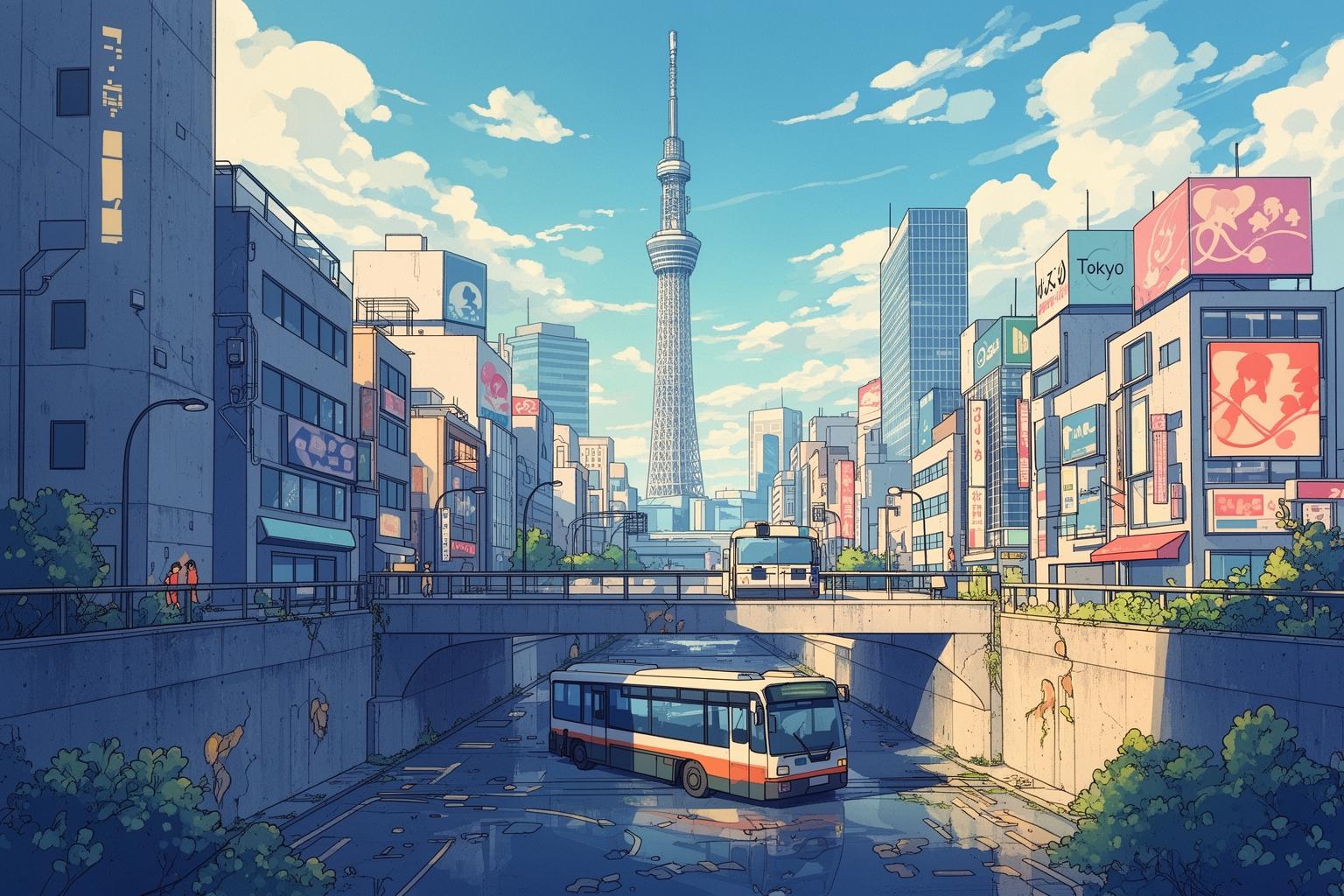
Our pilgrimage begins where Taki’s life takes root—in the sprawling, vibrant metropolis of Tokyo. Shinkai’s brilliance lies not only in capturing the city’s landmarks but in revealing its very soul. He transforms ordinary intersections, crowded train platforms, and quiet cafes into canvases filled with profound emotion. To walk through Tokyo following Taki’s footsteps is to view the city through a lens of wonder, where every pedestrian bridge could mark a fateful meeting and every skyline vista holds the promise of a distant dream. This is more than a backdrop; it is a living, breathing character in the narrative, its rhythms echoing the hurried pulse of a young man navigating his future, unaware of the cosmic thread drawing him toward another existence.
The Heart of Shinjuku: A Symphony of Screens and Steps
There is no better place to immerse yourself in Taki’s world than Shinjuku. It’s an exhilarating sensory overload. As an event planner, I see Shinjuku as an endless festival of human energy. The instant you enter Shinjuku Station—the busiest train station on Earth—you grasp the scale of Taki’s reality. It’s a rushing river of people, a symphony of train announcements, footsteps, and the distant jingles of countless shops. One can almost feel the kinetic energy Shinkai so masterfully animated. Look around, and scenes from the film come alive before you: the giant digital billboards bathing the streets in neon light, towering skyscrapers forming a canyon of glass and steel. The iconic NTT Docomo Yoyogi Building, though not a direct meeting place, appears as a constant, silent witness to the city’s drama, just as it did for Taki.
Just outside the station lies the Shinjuku Police Station intersection, a complex web of roads and walkways perfectly capturing the film’s urban intricacy. Nearby stands the famous “LOVE” sculpture by Robert Indiana, a landmark Taki and his friends would have passed countless times. This vibrant splash of color contrasts with the cool tones of the business district, a piece of art that feels strangely prophetic in a story about seeking a forgotten love. This area visually anchors Taki’s daily routine, his ambitions, and life before Mitsuha. To truly experience it, I recommend visiting during the day when sunlight glints off skyscrapers and streets buzz with purpose, and again at night, when the city transforms into a galaxy of artificial light—scenes straight from Shinkai’s most dazzling frames.
Echoes of Connection: The Yotsuya Staircase
If Shinjuku embodies the energetic heart of Taki’s world, then a quiet residential corner of Yotsuya is its soul. This is the pilgrimage site for every Your Name fan: the red-railed staircase of Suga Shrine. It serves as the emotional climax of the film and the setting for its hopeful, heart-stopping final scene. The journey there is a pilgrimage in itself. From Yotsuya Station, you leave behind the main roads, wandering into a maze of peaceful, narrow streets. The city’s noise fades, replaced by the gentle hum of neighborhood life. With every turn, anticipation builds. You are not merely following a map; you are tracing the path of two souls drawn together by fate, and the sensation is palpable.
Finding the Suga Shrine Steps
Then, you see it. The staircase is humble and unassuming—a simple stone flight framed by the iconic red railing, linking two quiet streets. Yet standing at its top or bottom, gazing at the spot where Taki and Mitsuha finally unite, is profoundly moving. The atmosphere here feels charged with the collective emotion of every fan who has stood precisely here. You see the distant skyline as they did. You feel the hill’s slope. It’s a perfect recreation, a testament to Shinkai’s meticulous attention to detail. Visitors often pause in silence, snap photos, or quietly reenact the scene. A helpful note for first-timers: this is a residential area, and the magic lies in its quiet authenticity. Please be respectful of the neighbors, avoid loud noises, and do not block paths used daily by locals. The ideal time to visit is late afternoon, during the golden hour, when light softens and the scene takes on an even more cinematic, dreamlike quality. Here, the boundary between anime and reality blurs, leaving you with the pure, hopeful feeling that defines the film’s conclusion.
A Moment of Respite: Taki’s Italian Escape
Every bustling life needs a refuge, and for Taki, it was his part-time job at the elegant Italian restaurant “Il Giardino delle Parole.” The restaurant’s name is a heartfelt nod from Shinkai to his earlier film, The Garden of Words. Though fictional, the restaurant’s design and atmosphere are inspired by Cafe La Bohème Shinjuku Gyoen. Discovering this spot offers a refreshing pace change from urban exploring. Nestled near the lovely Shinjuku Gyoen National Garden, the café boasts high ceilings, large windows, antique-style furnishings, and an air of relaxed sophistication. It’s easy to imagine Taki and his coworker Okudera-senpai weaving among tables here. The place feels like a little slice of Europe in the heart of Tokyo. It’s an ideal spot to unwind, recharge, and reflect on your journey. Enjoy a coffee or a pasta lunch, and for a moment, feel like a character in the story rather than just a visitor. This exemplifies how the pilgrimage isn’t solely about iconic landmarks but also about immersing yourself in smaller, atmospheric moments that imbue the film with texture and depth.
The Crossroads of Fate: Shintomicho and the Pedestrian Bridge
A recurring visual motif in Shinkai’s work is the pedestrian bridge. These often overlooked urban features become stages for quiet reflection and pivotal moments. In Your Name, the bridge where Taki and Okudera-senpai part ways after their date marks a subtle but key shift in Taki’s emotional journey. This real-world bridge stands just outside Shinanomachi Station, a short train ride from Shinjuku. From it, you can see train tracks extend below, trains gliding by just as in the film. The view of the NTT Docomo Yoyogi Building from here is striking. This spot beautifully embodies the theme of musubi—the invisible threads of connection and fate. In a city teeming with millions, paths cross, diverge, and sometimes, if luck allows, align. This simple pedestrian bridge becomes a poignant symbol of those near-misses and intersections that define our lives. It is a quiet, contemplative place that invites you to view the mundane city infrastructure with new, romantic eyes, spotting stories in every overpass and passing train.
Beyond the Neon: Mitsuha’s World in Hida
A journey dedicated to Your Name wouldn’t be complete without leaving behind the electric hum of Tokyo. To truly grasp the story, you must journey to the other half of its heart: the fictional town of Itomori. While Itomori itself doesn’t exist, its spirit and appearance are inspired by the beautiful, historic Hida region in Gifu Prefecture. The contrast is immediate and striking. Here, concrete and neon give way to lush mountains, crystal-clear rivers, and wooden buildings that have stood for centuries. Time seems to slow, flowing with the gentle pace of the river rather than the frantic rush of the Yamanote Line. This is Mitsuha’s world, steeped in tradition, spirituality, and a deep connection to nature. Exploring Hida-Furukawa, the main model for Itomori, is like stepping back into another era, where the whispers of ancient rituals still carry on the wind.
The Timeless Charm of Hida-Furukawa Station
Your arrival in Mitsuha’s world begins, as it did for Taki, at Hida-Furukawa Station. Stepping off the scenic JR Hida Wide View express train, the scene feels surprisingly familiar. The wooden station building, platform, footbridge, and waiting area are all depicted with meticulous accuracy in the film. It’s a surreal experience, as if you’ve walked straight onto the movie set. The station itself serves as a gateway to the town’s unhurried rhythm. You’ll also find the town’s mascot, a charming cow named Hidakuro-chan, who makes a cameo appearance in the film. From here, the compact, easily walkable town unfolds, each corner revealing a piece of Itomori. The quiet atmosphere is a stark contrast to Shinjuku, immediately grounding you in the slower, more deliberate pace of life that Mitsuha both treasured and longed to escape.
Weaving Tradition: The Art of Kumihimo
One of the most important symbols in Your Name is kumihimo, the intricate braided cords Mitsuha and her family make. These cords symbolize time itself—twisting, tangling, and sometimes rejoining—a perfect metaphor for Taki and Mitsuha’s intertwined lives. Hida has long been a center for traditional crafts, and kumihimo weaving thrives here. To deepen your connection to the film, visiting a place where you can experience this craft firsthand is essential. The Hida-Furukawa Festival Exhibition Hall offers exhibits on this art, but for a truly immersive experience, visit a local shop like Imai Art and Craft Store. There, you can sit at a traditional wooden stand, a marudai, and learn to weave your own kumihimo bracelet. As you cross the threads in a rhythmic, meditative pattern, you gain a new appreciation for the film’s central metaphor. It’s a tangible link to Mitsuha’s heritage and a beautiful, personal keepsake with far more meaning than a simple souvenir. It’s a piece of woven time you created yourself.
A Taste of Itomori: Exploring the Town
Wandering through Hida-Furukawa is a journey of delightful discovery. The town’s historic center is famous for Shirakabe Dozogai, a picturesque street lined with white-walled storehouses and a narrow canal teeming with vibrant koi fish. It’s a scene of pure, timeless beauty. As you explore, you’ll recognize more key spots. The Hida City Library is a must-see for any fan—it’s where Taki and his friends desperately searched for information about the vanished town of Itomori. The library staff have embraced the film’s popularity, creating a special section and even allowing photography where the characters sat, a rare and welcomed gesture in Japanese libraries. Another essential stop is Ajidokoro Furukawa, a small restaurant believed to be the model for the ramen shop where Taki’s crew tried to decipher the local dialect. While wandering, be sure to try goheimochi, a grilled rice cake coated in a sweet and savory miso-walnut sauce, a Hida specialty and the very snack Taki enjoys in the film. It’s a delicious, authentic taste of Mitsuha’s home.
The Spiritual Heart: Hie Shrine and Ketawakamiya Shrine
Mitsuha’s role as a shrine maiden is central to her identity and the film’s plot. The Miyamizu Shrine, with its ancient traditions and sacred rituals, was her responsibility. While the shrine in the film is a composite, its inspiration is drawn from two real shrines in the Hida region. The most visually similar is Hie Shrine, located in the nearby city of Takayama. Its large stone steps and towering cedar trees leading to the main hall strongly evoke the Miyamizu Shrine’s entrance. The atmosphere there is one of profound peace and history. The other key site is Ketawakamiya Shrine in Hida-Furukawa itself. Though visually different, it is another beautiful, historically significant shrine that captures the spiritual essence of a small mountain community. Visiting these shrines offers insight into the Shinto beliefs permeating the film’s narrative—the reverence for nature, the honoring of local deities, and the sense of a world beyond our own. Standing beneath ancient trees, with the scent of moss and incense in the air, you can easily imagine Mitsuha performing her duties, her life intricately woven into the fabric of this sacred place.
A Pilgrim’s Practical Guide: Planning Your Journey

Embarking on your own Your Name pilgrimage is a truly fulfilling adventure, and with a bit of planning, it becomes a smooth and enchanting experience. The journey unfolds across two contrasting settings, and knowing how to navigate both is essential to fully appreciating them. From the hyper-modern efficiency of Tokyo’s transport system to the scenic, leisurely pace of the Gifu countryside, here’s how to make your trip as memorable as the film itself.
Navigating Tokyo’s Urban Maze
Tokyo can feel overwhelming, but its public transportation system is remarkably efficient. Your essential companion will be a Suica or Pasmo IC card, a rechargeable card that you can tap for trains, buses, and even convenience store purchases. The key spots from Taki’s story are conveniently concentrated around the city center, mainly along the JR Chuo-Sobu Line. You can easily plan a one-day itinerary. Begin in Shinjuku, soaking in the morning energy. From there, it’s a quick train ride or a pleasant walk to Yotsuya for the Suga Shrine staircase. Shinanomachi Station, where the pedestrian bridge is located, is just one stop away. You can comfortably visit all the main Tokyo locations in a single day without feeling rushed. My advice is to embrace walking. Traveling between these sites on foot lets you explore the charming backstreets and quiet neighborhoods that give Tokyo its unique character, just as Shinkai so beautifully portrays.
The Scenic Route to Hida
Traveling from Tokyo to Hida-Furukawa is an adventure in itself. The most efficient way is to take the Tokaido Shinkansen (bullet train) from Tokyo to Nagoya, a journey of around an hour and a half. From Nagoya, transfer to the JR Hida Wide View limited express train. This second part of the trip is spectacular. The train truly lives up to its name, with large windows offering breathtaking views as it winds through deep valleys, follows the emerald-green Hida River, and crosses the majestic Japan Alps. It’s a gradual, beautiful transition from urban sprawl to untouched nature. To fully immerse yourself in the serene atmosphere of the Hida region, I highly recommend staying at least one night. Lodging options are available in Hida-Furukawa itself or in the larger neighboring town of Takayama, which offers more choices and is a charming historical destination. Spending the night lets you experience the town in the quiet of the evening and the fresh morning light, long after the day-trippers have left.
When to Visit: A Tale of Four Seasons
Your Name beautifully showcases the changing seasons, and your experience of these locations will be uniquely influenced by the time of your visit. Spring covers Tokyo in soft pink cherry blossoms, adding romance to the city’s parks and streets. Summer brings lush, vibrant greenery to the Hida mountains, making the landscape feel alive. Yet, autumn is perhaps the most iconic season for this pilgrimage. The film is rich with imagery of fall foliage, and witnessing the fiery reds and brilliant golds of Japanese maple trees in both Tokyo’s parks and the Hida mountainside is unforgettable. Winter offers a stark, quiet beauty, especially in Hida, often blanketed in pristine snow, turning it into a magical wonderland, just as Taki experienced during his search. As a festival lover, I also highly recommend timing your visit to coincide with one of the region’s famous events, like the magnificent Takayama Festivals in April and October, for a deeper cultural immersion.
More Than a Movie: The Enduring Magic of Place
Completing a journey through the world of Your Name offers something deeper than merely a collection of photos. It’s an emotional resonance that lingers with you. You’ve traveled the same paths, glimpsed the same views, and stood in the very spots where the story’s most powerful moments took place. This pilgrimage, known as seichi junrei, turns you from a passive observer into an active participant in the story’s universe. It’s a striking reminder that even the most fantastical tales are crafted from the fabric of our real, beautiful world.
The lasting appeal of this pilgrimage lies in its celebration of connection—or musubi. By visiting these locations, you create a new bond with the film, with Makoto Shinkai’s creative vision, and with Japanese culture itself. You also join a global community of fans who have undertaken the same journey, sharing a quiet understanding when you meet them atop that iconic staircase. The journey shows us that magic isn’t confined to the screen. It can be discovered in the stillness of a mountain shrine, in the vibrant chaos of a city at night, and in the breathtaking moment when you realize a fragment of a beloved dream has become real. So go ahead, chase that comet. Your own story awaits, ready to be written in these incredible places.