There’s a certain kind of magic that settles over you when you read a Haruki Murakami novel. It’s a quiet, surreal hum that vibrates just beneath the surface of the everyday. His Tokyo isn’t just a city of neon signs and bustling crowds; it’s a labyrinth of alternate realities, talking cats, missing elephants, and lonely souls searching for connection in jazz cafes and late-night diners. It’s a place where you might turn a corner and slip into a different world, or find the answers to life’s great mysteries at the bottom of a well. For years, I’ve wandered through his pages, and I began to wonder: could you find that Tokyo in the real world? Could you walk the same streets as Toru Okada, Aomame, and Naoko, and feel that same strange, beautiful melancholy? This journey is an attempt to answer that question. It’s a pilgrimage for the modern reader, a quest to map the emotional and physical landscapes of one of the world’s most beloved authors. We’re not just visiting locations; we’re chasing a feeling, stepping through the looking glass into the mesmerizing, enigmatic, and deeply human world of Haruki Murakami’s Tokyo.
If you’re inspired to explore more literary landscapes after this journey, consider embarking on a literary pilgrimage to Tokyo’s Mitaka to walk in the footsteps of another iconic author.
The Labyrinth of Shinjuku: Echoes of Urban Solitude
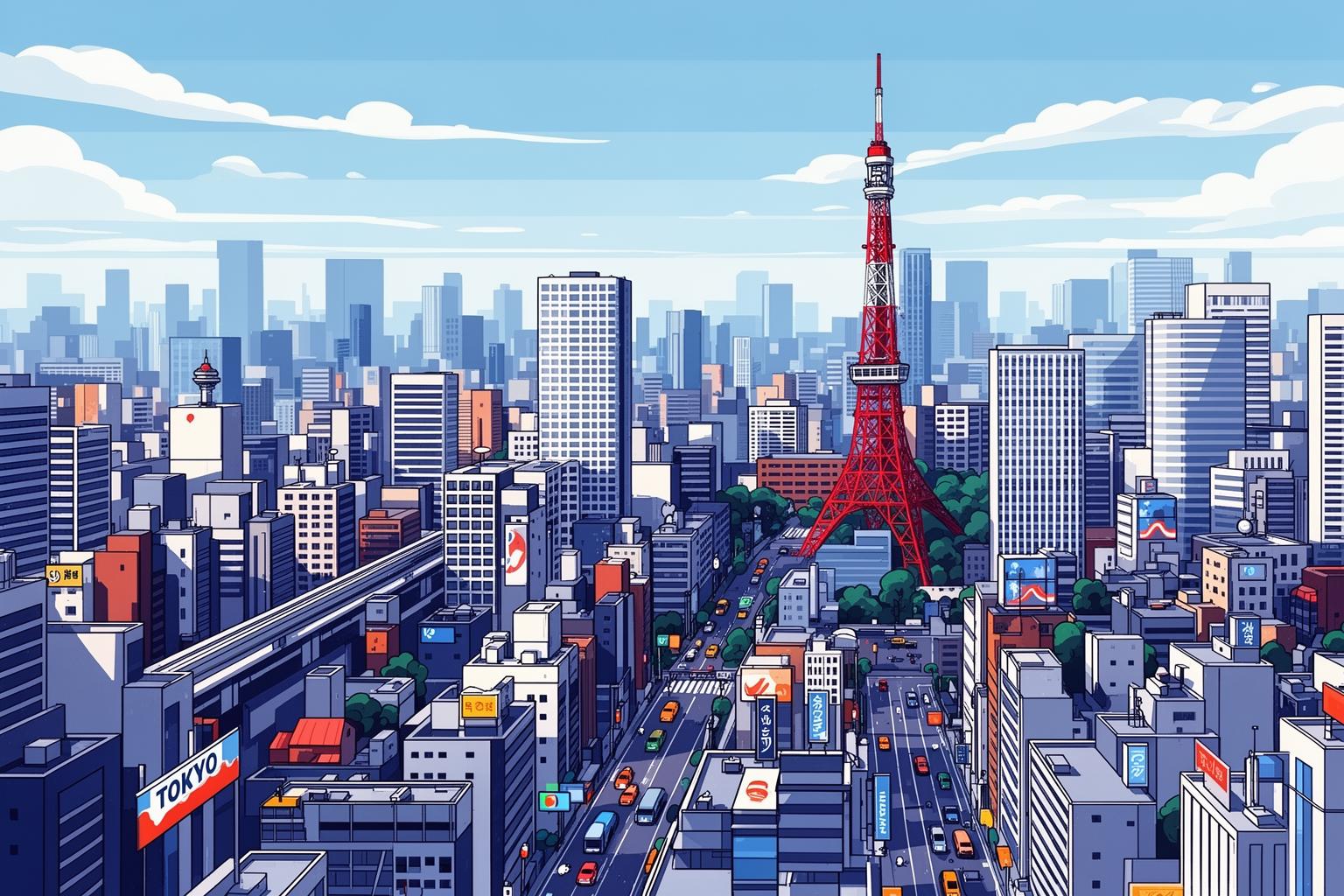
Shinjuku is the pulsating core of Murakami’s urban world. It’s an immense and deeply anonymous place where countless stories intersect yet never truly connect. Here, his characters frequently find themselves adrift, overwhelmed by the city’s sheer momentum, but it is within this overpowering environment that their inner journeys begin. To grasp Murakami’s Tokyo, you must first allow yourself to get lost in Shinjuku.
Shinjuku Station: The Grand Central of Disconnection
Entering Shinjuku Station feels like stepping into a rushing river. It’s the busiest train station on Earth—a dizzying whirl of people, signs, and noise. Pure, organized chaos. You sense the constant movement, millions of lives progressing along parallel tracks. In Murakami’s stories, the station is less a physical place and more a metaphor for modern existence—a hub of endless possibilities and profound solitude. Characters pass through, often seeming like ghosts in the machine. To truly experience it, don’t just treat it as a transit point. Pause near the central corridors and observe. Watch salarymen rushing to catch trains, students laughing, tourists looking lost. Absorb the intense energy. Here, you can feel the isolation that drives someone like Toru Watanabe from Norwegian Wood to seek solace in quieter corners. For first-time visitors, the station can be a nightmare to navigate. My advice: choose one exit—the South Exit for Shinjuku Gyoen, the West for the towering government buildings, or the East for shopping and nightlife—and stick to it. Avoid crossing underground unless you have a map and a strong dose of courage.
Golden Gai and Omoide Yokocho: Nostalgia in a Glass
Just a short walk from the futuristic gloss of the main station lies a world frozen in time. Golden Gai is a labyrinth of six narrow alleys, packed with over two hundred tiny, ramshackle bars, some so small they seat only five or six patrons. It’s a relic of the post-war Showa era—a fire hazard of a neighborhood that has remarkably survived earthquakes and redevelopment. Strolling through its lantern-lit streets feels like walking onto a film set. You can almost hear the quiet conversations and clinking glasses of Murakami’s introspective characters. Here, they’d come to drink whiskey and listen to old records, nursing their thoughts amid warm wooden interiors. Omoide Yokocho, or “Memory Lane,” has a similar atmosphere but focuses on food, its air thick with the smoky aroma of yakitori grills. The feeling is intoxicatingly nostalgic—authentic, lived-in, profoundly human. For travelers, especially solo women, Golden Gai can feel intimidating. Many bars have cover charges and cater mainly to regulars. Look for English signs welcoming tourists, or simply peek inside—a friendly bartender’s smile is a good sign. It’s best to visit early in the evening before crowds build. Always carry cash; very few places accept credit cards here. This is a spot for quiet appreciation, not loud partying. Find a small bar, order a drink, and soak in the history.
Shinjuku Gyoen National Garden: An Oasis of Contemplation
When the urban jungle of Shinjuku becomes overwhelming, there is a refuge. Shinjuku Gyoen is a stunning park that feels miles away from the city’s hustle. A masterpiece of landscape design, it features a traditional Japanese garden, a formal French garden, and an English landscape garden. Famously the setting for Makoto Shinkai’s The Garden of Words, its tranquil essence embodies Murakami’s spirit of introspection. This is the kind of place a character might retreat to read, reflect, or process a strange phone call or mysterious disappearance. The park’s beauty shifts dramatically with the seasons. In spring, it bursts with cherry blossoms, attracting large crowds. Yet I find it most magical in early autumn, when the air is crisp and the leaves turn, or on a quiet, rainy afternoon, when the greenery is lush and the city’s noise softens. A small entrance fee helps maintain its pristine condition and prevents overcrowding. Find a bench by the pond in the Japanese garden, watch the koi swim, and let the city fade away. It’s an ideal space to reconnect with yourself, a central theme woven through many of Murakami’s tales.
Aoyama & Harajuku: Style, Jazz, and Lost Connections
If Shinjuku represents the chaotic core, the stretch from Aoyama to Harajuku embodies the city’s stylish and sophisticated spirit. Here, fashion, art, and music intersect along quiet, tree-lined streets. This setting forms the backdrop for many of Murakami’s more cosmopolitan characters—individuals in creative professions who listen to obscure records and wrestle with existential questions over expertly brewed coffee. The ambiance here is calmer, more carefully curated, and reflective.
The Aoyama Vibe: Where Stories Unfold
Aoyama exudes effortless coolness. Unlike the ostentatiousness of Ginza, it prefers a subtle, intellectual elegance. It hosts high-end designer flagships such as those by Issey Miyake and Comme des Garçons, whose architectural designs resemble art galleries rather than retail stores. This is the world Aomame from 1Q84 navigates—a realm defined by discerning taste and understated luxury. Yet the true charm of Aoyama lies in its backstreets. Venture off Omotesando’s main avenue, and you’ll discover a tranquil residential labyrinth dotted with tiny independent boutiques, concealed cafes, and intimate art galleries. It’s an ideal area for aimless wandering on foot. The Nezu Museum, with its impressive collection of Japanese and East Asian art and a peaceful garden, is a must-see. It feels like a private retreat, a place easily capable of occupying an entire afternoon. This neighborhood captures the aesthetic sensibility evident in Murakami’s work—a reverence for well-crafted, timeless objects with their own stories. It’s a place where quality triumphs over quantity, and quiet moments outweigh loud extravaganzas.
Blue Note Tokyo & Jazz Kissa: The Soundtrack of Murakami
Talking about Haruki Murakami inevitably involves jazz, the lifeblood of his novels and the soundtrack to his characters’ lives. Before achieving worldwide fame as an author, Murakami owned a jazz café, Peter Cat, in Kokubunji. His love for jazz permeates every page. To immerse yourself in this aspect, visiting a jazz club is essential. Blue Note Tokyo in Aoyama stands as the city’s premier jazz venue, featuring world-class artists in a sleek and refined atmosphere. While it offers a fantastic night out, for a genuinely Murakami-like experience, seek out a traditional jazz kissa—a jazz café dedicated to serious listening. The most renowned, Jazz Bar Dug in Shinjuku, was frequented by Murakami himself. These cafés are typically in basement spaces, dimly lit, lined with thousands of vinyl records. The guideline is simple: order coffee or whiskey, then listen—talking is often discouraged. It’s a meditative ritual where you let the music envelop you, losing yourself in the improvisations of John Coltrane or the melodies of Bill Evans. In these quiet, sacred halls of sound, you can feel a profound connection to the author’s creative spirit. This fading cultural experience remains a precious piece of Tokyo’s soul.
From the Jingu Gaien Ginkgo Avenue to the Swallows Stadium
Running is another key element in Murakami’s world, a practice for both body and mind, as described in his memoir What I Talk About When I Talk About Running. His favorite running route often passes through the Meiji Jingu Gaien park area, notably the Ginkgo Avenue—a stunning boulevard lined with meticulously pruned ginkgo trees that blaze golden in late autumn. It’s one of Tokyo’s most iconic scenes. Walking or jogging down this path, you can sense the rhythmic solitude Murakami writes about. Nearby lies Meiji Jingu Stadium, home to the Yakult Swallows, Murakami’s cherished underdog baseball team. He famously wrote his debut novel, Hear the Wind Sing, while sitting in the outfield with a beer in hand. Attending a Swallows game offers a wonderful glimpse into local Tokyo life. The atmosphere is cheerful and relaxed, with fans rallying behind their team through coordinated chants and tiny umbrellas. It’s less about high-stakes competition and more about community and passion—a simple, unpretentious joy perfectly suited to the mood of one of his early novels.
The Intellectual’s Path: Jinbocho and the University Quarters
Murakami’s characters are frequently avid readers, thinkers, and researchers who delve into obscure histories or philosophical texts to understand their unusual situations. This intellectual curiosity draws us to neighborhoods like Jinbocho and university districts, places where knowledge and history fill the air, making the past feel vividly present.
Jinbocho Book Town: A World of Words
Jinbocho is a paradise for book enthusiasts. It’s an entire neighborhood devoted to the printed word, boasting over 170 bookstores lining its streets. Most specialize in secondhand books, turning a stroll through them into a treasure hunt. The air is thick with the dry, sweet scent of aging paper. Here, you’ll discover everything from rare academic volumes and antique woodblock prints to vintage manga and foreign paperbacks. Even if you don’t read Japanese, it’s a captivating place to explore. The visual richness of the shops, with books stacked from floor to ceiling, is a spectacle in itself. It’s easy to imagine Toru Okada from The Wind-Up Bird Chronicle searching for a book about Manchurian history here, or a young student stumbling upon a forgotten author whose work will transform their life. Several shops offer foreign-language sections, so everyone can join the hunt. For a rest, step into one of the traditional coffee shops, or kissaten, scattered throughout the area. Spots like Sabouru, with its spacious, log-cabin interior, seem untouched by time. They provide the perfect setting to sit with your new book and a cup of siphon coffee, embodying the quiet intellectual vibe of a Murakami protagonist.
The University of Tokyo and Waseda University: The Spirit of Norwegian Wood
Many of Murakami’s stories, especially Norwegian Wood, capture the essence of student life in the 1960s—a time of social upheaval and youthful idealism. The campuses of Tokyo’s top universities serve as physical backdrops for these memories. The University of Tokyo (Todai), with its iconic red-brick Yasuda Auditorium, was a focal point for intense student protests. Walking its leafy, historic grounds, you can sense the weight of that history. The architecture is grand and imposing, sharply contrasting with the emotional struggles of the characters who once walked those paths. Waseda University, Murakami’s alma mater, has a more open and vibrant campus. It’s where he spent his formative years studying drama and immersing himself in Western culture, film, and music. Close by stands the Waseda International House of Literature, also known as the Haruki Murakami Library. Designed by celebrated architect Kengo Kuma, this striking, futuristic space is dedicated to his works and literary archives. It features a replica of Murakami’s study and a jazz café, making it a must-visit for any fan. Visiting these campuses is not just about seeing locations from a book; it’s about connecting with the atmosphere of youthful exploration, love, loss, and the quest to find one’s place in the world that shapes much of his early writing.
Beyond the Center: Koenji and the Search for Something Different
To fully immerse yourself in a Murakami-esque experience, you must sometimes veer off the beaten path. His stories often highlight the ordinary and the slightly quirky, discovering magic in calm, unpretentious suburban neighborhoods. Koenji, a district in West Tokyo, embodies this spirit perfectly. It’s a place for those who follow their own unique rhythm.
Koenji’s Counter-Culture: A Haven for the Unconventional
Koenji serves as the main setting for Aomame’s storyline in 1Q84. It offers her a refuge, a place to live anonymously away from the sparkle of central Tokyo. The neighborhood is famous for its vibrant counter-culture scene. It’s a hotspot for vintage clothing shops (furugi), independent record stores, punk rock venues, and eccentric bars. The vibe is relaxed, creative, and somewhat rough around the edges. It feels like a community of artists, musicians, and dreamers. The covered shotengai (shopping arcades) near the station are delightful to wander through, packed with local shops selling everything from pickles to used electronics. Koenji resists corporate chains in favor of fiercely independent small businesses. This spirit of independence and non-conformity lies at the heart of the Murakami ethos. His characters are always outsiders, individuals who don’t quite fit into society’s strict categories. Koenji is their spiritual haven. Spending a leisurely afternoon here, browsing vintage shops and observing the local personalities, offers a glimpse of a different Tokyo—one that feels more personal, genuine, and wonderfully strange.
Finding Your Own Cat Town
Cats appear as a constant, mysterious presence in Murakami’s novels. They serve as guides, companions, and symbols of a world that exists just beyond ordinary perception. They lead characters to hidden spots and often seem to understand more than the humans around them. Although there isn’t a literal ‘Cat Town’ from Kafka on the Shore to visit, the quest for it is a fitting metaphor for exploring Tokyo’s residential backstreets. Neighborhoods like Koenji, or nearby Yanaka, known for its feline affection, feature quiet alleys where cats nap on walls and observe the passing world. Getting lost in these residential districts is a quintessential Murakami experience. Here, you discover Tokyo’s genuine texture: small shrines nestled between houses, carefully maintained potted plants, and vending machines glowing softly in the evening light. It is in these moments of quiet observation, perhaps during a chance meeting with a gracefully aloof cat, that you sense the line between reality and the surreal begin to fade. This reminds us that magic doesn’t always reside in famous landmarks but rather in the small, everyday details—if only we take the time to notice.
Navigating Your Murakami Pilgrimage: A Traveler’s Guide
Exploring Murakami’s Tokyo is as much about adopting the right mindset as it is about navigating its geography. It calls for a willingness to wander, to observe, and to appreciate the quiet moments. Here are some practical tips to guide you on your journey.
Getting Around Tokyo
Tokyo’s public transportation system is a marvel of efficiency and your gateway to the city. The JR train lines and Tokyo Metro subway network will take you nearly anywhere you want to go. To make things easier, get a rechargeable IC card such as a Suica or Pasmo as soon as you arrive. It allows you to tap in and out of train gates and also pay at convenience stores and vending machines. Although the train map might appear as a tangled web of colorful lines, apps like Google Maps offer highly accurate, real-time directions showing which train to take, which platform to use, and even the best car to board for smooth transfers. Don’t be intimidated by the complexity—embrace it as part of the adventure.
The Art of the Stroll
While trains are indispensable for covering long distances, the heart of this journey lies in walking. Murakami’s characters are constant walkers; they stroll to clear their minds, to process strange occurrences, and to let the city gradually reveal itself. Pick a neighborhood, get off the train, and simply start walking. Don’t hesitate to turn down a narrow alley or follow an intriguing path. This is how you uncover hidden shrines, quaint cafes, and peaceful parks that give Tokyo its unique charm. Getting a bit lost adds to the excitement. It’s through these spontaneous detours that you’ll experience your most memorable, and most Murakami-like, moments.
A Note on Solo Travel and Safety
Tokyo is among the safest major cities globally, making it a fantastic destination for solo travelers, including women. The general atmosphere of public order is exceptional. However, as with any large city, stay aware of your surroundings. In extremely crowded places like Shinjuku Station or Shibuya Crossing, keep your bag secure to avoid the risk of pickpocketing. Nightlife areas such as Golden Gai or parts of Roppongi can become lively, so stay mindful of your drink and comfort level. Overall, the strong sense of safety is a major advantage, letting you wander freely at any hour, walk home late after a jazz show, or take an early morning run in a park, fully immersing yourself in the city’s rhythm without constant worry.
When to Visit
Tokyo is a city for every season, each offering a unique perspective on Murakami’s world. Spring (March-April) showcases the iconic cherry blossoms, poignantly featured in Norwegian Wood as a symbol of fleeting, beautiful life. Summer (June-August) is hot and humid, creating a dreamlike, slightly oppressive ambiance that matches the surreal mood of novels like Hard-Boiled Wonderland and the End of the World. Autumn (October-November) is perhaps my favorite time. The weather is crisp and clear, ideal for walking, while the vivid hues of ginkgo and maple trees provide a stunning, melancholic backdrop. Winter (December-February) is cold but often sunny, with a quiet, stark cityscape that feels wonderfully atmospheric, perfect for introspective moments in a cozy café.
Beyond the Page: Finding Your Own Story in Tokyo
To walk through Tokyo in search of Haruki Murakami is to realize that you are not merely seeking physical locations. You are searching for an atmosphere, a distinct frequency of urban experience that echoes his writing. You encounter it in the quiet intensity of a jazz kissa, the lonely beauty of a skyscraper’s observation deck at night, the unexpected calm of a garden hidden within the city’s heart, and the simple joy of a warm bowl of noodles at a counter. This journey is not a checklist of places to be marked off. It is an invitation to slow down, notice the details, and listen to the city’s subtle melodies. You may not discover a talking cat or a portal to another world, but you will encounter a city that is deeper, stranger, and filled with quiet magic beyond your imagination. The greatest revelation is that Murakami did not create a fantastical Tokyo; he merely revealed the surreal and beautiful truths already present, waiting in the shadows for someone to perceive them. Now, it is your turn to wander these streets and find your own story, your own melody in the grand, chaotic, and wonderful symphony that is Tokyo.