There’s a hum that resonates deep within Makoto Shinkai’s masterpiece, Kimi no Na wa—or as the world knows it, Your Name. It’s a melody of longing, a rhythm of connection that transcends distance, time, and even memory itself. It’s the feeling of searching for a face you’ve never seen, a name you can’t recall. This film didn’t just tell a story; it painted an emotion onto the celluloid, using a brush dipped in the hyper-realistic light and color of Japan. Its breathtaking visuals are more than just background art; they are characters in their own right, breathing, living landscapes that ground a fantastical story in a tangible reality. And for those of us who felt that hum, who were swept away by the cosmic dance of Taki and Mitsuha, the call to walk in their footsteps is irresistible. This is the heart of seichi junrei, the anime pilgrimage, a journey to find the soul of a story in the real world. Our pilgrimage takes us to two Japans, a diptych of experience that mirrors the film’s central duality. We begin in the electric, sprawling heart of Tokyo, Taki’s world of concrete canyons and cascading lights. Then, we journey far into the mountains of Gifu Prefecture, to the tranquil, timeless towns that inspired Mitsuha’s fictional home of Itomori. This isn’t just about recreating iconic shots for a social media feed. It’s about standing on a staircase and feeling the weight of a fated reunion, about hearing the rumble of a rural train and imagining a journey to save a forgotten town. It’s about understanding how a place can shape a soul, and how a story can transform a place into something sacred. Join me as we trace the threads of fate, from the city’s vibrant pulse to the countryside’s gentle whisper.
To delve deeper into the electric, sprawling heart of Tokyo that served as Taki’s world, consider exploring our dedicated guide to the Tokyo locations from “Your Name”.
Tokyo’s Urban Heartbeat: Tracing Taki’s Footsteps
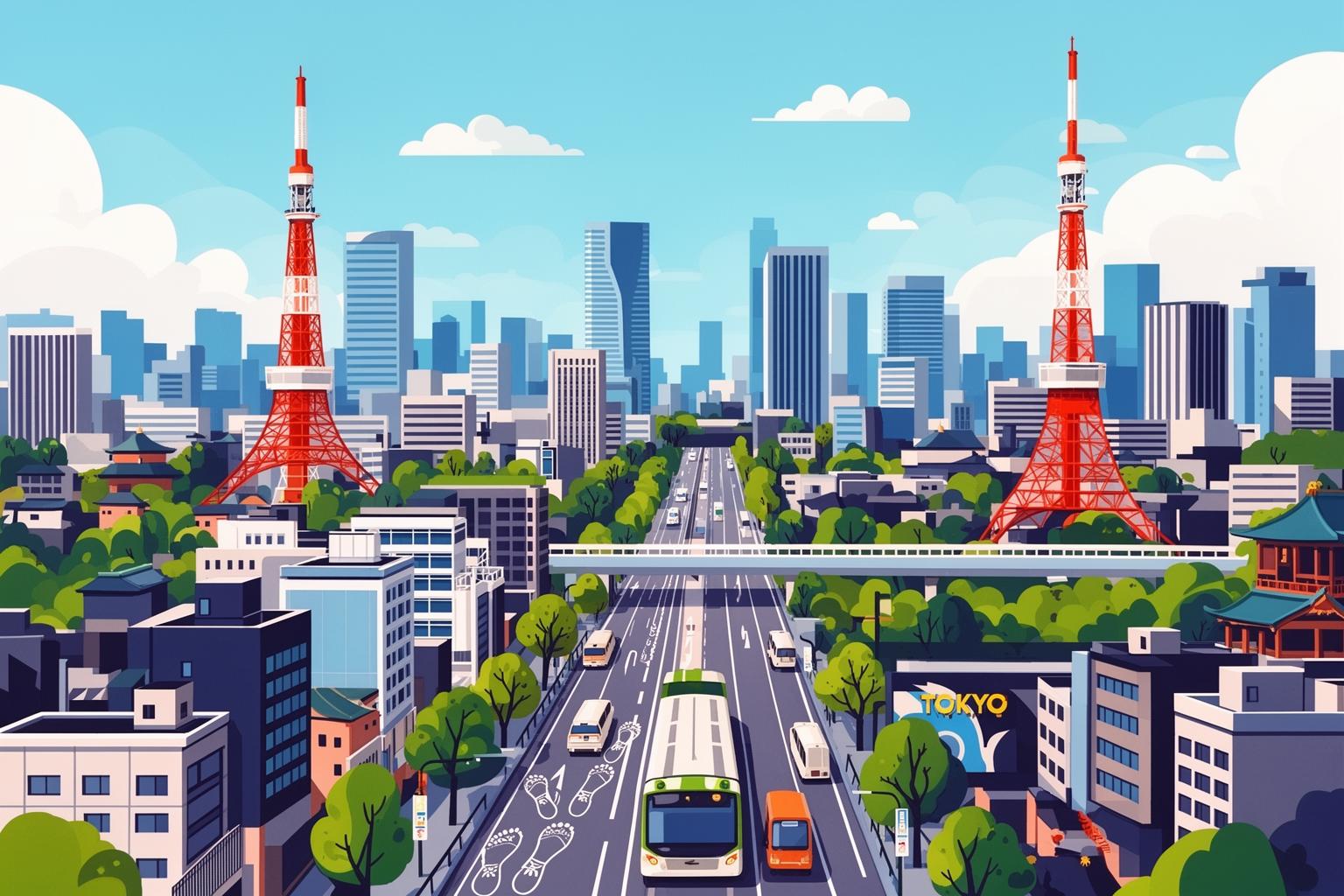
Tokyo is a symphony of organized chaos, a city that pulses with a relentless, tidal rhythm. It’s a place of immense scale and infinite detail, and this is the world where Taki Tachibana lives. Makoto Shinkai is a master at capturing this urban essence—not only the famous landmarks but also the poetry found in the mundane. He discovers beauty in the glare of a convenience store sign on wet asphalt, the intricate web of power lines silhouetted against a twilight sky, and the quiet ballet of commuters crossing streets. To walk through Taki’s Tokyo is to see the city through his eyes, experiencing both the exhilarating energy and the subtle undercurrent of urban loneliness that define his life before everything changes. Our journey here is one of contrasts, finding moments of quiet reflection amid the ceaseless motion of the world’s largest metropolis. It is a quest to uncover the specific corners where Taki’s story unfolded, each a small anchor in the vast ocean of the city.
The Iconic Red Staircase: Suga Shrine in Yotsuya
No location is more synonymous with the emotional climax of Your Name. than this simple, unassuming staircase. This is where the threads of time, memory, and longing finally converge—the setting for that heart-stopping final scene. To get here, you’ll disembark at Yotsuya Station and take a short, ten-minute walk through a quiet residential neighborhood. The transition is palpable. The city’s roar fades, replaced by the gentle hum of daily life. Then, you see it: the steep incline, the distinctive red handrail, the canopy of green trees framing the sky above. It’s a strangely powerful moment. Though you’ve seen this image countless times on screen, standing at the bottom looking up or at the top looking down allows you to feel the full weight of the film’s emotional journey. The air feels different here, charged with anticipation. You can almost hear the frantic beating of two hearts, the desperate question: “Kimi no na wa?”
Visiting in the late afternoon is highly recommended. As the sun begins to set, it casts a warm, golden glow—the kataware-doki or “magic hour” light so thematically crucial to the film. Shadows lengthen, the reds of the railing deepen, and the entire scene becomes soft and dreamlike. It’s the perfect moment to sit quietly and absorb the atmosphere. This is a residential area and a sacred space, home to the Suga Shrine perched at the top. Be mindful of your voice and respectful of the residents whose homes line the street. This pilgrimage isn’t about loud displays of fandom but rather a quiet, personal moment of connection with the story. It’s about feeling resolution—the peace that follows a long and arduous search—that settles within you as you stand on those hallowed steps.
Crossroads of Fate: Shinjuku’s Dazzling Scenery
If the Suga Shrine staircase is the film’s heart, then Shinjuku is its central nervous system. This is Tokyo of dazzling neon lights, towering skyscrapers, and rivers of people streaming through the world’s busiest station. Shinkai uses this overwhelming scale to emphasize Taki’s place within the sprawling, interconnected network of the city. Many of the film’s most memorable establishing shots are taken directly from the Shinjuku landscape, each a testament to the director’s obsession with photorealistic detail. The area is a labyrinth, but within its energetic maze, you can find the exact spots that framed Taki’s life.
The Shinjuku Pedestrian Bridge
Just a short walk from Shinjuku Station’s South Exit, there’s a pedestrian overpass near the Shinjuku Police Station. This is the very bridge where Taki and his friends are seen walking, with the distinctive lattice design of the Mode Gakuen Cocoon Tower looming in the background. Standing here, you are suspended above the constant flow of traffic. The sounds of the city wash over you—the rumble of engines, the distant wail of sirens, the murmur of thousands of conversations. It’s a chance to be an observer, to see the city as a living organism, its arteries clogged with light and motion. It captures the feeling of youth in a huge metropolis: a small piece of something massive and incomprehensible, yet still on your own unique path. The nighttime view is especially stunning, as the city transforms into a galaxy of artificial light, mirroring the starry skies so important to Mitsuha.
A Moment of Calm: The National Art Center, Roppongi
For Taki’s nerve-wracking date with his crush, Okudera-senpai, the setting shifts slightly to the elegant district of Roppongi. The location is The National Art Center, an architectural marvel designed by Kisho Kurokawa. Its undulating glass facade is instantly recognizable. Inside, the building is a cathedral of light and space. You don’t need a ticket for a specific exhibition to enter the main atrium, where their memorable lunch takes place. The Salon de Thé Rond, the café where they sat, perches atop a massive concrete cone, offering panoramic views of the sunlit interior. You can actually sit there, order coffee and cake, and reenact the scene. It’s a beautiful contrast: the grand, futuristic scale of the museum against the backdrop of an intimate, awkward, and ultimately pivotal conversation. Visiting here offers a welcome respite from the energy of Shinjuku. It’s a place to appreciate art—not only in the galleries but in the building’s very architecture—and to reflect on the personal turning points that unfold in the most public spaces.
Gifu’s Timeless Soul: Discovering Mitsuha’s Itomori
Leaving behind the electric pulse of Tokyo, our pilgrimage ventures deep into the heart of Japan, to the mountainous Hida region of Gifu Prefecture. This is the land that inspired the spirit of Itomori, the fictional hometown of Mitsuha Miyamizu. While Itomori itself is a blend, a dreamscape stitched together from several real places, its essence is unmistakably found here. The journey is an experience in itself. The Shinkansen bullet train gives way to the JR Hida Wide View express, a train that winds through stunning river valleys and dense forests. The view out the window gradually sheds the urban sprawl, a slow exhale into a realm of vibrant green and ancient tradition. The air that greets you upon stepping off the train at Hida-Furukawa feels cleaner and cooler. Life moves at a slower, more deliberate pace. This is a world ruled by the seasons, not subway timetables. This is Mitsuha’s world—a place steeped in deep-rooted custom, breathtaking natural beauty, and a lingering sense of nostalgia.
The Gateway to Tradition: Hida-Furukawa Station
This modest station is one of the film’s most faithfully recreated locations. It’s where Taki and his friends arrive on their quest to find Mitsuha, and the moment you step onto the platform, it feels like stepping into an animation cell. The wooden beams of the station roof, the bench designs, the pedestrian overpass from which Taki first views the town—it’s all depicted exactly. Fans will immediately recognize the spot on the platform to capture the iconic shot of the train pulling in, mountains rising in the background. Inside, there’s often a small display dedicated to the film, and you might even encounter a cutout of the local mascot, Hida-gyu, just as portrayed. The station staff, familiar with visiting pilgrims, are incredibly welcoming. Stepping out into the town square, you sense the same mix of hope and uncertainty Taki must have felt—a stranger in a strange land, driven only by a fragile memory.
Whispers in the Stacks: Hida City Library
A short walk from the station lies another pilgrimage highlight: the Hida City Library, where Taki tirelessly searched for records of the Itomori disaster. From the outside, it’s a handsome, modern building, but the interior truly captivates. The architecture celebrates the region’s famed woodworking tradition. Soaring wooden beams and geometric designs create a space that is both grand and warmly inviting. Soft natural light filters through large windows, illuminating the rows of books. You can find the very desks and seating areas where Taki and his friends sat, and for a moment, share in his desperate search for answers. The library embraces its film connection wholeheartedly. At the front desk, you can politely request a photography permit, which grants access to designated areas for photos. This thoughtful system respects both fans and local patrons who come to read and study. The atmosphere is profoundly quiet—a place for contemplation, to appreciate the power of knowledge and the importance of preserving history, themes that resonate deeply with the film’s story.
Echoes of Itomori’s Rituals: Exploring the Old Town
Though the Miyamizu family shrine in the film is fictional, its spiritual essence permeates the Hida region. Nearby Takayama hosts the Hida-Sannogu Hie Shrine, widely regarded as a major visual and atmospheric inspiration. The long stone steps flanked by towering cedar trees and moss-covered lanterns evoke the sacred, ancient feeling of Mitsuha’s home. Visiting here connects you to the deep Shinto traditions central to Mitsuha’s life, especially the concept of musubi—the invisible force linking all things. In these quiet, sacred groves, you begin to feel the timeless spiritual undercurrent of the story. Back in Hida-Furukawa, a stroll through the old town reveals the source of Itomori’s nostalgic charm. The Seto-gawa Canal, with its white-walled storehouses and thousands of colorful carp swimming in crystal-clear water, is a picturesque scene straight from a storybook. This landscape shaped the film’s portrayal of a town living in harmony with nature and tradition.
The Taste of Hida: Goheimochi and Local Flavors
No pilgrimage is complete without sampling local flavors. In the film, Mitsuha and her friends enjoy goheimochi, a regional specialty. You can find this snack freshly grilled at small stalls throughout Hida-Furukawa and Takayama. It’s a simple yet delicious treat: pounded rice skewered, flattened, then basted with a rich, savory-sweet glaze of miso, sesame, and walnuts before being toasted over an open flame. It’s the perfect snack for wandering the historic streets. Eating a skewer of warm goheimochi offers a multi-sensory connection to the film—a way to savor the simple, rustic pleasures of Mitsuha’s life. It’s a small detail, but these details are what make a pilgrimage genuinely immersive.
Planning Your Pilgrimage: A Practical Guide

Embarking on a journey from the bustling heart of Tokyo to the tranquil mountains of Gifu requires some planning, but the reward is an experience rich in depth and variety. Knowing the details of travel, timing, and local customs will help ensure your pilgrimage goes smoothly and meaningfully, allowing you to focus on the magic of the destinations rather than the challenges of navigation. Here is some practical advice to help you follow the story of Taki and Mitsuha with ease.
The Best Time to Visit
Japan’s four distinct and stunning seasons each offer a unique perspective on the world of Your Name. In Tokyo, spring and autumn are generally the most enjoyable seasons. Spring sees the city adorned with delicate pink cherry blossoms, adding a fleeting beauty to your journey. Autumn brings cool, pleasant weather and vibrant fall foliage in the city’s parks. Summer tends to be hot and humid, while winter is cold but often clear and bright. For the Hida region, autumn is especially spectacular. The mountains burst into brilliant shades of red, orange, and gold, perfectly reflecting the film’s nostalgic Itomori scenes. This season is ideal for capturing the classic countryside atmosphere. Winter in Hida presents a magical scene, with heavy snow covering the traditional town in a pristine white silence, offering a completely different yet equally captivating ambiance. Be prepared for cold weather and possible travel delays, though. Spring and summer showcase the lush greenery and lively spirit of the Japanese countryside.
Getting Around: From City to Countryside
Mastering Japan’s top-notch transportation system is an essential part of the experience. In Tokyo, a prepaid IC card like Suica or Pasmo will be your best companion. These rechargeable cards work effortlessly on almost all trains, subways, and buses, allowing you to tap and go with ease. Tokyo’s rail network is extensive and efficient, and apps such as Google Maps provide highly accurate, real-time transit guidance. For travel from Tokyo to the Hida region, the Japan Rail Pass is a great option for international visitors. Typically, you’ll take the Tokaido Shinkansen (bullet train) from Tokyo to Nagoya, a trip lasting about 1.5 to 2 hours. From Nagoya, transfer to the JR Hida Wide View limited express train, which takes roughly 2.5 hours to reach Takayama and slightly longer to Hida-Furukawa. This part of the journey is especially scenic, with large train windows offering stunning views of the Kiso River and nearby mountains. Once in Hida-Furukawa, the town is compact and walkable. Key anime sites—such as the station, library, and old town—are all easily reachable on foot. Renting a bicycle near the station is also a wonderful way to explore at a leisurely pace.
A Pilgrim’s Etiquette
Keep in mind that while these locations hold special meaning for fans, they are also active community spaces. The secret to a respectful pilgrimage is courtesy. When visiting the Suga Shrine and its iconic staircase, remember you are in a quiet residential area. Avoid loud noises and large, disruptive gatherings. Inside the Hida City Library, respect the space as a place for study and reading. Follow photo permission guidelines and move quietly. When photographing at train stations, be mindful of other passengers and never block platforms or use flash that might distract train operators. The most important guideline is to be a considerate visitor. Support the local economy by purchasing souvenirs from small shops, dining at local restaurants, or buying drinks from vending machines. A warm smile and a simple “arigatou gozaimasu” (thank you very much) go a long way. By being respectful, you honor the story, its creators, and the real communities that brought this beautiful film to life.
Beyond the Frame: Embracing the Spirit of ‘Your Name’
Ultimately, a pilgrimage to the sites featured in Your Name. is more than just a list of photo spots. It is an immersion into the essence of the film itself. It offers a chance to stand in a real place and sense the resonance of a fictional story that has touched millions. When you stand on the Shinjuku pedestrian bridge, don’t merely glance at the Cocoon Tower; absorb the overwhelming energy of a city of millions, each with their own story, connections, and the person they might be seeking. As you stroll through the quiet streets of Hida-Furukawa, don’t simply search for the library; listen to the soft murmur of the canal, feel the history in the aged wooden buildings, and breathe in the fresh mountain air Mitsuha would have known. The true magic arises when you move beyond mere imitation and let the atmosphere of these places engulf you. The film’s central theme of musubi—the intertwining of time, tradition, and human connection—is not something to be captured in a photo. It is something you feel. You feel it in the sacred silence of a shrine, in the shared experience of watching a train arrive with fellow fans, and in the kindness of a local shopkeeper offering a taste of goheimochi. This journey is about discovering your own connection, not only to the anime but to the beautiful country that inspired it. It’s about realizing that even across vast distances, whether between a city boy and a country girl or a viewer and a story, there are threads that unite us. So go, follow that comet trail across Japan. Find the staircase, visit the library, and wander the mountain paths. Somewhere between the neon glow of Tokyo and the soft twilight of Gifu, you just might find what you’ve been searching for.