To speak of Studio Ghibli is to speak of worlds that feel both fantastically distant and intimately familiar. The creations of Hayao Miyazaki, Isao Takahata, and their brilliant teams are more than mere animations; they are immersive landscapes of the heart, etched into our collective memory with the force of lived experience. We remember the thrill of soaring through the clouds with Kiki, the quiet awe of meeting Totoro at a rain-swept bus stop, and the primal fear and wonder of the great Forest Spirit in Princess Mononoke. These films possess a unique power, a genius loci or spirit of place, that feels profoundly real. For many, this has sparked a desire to bridge the gap between the screen and the soil, to walk in the very places that breathed life into these cinematic masterpieces. This journey, a modern form of pilgrimage known in Japan as seichi junrei, is not about finding exact replicas of film sets. Rather, it is a quest to connect with the source code of inspiration—the ancient forests, the sleepy seaside towns, and the deep cultural reverence for nature that are the very bedrock of Ghibli’s storytelling. It’s an exploration of the tangible magic woven into the fabric of Japan itself, a magic that Miyazaki and his colleagues have so masterfully translated into the language of animation. This guide is your invitation to that pilgrimage, a journey into the verdant cradle of Princess Mononoke, the gentle port that sheltered Ponyo, and the whimsical sanctuaries where the studio’s spirit is given physical form. It is a path that leads not just to a destination, but to a deeper understanding of the soul of an artist and the spirit of a nation.
For a different kind of pilgrimage inspired by another beloved anime, consider exploring the real-world locations of “Your Name”.
The Verdant Cradle: Yakushima, the Soul of Princess Mononoke
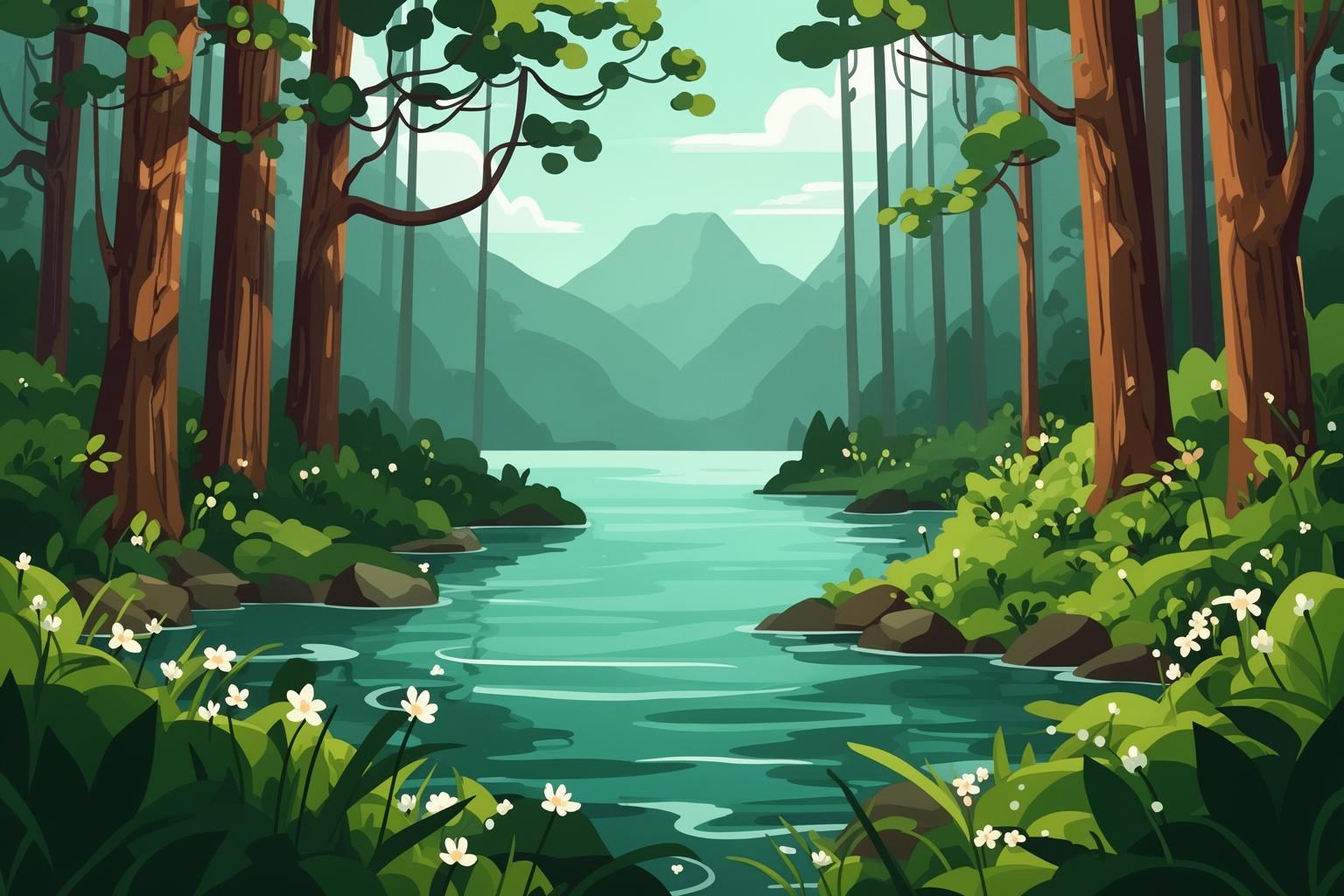
There are places on this earth that seem older than time itself, where the very air feels thick with memory and myth. Yakushima, a subtropical gem floating south of Kyushu, is one such place. Stepping foot here brings an immediate and profound shift in awareness. The world of concrete and commerce fades away, replaced by a symphony of green so vibrant and diverse it seems to hum with life. This is the primordial heart of Japan, a sanctuary of existence that served as the direct and unmistakable inspiration for the expansive, sacred forests of Princess Mononoke. The film’s central theme—the clash between the relentless advance of human industry and the unyielding power of nature—is not merely a story device, but the reality of Yakushima itself, a place where humanity has long learned to live in harmony with forces far greater than itself.
The Whispering Giants of the Forest
The spirit of Yakushima lives in its ancient cedar trees, the yakusugi. These are not just trees; they are living monuments, forest titans whose ages are measured in millennia rather than centuries. Walking among them is a lesson in humility. Their bark is gnarled and twisted into extraordinary shapes, blanketed in thick carpets of mosses, ferns, and small saplings that create entire ecosystems on their surfaces. The most renowned among them is Jomon Sugi, a colossal figure estimated to be between 2,000 and 7,200 years old. The trek to see it is strenuous, a full-day journey along old logging paths and steep mountain trails, yet it is a pilgrimage within a pilgrimage. Standing before it connects you to a truly ancient past, a time when the world was young and wild. However, the true essence of Princess Mononoke is found not just in this single giant, but in the collective presence of the entire forest. It dwells in the way sunlight filters through the dense canopy, casting ethereal beams that brighten the continually moist forest floor. It lives in the sound of flowing water, a constant companion from trickling streams and cascading waterfalls that carve through granite bedrock. This is a world awash with life, and you can sense the presence of the kodama, the little tree spirits, in every rustle of leaves and each drop of dew.
Walking into the Frame: Shiratani Unsuikyo
For those seeking the closest visual reflection of the film, Shiratani Unsuikyo Ravine is the place to go. This part of the forest is so intimately linked with the movie’s aesthetic that a section of it has been nicknamed Mononoke Hime no Mori, or “Princess Mononoke’s Forest.” This is no marketing ploy; it is a statement of truth. As you explore the intertwined trails, crossing moss-covered bridges and scrambling over huge, lichen-draped boulders, you are quite literally walking through Miyazaki’s sketchbook. The ground is a mosaic of emerald and jade, with mosses so thick they feel like velvet cushions. Ancient, twisted roots, resembling the sinewy limbs of mythical creatures, stretch across the path. The air is cool and laden with the scent of damp earth and decaying wood—the aroma of life and death fused in a continuous, beautiful cycle. Here, you come to understand the Forest Spirit, the Shishigami, not as a being, but as the embodiment of the forest’s very life force. When the mist rolls in, as it so often does, the world dissolves into blurred shapes and softened sounds, and the boundary between reality and animation simply vanishes.
Practical Passage to the Ancient World
Reaching this mystical island takes some preparation. The most common ways are via high-speed ferry or a short flight from Kagoshima, located at Japan’s southern mainland tip. Once on the island, renting a car is highly advised, since public transportation is infrequent and doesn’t reach all trailheads. Visiting Yakushima is far from a casual stroll. The terrain is tough and the weather notoriously unpredictable; locals joke it rains “35 days a month.” Sturdy, waterproof hiking boots, dependable rain gear, and layered clothing are not optional—they are necessities. For demanding hikes like the one to Jomon Sugi, hiring a local guide is a wise choice. Guides not only ensure your safety but also greatly deepen your experience by sharing their insights into the island’s unique plants, animals, and history. The best seasons to visit are spring and autumn when the weather is steadier and the trails less crowded. But whenever you go, go with reverence. This UNESCO World Heritage site is a living, breathing sanctuary that commands respect from all who enter.
The Gentle Port: Tomonoura, Where Ponyo Found Her Home
From the primal, untamed wilderness of Yakushima, our journey leads us to a place of gentle tides and quiet reflection: the small port town of Tomonoura in Hiroshima Prefecture. If Yakushima represents the heart of the wild, Tomonoura embodies the soul of nostalgia. This picturesque fishing village, nestled within a crescent-shaped harbor on the Seto Inland Sea, feels as though time has slowed to a gentle, lapping rhythm. It was here that Hayao Miyazaki lived for two months in 2005, residing in a small house overlooking the sea, soaking in the town’s character and allowing its spirit to infuse his imagination. The result was Ponyo, a film that perfectly captures the town’s whimsical charm, its deep bond with the sea, and its warm sense of community.
A Town Preserved in Amber
Strolling through Tomonoura feels like stepping into a flawlessly preserved Edo-period woodblock print. The town’s layout is a maze of narrow, winding alleys, bordered by traditional wooden buildings with their characteristic dark-stained facades and tiled roofs. The harbor, the town’s pulsing heart, remains much as it was centuries ago. It is a place of both function and beauty, where small fishing boats gently bob on the tide and weathered fishermen repair their nets. The iconic symbol of the port is the Joyato lighthouse, a stone structure dating back to the Edo period that once guided ships safely into the bay. As you walk along the circular sea wall, which inspired the geography of Ponyo’s cliffside home, you can see how every detail of the town was lovingly translated into the film. The clustered rooftops, the houses that appear to cling precariously to the hillside, the small boats drifting in and out of the harbor—all of it is present. The atmosphere is one of profound peace, punctuated by the cry of gulls and the distant hum of a boat engine. It’s a place that invites you to slow down, sit by the water, and simply watch the tide ebb and flow.
Finding Ponyo in the Details
The magic of Miyazaki’s vision lies in the fact that he didn’t merely replicate the town’s appearance; he captured its spirit. The house where Sosuke lives in the film is a blend of several clifftop homes in Tomonoura, but the sensation of being perched high above the ocean, with the sea as a constant, living presence, is perfectly conveyed. You can climb the steep stone steps to the Iou-ji Temple, not only for a breathtaking panoramic view of the harbor but also to experience that same sense of elevation and perspective. The film’s vibrant underwater world, teeming with life both real and imagined, is a fantastical echo of the Seto Inland Sea itself, a body of water historically renowned for its rich marine biodiversity. The local cuisine, naturally centered around fresh seafood, provides a literal taste of the film’s setting. Enjoying a meal of tai-meshi (sea bream with rice), a regional specialty, at a restaurant overlooking the harbor is an experience that connects you directly to the town’s maritime culture. Tomonoura reveals its secrets gradually. They lie in the small details: a moss-covered stone lantern, the intricate pattern of a roof tile, the friendly nod of a local shopkeeper. These are the elements Miyazaki noticed and wove into his tender tale of a girl from the sea.
A Port Waiting for the Tide
From a historical standpoint, Tomonoura’s preservation is an intriguing quirk of geography and economy. For centuries, it was a vital port of call for ships navigating the Inland Sea, known as a shiomachi no minato, a harbor where vessels waited for the tide. Sailing ships would anchor here to await favorable currents before continuing east or west. This historical function contributed to its prosperity and culturally rich landscape. However, with the rise of steamships and modern navigation, the need to wait for the tide disappeared, and Tomonoura was largely bypassed by the rapid industrialization that transformed much of Japan. This economic stagnation turned out to be its greatest cultural advantage, preserving its unique charm for future generations—and for one very perceptive animator. Getting to Tomonoura is easy; it is a short bus ride from Fukuyama Station, a major stop on the Sanyo Shinkansen line. While a day trip is feasible, to truly absorb its tranquil atmosphere, an overnight stay in one of the town’s traditional ryokans is highly recommended. It allows you to experience the port in the soft morning light and the quiet calm of evening, just as Miyazaki did.
The Artist’s Sanctum: The Ghibli Museum and Park
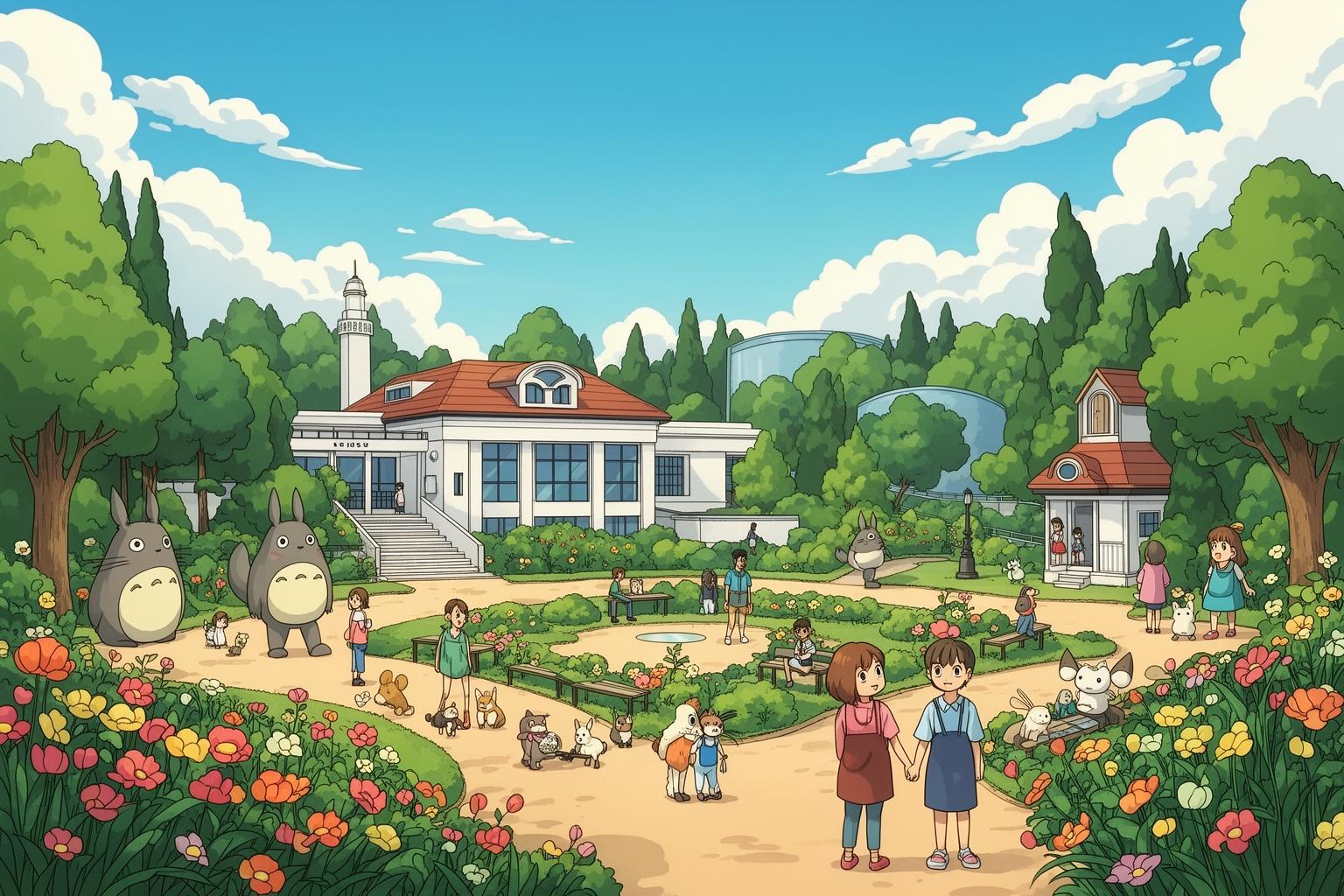
While Japan’s landscapes provide the raw, natural inspiration for Ghibli’s worlds, there are also locations where the studio’s magic has been carefully crafted and given physical form. These sites are not merely art repositories but living, breathing extensions of the films themselves, created with the same playful spirit and meticulous attention to detail. The Ghibli Museum in Mitaka, Tokyo, and the newly opened Ghibli Park in Aichi Prefecture serve as official sanctuaries for fans, offering an opportunity to step not only into the inspiration behind the films but into the very core of the Ghibli universe.
The Maze of Dreams: Ghibli Museum, Mitaka
The Ghibli Museum offers an experience that begins even before you enter. Nestled in a quiet corner of lush Inokashira Park, the building itself is a whimsical creation of winding staircases, hidden doorways, and a beautiful rooftop garden guarded by a solitary, life-sized robot soldier from Castle in the Sky. The museum’s motto, “Let’s get lost together,” invites visitors to abandon linear thinking and embrace a childlike curiosity. There is no fixed route to follow; instead, guests are encouraged to wander, explore, and discover its treasures at their own pace. The ground floor highlights the history and science of animation, featuring incredible exhibits such as a stunning three-dimensional zoetrope that brings characters to life in a dizzying, magical display of motion. Climbing the spiral iron staircase leads to rooms that replicate the artists’ studios, with desks cluttered with books, sketches, and pigments, offering a rare insight into the beautifully chaotic creative process. For many, the highlight is the magnificent Catbus from My Neighbor Totoro, a plush, life-sized model that children (and only children, much to the eternal chagrin of adults) are invited to climb inside. The museum also houses the Saturn Theater, which screens exclusive short films unavailable anywhere else in the world. The entire space is a testament to the philosophy that the creative process is just as magical as the final product. However, a crucial warning is necessary: entry is a privilege, not guaranteed. Tickets are not sold at the door and must be purchased online, typically on the 10th of each month for entry the following month. Competition is fierce, and tickets sell out within minutes. This is the first and most important step of your pilgrimage to this special sanctuary; plan carefully and be ready the moment sales open.
A World Without Rides: Ghibli Park
If the museum offers an intimate glimpse into the creator’s mind, Ghibli Park is a vast invitation to live within the creations themselves. Situated within the Expo 2005 Aichi Commemorative Park near Nagoya, this is not a conventional theme park. There are no roller coasters or thrill rides. Instead, the park consists of immersive areas meticulously designed to recreate the worlds of the films with stunning accuracy. The experience focuses on discovery, interaction, and the feeling of truly stepping through the screen. Ghibli’s Grand Warehouse, the park’s central hub, is a spacious indoor area filled with interactive exhibits, including recreations of iconic scenes like the train ride from Spirited Away, where visitors can sit beside No-Face, and Yubaba’s formidable office. The Hill of Youth invites fans of Whisper of the Heart to explore a faithful replica of the Chikyu-ya antique shop, while Dondoko Forest welcomes visitors to Satsuki and Mei’s house from My Neighbor Totoro, a lovingly constructed home that feels as if the family just stepped outside for a moment. Unlike the museum, the park is a much larger, more expansive project, with tickets sold separately for each main area, again requiring advance reservation. It represents a new phase in the Ghibli pilgrimage, evolving from observing the magic to actively engaging with it. It’s a place to live out your cinematic dreams, to sit on an authentic bench from a beloved film, and to experience the tangible reality of these animated worlds.
Echoes in the Every-Day: Finding Ghibli in Rural Japan
Beyond the well-known, celebrated sites of Yakushima and Tomonoura lies a wider landscape that forms the atmospheric essence of many Ghibli films. This is the realm of the satoyama, a Japanese term referring to the border zone between mountain foothills and arable flatlands. It is neither wilderness nor city; rather, it is the traditional, carefully managed countryside where people have lived in harmony with nature for centuries. This scenery—featuring terraced rice paddies ascending hillsides, small farming villages nestled in valleys, and dense forests dotted with modest Shinto shrines—is the quintessential backdrop for films like My Neighbor Totoro and Only Yesterday. It visually embodies furusato, a deeply significant Japanese concept that roughly translates to “hometown” but carries a strong emotional resonance of nostalgia and yearning for a simpler, rural past.
The Scenery of Childhood
Hayao Miyazaki and Isao Takahata grew up during and after World War II, a period when the satoyama landscape was still a dominant element of Japanese life. Their films, especially My Neighbor Totoro, are infused with a deep affection for this environment. The film’s setting in the Sayama Hills of Saitama Prefecture exemplifies this perfectly. While visitors can explore the area and even find a Totoro-themed forest, the real magic is that this landscape exists throughout rural Japan. The film’s power lies in its universality. Towering camphor trees, small wooden bus stops along dusty country roads, irrigation canals filled with small fish, and hidden shrines dedicated to local deities—these elements create a shared image of Japanese childhood. To discover this Ghibli world, simply take a local train from a major city into the countryside, rent a bicycle to pedal along paths dividing rice fields, follow a small trail into the woods, and uncover a forgotten shrine. Here lies the spirit of Totoro—in the warmth of a summer afternoon, the hum of cicadas in the air, and the sense that if you look closely enough, something wonderful might be hiding just beyond the edge of the forest.
A Nostalgia for What Was Lost
From a historian’s perspective, the Ghibli-like vision of the countryside also serves as a powerful social commentary. Studio Ghibli’s films, particularly those by Isao Takahata such as Only Yesterday, often explore the tension between this idealized rural past and the relentless push of modern urban life. Japan’s post-war economic boom came at a cost, leading to massive urbanization and the gradual erosion of the satoyama way of life. Thus, these films are not merely celebrations of nature; they act as preservation efforts, capturing a lifestyle and landscape that were beginning to vanish. They evoke a nostalgia that is both personal and national. For international visitors, understanding this context adds a profound depth to the experience of traveling through rural Japan. When you see an elderly farmer tending a small plot of land or a beautifully preserved traditional farmhouse (minka), you witness the living embodiment of values championed by Ghibli: hard work, community, and a deep, enduring respect for nature’s cycles. To seek the Ghibli experience, then, is to seek out these pockets of tradition, support rural communities, and appreciate the quiet beauty of a landscape that has inspired some of the world’s most beloved art.
A Traveler’s Guide to the Ghibli Universe
Embarking on a Ghibli pilgrimage is a journey that stretches across Japan, from the bustling metropolitan life of Tokyo to the subtropical wilderness of its southern isles. It demands more than just a map; it calls for a particular mindset, a style of travel that reflects the patient and observant artistry of the studio itself. This experience is not about checking off a list of locations but about immersing yourself in the atmospheres that inspired cinematic brilliance.
Charting Your Course: Itinerary Planning
Linking these varied inspirations requires careful logistical planning. A possible grand tour might start in Tokyo, serving as the base for a well-organized visit to the Ghibli Museum in Mitaka. From there, the Shinkansen bullet train can swiftly take you to Nagoya, the gateway to Ghibli Park. Continuing westward on the Shinkansen to Fukuyama offers access to the coastal allure of Tomonoura. The final stretch of this remarkable journey leads further south to Kagoshima, the departure point for ferries and flights heading to the ancient forests of Yakushima. Such an extensive trip is a considerable undertaking, typically spanning two to three weeks. For those with limited time, concentrating on a particular region—such as a Kanto-focused trip centered around the museum and the Totoro Forest, or a western Japan itinerary combining Tomonoura and Yakushima—provides a more manageable option. Using a Japan Rail Pass can be an economical choice for navigating the vast train network, granting flexibility and convenience for long-distance travel across the main islands.
The Art of Observation: A Ghibli Mindset
More crucial than any itinerary is the perspective you choose to adopt. Studio Ghibli films are renowned for their “pillow shots”—quiet, contemplative moments where the camera dwells on environmental details: raindrops on a leaf, the texture of a stone wall, steam rising from a bowl of noodles. This is the mindset to embrace. As you travel, train yourself to notice the small details. Watch the way moss blankets a stone lantern in a temple garden. Listen to the unique sound of a stream flowing over rocks in Yakushima. Feel the texture of the weathered wooden planks on a Tomonoura pier. This is the art of ma, the Japanese concept of negative space or interval, vital to the rhythm and emotional depth of Ghibli films. The magic often lies not in grand vistas but in modest, overlooked particulars. Slow your pace. Put your phone away for a while. Sit on a bench and simply observe the world going by. By cultivating this patient and appreciative gaze, you’re not just seeing the sights; you’re viewing the world through an animator’s eyes, uncovering the profound beauty in the ordinary that defines Ghibli’s art.
Seasonal Whispers: When to Visit
Japan’s four distinct and beautiful seasons each offer a unique perspective on these cherished sites. Spring, with its iconic cherry blossoms, brings a delicate, fleeting beauty to landscapes ranging from the parks around the Ghibli Museum to the hills above Tomonoura. Autumn is equally stunning, setting forests ablaze with fiery reds, oranges, and golds, offering a breathtaking backdrop for hiking in Yakushima or strolling through Aichi Expo Park. Summer presents vibrant, intense greenery but also brings heat, humidity, and the rainy season, which can complicate outdoor activities, especially in the south. Winter offers a stark, tranquil charm with fewer crowds, though it may be too cold for extensive hiking in mountainous areas. For Yakushima in particular, the shoulder seasons of spring and autumn are ideal, balancing comfortable hiking weather with lush scenery. Ultimately, there’s no wrong time to visit, as each season reveals a different side of the Ghibli world, reflecting how the films themselves capture the passage of time and the beauty of nature’s cycles.
The Enduring Magic of Place
To travel through the real-life landscapes of Studio Ghibli is to realize that the magic of these films is not created out of thin air. It is grounded in the earth, the water, and the deep cultural memory of Japan. These places—Yakushima, Tomonoura, and the tranquil satoyama countryside—are not mere film sets to be visited and photographed. They are living, breathing beings, carrying their own histories, spirits, and stories to share. The pilgrimage becomes a dialogue between the art and its source, showing how a twisted root system can transform into the arm of a forest god, or how the gentle curve of a harbor can hold a tale of friendship between a boy and a fish-girl.
This journey shows that Hayao Miyazaki is as much a naturalist and historian as he is an animator. His work stands as a powerful act of translation, interpreting the language of the wind, trees, and tides into a visual form that resonates with a global audience. By following these paths, we are not merely chasing the shadows of beloved characters. We are connecting with the profound love and respect for nature, the nostalgia for a vanishing way of life, and the deep belief in the power of wonder that remain the central themes of his art. The greatest reward of this pilgrimage is not a photograph that perfectly matches a movie scene, but the quiet moment of understanding when you sense that spirit yourself—a true Ghibli moment, experienced not on a screen, but in the heart of the Japanese landscape.