
There’s a feeling that threads itself through our lives, a phantom sense of longing for a person we’ve never met, a place we’ve never been. It’s the whisper of a name on the tip of your tongue, a dream that dissolves upon waking, leaving behind only an ache of loss. This is the very soul of Makoto Shinkai’s masterpiece, “Your Name” (Kimi no Na wa), a film that captured the world not just with its breathtaking animation, but with its profound understanding of this universal human experience. It tells a story of two souls, Taki in bustling Tokyo and Mitsuha in the tranquil countryside, bound by a mysterious connection that transcends time and space. The film’s magic, however, isn’t spun purely from fantasy. It is anchored, deeply and beautifully, in the real-world landscapes of Japan. For those of us who felt our hearts resonate with Taki and Mitsuha’s search, Tokyo ceases to be just a city. It becomes a map of their memories, a tangible world where we can walk in their footsteps. This is the essence of a seichi junrei, a pilgrimage to the sacred sites of a beloved story. It’s a journey to bridge the gap between the world on the screen and the world beneath our feet, to see if the magic still lingers in the air. So, let’s embark on this quest together, to find the places where a fictional love story became so real it felt like our own forgotten memory.
This quest is part of a larger tradition of anime pilgrimage, where fans travel to the real locations that inspired their favorite stories.
The Heart of the Connection: The Iconic Steps of Suga Shrine
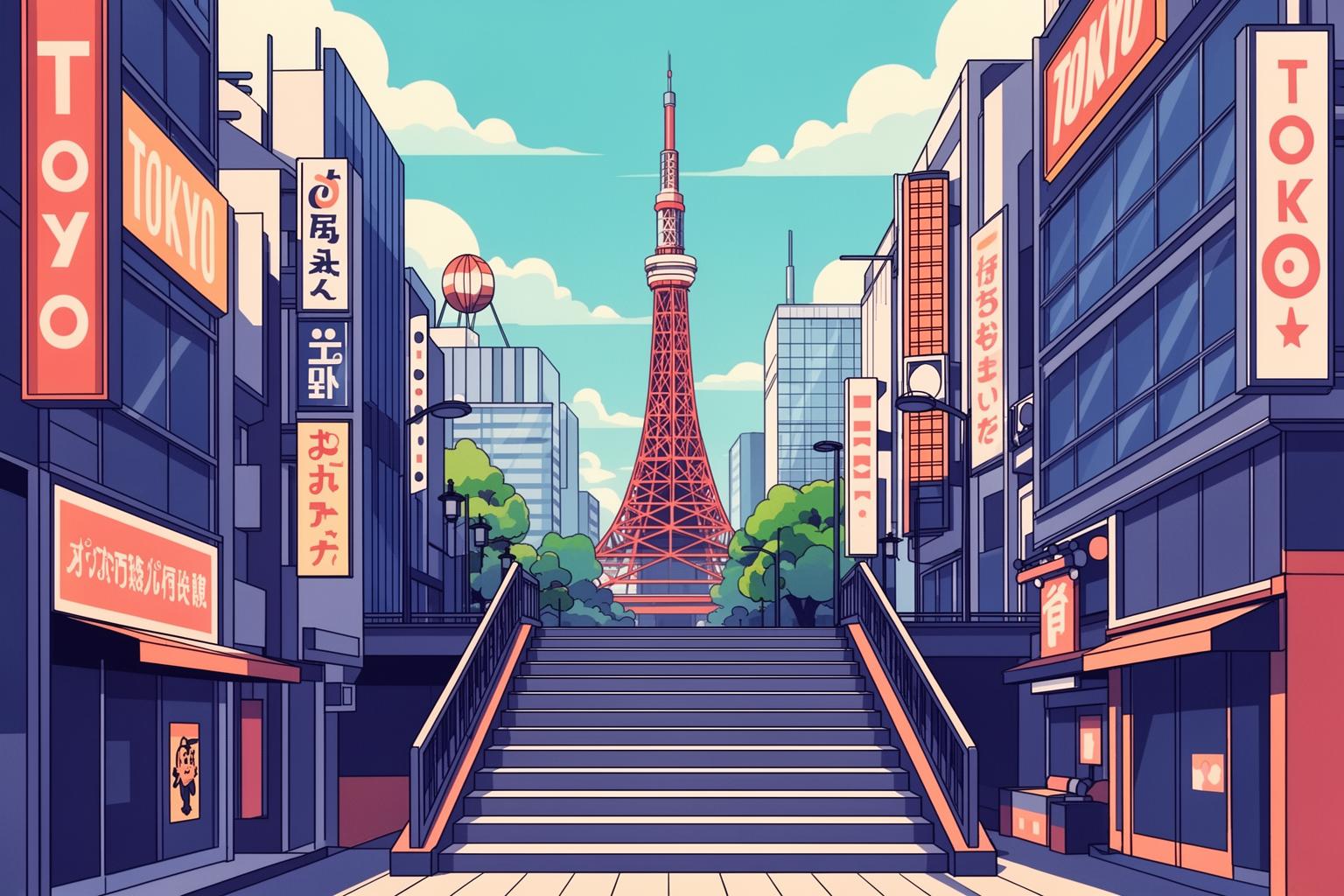
Our pilgrimage does not start in the neon-lit core of Shinjuku but rather in the quiet, modest neighborhood of Yotsuya. The journey itself forms an essential part of the experience. As you leave the station and meander through the maze-like residential streets, the city’s roar softens into a gentle murmur. You pass by small family-run shops, see locals cycling by with groceries, and sense the steady rhythm of everyday life. There’s a deep sense of normalcy here that makes what lies ahead all the more remarkable. It feels less like approaching a famous landmark and more like returning to a half-remembered dream.
A Stairway to a Fading Dream
Then, suddenly, you see it. Turning a corner, the view opens up, and your breath catches. The Suga Shrine steps come into sight—immediately and powerfully familiar. The iconic red handrail slices sharply against the muted city tones, the steep slope, and the buildings framing the sky at the bottom—it’s the climactic poster art of the film brought vividly to life. Standing at the top looking down, you can almost feel the frantic energy of Taki’s climb. From the bottom gazing upward, you sense Mitsuha’s hopeful hesitation. This place is charged with cinematic energy, an emotional vortex where years of longing and searching converge. The air feels different here—thick with unspoken questions. What are you seeking? Who are you looking for? The scene is so faithfully recreated that the boundary between animation and the tangible world dissolves. You are no longer just a visitor; you become part of the story. This spot is the living embodiment of musubi, the Shinto concept of connection and the binding of threads that Shinkai masterfully weaves throughout the film. It’s the intertwining of two timelines, two lives, right here on this stone stairway. At the top, the real Suga Shrine, a peaceful and charming local shrine, waits silently—a quiet reminder of the deep cultural and spiritual roots grounding this modern fairy tale.
How to Experience the Moment
To fully embrace the atmosphere of the Suga Shrine steps, timing is key. An early morning visit offers soft, ethereal light and a profound stillness, giving you the space almost to yourself. The late afternoon golden hour bathes the scene in a warm, nostalgic glow that perfectly echoes the film’s aesthetic. This is when shadows lengthen and the city seems to exhale, creating an ideal setting for photography. When taking your photos, try to capture not only the iconic wide shot but also the details: the stone’s texture, how the light catches the red railing, and the glimpses of the city framed by the buildings. Most importantly, be considerate. This is a quiet residential area. Keep your voice low, avoid blocking paths used by locals, and remember you are a guest in their daily lives. After your cinematic moment, climb the final steps to visit the Suga Shrine itself. Offering a small prayer feels like a fitting way to honor the spirit of connection that brought you here.
Urban Landscapes as Canvases: Shinjuku and Beyond
If the steps of Suga Shrine symbolize the destined, emotional core of “Your Name,” then Shinjuku represents its chaotic, vibrant, and expansive body. This is Taki’s realm, a concrete symphony of towering skyscrapers, cascading neon signs, and a ceaseless flow of people. To understand Taki is to grasp the energy of this place—the ambition, the crowd’s loneliness, and the urban sublime’s beauty.
The Pulse of Taki’s World: Shinjuku’s Concrete Symphony
Visiting Shinjuku to retrace the film’s locations isn’t about pinpointing one spot but about immersing yourself in the atmosphere. It’s about standing at the massive intersection before the Shinjuku Police Station and feeling the city’s heartbeat. It’s about looking up to see the distinctive, web-like structure of the Mode Gakuen Cocoon Tower slicing through the sky—a landmark defining Taki’s skyline. Shinkai, a master of hyper-realism, reveals his genius here. He doesn’t merely animate buildings; he brings to life the light glistening on rain-soaked pavement, the lens flare from countless signs, and the intricate dance of headlights and train lights streaking across the evening. Walking through Shinjuku at night is like stepping directly into a Shinkai film. The city itself becomes the protagonist, a living entity that is both daunting and stunningly beautiful. It’s in this environment that you realize Taki’s life—spent juggling part-time jobs and navigating this urban labyrinth—is sharply contrasted with Mitsuha’s rural world, making their connection all the more extraordinary.
A Bridge Between Worlds: Shinanomachi Station
Just a brief train ride from Shinjuku’s intensity lies another vital yet quieter spot: the pedestrian bridge just outside Shinanomachi Station. Here, after his date with coworker Okudera-senpai, Taki looks down at his phone and senses his bond with Mitsuha slipping away. The bridge is a liminal space, a place of transition. It physically spans the train tracks, a powerful, recurring motif in Shinkai’s films symbolizing journeys, time, and the parallel paths people follow. Standing on this bridge, you can watch the JR Chuo-Sobu line trains glide beneath, just as depicted in the movie. It’s a contemplative place where the roar of passing trains punctuates the relative calm, reflecting Taki’s internal turmoil and dawning realization. Here he begins to consciously grasp the depth of his feelings and the fear of losing something precious. For a pilgrim, this bridge offers an opportunity to pause and reflect on the film’s subtler emotional moments, away from its grand, dramatic scenes.
A Practical Guide to Shinjuku’s Sights
Navigating Shinjuku Station can be an experience unto itself—it’s one of the world’s busiest transport hubs. To orient yourself, head for the West Exit for a great view of the Cocoon Tower and the area near the Shinjuku Police Station. The South Exit provides access to bustling main streets and leads toward areas with spectacular nighttime views. While exploring, don’t miss Yotsuya Station, the meeting spot for Taki and Okudera-senpai. Its distinctive, old-fashioned red brick design stands out as another perfectly recreated element from the film. The best way to experience Taki’s Shinjuku is to arrive late afternoon and stay after sunset. Watching the city transform as a million lights switch on is an unforgettable experience that makes you feel as if you’ve stepped right through the screen.
Moments of Quiet Reflection: Cafes and Museums
While “Your Name” unfolds through grand destinies and cosmic events, it is equally a tale shaped by small, intimate moments: a shared meal, a quiet conversation, a meaningful glance across a room. Some of the most unforgettable scenes take place not amidst epic landscapes, but within warm, inviting interiors where the characters’ relationships are free to grow and evolve.
A Date with Possibility: The National Art Center, Tokyo
Located in the chic district of Roppongi, the National Art Center, Tokyo stands as a stunning architectural marvel and serves as the backdrop for Taki’s much-anticipated date with Okudera-senpai. The building itself, with its flowing glass facade, is a masterpiece. Inside, the interplay of light and space is breathtaking. A key spot for fans is the Salon de Thé Rond, a café perched atop a massive inverted concrete cone in the atrium. Sitting there, you are literally immersed in the film. The design is so unique and faithfully recreated that it feels surreal. This setting is more than a mere backdrop; its modern, sophisticated, and slightly detached atmosphere perfectly mirrors the mood of Taki’s date. It’s a beautiful moment, yet Taki’s attention clearly drifts, his thoughts and heart wandering towards Itomori and Mitsuha. The surrounding art speaks of creation and interpretation, much like Taki’s attempt to make sense of the strange new feelings and memories emerging within him. Visiting the center and enjoying a coffee in that very spot offers a chance to experience a refined side of Tokyo and appreciate both the artistry of the museum and Shinkai’s vision.
The Part-Time Hustle: Cafe La Bohème
The Italian restaurant where Taki works part-time, called “Il Giardino delle Parole” in the film—a nod to Shinkai’s other work, “The Garden of Words”—is modeled after the real Cafe La Bohème near Shinjuku Gyoen National Garden. Stepping inside feels like entering another era. With soaring ceilings, ornate chandeliers, dark wood, and theatrical décor, the restaurant exudes a grand, almost operatic ambiance. It’s far more glamorous than one might expect for a student’s part-time job, but this touch of fantasy is quintessentially Shinkai. This is where we witness Taki’s daily routine, his interactions with friends, and the development of his crush on Okudera-senpai. It grounds his Tokyo life in a tangible rhythm. For visitors, it offers a wonderful chance not just to see the location but to live it: sitting down, ordering a meal, and soaking in the atmosphere while imagining the hustle and bustle of Taki’s shifts.
Planning Your Cultured Detour
If you plan to visit The National Art Center, Tokyo, keep in mind that it is closed on Tuesdays. Checking the current exhibition schedule online is advisable, as your admission may be tied to specific galleries. The Salon de Thé Rond is very popular, so you might have to wait for a table, but the view is definitely worth it. For Cafe La Bohème near Shinjuku Gyoen, making a reservation is highly recommended, especially for dinner. Its close proximity to Shinjuku Gyoen—a main setting for “The Garden of Words”—is a delightful bonus. Fans of Shinkai’s broader filmography can easily combine these pilgrimages into a single, beautiful, reflective afternoon, moving gracefully from one beloved story to another.
Weaving Your Own Narrative: A Pilgrim’s Path
A seichi junrei for “Your Name” is much more than merely a scavenger hunt to check off locations. It offers an interactive and emotional experience. It reveals how the real world shapes the fictional, and how the fictional, in turn, adds a new layer of meaning and magic to real places. It’s about pursuing that sense of déjà vu that the film so expertly captures.
Beyond a Simple Checklist
As you stroll these streets, the story begins to weave itself into your own memory. The Suga Shrine steps become more than just stairs; they turn into a symbol of hope and reunion. The Shinanomachi bridge is no longer simply a walkway; it represents quiet heartbreak and determination. This journey taps into something profoundly human. Coming from a background deeply interested in the cultural ties that connect East Asia, the film’s theme of musubi resonates with a similar concept called yuanfen (缘分) in Chinese culture. It’s the notion of a binding, fateful force—a serendipitous connection that brings people together regardless of distance. Viewing these physical sites, you understand they serve as anchors for this invisible thread. They are tangible evidence that even in a sprawling city, two people can find each other. The pilgrimage turns you from a passive observer into an active seeker.
A Recommended Itinerary for the Devoted Fan
For those wishing to experience the heart of the pilgrimage in a single, immersive day, a carefully planned route is key. Begin your morning in Yotsuya. Get off at Yotsuya Station, take a moment to appreciate its architecture, then start a reflective walk toward the Suga Shrine steps. Enjoy the neighborhood’s quiet atmosphere. From there, it’s a brief, pleasant walk to Shinanomachi Station to visit the pedestrian bridge. Next, catch a train to Roppongi for an afternoon at The National Art Center. After soaking in the art and taking a break at the iconic café, head by train to Shinjuku as evening falls. Spend the rest of your night exploring the vibrant core of Taki’s world. Let the crowds and lights carry you away. For dinner, stop by Cafe La Bohème Shinjuku Gyoen for a perfect, comforting conclusion to a day spent wandering through memories.
Key Tips for a Smooth Pilgrimage
First, wear your most comfortable walking shoes. You’ll be covering a lot of ground and want to enjoy the journey without foot discomfort. Having a prepaid IC card like Suica or Pasmo is essential for easily hopping on and off Tokyo’s highly efficient train network. While a map app on your phone helps with navigation, don’t hesitate to put it away now and then. Allow yourself to wander, get slightly lost, and uncover the little details that bring these neighborhoods to life. Lastly, always be considerate. These are not movie sets but real public spaces and private homes. Be respectful when taking photos, keep your voice low in residential and quiet areas, and honor the people whose everyday lives form the real-world backdrop of this beloved story.
Beyond the Frame: The Enduring Magic of “Your Name”
As your day of pilgrimage draws to a close, standing amid the dazzling chaos of Shinjuku, you may find yourself viewing the city with fresh eyes. The once anonymous crowds no longer feel so anonymous. In every face, there is a story. In every fleeting encounter, a universe of possibility. This is the greatest gift of a pilgrimage for “Your Name.” It doesn’t simply bring you closer to a film; it brings you closer to the world around you. Makoto Shinkai’s true brilliance lies in his ability to uncover the extraordinary within the utterly ordinary. He reveals that a simple stairway, a pedestrian bridge, or a bustling intersection can all serve as stages for the most profound moments of our lives. The journey deepens your appreciation not only for the film’s incredible artistry and emotional depth but also for Tokyo itself. The city becomes a character you know intimately. You’ve wandered its quiet streets and its roaring avenues. You’ve felt its pulse. And as you make your way home, you carry with you not just photographs, but a feeling—the warm, hopeful, and lasting belief that somewhere out there, we are all searching for our own connection, chasing the memory of a person whose name we have yet to learn.