
Have you ever felt it? That strange, persistent tug of nostalgia for a place you’ve never been, a memory that isn’t yours. It’s a feeling that resonates at the very core of Makoto Shinkai’s breathtaking masterpiece, ‘Your Name.’ (Kimi no Na wa). The film doesn’t just tell a story; it paints an emotional landscape where the bustling, hyper-modern city of Tokyo becomes as vital a character as its star-crossed protagonists, Taki and Mitsuha. For fans across the globe, the film’s painstakingly rendered backdrops have transformed from mere animation cells into destinations, creating a modern-day pilgrimage known in Japan as ‘seichi junrei.’ This isn’t just about sightseeing; it’s about stepping through the screen and into a world that felt impossibly real, a journey to find the tangible heart of a story that touched millions. It’s a quest to stand in the exact spots where cinematic lightning was captured, to feel the city’s rhythm, and perhaps, to listen for a name you don’t yet know. Your journey into the world of ‘Your Name.’ begins here, in the heart of a city that holds the threads of a fate-altering tale.
Immerse yourself further in the magic of cinema by exploring the real-life Tokyo locations that provided a vivid backdrop for the film’s journey.
The Red Steps of Fate: Suga Shrine in Yotsuya
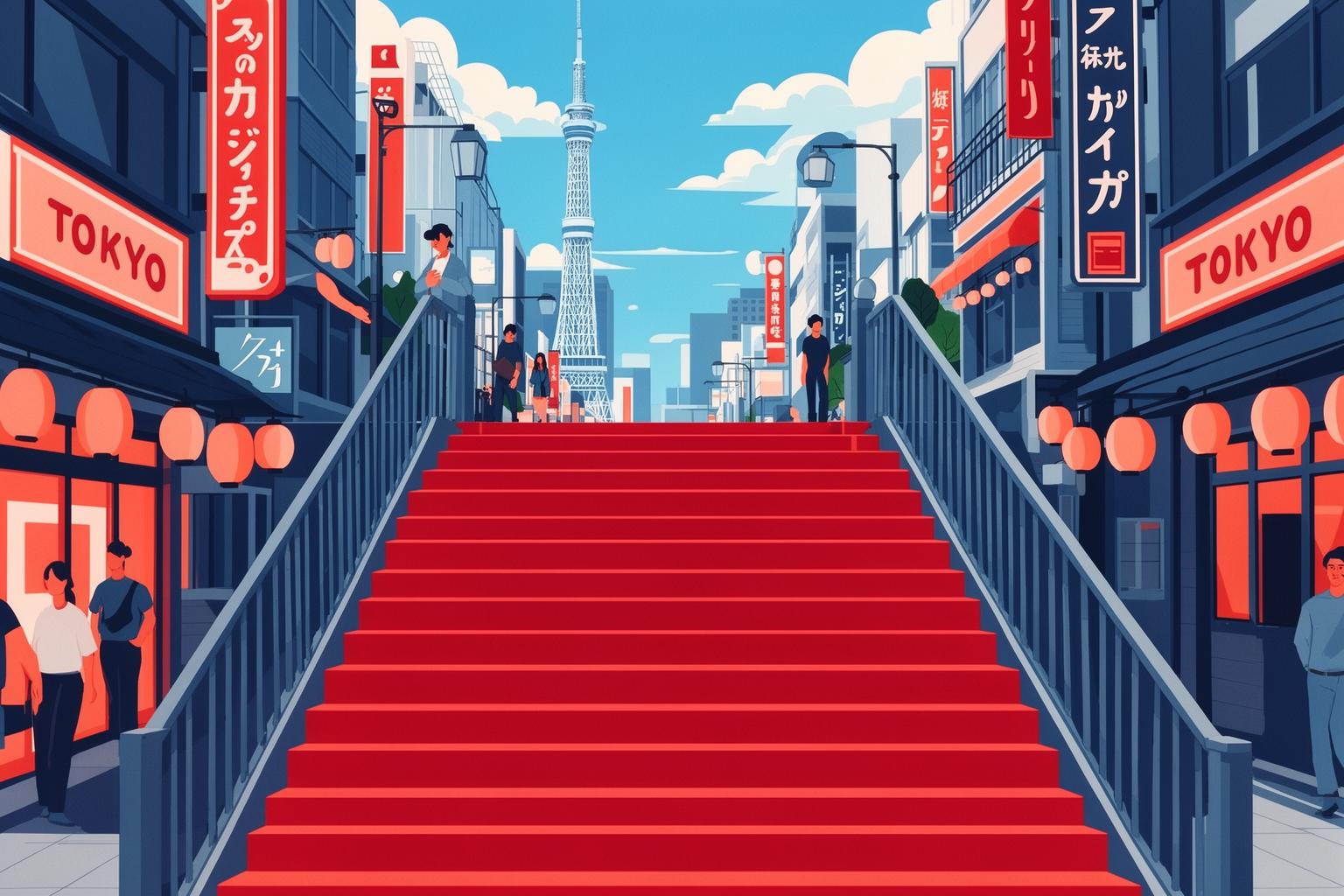
The emotional climax of Your Name. is forever immortalized in a simple, unassuming staircase. Nestled in a quiet residential area of Yotsuya, the red-railed steps ascending to Suga Shrine serve as the film’s most hallowed ground. It is here that Taki and Mitsuha, years after their memories have faded into a dream, finally reunite. The path to this spot feels like a pilgrimage in itself. Emerging from Yotsuya-Sanchome Station, you weave through narrow streets, far removed from the neon lights of Shinjuku. The neighborhood is serene, filled with the gentle rhythm of everyday life. Then, rounding a corner, there it appears. The scene aligns so perfectly with the film’s iconic poster that it briefly blurs the boundary between fiction and reality. The steep incline, the vermilion handrails, the greenery-covered wall on one side, and the city skyline peeking through on the other—all are exactly as depicted.
Standing at the base and gazing upward, you can almost hear their hearts pounding and feel the desperate hope in their quest. The atmosphere is imbued with a quiet reverence. You’ll encounter other fans, some recreating the famous shot, others quietly reflecting. Yet, the spot maintains its local charm. Residents walk dogs, children ride bicycles past, and life continues—a beautiful reminder that this magical place exists within the real world. For the best experience, visit on a weekday morning. The soft light streams through the buildings, and the relative calm allows you to fully absorb the moment without the weekend crowds. Remember to be respectful; this is a residential area and a pathway to an active shrine. Speak softly, be considerate of residents, and avoid lingering on the stairs for extended periods. Your aim is not only to capture a photo but to feel the connection that makes this staircase one of the most cherished locations in modern anime history.
The Pulse of the Metropolis: Taki’s Shinjuku
If the stairs at Suga Shrine symbolize the story’s core, then Shinjuku represents its vibrant heartbeat. This vast, lively ward is Taki’s home ground, with its landmarks intricately tied to his everyday life. Exploring this neighborhood is like following in his footsteps, seeing the city through his perspective—a dazzling, overwhelming, and endlessly captivating concrete jungle. The immense scale, the towering skyscrapers, and the streams of people flowing through the streets are rendered with stunning precision by Shinkai.
A Skyline Defined by a Spire
Throughout the film, one particular building stands out against the Tokyo skyline: the NTT Docomo Yoyogi Building. Its distinctive clock-tower-like spire makes it an unmistakable landmark. While you cannot enter it, one of the best spots to capture its cinematic presence is from the pedestrian bridge near Shinanomachi Station. From here, you can see train tracks curving below and the tower rising majestically in the distance, a view directly lifted from the film. This scene beautifully represents the dynamic relationship between urban infrastructure and grand architecture, a visual motif central to the movie. The bridge itself offers a perfect moment for reflection, as JR Sobu Line trains—the very ones Taki likely took—pass beneath. The ceaseless motion evokes the city as a living, breathing entity, just as portrayed in the animation.
The Crossroads of a Million Stories
Shinjuku Station is more than a transit hub; it’s the busiest train station in the world, a mesmerizing and chaotic intersection of countless lives and journeys. You can easily imagine Taki navigating its dizzying underground corridors and sprawling platforms. The film uses the station to highlight the anonymity and enormity of urban life, the sensation of being one person among millions. For a newcomer, the station may seem overwhelming, but embracing that controlled chaos is part of the adventure. Don’t fret about getting lost; simply follow the signs for your exit and let yourself be carried by the flow of commuters. The South Exit provides sweeping views of the area and makes a great starting point for exploring Shinjuku, perfectly capturing the vastness of Taki’s world.
The Italian Restaurant of Dreams
For those wanting to literally taste a bit of the movie, a trip to Cafe La Bohéme Shinjuku Gyoen is a must. This beautifully styled restaurant inspired ‘Il Giardino delle Parole,’ the Italian eatery where Taki worked part-time. Its high ceilings, ornate decor, and large windows overlooking the park’s greenery are instantly familiar. It offers a surprisingly peaceful oasis just steps away from Shinjuku’s hustle. While you might not spot Ms. Okudera, you can enjoy a delicious pasta or pizza lunch. Reservations are recommended, especially for a window seat, as it has become a popular spot for fans. Sitting here, it’s easy to imagine scenes of Taki balancing trays, navigating kitchen drama, and nurturing his crush. This adds a wonderful, immersive layer to your pilgrimage, linking the cinematic world to a real, tangible experience.
An Afternoon of Art and Ambition: The National Art Center, Roppongi
Leaving behind the frenetic energy of Shinjuku, we accompany Taki on his memorable, if somewhat awkward, date with his coworker, Ms. Okudera. Their destination was The National Art Center in Roppongi, one of Tokyo’s premier art museums. The building itself is a masterpiece. Designed by the renowned architect Kisho Kurokawa, its sweeping glass facade creates a captivating interplay of light and shadow, evoking a sense of fluidity and motion. It serves as a perfect visual metaphor for the film’s themes of time and connection. Inside, the expansive, light-filled atrium is equally impressive. You’ll instantly recognize the inverted concrete cones housing the museum’s cafes and restaurants. Taki and Ms. Okudera enjoyed lunch at the Salon de Thé Rond, perched atop one of these cones on the second floor.
Visiting the museum offers a different kind of pilgrimage experience—quieter and more contemplative. You can stroll through the latest exhibitions, appreciating the art just as they did. Afterwards, head to the cafe for tea and cake. Sitting there, suspended in the airy, open space, provides a unique perspective of both the museum and the film. You’re not just re-creating a scene; you’re engaging in the same cultural experience. The National Art Center is easily accessible via Nogizaka Station, which features a dedicated exit leading directly into the museum. It’s a wonderful way to spend an afternoon, blending your love for the film with an appreciation for world-class art and architecture—a sophisticated nod to Taki’s own artistic aspirations.
A Traveler’s Guide to Finding Your Connection
Embarking on a ‘seichi junrei’ for ‘Your Name.’ is more than just ticking off a list of locations; it’s about crafting a story through the city. To get the most out of it, a bit of planning really helps. The key spots are scattered across various neighborhoods, but Tokyo’s excellent public transportation system makes getting around easy. A Suica or Pasmo IC card is essential—just tap and go on nearly any train or subway line.
Charting Your Own Star-Crossed Path
A sensible way to organize your day is to begin in Yotsuya. The serene morning ambiance at Suga Shrine provides a perfect emotional start. From Yotsuya-Sanchome Station, you can conveniently take the Marunouchi subway line straight to Shinjuku. Spend most of your day exploring different spots in Shinjuku—such as the station, the pedestrian bridge near Shinanomachi, and maybe lunch at Cafe La Bohéme. Later in the afternoon, take the Oedo line from Shinjuku to Roppongi to visit The National Art Center. This route follows a natural geographical and narrative flow, shifting from the story’s emotional heart to the wider world Taki inhabits. Make sure to wear comfortable shoes; you’ll be doing a lot of walking, but it’s the best way to discover the small details that make Tokyo so unique.
Capturing the Magic Hour
Photography plays a big role in the pilgrimage, letting you create your own real-life storyboards. For the Suga Shrine stairs, the ‘magic hour’—just after sunrise or before sunset—is unbeatable. The warm, angled light creates long shadows and makes the red handrails stand out, perfectly echoing the film’s dreamy, nostalgic color palette. For shots of the Shinjuku cityscape, clear days work best, but don’t overlook the moodiness of cloudy or rainy weather, which can reflect the film’s more melancholic moments. When photographing, always stay aware of your surroundings. Avoid using tripods in crowded places, respect locals going about their day, and never risk safety for the perfect shot. The goal is to capture memories, not cause disruptions.
More Than a Movie: Tokyo’s Enduring Story
A journey through the locations of ‘Your Name.’ is a deeply moving experience. It shows how profoundly a work of fiction can blend with the real world, adding a touch of magic to otherwise ordinary city scenes. You begin to see Tokyo in a new light. A random pedestrian bridge turns into a cinematic viewpoint. A busy train station becomes a stage for countless untold stories. A quiet residential staircase stands as a symbol of hope and connection. This pilgrimage reveals that the power of Shinkai’s film lies not only in its stunning animation or emotional storyline but in its ability to uncover the extraordinary within the everyday. It reminds us that our own cities and lives hold countless opportunities for connection, serving as breathtaking backdrops for our personal narratives. When you leave the final location, you carry a piece of the film’s magic with you, leaving a fragment of your own story woven into the vast, beautiful, and unforgettable tapestry of Tokyo.