
Some stories don’t just end when the credits roll. They linger, woven into the fabric of your thoughts, their melodies playing on a loop in your mind. Makoto Shinkai’s masterpiece, Your Name. (Kimi no Na wa.), is one such story. It’s a breathtaking tale of connection, distance, and destiny that captured the hearts of millions around the globe. The film’s emotional weight is carried not just by its characters, Taki and Mitsuha, but by its stunningly realistic world. The verdant landscapes of Itomori and the pulsating, vibrant heart of Tokyo are characters in their own right. For those of us mesmerized by this animated symphony, the desire to step into its world is a powerful pull. This is the essence of seichi junrei, or anime pilgrimage—a journey to the real-life locations that inspired our favorite fictional worlds. And in Tokyo, the world of Taki Tachibana awaits, its streets and skylines echoing with the phantom feelings of a love that transcends time and space. This isn’t just about sightseeing; it’s about retracing the steps of a fateful journey, standing in the very spots where cinematic magic was born, and feeling the story come alive all around you. From the quiet, sun-dappled staircase where two souls finally meet, to the chaotic, dazzling energy of the world’s busiest city, this guide will walk you through the most iconic Tokyo locations from Your Name., allowing you to chase the ghost of a falling comet and find your own connection in the heart of Japan.
Amid Tokyo’s vibrant cinematic landscapes, enthusiasts can also discover a lush garden retreat that offers a quiet counterpoint to the city’s bustling energy.
The Heart of the Connection: Yotsuya and the Iconic Red Stairs
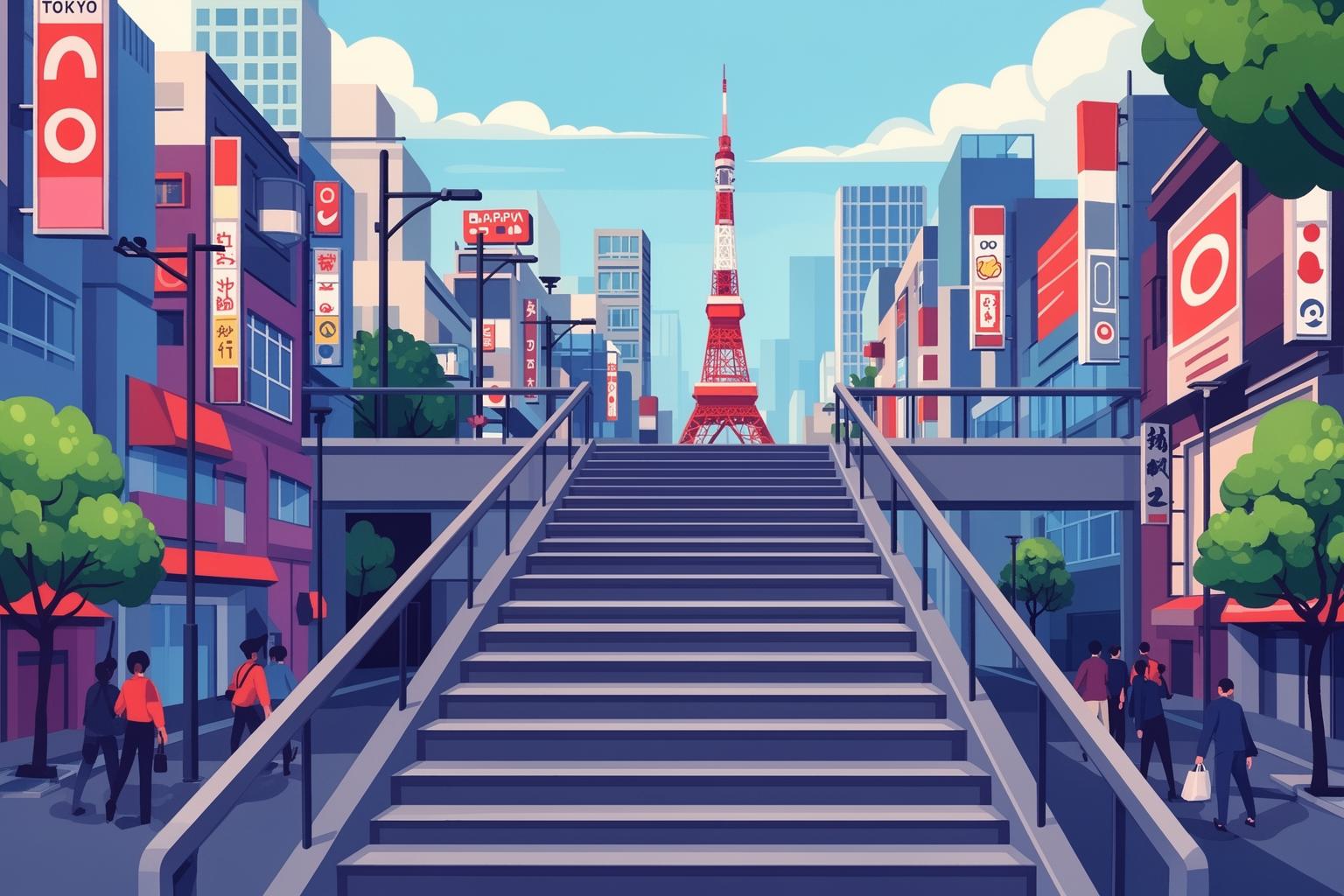
The final, heart-wrenching, and ultimately uplifting scene of Your Name. is etched into the memory of every fan. The desperate search, the near misses, and then, a moment of recognition on a simple staircase. That staircase, with its distinctive red railing, is a pilgrimage site for any fan. It is not part of a fantasy world, but nestled within the quiet, unassuming residential neighborhood of Yotsuya, located in Shinjuku Ward, which feels far removed from the neon brilliance of its famous counterpart. The journey to find it is an experience in itself. You emerge from the subway, perhaps at Yotsuya-Sanchome Station on the Tokyo Metro Marunouchi Line, and the city’s roar quickly softens to a gentle murmur. The streets here are narrow, lined with modest apartment buildings, small family-run shops, and the occasional vending machine casting a soft glow. It’s quintessentially Tokyo, yet remarkably tranquil. You’ll likely be navigating with a map on your phone, winding through a maze of clean, orderly streets. There’s a tangible sense of anticipation with every turn. You might encounter other small groups of travelers, speaking in hushed, excited whispers, all on the same mission. This shared purpose fosters a quiet, friendly camaraderie.
Finding the Suga Shrine
Then, you spot it. The stairs ascending to the Suga Shrine. The reality of the place is simultaneously just as you imagined and surprisingly different. It’s smaller and more intimate than its grand cinematic depiction might suggest. The red railing shines in the sunlight, beautifully contrasting with the grey stone steps and the lush greenery surrounding the area. Standing at the bottom looking up, or at the top looking down, you can’t help but replay the scene in your head: Taki and Mitsuha passing each other, the flicker of a forgotten memory, the hesitant turn, and the question that changes everything: “Kimi no namae wa?” or “What’s your name?” The atmosphere here feels heavy with unspoken emotions. It’s a powerful moment to stand in a place so imbued with fictional history. You’ll see fans respectfully taking photos, aiming for the perfect angle, some even mimicking the characters’ poses. Yet, it’s rarely crowded. There’s a mutual, unspoken respect to maintain the spot’s tranquility. It’s a place for quiet reflection, for sensing the weight of the story you cherish. Remember, this is a residential area and a place of worship. The key is mindfulness. Keep your voice low, be considerate of locals going about their day, and if you visit the Suga Shrine itself at the top of the stairs, follow proper etiquette by washing your hands and offering a quiet prayer. The ideal time to visit is on a weekday morning or late afternoon when the light is soft and golden, perfectly capturing the film’s aesthetic and avoiding the weekend crowds.
Taki’s World: The Urban Pulse of Shinjuku
If the stairs at Suga Shrine symbolize the story’s emotional peak, Shinjuku is its vibrant heart. This is Taki’s home zone—a vast, lively, and sometimes overwhelming district that perfectly embodies the beautiful chaos of contemporary Tokyo. The film skillfully employs wide, panoramic shots of Shinjuku’s skyline to highlight the immense distance, both physical and emotional, between the city boy and the country girl. To fully grasp Taki’s world, you must immerse yourself in the dazzling sensory overload that is Shinjuku. The sheer magnitude of it all is awe-inspiring. Towering skyscrapers pierce the clouds, their glass surfaces reflecting the sky. Gigantic LED screens blast advertisements and music videos from every direction. The streets flow like rivers of people, a continuous stream of students, office workers, and tourists. The soundscape is a complex symphony of train announcements, J-pop tunes spilling from stores, the buzz of countless conversations, and the rhythmic beeping of crosswalk signals. This is the environment that shaped Taki—a place of endless possibilities and overwhelming anonymity, where finding one particular person feels like a miraculous feat.
A Date with a View: Shinjuku Gyoen National Garden
Amid the concrete and neon maze of Shinjuku lies a stunning oasis of tranquility: Shinjuku Gyoen National Garden. This is where Taki went on a date with his coworker, Ms. Okudera, and where several background scenes take place. The contrast between the garden’s peaceful beauty and the bustling city just beyond its walls is a recurring motif in Shinkai’s work. Passing through the gates feels like stepping into another world. The city’s noise fades, replaced by the rustling leaves, birdsong, and gentle flow of water. The garden is a masterpiece of landscape design, showcasing three distinct styles. There’s the traditional Japanese Landscape Garden, with its meticulously maintained ponds, graceful bridges, and quaint teahouses. Then, the formal French Garden, featuring symmetrical flowerbeds and rows of plane trees. Lastly, the expansive English Landscape Garden, with wide, open lawns perfect for a leisurely picnic. Fans of the film will instantly recognize the greenhouse, with its distinctive domed structure, faithfully recreated in the anime. Walking through its warm, humid interior surrounded by exotic tropical plants, you can almost picture the awkward yet sweet conversation between Taki and Ms. Okudera unfolding. Shinjuku Gyoen invites you to slow down. For a modest entrance fee, you can spend hours here. Find a bench, sketch the scenery, or simply lie on the grass and watch the clouds drift by, with the iconic silhouette of the NTT Docomo Yoyogi Building—a landmark frequently seen in the film—peeking over the treetops. It’s a reminder that even in the busiest cities, moments of peace and beauty can be discovered.
The Crossroads of Fate: Shinjuku Station and its Surroundings
Shinjuku Station is more than just a train station—it’s a city within a city. As the world’s busiest transportation hub, it serves millions of passengers every day. In Your Name., it symbolizes the vast, interconnected network of Tokyo life. Taki navigates its labyrinthine corridors daily. For newcomers, the station can be an intimidating maze. It’s a sprawling complex of platforms, underground passageways, shopping arcades, and a bewildering number of exits. But embracing this chaos is part of the journey. Let yourself be swept along by the human flow. Look up at the intricate network of signs and train lines. This is the everyday reality for millions of Tokyoites, showcasing the city’s remarkable efficiency and scale. Many of the film’s most iconic establishing shots were inspired by views around the station. The Shinjuku Police Station intersection, with its distinctive circular design, is one such recognizable location. Another significant spot is the pedestrian bridge near the station, where Taki makes a frustrated phone call, unable to reach Mitsuha. Finding these exact places can be a fun scavenger hunt. The best way to experience the film’s sense of scale is to seek out a vantage point. The observation decks of the Tokyo Metropolitan Government Building, which are free to access, offer breathtaking panoramic views of the entire city, allowing you to see the Shinjuku cityscape just as Shinkai portrayed it—a shimmering, endless sea of lights stretching to the horizon.
More Than Just a Movie Set: Experiencing the Vibe
A seichi junrei goes beyond simply ticking off locations on a list. It’s about fully immersing yourself in the atmosphere that breathed life into the story. It involves noticing the subtle details painstakingly recreated by animators, bridging the divide between the screen’s world and the one beneath your feet. It means understanding the cultural background that elevates these settings beyond mere picturesque scenes. Makoto Shinkai is celebrated for his photorealistic animation style. He and his team visit real places, capturing thousands of photos to ensure every crack in the pavement, every rusted patch on a guardrail, and every reflection in a window is depicted with remarkable precision. This commitment is what makes the pilgrimage so fulfilling. You’re not just visiting sites that resemble those in the film; often, you’re standing exactly where they were animated.
The Little Details: From Pedestrian Bridges to Cafes
In addition to the major landmarks, dedicated fans can discover numerous smaller, more nuanced locations scattered throughout the film, each adding another layer of authenticity to Taki’s Tokyo. One especially rewarding find is the restaurant where Taki and Ms. Okudera work part-time. Its real-world counterpart is Cafe La Bohème Shinjuku Gyoen, a chic Italian restaurant situated right beside the park. Although the interior has been updated since the film’s release, the exterior and the elegant, romantic vibe remain largely unchanged. Dining here—perhaps after a walk through the garden—feels like stepping into one of the movie’s scenes. It offers a wonderful way to connect with the characters’ everyday lives. Another notable pilgrimage spot is the large cylindrical structure in Shinjuku featured in several scenes: the Toho Building, known for the iconic giant Godzilla head peering from its roof. While this building plays no direct narrative role, it’s an homage to its landmark status in the Shinjuku skyline, adding another piece to the urban mosaic that forms Taki’s world. Spotting these locations requires sharp observation and some research, but the thrill of recognition—the moment you say “I know this place!” when you round a corner—is a uniquely rewarding part of the experience.
A Pilgrim’s Itinerary: Tying It All Together
To maximize your Your Name. pilgrimage, a bit of planning goes a long way. An ideal and enjoyable approach is to dedicate a full day to the journey. Begin your morning in Shinjuku, arriving at Shinjuku Gyoen National Garden as it opens to enjoy the tranquil morning light and beat the crowds. Spend a couple of hours exploring its variety of landscapes. Afterwards, head to Cafe La Bohème for a themed lunch, immersing yourself fully in Taki’s work environment. In the afternoon, prepare for the vibrant energy of central Shinjuku. Explore the area around the station, track down key intersections and pedestrian bridges, and finally ascend the Tokyo Metropolitan Government Building to take in spectacular city views as the sun sets. As evening nears, hop on the Marunouchi Line from Shinjuku Station for just a few stops to Yotsuya-Sanchome. Make your way to the Suga Shrine stairs during the “magic hour.” That gentle, golden light just before sunset perfectly recreates the film’s iconic final scene, offering a beautiful and emotional conclusion to your day. For smooth travel, having an IC card such as a Suica or Pasmo is essential—just tap and ride on trains and buses. And most importantly, wear comfortable shoes. You’ll be covering plenty of ground, but each step is part of the adventure.
Your journey through the Tokyo of Your Name. is a pilgrimage full of emotion. It’s an opportunity to walk the same streets, see the same sights, and breathe the same air as the characters who touched your heart. It’s a tribute to storytelling’s power and the incredible artistry that transforms ordinary urban corners into sacred places for fans. Standing on the stairs in Yotsuya or weaving through the crowds of Shinjuku, you’ll find the story feels less fictional. The invisible red string of fate seems real, connecting you not only to Taki and Mitsuha but also to the city itself and the countless fans worldwide who have embarked on this same pilgrimage. You came seeking a movie, but you’ll leave holding a piece of Tokyo’s heart, forever intertwined with a tale of searching, discovering, and the magic of a name.