There’s a certain magic that hums in the cold December air of Japan, a feeling that deepens as you venture away from the neon glow of Tokyo and into the heart of the mountains. Imagine a town, cradled by frosted peaks, where the entire community pours into the streets under a sky lit not by skyscrapers, but by a blizzard of winter fireworks. This isn’t a dream; it’s Chichibu, a city in Saitama Prefecture that feels a world away from the capital’s hustle, yet is surprisingly accessible. Every year, on the second and third of December, this quiet mountain town erupts into a symphony of light, sound, and tradition for the Chichibu Yomatsuri, or the Chichibu Night Festival. It’s a spectacle of such immense scale and historical weight that it’s recognized as one of Japan’s top three float festivals and proudly bears the title of a UNESCO Intangible Cultural Heritage. But the story of Chichibu doesn’t end with its ancient rites. For a generation of travelers, this city resonates with a different kind of spirit, a more modern and poignant pilgrimage. It is the living, breathing backdrop of the beloved anime Anohana: The Flower We Saw That Day, a tale of friendship and loss that has etched Chichibu’s bridges, temples, and quiet streets into the hearts of fans worldwide. It’s a place where the thunderous roar of festival crowds and the whispered memories of fictional friends coexist, creating a destination with a powerful, dual-layered soul. Here, tradition and pop culture don’t just intersect; they dance together under the winter sky.
For those captivated by the interplay of traditional festival magic and modern pop culture, exploring Totoro’s enchanting realm in Sayama Hills offers another delightful journey into Japan’s storied landscapes.
The Heartbeat of Chichibu: The Yomatsuri’s Grandeur
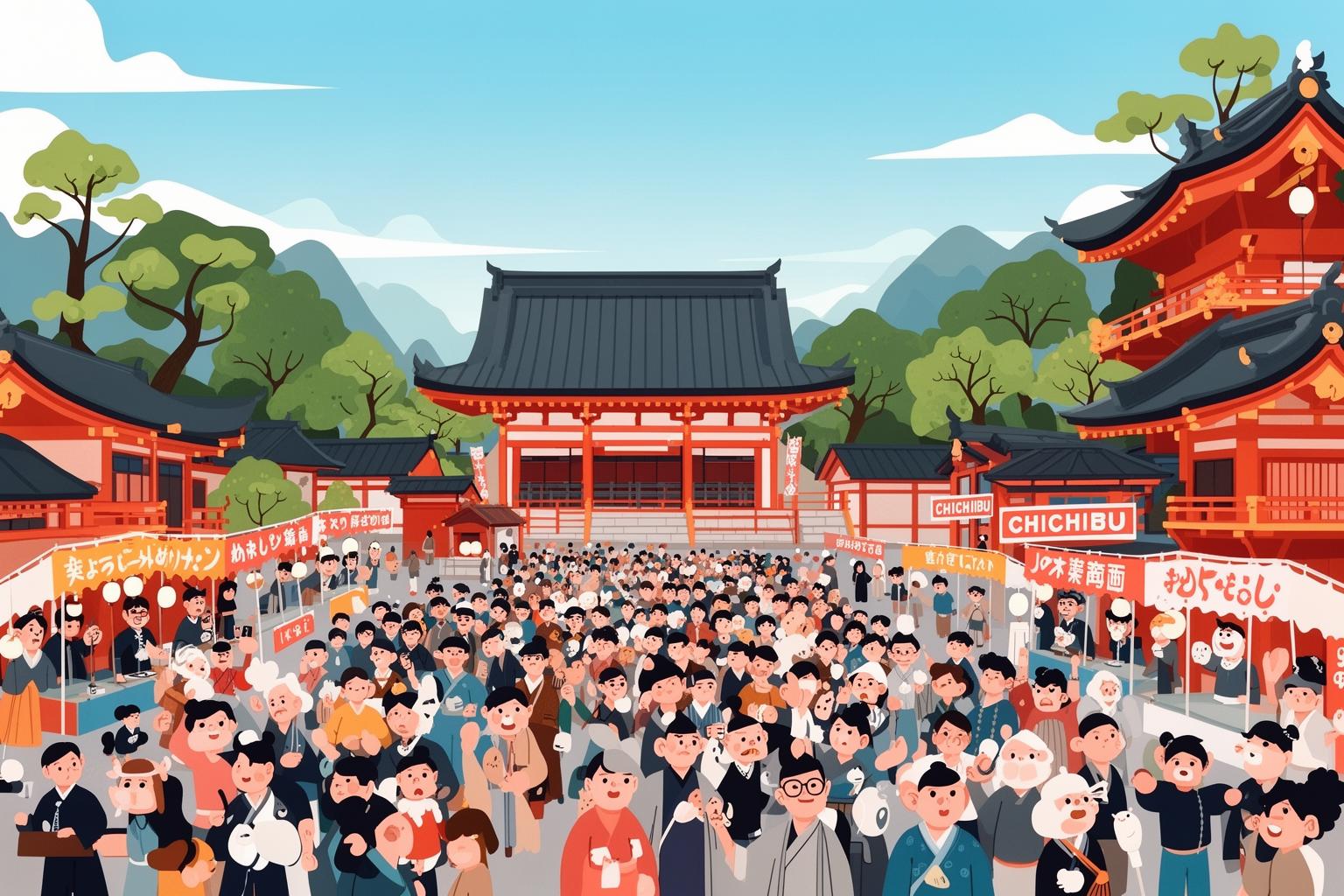
To truly grasp the Chichibu Yomatsuri is to grasp the very spirit of the town itself. This event is far more than just a festival; it represents a year-long preparation and centuries of devotion coming to fruition. The festival’s origins date back more than 300 years, centered around Chichibu Shrine, which itself carries a history spanning over two thousand years. As twilight descends on December 3rd, the festival’s peak, the atmosphere grows electric. The crisp mountain air, sharp and clear, mingles with the fragrant smoke wafting from numerous food stalls, or yatai, lining the streets. The scents of savory takoyaki, sweet candied apples, and the rich aroma of amazake—a warm, sweet, non-alcoholic sake perfect for warding off winter’s chill—fill the air. The auditory backdrop is a powerful, primal rhythm—the booming beat of taiko drums and the soaring melodies of flutes, emanating from the heart of the town itself.
Then, they come into view. The highlight is the six enormous floats, including two towering kasaboko (literally ‘flower parasol floats’) and four elaborately decorated yatai (float stages). These are not simply parade floats; they are moving architectural masterpieces. Weighing between 10 and 20 tons each, they feature intricate, gilded woodcarvings of dragons, phoenixes, and folklore scenes. Hundreds of lanterns hang from their eaves, casting a warm, golden light that pushes back the December gloom. The yatai also serve as stages for stunning kabuki performances, with actors in elaborate costumes bringing age-old stories to life right on the moving floats. The energy is contagious. Hundreds of men dressed in traditional festival attire chant in unison—ho-ryai, ho-ryai—as they strain against thick ropes, their breath forming clouds in the cold air while pulling these colossal floats through the packed streets. The very ground seems to tremble with their combined effort.
Yet, the festival’s most dramatic moment arrives at the climb up Dango-zaka, a steep, short incline leading to the plaza in front of city hall. This is the ultimate test of strength and spirit. The crowd presses forward, their cheers swelling like a wave as the men dig in their heels, the massive wooden wheels of the floats creaking under the strain. It’s a raw, powerful demonstration of communal strength. And as the final float crests the hill, the sky bursts alive. The Chichibu Yomatsuri is renowned for its lengthy, breathtaking fireworks display. Winter fireworks are rare in Japan, making this spectacle all the more extraordinary. Vibrant colors explode against the deep, dark winter sky, illuminating the snow-dusted mountains beyond—an image of profound beauty. It’s a moment of pure, unfiltered joy, a celebration both deeply sacred and wildly exhilarating.
A Pilgrimage of a Different Kind: Walking in the Footsteps of Anohana
While the Yomatsuri attracts crowds with its historical grandeur, countless other visitors come to Chichibu carrying a different kind of map—one assembled from screenshots and memories of an anime series. Anohana: The Flower We Saw That Day tells a deeply emotional tale about a group of childhood friends, the “Super Peace Busters,” who drift apart following the tragic death of one of their own, Meiko “Menma” Honma. Years later, Menma’s spirit appears to the group’s former leader, Jinta, asking him to fulfill a forgotten wish so she can move on. What follows is a poignant and ultimately beautiful journey of reconnecting, facing guilt, and finding closure. The series doesn’t merely use Chichibu as a backdrop; the town itself becomes a character. Its real-life locations are depicted with such heartfelt detail that they have become sacred sites for fans—a phenomenon known in Japan as seichi junrei, or anime pilgrimage.
Walking through Chichibu as an Anohana fan is a surreal and deeply moving experience. The line between fiction and reality feels incredibly thin. You find yourself standing in the very places where the characters shared their most vulnerable moments, and the emotional resonance of their story seems to linger palpably in the air.
Key Locations for the Super Peace Busters
The Old Chichibu Bridge stands as perhaps the most iconic landmark from the series. This graceful truss bridge crossing the Arakawa River appears throughout the anime’s openings, endings, and key scenes. Standing on it, gazing at the flowing water and the town beyond, you can almost hear echoes of the characters’ conversations. It’s a place for quiet reflection, where the anime’s world feels remarkably close. Many fans leave messages or small offerings here, testifying to the show’s lasting impact.
From there, a solemn yet essential stop is Jorinji Temple. This tranquil Buddhist temple is believed to be where Menma’s spirit rests. In the anime, the friends often gather here, and the temple grounds evoke both sorrow and healing. Visiting in person, you’re struck by its calmness; the scent of incense hangs in the air, and the quiet dignity of the place invites contemplation. The temple has embraced its connection to the series, with ema—small wooden prayer plaques—often adorned with drawings of Menma and messages from fans around the world.
Other locations are scattered throughout the town, each recalling a specific memory from the series. The main street leading from Seibu-Chichibu Station, with its distinctive shops, is where the friends frequently walked. You can trace their steps past the very storefronts they visited. A short walk away lies Hitsujiyama Park, which serves in the anime as the site of the friends’ secret base. While the base is fictional, the park is renowned for its spectacular natural attraction: the Shibazakura Hill. In late April and early May, the entire hillside bursts into a breathtaking carpet of pink, purple, and white moss phlox—a sight that draws visitors from across Japan. Seeing this vibrant bloom in a place so tied to a story about memory and loss adds an extra layer of emotional depth to the pilgrimage.
The Feeling of Being There
What makes the Anohana pilgrimage in Chichibu so special is the town’s wholehearted embrace of its anime fame. This is not a passive connection but an active celebration. You’ll find Anohana posters in shop windows, vending machines wrapped in character art, and even manhole covers decorated with the Super Peace Busters. Local businesses offer exclusive merchandise, and the tourist information center provides maps highlighting key anime locations. The townspeople warmly welcome pilgrims, often eager to share stories or guide visitors. It feels less like a tourist attraction and more like a shared experience—a town-wide appreciation of a story that placed them on the global map in a new and remarkable way. You arrive as a fan of fiction, but you depart with genuine affection for the very real, very welcoming town of Chichibu.
Beyond the Festival and Anime: Discovering Chichibu’s Soul
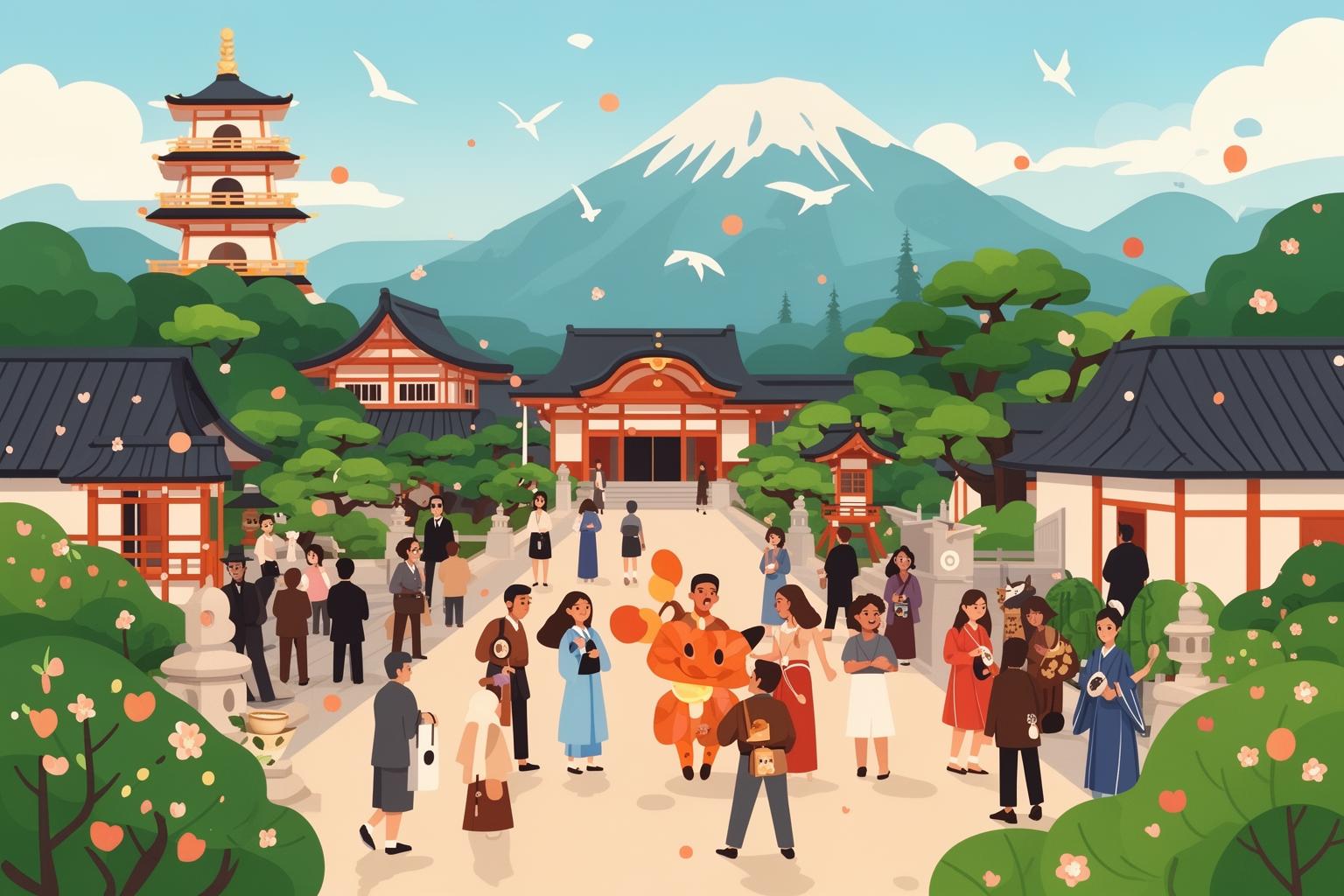
Chichibu’s identity is a rich mosaic, shaped by much more than just a single festival or one anime. To truly understand the town, it’s valuable to delve into the deeper streams of history and nature that have influenced it for centuries. Long before it became a popular spot for anime enthusiasts, Chichibu was—and still remains—a significant center for spiritual journeys. Its mountainous landscape hosts a renowned pilgrimage route that links deep cultural heritage with the themes of memory and transition reflected in its contemporary pop culture acclaim.
The Spiritual Core: Chichibu’s 34 Kannon Pilgrimage
The Chichibu Fudasho Meguri is a pilgrimage path connecting 34 temples devoted to Kannon, the Buddhist goddess of mercy. Alongside the Bando and Saigoku routes, it ranks among Japan’s most important Kannon pilgrimages. For centuries, pilgrims clad in traditional white attire have trekked these mountain trails, collecting stamps and calligraphy in a special book called a nōkyōchō at each temple. You don’t need to be a devoted Buddhist or complete the entire route to appreciate its meaning. Visiting even one or two temples can provide a profound sense of peace and a connection to a rich history.
Chichibu Shrine, the focal point of the Yomatsuri festival, is not officially included in the 34-temple circuit, yet it serves as the city’s spiritual heart. Its main hall is a magnificent example of early Edo-period architecture, featuring vibrant, intricate carvings made by the same artisans who worked on the famed shrines of Nikko. Pay special attention to the carving of the “Tsunagi no Ryu” (The Chained Dragon). According to legend, the dragon would escape at night to cause chaos at a nearby lake, so it was chained to the temple to maintain peace. Another notable carving is the “O-genki San-saru” (The Three Wise-ish Monkeys), which, unlike the well-known “see no evil, hear no evil, speak no evil” monkeys, are portrayed as “look well, listen well, and speak well”—a more positive and proactive philosophy. Taking time to explore this shrine provides a direct connection to the faith and craftsmanship behind the spectacular night festival.
Nature’s Embrace
Chichibu’s charm also springs from its breathtaking natural surroundings. The city is almost completely encircled by Chichibu-Tama-Kai National Park, a vast region of mountains, forests, and pristine rivers. The Arakawa River, flowing through the city, reveals different characteristics with each season. In spring and summer, visitors can enjoy exhilarating white-water rafting or take a leisurely traditional boat ride through Nagatoro Gorge, marveling at the Iwadatami, a vast natural rock terrace. In autumn, the mountainsides ignite with vibrant red, orange, and yellow foliage, attracting many for leaf-peeping, or momijigari.
For hiking enthusiasts, Mount Bukō—the city’s imposing limestone guardian—offers trails with stunning views. Its terraced, almost pyramid shape is the result of centuries of mining, yet it remains a powerful symbol of Chichibu’s connection to the land. On a different note, Chichibu has recently gained international recognition for something else entirely: whisky. Ichiro’s Malt, crafted at the Chichibu Distillery, is a world-renowned Japanese single malt whisky. Though visiting the distillery is challenging, its acclaimed products are available in local liquor stores and bars, providing a perfect, warming conclusion to a day of exploration.
Your Chichibu Adventure: Practical Planning and Local Secrets
One of Chichibu’s greatest strengths is its accessibility. It provides a genuine immersion into mountain culture without the need for a complex, multi-day trip. That said, a bit of planning can make a significant difference, especially if your visit falls during peak seasons. Knowing the best way to get there, the optimal time to visit based on your interests, and a few local tips can turn a good trip into an unforgettable one.
Getting There from Tokyo
Traveling from central Tokyo to Chichibu is refreshingly straightforward and scenic. The most convenient and comfortable choice is the Seibu Railway’s Red Arrow Limited Express train, which runs directly from Ikebukuro Station to Seibu-Chichibu Station. The trip takes about 80 minutes, and the ride itself is beautiful. As the train leaves behind Tokyo’s dense urban landscape, the scenery gradually shifts to rolling hills and then rugged mountains. Be sure to reserve a seat, especially on weekends or during festival times, to ensure a comfortable journey. Once you arrive at Seibu-Chichibu Station, you’ll find a recently renovated complex featuring a food court with local specialties and a hot spring facility—a perfect way to start or end your visit.
Timing Your Visit
Chichibu is a destination for all seasons, but the experience varies greatly throughout the year.
If you’re determined to attend the Chichibu Yomatsuri, plan your visit for December 2nd and 3rd. The main events, including the float procession up Dango-zaka and the fireworks, occur on the evening of the 3rd. Be warned: this is by far the busiest time of year. Accommodations in Chichibu and nearby towns fill up months, sometimes even a year, in advance. If you intend to attend, booking your hotel early should be your top priority. Alternatively, you can treat it as a long day trip from Tokyo, but be prepared for very crowded last trains returning to the city.
For an Anohana pilgrimage, any time of year is suitable. The town is always welcoming, and key locations remain accessible. Spring and autumn offer pleasant weather for walking. A summer visit might feel most authentic to the anime’s setting, but be ready for Japan’s characteristic heat and humidity.
Nature enthusiasts should aim for late April to early May to witness the stunning Shibazakura at Hitsujiyama Park. The hillside covered in vibrant pink moss is truly spectacular. Autumn, from late October through November, is ideal for hiking and enjoying the brilliant fall colors in the surrounding mountains and gorges.
Local Tips from a Planner
First and foremost, wear comfortable shoes. Chichibu is best explored on foot. Whether you’re following the path of the Super Peace Busters or strolling between festival stalls, expect to walk a lot. To see more ground, especially the spread-out temples of the Kannon pilgrimage, consider renting a bicycle near the station.
When it comes to food, don’t miss the local specialties. The most famous is Waraji Katsudon, a pork cutlet bowl with cutlets so large they resemble waraji, traditional straw sandals. It’s a hearty, delicious meal. Chichibu is also renowned for its excellent soba noodles, often served with a walnut dipping sauce, and miso butadon, a grilled pork bowl glazed with a sweet and savory miso sauce. For a unique snack, try miso potato—skewered, grilled potatoes coated in that same flavorful miso paste.
If you’re visiting for the Yomatsuri, dress warmly—and then add another layer. December nights in the mountains are bitterly cold, and you’ll be outdoors for hours. Hats, gloves, scarves, and heat packs will be invaluable. Also, although Japan is increasingly credit card-friendly, festival food stalls mostly accept cash only. Be sure to have enough yen on hand to enjoy all the delicious treats.
The Unforgettable Echo of Chichibu
Chichibu is a place of striking contrasts. It is a town where the sacred silence of an ancient temple can be found just a few streets away from the lively clamor of a world-famous festival. The landscape combines the rugged, timeless beauty of nature with a deeply modern tale of love and friendship that resonates with fans worldwide. Visiting here is a journey through layers of time and emotion. You can sense the weight of history in the creaking wheels of the festival floats and the solemn reverence of a centuries-old shrine. Simultaneously, you can feel the tender, youthful energy of the Anohana story in the view from a bridge or the gentle rustling of leaves in a park.
Whether you are drawn by the thunder of taiko drums, the dazzling burst of winter fireworks, or the quiet allure of an anime pilgrimage, Chichibu offers something truly unique. It rewards travelers who are willing to look beyond the surface, to listen for both the roar of the crowd and the whispers of memory. You may arrive seeking a spectacle or a story, but you will leave with the unforgettable echo of a town that skillfully harmonizes its past, present, and enduring spirit.