There are films that entertain, and then there are films that create worlds. Hayao Miyazaki’s 2001 masterpiece, Spirited Away, is firmly in the latter category. It is more than an animated feature; it is a cultural touchstone, a vessel of Japanese folklore, and a dreamscape that has captivated audiences globally for decades. The story of Chihiro, a young girl lost in a world of gods, spirits, and monsters, is a profound meditation on identity, memory, and courage. But the world she navigates—the magnificent Aburaya bathhouse, the bustling spirit market, the lonely train gliding over a silent sea—feels impossibly real. That is because, in many ways, it is. Miyazaki, a master world-builder, did not conjure these places from thin air. He wove them from the threads of Japan’s tangible history, its stunning landscapes, and its cherished architectural heritage. This journey, this article, is a pilgrimage—or seichi junrei, as it’s known in Japan—to the very soul of Spirited Away. We will peel back the celluloid to reveal the wood, steam, and stone of the real locations that breathe life into one of cinema’s most enchanting worlds. This is not just a tour for anime fans; it is a historian’s walk through the twilight of the Meiji and Taisho eras, a traveler’s descent into the heart of Japanese aesthetics, and a seeker’s quest for the magic that hides just beyond our own world’s veil. Before we cross the first bridge, let us survey the map of our spiritual itinerary, a constellation of places where the veil between worlds is at its thinnest.
Embracing the fusion of tangible history and mystical landscapes, visitor insights into Shirakawa-go reveal the serene echoes of Japan’s folklore that transform animated fantasy into an evocative pilgrimage.
The Grand Bathhouse of the Gods: Echoes of Aburaya
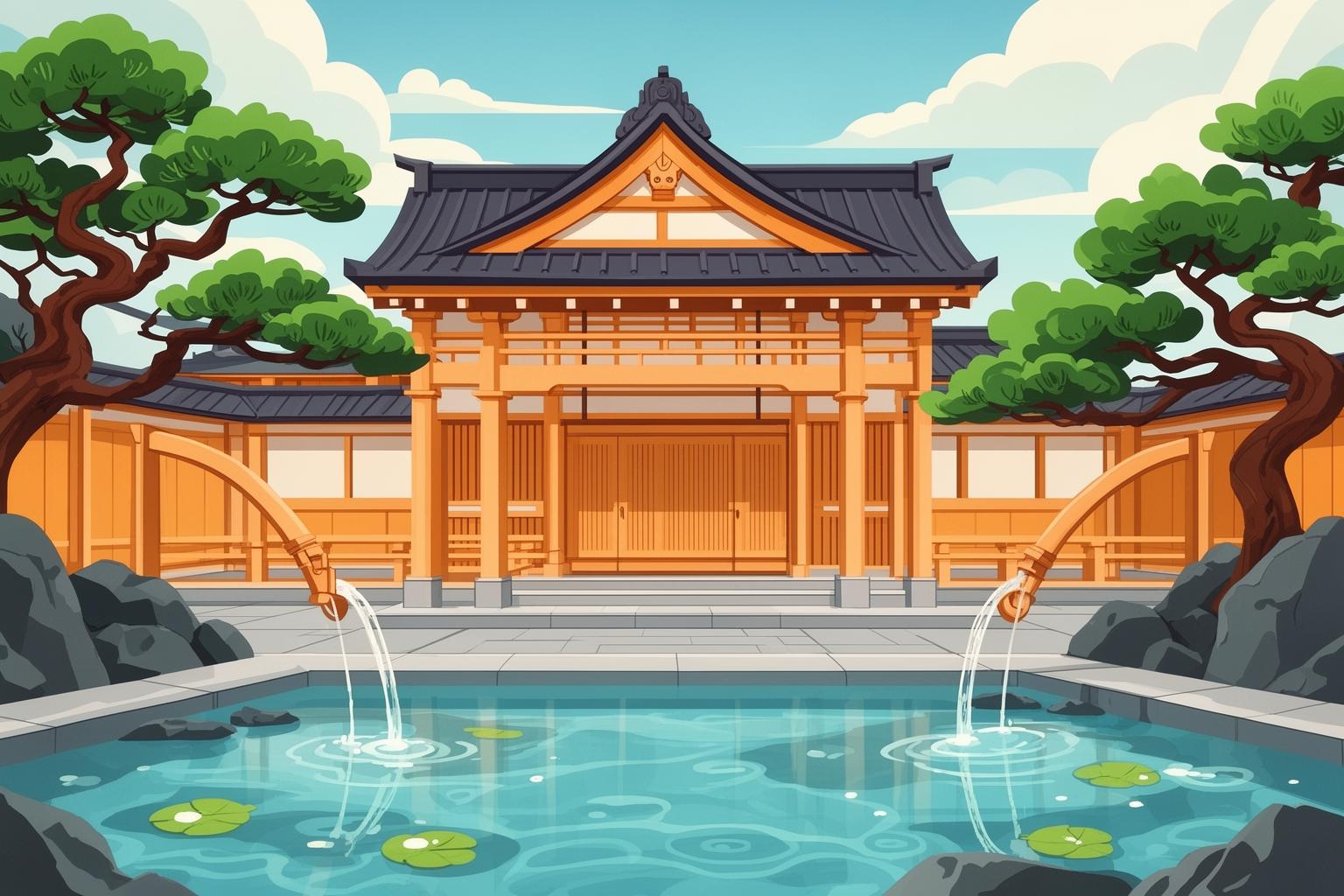
The Aburaya, the grand, chaotic, and magnificent bathhouse where Chihiro is compelled to work, serves as the film’s beating heart. It is a vertical society bustling with a dizzying array of spirits, a monument to both divine luxury and arduous labor. To trace its origins in our world, we must travel to the steamy, mineral-rich waters of Japan’s hot springs, or onsen, where the tradition of communal bathing is an ancient and sacred art. Two legendary onsen towns, in particular, resonate strongly with the Aburaya’s form and spirit, each reflecting a different aspect of its complex character.
Shima Onsen’s Sekizenkan Ryokan: The Crimson Bridge to Another World
Nestled deep within the tranquil mountains of Gunma Prefecture lies Shima Onsen, a quiet and traditional hot spring town that feels worlds apart from the neon glow of modern Tokyo. Here stands the Sekizenkan Ryokan, an inn presenting perhaps the most striking visual parallel to the film. Approaching it, the first thing that captures your attention is the iconic red bridge arching gracefully over the Shima River. No fan of the film can see it without immediately picturing Chihiro—small and fearful—holding her breath as she crosses into the spirit world for the first time. This bridge, the Keiun-bashi, serves as both a physical and symbolic gateway to the ryokan’s main building, a multi-storied wooden structure from the late 17th century, designated an Important Cultural Property.
The atmosphere here is one of deep tranquility and timelessness. The air is thick with the scent of sulfur and damp cedar. The main building, the oldest wooden onsen hotel in Japan, feels both ancient and alive. Its interlocking wings and annexes, connected by a web of covered walkways and secret tunnels, climb the hillside in a design that closely mirrors the chaotic yet harmonious architecture of the Aburaya. One such tunnel, a marvel of Taisho-era engineering, links the main building to a newer, more luxurious structure constructed in the 1930s. Passing through this dimly lit, tile-lined corridor feels like a journey through time, echoing the hidden hallways and staff-only passages Chihiro nervously traverses. The inn’s most famous bath, the Genroku no Yu, is a breathtaking Romanesque hall with soaring arched windows and stone basins, a beautiful relic of the Taisho period’s fascination with Western design. Soaking in its waters, one can almost hear the whispered conversations of unseen spirits. Visiting Sekizenkan is best during autumn, when the surrounding mountains burst into a fiery mix of reds and golds, or in winter, when a blanket of pristine snow muffles all sound and steam from the river and baths rises to meet the cold air, truly blurring the boundary between the physical and the ethereal. To reach here from Tokyo, take the Joetsu Shinkansen to Takasaki, transfer to the local Agatsuma Line to Nakanojo Station, and then a brief bus ride brings you to this enchanting threshold.
The Majestic Dogo Onsen Honkan: A Labyrinth of Luxury
If Sekizenkan embodies the Aburaya’s hauntingly beautiful exterior and symbolic entrance, then Dogo Onsen Honkan in Matsuyama, Ehime Prefecture represents its soul: the bustling, labyrinthine, and majestic interior. This is one of Japan’s oldest and most renowned hot spring facilities, with a history spanning over a thousand years. The present main building, or Honkan, is a Meiji-era masterpiece from 1894, a three-story wooden bathhouse that is both imposing and whimsical. Its intricate roofline, topped with a white heron—the legendary bird said to have discovered the springs’ healing powers—and the steady beat of the Shinrokaku drum tower, which marks the time, contribute to an immediate sense of grandeur.
The atmosphere around Dogo Onsen is one of vibrant energy. Visitors clad in traditional yukata (light cotton kimonos) clack through covered shopping arcades on their geta (wooden sandals), creating a lively soundtrack. Yet the interior truly captures the spirit of Aburaya. The building is a maze of steep, narrow staircases, winding corridors, and tatami-matted lounges where bathers relax with tea and snacks after their soak. One can easily imagine frantic frog-men and diligent Yuna hustling through these halls. The Honkan features two primary public baths of differing prestige: the larger Kami no Yu (Bath of the Gods) and the more intimate Tama no Yu (Bath of the Spirits), crafted from exquisite Aji granite. Even more fascinating is the Yushinden, a private bathing area and lounge built exclusively for the Imperial Family in 1899—the only one of its kind in Japan. Viewing its ornate rooms, complete with a private toilet for the emperor, offers a glimpse into the divine hierarchy that defined the Aburaya. As a historian, I regard this building as a priceless record of Meiji-period craftsmanship and social order. Visitors should note that the Honkan is currently undergoing extensive preservation work, expected to last several years. However, bathing is still available in the Kami no Yu on the first floor, and the building’s magnificent exterior remains open for admiration. Additionally, two newer annexes, Asuka-no-Yu and Tsubaki-no-Yu, provide a modern yet respectful interpretation of the Dogo bathing experience. A visit here offers a step into a living, breathing piece of history that continues to serve its original purpose, much like the Aburaya served its divine clientele.
The Nostalgic Townscape: Wandering Through a Bygone Era
The strange, empty town that Chihiro’s family initially discovers—with its inviting yet unattended food stalls—quickly transforms into a vibrant, bustling night market for the spirits. This aesthetic—a blend of traditional Japanese design and Western-influenced architecture from the late 19th and early 20th centuries—is a hallmark of Miyazaki’s work, evoking a profound sense of natsukashii, a nostalgic longing for a past one may never have experienced. This sentiment is rooted in tangible places that preserve this distinct transitional era in Japanese history.
The Edo-Tokyo Open Air Architectural Museum: A Walk Through Time
For the most direct insight into Hayao Miyazaki’s vision, a visit to the Edo-Tokyo Open Air Architectural Museum in Koganei Park, on Tokyo’s outskirts, is essential. The director himself was a frequent visitor during the making of Spirited Away, and his influence is clearly felt. This is no ordinary museum; it is a village of ghosts—a wide park where numerous historical buildings from all over Tokyo have been relocated and meticulously restored to protect them from the march of modernization. Walking through its streets feels like stepping into the Meiji, Taisho, and early Showa periods (from the 1860s to the 1940s).
The atmosphere is surreal and deeply evocative. Visitors can explore opulent Meiji-era mansions, humble downtown flower shops, a traditional public bathhouse (sento) adorned with a grand mural of Mount Fuji, and a perfectly preserved police box. For Spirited Away enthusiasts, the highlight is the former stationery shop, Takei Sanshodo. Stepping inside instantly transports you to Kamaji’s boiler room. The walls are lined floor to ceiling with countless small wooden drawers, just like those from which the spider-like boiler man draws his herbal ingredients for the baths. You can almost sense the presence of the tiny Soot Sprites darting in the shadows. Another significant location is an old izakaya, or pub, whose traditional facade and red paper lantern appear to be a direct inspiration for the food stalls that tempted Chihiro’s parents. The museum captures the very soul of the film’s forgotten town—beautiful, detailed, and poignantly devoid of people. It stands as a testament to the idea that buildings hold the memories of the lives lived within them, a central theme of the film. First-time visitors should set aside at least half a day to fully absorb the details. The park setting makes for a delightful outing year-round but is especially enchanting during cherry blossom season in spring or when the autumn leaves peak.
Jiufen, Taiwan: The Spirited Debate
No discussion of Spirited Away’s inspirations is complete without a trip across the sea to Jiufen, a mountain town in northern Taiwan. For years, it has been widely recognized as the primary model for the film’s enchanting night market. The visual parallels are striking. Jiufen is a former gold mining town perched precariously on a steep mountainside. Its core comprises narrow, winding alleyways and stone staircases, filled with food stalls, souvenir shops, and traditional teahouses. As dusk falls, the entire town lights up as hundreds of red paper lanterns are ignited, bathing the bustling crowds in a warm, magical glow. The atmosphere is a sensory feast—the scent of stinky tofu and sweet taro ball soup mingles in the air, the roar of the crowd resonates between buildings, and the vertical layout makes you feel as though you might step off a path and into another world. The A-Mei Tea House, with its tiered wooden structure and luminous facade, is frequently cited as a close match for the Aburaya from a distance.
Yet this link is debated. Miyazaki himself has stated in interviews that he has never visited Jiufen and that it was not a direct inspiration. As a historian, I find this contention fascinating. While it might not be a literal blueprint, Jiufen perfectly captures the spirit and aesthetic of the film, making the association a truth in its own right, born from the collective imagination of fans. Perhaps it reflects shared cultural DNA, a similar response to landscape and history. Jiufen’s history as a boom-and-bust gold rush town—a place of fortune and fleeting dreams—certainly resonates with the film’s themes. My advice to visitors is to embrace the ambiguity. Don’t expect Jiufen to be an exact replica, but rather a place that embodies the same otherworldly, chaotic, and beautiful energy. Visit on a weekday to avoid overwhelming weekend crowds, and be sure to stay after sunset. That is when the real magic unfolds, and whether Miyazaki intended it or not, for a few hours you may truly feel as if you have been spirited away.
The Lonely Journey: Tracks into the Swallowing Sea

One of the most emotionally striking and visually captivating sequences in Spirited Away is Chihiro’s train journey to visit the witch Zeniba. Accompanied by No-Face, she boards a train that moves silently over a vast, shallow sea, its tracks vanishing into the water. The other passengers appear as mere shadows, quiet and fleeting. This sequence is an exceptional example of atmospheric storytelling, evoking feelings of melancholy, determination, and the immense scale of the world. Although a train running through the ocean is purely fantastical, the emotional and visual heart of this scene can be found at a modest, unassuming station along the coast of the Seto Inland Sea.
Shimonada Station: A Platform on the Edge of the World
Shimonada Station, situated on the Yosan Line in Ehime Prefecture (the same prefecture as Dogo Onsen), is a renowned spot for photographers and those in search of tranquil beauty in Japan. It is a simple, unmanned station with a single platform and a small wooden shelter. Its charm lies in its unique setting. The platform sits right beside the ocean, with only a narrow road separating the tracks from the waves of the Seto Inland Sea. The sight is breathtaking. Standing on that platform and gazing outward, the vastness of water and sky is overwhelming. At high tide, the sea comes so close that it truly feels as if the tracks are laid directly on the water.
The atmosphere is one of deep peace and solitude. There are no announcements, no station staff, no busy crowds. Only the rhythmic sound of waves gently touching the shore, the distant cry of seabirds, and the salty breeze brushing your face. It’s a place that encourages quiet reflection. Watching the local, two-car train arrive and then disappear toward the horizon is a profoundly moving experience, instantly recalling the silent, ghostly journey Chihiro takes. The best time to visit is during the golden hour, just before sunset. As the sun sinks below the horizon, it bathes the sea and sky in vibrant hues of orange, pink, and purple, creating a scene of nearly overwhelming beauty. Visiting Shimonada requires careful planning. Trains on this rural line run infrequently, sometimes with gaps exceeding an hour between services. First-time visitors should check the train timetable carefully and be prepared to wait. Yet, the wait becomes part of the experience, encouraging you to slow down, sit quietly, and simply exist in a landscape that feels drawn straight from a dream.
Finding Your Way Back: A Pilgrim’s Reflection
Traveling to these places is to realize that Spirited Away is not merely a fictional tale but a heartfelt tribute to a Japan that is both vanishing and timeless. The story is crafted from the steam rising from ancient onsen, the texture of Meiji-era wood, the soft glow of a paper lantern, and the gentle melancholy of a seaside train platform. Hayao Miyazaki built his spirit world on the foundations of our reality, imbuing it with a sense of history and place that makes it profoundly believable. This pilgrimage shows that the film’s magic does not reside solely on the screen. It lives in the dedication of the artisans who maintain the Dogo Honkan, in the quiet grace of the Edo-Tokyo Museum buildings, and in the simple, breathtaking beauty of a sunset at Shimonada Station. Visiting these locations goes beyond cinematic tourism; it offers a way to engage with the themes the film explores. It is a journey to rediscover what has been lost, to value the beauty of the old and forgotten, and to remember that even in the most unfamiliar worlds, a path home can always be found. The spirits may be invisible to our eyes, but in these places, their presence is sensed, humming just beneath the surface of everyday life.