There’s a curious magic to certain places, a whisper of nostalgia for a memory you never made. It’s the feeling of stepping into a story, where the air hums with the energy of a thousand tales told and a million yet to come. This is the sensation that greets you in Dogo, a district nestled within the city of Matsuyama on Japan’s island of Shikoku. Here, steam rises from the earth not just as heated water, but as visible history, carrying with it the echoes of gods, emperors, poets, and animators. At the heart of it all stands the Dogo Onsen Honkan, a magnificent, multi-tiered wooden bathhouse that claims the title of Japan’s oldest hot spring, with a history stretching back an astonishing three millennia. Yet for many travelers today, its fame is twofold, a perfect intersection of the classical and the contemporary. It is a hallowed ground for lovers of Japanese literature, the cherished setting of Natsume Soseki’s beloved novel, Botchan. And, in the soft glow of its evening lanterns, it transforms into something else entirely: the unmistakable, living inspiration for the fantastical Aburaya, the bathhouse of the gods in Studio Ghibli’s Academy Award-winning masterpiece, Spirited Away. This is not just a destination; it’s a pilgrimage site for the soul, a place to soak in waters that have healed mortals and deities alike, and to walk the very line where Japan’s rich past breathes life into its most imaginative futures. Our journey begins here, in a town where every clatter of wooden sandals on stone pavement seems to keep time with a story you’re just about to discover.
For more on the real-world places that inspired Studio Ghibli’s magical worlds, explore our guide to other Ghibli pilgrimage sites.
The Grandeur of the Honkan: Bathing in a Living Museum
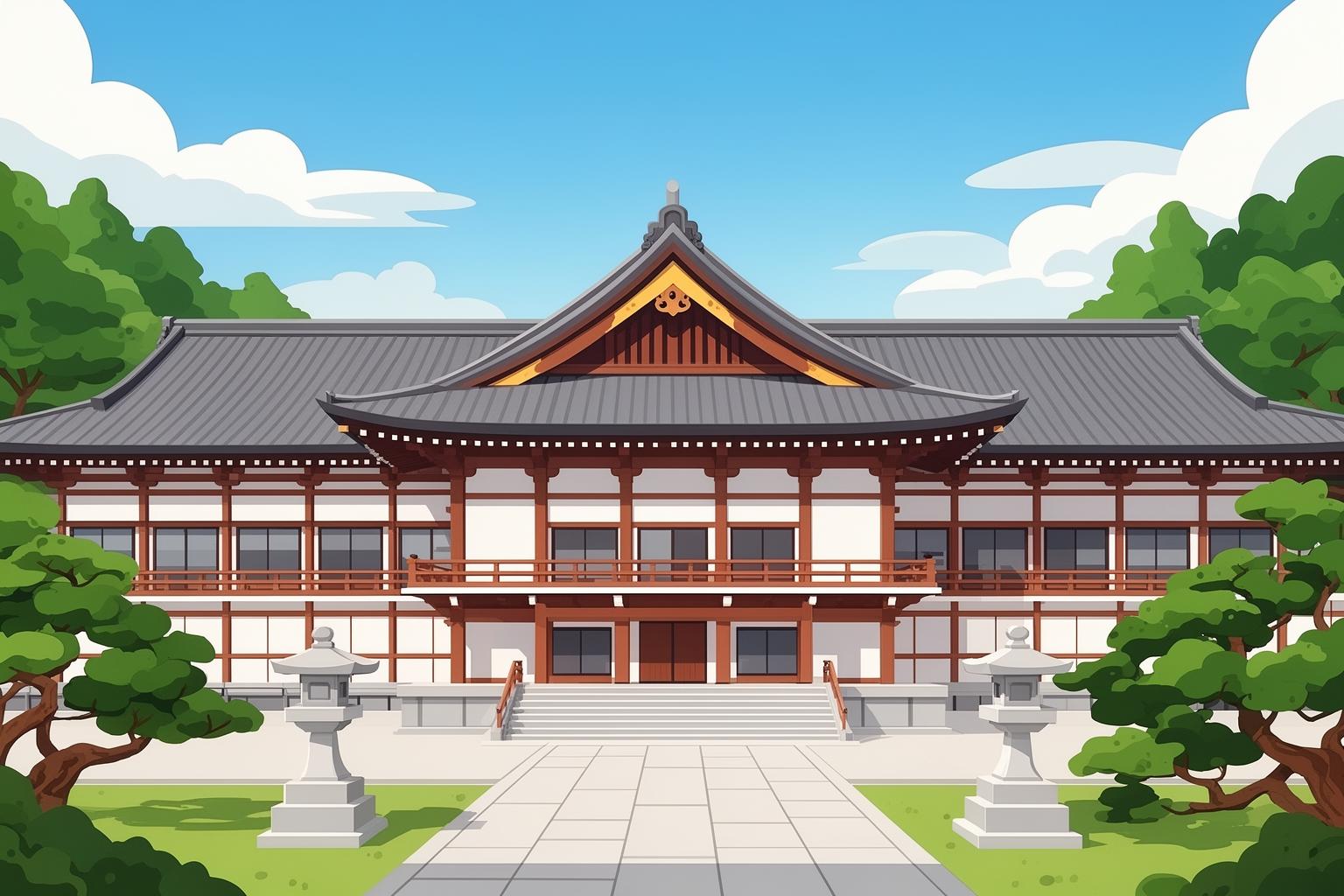
To see the Dogo Onsen Honkan for the first time is to be utterly captivated. It doesn’t simply stand; it presides—a beautiful, chaotic symphony of Meiji-era architecture dating back to 1894. Its interlocking roofs, crowned with a striking white egret and a taiko drum tower, stretch skyward in a manner that feels both impossibly intricate and perfectly natural. The building appears to have grown organically rather than been built, a labyrinth of dark wood, sliding paper screens, and intricate latticework that hints at secrets around every corner. The air around it is alive—you hear the gentle hiss of steam escaping from hidden vents, the lively chatter of visitors clad in crisp cotton yukata provided by nearby inns, and the rhythmic clacking of their geta, traditional wooden sandals, forming a unique percussive soundtrack for the town. At the top of each hour, a deep, resonant boom reverberates from the Shinrokaku, the drum tower at its peak, marking time not with sterile chimes but with a sound that feels ancient and profound. This is Dogo’s heart, and its pulse beats strong.
Stepping inside is like traveling back in time. The interior is a maze of steep staircases and polished wooden floors, smoothed by the footsteps of millions of visitors over more than a century. The scent of sulfur from the mineral-rich water mingles with the faint, pleasant aroma of aging timber and damp tatami mats. The main public bath on the first floor is the Kami no Yu, or “Bath of the Gods.” The bathing area is carved from solid granite, with water naturally flowing at a soothing temperature—soft and alkaline, famed for its skin-beautifying qualities. As you soak, you can admire the rich blue-and-white Tobe-yaki ceramic mural depicting an egret, the legendary bird said to have discovered the healing powers of Dogo’s waters by dipping its injured leg into a spring. The experience is communal and deeply humbling—a shared ritual of purification and relaxation. For a more exclusive experience, the second floor houses the Tama no Yu, or “Bath of the Spirits.” Smaller and more intimate, built with exquisite Aji marble, it offers a quieter moment of reflection. After your bath, you can retreat to one of the communal tatami rooms, where you’re served a cup of tea and a small sweet. Lounging there, feeling warmth seep into your bones and gazing through open shoji screens at the bustling town below, you realize this is more than just a bath; it is a cultural immersion, a living museum in which you are not simply an observer but an active participant in a tradition that has endured through the ages.
Echoes of Spirited Away: Chasing Yubaba’s Bathhouse
As daylight fades and lanterns begin to cast a warm, golden glow upon the Honkan, the building undergoes a stunning transformation. Shadows deepen, architectural details grow more dramatic, and steam rising from its vents seems to swirl with a newfound mystique. It is in this twilight enchantment that the connection to Hayao Miyazaki’s Spirited Away becomes unmistakably clear. While Miyazaki has famously said the film’s world is a collage of inspirations, the spirit of the Aburaya—the grand bathhouse for the eight million gods—undoubtedly lives here in Dogo. It’s not a direct replica, but something far more evocative: an atmospheric blueprint. Fans of the film will recognize a jolt of familiarity at every corner. The imposing multi-storied facade, the bewildering array of windows each hinting at a hidden room, and the distinctive red bridge one crosses to enter—it’s all present, a dreamscape brought to life. You can almost envision the kami disembarking from their celestial barges or hear the frantic calls of the frog attendants echoing through the halls. The strongest connection emerges at night, when the Honkan is fully lit. Its windows blaze with light, creating a spectacle of warmth and mystery against the dark sky. From afar, it appears as a beckoning, otherworldly vessel, much like the Aburaya does when Chihiro first glimpses it across the plains. As a devotee of East Asian culture, what moves me most deeply is how Miyazaki captured not just the appearance of the Honkan, but its very essence. He conveyed the building’s chaotic energy, its blend of the sacred and the commercial, and its role as a liminal space—a threshold between the everyday world and a realm of spiritual cleansing. Walking around the building, you can uncover your own cinematic moments. A narrow side alley might recall the path Chihiro took to Haku. The view of the complex rooflines from a nearby hill can evoke the moment she gazes down upon the spirit world. This act of discovery, piecing together the inspirations, is what makes a pilgrimage here so rewarding. It’s a treasure hunt where the prize is a deeper appreciation of how Japan’s tangible heritage continues to inspire its most brilliant modern folklore.
Walking in Soseki’s Footsteps: The Literary Soul of Matsuyama
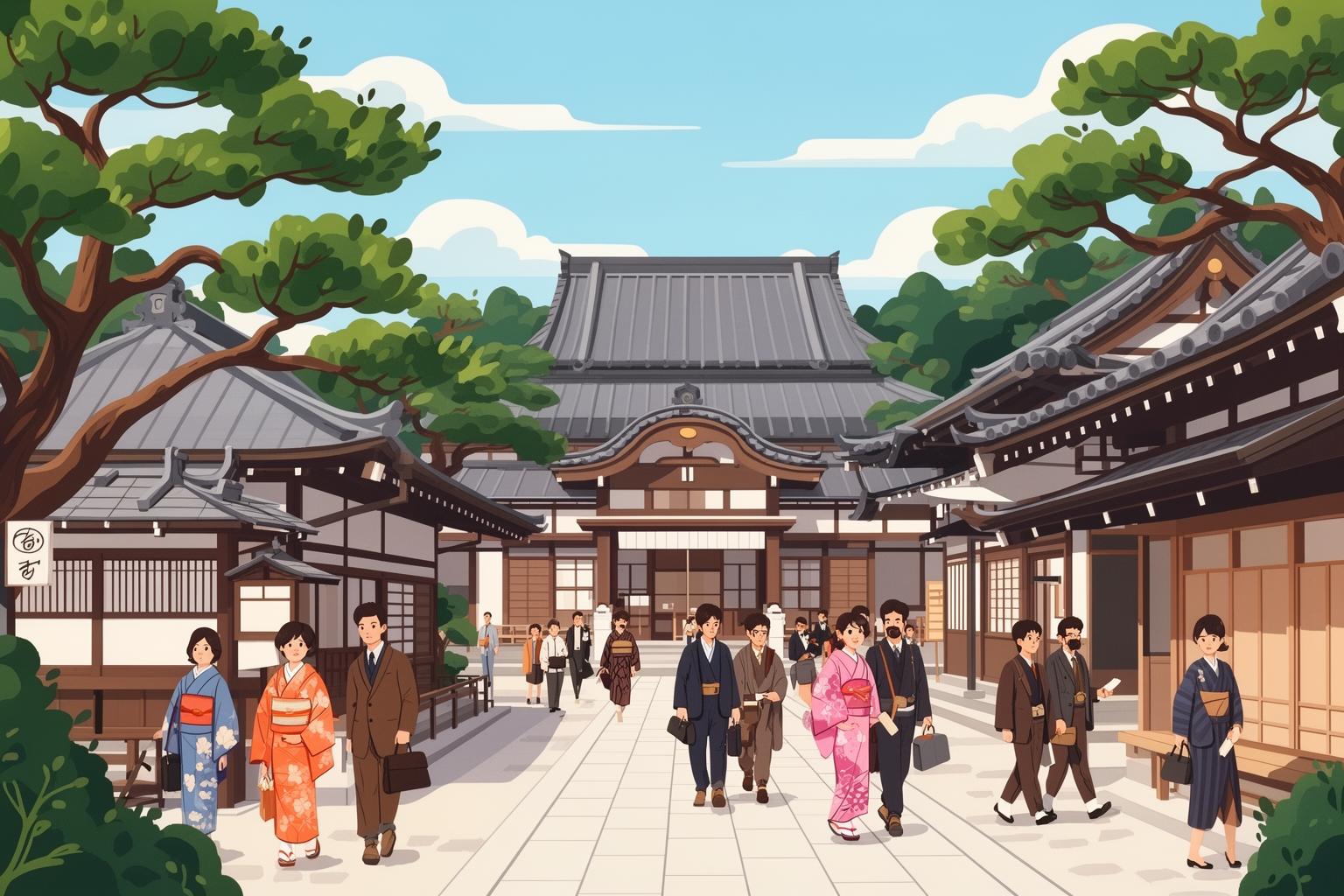
Long before Dogo Onsen became a popular spot for anime enthusiasts, it was immortalized in one of Japan’s most renowned novels, Botchan. Written in 1906 by Natsume Soseki, a towering figure in modern Japanese literature, the satirical novel follows a young, hot-headed mathematics teacher from Tokyo who relocates to Matsuyama for a teaching position. The book offers a sharp, humorous critique of provincial life and societal hypocrisy, with Dogo Onsen serving as the protagonist’s sole sanctuary. For him, the bathhouse provides a refuge from the trivialities of his colleagues, a place where he can wash away his worries. Soseki himself lived and taught in Matsuyama for a year in 1895, and the novel is deeply influenced by his own experiences. Today, the entire city of Matsuyama, especially Dogo, stands as a living tribute to Soseki and his beloved character. It’s a literary landscape waiting to be explored. Inside the Honkan, visitors can see the Botchan no Ma, the very room on the third floor that Soseki is said to have frequented. From its windows, you can glimpse the same views that may have inspired him over a century ago. The town abounds with references that bring the novel to life, turning a visit into a rich, layered experience that bridges fiction and reality. It’s a beautiful example of how a single work of art can shape the identity of a place for generations.
The Botchan Experience: More Than Just a Name
A pilgrimage in Soseki’s honor is both charming and delicious. Just outside the Honkan stands the Botchan Karakuri Clock, an ornate, multi-tiered clock tower that comes alive every hour. As the music plays, miniature figures from the novel emerge from hidden panels to reenact scenes from the story, a delightful mechanical tribute that draws crowds throughout the day. A short walk away, in the Dogo Haikara Dori shopping arcade, vendors sell Botchan Dango. This sweet treat, famously enjoyed by the novel’s protagonist, consists of three small mochi dumplings flavored with red bean paste, egg, and green tea, served on a skewer. Sampling the dango in the very town where the story takes place is a simple yet powerful way to connect with the narrative. The ultimate Soseki-themed adventure, however, is a ride on the Botchan Train. A diesel-powered replica of the original light steam locomotives that ran in Matsuyama during the Meiji era, this charming little train travels between Dogo Onsen and the city center. The conductors, dressed in period uniforms, and the ringing of the bell create the feeling of being truly transported back to Soseki’s era. As the train rattles along, passing modern cityscapes, it serves as a moving monument—a reminder of the literary history coursing through Matsuyama’s veins just as surely as the hot spring water flows beneath its streets.
Beyond the Bathhouse: Exploring the Dogo Onsen Area
While the Honkan undoubtedly stands as the main attraction, the surrounding area of Dogo offers a treasure trove of sights, sounds, and flavors that reward exploration. The town is compact and easily walkable, encouraging you to wander and discover on your own. It’s a place where the sacred and the secular, the ancient and the modern, coexist in perfect harmony. Spending a day or two exploring these nearby attractions gives a richer understanding of Dogo’s unique cultural tapestry.
Dogo Haikara Dori: A Shopping Arcade Through Time
Extending from the Dogo Onsen tram station all the way to the Honkan entrance is Dogo Haikara Dori, a lively covered shopping arcade that acts as the town’s main thoroughfare. The name “Haikara” is a Meiji-era term derived from the English “high collar,” referring to the fashionable Western styles of that period, and the arcade exudes a nostalgic charm. It’s a bustling corridor filled with an eclectic mix of shops. You’ll encounter traditional souvenir vendors offering local crafts such as Tobe-yaki pottery and Iyo-kasuri textiles alongside contemporary boutiques and cafes. The air is rich with the enticing aromas of street food — an ideal spot to sample Ehime Prefecture’s local specialties. Be sure to try Jakoten, a savory patty made from ground local fish, deep-fried to golden perfection—simple, rustic, and incredibly satisfying. Since Ehime is Japan’s citrus capital, you’ll also find an amazing assortment of mikan (mandarin orange) products, from fresh juice and soft-serve ice cream to jellies and even Mikan-flavored beer. The arcade is more than just a place to shop; it’s a social hub where families stroll in yukata, visitors browse for the perfect keepsake, and everyone enjoys an authentic taste of local culture.
Ishite-ji Temple: A Pilgrim’s Respite
Just a short walk from the main onsen area lies Ishite-ji, the 51st temple on the renowned Shikoku 88 Temple Pilgrimage. Stepping onto its grounds feels like entering another world. Unlike many Japanese temples known for serene minimalism, Ishite-ji is a vibrant spectacle of sights and sounds. The grounds are filled with weathered stone statues, intricate carvings, and historic buildings, including a three-storied pagoda designated as an Important Cultural Property. The temple’s atmosphere is dense and mysterious, feeling less like a polished institution and more like an accumulation of folk beliefs gathered over centuries. Its most famous feature is a dark, winding cave leading to an inner sanctuary. Navigating this subterranean passage, guided only by the faint glow of lanterns and the sound of your footsteps, offers a memorable and slightly eerie experience. Ishite-ji provides a striking contrast to the refined elegance of the onsen, revealing a raw and esoteric aspect of Japanese spirituality. It stands as a powerful reminder that Dogo has drawn pilgrims of all kinds for well over a thousand years.
Dogo Park and the Yuzuki Castle Ruins
For a moment of peace and fresh air, visit Dogo Park. Located on a small hill, this spacious park sits on the ruins of Yuzuki Castle, the former stronghold of the Kono clan who ruled the region in medieval times. Although the original castle no longer stands, the park preserves its moats and earthworks, creating a serene green oasis in the heart of the town. A small reconstructed samurai compound offers insight into the area’s feudal past. The park’s highlight, however, is the panoramic view from the observatory at its highest point. From here, you can gaze across the entire Dogo area and the city of Matsuyama beyond. It’s an excellent spot for a leisurely walk, a picnic, or simply to sit and take in the scenery. In spring, Dogo Park becomes one of the city’s top hanami (cherry blossom viewing) destinations, when hundreds of cherry trees burst into bloom, covering the old castle grounds in a delicate sea of pink and white. It’s an ideal place to appreciate the natural beauty surrounding this historic onsen town.
Practical Guidance for Your Pilgrimage
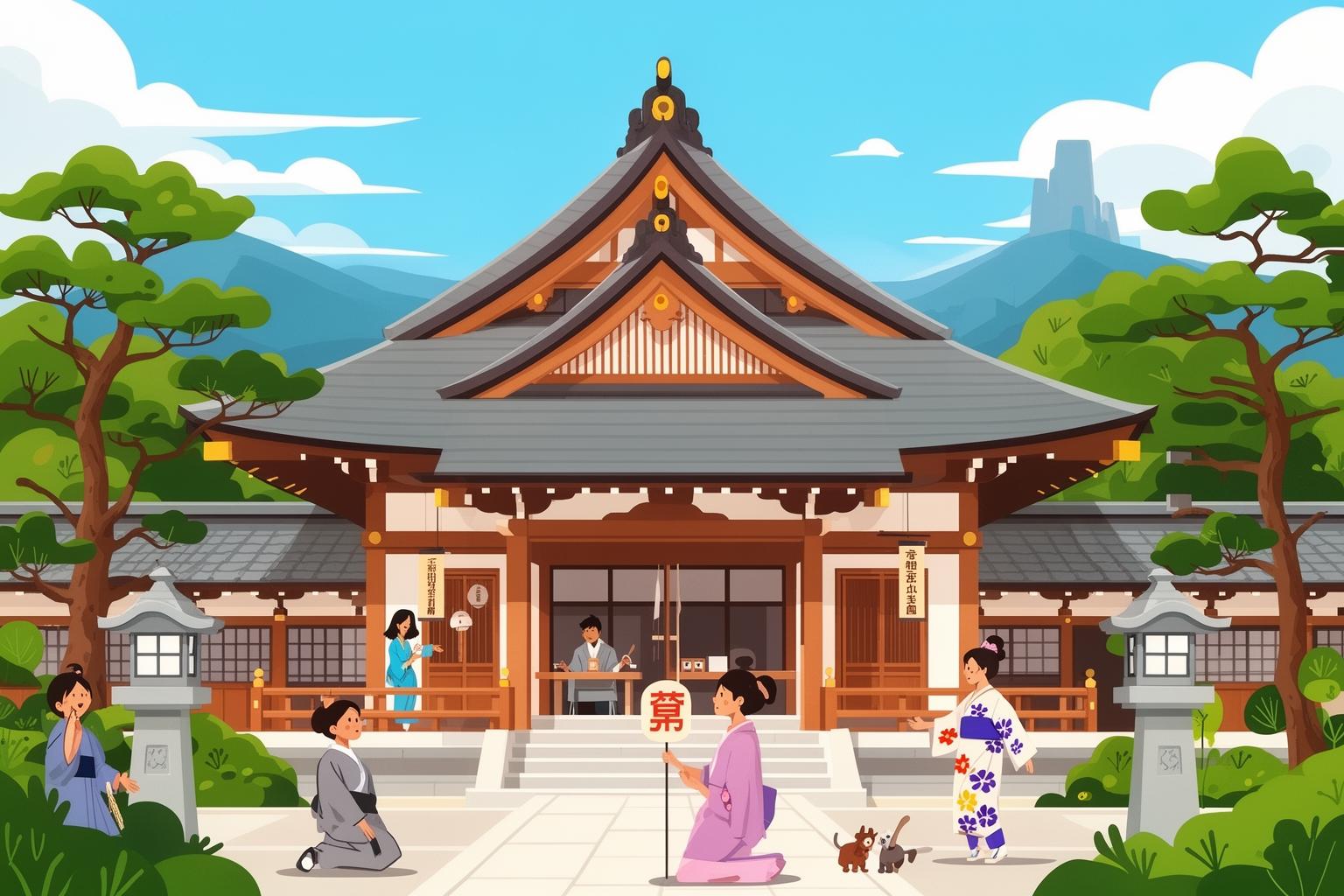
Exploring a new destination, particularly one steeped in tradition, can feel overwhelming, but Matsuyama and Dogo warmly welcome travelers. With some preparation, your visit can be as smooth and soothing as the onsen waters themselves. Here is some practical advice to help you enjoy your journey to this charming part of Japan.
Getting to Matsuyama and Dogo Onsen
Matsuyama, the largest city on Shikoku Island, is well-connected. The easiest way to get there is by flying into Matsuyama Airport (MYJ), which offers frequent domestic flights from major cities such as Tokyo (Haneda), Osaka (Itami), and Fukuoka. From the airport, a convenient limousine bus takes you directly to the Dogo Onsen area in about 40 minutes. For travelers with a Japan Rail Pass, the train journey is both scenic and enjoyable. From Honshu, take the Sanyo Shinkansen to Okayama Station, then transfer to the JR Shiokaze Limited Express, which crosses the impressive Great Seto Bridge and arrives at JR Matsuyama Station in roughly 2.5 hours. Once in Matsuyama, the charming streetcar system, known as “Iyotetsu,” is invaluable. A dedicated tram line runs from both JR station and the main city center (Okaido) directly to the final stop at Dogo Onsen, making access easy and straightforward.
Timing Your Visit and Navigating the Onsen
Although Dogo is a delightful destination year-round, the best weather for exploring is in spring (March to May) and autumn (October to November). Spring showcases cherry blossoms, while autumn brings crisp air and vibrant fall foliage. It’s important to note that the beloved Dogo Onsen Honkan is currently undergoing a significant multi-year conservation and repair project. While much of the building is partially covered by scaffolding and a beautiful art installation, it remains partially open. Bathing is still available in the Kami no Yu bath, though other areas, like Tama no Yu and the upstairs rest lounges, may be closed. This preservation work is essential to ensure the Honkan endures for another century, so it’s vital to adjust your expectations accordingly. Fortunately, Dogo offers excellent alternatives.
The Alternatives: Asuka-no-Yu and Tsubaki-no-Yu
To accommodate visitors during the Honkan’s restoration and celebrate Dogo’s rich history, a stunning new bathhouse called Asuka-no-Yu opened in 2017. Its architecture is inspired by the Asuka period (538–710 AD), when Prince Shotoku is said to have visited Dogo. The interior showcases traditional craftsmanship blended with contemporary Japanese art, providing a luxurious and artistically enriching bathing experience. Next door is Tsubaki-no-Yu (Camellia Bath), a larger and simpler bathhouse favored by locals. For those seeking an authentic, no-frills Japanese public bath experience, this is the spot. Visiting all three bathhouses offers a fascinating comparison of onsen culture across different periods.
What to Wear and Onsen Etiquette
One of the highlights of staying in Dogo is the yukata culture. Nearly every ryokan (traditional inn) and hotel provides guests with a yukata and geta sandals. Wearing your yukata while strolling through town, shopping in the arcade, or heading to the onsen is perfectly acceptable—and highly encouraged—creating a festive and timeless atmosphere. For first-time onsen visitors, the etiquette is straightforward and centers on respect and cleanliness. You will receive a small towel for modesty and washing and a larger towel for drying off. In the changing room, you must disrobe completely; swimsuits are not permitted. Before entering the bath, thoroughly wash your body at the shower stations. The small towel can be used for washing but should never be placed in the bath water; most people rest it on their heads or beside the bath. Finally, the onsen is a space for quiet relaxation, not for swimming or loud conversation. By following these simple guidelines, you can confidently enjoy one of Japan’s most treasured cultural experiences.
The Enduring Magic of Dogo
As your visit comes to an end and you soak one last time in the silky, restorative waters, the true magic of Dogo becomes clear. This is a place of layers, a destination where various histories and stories coexist and enrich each other. It’s a town where you can start your day by following the footsteps of a literary giant, contemplating the birth of modern Japanese consciousness, and finish it marveling at the architectural fantasy that inspired one of the world’s most beloved animated films. The steam rising from Dogo’s earth is more than just heated water; it is the visible breath of a culture that deeply cherishes its past while continually and brilliantly reinventing it for the future. For someone who has long admired the connections tying East Asian traditions, Dogo feels like a focal point. It embodies ancient Shinto beliefs in nature’s purifying power, the refined intellectualism of the Meiji Restoration, and the boundless creativity of modern Japanese storytelling. Dogo Onsen is not a place you merely see; it is a place you feel. It seeps into your skin, warming you from within, leaving you with peace and a profound bond to the stories—both real and imagined—that flow through its timeless heart. It’s a pilgrimage well worth making, a journey that promises to leave you, in every sense, spirited away.