
There are stories that stay with you, not just as memories, but as echoes in your own world. They whisper to you from a certain slant of late afternoon light, a passing train, a name you feel you should know but can’t quite place. Makoto Shinkai’s masterpiece, Kimi no Na wa, or Your Name., is one such story. It’s a film that captured the global imagination with its breathtaking visuals, its heart-wrenching story of connection and loss, and its profound sense of musubi—the mysterious force that binds people, places, and time itself. The film feels like a dream, a beautifully rendered fantasy. But what if I told you that the threads of this dream are woven into the very fabric of Japan? The hyper-realistic cityscapes and serene mountain towns are not just products of an artist’s imagination; they are real, tangible places you can walk through, breathe in, and experience for yourself. This is the magic of a sacred spot pilgrimage, a journey to find the reality behind the animation, and in doing so, discover a deeper connection to the story. We will trace the parallel paths of Taki Tachibana and Mitsuha Miyamizu, diving headfirst into the electric labyrinth of Tokyo before seeking the quiet soul of the Gifu countryside. It is a tale of two Japans, one of modern ambition and one of ancient tradition, both bound together by the invisible, unbreakable red string of fate. This guide is your map to that journey, a way to find the feeling of the film in the rhythm of daily life, to stand in the very spots where Taki and Mitsuha’s worlds collided, and perhaps, to ask the universe the film’s defining question: “What’s your name?”
This journey to the real-life locations of Your Name. is a form of sacred spot pilgrimage, much like exploring the Kamakura of Our Little Sister.
The Urban Heartbeat: Discovering Taki’s Tokyo
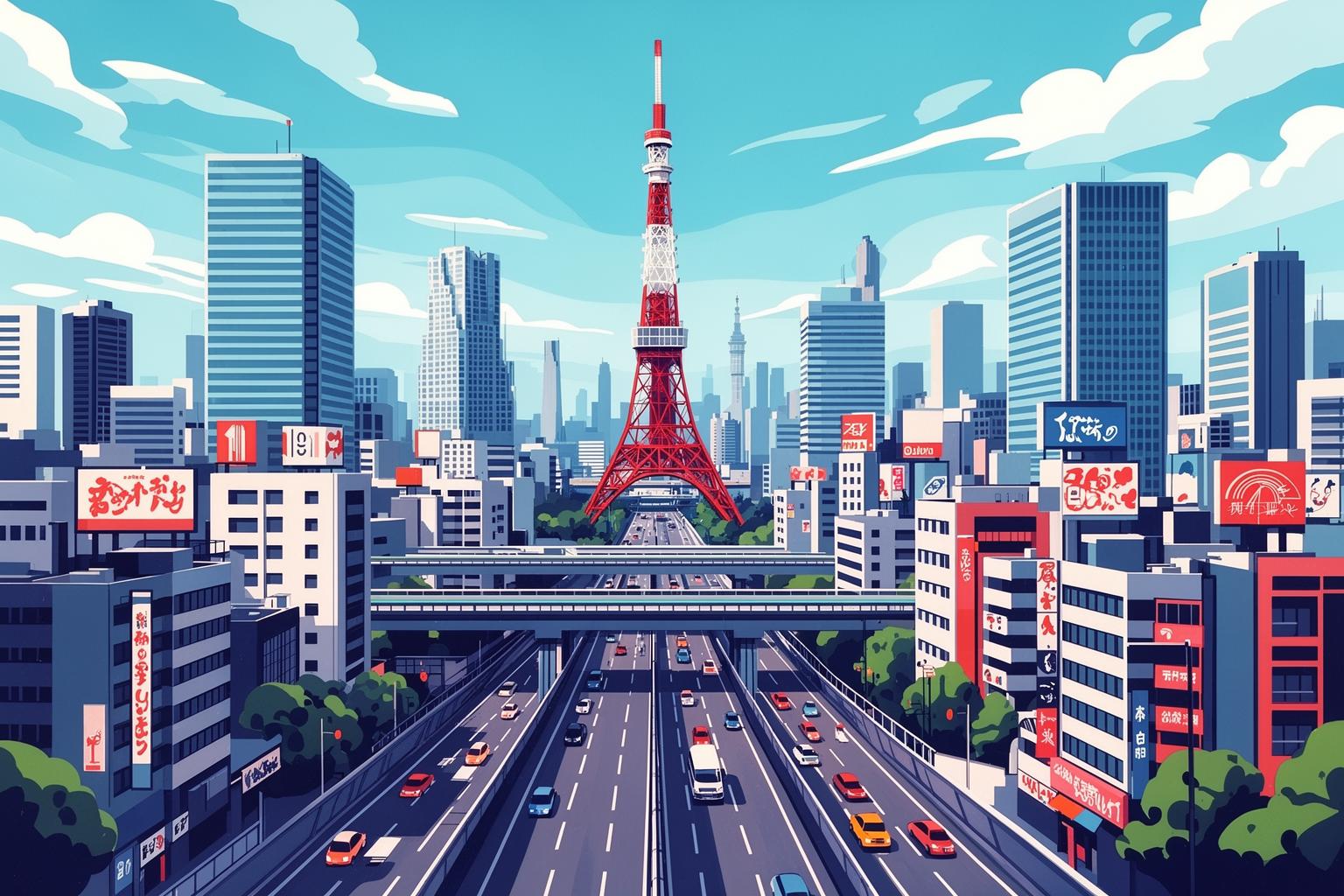
Our pilgrimage begins where Taki’s story takes place: the vast, vibrant metropolis of Tokyo. Shinkai’s portrayal of the city is far more than a simple backdrop; it acts as a living character—an entity of glass, steel, and light. He captures both its overwhelming scale and its unexpected intimacy with the eye of a painter. Walking these streets means stepping directly into the film’s world, where every skyscraper, train line, and pedestrian crossing is charged with narrative energy. This journey isn’t just about finding photo spots; it’s about sensing the city’s relentless forward motion, the very force that shapes Taki’s life and dreams. It’s about appreciating the beautiful loneliness that can exist amid millions, a central theme echoed throughout the film. You’ll find yourself looking skyward, just as Taki does, at a horizon framed by concrete canyons—searching for a sign, a comet, a connection beyond the everyday rush.
The Iconic Red Steps: Suga Shrine in Yotsuya
No place is more central to the emotional climax of Your Name. than the iconic red-railed staircase. This is where Taki and Mitsuha, years after their miraculous bond has faded into memory, finally reunite. The tension, the hesitant turn, the desperate question—all unfold on these steps. In reality, this staircase is part of Suga Shrine, tucked away in a quiet residential area of Yotsuya. Finding it is part of the experience. Leaving Yotsuya Station or Yotsuya-Sanchome Station, you wander through narrow streets, away from the hustle of central Shinjuku. The atmosphere shifts—the air grows still, filled with sounds of local life: the hum of a vending machine, rustling leaves, distant conversations through open windows. Walking up a gentle incline, there it is. The view is so perfectly recreated in the film that a surreal sense of déjà vu sets in. Standing at the top or bottom, looking across, you can almost hear the film’s score rising. It feels like sacred ground for fans. Many come to re-enact the famous scene, united by a quiet reverence. You’ll see people taking photos, but it’s more than tourism; it’s a pilgrimage honoring a deeply moving story. For the fullest experience, visit in the late afternoon when the “magic hour” light—a signature element in Shinkai’s work—bathes the scene, casting long shadows and making the red railings glow. It’s a moment of cinematic serenity and profound peace. Remember, this is a residential area and an active place of worship, so please be mindful of noise and respectful of the neighbors.
A View from the Top: Shinjuku and the Docomo Tower
Shinjuku serves as both Taki’s playground and workplace, a symbol of urban Japan’s zenith—a dizzying collage of neon lights, towering skyscrapers, and waves of people. Shinjuku Station, the world’s busiest train hub, is perfectly depicted, conveying the sensation of being a small cog in a massive, intricate machine. One of the film’s visual anchors is the NTT Docomo Yoyogi Building, with its distinctive wedding-cake-like spire and clock face, a constant presence grounding the animated city in a tangible reality. Though you can’t enter the Docomo Tower itself, its presence is undeniable. A great spot to savor this view is Shinjuku Southern Terrace, a pleasant pedestrian area near the South Exit of the station. Another significant pilgrimage site is the pedestrian bridge near Shinjuku Station, featured in several scenes, where you can pause to watch the endless flow of traffic and trains below, feeling the city’s pulse as the characters do. Particularly evocative is the Shintoshin Pedestrian Bridge, west of the station, offering a classic skyline view that defines the film’s urban aesthetic. For a truly cinematic perspective, visit the observation decks of the Tokyo Metropolitan Government Building. Entry is free, and the panoramic views, especially at sunset or nighttime, are breathtaking. From here, you can see the Docomo Tower, Shinjuku Gyoen, and the sprawling city stretching to the horizon. This vantage point captures the vast scale of Taki’s world and the immense physical and emotional distance that separated him from Mitsuha.
Taki’s World: Cafes and Part-Time Jobs
To immerse yourself fully in Taki’s everyday life, a visit to the real-life inspiration for his part-time job is essential. The elegant Italian restaurant “Il Giardino delle Parole” in the film is modeled on Cafe La Bohème, located near the Shinjuku Gyoen National Garden. Stepping inside feels like entering the film’s set: high ceilings, ornate décor, and a grand open kitchen are faithfully represented. The restaurant embraces its connection to the film warmly; staff welcome fans happily. Here, you can enjoy an authentic Italian meal—perhaps at a table overlooking the park—and imagine Taki bustling about, juggling orders and navigating his complicated relationship with Okudera-senpai. This experience is a wonderful way to connect to the more ordinary, slice-of-life moments in the story. Its location is meaningful too: Shinjuku Gyoen serves as the main setting for another of Makoto Shinkai’s cherished films, The Garden of Words. Visiting the garden before or after dining at Cafe La Bohème feels like a pilgrimage within a pilgrimage, linking threads of Shinkai’s cinematic universe. The park itself is a stunning oasis in the city’s heart—a peaceful, reflective contrast to Shinjuku’s energy, just as the countryside contrasts with the city in Your Name.
The Soul of Itomori: Mitsuha’s Hida
Leaving Tokyo’s concrete canyons behind, our journey heads westward, deep into the heart of the Japan Alps. We seek Itomori, the fictional hometown of Mitsuha Miyamizu. Although Itomori isn’t found on any map, its essence is a beautiful blend of real locations, mainly centered around the city of Hida in Gifu Prefecture. Reaching here is a journey in itself, gradually shedding the urban noise for the serene mountain calm. Traveling via the Shinkansen to Nagoya and then transferring to the JR Takayama Main Line, you’ll witness the scenery shift from endless cityscapes to lush river valleys and dense cedar forests. This transformation is vital, mirroring the disorienting yet magical change that Taki and Mitsuha experience. The air feels different, life’s pace slows, and you begin to sense the deep-rooted traditions that shape Mitsuha’s world. Hida is a place where time seems altered, where the past isn’t just remembered but lives on vibrantly in the present. This world Mitsuha longed to escape is also the source of her identity and the ancient customs she upholds as a Miyamizu shrine maiden.
The Gateway to Tradition: Hida-Furukawa Station
Hida-Furukawa Station is your entry point into the world of Itomori. For fans of the film, the station platform is instantly recognizable. This is where Taki, armed with only his fractured memories and sketches, steps off the train and begins his determined search for Mitsuha. The film replicates the station with painstaking detail, from the footbridge design to the signs on the platform. Standing here, you can perfectly frame the movie’s shot, watching the wide-view express train pull away just as Taki did. The town has warmly embraced its anime fame. Inside the station, you may find posters and even one of the braided cords (kumihimo) that play a central role in the film’s story. Don’t be surprised to spot the local mascot, Hidakuro—a cheerful cow celebrating the region’s renowned Hida beef. This charming touch of local culture grounds the cinematic experience in authenticity. The station is more than a photo opportunity; it’s a portal. It symbolizes the moment when Taki’s world physically intersects with Mitsuha’s—the start of his quest to bridge their lives. Stepping out of the station and into Hida-Furukawa feels like stepping back in time.
A Treasury of Knowledge: The Hida City Library
One of the most pivotal scenes in Taki’s search unfolds in a library, where he and his friends finally uncover the heartbreaking truth about Itomori and the comet. This beautifully designed, modern library is not fictional; it is the Hida City Library, just a short walk from the station. Its interior is a stunning mix of warm wood and natural light, featuring a unique circular layout perfectly captured in the film. The library has become a must-visit for pilgrims, and the staff are very welcoming. Aware of their special role, they have created a process for fans—you can request permission at the front desk to take photos in the exact spot where Taki sat. They appreciate the location’s significance and gladly share it, provided visitors respect the library’s primary role as a working public library for the community. Sitting at one of the tables, surrounded by the quiet hum of study and the scent of aged paper and polished wood, you sense the weight of Taki’s discovery. It is a moment of profound connection to the film’s narrative, where the mystery begins to unravel. The library exemplifies how a community can gracefully embrace newfound fame while preserving the peaceful atmosphere essential to daily life.
Echoes of Itomori: Exploring the Town
While the station and library are direct physical inspirations, the overall atmosphere of Itomori is drawn from the charming streets of Hida-Furukawa itself. To truly sense Mitsuha’s world, you must simply wander. Follow the Seto River—a narrow canal flowing through the town where thousands of colorful carp swim in crystal-clear water. Though this scene isn’t directly in the film, its aesthetic—the harmony of nature within the town—aligns perfectly with Itomori’s spirit. Shirakabe Dozogai Street, with its striking white-walled storehouses and black-tiled roofs, evokes the traditional architecture of Mitsuha’s hometown. As you stroll, you’ll pass sake breweries operating for centuries and quaint shops selling local crafts. Two additional spots are worth seeking out for dedicated fans. The Keta Wakamiya Shrine, with its long stone staircase, is often cited as an inspiration for the Miyamizu Shrine’s setting. While not the primary model, it contributes to the overall atmosphere. Also, a local bus stop has become a popular photo spot as it resembles the one where Mitsuha lamented her small-town life. Exploring Hida-Furukawa means absorbing the details that, combined, create the fictional world of Itomori. It involves tasting Gohei Mochi, a grilled rice cake coated in sweet miso and walnut sauce, which Taki eats in the film. It’s about feeling the slower rhythm of life that both challenged and defined Mitsuha.
The Spiritual Core: The Lake and the Shrine

Beyond the town, Itomori’s most powerful and mystical features—the crater lake and the sacred Miyamizu Shrine—are also rooted in reality. These sites lie at the core of the film’s mythology, connected to ancient customs, celestial phenomena, and the very essence of musubi. While reaching their real-life counterparts involves additional travel, the experience is vital for any pilgrim seeking to engage deeply with the story’s central themes. These locations possess tremendous natural beauty and spiritual importance, where the line between the physical world and the film’s universe seems remarkably fragile.
The Goshintai and Miyamizu Shrine
Mitsuha’s life is intimately tied to her family’s shrine, the Miyamizu Shrine. Its architecture, especially the maintorii gate and the surrounding forest, draws heavy inspiration from the Hie Shrine in the nearby city of Takayama. Takayama is a larger, more tourist-oriented city known for its well-preserved historic district, reachable by a short train or bus ride from Hida-Furukawa. Perched on a hillside, Hie Shrine’s approach through a forest of towering, ancient cedar trees immediately conjures the atmosphere of Miyamizu’s domain. The air is cool and redolent with damp earth and cedar. Moss covers the stone lanterns lining the path, evoking a timeless, sacred ambiance. In the shrine’s tranquil grounds, it is easy to picture Mitsuha fulfilling her role as a shrine maiden, crafting the kuchikamizake in a ritual that spans generations. Though the goshintai—the sacred crater where the shrine’s deity dwells—is a fictional element, visiting Hie Shrine offers a profound insight into the Shinto beliefs that inform the film’s spiritual core. It connects you to the concept of an unseen realm, where gods and traditions flow continuously through time, anchoring Mitsuha’s identity.
The Crescent Lake: Lake Suwa in Nagano
One of the most striking and iconic images in Your Name. is the crescent-shaped Lake Itomori, nestled within a crater formed by an ancient comet. The visual impact, especially during the heart-wrenching scenes of the second comet’s arrival, is unforgettable. This breathtaking view is not imaginative; it is based on Lake Suwa, located in the neighboring Nagano Prefecture. The best vantage point to take in this cinematic panorama is from the observation platform at Tateishi Park. Positioned high on a hillside overlooking the lake and the adjacent city, the view from here is genuinely awe-inspiring. The crescent shape of the lake, the curve of the city’s lights, and the mountains framing the scene align so perfectly with the film’s imagery it seems the animation was drawn directly from this spot. Visiting at dusk, during the “magic hour” favored by Shinkai, is almost a spiritual experience. As the sun sets, the sky bursts into color while the city below begins to glitter. This transition from day to night mirrors the film’s blurring of boundaries between worlds, making it a powerful moment for reflection on themes of fate, catastrophe, and the fragile beauty worth protecting. Although reaching Tateishi Park can be challenging—often requiring a taxi or a strenuous uphill walk from Kami-Suwa Station—the reward is an unforgettable experience for any film pilgrim.
A Pilgrim’s Practical Guide
Embarking on a Your Name. pilgrimage is a deeply rewarding adventure, though it requires some planning to connect the story’s two distinct settings. A thoughtful approach will help your journey run smoothly, letting you immerse yourself in the atmosphere of these unique places without worrying about logistics. Think of it like crafting your own kumihimo braid: each thread represents a different part of the trip, and when woven together, they form a beautiful, cohesive experience.
Planning Your Itinerary: Tokyo and Hida
The most logical way to organize your trip is to follow the film’s geography. Start in Tokyo, allowing at least two to three full days to explore Taki’s world at a comfortable pace. You might dedicate one day to the Shinjuku area—the station, pedestrian bridges, Cafe La Bohème, and Shinjuku Gyoen. Another day can be spent making the trip to the quieter Yotsuya neighborhood to visit the Suga Shrine staircase. Traveling from Tokyo to the Hida region marks your entry into Mitsuha’s world. The most efficient way is taking the Tokaido Shinkansen to Nagoya (about 1.5 to 2 hours) and then transferring to the JR Hida Wide View Express train to Takayama (about 2.5 hours). This scenic train route winds through mountains and along rivers, serving as a highlight of the journey. Takayama makes a convenient base due to its wider range of accommodations, with a short local train ride (around 20 minutes) to Hida-Furukawa. Plan to spend at least two days in this area—one day exploring Hida-Furukawa’s station and library, and another visiting Takayama and its Hie Shrine. For the dedicated pilgrim, the trip to Lake Suwa in Nagano is a vital, though separate, part of the itinerary. It’s best reached from Tokyo via the JR Chuo Line Limited Express to Kami-Suwa Station and can be done as a long day trip or an overnight stay to fully enjoy the sunset views. If you plan to cover this entire multi-city route, a Japan Rail Pass can be very cost-effective, covering the expensive Shinkansen and limited express train fares.
Weaving Your Journey: Seasonal Considerations
The world of Your Name. is primarily set in the lush, vibrant greens of late summer, but the locations are stunning throughout the year, each season offering a unique perspective on the story. Spring brings cherry blossoms, casting a delicate pink frame around the Suga Shrine steps and adding a fleeting beauty to the parks and towns. Summer, as depicted in the film, offers deep greens and the lively hum of cicadas, fully immersing you in the movie’s atmosphere. Autumn is arguably the most spectacular season for the Hida region and Lake Suwa, with mountains bursting into brilliant reds, oranges, and yellows that create a breathtaking backdrop for your pilgrimage. The crisp, clear air offers excellent visibility from Tateishi Park. Winter transforms the Gifu countryside into a serene, white wonderland. Hida-Furukawa blanketed in snow is extraordinarily picturesque and peaceful, providing a tranquil and reflective experience—though be prepared for cold weather and possible heavy snowfall. The season you choose will depend on the mood you prefer, but none will disappoint.
Beyond the Screen: Embracing the Culture
While the aim is to visit the film’s real-life locations, the true magic of the journey lies in engaging with the culture of these places. This pilgrimage is more than just ticking off photo spots. In Tokyo, take time to linger in a cafe, get lost in the Shinjuku crowds, and feel the city’s rhythm. In Hida, slow your pace: visit a sake brewery to sample the local craft perfected over centuries, savor a meal of Hida beef, an esteemed regional delicacy, and converse with locals who are often proud and happy to share their hometown. Remember that Suga Shrine and Hie Shrine are active places of worship. Observe proper etiquette: bow at the torii gate, purify your hands at the chozuya water pavilion, and remain quiet and respectful within the main precincts. At the Hida City Library, keep in mind that it serves the community. By showing respect and genuine interest, you transform from a mere tourist into a welcomed guest—a true pilgrim. This approach enriches your journey and helps ensure these places stay special for fans who will follow in your footsteps.
The Lingering Echo

A pilgrimage tracing the footsteps of Taki and Mitsuha is a journey that lingers in your mind long after you’ve returned home. It reveals that the stunning beauty of Makoto Shinkai’s world is not purely imaginary. It can be found in the quiet grace of a residential staircase, the organized chaos of a city intersection, the serene silence of a rural library, and the breathtaking views from a mountainside park. Standing in these spots, you sense an undeniable connection, where the boundary between the screen’s world and the one beneath your feet fades. The story’s themes of distance, memory, and the invisible threads that bind us feel more vivid, more authentic. You arrive searching for the anime’s locations but depart with a deeper appreciation for Japan’s diverse beauty—the vibrant, futuristic heartbeat of its cities and the timeless, soulful rhythm of its countryside. This journey reminds us that even across vast distances, and perhaps even through time, we all seek connection. The red braided cord of your own journey awaits being tied. All that remains is to take the first step.