There are places on this earth that feel older than time, where the air itself seems to hum with a forgotten frequency. Yakushima is one such place. It isn’t an island you simply visit; it’s an island you experience, a living, breathing entity that works its way into your soul. Floating off the southern coast of Kyushu, this sphere of granite and green is a world unto itself, a UNESCO World Heritage site where ancient cedar trees, known as Yakusugi, have stood sentinel for millennia. For many, however, this primeval landscape is best known by another name: the Forest of the Deer God. This is the island that breathed life into Hayao Miyazaki’s animated masterpiece, Princess Mononoke. It’s not a filming location, but something far more profound—it is the spiritual source, the very heartwood from which the film’s powerful ecological fable was carved. As a hiker, the call of Yakushima is twofold. It’s a summons to tackle some of Japan’s most rewarding and challenging trails, and it’s an invitation to step through the screen into a world where nature’s power is palpable, raw, and utterly magnificent. This is a journey into a real-life animation, a pilgrimage to the soul of a story that has captivated the world.
Discover even more of the island’s timeless magic by exploring Yakushima’s ancient allure, which deepens the connection to the spirit behind Princess Mononoke.
The Whispering Woods: Entering a Living Animation
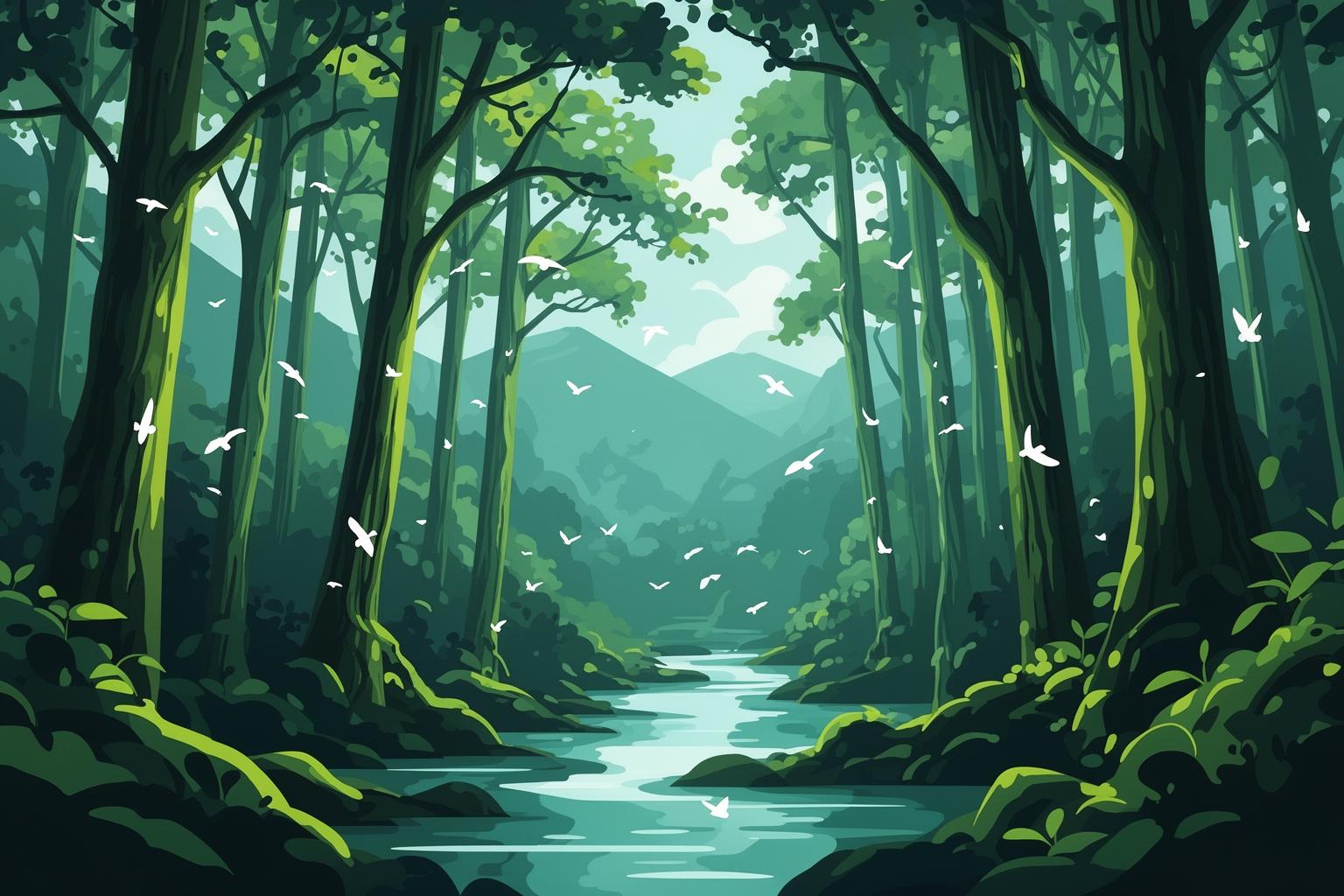
Your journey into the world of Mononoke truly begins at Shiratani Unsuikyo, the Ravine of White Cloud and Water. From the moment you step onto the trail, the outside world fades away, replaced by a lush symphony of green. This is more than just a forest; it is a living cathedral of moss. It clings to everything—the twisted roots of ancient trees, the surfaces of massive granite boulders, and the fallen logs that span rushing streams. It is said that over 600 varieties of moss thrive here, forming a soft, sound-absorbing carpet that turns the entire ravine into a tranquil sanctuary. The air is heavy with humidity and rich with the scent of damp earth and decaying wood, a fragrance of life, death, and rebirth cycling through centuries. Light has difficulty piercing the dense canopy, but when it does, it filters down in ethereal beams, illuminating patches of the forest floor like divine spotlights. In these moments, you grasp how Miyazaki and his team of artists captured such a powerful sense of magic. You can almost glimpse the Kodama, the tiny tree spirits from the film, their heads rattling as they peek from behind a moss-covered branch. The ravine features multiple trails suited to different fitness levels. The shorter routes can be completed in an hour or two, passing magnificent trees like the Nidaiosugi and Yayoisugi. Yet for the true explorer, the path to take is the one leading deeper, toward the renowned Moss Forest (Kokemusu-no-mori). This area is unquestionably the heart of Mononoke’s inspiration. Twisted trees draped in thick, velvety green cloaks tower over a landscape so brimming with life it feels otherworldly. Silence is broken only by the sound of your own breathing and the crystal-clear water of the Shiratani River flowing over granite. For the more adventurous, the trail ascends steeply to Taikoiwa Rock. The climb is demanding, a scramble over roots and rocks, but the reward is breathtaking. You emerge from the dense forest onto a vast, exposed granite dome, where the world unfolds beneath you. A panoramic view of Yakushima’s mountainous interior stretches to the horizon, a sea of green peaks that seem to extend endlessly. Standing there, high above the forest that inspired the Deer God, you feel a profound sense of scale and perspective—a humbling reminder of nature’s timeless grandeur.
Jomon Sugi: The Quest for an Ancient King
While Shiratani Unsuikyo captures the essence of Mononoke’s atmosphere, the trail to Jomon Sugi reveals its soul. This is far from a casual stroll; it’s an epic, full-day trek lasting ten to twelve hours, challenging your endurance and culminating in an encounter with true antiquity. The ultimate reward is Jomon Sugi, a colossal Yakusugi cedar said to be one of the oldest trees on Earth. Estimates of its age vary widely, from around 2,170 to an astonishing 7,200 years. Standing before it is to connect with a past predating written language, a living witness to the rise and fall of civilizations. The journey begins in the pre-dawn darkness at the Arakawa Trailhead. With a headlamp slicing through the pitch black, you join a quiet line of fellow hikers. The first hours follow the Anbo Forest Railway, a narrow-gauge track once used for logging. The steady rhythm of your boots on the wooden sleepers creates a meditative pace as the forest gradually stirs with birdsong and the rustle of hidden creatures. You may catch sight of a Yakushika deer—smaller and more compact than its mainland relatives—or a Yakuzaru macaque foraging nearby. As dawn breaks, soft pastel hues paint the sky, revealing the breathtaking ravine you are crossing. The railway portion is mostly flat, a deceptive prelude to what lies ahead. After roughly eight kilometers, you leave the tracks and begin the real mountain climb. The Okabu Trail is steep, demanding, and breathtakingly beautiful. You’ll ascend wooden staircases and winding paths, scrambling over a tangle of massive roots. Along the route, you pass other giant cedars, each remarkable: Meotosugi (Husband-and-Wife Cedars) joined at the branches, and Daiosugi (Great King Cedar), a massive stump hinting at the giants that stood here before the logging era.
Preparing for the Journey
Such a trek requires respect and thorough preparation. This is no path for casual shoes or a light jacket. Proper gear is essential. Sturdy, waterproof hiking boots with strong ankle support are indispensable. Yakushima’s weather is notoriously unpredictable; rain is almost guaranteed, making a breathable, high-quality rain jacket and pants a must. Dress in synthetic layers—cotton is best avoided as it retains moisture and raises the risk of hypothermia. Your backpack should hold at least two liters of water (there are refill stations with fresh mountain spring water along the way), high-energy snacks and a packed lunch, a first-aid kit, and a headlamp with spare batteries. Many hikers start before 5 AM, so the headlamp is crucial for safety. Access to the Arakawa Trailhead is restricted to private vehicles during peak season (March to November), so you must take a shuttle bus from the Yakusugi Museum. Tickets need to be purchased in advance, and it’s advisable to book them as soon as your dates are confirmed. Though the trail is well-marked, hiring a local guide is highly recommended for first-timers. They not only ensure safety but enrich the experience by pointing out unique flora and fauna, sharing local legends, and maintaining a sustainable pace.
The Reward: Standing Before Timelessness
The final climb to Jomon Sugi is a steep ascent that sets your legs burning and tests your lungs with the thin mountain air. Then, you arrive. To protect the fragile root system, the tree is viewed from a specially built wooden deck about fifteen meters away. Any initial disappointment at the distance quickly melts away in the presence of the tree itself. Jomon Sugi is not traditionally beautiful; it is a gnarled, weathered, and resilient giant. Its trunk is a chaotic mass of hardened bark, its branches twisted arthritically by countless typhoons. It is a survivor. Standing there, surrounded by the quiet reverence of fellow hikers, a profound awe takes hold. You are beholding a living organism that was a sapling when the pyramids of Giza were constructed. It’s a moment that profoundly resets your sense of time and significance. This is the ultimate embodiment of the theme in Princess Mononoke: the untamable, enduring power of nature. This tree personifies the Forest Spirit—an existence that transcends the fleeting concerns of humanity.
Beyond the Ancient Cedar: The Island’s Diverse Soul
As awe-inspiring as the hikes to Shiratani Unsuikyo and Jomon Sugi are, they reflect just one aspect of Yakushima’s essence. This island serves as a microcosm of Japan’s ecosystems, featuring a subtropical coastline that transitions into a cool, temperate alpine interior. To fully grasp its spirit, you need to discover its other marvels. On the path to Jomon Sugi, you’ll find Wilson’s Stump (Wilson-kabu), the massive remains of a cedar tree felled centuries ago. Step inside its hollowed trunk and look upward; the opening at the top forms a perfect, whimsical heart shape, a beloved photo spot for tired hikers. But descend from the mountains, and an entirely different world awaits. The island is encircled by a road offering breathtaking coastal views. Head to Nagatahama Beach on the northwest shore, a pristine stretch of golden sand and the largest nesting ground for loggerhead sea turtles in the North Pacific. From May to August, guided tours allow you to witness the incredible sight of female turtles hauling themselves ashore under cover of darkness to lay their eggs. Yakushima is also an island defined by water. Its name literally means “medicine mountain,” yet its immense rainfall gives it another identity. The island is renowned for its powerful waterfalls. Senpiro-no-taki and Oko-no-taki are two of the most striking, tumbling down immense granite cliffs with thunderous force. Both are easily reachable by car, providing dramatic rewards for minimal effort. After days of challenging hiking, nothing soothes aching muscles better than soaking in a natural onsen. For a truly unique experience, visit the Hirauchi Kaichu Onsen on the southern coast. These tidal hot springs emerge from cracks in the seaside rocks only during the few hours around low tide. Bathing in volcanically heated water while the Pacific Ocean’s waves crash just feet away offers an unforgettable, uniquely Yakushima experience.
A Taste of the Island
The island’s offerings extend to its cuisine. The local food is hearty, fresh, and closely tied to the environment. A signature dish is flying fish (tobiuo), often served deep-fried to a crisp, fins and all, or as delicately sliced sashimi. The seafood is, naturally, outstanding. Be sure to sample the local citrus as well. The ponkan and tankan oranges are incredibly sweet and juicy, making a perfect trail snack. And to cap off a day of hiking, try the local shochu, Mitake, a sweet-potato-based spirit that is as integral to the island’s culture as the ancient cedars.
The Spirit of Mononoke: A Modern-Day Fable
Why does this particular island, along with the film it inspired, resonate so profoundly with people worldwide? Because the story of Princess Mononoke reflects the story of our era. It’s a nuanced, uncompromising exploration of the clash between human industry and the natural world. It offers no simple villains or heroes. Lady Eboshi, who leads Iron Town, is not merely evil; she provides a refuge for lepers and former prostitutes, fostering a community and progress. San, the Wolf Princess, is not just a wild child; she is a passionate protector of a world pushed to the edge of collapse. The film’s brilliance lies in its refusal to offer easy answers. It suggests that we must find a way to coexist, to live with the forest and its gods, not against them. A pilgrimage to Yakushima transforms this abstract idea into a tangible experience. As you walk the trails, you are surrounded by signs of this conflict. You tread old logging tracks, reminders of a time when these sacred trees were valued only as resources. Yet you also stand before Jomon Sugi, a symbol of nature’s resilience. You feel the life-giving rain on your skin—the same rain that nourishes the moss and swells the rivers. Visiting Yakushima is a powerful reminder of what’s at stake. It offers a chance to disconnect from the noise of the modern world and reconnect with something deeper, to grasp the profound truth in the film’s message: that the world is troubled, yet it is also beautiful, and worth fighting for.
A Pilgrim’s Parting Words
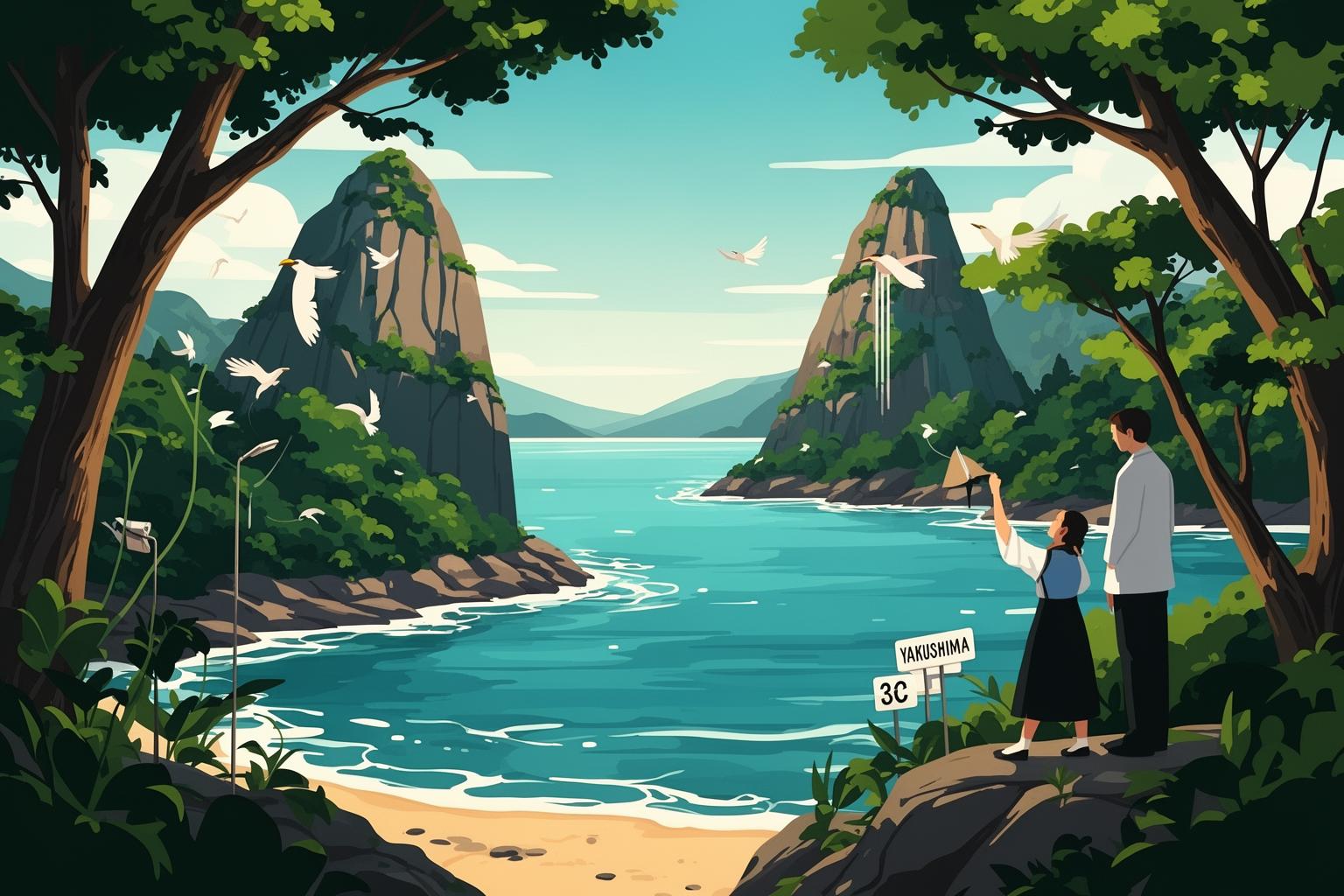
Leaving Yakushima is a peculiar experience. A part of you stays behind, wandering among the moss-covered stones and ancient roots. The island alters your perspective, slowing your internal clock to align with its own patient, arboreal rhythm. You arrive as a tourist, a hiker, or an anime fan, but depart as a pilgrim, having witnessed something sacred. This place is not merely a destination to check off a list. It demands to be approached with humility and respect. Dress for the rain, prepare for physical challenges, and leave no sign of your visit. Most importantly, come with an open heart. Listen to the forest’s stories—in the whisper of wind through cedar branches, the rush of rivers over granite, and the profound silence surrounding a 7,000-year-old tree. Yakushima is not just a backdrop for fantasy. It is the living, breathing source of it, a place reminding us that magic isn’t something we need to imagine. Sometimes, we just need to be willing to walk far enough into the woods to find it.