In a quiet, leafy corner of western Tokyo, nestled beside the serene Inokashira Park, lies a building that seems to have sprouted directly from a dream. It’s a place of whimsical architecture, of spiraling staircases that lead to unexpected places, and of stained-glass windows that don’t depict saints, but rather the gentle, whiskered face of a forest spirit named Totoro. This is the Ghibli Museum, a physical love letter to the worlds imagined by Hayao Miyazaki, Isao Takahata, and the legendary animation house, Studio Ghibli. For millions around the globe, their films are more than just animation; they are formative stories of courage, kindness, and the profound beauty of the natural world. A visit here isn’t just a tourist stop; it’s a pilgrimage. It’s a chance to step through the screen, to feel the tangible heart of the studio, and to become, for a few hours, a “child who has gotten lost.” It’s an invitation to remember the magic that hums just beneath the surface of our everyday lives, waiting to be rediscovered. This is not just a museum; it is a meticulously crafted experience, designed to spark wonder and fill your pockets with memories, not just photos.
For those whose hearts still wander in search of wonder, an engaging anime pilgrimage awaits to deepen the connection with cherished cinematic landscapes.
The Journey Begins: Securing the Golden Ticket
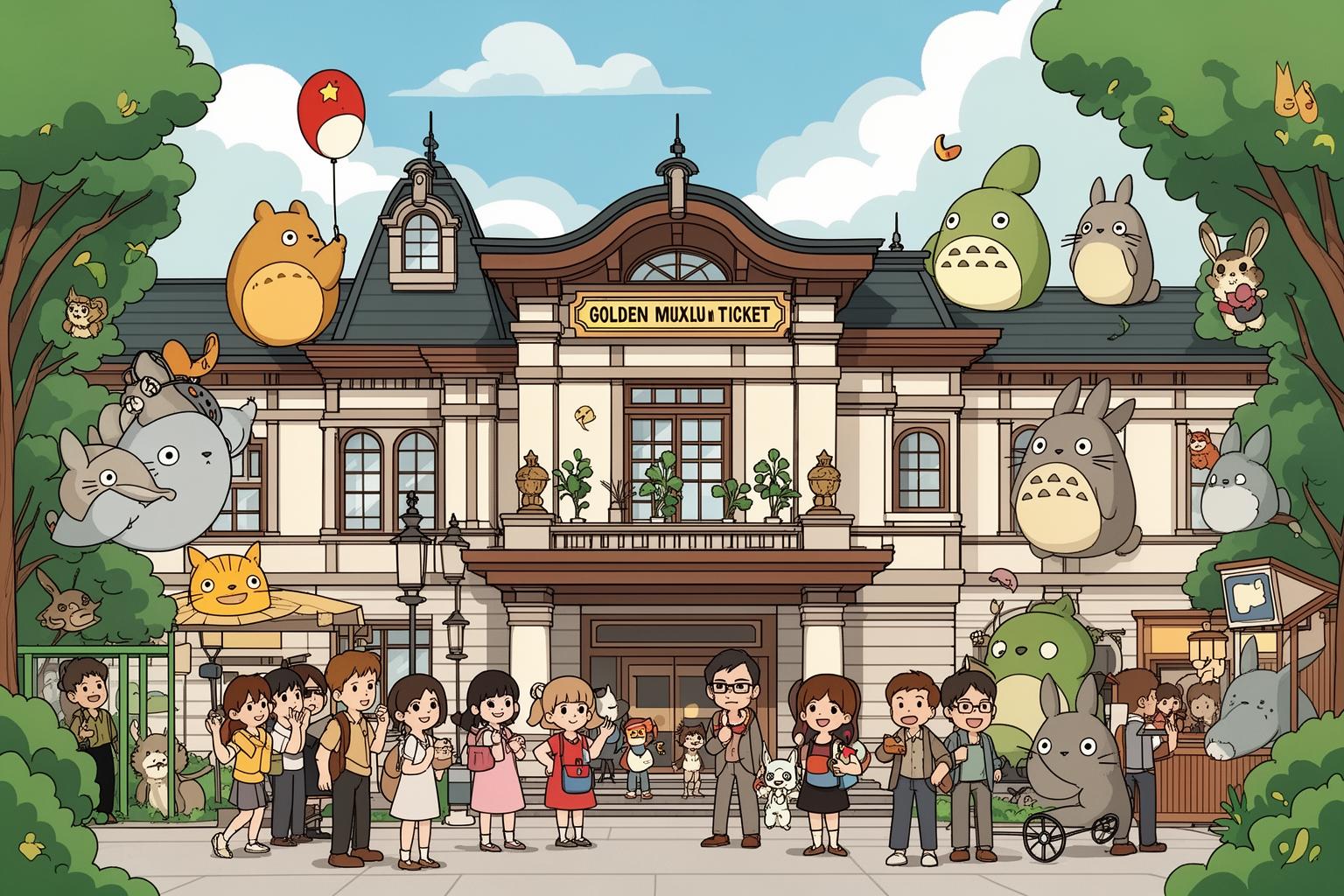
Before you even consider which walking shoes to pack, your adventure to the Ghibli Museum begins with its first—and perhaps most notorious—challenge: securing a ticket. There is no straightforward walk-up-and-buy option here. This beloved and intimately designed place limits entry strictly to preserve the experience from becoming overcrowded and impersonal. The quest for a ticket is a rite of passage for any prospective visitor, requiring a bit of strategy, persistence, and a dash of luck. For those traveling from abroad, the main gateway is the official Lawson online ticketing website. Tickets for a given month go on sale at 10:00 AM Japan Standard Time on the 10th of the previous month. This moment resembles a digital festival rush. You must be prepared at your computer, with your details pre-filled, ready to navigate a system often strained by global demand. It can be a frantic, heart-pounding few minutes as tickets for popular dates disappear in the blink of an eye. My advice is to have several dates and time slots in mind, stay flexible, and accept that you might not get your first choice. The process is challenging, but when that confirmation email finally arrives, the feeling is pure triumph. It’s the first magical moment of your Ghibli journey, a golden ticket earned through dedication, turning a simple museum visit into a highly anticipated event. This careful planning acts as a gatekeeper, ensuring that everyone who enters truly wants to be there, fostering a shared atmosphere of reverence and excitement.
Stepping into a Hayao Miyazaki Dream
The excitement built up during the ticket-booking process overflows on the day of your visit. The journey itself feels like a purposeful shift from the ordinary to the extraordinary. You’ll likely board the JR Chuo Line from the bustling hub of Shinjuku, and as the train takes you westward, towering skyscrapers give way to quieter, more residential scenery. Upon arriving at Mitaka Station, you have a choice. You can hop on the whimsical community bus, brightly decorated with characters and stars, which transports visitors directly to the museum. Alternatively, you can follow our lead and choose the route that aligns more closely with the Ghibli spirit: a gentle, fifteen-minute walk along the “Tamagawa Josui” aqueduct, a path shaded by cherry trees and whispering maples. This stroll acts as a decompression chamber, washing away the city’s frenetic energy. Soon, peeking through the trees, you catch sight of it. The museum doesn’t announce itself with grand arches or bold signage. Instead, it reveals itself gradually, as a warm, stucco-and-ivy-covered building that feels less like an institution and more like a fantastical European villa imagined by a master storyteller. It’s a joyful jumble of shapes and colors, featuring an exterior staircase that seems to lead nowhere and rounded windows that peer out like curious eyes. The first friendly face you’ll encounter is a giant, sleepy-looking Totoro, gazing out from an actual ticket booth at the entrance. He doesn’t actually sell you a ticket, of course—your treasured printout is for the human staff inside—but his presence offers a comforting, official welcome. It’s a promise that you have truly left the mundane world behind and are about to enter a realm ruled by imagination.
Inside the Labyrinth of Wonder: No Photos, Just Memories
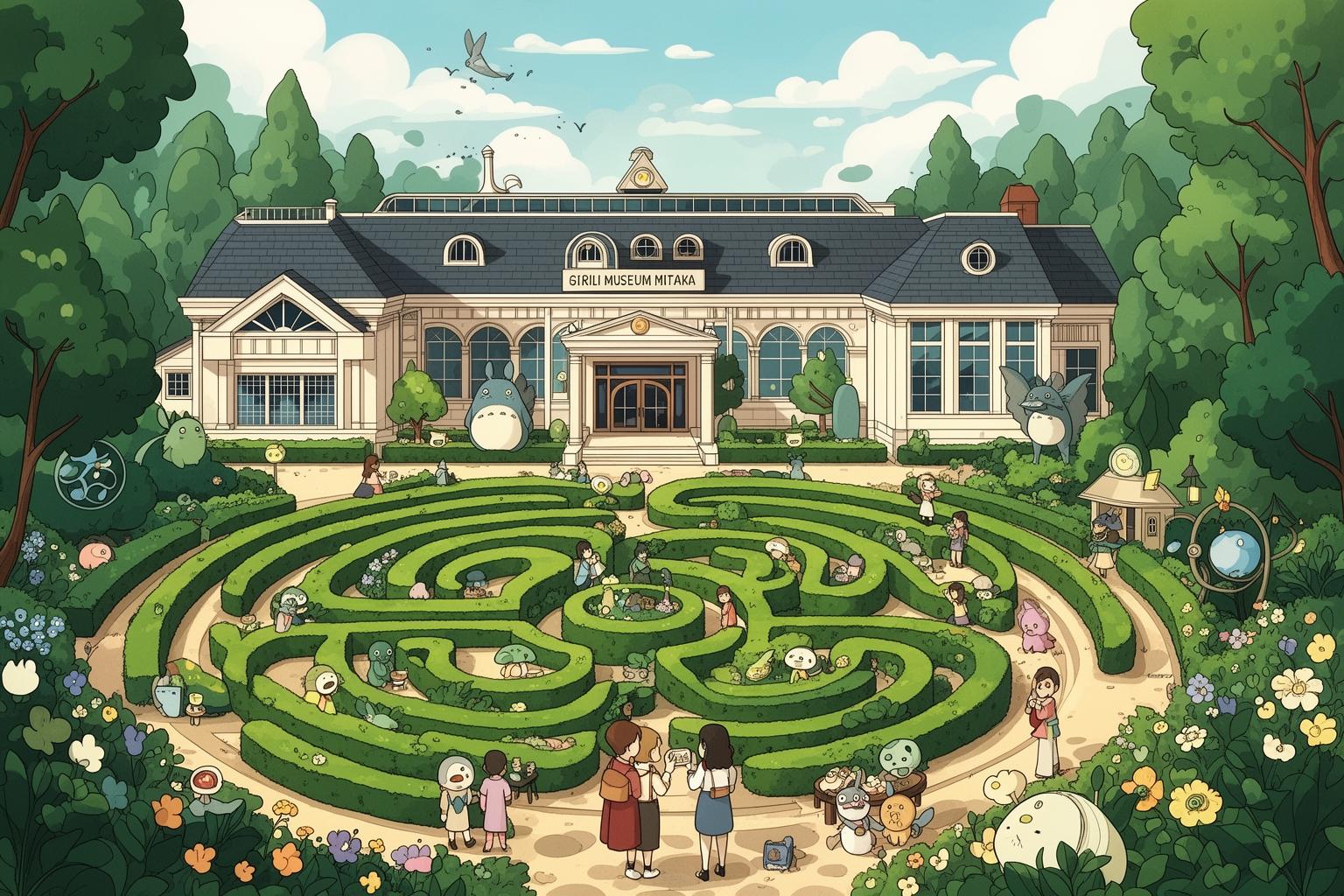
Upon entering and exchanging your voucher for a beautiful, unique ticket—a keepsake crafted from an authentic strip of 35mm film from one of the Ghibli movies—you encounter the museum’s one strict rule: no photography or video is permitted inside. For a modern traveler, this may initially seem limiting. We are so accustomed to capturing every moment through a lens. Yet, this rule is arguably the museum’s greatest gift. By setting aside your phone, you are invited to be fully present. You are encouraged to see with your own eyes, absorb the details with your own mind, and create memories that are far richer and more personal than any digital snapshot. This policy changes the entire atmosphere. Instead of a crowd scrambling for the perfect Instagram shot, you discover a community of visitors quietly and respectfully taking in the wonder around them. The heart of the museum is the Central Hall—a soaring, multi-story space that feels like a blend of a fantastical airship and an old-world library. A magnificent glass dome floods the room with natural light, illuminating a network of spiraling staircases, aerial walkways, and hidden balconies. The woodwork is warm and intricate, with details that capture your attention everywhere you look. The true enchantment, however, lies in the stained-glass windows. Sunlight streams through panes depicting scenes and characters from the films—Kiki on her broomstick, the gentle Laputian robot, the playful Kodama—casting shifting patterns of color across the wooden floors, making the entire space feel alive and breathing. It’s a place designed for wandering, getting a little lost, and delighting in the discovery of a tiny, hidden door or a whimsical fresco tucked away in a corner.
The Art of Animation: Where Magic is Made
At its heart, the Ghibli Museum is a tribute to the art of animation, with its permanent exhibits serving as a brilliant, hands-on course on how these cherished films come to life. On the ground floor, you’ll find a captivating exhibit called “Where a Film is Born,” comprised of five rooms that reveal the creative process in the most enchanting way. Rather than merely observing displays behind glass, you step into spaces that feel like authentic recreations of the artists’ private work areas. One room is a vibrant chaos of inspiration, its walls and ceiling covered with sketches, concept art, and reference photos. Books on aircraft, botany, European architecture, and mythology are stacked high on every surface. It feels deeply intimate, as though you’ve been invited to explore the very mind of a director, witnessing the complex web of ideas woven together to craft a single, cohesive world. The journey moves through rooms focused on storyboarding, layout, background painting, and coloring, revealing the immense, meticulous effort involved and the thousands of drawings needed to produce just a few seconds of fluid motion. This fosters a true appreciation for the craft. Yet, the standout attraction, the exhibit that draws audible gasps from visitors of all ages, is the collection of three-dimensional zoetropes. In one, static models of Mei, Satsuki, and various Totoros are arranged in a circle on a spinning platform. In normal light, they are simply beautifully crafted figures. But when the lights dim and a strobe light flickers on, pure magic unfolds. The figures come to life—Totoro bounces, his umbrella spinning; Mei runs and jumps with infectious joy. It’s a breathtaking, physical illustration of the persistence of vision principle that forms the basis of all animation. This is not just an explanation; it is a performance, a work of art that perfectly captures the museum’s philosophy of showing rather than telling how wonder is created.
A Film for Your Eyes Only: The Saturn Theater
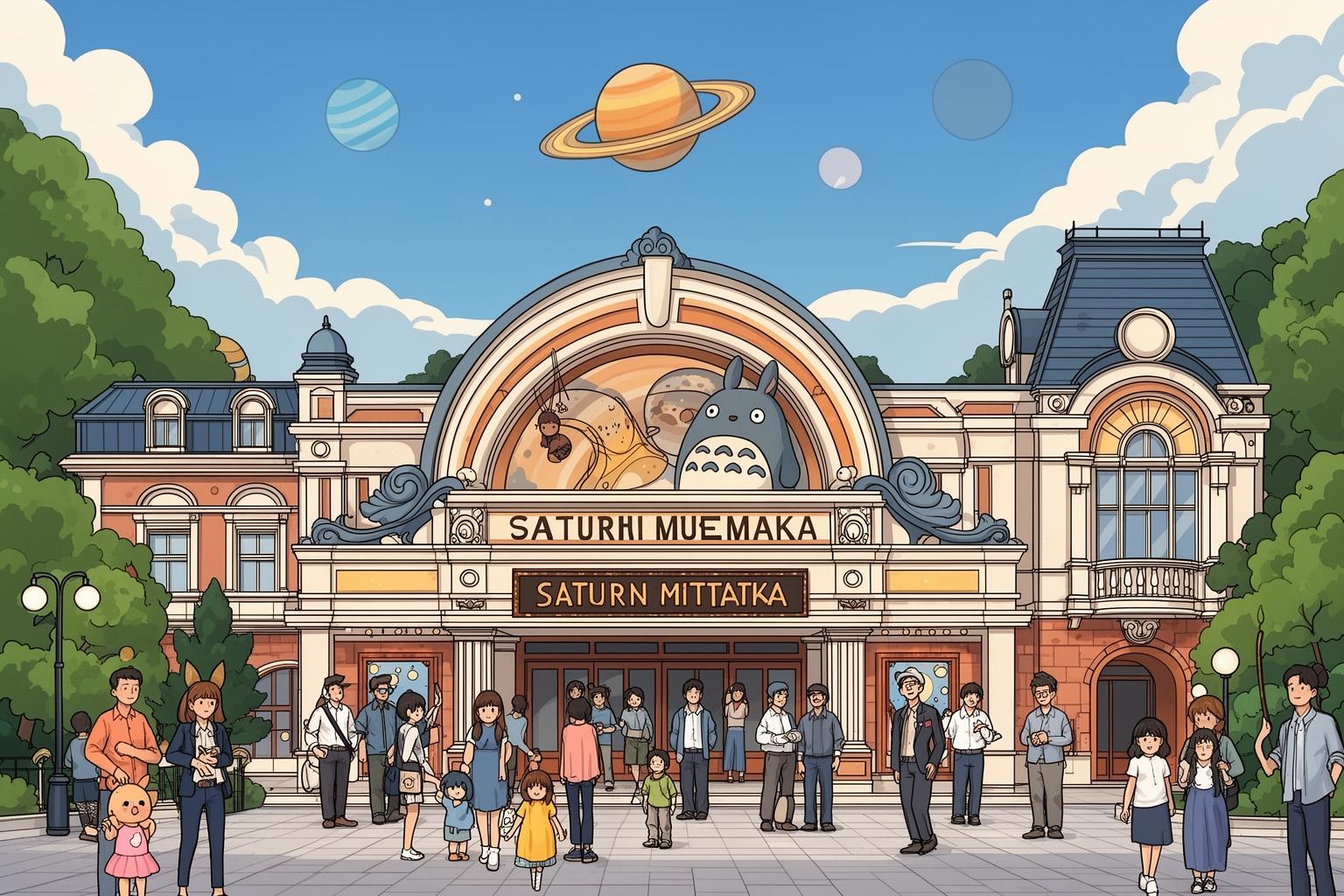
One of the most treasured experiences at the museum is visiting the small, cozy cinema on the ground floor: the Saturn Theater. Your film-strip entrance ticket grants you one admission to watch one of several exclusive short films created by Studio Ghibli, unavailable anywhere else in the world. The theater itself is charming, featuring a sky-blue ceiling adorned with a smiling sun and fluffy clouds. The benches are simple wooden seats, fostering a communal atmosphere, reminiscent of gathering for a story in a village hall. The films change throughout the year, so each visit may offer a new story. These shorts embody pure Ghibli, condensed into a potent ten-to-fifteen-minute experience. They range from whimsical tales of sumo-wrestling mice to endearing stories about a water spider falling in love. Often featuring little or no dialogue, they convey heartfelt narratives through stunning visuals and expressive character animation, making them universally accessible and enjoyable. There is something truly special about this experience. In an era of endless streaming and global distribution, the notion of a piece of art being tied to a single, physical location feels almost revolutionary. It makes the viewing feel precious—a secret shared only with the hundred or so other people in the room. You watch, you laugh, you are moved, then you leave, carrying the memory of a film the rest of the world has never seen. It’s a beautiful, fleeting piece of Ghibli magic meant for your eyes only.
To the Rooftop: Guardian of the Sky
After exploring the intricate, art-filled rooms inside the museum, an ascent offers a completely different, yet equally striking, experience. A narrow, caged spiral staircase, tucked away near the Catbus room, twists its way up to the roof. The climb feels like an adventure, a journey up a metal vine reaching toward the sky. Upon emerging, you step into the open air and onto a rooftop garden—a lush green oasis that provides a moment of peace and a breathtaking view of the surrounding park. Standing silent watch over this garden is perhaps the museum’s most iconic and photographed resident: a life-sized, five-meter-tall statue of a Robot Soldier from Castle in the Sky (Laputa). The statue is magnificent. Its metallic surface is weathered, with moss and vines beginning to climb its long, slender legs, giving it the appearance of an ancient guardian who has stood watch for centuries. Its head is gently bowed, its expression soft and melancholic, perfectly capturing the dual nature of the robots from the film—capable of great destruction, yet deeply connected to nature and imbued with a profound sadness. Unlike inside the museum, photography is allowed here, and nearly everyone takes the opportunity to pose beside this gentle giant. Still, the best moments are the quiet ones—stepping back and simply observing it against the backdrop of the sky. Nearby, hidden amidst overgrown vegetation, you can also find the black control cube from Laputa, inscribed with its mysterious, ancient script. The rooftop is a place of reflection, a perfect physical embodiment of Studio Ghibli’s recurring themes of technology, nature, and the bittersweet passage of time.
Neko Bus and Straw Hats: Play and Nourishment
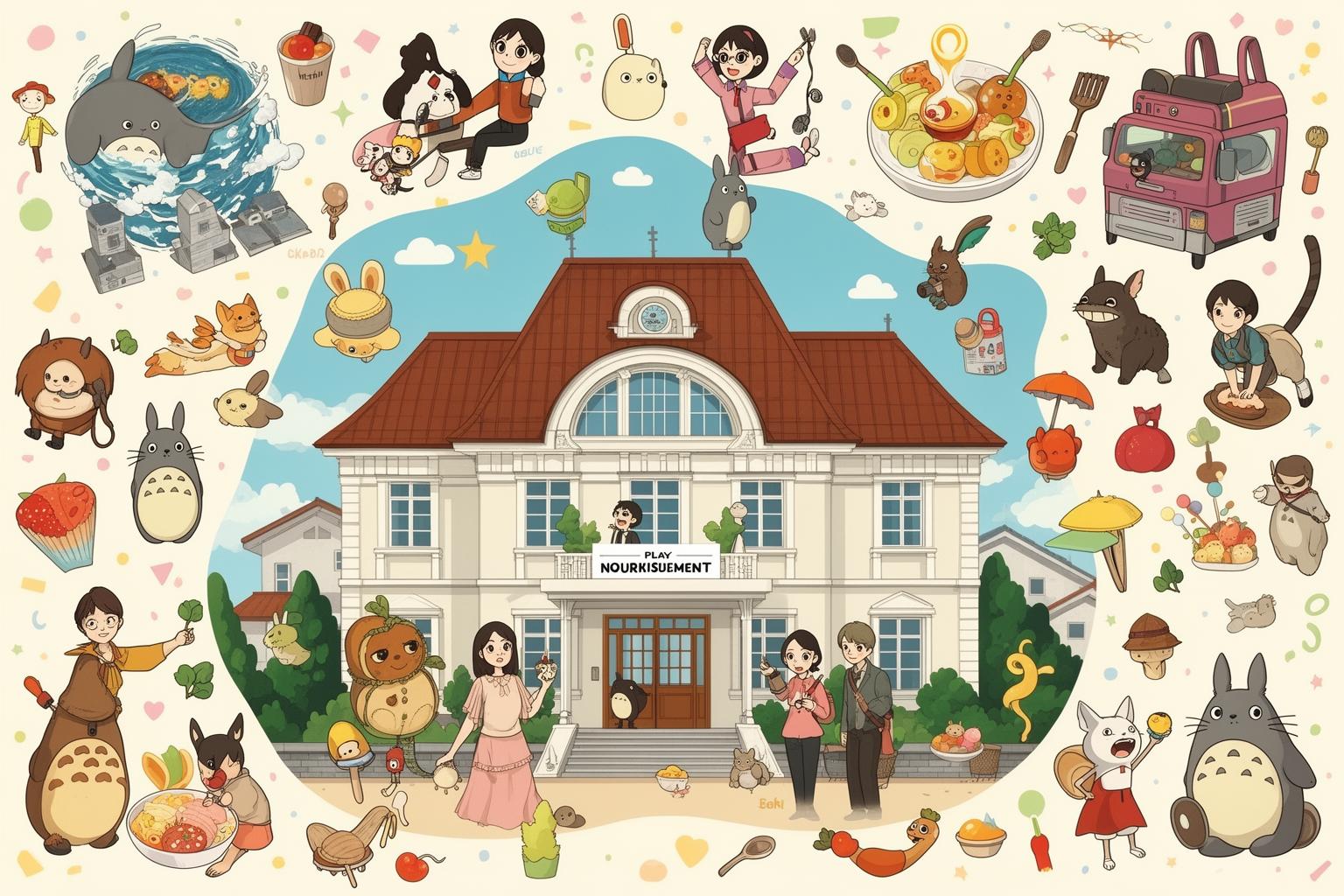
While the entire museum serves as a playground for the imagination, certain areas are specially designed for more literal play and the essential art of refueling. For families with young children, the undisputed highlight is the Catbus Room. Here awaits a magnificent, life-sized (well, child-sized) plush version of the famous Neko Bus from My Neighbor Totoro. This is not a static exhibit; children (and only those aged 12 and under, much to the playful frustration of many adults) are encouraged to kick off their shoes and climb, bounce, and cuddle their way through the iconic, multi-legged vehicle. The pure, unfiltered joy in this room is tangible. The air resonates with happy shrieks as kids scramble in through the door-like side and dive into its furry, inviting interior, filled with soft Soot Sprite toys. It’s a moment of pure wish fulfillment for any child who has ever dreamed of riding the Catbus. When hunger inevitably strikes, the Straw Hat Café offers the perfect solution. Following the Ghibli philosophy of simple, honest quality, the café is not a fast-food spot but a charming eatery that feels as if it was taken straight from a European countryside. The menu is small but carefully curated, focusing on wholesome, hearty dishes like a thick-cut pork cutlet sandwich (katsu sando), creamy soups, and satisfying cakes. They even serve a special “Valley of the Wind” beer. The attention to detail is, as always, delightful. The plates showcase Ghibli characters, and even the outdoor hand-washing station features a custom faucet shaped like Jiji, the black cat from Kiki’s Delivery Service. On a sunny day, securing a table on the outdoor terrace is pure bliss, allowing you to enjoy a simple, delicious meal surrounded by the park’s greenery. The café is a place to rest, recharge, and savor food made with the kind of care and attention that defines the entire Ghibli experience.
Mamma Aiuto! The Ultimate Souvenir Stop
No pilgrimage would be complete without the opportunity to bring a small piece of the magic home, and the museum’s gift shop, Mamma Aiuto!, is a treasure trove of delights. Named after the sky pirates from Porco Rosso, the shop is curated with as much care as the rest of the museum. This is far from your typical gift shop filled with mass-produced souvenirs. Instead, it’s a boutique offering beautifully crafted items, many exclusive to the museum. You’ll discover exquisite art books brimming with concept sketches and storyboards, high-quality character models, and elegant stationery. You can buy stained-glass-style window hangings, intricate pins, and plush toys that stand out from what you’d find elsewhere. One of the most sought-after keepsakes is the bookmark made from the same 35mm film strips as the entrance tickets, giving you the chance to own a few unique, precious frames from a Ghibli classic. The shop can get quite crowded, especially near closing time when it becomes a popular last stop. It’s wise to set aside some time for it, perhaps visiting before your film screening or rooftop climb, to avoid the busiest rush. It’s a place where wallets can empty quickly, but the quality and rarity of the items make it feel less like a commercial exchange and more like acquiring a treasured artifact from a world you were lucky enough to explore.
Beyond the Museum: Exploring Mitaka and Kichijoji

The magic of visiting the Ghibli Museum doesn’t have to end as you leave. Perfectly positioned, the museum serves as the heart of a delightful day spent exploring one of Tokyo’s most charming neighborhoods. Situated on the southern edge of Inokashira Park—a vast and picturesque public space that is an attraction in itself—the museum invites you to extend your experience. After your visit, a leisurely walk through the park offers an ideal way to reflect on the wonders you’ve encountered. You can rent a swan-shaped paddle boat on the large central pond, visit the quaint Benzaiten Shrine dedicated to a goddess of water and music, or simply relax on a bench beneath a tree and watch the world go by. On weekends, the park buzzes with street performers, musicians, and local artists selling their crafts. Heading north through the park brings you straight into the lively neighborhood of Kichijoji. Frequently ranked as one of Tokyo’s most desirable places to live, Kichijoji exudes a laid-back, bohemian atmosphere that feels worlds apart from the high-energy buzz of Shibuya or Shinjuku. Its streets are dotted with independent boutiques, vintage clothing shops, cozy cafes, and art galleries. A must-visit spot is Harmonica Yokocho, a maze of lantern-lit alleyways just north of the station, filled with tiny standing bars, ramen stalls, and gyoza counters. It’s a wonderfully atmospheric place to enjoy dinner and drinks after your museum visit. Combining the Ghibli Museum with time in Inokashira Park and Kichijoji transforms a simple museum trip into a full, unforgettable day of exploration and joy.
Practical Magic: A Traveler’s Guide
To ensure your pilgrimage is as smooth and enchanting as possible, a bit of practical knowledge can go a long way. First, access: the most common way is to take the JR Chuo Line to Mitaka Station. From the South Exit of the station, you can either catch the designated Ghibli Museum shuttle bus (for a small fee) or enjoy a highly recommended 15-20 minute walk along the canal through the park. If you plan to explore Kichijoji, you can also walk from Kichijoji Station through Inokashira Park, which takes about the same amount of time. Second, timing is crucial. Your ticket will specify a specific entry time, and you must arrive within thirty minutes of that time, so punctuality is essential. Once inside, you may stay as long as you wish until closing. I suggest allowing at least three hours for the museum itself, and closer to four if you want to relax at the café and browse the shop without hurrying. Weekday time slots are generally less crowded than on weekends. Third, and this cannot be emphasized enough: tickets. You absolutely must book your tickets in advance since they are not sold at the museum. The official online sale on the 10th of the preceding month is your best opportunity. Be prepared, act fast, and have backup dates in mind. Finally, when you arrive, respect the rules. Keep your phone tucked away and let your eyes be the camera. Coin lockers are available near the entrance for larger bags and coats, making it easier to navigate the sometimes narrow spaces. Trust the process; the museum is meant to be experienced, not just documented.
Carrying the Magic Home
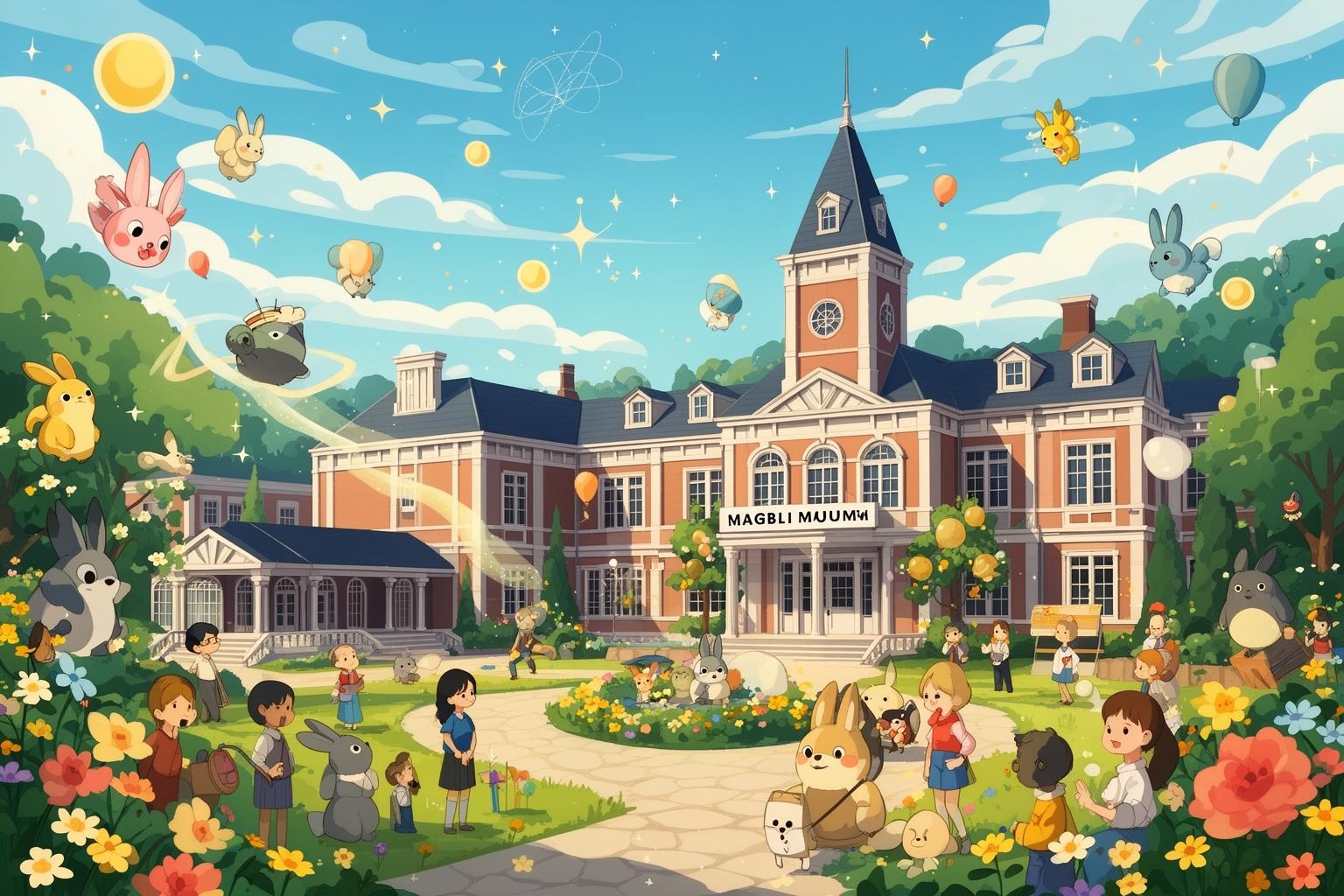
Exiting the Ghibli Museum feels like emerging from a particularly beautiful dream. As you make your way back to the station, the ordinary world gradually returns, yet you feel transformed. You carry with you not just a film-strip ticket or a Mamma Aiuto! souvenir, but a refreshed sense of wonder. The museum is far more than a collection of film artifacts; it stands as a living, breathing tribute to the power of imagination and the beauty of handcrafted artistry. It is an intimately personal space that embodies the values present in every Ghibli film: respect for nature, the importance of community, the courage to be kind, and the belief that magic exists in the quiet, everyday moments. It reminds you that creating art is neither easy nor instantaneous; it is born from immense passion, meticulous effort, and countless hours of dedication. You depart with a deeper appreciation for the animators, writers, and directors who craft these worlds for us. The greatest keepsake from the Ghibli Museum is the feeling it reignites within you—a gentle, persistent whisper from your own heart, encouraging you to look more closely, dream bigger, and never lose your childlike sense of wonder.