
There’s a certain kind of silence that falls upon you the moment your feet touch the ancient stones of the Kumano Kodo. It’s not an emptiness, but a presence. It’s the whisper of wind through the tops of giant cedar trees, the steady drip of morning dew from moss-covered branches, and the imagined footfalls of a thousand years of pilgrims who walked this very path before you. This is more than a trail; it’s a journey into the spiritual heart of Japan, a UNESCO World Heritage site carved through the dense, mystical forests of the Kii Peninsula. For centuries, this network of routes has drawn everyone from emperors and samurai to humble poets and peasants, all seeking purification, enlightenment, and a connection to the divine. But in the modern age, it has also become a destination for another kind of pilgrim: the literary traveler, one who walks in the footsteps of not only ancient deities but also the wandering characters of contemporary fiction. It is a place where the veil between worlds feels thin, a landscape that seems to breathe with stories, making it a powerful, almost fated, setting for those on a quest for meaning, both real and imagined.
For many, these sacred mountains echo with the haunting prose of authors who tap into Japan’s deep well of magical realism. The atmosphere of Kumano, with its profound silences and sudden, breathtaking vistas, feels like stepping into a living novel. It’s a place where you can easily imagine a young boy running away from a prophecy, or a lost soul searching for a gateway to another reality. It’s this potent blend of tangible history and intangible mystery that makes a pilgrimage here so unique. You are not just hiking from one point to another; you are participating in an unbroken chain of storytelling, adding your own chapter with every step. This guide is your invitation to that story, a map to navigate both the physical trails of the Kii Peninsula and the sublime, dreamlike world that has captivated so many seekers.
Many literary travelers, drawn by the allure of mystical trails and timeless narratives, often extend their journey by exploring the cultural nuances of Matsuyama pilgrimages that echo the spirit of ancient wanderings.
The Soul of the Ancient Trails
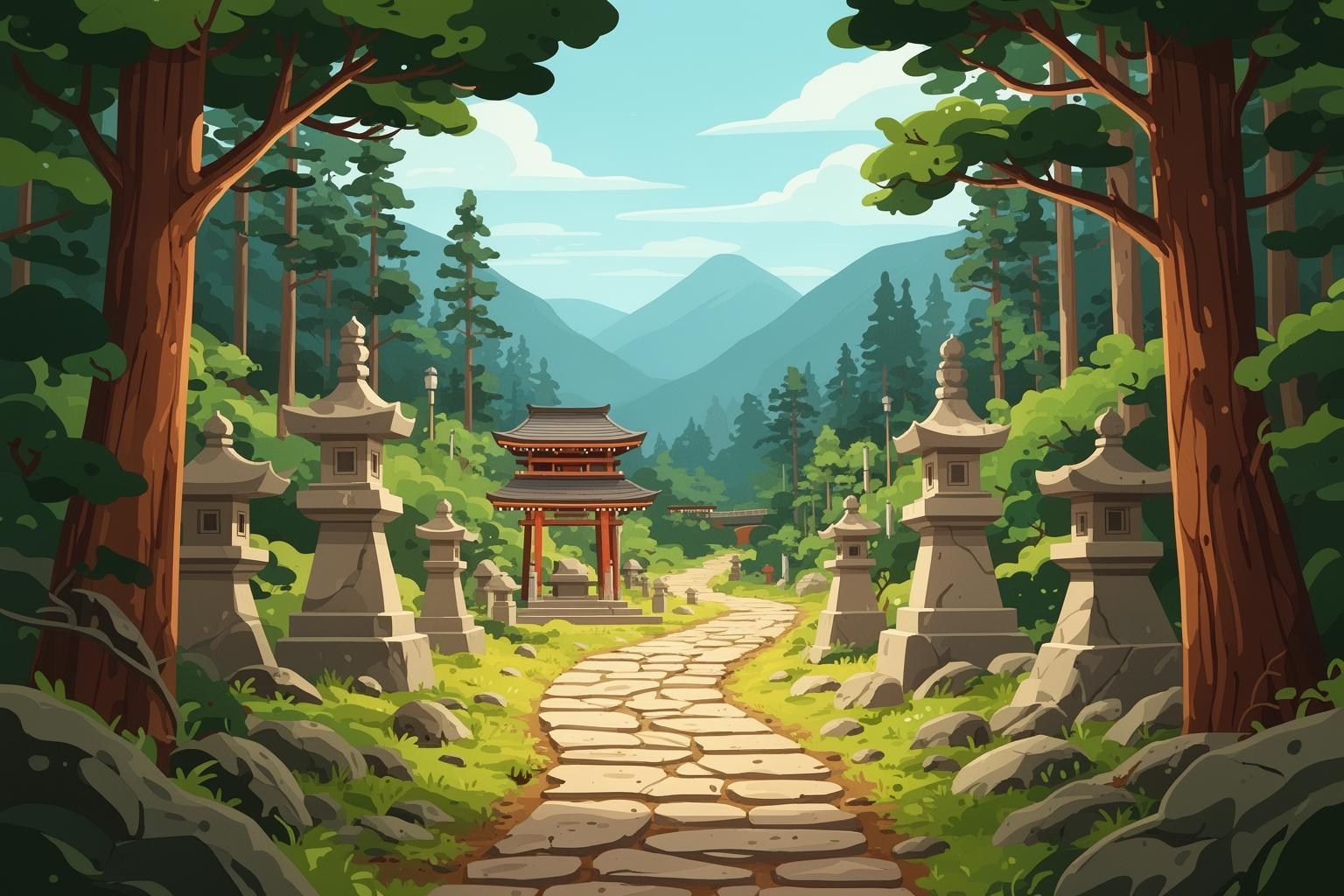
The essence of the Kumano Kodo lies not in a single destination but in the journey itself. The path serves as a sanctuary. To grasp its significance, one must first understand its history—a narrative woven from faith, nature, and the deep-rooted human impulse for pilgrimage. These trails were not designed for leisure; they were established as sacred corridors to the gods, linking the earthly realm to a divine world where deities were believed to descend. This is a land where Shintoism, Japan’s native nature worship, and Buddhism, introduced from the mainland, did not conflict but instead blended into a distinctive spiritual fusion called Shinbutsu-shugo. Here, Shinto kami were viewed as embodiments of Buddhist deities, and the pilgrimage to honor them was an act of devotion open to everyone, regardless of class or gender—an impressively progressive concept in feudal Japan.
A Path Worn by Gods and Emperors
Walking the Kumano Kodo is like experiencing history through your steps. The most renowned sections are paved with ishi-datami—beautiful yet often challenging cobblestones laid centuries ago to withstand the area’s heavy rains and prevent erosion. As you tread carefully on these moss-covered, uneven stones, it’s impossible not to reflect on the retired emperors who undertook the grueling month-long journey from Kyoto’s imperial capital more than ninety times during the Heian period. You can sense the weight of their devotion, their grand processions now replaced by the quiet solitude of today’s hikers. The air feels ancient, thick with the scent of damp earth, cypress, and cedar. Sunlight filters through the dense canopy, creating shifting patterns known as komorebi, evoking an ethereal and almost otherworldly ambiance. The trail meanders through small, secluded villages where life flows at a gentler pace, past terraced rice paddies clinging to the mountainsides, and beside crystal-clear rivers carving through the valleys. The landscape is not merely a backdrop for the pilgrimage; it is an active participant, its beauty and hardships shaping the spiritual journey.
The Three Grand Shrines: Kumano Sanzan
The entire trail network ultimately leads to three magnificent shrines collectively called the Kumano Sanzan. Each shrine has its own unique character and is deeply connected to the surrounding natural environment. Traditionally, pilgrims conclude their journey by visiting these three sacred sites. The first, Kumano Hongu Taisha, is the spiritual center of the network. Originally located on a sandbank at the meeting point of two rivers, it was relocated to its present site on a forested ridge after a catastrophic flood in 1889. Its raw, unpainted cypress wood structures blend naturally into the mountain, embodying a sense of rustic and powerful simplicity. The shrine is protected by the mythical three-legged crow, Yatagarasu, a divine messenger in Japanese mythology. The original site, Oyunohara, is now marked by the world’s largest torii gate, a massive steel structure standing as a solemn testament to nature’s strength. Further east, near the coast, lies Kumano Hayatama Taisha in the city of Shingu. Its vibrant vermilion-lacquered pavilions offer a vivid contrast to Hongu’s understated elegance. Located near the mouth of the Kumano River, its grounds feature a giant ancient Nagi tree revered as sacred, highlighting the deep animistic roots of Shinto. The final shrine, Kumano Nachi Taisha, is perhaps the most visually striking. Part of an extensive religious complex, it perches halfway up a mountain overlooking the Pacific Ocean. Its vermilion buildings stand against the backdrop of Nachi no Otaki, Japan’s tallest waterfall. The sight of the shrine’s three-storied pagoda framed by the thundering cascade behind it is one of Japan’s most iconic images—a perfect harmony of human faith and natural divinity.
Walking into a Fictional Labyrinth
For readers of modern Japanese literature, especially works by authors who blur the line between the ordinary and the magical, the Kumano Kodo feels like a well-known terrain. It is the kind of place characters escape to when the real world becomes overwhelming—a liminal space where reality’s rules appear to twist and shift. The dense, often disorienting forests, secluded villages, and tangible sense of history form a backdrop ripe for reflection and transformation. It serves as a physical symbol of the journey into the subconscious, a place where one can lose themselves in order to be found. The silence along the path prompts inward contemplation, and the towering ancient trees can make personal troubles seem small and manageable. This is why the trail resonates so deeply with themes of fate, memory, and identity commonly explored in fiction. It offers a chance to face one’s own metaphorical “entrance stone,” a gateway to deeper self-understanding.
A Refuge in the Wilderness
Walking the Kumano Kodo parallels the narrative arc of a character venturing into the unknown. The journey starts in a town, a center of order and society, and gradually leads you into the untamed wilderness. As you proceed deeper into the mountains, the sounds of civilization fade, replaced by the forest’s symphony. This physical seclusion encourages mental solitude. The long hours of walking act as meditation, a rhythmic repetition of placing one foot before the other that clears the mind. In this mindset, the forest can feel like a labyrinth—both beautiful and intimidating. Paths diverge, signs can be sparse, and sudden fog may roll in to obscure the way ahead. It’s this experience of being lost, of yielding to the trail, that lies at the heart of the pilgrimage’s transformative power. You begin to trust your instincts, interpret the landscape, and remain present, much like a fictional protagonist navigating an unfamiliar world. The forest itself becomes a character: a silent confidant and an insightful teacher.
Feeling the Unseen World
What truly gives the Kumano Kodo its literary quality is its strong atmosphere of the unseen. The trails are sprinkled with hundreds of small subsidiary shrines called oji. These are not grand edifices but often simple stone markers or tiny wooden shelters, where deities are believed to rest and protect pilgrims. Pausing at an oji to catch your breath, a sense of reverence naturally arises—a connection to the spiritual energy of the place. On misty mornings, when the forest is enveloped in soft grey light, it’s easy to imagine spirits, or kami, dwelling within the ancient trees and moss-covered stones. This tangible sense of an invisible world coexisting alongside our own is a hallmark of Japanese folklore and a common motif in its modern fiction. The journey shifts from reaching a destination to tuning your senses to these subtle energies, to the whispers of the woods. It is about embracing mysteries that cannot be explained, only felt. This is the magic of Kumano: it invites you to step beyond the logical world and enter a story still unfolding.
Your Pilgrimage: Practical Steps on a Sacred Path
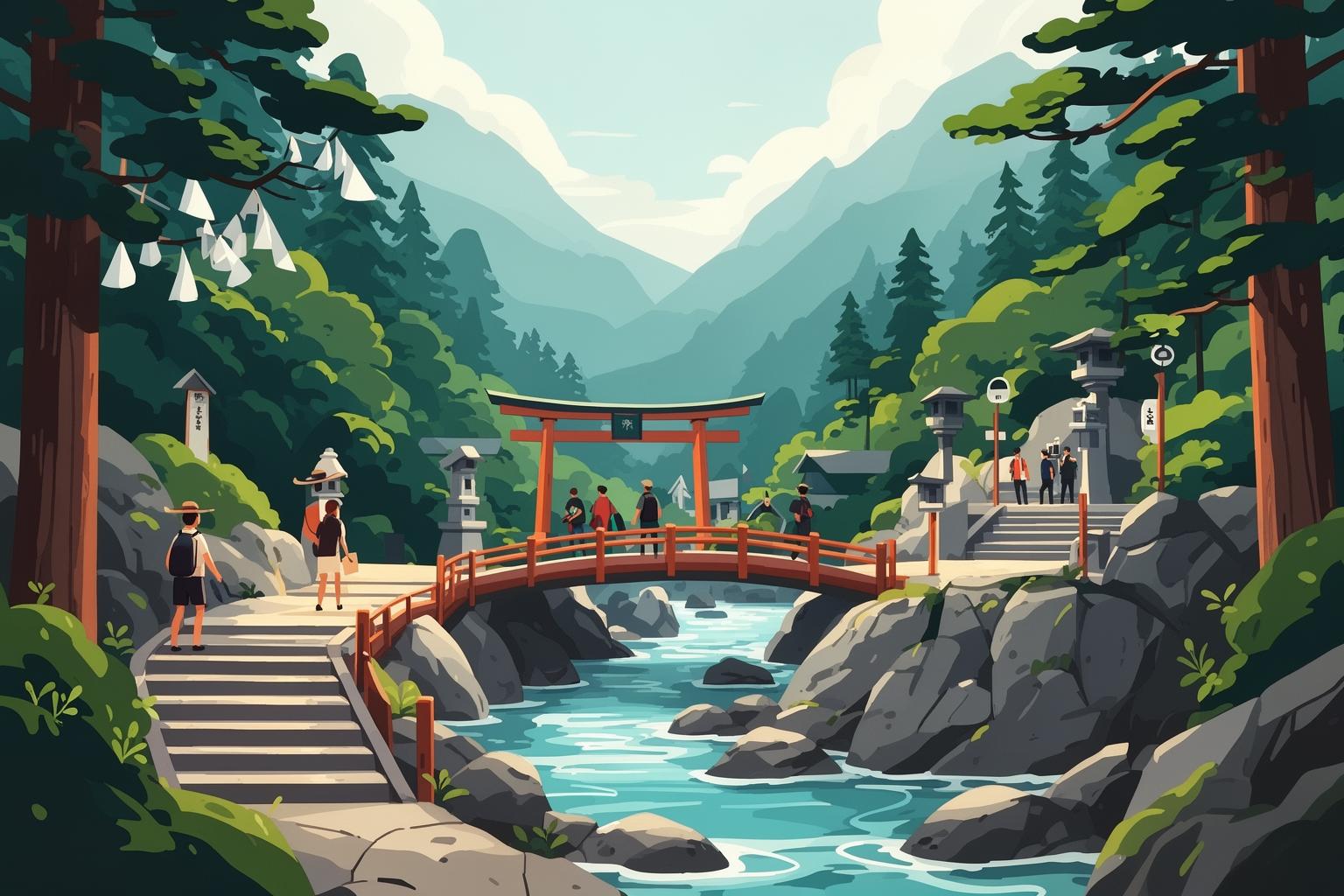
Setting out on a journey to the Kumano Kodo demands a bit more planning than a typical vacation, but the rewards are truly priceless. The experience is highly personal, and proper preparation can be the difference between a tough challenge and a transformational adventure. As a planner, I always encourage travelers to first connect with the ‘why’ behind their journey. Are you after a physical challenge, a spiritual retreat, cultural immersion, or a stroll through a literary dreamscape? Your intention will guide your itinerary, from the route you pick to the pace you maintain. The beauty of the Kumano Kodo lies in its versatility; it can cater to a relaxed afternoon walk or a multi-day trek testing your stamina. The key is to honor both the trail and your own limits while leaving room for spontaneity and awe.
Choosing Your Route: From Day Hikes to Epic Treks
The most popular and well-maintained path is the Nakahechi, also known as the Imperial Route, favored by emperors from Kyoto. For first-timers, hiking a section of the Nakahechi offers an excellent introduction. One highly rewarding day hike is the trail from Hosshinmon-oji to Kumano Hongu Taisha. This approximately seven-kilometer stretch takes about two to three hours and passes through a blend of forested trails, scenic lookout points with stunning mountain views, and quaint, peaceful villages. It encapsulates the essence of the Kodo in a manageable timeframe. Those with more time and energy can opt for the classic two-day hike from Takijiri-oji to Hongu Taisha, which involves steep climbs and extended wilderness stretches, truly immersing you in the pilgrim experience. For the most dedicated trekkers, the challenging Ogumotori-goe and Kogumotori-goe sections connect Hongu Taisha with Nachi Taisha, offering a demanding but spectacular journey through the heart of the mountains.
Access and Orientation: Reaching the Kii Peninsula
The Kii Peninsula is a beautifully remote region of Japan, and getting there is part of the adventure. The main access point to the Nakahechi route is the city of Kii-Tanabe, reachable by a direct express train from Osaka. I strongly recommend making your first stop the Tanabe City Kumano Tourism Bureau, located right next to the Kii-Tanabe train station. The staff there are highly knowledgeable, speak excellent English, and provide maps, bus schedules, and up-to-date trail conditions. They can also assist with accommodation bookings and arrange the excellent luggage-forwarding service, which lets you send your main suitcase ahead to your lodging each day so you only carry a small daypack on the trail. This modern convenience makes the ancient pilgrimage far easier and more enjoyable. From Tanabe, a local bus system connects you to various trailheads, including Takijiri-oji and Hosshinmon-oji.
Timing Your Journey: The Rhythm of the Seasons
The Kii Peninsula can be enjoyed year-round, though certain seasons offer a more comfortable and visually stunning experience. Spring, from late March to May, is arguably the best time, with mild weather and mountains adorned with cherry blossoms and other wildflowers. Trails are lush and green, and the air is fresh. Autumn, from late October to November, is equally breathtaking. Cool, pleasant temperatures complement forests ablaze with vibrant red, orange, and yellow foliage, favored by photographers. Summer, from June to August, can be challenging due to the rainy season, followed by intense heat and humidity. While the forests are at their greenest, the weather can be oppressive, with a significant risk of typhoons causing trail closures. Winter, from December to February, can be cold, with snow and ice at higher elevations that require proper gear. However, the trails are far less crowded, offering a profound sense of solitude and crisp, clear air that often provides the best long-distance views.
Beyond the Trail: Immersing in the Kumano Culture
A pilgrimage along the Kumano Kodo is not just about the walk itself; it encompasses the entire cultural ecosystem that supports the journey. It involves the healing waters of ancient hot springs, the warm hospitality of family-run inns, and the hearty local cuisine that nourishes you for the next day’s trek. To genuinely experience the region, you must engage with the traditions that have sustained pilgrims for over a thousand years. These are the moments that elevate a simple hike into a profound cultural immersion. Soaking your tired muscles in a thermal bath, sharing a meal with fellow travelers from across the globe, and resting on a futon in a traditional tatami room are as essential to the Kodo experience as the trail itself.
Healing Waters of the Gods: Yunomine Onsen
Nestled in a narrow valley just a short bus ride from Hongu Taisha lies Yunomine Onsen, one of Japan’s oldest and most atmospheric hot spring towns. According to legend, its waters were discovered nearly 1,800 years ago. For centuries, pilgrims have performed yunogo-ri, a hot water purification ritual here before praying at the grand shrine. The town’s main attraction is Tsuboyu, a tiny, rustic wooden cabin built over a small thermal pool. It is the only hot spring in the world designated as a UNESCO World Heritage site. Visitors can book a private 30-minute session to soak in the mineral-rich waters, which are said to change color seven times a day. The experience is intimate, ancient, and deeply restorative. Beyond Tsuboyu, the town features a public bath and several ryokan with their own onsens. Be sure to try cooking your own onsen tamago (hot spring eggs) in the public cooking basin, where near-boiling water bubbles up from the earth. It’s a simple, delicious, and quintessentially Yunomine experience.
Lodging and Sustenance on the Path
The most authentic way to enjoy the Kumano Kodo is by staying in small, family-run guesthouses called minshuku and the more traditional inns, or ryokan, that line the route. These are not luxury hotels; rather, they are intimate, welcoming homes offering a window into rural Japanese life. The hosts are often lifelong residents of the area, ready to share stories and invaluable local knowledge. The highlight of any stay is the food. Dinners typically consist of multi-course meals featuring local, seasonal ingredients such as river fish, mountain vegetables, and regional specialties. Breakfasts are traditional Japanese set meals, providing ideal fuel for a day of hiking. Many inns also prepare bento lunches to take on the trail, often including mehari-zushi, a local specialty made from rice balls wrapped in large, pickled mustard leaves. Sharing a meal in the communal dining room of a minshuku is a wonderful opportunity to connect with other pilgrims, exchange stories from the day’s journey, and share tips for the path ahead.
A Traveler’s Guide to a Deeper Experience
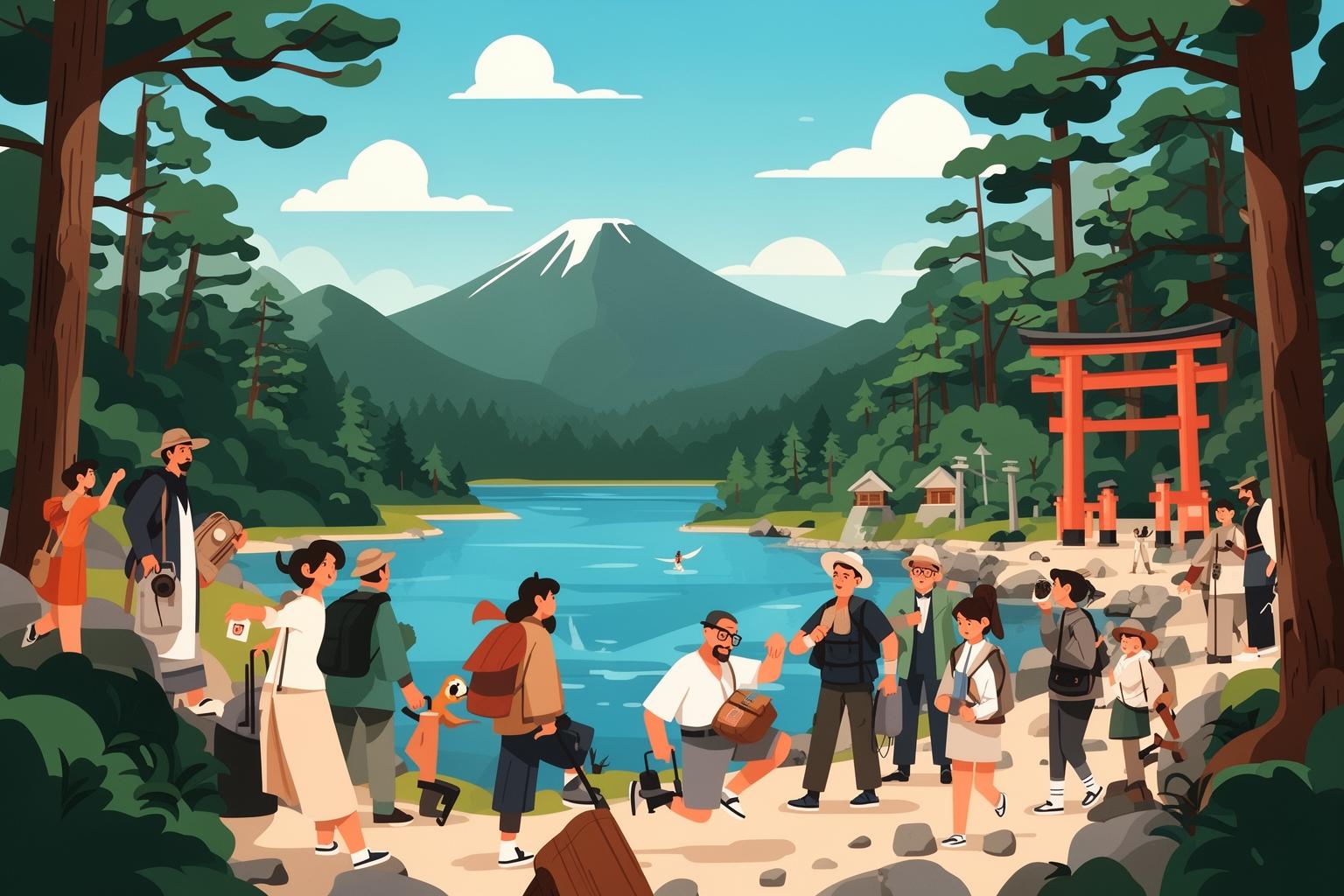
Beyond the logistics of routes and lodging, there are finer details that can transform your Kumano Kodo journey from a good trip into an unforgettable pilgrimage. It’s about embracing a mindset of mindfulness, respect, and preparedness. The trail requires your attention—not only for safety but also to fully appreciate its subtle beauty. The culture of the region embodies quiet reverence, and by tuning into it, you open yourself to a deeper, more meaningful experience. These small pieces of advice are often learned through experience, shared from one traveler to another along the path.
Packing for Mind and Body
What you carry on your back matters. Above all, invest in a pair of high-quality, waterproof hiking shoes with strong ankle support. The ishi-datami cobblestones become notoriously slippery when wet, and the trails can be muddy. Your feet will thank you. Dress in layers, as mountain weather can change rapidly, often feeling cool in shaded forests and hot in exposed clearings. A waterproof, windproof outer layer is essential regardless of the forecast. Bring a reusable water bottle and plenty of snacks. While vending machines are available in villages, stretches between them may be long. Practically speaking, always carry enough cash, as many small inns, shops, and bus ticket vendors in this rural area do not accept credit cards. Lastly, I recommend packing a small journal or notebook. The Kumano Kodo invites deep reflection, and you’ll want to capture your thoughts and impressions. It’s a way to connect with the literary spirit of the journey.
Trail Etiquette and Spiritual Respect
Remember, you are walking on sacred ground. Treat the trail and its surroundings with the highest respect. Follow the “leave no trace” principle: carry out everything you carry in. The forest is remarkably clean, and it is everyone’s responsibility to maintain that. When you come across the small oji shrines along the path, pause to be quiet and respectful. If you wish to offer a simple prayer in the Shinto tradition, bow twice, clap your hands twice, then bow once more. Keep your voice low on the trails; many people—both Japanese and international visitors—walk in quiet contemplation. A friendly “Konnichiwa” (hello) to fellow hikers is always welcomed and nurtures a sense of community on the path. This shared sense of purpose and mutual respect is among the most beautiful aspects of the Kumano Kodo pilgrimage.
The Echo of Your Footsteps
When you finally arrive at one of the grand shrines, standing before the altar with tired legs and a full heart, the journey becomes clear. You realize the pilgrimage was never solely about reaching this single point. It was about the cumulative impact of thousands of steps, each a small act of devotion. It was found in the shared smile with a stranger on the trail, the kindness of an innkeeper, the breathtaking view that suddenly appeared through a break in the trees, and the profound peace within the forest’s silence. The Kumano Kodo offers a rare chance in our fast-paced world: an opportunity to slow down, disconnect from the digital noise, and reconnect with something deeper inside ourselves and the natural world.
Whether you come seeking spiritual enlightenment, a connection to history, or to walk through the pages of a half-remembered novel, the path will provide what you need. It has a way of affecting you, smoothing the sharp edges of everyday anxieties, leaving you with a sense of clarity and perspective. The echo of your footsteps will join the chorus of millions who have walked before, each carrying their own story, burden, and hope. You leave a small part of yourself on the trail, but take with you a much larger share of its ancient, quiet wisdom. The journey may end, but the whispers of the woods will follow you long after you’ve returned home, calling you to discover your own sacred paths, wherever they may lie.