
There’s a certain kind of magic that lives inside a Studio Ghibli film, a whisper of nostalgia for places we’ve never been and a deep, resonant connection to the natural world. It’s a magic woven from light, shadow, and sound, but its threads are spun from tangible, real-world locations scattered across Japan. For those of us who grew up with these stories, the idea of walking through the landscapes that sparked Hayao Miyazaki’s imagination is more than a vacation; it’s a pilgrimage, a seichi junrei to the sacred heart of our cinematic memories. It’s a journey to understand how the rustle of ancient trees and the gentle lap of harbor waves could transform into epic tales of gods, spirits, and the profound courage of the human heart. This is not just a quest to find filming locations, but an odyssey to feel the spirit of place that breathes life into these animated masterpieces. We venture to two distinct corners of Japan, each a portal to a different Ghibli universe: the primeval, moss-draped forests of Yakushima Island, the soul of Princess Mononoke, and the sleepy, sun-drenched port of Tomonoura, the picture-perfect setting for Ponyo. Prepare to step through the screen and into the very air that fueled a legend.
For those inspired to explore more real-world anime pilgrimages, you can also embark on a journey through the iconic Tokyo locations of “Your Name”.
The Ancient Forest of the Gods: Yakushima
An Island Where Time Stands Still
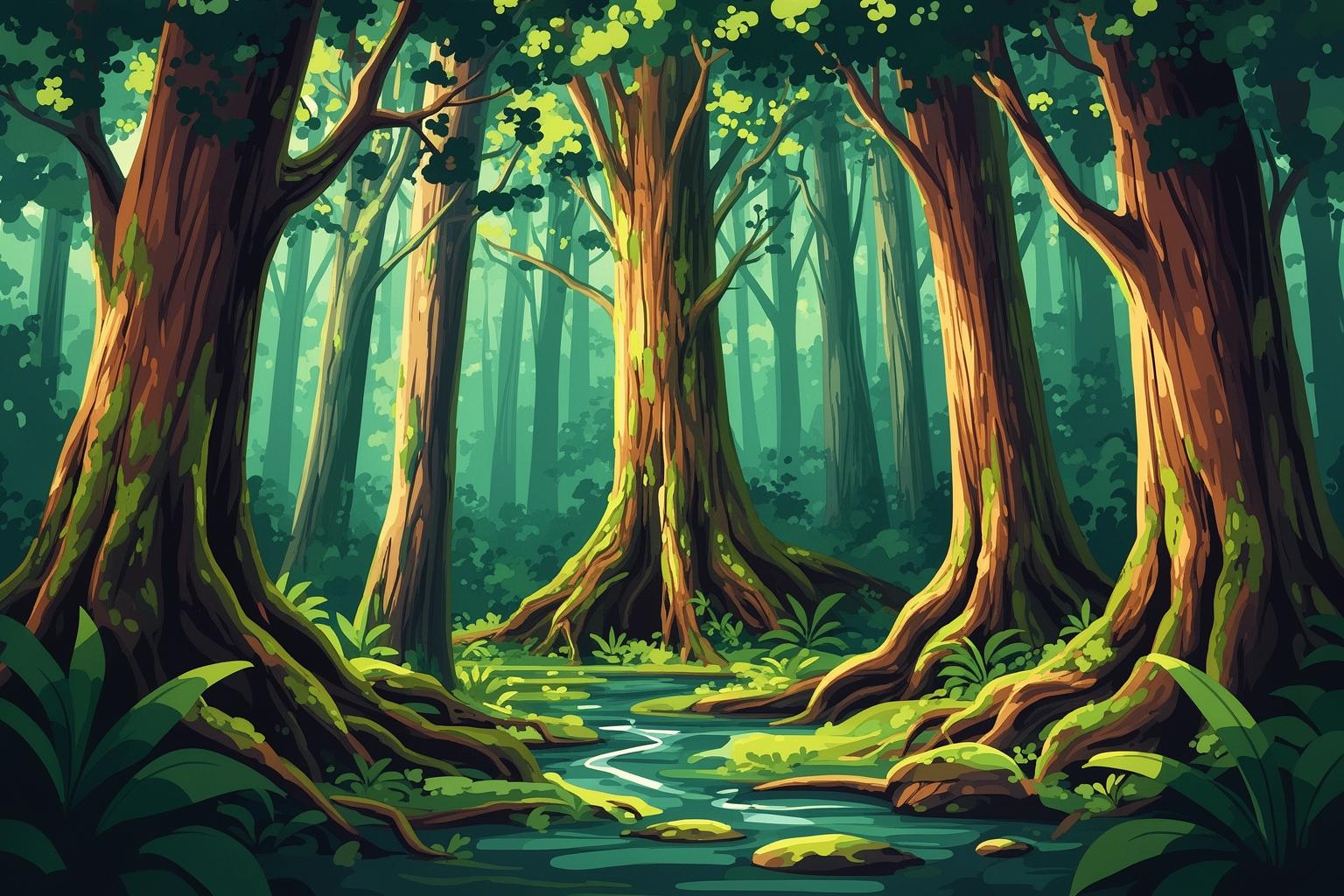
Reaching Yakushima feels like traveling back to the dawn of time. Whether you take the slow reveal of the ferry slicing through the East China Sea or the dramatic drop of a propeller plane from Kagoshima, the moment the island comes into view, you sense you’ve arrived somewhere entirely different. This isn’t the Japan of neon-lit skylines and bullet trains. It’s an island of granite and greenery, where mountains pierce the clouds and ancient forests soak up the rain, which is said to fall for “35 days a month.” As your feet meet the soil, the air itself feels denser, heavy with moisture and the scent of damp earth and chlorophyll. It’s a primal energy, a raw, untamed spirit that instantly evokes the world of Princess Mononoke. You can almost sense the Forest Spirit’s presence, a silent, watchful guardian of this sacred land. Yakushima is a designated UNESCO World Heritage site for good reason; its unique ecosystem, spanning from subtropical coastlines to subarctic peaks, has nurtured life in ways that seem almost mythical. The island is a living, breathing entity, and walking its trails is like engaging in a conversation with nature that has lasted millions of years. The towering cedars, the rushing rivers carving through stone, the overwhelming presence of the landscape—it’s a humbling reminder of nature’s power and permanence, the very themes at the heart of Ashitaka’s and San’s journey.
Walking with Kodama in Shiratani Unsuikyo
To truly enter the world of Princess Mononoke, you must visit Shiratani Unsuikyo Ravine. This is the site Hayao Miyazaki and his team visited repeatedly, sketching and soaking in the atmosphere that inspired the film’s iconic forest. Stepping onto the trail feels like passing through a veil. The outside world fades, replaced by an almost overwhelming symphony of green. Moss, in countless shades and textures, covers everything—fallen logs, ancient stones, gnarled tree roots. It drapes from branches like emerald velvet and blankets the forest floor in a soft, sound-absorbing quilt. The air is cool and still, with only the drip of water from leaves and the distant murmur of a mountain stream. Here, in Kokemusu-no-mori, or the Moss Forest, the film’s inspiration is most palpable. You find yourself instinctively searching for the faint rattle and turn of a Kodama’s head, the small white tree spirits that inhabit Mononoke’s world. The forest feels so vividly alive, so sentient, that their presence seems not only possible but expected. Every twisted root looks like a slumbering creature, and every beam of sunlight breaking through the thick canopy feels like a deliberate blessing. It’s a deeply immersive experience, one that quiets the mind and awakens the senses. You begin to grasp the reverence for the forest portrayed in the film—a place not only of beauty but of profound spiritual power.
Practical Notes for Your Forest Walk
Exploring this mystical world requires some planning. Access to the trailhead is usually by car or local bus, which runs on a limited schedule, so timing is crucial. The island’s weather is famously unpredictable, and rain is a frequent companion. High-quality waterproof gear—from your jacket to your shoes—is essential. Sturdy hiking boots with good traction are a must, as moss-covered stones and wooden paths can be extremely slippery. The trails in Shiratani Unsuikyo vary in difficulty. You can opt for a short one-hour loop to get a taste of the magic or choose a longer four- to five-hour trek that ventures deeper into the ravine and up to the stunning Taiko Iwa viewpoint. This massive granite boulder offers breathtaking panoramic views of the island’s mountains, a well-earned reward after the steep climb. It’s a moment of perspective—seeing the vast sea of green below—that cements the island’s scale and grandeur. Be sure to bring water and high-energy snacks; the forest demands your strength but rewards it richly in wonder.
The Jomon Sugi: A Silent Witness
For the truly devoted, there is a more challenging pilgrimage on Yakushima: the trek to the Jomon Sugi. This is far from a casual walk—it’s a grueling ten-hour round-trip hike, a true test of stamina. But the prize is a meeting with one of the oldest living organisms on Earth. The Jomon Sugi is a colossal Yakusugi cedar, a gnarled and mighty giant estimated to be between 2,000 and 7,200 years old. It sprouted when ancient civilizations were just emerging. The hike itself is part of the journey. It begins on an old logging railway track, a man-made scar that serves as a stark reminder of the conflicts explored in Princess Mononoke. As you leave the tracks and start the steep ascent, the forest feels older and more formidable. You pass other remarkable Yakusugi, like the Wilson Stump—a hollowed giant you can walk inside—and the Dai-o Sugi (Great King Cedar). Finally, after hours of climbing over roots and rocks, you reach a viewing platform. From a respectful distance, you behold the Jomon Sugi. Its presence defies capture by photograph. Its bark is a tapestry of texture and time, its branches reaching like ancient arms. Standing before it is profoundly humbling. You sense a connection to deep time, to a world long before human dramas unfolded. The Jomon Sugi embodies the forest gods from the film—a silent, enduring witness to history and a powerful symbol of nature’s resilience and grandeur.
Life on the Island
Yakushima’s magic extends beyond its famed forests. The island’s culture is shaped by its isolation and deep respect for nature. As you explore, you’ll encounter other inhabitants: Yakushika deer and Yakuzaru monkeys. They roam freely, often appearing by roadsides or hiking trails, seemingly unbothered by human presence. Seeing a deer quietly step through the mossy undergrowth is another moment that feels drawn straight from Miyazaki’s sketchbook. Life here moves to a different rhythm. Coastal villages like Miyanoura and Anbo serve as the island’s main hubs, yet they retain a quiet, small-town charm. Staying in a family-run minshuku provides a wonderful chance to experience local hospitality and cuisine. Don’t miss trying dishes featuring tobiuo, or flying fish, a local specialty often grilled or served as sashimi. While spring and autumn offer the most comfortable hiking weather, visiting during the early summer rainy season reveals a unique beauty, with forests lush and vibrant and waterfalls thundering in full force. No matter when you come, Yakushima invites you to slow down, listen, and look closely. It’s an island that rewards patience and attentiveness, unveiling its secrets to those willing to immerse themselves fully.
The Seaside Town of Nostalgia: Tomonoura
A Postcard from the Past
Moving from the primordial wilds of Yakushima to the gentle shores of the Seto Inland Sea is a complete change of scenery, a journey from grand myth to intimate fairytale. Our destination is Tomonoura, a small, crescent-shaped port town in Hiroshima Prefecture. Stepping off the bus from Fukuyama feels like entering a perfectly preserved photograph from a long-gone era. The town is a maze of narrow, winding streets bordered by traditional wooden buildings with their distinctive dark, latticed facades. There are no sprawling resorts or gaudy tourist traps here. Instead, there is a quiet dignity in a place that has retained its character for centuries. The heart of the town is its harbor, a scene of timeless beauty. Small fishing boats gently bob in the calm waters, their reflections dancing on the surface. Towering over the view is the Joyato, a stone lighthouse that has guided sailors safely home since the Edo period. It’s easy to understand why Hayao Miyazaki chose to stay here for two months while imagining Ponyo. Tomonoura is more than just a backdrop; it is a character itself, a town steeped in a gentle, nostalgic atmosphere that permeates every frame of the film. The air carries the scent of salt and sea, and life moves gently to the rhythm of the tides.
Finding Ponyo’s World
For Ponyo fans, wandering through Tomonoura is a joyful treasure hunt. The film’s world is not merely inspired by the town; it is a lovingly detailed portrait of it. As you stroll along the Ganzo, the stone-stepped pier by the harbor, you can easily imagine Sosuke running down to the water, where he finds a little fish-girl trapped in a jar. The town’s charming houses, seemingly stacked one atop another as they climb the hillside, clearly inspired the clifftop home where Sosuke and his mother, Lisa, live. You can almost see the light from their Morse code messages flashing across the water. Though the exact house doesn’t exist, its spirit is present everywhere. The film’s vibrant, chaotic depiction of the town’s port during the storm, with boats crammed together, directly reflects the layout of Tomonoura’s real harbor. Even the local businesses seem touched by Ghibli magic. You can visit Onfunayado Iroha, a beautifully restored inn where Studio Ghibli staff once stayed. This place, steeped in history, also holds a piece of modern animation lore. The connection is so vivid that you don’t just notice the similarities; you feel the story all around you, carried on the sea breeze.
The Slow Rhythm of the Port
Tomonoura invites you to let go of any sense of haste. The best way to experience the town is simply to wander and follow your curiosity. Spend time sitting by the harbor, watching fishermen mend their nets and ferries chugging back and forth to the nearby islands of Sensuijima and Bentenjima. The pace of life is wonderfully and unapologetically slow. One essential experience is visiting Fukuzenji Temple, perched on the hill just above the harbor. Its Taichoro guest hall offers what a Korean envoy once called “the most beautiful view in Japan.” Framed by the hall’s open windows, the view of the harbor, lighthouse, and islands resembles a living ink painting. It’s an ideal spot for quiet reflection, to sit on tatami mats and let the beauty wash over you. For a taste of local history, seek out small shops selling Homeishu, a medicinal herbal liqueur made in the town for more than 350 years. It’s these small discoveries—a hidden shrine, a quiet alley, a friendly chat with a shopkeeper—that form the true heart of visiting Tomonoura.
Local Insights for a Perfect Visit
Getting to Tomonoura is simple. The nearest Shinkansen (bullet train) station is Fukuyama, from which a scenic 30-minute bus ride brings you directly to the port. Once there, the entire historic district is easily walkable. In fact, Tomonoura’s narrow streets are best explored on foot. Don’t hesitate to get a little lost; each corner reveals another picturesque scene. While many visitors come for a day trip, staying overnight allows you to experience the town’s magical atmosphere after the crowds have gone. Watching the sunset paint the sky over the harbor and the Joyato lighthouse begin to glow is unforgettable. The locals are warm and friendly, proud of their town’s heritage and its connection to the beloved film. Engaging with them, even with a simple greeting, greatly enriches your visit. Tomonoura reveals its charms slowly, rewarding those who take time to listen to its gentle pace.
Beyond the Animation
While Ponyo draws many visitors today, Tomonoura’s rich history adds another dimension to your visit. For centuries, it was a vital port, a shiomachi no minato, where ships awaited favorable tides to navigate the treacherous currents of the Seto Inland Sea. This made it a bustling hub of commerce and culture. The town is also renowned for its connection to Sakamoto Ryoma, a key figure in the Meiji Restoration. During a tense naval incident, Ryoma hid here, and you can visit the very room where he negotiated with his opponents. Understanding this history deepens your appreciation for the town’s preserved architecture and enduring spirit. Tomonoura is not just a movie set; it is a living museum where the stories of samurai, sailors, and merchants resonate alongside the fantastical tale of a girl who came from the sea.
The Enduring Magic of Place

From the misty, god-haunted peaks of Yakushima to the sunlit, nostalgic streets of Tomonoura, the journey through Studio Ghibli’s real-life inspirations serves as a powerful reminder that magic is grounded in reality. Hayao Miyazaki did not create these worlds out of thin air; he discovered them. He wandered through these forests and harbors, felt the humidity on his skin, listened to the locals’ stories, and absorbed the distinctive spirit of each place. He then transformed these experiences into the unforgettable art that has touched so many of us. Visiting these sites is like following the artist’s footsteps, allowing us to see the world through his eyes for a moment. It deepens our appreciation for the films, turning them from beautiful fantasies into stories rooted in a tangible, living world. It’s a pilgrimage that reveals how thin the boundary is between the world on screen and the world outside our door. All it takes is a willingness to see, to listen, and to believe in the enduring magic of place.