
There are films that you watch, and then there are films that you inhabit. Makoto Shinkai’s 2016 masterpiece, Kimi no Na wa—or Your Name.—is emphatically the latter. It’s a story that swept across the globe, a celestial romance painted with hyper-realistic cityscapes and achingly beautiful skies. It tells the tale of Taki, a high school boy living in the electric heart of Tokyo, and Mitsuha, a girl yearning for that life from her tranquil, rural town. A cosmic event swaps their bodies, weaving their destinies together across time and space. The film’s emotional core is its powerful sense of connection, or musubi, a thread that ties people, places, and moments together. But what truly makes the film resonate is that Taki’s Tokyo isn’t a fantasy. It’s a real, breathing city, and for fans around the world, the call to walk in his footsteps is irresistible. This is the essence of seichi junrei, the anime pilgrimage, a journey to find the sacred places where fiction and reality beautifully collide. It’s a quest not just to see where a story was set, but to feel it, to stand on the same ground as the characters and let their world wash over you. Our journey begins here, in a city of a million stories, following the invisible threads of a boy and a girl searching for one another, and in doing so, perhaps finding a piece of ourselves. Prepare to step through the screen into the vibrant, sprawling, and surprisingly intimate Tokyo of Your Name.
To truly walk in Taki’s footsteps, you can embark on a detailed pilgrimage to the real-world locations of Your Name.
Chasing Echoes at Suga Shrine: The Iconic Red Staircase
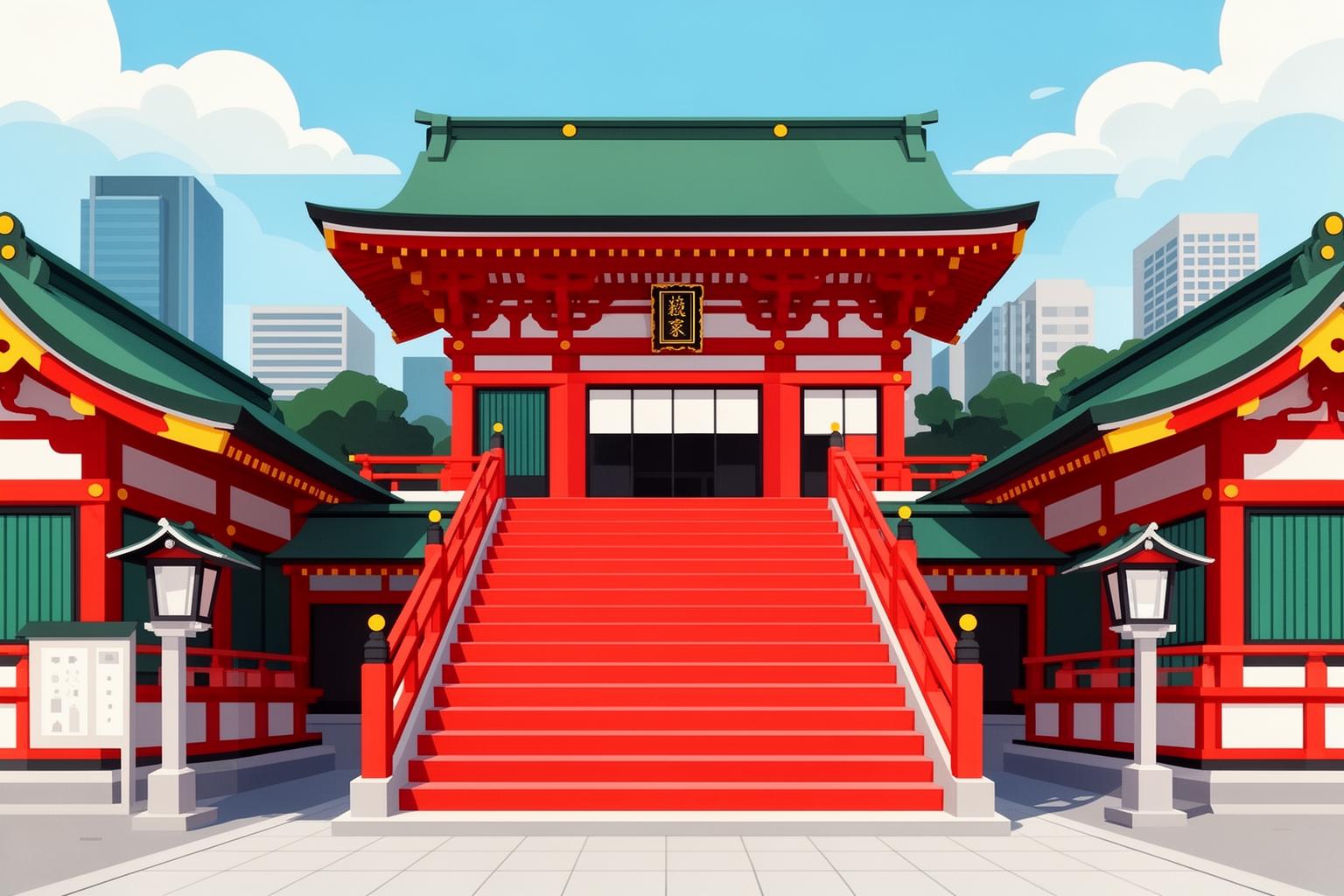
Our pilgrimage does not start in the neon-lit canyons of Shinjuku or Shibuya, but in the tranquil, residential core of Yotsuya. This is the setting where the film’s emotional climax takes place—a scene so impactful and instantly recognizable that it has transformed an ordinary neighborhood staircase into a worldwide landmark. Arriving here, you sense the story’s rhythm change. You leave behind the thunderous beat of the JR Yamanote Line and switch to the quieter, more local Chuo-Sobu Line. The train is less crowded, its pace slower. Upon exiting Yotsuya Station, the atmosphere itself feels altered. The city’s roar mellows into the gentle hum of everyday life—the soft chatter from a neighborhood shop, the quiet whir of a passing bicycle, the rustle of leaves in a nearby park. This is Taki’s Tokyo, the version he returns to at day’s end—a place of homes and peaceful streets.
The Approach: A Stroll Through Yotsuya’s Neighborhoods
The walk from the station to Suga Shrine is an essential part of the experience. It’s a ten- to fifteen-minute walk that prepares you for what lies ahead. You’ll weave through a maze of narrow lanes, passing modest apartment buildings, small, carefully tended gardens, and softly glowing vending machines at street corners. Tourists are noticeably absent here, replaced by the authentic rhythm of Tokyo life. An elderly woman watering her flowers, a salaryman rushing home, the distant melody of piano practice drifting from an open window. This is precisely the essence Shinkai captures so masterfully: the profound beauty found in the everyday. He discovers poetry in power lines, reflections in puddles, and sunlight playing on asphalt. As you walk these streets, you begin to see the city through his eyes, noticing the subtle details that make it come alive. You are not merely a tourist heading to a popular photo spot; you become an urban explorer following a path shaped by memory and yearning, the same feelings that move Taki and Mitsuha.
The Moment of Arrival: The Legendary Steps
And then, you see it. You turn a corner, and there it stands—the staircase. With its weathered red railings and framed by unremarkable apartment buildings, the steps leading up to Suga Shrine appear exactly as they do in the film. The sensation is surreal. It’s an authentic jolt of recognition, a feeling that you’ve slipped inside the anime frame. For a moment, you become both Taki and Mitsuha—breathless, hearts racing, searching for the face you know you must remember. Visitors often find themselves instinctively reenacting the scene, one person at the top, another at the bottom, calling out, “Kimi no na wa?” The air here feels heavy with untold stories—both the film’s narrative and the countless personal tales brought by fans from around the world. It is a shared space of collective affection for a story that has touched millions. For the best experience, try to come on a weekday morning. The light is gentle, crowds are sparse, and you can almost have the moment to yourself. This quiet allows the true power of the place to sink in. Remember to respect that this is a residential neighborhood. The locals in the surrounding buildings witness this pilgrimage daily, so keep your voices low and be considerate of their peace. After your time on the stairs, continue upward. You’ll come upon Suga Jinja, a charming and tranquil local Shinto shrine. It’s not a grand complex, but a place of quiet community worship. Here, you can offer a brief prayer, admire the traditional architecture, and soak in the calm atmosphere—a gentle counterbalance to the intense emotions stirred at the staircase below. It’s a reminder that this iconic spot remains part of a living, breathing neighborhood.
Taki’s Tokyo: Navigating the Urban Labyrinth of Shinjuku
If Yotsuya represents the story’s heart, then Shinjuku is its vibrant, energetic pulse. This is Taki’s world—a vast urban ecosystem of towering skyscrapers, extensive train lines, and an unceasing flow of people. Here, we watch him manage his part-time job, spend time with friends, and sketch the cityscapes that fill his notebooks. Traveling from the quiet reverence of Suga Shrine to the organized chaos of Shinjuku Station—the world’s busiest train hub—is to witness the same dramatic contrast between Mitsuha’s rural existence and Taki’s metropolitan life. The station itself acts as a character in the film, a crossroads of intersecting paths and hurried farewells, and emerging from its maze-like depths feels like stepping into an entirely different reality. The immense scale of the buildings, the dazzling array of digital billboards, the symphony of announcements and footsteps—it might be overwhelming, but it’s an exhilarating dive into the environment that shaped Taki.
The Shinjuku Pedestrian Bridge: A Symbol of Intersecting Paths
Just a short walk from the station’s South Exit lies another significant, though more subtle, location from Your Name. It’s a circular pedestrian bridge near the Shinjuku Police Station, an infrastructure piece that Shinkai transforms into a powerful emblem. In the film, this bridge appears in a montage, its sweeping curves symbolizing the orbits of Taki and Mitsuha—two individuals moving through the same city, so near yet so far apart. Standing on this bridge, the sense of urban anonymity is palpable. Below, cars stream past in rivers of red and white light. Around you, hundreds of people pass by, each absorbed in their own world, their own story. It’s a place of near misses and fleeting glances. From this vantage point, you also gain a stunning view of the skyline, including the distinctive silhouette of the NTT Docomo Yoyogi Building, which prominently recurs in the film as a landmark, a constant on Taki’s horizon. This spot is especially magical at dusk during the film’s cherished “magic hour” or kataware-doki, when the setting sun paints the sky with orange and violet hues and the city begins to sparkle. It’s a perfect location for photographers and dreamers alike—a place to pause and reflect on the millions of connections happening, and those that aren’t, all at once within the vastness of Tokyo.
A Glimpse into Taki’s Life: Shinjuku Gyoen and Cafe La Bohème
While Taki’s life moves at a brisk pace, Shinkai also portrays moments of beauty and calm. A short walk from the station leads you to Shinjuku Gyoen National Garden, a stunning oasis of tranquility amid the urban expanse. Though not a direct filming site, it captures the quiet pockets of nature that Taki often sketched. It’s easy to imagine him sitting on a bench here, sketching the reflection of the Mode Gakuen Cocoon Tower on the still surface of a pond. For a direct connection to Taki’s working life, our next stop is essential: Cafe La Bohème Shinjuku Gyoen. This elegant restaurant served as the real-life model for “Il Giardino delle Parole,” the Italian eatery where Taki worked part-time and where he had his date with coworker Okudera-senpai. Stepping inside, the resemblance is striking. The high ceilings, grand chandeliers, and large arched windows overlooking lush greenery—it’s all accurately captured. The atmosphere is refined yet inviting, far from the fast-food places you might expect a high schooler to work at. Finding a window seat, you can almost picture the scenes unfolding here. This is where Taki learned to balance trays, engaged in awkward but endearing conversations, and began to untangle his own complex emotions. The menu features classic Italian dishes, from pizza to pasta, and taking the time for a meal here is a wonderful way to fully immerse yourself in the film’s world. It invites you to slow the pace of your pilgrimage, to sit and savor the ambiance. A helpful tip: the restaurant is very popular, partly due to the film’s influence, so booking a reservation online in advance is highly recommended, especially for dinner. Ordering a pasta dish and a sparkling drink, you can watch the world pass by and feel, if only for a moment, like a character in your own Shinkai story.
The City from Above: Roppongi Hills and the National Art Center
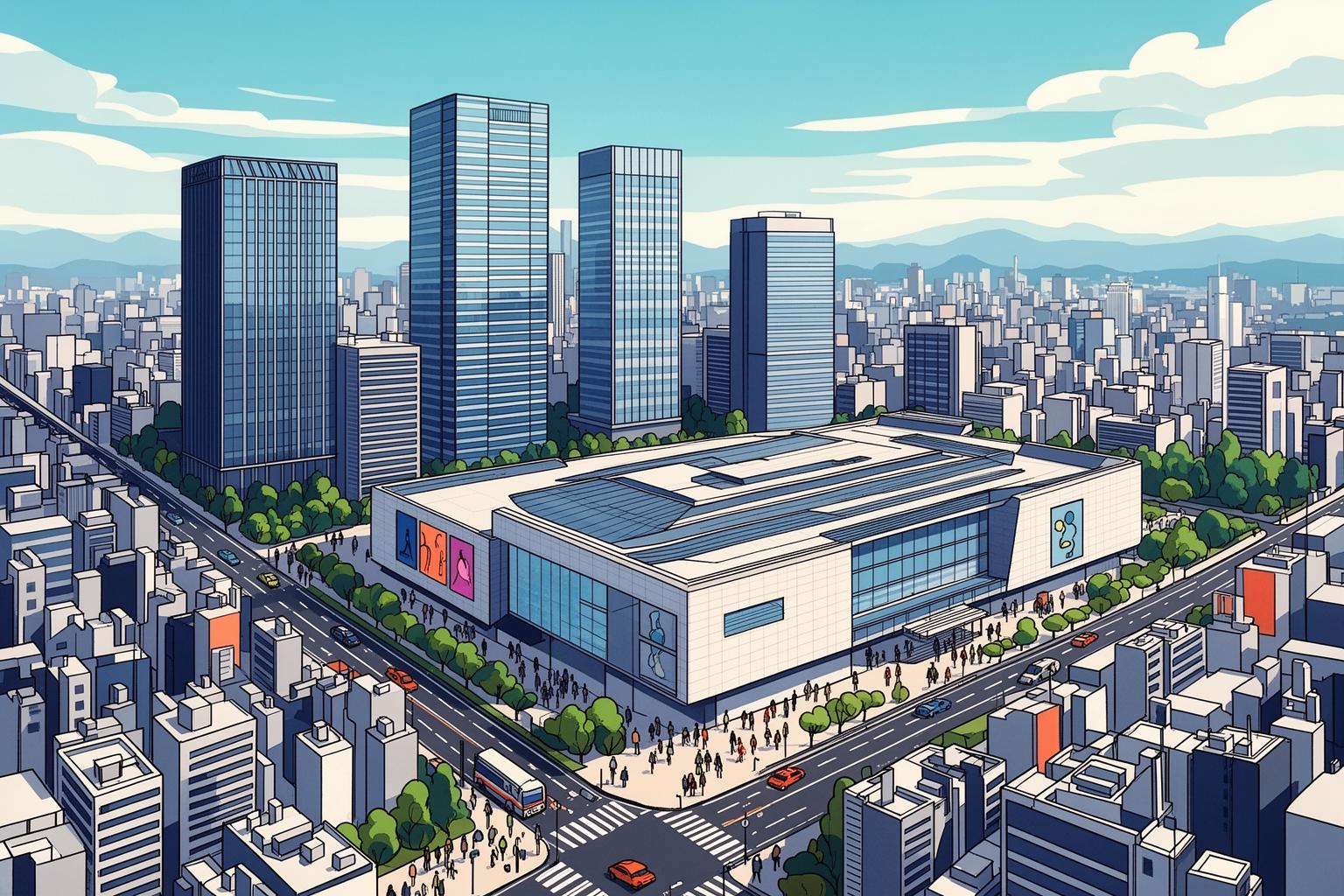
Makoto Shinkai is a master at portraying scale. He juxtaposes intimate, personal moments with stunning, expansive views of the city, reminding us of how small we are within the grand scheme, yet how meaningful our individual connections can be. To explore this element of Your Name., our journey takes us to Roppongi, an upscale, modern district known for its art museums, international vibe, and striking architecture. This area serves as the setting for one of the film’s most memorable scenes: Taki’s date with Okudera-senpai. It offers a glimpse into a more mature, sophisticated Tokyo, where the film’s remarkable artistic direction truly shines.
The National Art Center, Tokyo: An Architectural Date Spot
Their date begins at The National Art Center, Tokyo, where standing before its flowing glass facade is an experience on its own. Designed by the famed architect Kisho Kurokawa, the building itself is a masterpiece. The way light filters through the glass curtain, creating shifting patterns on the floor, was recreated with stunning accuracy by Shinkai’s team. Inside, the space is vast, open, and imbued with a calm, creative energy. You don’t need to be an art connoisseur to appreciate its beauty. The film’s most specific location here is the Salon de Thé ROND, a chic French-style café and brasserie perched atop one of the center’s massive concrete cones. Here, Taki and Okudera sit at a small table dwarfed by the enormity of the atrium. Securing a seat provides a unique vantage point, overlooking the museum floors below. It’s a popular spot, so a wait might be necessary, but enjoying coffee and cake while suspended in this architectural wonder is well worth it. You can almost hear their conversation, sense Taki’s nervousness and Okudera’s gentle amusement. This scene captures the awkwardness of growing up and the complexities of relationships, set against a backdrop of world-class design.
Tokyo City View: The Sky-High Panorama
Later in their date, Taki and Okudera visit an observation deck to watch the sunset over the city. This scene was inspired by the Tokyo City View observation deck atop the Roppongi Hills Mori Tower. After ascending 52 floors in a high-speed elevator, you step into a space with 360-degree, floor-to-ceiling windows offering one of Tokyo’s most breathtaking panoramas. This is Shinkai’s cityscape at its purest. The endless urban sprawl extends to the horizon—a glittering mosaic of lights, buildings, and highways. Landmarks like Tokyo Tower, Tokyo Skytree, and on clear days, even Mount Fuji, are visible in the distance. The experience is deeply moving. It offers a god’s-eye view that perfectly echoes the film’s cosmic themes. The city is seen not just as a collection of streets and structures but as a living entity, pulsing with millions of lives and stories, all connected. The best time to visit is unquestionably just before sunset. Watching the sky ignite with colors then fade to deep indigo as city lights twinkle below is unforgettable. It’s the ultimate kataware-doki moment—the time when worlds can intersect, and the boundary between reality and magic feels thin. It’s a moment for reflection and to sense the vast scale of the world that Taki and Mitsuha were striving to navigate to find each other.
Your Pilgrimage Blueprint: Navigating Tokyo Like a Pro
Embarking on a seichi junrei for Your Name. is an adventure, and like any great adventure, a bit of preparation goes a long way. Tokyo’s public transport system is remarkably efficient, and mastering it is essential for a smooth journey. The locations are spread across multiple districts, but all are easily accessible via the city’s dense JR train and subway networks. With some planning, what could be a confusing trip transforms into a seamless narrative experience.
Getting Around: The Pilgrim’s Pass
Your most important tool will be a prepaid IC card such as Suica or Pasmo. You can load them with funds at any station and just tap in and out of the gates, avoiding the need to buy individual tickets for each trip. During this pilgrimage, you’ll mainly rely on the JR Chuo-Sobu Line (for Yotsuya), the JR Yamanote Line and Tokyo Metro Marunouchi Line (for Shinjuku), and the Toei Oedo Line or Tokyo Metro Hibiya Line (for Roppongi). A sensible one-day itinerary might begin with the tranquil reverence of Suga Shrine in the morning. From Yotsuya, take the Marunouchi subway line straight to Shinjuku. Spend your afternoon exploring Taki’s urban haunts, perhaps enjoying lunch at Cafe La Bohème. As evening falls, take the Oedo subway line from Shinjuku to Roppongi, arriving just in time to watch the sunset from Tokyo City View. This route mirrors the film’s emotional arc, moving from introspection to urban energy and concluding with a grand, reflective panorama.
A Note on Respect: Visiting Sacred and Private Spaces
It’s important to remember these are not film sets; they are real places with their own purposes and communities. When visiting Suga Shrine and its famous staircase, be mindful that you are in a quiet residential neighborhood. Please keep your voice low, avoid lingering on the stairs, and respect residents coming and going. The shrine itself is a place of worship, so behave with the same respect you would in any religious setting. Similarly, at Cafe La Bohème and Salon de Thé ROND, you are a customer in an operating business. Be patient if there’s a wait, support the establishment by ordering something, and avoid disruptive photography that might bother other guests. The golden rule of seichi junrei is to be a grateful guest. Your visit should leave nothing behind but fond memories and perhaps a small contribution to the local economy. By showing respect, you help ensure these places remain welcoming to future pilgrims for years to come.
Timing Your Visit: Seasons of Shinkai
The Tokyo of Your Name. shines in every season, each offering a unique experience. Spring is arguably the most iconic, with cherry blossoms painting the city in soft pinks and whites. Visiting Shinjuku Gyoen during sakura season is truly magical. Summer features lush greenery and brilliant, clear skies after rain, creating the dramatic cloudscapes Shinkai is renowned for. Autumn offers crisp, comfortable weather ideal for walking, with often the clearest city views from Roppongi Hills. Winter has its own stark charm, with festive illuminations adding a different kind of sparkle to the city nights. The film itself moves through these seasons, and aligning your visit with your favorite scenes—whether a sunny afternoon or a rain-soaked evening—can add an enriching dimension to your pilgrimage.
Beyond the Screen: Finding Your Own Story in Tokyo
A journey through the locations of Your Name. is more than just a sightseeing tour. It’s an act of engagement. It’s about pursuing the feeling the film left behind—that powerful blend of wonder, melancholy, and hope. Standing on the staircase in Yotsuya, you’re not merely reenacting a scene; you’re joining a global community of people touched by the same story. Gazing out over the sparkling cityscape from Roppongi Hills, you’re not simply admiring a view; you’re reflecting on the countless connections that weave together a city, and indeed, our lives. The true magic of this pilgrimage lies in the moments between landmarks. It’s in the taste of coffee at the café where Taki worked, the sound of the train arriving at Shinjuku station, the feeling of the breeze atop a flight of stairs. It’s the realization that the stunning beauty Makoto Shinkai depicts on screen isn’t a fantasy. It’s the everyday reality of Tokyo, seen through the eyes of an artist profoundly in love with his city. You came to Tokyo seeking Taki and Mitsuha’s story, but as you wander these streets, you’ll inevitably discover you’re creating your own. You’re finding your own connections, your own magic hour, your own musubi with this extraordinary, unforgettable city.