
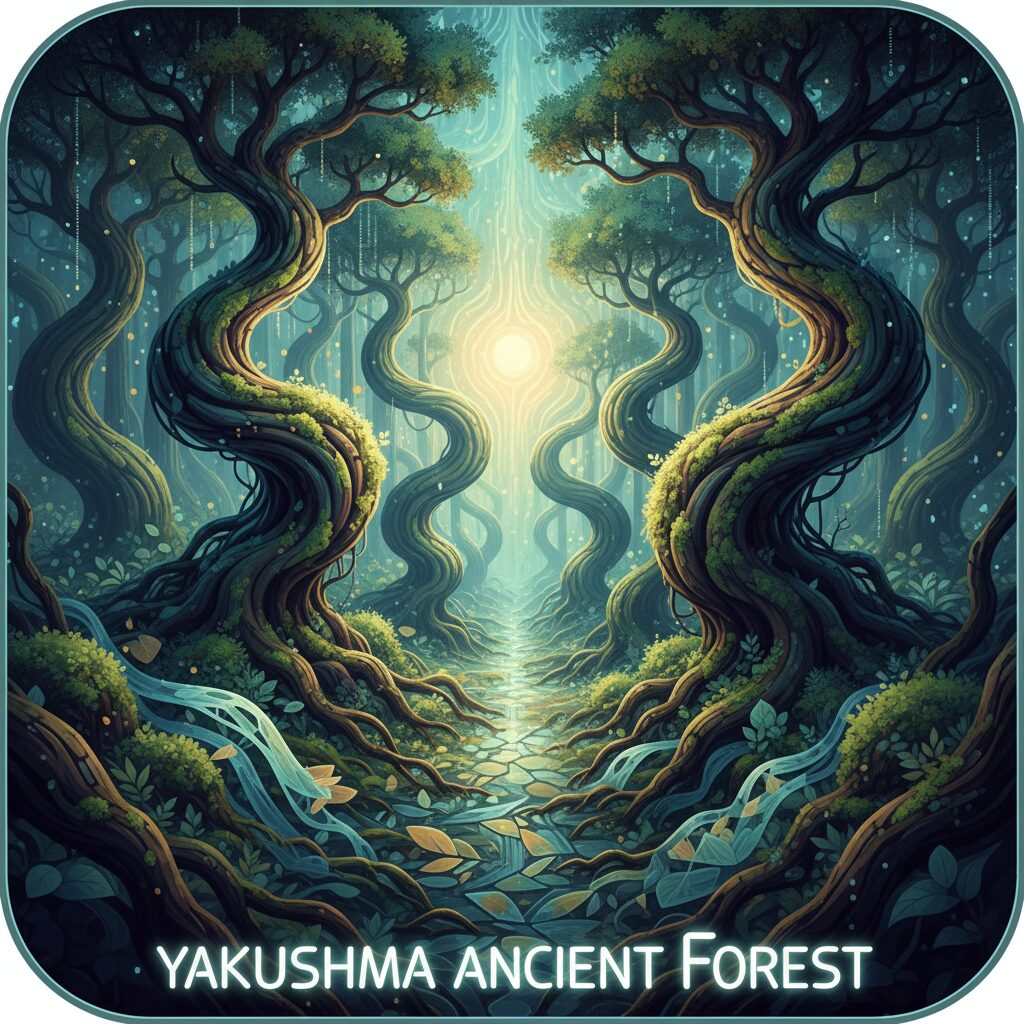
There are places on this earth that feel older than time itself, where the air hums with a silent, powerful energy. Yakushima is one of those places. It’s an island of dramatic granite peaks and impossibly green forests, a near-perfect circle floating in the sea south of Kyushu, Japan. For many, its name is whispered with a sense of reverence, not just as a UNESCO World Heritage site, but as something more mystical: the real-life soul of a cinematic masterpiece. This is the island that breathed life into Hayao Miyazaki’s epic, Princess Mononoke. To set foot on Yakushima is to step through the screen, to walk amidst the same ancient trees and moss-covered stones that inspired the world of the Forest Spirit, of San and her wolf gods. It’s a journey into a landscape that doesn’t just imitate art, but is the very heart from which that art was born. Prepare to leave the modern world behind; the forest is waiting to tell you its story.
For those who feel the forest’s timeless magic, exploring the Ghibli Museum offers a unique glimpse into the real-life inspiration behind cinematic legends.
The Soul of the Forest: Where Ghibli Found Its Magic
The essence of Studio Ghibli’s vision is most palpable deep within the island’s forests—places so vibrant and alive they seem like a single, breathing organism. This is where your pilgrimage genuinely begins, on trails that meander through a world painted in countless shades of green.
Shiratani Unsuikyo Ravine: The Moss-Covered Kingdom
If there is one location that stands as the absolute, undisputed heart of Princess Mononoke’s aesthetic, it is the Shiratani Unsuikyo Ravine. The moment you step onto the trail, the atmosphere transforms. The air turns cool and heavy with moisture. Every surface—the bark of ancient trees, the smooth granite boulders, the fallen logs bridging small streams—is blanketed in a thick, velvety layer of moss. Sunlight struggles to penetrate the dense canopy, and when it does, it filters down in ethereal beams, illuminating the mist rising from the damp earth. This is the Moss Forest, or Kokemusu-no-mori, the very place Miyazaki and his team sketched for hours, capturing its otherworldly spirit. Walking here feels less like a hike and more like a sacred procession. The only sounds are the drip of water, the cheerful murmur of a hidden stream, and the soft thud of your footsteps on the moist ground. You almost expect to see a tiny white kodama with its rattling head peeking from behind a tree root. For the adventurous, the trail continues upward to a dramatic climax at Taiko-iwa Rock, a massive granite outcrop offering a breathtaking panorama of the island’s mountainous interior. From there, gazing down upon the endless sea of green, you grasp the vast scale and wildness the film sought to convey.
The Ancient Whispers of the Yakusugi
While the moss forms the forest’s skin, the Yakusugi are its bones. These legendary Japanese cedars of Yakushima number among the oldest living trees—many over 1,000 years old. They are far more than just trees; they are living monuments, silent witnesses to centuries of history. To stand before one is a humbling experience. Their bark is gnarled and twisted, their shapes molded by typhoons and the slow, unyielding passage of time. The most famous among them is the Jomon Sugi, a colossal giant estimated to be between 2,000 and 7,200 years old. Reaching it is no casual walk; it’s an arduous ten-hour round-trip hike along a route that includes old logging railway tracks and steep mountain paths. This journey is a pilgrimage in its own right. The effort to reach Jomon Sugi strips away the trivial concerns of daily life, preparing you for the moment of encounter. When you finally arrive, you view it from a protected deck—a necessary measure to preserve its ancient roots. Yet even from afar, its presence is overwhelming. It doesn’t feel like you’re looking at a plant; it feels as if you are in the presence of a deity. It embodies the Forest Spirit, the Shishigami—a being of immense age, power, and serene, formidable dignity.
A Living, Breathing Island: Beyond the Silver Screen
Yakushima’s identity is not defined solely by its association with Ghibli. The island is a complex and ever-changing ecosystem, a place where powerful natural forces converge as mountains, rivers, and the ocean collide spectacularly.
The Rhythms of Water: Rivers, Waterfalls, and Endless Rain
A local saying on the island goes: “It rains 35 days a month.” Though an exaggeration, it reflects a fundamental truth. Yakushima is among the wettest places in Japan, and this constant rainfall is its lifeblood. The rain nourishes the moss, sustains the ancient trees, and shapes the island’s dramatic terrain. The water here is incredibly pure. Rivers such as the Anbo and Miyanoura run so clear that every stone on the riverbed is visible. This abundance of water also gives rise to some of Japan’s most spectacular waterfalls. Oko-no-taki Falls in the south is a thunderous cascade, 88 meters high, which you can approach right at its base to feel the spray on your face. Senpiro-no-taki Falls is another giant, plunging down a vast granite cliff. Water is a constant presence here, providing the soundtrack to your journey. It is both a force of creation and erosion, making the forest lush and the mountains strikingly rugged. To truly appreciate Yakushima, you must welcome the rain—not as a disturbance but as a vital part of its wild spirit.
Where Mountains Meet the Sea: Coastal Wonders
While Yakushima’s interior is dominated by deep, dark forest greens, its coastline provides a stunning contrast of blue and gold. The single road that circles most of the island follows dramatic cliffs, offering breathtaking views of the Pacific Ocean. In the northwest lies Nagata Inakahama Beach, a beautiful stretch of golden sand that serves as the largest nesting site for loggerhead sea turtles in the North Pacific. From May to July, guided tours allow visitors to witness the extraordinary sight of female turtles coming ashore at night to lay their eggs. This is a powerful reminder of the island’s role as a sanctuary for wildlife. The island’s volcanic character is also evident along the coast. The Hirauchi Kaichu Onsen is a unique natural hot spring where pools form among the seaside rocks, accessible only for a few hours daily during low tide. Soaking in the warm sulfurous water while waves crash just feet away is a primal experience, offering a direct connection to the earth’s raw geothermal energy.
Your Pilgrimage to the Enchanted Isle: Practical Guidance
Setting out on a journey to Yakushima requires more preparation than a visit to Tokyo or Kyoto. As a remote and wild destination, being well-prepared is essential to truly immerse yourself in its enchanting atmosphere.
Charting Your Course: Getting to Yakushima
Your adventure starts in Kagoshima, the southernmost major city on Kyushu’s main island. From there, you have two main options. The quickest is by air, with several daily flights making the 40-minute trip from Kagoshima Airport to the small Yakushima Airport. This option is fast, convenient, and offers stunning aerial views of the island as you approach. Alternatively, the more popular and scenic choice is the high-speed ferry, often called the “Toppy” or “Rocket,” which takes about two to three hours from Kagoshima City’s port. The ride can be a bit rough depending on sea conditions, but watching the island’s jagged peaks emerge from the horizon provides an unforgettable introduction to its grandeur. For those with a tighter budget but more time, a slower car ferry is also available. Whichever mode you select, booking well in advance is essential, especially during peak seasons like Golden Week in spring or the Obon holidays in summer.
Navigating the Wilds: Getting Around the Island
Upon arrival, you’ll discover that Yakushima is much larger than it appears on maps. There is public transport via a bus system that circles the island, but services can be infrequent and may not reach all the trailheads you want to explore. To fully uncover the island’s hidden spots and enjoy the freedom to follow your interests, renting a car is by far the best choice. The main road is well-paved but often narrow and winding, requiring a slower and more cautious driving style. This actually works to your advantage, encouraging you to embrace the island’s unhurried rhythm. Be ready to share the road with local wildlife, as Yakushika deer and Yakuzaru monkeys frequently cross the pavement, completely unbothered by traffic. Driving along the Seibu Rindo, a narrow forest route on the island’s western side (when it’s open), provides a genuine adventure through a dense World Heritage zone with very few signs of human presence.
Finding Your Shelter: Where to Stay
Most of the island’s population is centered in a few key settlements, chiefly Miyanoura on the north coast, where the main ferry port is located, and Anbo on the east side, closer to the trailheads for Jomon Sugi and Yakusugi Land. Both towns offer a variety of accommodations, from simple guesthouses known as minshuku to more comfortable hotels. Staying in a minshuku offers a wonderful chance to experience local hospitality, as they are often family-run and provide cozy rooms along with delicious home-cooked meals made from local ingredients such as flying fish (tobiuo). Your choice of base depends on your itinerary: Miyanoura has more shops and restaurants, while Anbo is ideal for serious hikers. For a quieter, more secluded experience, consider lodging in one of the smaller villages scattered along the southern coast.
Embracing the Spirit of Mononoke: A Deeper Connection
A trip to Yakushima offers more than just sightseeing. It presents a chance to connect deeply with nature, much like the characters in Miyazaki’s film. This experience calls for both the proper equipment and mindset.
What to Pack for the Mossy Trails
The island’s weather is famously unpredictable. A bright morning can quickly turn into a heavy downpour by afternoon. Therefore, having the right gear is essential, not optional. High-quality waterproof clothing—a jacket and pants—are the most crucial items to bring. Durable, waterproof hiking boots with strong grip are necessary for managing the slippery, root-covered paths. The forest can remain dim even at midday, so a headlamp is a smart item, especially if you plan to start hiking before dawn. Dress in layers that you can easily add or shed as your body temperature and the weather fluctuate. Lastly, honor the trails by carrying a small bag for your trash. The rule is simple: leave the forest exactly as you found it.
Timing Your Visit: The Island’s Many Moods
Yakushima is stunning all year, but each season reveals a unique character. Spring (March to May) brings mountain rhododendrons bursting into bloom, adding spots of pink to the green landscape. Summer (June to August) is hot, humid, and the busiest season for both tourists and nesting sea turtles. It’s also typhoon season, so flexibility is important. Autumn (September to November) tends to bring cooler temperatures and more stable, clear weather, perfect for extended hikes. Winter (December to February) is the quietest season on the island. While coastal areas stay mild, the tall mountain peaks are often dusted with snow, turning the forest into a silent, enchanting realm. For those seeking solitude, a winter visit can be an especially moving experience.
A Note on Respect: Kodo and the Forest Etiquette
The core message of Princess Mononoke is respect towards nature. This belief is deeply rooted in Japanese culture, stemming from Shinto traditions that gods and spirits, or kami, dwell in natural elements like ancient trees, mountains, and waterfalls. When hiking in Yakushima, you traverse a sacred place. This awareness should shape your behavior. Move quietly and thoughtfully. Greet other hikers on the trail with a friendly “Konnichiwa.” Stay on marked paths to protect the fragile moss and roots. Do not take anything from the forest, not even a small stone. This is not only about conservation but about recognizing you are a guest in a powerful, ancient world. By embracing this respectful mindset, your trip to Yakushima becomes more than a vacation; it transforms into a meaningful interaction with the island’s spirit.
Your time on Yakushima will linger long after you board the ferry back to the mainland. The memory of the deep, vivid green moss, the cool, misty air, and the awe-inspiring presence of the ancient Yakusugi trees will stay with you. You come seeking the world of a beloved film, and you find it—but you also leave with something greater—a profound connection to the wild, untamed beauty of nature. The island is not just a setting; it is a living entity, with a story of resilience, beauty, and timeless, silent strength. The forest has existed for millennia and, with our care, will endure for millennia more, waiting for the next traveler to hear its whispers.








