
There’s a feeling, a whisper on the wind, that some places hold more than just history. They hold stories, woven into the very fabric of their streets, their mountains, their sky. For millions around the world, the city of Takayama, nestled deep within the mountainous Hida region of Gifu Prefecture, is one such place. It’s a town that exists in two realms at once: the tangible, breathtaking reality of a preserved Edo-period town, and the ethereal, dreamlike landscape of Makoto Shinkai’s animated masterpiece, ‘Your Name.’ (Kimi no Na wa). To visit Takayama is to walk through a living, breathing film set, to feel the echoes of a story about connection, memory, and fate. It’s a journey that starts with the search for a familiar image from a movie but ends with the discovery of a place with a soul so deep and captivating it writes its own story onto your heart. Here, the soft glow of a paper lantern on a wooden lattice wall feels just as magical as a twilight comet streaking across the heavens. This is where the world of Itomori, the fictional town from the film, finds its stunning real-world counterpart, inviting you to blur the lines and believe, just for a moment, that you too are part of its unforgettable tale.
The captivating blend of myth and history encourages travelers to further immerse themselves by exploring the real-life locations that inspired the cinematic magic of Your Name.
Echoes of Itomori: Tracing the Scenes
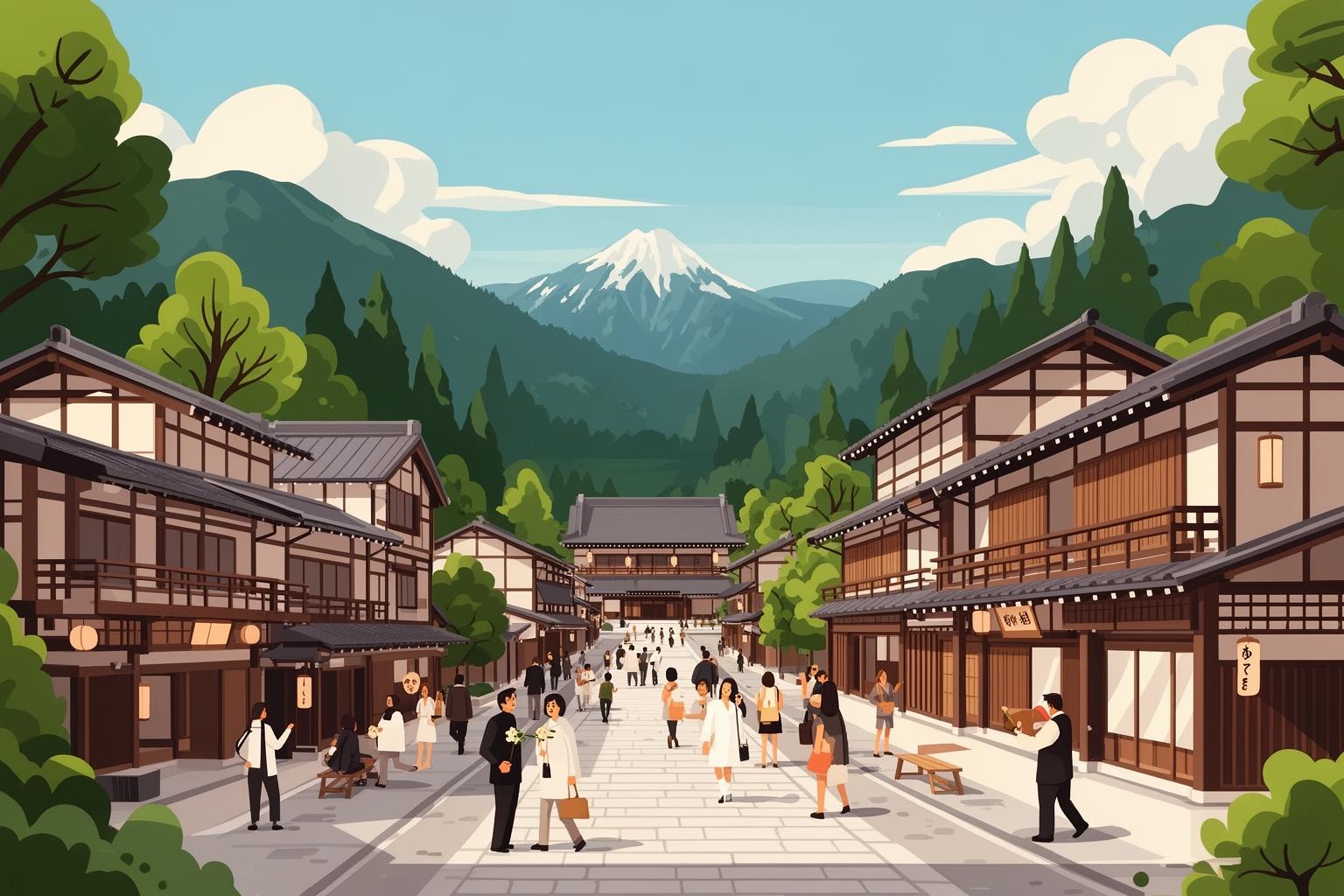
The pilgrimage truly begins the moment you step off the train. The newly renovated Takayama Station serves as your gateway—a modern glass and timber structure that immediately reflects the town’s deep respect for its natural surroundings. Yet for fans of the film, the genuine cinematic moment lies just a short train ride away at Hida-Furukawa Station. This is precisely where the protagonist, Taki, steps into the countryside on his journey to find Mitsuha. The quiet platform, the distinctive design of the overhead walkway, the waiting area—it all feels uncannily familiar. You can almost sense Taki’s anxiety and determination as he holds up his hand-drawn sketches of the town. Standing there, watching the local train pull away against a backdrop of green hills, the real world feels as poignant and beautifully framed as Shinkai’s animation. Be sure to spot the Hida Beef mascot statue, Hidakuro, a charming local detail that anchors the cinematic experience in authentic regional culture.
The Sacred Heart of the Story
From the station, the path naturally leads you toward the spiritual core that inspired the film: the shrines. Although the Miyamizu Shrine in the movie is fictional, its essence is drawn from several real-world locations, the most notable being Hida-Sannogu Hie Shrine on the outskirts of Takayama’s city center. The journey there is everything. As you begin climbing the steep, moss-covered stone staircase, the sounds of the town fade away, replaced by the rustling of leaves from ancient cedar trees towering above like silent guardians. The air grows cooler, carrying the scent of damp earth and wood. Each step upward feels like a step further from the ordinary. When you finally reach the top and pass under the imposing stone torii gate, the shrine grounds unfold before you—a serene clearing that feels both vast and intimate. This is where Mitsuha performed her duties as a shrine maiden, and standing in this sacred space, it’s easy to imagine the weight of tradition and the quiet longing she experienced. The architecture, stone lanterns, and tranquil atmosphere combine into a powerful and moving experience that connects you directly to the film’s emotional core.
Another key source of inspiration is the Keta Wakamiya Shrine, situated closer to Hida-Furukawa. While Hie Shrine provides the grand staircase, Keta Wakamiya offers the more intimate details of the shrine’s layout depicted in the film. Visiting both lets you piece together a fuller image of the Miyamizu Shrine in your mind—a beautiful puzzle of real-world inspirations.
The Library of Memories
A pivotal scene in Your Name. shows Taki and his friends poring over records, desperately seeking information about the lost town of Itomori. That beautifully rendered library, with its unique wooden interior and sunlit reading areas, is real: it’s the Hida City Library. Just a short walk from Hida-Furukawa Station, this public library has embraced its connection to the film wholeheartedly. It features a dedicated corner for fans and even permits photography, as long as you respect other patrons. Sitting at one of the tables, looking up at the geometric wooden ceiling beams, you can feel the same sense of discovery and urgency that Taki experienced. The light filtering through large windows and the quiet hum of a knowledge-filled public space make it a surprisingly emotional stop on the pilgrimage—where the search for answers in the story becomes tangible.
Beyond the Film: Discovering the Soul of Takayama
While the anime may be the initial draw for many visitors, Takayama’s own story is equally epic, spanning centuries. Known as ‘Little Kyoto,’ the town boasts one of the most beautifully preserved historic districts in all of Japan. To truly appreciate Takayama, one must look beyond the animation and fully immerse in its rich culture—a culture centered on craftsmanship, festivals, and a profound connection to the surrounding nature. At the heart of this is the Sanmachi Suji district, a trio of streets where the old world is not merely preserved but vibrantly alive.
The Living Museum of Sanmachi Suji
Strolling through the Sanmachi Suji district feels like stepping back in time. The streets are lined with dark-wood merchant houses, their latticed windows and overhanging eaves creating a scene straight from the Edo Period. By day, these buildings host sake breweries, artisan shops offering intricate local crafts, and cozy cafes. You may see sake makers rolling massive barrels out of their storefronts, the aroma of freshly grilled mitarashi dango (skewered rice cakes) filling the air, and the soft clatter of wooden geta sandals along the pavement. The narrow streets are designed for pedestrians, encouraging a slower pace. Notice the fine details: the elaborate carvings on the buildings, the small water channels beside the streets carrying crystal-clear mountain water, and the large ‘sugidama’ (balls of cedar branches) hanging outside breweries signaling a new batch of sake is ready. The atmosphere is lively yet serene, a perfect blend of commerce and tradition. This authentic, lived-in history provided the ideal visual backdrop for the timeless townscape of Itomori.
The Spectacle of the Takayama Festivals
As an event planner, I can confidently say that few occasions worldwide rival the artistry and community spirit found in the Takayama Festivals. Held twice annually, these festivals represent the pinnacle of Takayama’s cultural calendar and are considered among Japan’s most beautiful. The Spring Festival (Sanno Matsuri) in April offers prayers for a bountiful harvest, while the Autumn Festival (Hachiman Matsuri) in October expresses gratitude and thanksgiving. The highlight of both events is the ‘yatai,’ or floats—though calling them ‘floats’ greatly understates their grandeur. These are mobile museums and ornate masterpieces of craftsmanship, handed down through generations. Each of the dozen or so yatai is a towering structure made of lacquered wood, intricate metalwork, and rich textiles, representing a specific neighborhood in the old town. During the day, the floats parade through the streets in a stunning procession of color and tradition. Some even feature highly sophisticated mechanical puppets, or ‘karakuri ningyo,’ performing elaborate dances and acrobatics controlled by unseen puppeteers within the float. It’s a captivating display of centuries-old engineering and artistry. As night falls, the festival takes on a new magic. Hundreds of paper lanterns illuminate each yatai, casting a warm, enchanting glow across the town. The floats sway gently as they are pulled through the darkened streets, accompanied by festive music, creating an atmosphere of pure enchantment. Witnessing this is to truly grasp the deep pride and communal spirit that define Takayama. It is an experience that goes beyond tourism; it is a celebration of shared cultural joy.
A Culinary Pilgrimage: The Flavors of Hida
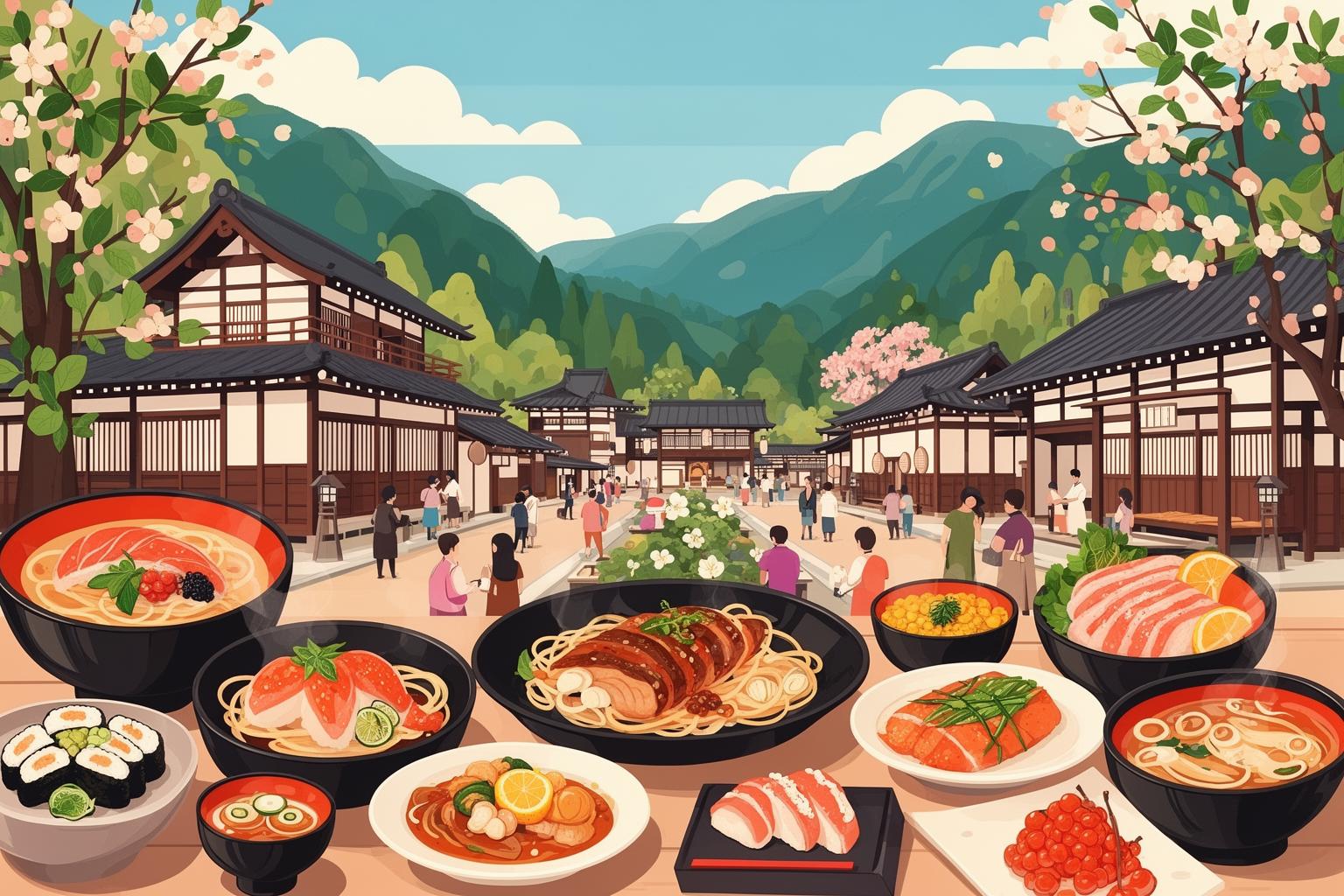
Exploring Takayama is a feast for the eyes as well as the palate. The Hida region boasts pristine mountain water and fertile land, resulting in a culinary scene that is both rustic and sophisticated. Your visit here isn’t complete without savoring its signature flavors.
The Legendary Hida Beef
You’ll find it everywhere, and it’s a must-try. Hida-gyu, or Hida beef, is one of Japan’s premier wagyu brands, celebrated for its intense marbling and melt-in-your-mouth texture. The fat is so fine it melts at a low temperature, producing a rich, buttery flavor and unbelievably tender bite. It can be enjoyed in many forms. For a quick and tasty street snack, seek out stalls offering Hida beef skewers (kushi-yaki) or Hida beef buns (gyuman). For something more unique, try Hida beef nigiri sushi, where a lightly seared slice of beef rests on a small block of rice, often placed on a crispy senbei rice cracker instead of a plate. It’s the perfect savory indulgence. For a truly luxurious meal, visit a local restaurant serving it as a steak, in a sukiyaki hot pot, or grilled yakiniku-style. The beef’s exceptional quality shines through even in the simplest preparations.
Local Delights and Mountain Brews
Beyond the famed beef, Takayama offers many other culinary gems. Be sure to try the local mitarashi dango. Unlike the sweet, syrupy versions found elsewhere in Japan, Takayama’s dango are charcoal-grilled and brushed with savory soy sauce, giving them a smoky, slightly tangy flavor that’s incredibly addictive. Another must-try is Takayama Ramen, a simple yet deeply satisfying dish featuring a dark soy-sauce-based broth, thin curly noodles, and minimal toppings that highlight the soup’s rich flavor. The old town is also home to several historic sake breweries, some in operation for hundreds of years. The cold, pure waters from the Japanese Alps are ideal for brewing high-quality sake. Many breweries offer tastings, allowing you to sample different varieties and learn about the brewing process. Stepping into the cool, dim interior of a brewery, with the faint sweet aroma of fermenting rice in the air, is a wonderful sensory experience.
Don’t miss the morning markets, or asaichi, held daily along the Miyagawa River and in front of Takayama Jinya. Here, local farmers and artisans set up stalls selling fresh produce, homemade pickles, local honey, and various crafts. It’s a fantastic spot to soak up the local atmosphere, chat with vendors, and sample fresh, seasonal foods. It offers a lively, authentic glimpse into daily life in Hida.
A Practical Guide for Your Journey
Finding your way to and around this mountain town is part of the experience. With some planning, the journey can be just as scenic and enjoyable as the destination itself.
How to Get There
Takayama’s mountainous location means it’s not on a major Shinkansen (bullet train) line, but it remains easily reachable. The most common route from Tokyo involves taking the Shinkansen to Nagoya, then transferring to the JR Hida Limited Express train. This latter segment is one of Japan’s most picturesque train rides, winding through deep valleys and alongside a turquoise river. The large windows of the ‘Wide View’ train are designed to offer the best views of the stunning surroundings. The full trip from Tokyo takes approximately four and a half hours. From cities like Kyoto or Osaka, the journey is similar, usually requiring a transfer at Nagoya. It’s important to plan your train connections ahead of time since Limited Express trains run less frequently than the Shinkansen.
When to Visit and How to Get Around
Takayama is a year-round destination. Spring and autumn are especially beautiful, highlighted by festivals as well as cherry blossoms and vivid fall colors. Summer offers lush greenery and a refreshing break from the heat of major cities. Winter covers the town in a thick layer of snow, turning the historic streets into a peaceful, magical scene. Once in Takayama, the best way to explore the central historic area is on foot. The town is compact, and its charm is best enjoyed by wandering through its narrow alleys. For destinations further out, such as the Hida Folk Village (Hida no Sato)—an outstanding open-air museum featuring traditional gassho-zukuri farmhouses—you can use the local Sarubobo bus system, which is simple for visitors to navigate. For a more memorable experience, consider renting a bicycle to explore the surrounding countryside and the nearby town of Hida-Furukawa.
A Few Final Tips
To get the most out of your visit, keep a few small tips in mind. Wear comfortable walking shoes, as you’ll do a lot of walking. While credit cards are widely accepted at hotels and larger restaurants, it’s wise to carry some cash for smaller shops, market stalls, and shrine offerings. Mornings in Takayama are special. Rising early to stroll through the Sanmachi Suji district before the crowds arrive is magical. The town is quiet, the air crisp, and you can watch shopkeepers preparing for the day. It feels like you have the entire historic town to yourself. Lastly, watch for ‘sarubobo’ dolls—the faceless red talismans that symbolize the Hida region. They are believed to bring good luck and make a perfect souvenir to commemorate your trip.
The Enduring Magic of Place
A trip to Hida Takayama is a stunning fusion of worlds. It offers a chance to step beyond the screen and into a story you cherish, discovering the real-life locations that inspired a beloved film’s breathtaking scenery. Yet, it is far more than that. It is a journey to the heart of traditional Japan—a place where craftsmanship is honored, ancient festivals illuminate the night, and the connection between people and nature is deeply felt. You may arrive seeking Itomori, but you will leave having discovered Takayama—a town with its own unique spirit, where every street corner tells a story, and where the magic feels truly, wonderfully alive. It’s a pilgrimage that delights the anime fan, the culture enthusiast, and the curious traveler alike, leaving you with memories as vivid and precious as a fading dream.