
There are stories that stay with you, that weave themselves into the very fabric of your memory. They echo in your thoughts long after the credits roll, leaving you with a profound sense of longing, a bittersweet ache for a world you’ve only seen on screen. Makoto Shinkai’s masterpiece, ‘Your Name.’ (Kimi no Na wa), is one such story. It’s a celestial symphony of fate, time, and connection that captivated the globe, not just for its breathtaking animation or its heart-wrenching narrative, but for the tangible reality it was built upon. The film’s magic feels so potent because, in a way, it’s real. The bustling streets Taki Tachibana calls home and the serene, tradition-steeped town where Mitsuha Miyamizu dreams of a different life are not just figments of an artist’s imagination. They are real places, etched onto the map of Japan, waiting for you to find them. This journey, this act of stepping into the frame, is known in Japan as ‘seichi junrei’—a holy land pilgrimage. It’s a quest to bridge the gap between fiction and reality, to stand where your favorite characters stood, and to feel the same air on your skin. From the electric heart of Tokyo to the tranquil mountains of Gifu Prefecture, we will trace the intertwined destinies of Taki and Mitsuha, uncovering the real-world magic that brought their story to life. This isn’t just a tour; it’s an immersion into the soul of ‘Your Name.’, a chance to find your own connections in the places where their story began.
Beyond these revered landmarks, experiencing the luminous charm of Takehara unveils another facet of the real-world magic that inspired ‘Your Name.’
Tokyo’s Urban Heartbeat: Tracing Taki’s Steps
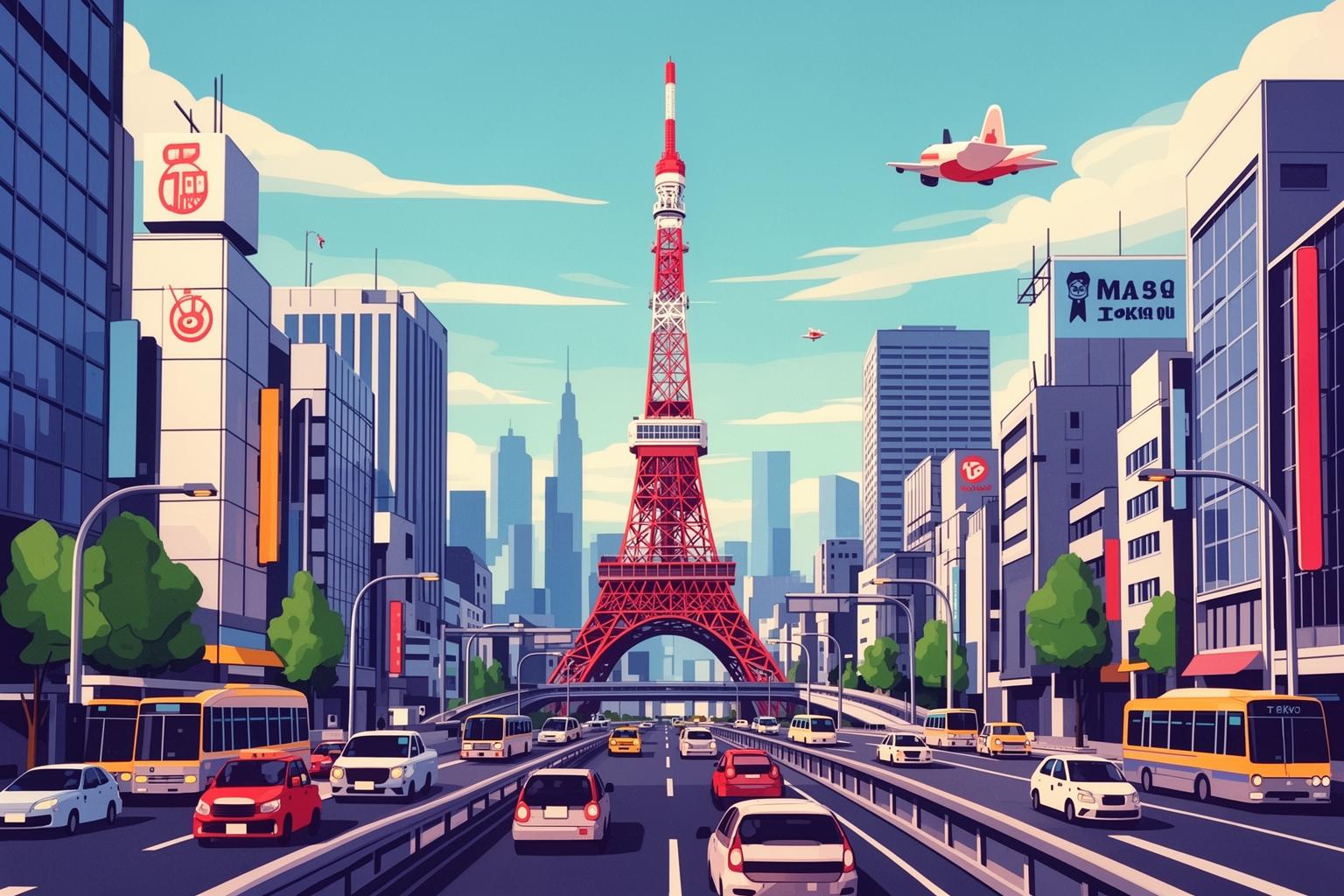
Tokyo is a city of constant motion, a dazzling constellation of light, sound, and humanity. It’s Taki’s world—a realm of towering skyscrapers, crowded trains, and infinite possibilities. This is where our journey starts, in the very wards and districts that framed his everyday life. Tracing his steps means experiencing the rhythm of the world’s greatest metropolis and witnessing how Shinkai portrayed its vast scale alongside moments of quiet, personal beauty. The city in ‘Your Name.’ isn’t merely a backdrop; it’s a character itself, pulsing with an energy that is both intimidating and thrilling. Wandering these streets, you begin to grasp the source of Taki’s drive and Mitsuha’s innocent wonder. It’s a world far removed from the timeless traditions of Itomori—a landscape of concrete and neon where destinies are created and erased in the blink of an eye.
The Iconic Red Staircase: Suga Shrine in Yotsuya
No image is more closely associated with ‘Your Name.’ than the final, breathtaking scene on a simple red-railed staircase. This spot is the emotional heart of the entire film, the culmination of a years-long quest. It truly exists. Hidden in a quiet residential corner of Yotsuya, a neighborhood blending modern life with Showa-era charm, are the steps leading to Suga Shrine. The walk from Yotsuya Station is a pilgrimage on its own. You leave the main streets behind, weaving through narrow alleys and tranquil lanes as the city’s noise softens to a gentle murmur. Anticipation grows with every turn. Then, there it is—the curve of the road, the distinctive railings, the view down the hill. It’s a surreal moment, a flawless merge of animation and reality. Standing at either end, gazing at the very spot where Taki and Mitsuha finally reunited, you can almost hear their tentative question: “Kimi no namae wa?” The atmosphere is thick with a tender, hopeful melancholy. It’s not a major tourist attraction but a local Shinto shrine. You’ll observe residents coming to pray, the sound of clapping hands echoing softly. This quiet authenticity is what makes the experience so impactful. For the best visit, come late afternoon when the golden hour bathes the scene in warm light, mirroring the film’s ethereal climax perfectly. It’s a place for quiet contemplation, not just for photos. Be sure to respect the residents and the shrine’s sanctity—a small bow upon passing through the torii gate is a simple gesture of reverence. This isn’t merely a movie location; it’s a place where the film’s central theme of ‘musubi’—the invisible, powerful thread of connection—can be felt vibrating in the air.
A View from the Top: Shinjuku’s Dazzling Cityscape
If Yotsuya embodies the story’s emotional core, Shinjuku represents its vibrant, pulsing heart. This is the Tokyo Mitsuha dreamed of—a chaotic yet stunning urban jungle rendered by Shinkai with meticulous detail. The sprawling Shinjuku Station, a labyrinth used by millions each day, is your gateway. The film perfectly captures its ordered chaos. Just outside the station, you can find the pedestrian bridge where Taki and his crush, Okudera-senpai, share a moment after their date. Standing there amidst the constant flow of people, you feel like a background character in Taki’s life. Look up and you’ll spot the iconic Yunika Vision building with its enormous screens, prominently featured in establishing shots of the city. To truly sense the pulse of the film’s Tokyo, visit at night. The city transforms into a river of light, a scene straight from the movie’s breathtaking time-lapses. Neon signs reflect off wet pavement, and the sheer density of light and energy is intoxicating. It’s easy to imagine Taki walking these very streets, headphones on, lost in thought. For another perspective, head to the NTT Docomo Yoyogi Building, the clock-tower-like skyscraper that serves as a constant landmark in the film’s skyline shots. Although you can’t enter, its presence is a navigational anchor, much like for the animators. The area around Shinjuku Gyoen National Garden inspired Taki’s high school—a slice of calm amid the urban sprawl. A first-time visitor might feel overwhelmed by Shinjuku, and that’s part of the experience. Embrace it. Don’t rush. Allow yourself to get a little lost. Grab a coffee, find a window seat, and watch the city breathe. That’s how you’ll discover the beauty Shinkai saw—the personal moments of reflection hidden even in the busiest places on Earth.
A Moment of Respite: Taki’s Part-Time Job
Every pilgrimage needs a place to rest and recharge, and there’s no better spot than the real-life inspiration for the restaurant where Taki worked part-time. The charming Italian eatery, called ‘Il Giardino Delle Parole’ (The Garden of Words) in the film as a homage to another of Shinkai’s works, is based on Cafe La Bohème near Shinjuku Gyoen. Stepping inside feels like peeling back another layer of reality. The layout, elegant decor, and large windows overlooking greenery are all remarkably faithful. The restaurant has embraced its connection to the film, and you’ll often find fellow fans quietly enjoying a meal, their faces illuminated by the joy of recognition. This is more than a photo opportunity; it’s a chance to fully immerse yourself in Taki’s world. Order pasta or pizza and imagine the conversations Taki might have shared with Okudera-senpai and his friend Tsukasa. The atmosphere is refined yet welcoming, a sharp contrast to the fast pace of Shinjuku’s core. It offers a tangible link to the everyday, mundane aspects of Taki’s life, grounding the fantastical story in relatable reality. A helpful tip: make a reservation, especially during peak times, as its fame has made it a popular destination. Sitting there, you realize how much care went into crafting the film’s world. Even the location of a simple part-time job was chosen with intention, providing a beautiful, memorable space that enriches the story.
Journey to Itomori: Discovering Mitsuha’s World in Hida
The transition from Tokyo to Mitsuha’s world is as striking as it is in the film. It involves a journey aboard the Shinkansen, the bullet train, watching the endless cityscape gradually give way to sprawling suburbs, lush farmland, and finally, the majestic, rolling mountains of central Japan. You are heading to the Hida region in Gifu Prefecture, the area that inspired Mitsuha’s fictional hometown of Itomori. While Itomori itself doesn’t exist, its spirit lives on in the charming town of Hida-Furukawa. Arriving there feels like stepping back in time—the air grows crisper, the pace of life slows to a gentle rhythm, and the sounds of nature replace the city’s hum. This is the heart of rural Japan, a world rich with ancient traditions, close-knit communities, and a profound spiritual connection to the surrounding landscape. Exploring Hida-Furukawa helps you understand Mitsuha’s yearning for Tokyo’s excitement, while also appreciating the profound beauty and peace she ultimately fought to protect.
The Soul of a Small Town: Hida-Furukawa Station
Your entrance into Mitsuha’s world fittingly begins at a train station. The moment you step off the local train at Hida-Furukawa Station, a strong sense of déjà vu hits you. This is where Taki and his friends arrive on their quest to find Mitsuha. Walking up to the pedestrian overpass, the scene unfolds exactly as it did in the animation. The tracks stretching into the distance, the platform, the mountains framing the view, even the charming ‘Hida-gyu’ cow mascot statue—it’s a flawless recreation. The station is more than a backdrop; it serves as the town’s gateway, linking this secluded mountain community to the outside world. You can almost sense Taki’s uncertainty and determination as he gazes upon this unfamiliar landscape. Hida-Furukawa has warmly embraced its “Your Name.” fame. The local tourist center offers maps highlighting key pilgrimage spots, and friendly locals are eager to share stories. For travelers from Tokyo, a practical tip is to plan your trip carefully: the common route is taking the Tokaido Shinkansen to Nagoya, then transferring to the scenic JR Hida Wide View Express. This train ride, winding through dramatic river gorges and lush valleys, is an essential part of the experience and builds anticipation for your arrival. Spend some time soaking in the station’s atmosphere; it’s a perfect introduction to Hida’s gentle, unhurried spirit.
Echoes of Tradition: The Hida City Library
One of the most crucial scenes in Taki’s search takes place in a library, where he examines records to uncover the truth about Itomori and the comet. This beautiful, modern library is not fictional; it’s the Hida City Library, and it’s open to visitors. Passing through the automatic doors feels like stepping directly into Taki’s path. The spacious, light-filled interior, distinctive wooden ceiling beams, and rows of bookshelves are instantly recognizable. The library staff warmly welcome anime pilgrims, having set up a small dedicated section with information about the film and a guestbook for visitors to sign. As a gesture of trust and respect towards fans, they even permit photography—provided you seek permission at the front desk and respect other patrons. Find a seat at one of the tables where Taki sat and look around. This is a real, functioning library, a vital hub for the local community. This pilgrimage stop offers a unique cultural insight, highlighting the role of public spaces in preserving local history and collective memory—a theme that deeply resonates with ‘Your Name.’. It’s a quiet, reflective experience connecting you not only to the film but also to Hida’s real community. Take a moment to browse the shelves, feeling the weight of the town’s history surrounding you. It’s here that the mystery of Itomori was unraveled, and you can sense a lingering ghost of that revelation in the silent, studious air.
Weaving Connections: Kumihimo and Local Crafts
The braided cords, or ‘kumihimo,’ are perhaps the most significant symbol in ‘Your Name.’. They represent Mitsuha’s family tradition, the passage of time, and the invisible threads of fate—’musubi’—that connect the characters. In the film, Mitsuha says, “They are time itself.” While visiting Hida, you have a wonderful opportunity to experience this beautiful craft firsthand. The Hida region has a rich history of textile arts, and the film’s popularity has brought renewed attention to kumihimo. Several shops and craft centers in Hida-Furukawa and nearby Takayama offer workshops where you can sit at a traditional ‘marudai’ (a round stand) and create your own braided cord. It’s a meditative, surprisingly intricate process. Handling the weighted bobbins and weaving the colorful threads together in a rhythmic pattern deepens your appreciation for the skill and patience involved. This is more than just a souvenir; it’s a tangible connection to the story’s heart. You are creating your own symbol of musubi. This hands-on experience is one of the most rewarding aspects of the Hida pilgrimage, transforming you from a passive observer into an active participant in the region’s traditions. A helpful tip is to seek out the local specialty shop that recreated the exact kumihimo stand seen in the film, offering a perfect photo opportunity alongside high-quality handmade cords for purchase. Crafting your own kumihimo is a beautiful way to conclude your visit to Mitsuha’s world, leaving you with a personal memento embodying the film’s most profound theme.
The Spiritual Heart: Uncovering the Deeper Lore

Your Name. is profoundly imbued with the spiritual traditions of Shinto, Japan’s native religion. The ideas of kami (gods or spirits), ancient rituals, and the sanctity of nature are intricately woven into the very essence of Itomori’s identity. A pilgrimage would be incomplete without exploring the real-life inspirations behind these mystical elements. While you won’t find the exact Miyamizu family shrine, you can visit sites that share its ancient, sacred atmosphere. This segment of the journey immerses you further into Japan’s cultural landscape, unveiling the historical and religious foundations upon which the film’s fantasy is based. It invites you to look beyond the surface and connect with the timeless beliefs that shape the story’s core, recognizing that the boundary between the physical and spiritual realms is often beautifully blurred.
The Miyamizu Shrine: Keta Wakamiya Shrine
Mitsuha’s role as a shrine maiden, or ‘miko,’ is central to her character. Her family’s shrine serves as the spiritual heart of Itomori, a place of community, tradition, and ritual. Though the Miyamizu Shrine is a blend of multiple inspirations, one of its main models is believed to be the Keta Wakamiya Shrine, situated near Hida-Furukawa. A short walk from the town center leads you to a lengthy flight of stone steps ascending through a dense cedar forest. As you climb, the sounds of town fade away, replaced by the rustling leaves and birdsong. The atmosphere evokes reverence and timelessness. At the summit stands the shrine’s main building, a serene and dignified wooden structure. Fans of the film will recognize familiar details—the stone lanterns, the ‘torii’ gate marking the entrance to sacred ground, and the overall layout. It’s easy to picture Mitsuha and her sister Yotsuha sweeping the grounds here. This site offers insight into the role of Shinto shrines in Japanese life: they are not merely places of worship but vital parts of the community, deeply linked to the surrounding natural world. When visiting, be mindful and respectful. You can offer a small prayer in the traditional manner: bow twice, clap twice, make your prayer, and bow once more. Standing quietly within Keta Wakamiya Shrine’s precincts, you can sense the deep history and spirituality that Shinkai so masterfully conveyed on screen—a moving reminder of the traditions Mitsuha fought to preserve.
The Goshintai: A Journey of Imagination
The ‘goshintai’—the sacred site where the Miyamizu family’s shrine deity resides—is among the most stunning and otherworldly locations in Your Name. The moss-covered, forested caldera housing the sacred tree is where Mitsuha offers kuchikamizake and where Taki, inhabiting her body, makes a pivotal discovery. This mystical place, symbolizing the boundary between the living world and the underworld, is not a single easily accessible site. Its main visual inspiration is thought to be Aogashima, a volcanic island in the Izu archipelago, a remote and difficult-to-reach area administered by Tokyo. A visit to Aogashima requires a helicopter or ferry and lies far beyond a typical Your Name. pilgrimage. Nonetheless, knowing this source adds depth to the film, demonstrating the creative team’s dedication to finding real, awe-inspiring landscapes to inspire their fantasy. The spirit of the goshintai, however, is present in the rich natural environment around Hida. The dense forests, ancient trees, and the reverence for nature’s power are all characteristic of the local scenery. Thus, the pilgrimage to the ‘goshintai’ is less a physical trek and more a journey of imagination. It encourages an appreciation for nature’s sacred power throughout Japan, reflecting Shinto beliefs that a god can dwell in a mountain, river, or ancient tree. It reminds us that the film’s most magical locations emerge from a profound respect for the Earth’s raw, untamed beauty.
Planning Your Perfect ‘Your Name.’ Pilgrimage
Embarking on a ‘seichi junrei’ for Your Name. is an incredibly rewarding experience, though it requires some planning to ensure the journey is smooth and meaningful. As an experienced tour planner, I can assure you that a carefully crafted itinerary lets you fully immerse yourself in the atmosphere without worrying about logistics. This pilgrimage tells a story of two contrasting experiences: the vibrant energy of urban Tokyo and the peaceful, reflective calm of rural Hida. Striking a balance between these worlds is essential for the perfect pilgrimage. With the right transportation, timing, and mindset, you can effortlessly step from Taki’s world into Mitsuha’s, creating a travel memory as epic and emotional as the film itself.
The Ideal Itinerary: A Tale of Two Destinations
To truly honor this pilgrimage, I suggest setting aside at least three to four days. This timeframe allows you to explore without rushing and to genuinely absorb the unique atmosphere of each location. A good plan is to dedicate the first two days to Tokyo. On Day One, focus on Shinjuku—explore the station, visit various filming locations, enjoy lunch at Cafe La Bohème, and experience the neon cityscape by night. Day Two should be devoted to the quieter Yotsuya district, where you can visit Suga Shrine and stroll through its charming residential streets, gaining insight into different facets of Taki’s life. On the morning of Day Three, take the Shinkansen and the Hida Wide View Express to Hida-Furukawa, where the journey itself becomes part of the adventure. Spend the afternoon exploring the town center, visiting the station, the library, and perhaps a kumihimo shop. Reserve Day Four for deeper exploration—visit Keta Wakamiya Shrine and simply soak in the town’s peaceful ambiance before starting your journey back. For international visitors, the Japan Rail Pass is invaluable, covering the Shinkansen ride from Tokyo to Nagoya and the JR train to Hida-Furukawa, making travel both convenient and economical. Be sure to reserve long-distance train seats ahead of time, especially during peak seasons.
When to Go: Capturing the Film’s Seasons
Your Name. is primarily set during the lush, vibrant green of a Japanese summer; visiting between June and August offers an experience closest to the film’s aesthetic. The verdant mountains around Hida are stunning, and Tokyo’s warm evenings are ideal for city exploration. However, summer can be hot and humid, with a rainy season early on. Another excellent option is autumn (October to November), when Hida becomes a spectacular canvas of fiery reds and brilliant yellows as the leaves change. The crisp, cool air is perfect for walking, and seasonal cuisine enhances the experience. Autumn adds a layer of beautiful, wistful melancholy to the pilgrimage. Winter offers a distinct charm—Hida-Furukawa often lies blanketed in snow, transforming it into a serene, monochrome wonderland. It’s a deeply peaceful time to visit, although warm clothing is necessary. Spring (March to April) provides the iconic cherry blossoms in Tokyo, offering a stunning but different visual backdrop for Taki’s world. For a more personal and reflective visit, particularly at popular spots like the Suga Shrine staircase, try to go on a weekday and avoid national holidays when domestic tourism peaks.
Beyond the Checklist: Immersing Yourself in the Experience
A successful pilgrimage goes beyond ticking photo spots; it’s about engaging all your senses and connecting with the local culture. In Hida, be sure to try the regional culinary specialties. Sample Hida beef, famous for its rich marbling and flavor. And don’t miss ‘goheimochi,’ grilled rice cake on a stick coated with sweet miso and walnut sauce—Taki’s favorite in the film and a delicious, authentic local treat. I also encourage you to wander—put the map away for an hour and explore Yotsuya’s side streets or the canals of Hida-Furukawa. This is how you discover the small details—a quaint shop, a lovely garden, a friendly local—that make a place truly unforgettable. One last tip to enhance your journey: re-watch Your Name. just before you depart or download it to watch during the long train ride to Hida. Seeing the animated scenes while en route creates a powerful and immediate connection, making your arrival and the moment you see these places in person all the more magical. This pilgrimage becomes your story now—a new thread woven into the worlds of Taki and Mitsuha.
This journey is far more than a simple sightseeing trip. It is an exploration of memory, art, and the surprising ways a fictional story can add new meaning to real places. To stand on that staircase in Yotsuya or hear the train arrive at Hida-Furukawa is to feel a direct connection to the powerful emotions Your Name. evokes. It’s a testament to storytelling’s power, a force strong enough to turn a quiet shrine or rural station into a heartfelt landmark for millions worldwide. As you leave these places, you carry a piece of them with you, blurring beautifully the line between the world on the screen and the world beneath your feet. The search for a name becomes a search for a place, and in finding it, you might just discover a little piece of yourself, too.