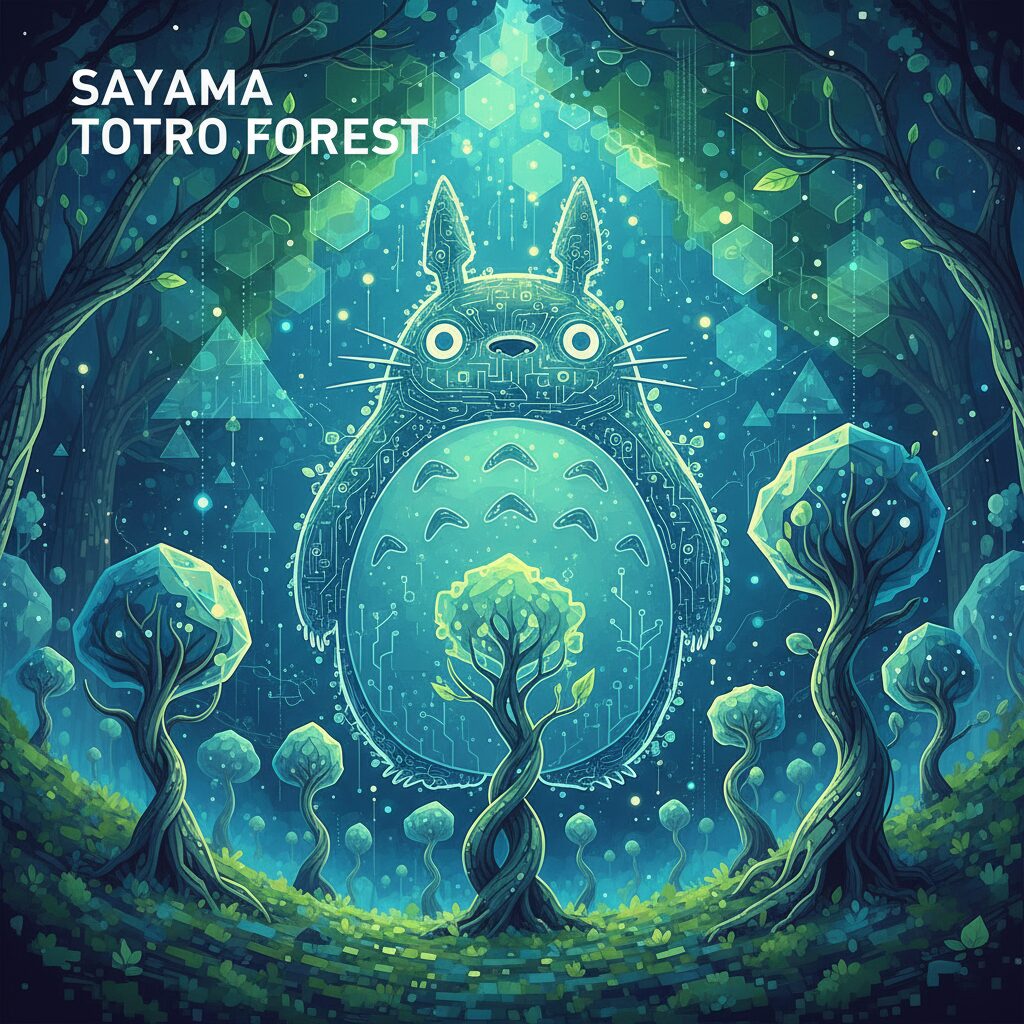
There’s a certain kind of quiet that lives only in childhood memory. It’s the sound of a summer afternoon, thick with the buzz of cicadas and the rustle of impossibly tall grass. It’s the feeling of dappled sunlight warming your face as you lie beneath a canopy of leaves, convinced that some great, gentle magic is sleeping just beyond your sight. For millions around the world, this feeling is captured in a single, whiskered, smiling face: Totoro. Hayao Miyazaki’s 1988 masterpiece, My Neighbor Totoro, is more than a film; it’s a vessel for nostalgia, a portal back to a time when the world felt boundless and full of benevolent spirits. What many don’t realize is that this portal has a physical doorway. It exists just a short train ride from the electric hum of Tokyo, in a sprawling green expanse known as the Sayama Hills. This is not merely a place that looks like the movie; it is the very soul of it, the rolling woodlands and quiet rice paddies that inspired Miyazaki to create his iconic world. To walk here is to step through the screen, to feel the breath of the Catbus on the wind, and to search for acorns under the shade of a real-life camphor tree. This is a pilgrimage not to a set, but to an atmosphere, a living, breathing landscape that holds the gentle, rumbling heartbeat of a forest king.
For those seeking to truly relive the magic, a visit to the Sayama Hills trails offers a tangible passage into the heart of Miyazaki’s enchanting world.
The Echo of a Gentle Giant

The magic of the Sayama Hills isn’t announced with signs. There are no grand gateways proclaiming it “Totoro Land.” Its enchantment is much more subtle—a quiet presence that seems to rise from the earth itself. It’s said that Hayao Miyazaki walked these very trails, soaking in the unique spirit of this place where the city’s edge blends into nature. He observed the dance of light and shadow, the ancient trees that appeared to hold stories, and the mosaic of farms and forests that shape the traditional Japanese satoyama landscape. This is what he captured and brought to life on screen. As you wander, you begin to sense it. The path bends in a familiar way. A cluster of trees creates a dark, welcoming tunnel, just like the one Mei ran through. A sudden gust stirs countless leaves at once, briefly sounding like a deep, rumbling sigh. The air feels different here—fresher, softer, and alive with a quiet energy. It’s the sensation of possibility. The feeling that if you glance away and then back quickly enough, you might glimpse a furry ear slipping behind a bush. This is the heart of the pilgrimage: not to see Totoro, but to experience the world that gave rise to him. It’s a sensory immersion. You smell the damp earth after a light rain, the sweet aroma of cedar, and the delicate fragrance of wildflowers you can’t name. You hear unfamiliar bird calls and the constant hum of insects composing the forest’s ambient soundtrack. It’s a place that invites you to slow down and notice the small details—a curious mushroom, a line of ants marching with purpose, the way sunlight filters through the leaves to form a shifting mosaic on the forest floor. This deep connection to the film is felt rather than seen, offering a far more powerful experience than any replica ever could.
Charting Your Path Through the Woods
While the spirit of Totoro permeates the entire region, there are certain focal points where the boundary between his world and ours feels especially fragile. Exploring this area is part of the adventure—a gentle treasure hunt where the reward is a deeper connection to the story. The journey isn’t about rushing from one photo spot to another; it’s about the moments in between, the quiet discoveries along the winding paths that weave the landscape together. You become your own explorer, following your curiosity down side trails or pausing to watch a dragonfly hover above a still pond. The forest invites you to get a little lost, trusting that you’ll find your way again, perhaps with a fresh perspective.
Kurosuke’s House: A Step into the Story
The most tangible link to the Ghibli universe here is Kurosuke’s House, or “Soot Sprite House.” This lovingly preserved Showa-era home feels as though it were lifted straight from the film’s celluloid frames. It is not a movie set, but a genuine piece of Japanese history that perfectly captures the nostalgic aesthetic of Satsuki and Mei’s countryside home. Managed by dedicated local volunteers, the house is open to the public only on certain days—usually Tuesdays, Wednesdays, and Saturdays—adding to its charm and giving each visit a special feeling. As you slide open the wooden door and step inside, the scent of old tatami mats and weathered wood welcomes you. The house is filled with details sure to make any Ghibli fan’s heart flutter. And then you see him. Seated in the main room, enormous and huggable, is a giant plush Totoro, patiently waiting for visitors. Both children and adults can’t help but sit beside him, sharing a moment of pure, unadulterated joy. Look carefully in the corners and rafters, and you’ll spot handmade makkuro kurosuke, the little black soot sprites, peeking out from the shadows. The house stands as a testament to the community’s love for the film and its ties to their home. It’s a warm, inviting space that feels less like a museum and more like visiting a friend’s grandmother—a place where time moves slowly and comfortably.
The Trails of Totoro’s Forest
Beyond Kurosuke’s House, the true exploration begins. The Totoro no Furusato Foundation, a conservation group formed to protect this inspiring landscape from urban development, maintains a series of walking trails collectively known as “Totoro’s Forest.” These trails, numbered and marked with charming, hand-carved wooden signs often featuring Totoro himself, wind through the most pristine sections of the Sayama Hills. Each trail offers a unique character. Totoro’s Forest No. 1 might lead you through a dense bamboo grove, where tall stalks creak and sway, producing a percussive, otherworldly music. Another path may open into a sunlit clearing, offering a sudden, sweeping view of the valley below. Walking these trails is a meditative experience. There is no set route, no right or wrong way to go. The aim is simply to wander. You’ll cross small wooden bridges over babbling brooks, climb gentle slopes with earthen steps reinforced by logs, and find yourself completely alone with your thoughts and the forest’s symphony. These paths form the heart of the pilgrimage. It is here, away from everything, that you can fully appreciate the landscape that inspired Miyazaki’s imagination. You can easily picture the girls chasing one another down these very trails, their laughter ringing through the trees as they searched for their mother in the hospital or waited for their father’s bus in the rain.
The Living Landscape of Sayama
The charm of the Sayama Hills is ever-changing; it is a vibrant, living tableau that shifts profoundly with the passage of the year. Its beauty is diverse, presenting a fresh character with each season and encouraging visitors to return repeatedly to observe its cyclical display. Moreover, the forest is not a wild, untouched wilderness. It exemplifies a satoyama, a concept deeply rooted in Japanese culture and a recurring motif in Miyazaki’s work. Recognizing this adds an additional dimension of appreciation to your visit, revealing an ancient and delicate balance between humans and nature.
A Symphony of Seasons
In spring, the forest bursts into life with gentle intensity. The pale pink and white blossoms of wild cherry and plum trees sprinkle the hillsides, their fragile petals drifting down like soft snow onto the paths. The air is crisp, alive with the lively songs of birds returning to nest. It is a season of renewal and vibrant, hopeful greens. Summer brings a rich, immersive intensity. The foliage thickens into an almost impenetrable emerald canopy, offering a cool, shaded refuge from the heat. The cicadas’ hum reaches its crescendo, a constant, rhythmic soundtrack to the languid, sun-filled afternoons. This season closely mirrors the film’s setting, embodying lush growth and buzzing vitality. Autumn is arguably the most breathtaking. The hills ignite in a brilliant display of crimson, gold, and orange as maples and ginkgo trees change color. The air sharpens and clears, and the sunlight takes on a warm, slanting quality. The forest floor is blanketed with fallen leaves, and acorns, a key motif in the film, are scattered everywhere, sparking the imagination. Winter offers a contrasting beauty—stark, quiet, and reflective. Bare branches form delicate, skeletal patterns against a pale sky. Visitors vanish, and the silence is deep, interrupted only by the crunch of footsteps on frost-covered leaves. It is a season for peaceful reflection, revealing the landscape’s bare bones.
More Than Just a Forest: The Satoyama Ecosystem
The Sayama Hills serve as an ideal example of satoyama, the traditional rural landscape where human communities, farms, and managed woodlands coexist sustainably and symbiotically. This is not a pristine wilderness; it is a terrain shaped by centuries of human activity. You will encounter carefully maintained rice paddies terraced into the hillsides, small vegetable gardens, and reservoirs like Lake Sayama and Lake Tama, which were constructed to support local communities. Historically, the forests were managed for charcoal and timber production. This human influence, rather than damaging nature, fostered a unique and biodiverse environment. This concept lies at the core of My Neighbor Totoro. The film glorifies a world where children freely roam between their home, neighboring farms, and the mysterious forest—a world where the human and spiritual realms are intertwined rather than separate. By exploring Sayama, you engage directly with this philosophy. You witness the profound respect for nature woven into rural Japanese life, a theme of conservation and harmony that Hayao Miyazaki has embraced throughout his career.
Practical Magic for the Aspiring Explorer
Embarking on a journey to Totoro’s Forest is surprisingly easy, showcasing Japan’s exceptional public transportation system. However, a bit of preparation can turn a nice day trip into an enchanting experience. Knowing the route, what to expect, and what to bring will allow you to fully immerse yourself in the adventure, letting the forest work its gentle magic without the distraction of logistical concerns. This trip rewards some planning with a day full of seamless discovery and tranquility.
Setting Out from the Urban Jungle
The usual starting point for this adventure is central Tokyo, with the key being the Seibu Railway network. From Ikebukuro Station, a major city hub, you catch the Seibu Ikebukuro Line headed toward Seibukyūjō-mae Station, located right next to Belluna Dome, home of the Seibu Lions baseball team. The trip takes less than an hour and includes a straightforward transfer at Nishi-Tokorozawa Station. Upon arrival, the contrast is striking. You step away from the dense cityscape into an area where the sky feels wider and the air carries the scent of greenery. From the station, the main walking trails and Kurosuke’s House are a pleasant 20 to 30-minute walk. The stroll itself forms part of the experience, passing local homes, small farms, and landscapes that gradually become wilder. For those wanting to explore more, renting a bicycle near larger stations like Tokorozawa offers a great way to cover the forest trails, lakes, and Kurosuke’s House at a comfortable pace.
Essentials to Bring on Your Adventure
Getting ready for a day in Sayama is straightforward. Most importantly, wear comfortable, sturdy walking shoes. While the trails are typically well-kept, they are unpaved paths with uneven terrain, gentle slopes, and occasional muddy spots. Your feet will appreciate it. Weather can shift, so layering your clothing is a smart move. The forest intentionally has few amenities to maintain its natural feel—there are no vending machines or cafes on the trails—so it’s crucial to carry your own water and perhaps some snacks or a light packed lunch. Finding a quiet, sunlit spot to enjoy a simple meal is one of the day’s special moments. In warmer seasons, from late spring to early autumn, insect repellent is a must-have. Bringing a camera is a perfect way to capture the hills’ beauty, but don’t forget to set it aside occasionally. The true soul of this place is best experienced not through a lens, but by engaging your senses fully, simply being present and allowing the forest’s quiet magic to envelop you.
Beyond the Footprints of Totoro
While the spirit of Totoro is the main attraction for many visitors, the Sayama Hills area presents a broader array of experiences that can enhance your day trip. After connecting with the forest spirits, a short journey in nearly any direction unveils new views and diverse forms of tranquility, making the region a truly all-encompassing escape from the city. These nearby points of interest provide a beautiful backdrop to the forest, illustrating how it integrates into the larger landscape of water, recreation, and community life that characterizes this unique borderland between Tokyo and Saitama prefectures.
Just north of the main forest trails lie two vast, shimmering reservoirs: Lake Tama and Lake Sayama. These man-made lakes, created to supply water to Tokyo, are strikingly beautiful. Their calm, expansive surfaces mirror the sky, and their shorelines are lined with walking and cycling paths. After wandering through the enclosed, intimate world of the forest, the wide-open views offered by the lakes provide a refreshing contrast. The perimeter of Lake Sayama, especially, features a superb cycling route and many spots to sit and gaze over the water, where you can often spot distant mountain silhouettes on a clear day. These lakes offer a different type of natural beauty—less about mystery and more about serene, open-air reflection. They are favored by local families, cyclists, and birdwatchers, adding a gentle hum of community life to the area’s tranquil atmosphere. For visitors seeking a completely different vibe, the nearby Belluna Dome and Seibu Amusement Park present an intriguing contrast, a reminder that this natural sanctuary exists right on the edge of modern entertainment and urban life.
Preserving the Dream
Perhaps the most touching aspect of the Sayama Hills story is the continuous effort to preserve it. The reason this stunning landscape remains intact, despite the relentless pressure of Tokyo’s urban expansion, is largely due to the passion and commitment of ordinary citizens. In the late 1980s, when the area was at risk of being sold and developed, a movement arose. Inspired by the release of My Neighbor Totoro, which beautifully captured the spirit of the land they cherished, local residents and fans of the film united. With the public support of Hayao Miyazaki himself, the Totoro no Furusato Foundation was founded in 1990. The foundation’s mission is straightforward yet impactful: to purchase sections of the forest, bit by bit, to protect them permanently. They rely on donations from people across Japan and around the world—those who want to ensure that “Totoro’s Forest” endures for future generations. When you walk the numbered trails, you tread on land saved by this shared devotion. Kurosuke’s House also serves as the foundation’s center, where you can learn more about their work and even contribute a small donation. Knowing this story transforms the experience of being here. You are no longer just a tourist visiting a film site; you become a witness to a successful and ongoing conservation effort driven by the power of art. The forest feels even more precious when you recognize the community’s struggle to preserve it. It’s a powerful reminder that the gentle, nature-loving message of Miyazaki’s film has had a real, tangible, and positive impact on the world.
A Parting Whisper
Leaving the Sayama Hills feels like emerging from a pleasant dream. As you board the train heading back to the city, the rhythmic clatter of the tracks takes on a different tone, and Tokyo’s towering skyscrapers seem somewhat less daunting. You carry the forest’s tranquility with you—the image of sunlight filtering through leaves, the memory of damp earth’s scent, and the lingering sense that something wonderful lies just around the bend. A visit to Totoro’s Forest is more than an anime pilgrimage; it is a journey back to the root of wonder. It offers a chance to disconnect from the noise of the modern world and reconnect with the simple, profound beauty of nature. You may not see a giant, furry creature with a leaf upon his head, but you will undoubtedly sense his presence—in the whisper of the wind through bamboo, the strength of ancient trees, and the quiet joy of finding a perfect acorn along the path. The true magic of Sayama is that it reminds us this gentle, benevolent spirit of nature is not confined to a single forest in Japan; it waits to be discovered everywhere, if only we remember to look.