There’s a certain kind of magic that lives inside a Studio Ghibli film, a whisper of wonder that lingers long after the credits roll. It’s in the quiet rustle of leaves in a sun-dappled forest, the nostalgic glow of a lantern-lit street, the soaring freedom of a witch on her broomstick against a bright blue sky. For millions around the world, the works of Hayao Miyazaki and his team are more than just animated movies; they are entire worlds we yearn to inhabit. They evoke a profound sense of natsukashii, a Japanese word for a nostalgic, heartwarming longing for a past we may not have even experienced. What if you could step through the screen? What if you could walk the same mossy paths as the forest gods, or soak in the same steaming baths that inspired the spirits? This journey is not about finding exact replicas, but about discovering the soul of these cinematic masterpieces woven into the very fabric of Japan’s stunning landscapes and timeless towns. It’s a pilgrimage to the heart of imagination, a chance to see the world through Miyazaki’s eyes and find that the magic, as it turns out, has been real all along. Prepare to explore the ancient forests, bustling bathhouses, and quiet country lanes that breathed life into some of the most beloved animated films of all time. Your adventure into the real-life world of Studio Ghibli begins now.
Embrace the enchanting interplay of urban energy and cinematic nostalgia by embarking on a Tokyo pilgrimage that reveals the secret corners where film magic and real-life wonder converge.
The Ancient Forests of Princess Mononoke: Yakushima Island
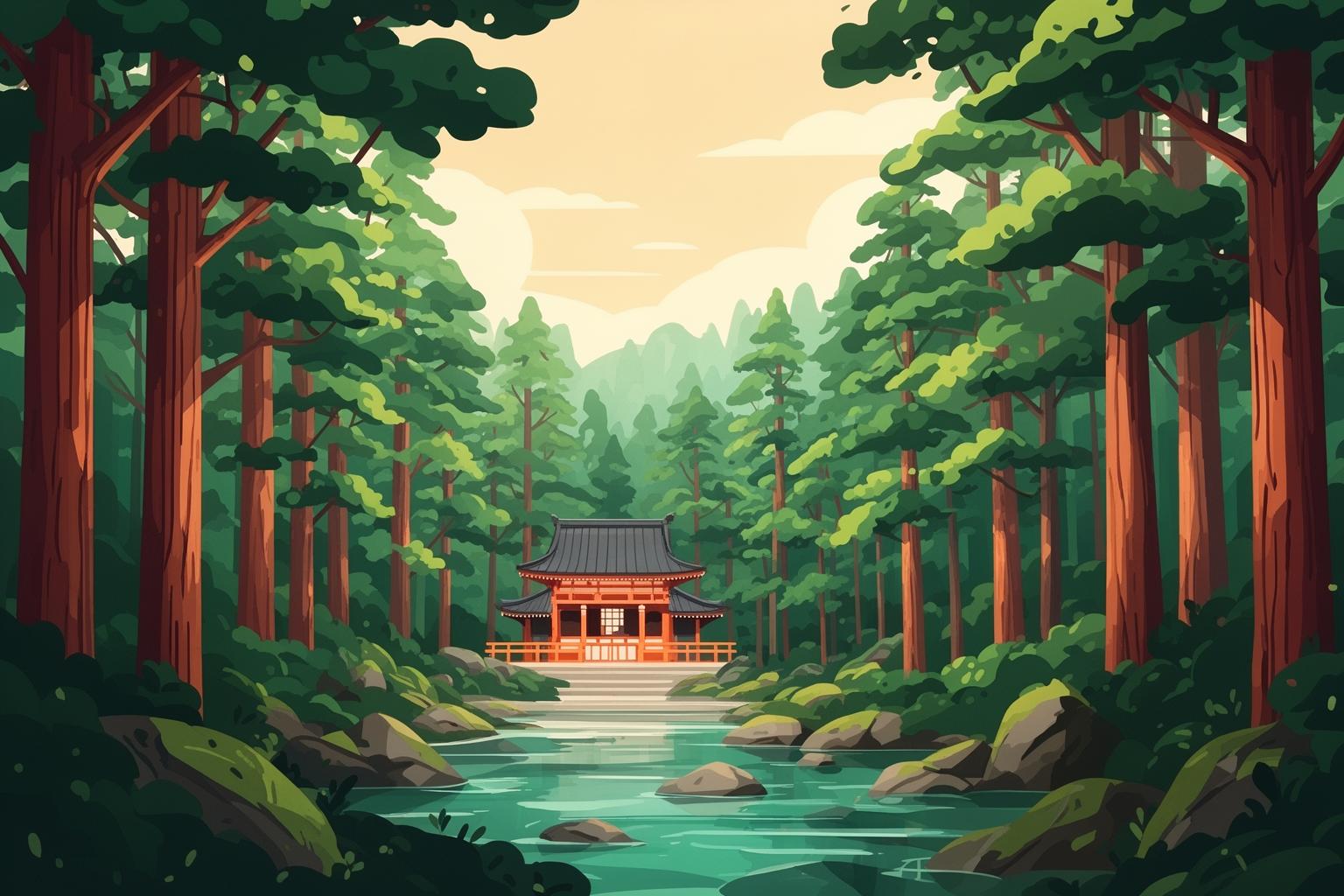
Far to the south of Japan, where the East China Sea converges with the Pacific Ocean, lies an island seemingly forgotten by time. Yakushima, a subtropical haven shrouded in constant mist, exudes a raw, untamed energy. This land of ancient deities and towering trees is so primeval that it directly inspired the vast, mystical forests in Princess Mononoke. Setting foot on this island means feeling the immense weight of centuries surround you, breathing air dense with life, and understanding immediately why Hayao Miyazaki chose this sacred place as the home of the Great Forest Spirit. The island is a UNESCO World Heritage site, a tribute to its unique ecosystem, where monumental cedar trees, some thousands of years old, command silent reverence.
Whispers of the Kodama in Shiratani Unsuikyo Ravine
Your journey into the world of Mononoke truly begins in the Shiratani Unsuikyo Ravine. The name means “White Valley Cloud Water Gorge,” a fittingly poetic title for a place suspended between earth and sky. The moment you step onto the trail, the outside world disappears, replaced by an enveloping sea of green. Every surface—the gnarled roots of giant trees, the smooth faces of granite boulders, the fallen logs bridging rushing streams—is blanketed in a thick, velvety carpet of myriad moss species. Sunlight struggles through the dense canopy, filtering down in ethereal beams that illuminate the mist rising from the damp forest floor. It’s easy to picture the little white Kodama, the tree spirits from the film, their heads rattling with curiosity as they watch you pass. The air is cool and heavy with the scent of earth and rain, and the only sounds are droplets falling from leaves to stone and the rush of crystal-clear streams carving their way through the ravine. This is not merely a hike; it is a full sensory immersion into a living, breathing entity.
Navigating the Ancient Trails
Trails here range from gentle, well-marked paths suitable for casual strolls to challenging multi-day treks leading deep into the island’s mountainous core. The most famous area, known as “Mononoke Hime no Mori” (Princess Mononoke’s Forest), is accessible and stunning, perfectly embodying the film’s spirit. As you walk, watch for the island’s native wildlife: the Yakushika deer, smaller and more compact than those on the mainland, move gracefully through the underbrush, while Yakuzaru monkeys, with their distinctive long fur, observe from overhead branches. For truly committed adventurers, the trek to Jomon Sugi—a colossal cedar tree estimated to be between 2,000 and 7,200 years old—is a rite of passage. Though a strenuous, full-day hike, standing before this ancient giant is a humbling, nearly spiritual experience.
A practical tip for any Yakushima visitor is to be well prepared. The island is famous for its frequent rain—the local joke is that it rains “35 days a month.” High-quality waterproof gear, from jacket to hiking boots, is essential. Weather conditions can change suddenly, but the rain enhances the vibrant greens and fuels the mists that give the forest its magical aura. Access to Yakushima is generally by high-speed ferry or a short flight from Kagoshima on Kyushu’s mainland. While public transportation is available, renting a car offers the freedom to explore the island’s varied coastline and hidden waterfalls at your own pace. Hiring a local guide for more demanding hikes is recommended; their expertise in the terrain, flora, and fauna adds immense depth to the experience, turning a simple walk into a profound lesson in ecology and history.
Spirited Away’s Nostalgic Dreamscapes
Spirited Away is a film governed by the logic of a dream, a dizzying plunge into a realm of spirits, gods, and forgotten customs. Its settings blend the familiar and the fantastical with masterful skill, evoking nostalgia for places we have never actually visited. Although no single spot in Japan exactly mirrors the film’s spirit world, several locations embody the distinctive architectural and atmospheric essence that Miyazaki intricately wove into his masterpiece. These are places where the boundary between the modern world and the mythical feels remarkably thin, where you might half-expect No-Face to silently beckon from a twilight bridge.
Echoes of the Bathhouse: Dogo Onsen, Ehime
In Matsuyama, on the island of Shikoku, stands a building seemingly lifted straight from the film’s storyboard: Dogo Onsen Honkan. As one of Japan’s oldest and most renowned hot spring establishments, its grand, multi-tiered wooden structure—featuring a complex network of corridors, steep staircases, and tiled roofs—is widely recognized as a chief inspiration for Yubaba’s magnificent and chaotic bathhouse, the Aburaya. Standing before it, especially as steam drifts from its windows into the cool evening air, is a deeply immersive experience. The building pulses with history and vitality, a vast labyrinthine hub where locals and tourists alike, dressed in traditional yukata robes, wander the streets, their wooden geta sandals clicking against the stone pavement.
The interior atmosphere is equally evocative. Visitors can select from various bathing options, ranging from the straightforward public baths to the more exclusive private rooms once reserved for the Imperial Family. Soaking in the geothermally heated, mineral-rich waters connects one to a ritual practiced here for over a thousand years—a link to a profound stream of Japanese heritage. Even if you opt not to bathe, touring the building is highly recommended. You can wander through tatami-matted resting rooms, explore the maze of passages, and admire the craftsmanship of this Meiji-era architectural masterpiece. A vital note for travelers: the historic structure is currently undergoing a long-term preservation and renovation project. Some areas may be covered or off-limits, with operations continuing on a limited basis. Checking the official Dogo Onsen website for the latest updates before your visit is essential, but even viewing the imposing building from outside makes the trip worthwhile. The surrounding neighborhood is a joy to explore, featuring a lively covered shopping arcade, charming footbaths, and the impressive Botchan Karakuri Clock, which animates with figures on the hour.
The Golden Glow of Jiufen, Taiwan (A Special Mention)
Though our journey focuses on Japan, any discussion of Spirited Away’s inspirations is incomplete without acknowledging a magical town across the sea. Jiufen, a former gold mining town nestled in the mountains of northern Taiwan, is inseparably linked with the film in the minds of fans worldwide. While Studio Ghibli has never officially confirmed it as a direct model, the resemblance is unmistakable and the ambiance undeniable. At dusk, the town’s narrow, winding alleys come alive with the soft, warm light of countless red lanterns. The A-Mei Tea House, a multi-storied building precariously perched on the hillside, so closely resembles a segment of the Aburaya that it has become a pilgrimage site itself. The atmosphere here is pure enchantment—a chaotic, beautiful mix of enticing street food aromas, the hum of voices, and breathtaking views of the Pacific Ocean far below. Sitting in a teahouse, sipping oolong tea as the sea of lanterns brightens the falling night, feels like discovering the gateway to the spirit world. It stands as a powerful reminder of how a film’s visual style can transcend borders and inspire travel to the most enchanting destinations.
The Pastoral Charm of My Neighbor Totoro: Sayama Hills
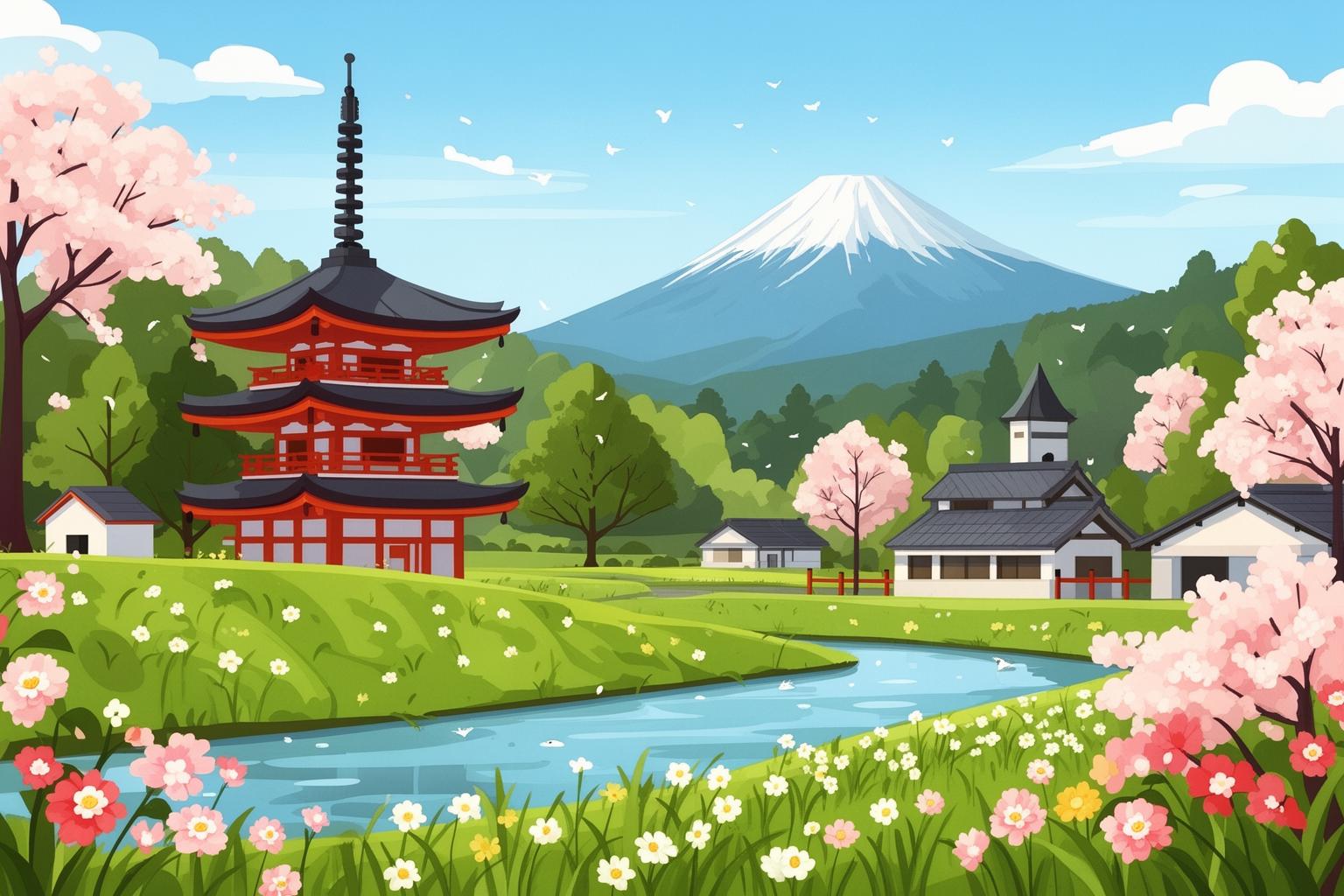
Not all Ghibli worlds are grand and fantastical. Some of the deepest magic lies in the quiet, gentle moments of everyday life, found in the natural beauty just beyond the city’s edge. My Neighbor Totoro perfectly embodies this idea, serving as a heartfelt tribute to childhood innocence and the soothing presence of nature. The film’s setting—a landscape of rolling hills, lush forests, and rice paddies beneath a vast summer sky—feels incredibly real and comforting because it is based on an actual location: the Sayama Hills.
Finding Totoro’s Forest in Saitama
Located on the border of Tokyo and Saitama prefectures, the Sayama Hills, fondly called “Totoro no Mori” or “Totoro’s Forest,” provided Hayao Miyazaki with the direct inspiration for the serene countryside where Satsuki and Mei share their memorable adventures. This is not a dramatic national park with towering mountains, but a gentle, accessible green space maintained through the efforts of a foundation supported by Miyazaki himself. Visiting here is like stepping into a world of quiet nostalgia. The experience encourages slowing down and appreciating small wonders: the dappled light filtering through leaves, the hum of cicadas in the summer warmth, tiny shrines hidden along the trails, and acorns scattered on the ground.
As you walk the network of trails weaving through the hills, it’s easy to imagine the Catbus racing above the treetops or a fluffy white Totoro beckoning you to follow into the woods. The area is a mosaic of deciduous forests, bamboo groves, tea fields, and wetlands, offering a peaceful escape from Tokyo’s urban sprawl. A key attraction for visitors is Kurosuke’s House, or “House of Black Soot Sprites.” This charming traditional Japanese house functions as a community center and small museum dedicated to Totoro. Inside, a large Totoro figure awaits a hug, accompanied by artwork and information about forest conservation efforts. It’s a warm, delightful stop that perfectly captures the film’s spirit. A visit to the Sayama Hills makes an ideal day trip from Tokyo, easily reachable by Seibu Railway lines. The best way to experience it is just to wander without a fixed plan. Bring a small picnic, find a tranquil spot, and let the peaceful surroundings envelop you. It’s a gentle reminder that magic doesn’t always roar; sometimes it whispers through the rustling camphor trees.
Soaring Above the Port Town: Kiki’s Delivery Service
Kiki’s Delivery Service tells a story of independence, creativity, and discovering your place in the world. Its European-inspired port city of Koriko, with cobblestone streets, a clock tower, and shimmering ocean views, feels like a character itself—a stunning backdrop for Kiki’s journey of self-discovery. Although the animated film mainly drew inspiration from Stockholm and Visby in Sweden, Japan has embraced Kiki’s spirit through a later live-action adaptation, turning a location there into a cherished destination for fans.
The Real-Life Koriko: Shodoshima Island
Nestled in the tranquil, blue waters of the Seto Inland Sea is Shodoshima, an island famed for its Mediterranean climate, terraced olive groves, and soy sauce production. This is where the 2014 live-action Kiki’s Delivery Service was filmed, and the island has since become a popular pilgrimage site for Kiki enthusiasts in Japan. Central to this experience is the Shodoshima Olive Park, a vast and beautiful park that honors the island’s century-long tradition of olive cultivation. Atop a hill overlooking the sparkling sea stands a pristine white Greek-style windmill, the picturesque setting of the Gütiokipänjä Bakery run by Osono and her husband in the film. The park embraces its cinematic connection, inviting visitors to borrow magic brooms from the visitor center and spend hours attempting to capture the perfect jump photo in front of the windmill, recreating Kiki’s iconic flying image. It’s a simple, joyful activity that unites fans, and seeing people of all ages leaping into the air with brooms is sure to bring a smile. The park itself offers more than just that: over 2,000 olive trees, a museum showcasing the history of olive oil production, and a café serving dishes and ice cream infused with—yes—local olives. The vibe is sunny, breezy, and infused with the same uplifting energy that makes the film so beloved. To reach Shodoshima, take a ferry from ports including Takamatsu on Shikoku or Shin-Okayama on the mainland. Once on the island, a rental car or the local bus provides the best way to explore not only Olive Park but also other unique sites like Kankakei Gorge and the “Angel Road” sandbar, which emerges at low tide.
Beyond the Screen: The Ghibli Museum and Park
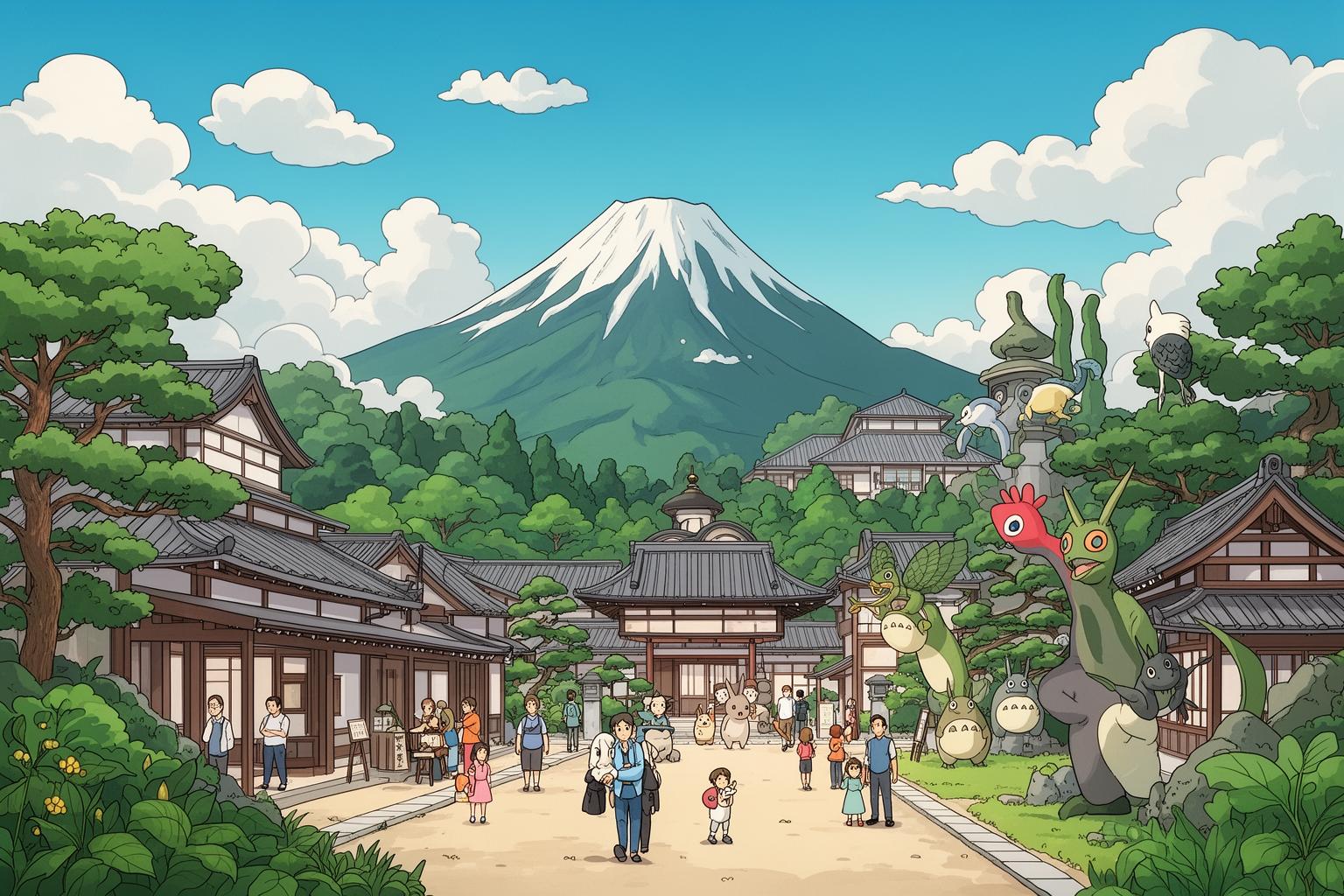
While searching for the landscapes that inspired the films is a magical journey, no Ghibli pilgrimage is truly complete without visiting the official destinations created by the studio itself. These are not just theme parks or typical museums; they are carefully crafted, immersive experiences designed to honor the art of animation and the spirit of wonder that defines Studio Ghibli.
A Ticket to Imagination: The Ghibli Museum, Mitaka
Nestled in a quiet Tokyo suburb within the lush Inokashira Park, the Ghibli Museum is a realm of endless imagination. Designed by Hayao Miyazaki, the building is a whimsical, colorful structure draped in ivy, featuring spiral staircases, a rooftop garden, and stained-glass windows depicting Ghibli characters. Its motto, “Let’s get lost, together,” perfectly captures the experience. There is no set route to follow; visitors are encouraged to wander and explore the maze-like rooms at their own pace. Inside, you’ll discover fascinating exhibits that reveal the animation process, from sketches and storyboards to a giant zoetrope animating characters. Children get the special treat of climbing into a fluffy, life-sized Catbus, while all visitors can admire a faithful recreation of an animator’s studio and watch a beautiful, exclusive short film screened only in the museum’s Saturn Theater. On the rooftop garden, a giant, gentle Robot Soldier from Castle in the Sky waits patiently for photos. The entire museum is filled with enchanting details that reward the curious and observant.
However, there is one crucial catch: entering this wonderland requires careful planning. Tickets are notoriously hard to get. They are not sold at the museum and must be purchased online in advance. For international visitors, tickets usually go on sale on the 10th of each month for the following month and sell out within minutes. This is no exaggeration. If the Ghibli Museum is on your must-see list, you need to be online and ready the instant tickets go on sale. It’s a challenge, but the unforgettable experience makes it well worth the effort.
A World Unfolding: Ghibli Park, Aichi
The newest and most ambitious addition to the Ghibli universe is Ghibli Park, located in the expansive Expo 2005 Aichi Commemorative Park near Nagoya. Unlike a typical theme park with rides and rollercoasters, Ghibli Park is designed as an immersive environment that promotes exploration and harmony with nature. It is divided into several distinct areas, each with its own theme and attractions. Ghibli’s Grand Warehouse is an incredible indoor city filled with exhibits, playgrounds, and recreations of iconic movie sets, from Laputa’s sky garden to Yubaba’s office. Dondoko Forest features a perfect, life-sized replica of Satsuki and Mei’s house from My Neighbor Totoro, with such detailed authenticity that it feels like the family might return any moment. The Hill of Youth welcomes visitors with an antique shop inspired by Whisper of the Heart and the Cat Bureau from The Cat Returns. Future expansions will include areas like Mononoke Village and the Valley of Witches. The park’s philosophy encourages visitors to “take a stroll, feel the wind, and discover the wonders.” It’s a place to slow down and lose yourself in the details. Like the museum, accessing Ghibli Park requires advance planning. The ticket system is complex, often involving lotteries or staggered releases for different zones and time slots. Carefully checking the official website well before your visit is essential to organizing your day in this extraordinary new world.
This journey through Ghibli-inspired landscapes in Japan is more than a tour of film locations. It is an invitation to see the world with renewed wonder. It’s found in the deep, humbling silence of an ancient forest, the nostalgic charm of a historic town, and the simple pleasure of feeling the sun on your face by a sparkling sea. The magic of Studio Ghibli extends beyond the screen—it reflects the beauty and spirit already present in the world, waiting to be discovered. Whether hiking the mossy ravines of Yakushima or simply enjoying a quiet moment in a local park, may you carry that sense of adventure with you, and may you always find your own Totoro, patiently waiting just around the corner.