To read Haruki Murakami is to walk through a dream of Tokyo. It’s a city that feels both hyper-realistic and hauntingly surreal, where lonely protagonists sip whiskey in subterranean jazz bars, cats speak in riddles, and a simple walk down an emergency staircase can lead you to another world. The asphalt, the neon, the quiet residential streets—they are as much characters in his novels as the people who inhabit them. For those of us who have fallen under his spell, Tokyo beckons not just as a travel destination, but as a pilgrimage. It’s an invitation to step inside the pages, to trace the footsteps of Toru Okada, Aomame, and Naoko, and to search for our own hidden wells and parallel moons. This isn’t a journey about finding exact filming locations; it’s about capturing a feeling. It’s about wandering through the urban labyrinth and allowing yourself to get a little lost, to see if the city might reveal one of its secrets to you. We’ll explore the chaotic heart of Shinjuku, drift through the bohemian suburbs of West Tokyo, and feel the stylish solitude of Aoyama, all through the lens of Murakami’s enigmatic universe. Prepare to walk, to listen, and to observe. Your alternate reality, your personal 1Q84, might be just around the corner.
As the city continues to reveal its surreal secrets, a Murakami pilgrimage invites you to venture even deeper into Tokyo’s enigmatic labyrinth.
The Shinjuku Labyrinth: Where Realism and Fantasy Collide
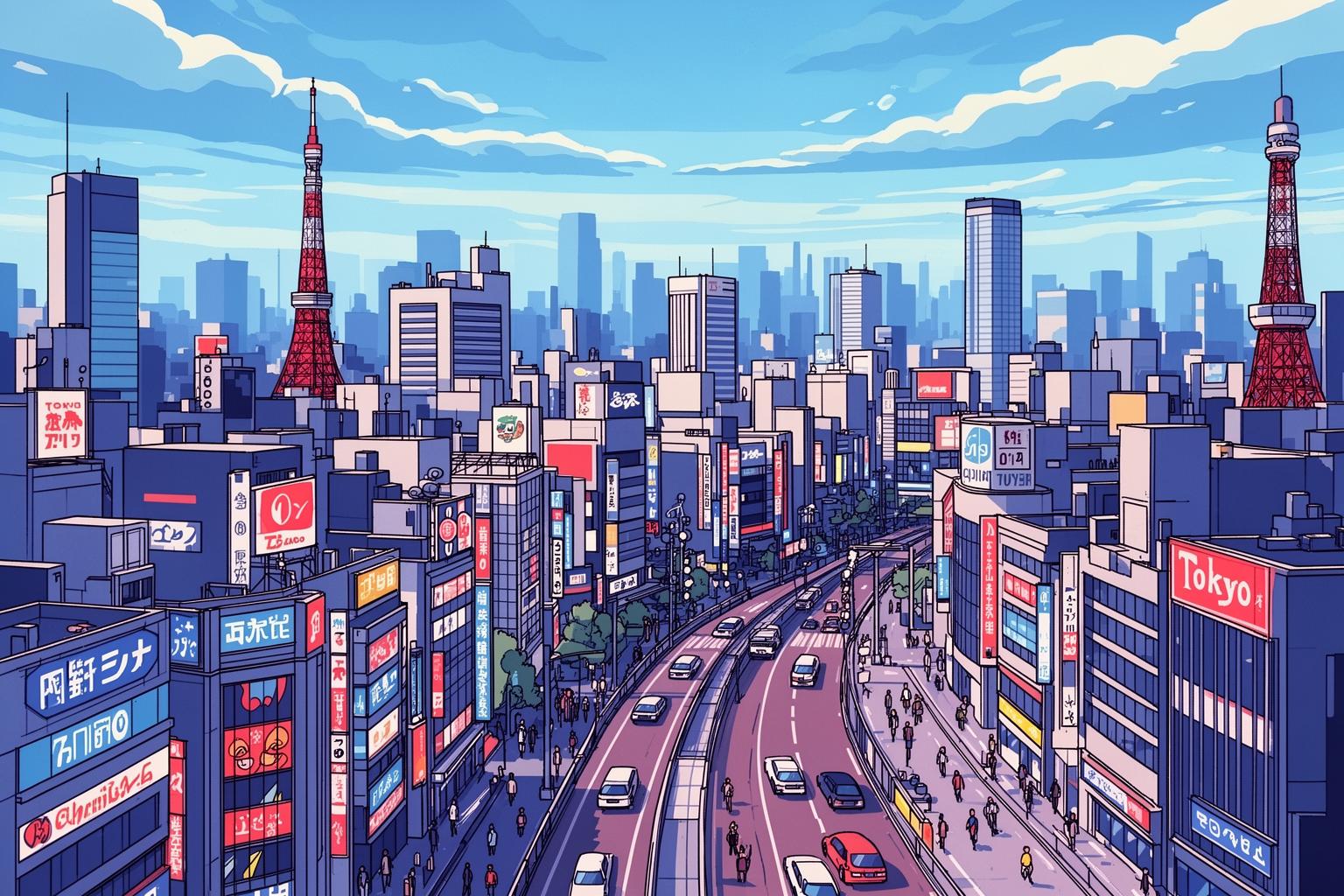
Shinjuku is the vibrant core of Murakami’s Tokyo. It is a place full of stark contrasts, a vast concrete expanse where towering skyscrapers loom over tiny, lantern-lit alleyways. The sheer concentration of people here is staggering. Millions pass through its station, the busiest on the planet, every single day. This relentless, impersonal flow creates the ideal backdrop for Murakami’s themes of urban loneliness and unexpected encounters. His characters are often caught in Shinjuku’s currents, ending up somewhere they never planned to be, encountering people who will permanently change their lives. To explore Shinjuku as a Murakami devotee is to embrace this disorder. It means recognizing that the sleek, futuristic West Shinjuku, with its corporate high-rises and luxury hotels, exists alongside the gritty, intimate, and often strange East Shinjuku. One side represents polished surfaces and routine predictability; the other offers hidden bars, smoky jazz clubs, and stories that unfold only after midnight. The atmosphere seems to shift as you move from one area to the other—from order to delightful unpredictability. This is where the tension between the mundane and the magical that defines much of his work becomes palpable.
Golden Gai: Echoes of After Dark
Step into Golden Gai, and you enter the nocturnal realm of After Dark. Nestled in a corner of Kabukicho, Shinjuku’s notorious red-light district, these six narrow, winding alleys are a treasured remnant of post-war Tokyo. Over 200 tiny bars cram into this small block, some only fitting five or six customers. The buildings are shabby, leaning against each other for support, their wooden exteriors worn down by decades of rain and cigarette smoke. During the day, it’s a quiet, nearly ghostly place, but as night falls, lanterns flicker on, bathing the cobblestones in a warm, inviting light. The air is thick with lingering conversations, the scent of cheap whiskey, and grilled snacks. Each bar boasts a distinct theme and character, shaped by its fiercely independent “Master.” Some focus on punk rock, others on vintage cinema, and others on specific literary genres. Walking these alleys is like navigating a dream—snippets of laughter, clinking glasses, and faint melodies spill out from behind sliding doors. Solo travelers, especially women, may find it intimidating at first, but it is surprisingly welcoming. Many bars charge a small cover fee, or otoshi, which usually includes a small snack. It’s wise to carry cash. Pick a bar that feels inviting, open the door, and take a seat. The key is to be respectful, order a drink, and absorb the atmosphere. Here, you’re not merely a customer; you are a temporary guest in someone’s small, personal world. It’s the perfect place to feel like a Murakami protagonist, quietly observing the city’s strange and beautiful nightlife.
Dug Jazz Cafe: A Subterranean Sanctuary
If Golden Gai serves as the setting for an unusual nocturnal encounter, Jazz Cafe Dug provides the soundtrack. Mentioned explicitly in Norwegian Wood, this famed basement club is a pilgrimage site for jazz enthusiasts and Murakami fans alike. Finding it is part of the journey. You walk down a bustling Shinjuku street, past bright neon signs and chain stores, until a simple sign and a steep, narrow stairway leading underground catch your eye. As you descend, the city’s noise fades, replaced by the warm, intricate sound of a Miles Davis trumpet or a Bill Evans piano. You are stepping out of the 21st century. Dug opened in 1967, and little seems to have changed since. The space is dark, intimate, and filled with the hush of reverence. Walls lined with thousands of vinyl records reflect a lifetime of collecting. The air carries the scent of dark-roasted coffee, old paper, and a faint trace of tobacco from days past. This is a jazz kissa, a uniquely Japanese venue where listening is the main event. People come not to talk but to immerse themselves in the music. The patrons range from longtime regulars to young pilgrims like yourself, all sharing a silent, respectful appreciation for the sound. Find a small table, order a strong coffee or simple whiskey, and let the music envelop you. It’s a meditative experience. You can easily picture Watanabe, the protagonist of Norwegian Wood, sitting here, lost in thought as the music offers refuge from life’s complexities. It’s a place to be alone, without feeling lonely, surrounded by the spirits of music and literature.
Shinjuku Gyoen: An Oasis of Solitude
After the sensory frenzy of Shinjuku’s streets and the intensity of its nightlife, the soul craves a place to breathe. Shinjuku Gyoen National Garden fulfills that need. Although it may not serve as a direct setting in the same way as Dug does, this expansive, stunning park embodies the moments of quiet reflection and natural respite that are vital in Murakami’s novels. His characters often seek comfort in parks, finding a place to sort through their thoughts, escape the city’s relentless pace, and connect with something timeless. Entering Shinjuku Gyoen feels like passing through a gateway. The city’s roar muffles behind a dense canopy of trees, replaced by wind rustling and birdsong. The park is a masterpiece of landscape design, blending three distinct styles seamlessly. There is a traditional Japanese garden, with carefully raked gravel, elegant teahouses, and koi-filled ponds. A formal French garden features symmetrical rose beds and grand avenues lined with plane trees. And the English landscape garden offers wide, rolling lawns and spacious groves, ideal for spreading a blanket and reading. Each season reveals a unique beauty. In spring, it’s renowned for cherry blossoms, with the air thick with delicate pink petals. In autumn, maple trees burst into brilliant reds and golds. Even in humid Tokyo summers, the forest shade offers cool relief. For a Murakami pilgrim, this is a place to wander aimlessly, sit quietly, and watch the world unfold, feeling the profound peace found only in such a serene, beautiful environment. It serves as a reminder that even in the heart of the world’s largest city, moments of perfect solitude remain possible.
West Tokyo’s Bohemian Beat: Koenji and Kichijoji
Leave behind the vertical intensity of Shinjuku and head west on the JR Chuo Line. As the train rattles away from the bustling city center, the scenery starts to shift. Towering skyscrapers give way to a lower, more intimate urban landscape composed of residential neighborhoods, small parks, and lively local shopping streets. This is West Tokyo—a place often serving as the backdrop for the youthful, formative years of Murakami’s characters. It exudes a distinctly bohemian, counter-cultural vibe, far removed from the corporate gloss of downtown. Neighborhoods like Koenji and Kichijoji are where his protagonists reside in modest apartments, hold part-time jobs, and navigate the confusing maze of early adulthood. The atmosphere here feels more relaxed, more creative, and perhaps somewhat more hopeful. It’s a realm of vintage clothing stores, independent record shops, cozy cafes, and live music venues known as “live houses.” Exploring this area offers a different perspective on the Murakami universe—one focused less on surreal mysteries and more on the quiet, everyday moments of searching for one’s place in the world.
The Koenji Underground: A World of 1Q84
Koenji stands as the vibrant heart of Tokyo’s underground culture, intimately connected with 1Q84 for Murakami enthusiasts. Here, the protagonist Aomame descends an emergency staircase from an elevated expressway, transporting her from the familiar world of 1984 into the strange parallel reality of 1Q84, where two moons hang in the sky. Although that exact staircase isn’t accessible, the sensation of standing on the edge of another world is deeply felt in Koenji. The Chuo and Sobu line trains run on elevated tracks slicing through the area, and standing beneath them, you sense the rumble and roar shaking the air. The neighborhood itself is a labyrinth of covered shopping arcades, or shotengai, radiating from the station. These arcades form a world unto themselves, a vibrant ecosystem of old-fashioned tofu shops, trendy bakeries, and, most famously, an impressive number of secondhand clothing stores. Koenji is a haven for vintage fashion lovers—you could spend an entire day browsing through racks of carefully curated denim, 1970s dresses, and obscure band t-shirts. Beyond fashion, Koenji boasts a rich punk rock and indie music scene. At night, the sounds of guitars and drums spill out from dozens of tiny basement live houses. To truly experience Koenji, simply wander. Lose yourself in the narrow side streets, follow a curious sound, and step into a cafe that catches your eye. The whole neighborhood feels like a liminal space, where the ordinary can easily turn extraordinary, and where it wouldn’t be surprising to glance up and see a second moon hanging in the sky.
Inokashira Park and Kichijoji’s Charms
Just a few stops down the Chuo Line lies Kichijoji, a neighborhood that frequently ranks among Tokyo’s most desirable places to live. It combines Koenji’s bohemian spirit with a slightly more polished, family-friendly vibe. Its centerpiece is the magnificent Inokashira Park, a place that seems lifted straight from the pages of Norwegian Wood. The park revolves around a large, tranquil pond where couples and families paddle swan-shaped boats beneath the shade of weeping cherry and cypress trees. The paths meandering around the pond are perfect for long, contemplative walks—the kind Murakami’s characters often take while wrestling with themes of love, loss, and memory. The park carries a gentle, somewhat melancholic beauty, especially striking in spring with cherry blossoms in full bloom or in autumn when the leaves carpet the ground in vivid color. Just outside the park, Kichijoji itself is a delight to explore—a harmonious blend of large department stores, stylish independent boutiques, and charmingly chaotic alleyways. One of the most famous is Harmonica Yokocho, a network of incredibly narrow lanes near the station’s north exit. By day, it’s a sleepy collection of fishmongers and butchers; by night, it transforms into a bustling hub of tiny standing bars, yakitori joints, and gyoza restaurants, with red lanterns casting a warm glow on happy crowds. Kichijoji offers the perfect balance of natural beauty and urban energy—a place where you can spend a quiet afternoon lost in thought by a serene pond and an evening wandering the joyous maze of a lantern-lit alley.
The Aoyama Itchome Passage: Style, Loneliness, and Longing
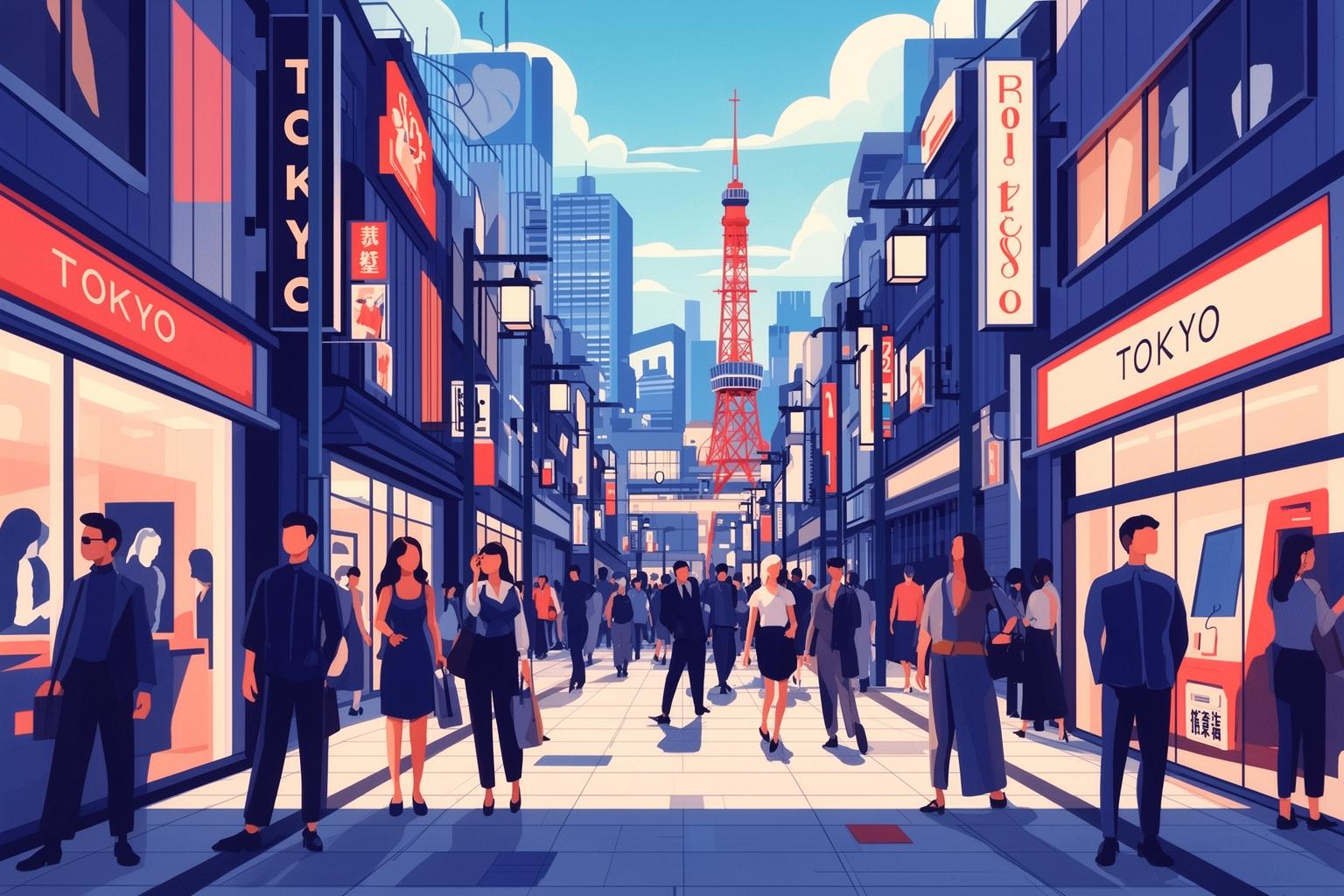
If Shinjuku is the chaotic heart and West Tokyo the bohemian soul, then the Aoyama-Harajuku-Omotesando area represents the city’s sleek, stylish, and occasionally lonely facade. This world is defined by high fashion, avant-garde architecture, and quiet, sophisticated wealth. It is a landscape of glass and steel, where designer flagship stores serve as much as art installations as shopping venues, and wide, tree-lined avenues are filled with impeccably chic people. In Murakami’s work, this area often symbolizes surface-level perfection that conceals a deeper, more profound sense of alienation. His characters traverse these streets feeling like outsiders, observing a life of glamour and success that seems distant and unattainable. It’s a place for long, solitary walks, for watching the city from the window of a quiet café, and for experiencing the unique loneliness that emerges in a crowd. The beauty here is undeniable, yet it is a cool, detached beauty that embodies the modernist aesthetic and emotional restraint often present in his novels.
Walking the Path of Sumire and K
This part of Tokyo is central to the world of Sputnik Sweetheart. The narrator, K, frequently finds himself wandering through the streets of Aoyama, thinking about Sumire, the aspiring writer he hopelessly loves. The route from Aoyama-Itchome station to Jingu Gaien park perfectly captures this atmosphere. The streets are quieter here, more residential, lined with elegant apartment buildings and exclusive hidden-gem restaurants. A particularly poignant spot is Jingu Gaien Ginkgo Avenue, a magnificent boulevard lined with ginkgo trees that blaze golden yellow in late autumn. It’s easy to picture K walking here, the golden leaves crunching beneath his feet, his mind clouded with unrequited love and philosophical reflection. As one continues toward Omotesando, the ambiance shifts. This is Tokyo’s answer to the Champs-Élysées, a grand avenue bordered by architectural marvels like the shimmering Prada building. People-watching becomes an activity in itself—every passerby seems part of a fashion photoshoot. Yet beneath all this external perfection is a palpable Murakami-esque void. It’s a place that sharpens awareness of one’s inner world, longings, and secrets, sharply contrasting with the polished cityscape surrounding you.
Nezu Museum’s Garden Cafe: A Moment of Zen
Though not a direct location from the novels, the Nezu Museum in Aoyama perfectly captures the kind of serene, aesthetic refuge Murakami’s characters often seek. After a long walk through stylish yet impersonal streets, entering the museum and its hidden garden feels like a secret discovery. The museum itself houses a sublime collection of Japanese and East Asian art, but the true treasure for a pilgrim is the vast, traditional Japanese garden behind it. This oasis of greenery in the heart of the city offers winding stone paths, trickling streams, ancient stone lanterns, and a tranquil pond. Nestled within the garden is NEZUCAFÉ, a minimalist glass structure appearing to float among the trees. Sitting by the floor-to-ceiling windows, one can enjoy a matcha latte and a piece of cake while gazing out at the garden’s serene beauty. It is the perfect setting for reading, journaling, or simply letting thoughts drift. In a world filled with noise and commerce, places like this serve as sanctuaries—wells of silence and beauty that characters such as Tsukuru Tazaki or the narrator of Kafka on the Shore would gravitate toward—a spot to still the mind, appreciate moments of simple, perfect beauty, and recharge before returning to Tokyo’s beautiful, bewildering labyrinth.
Practical Pilgrim’s Notes: Navigating Your Murakami Journey
Embarking on a Murakami-themed exploration of Tokyo is less about following a strict itinerary and more about adopting a particular mindset. Nevertheless, a few practical tips can help smooth your journey, enabling you to focus more on the atmosphere than the logistics. While the city is vast, its public transportation system is an impressive model of efficiency. Mastering it is your first step to unlocking the city’s hidden gems. Beyond that, it’s about knowing where to find quiet spots and how to navigate Tokyo’s unique cultural spaces with respect and ease. Consider this your field guide to becoming a seasoned wanderer, an urban explorer in search of the intangible.
Navigating the Maze
Tokyo’s rail and subway networks are the key to the city. Initially, the map may look like a complex web of multi-colored lines, but it quickly becomes quite intuitive once you get familiar with it. For this pilgrimage, you’ll mainly use the JR Lines—especially the green Yamanote Line, which loops around the city center, and the orange Chuo Line, cutting across to West Tokyo. The Tokyo Metro and Toei Subway lines fill in the gaps. The best advice for first-time visitors is to get a rechargeable IC card like Suica or Pasmo, available from ticket machines at any major station. Simply tap the card at the ticket gates, and the fare is automatically deducted, sparing you the hassle of buying single tickets for every trip. Yet more importantly, embrace walking. The true magic of Murakami’s Tokyo lies in the spaces between stations. Walk from Shinjuku to Yoyogi, wander from Shibuya to Omotesando. Allow yourself to take a wrong turn—that’s often when you’ll stumble upon a quiet shrine, a tiny coffee shop, or an odd little park that becomes the most memorable part of your day.
Capturing the Mood: Coffee, Jazz, and Whiskey
Much of the Murakami experience centers on three key venues: the kissaten (traditional coffee shop), the jazz bar, and the classic whiskey bar. These are more than just places to grab a drink; they are atmospheric spaces with their own unspoken rules. A kissaten differs from a modern café. Often decades old and run by an elderly owner, they radiate a quiet, studious vibe. You go to savor a carefully brewed siphon coffee and read a book, not to engage in loud conversation. Similarly, a jazz bar—or jazz kissa like Dug—is devoted to listening. The music is the main event. Keep your voice low, and don’t be surprised if the bartender seems more invested in changing the vinyl record than taking your order. It’s a sign of passion, not rudeness. When it comes to whiskey bars, Japan boasts some of the best worldwide. These spots are often small, intimate, and feature encyclopedic bottle collections. Trust the bartender; share your flavor preferences, and they’ll guide you to something extraordinary. In all these places, the key is to be a quiet, respectful observer. You’re entering a carefully curated world, and the best way to enjoy it is simply to let it unfold.
Safety and Solo Travel Notes
As a woman who often travels alone, Tokyo is among the safest cities I’ve visited. The city is remarkably orderly, and respect for personal space is deeply ingrained in the culture. However, like any major city, caution is warranted. Crowded trains during rush hour can be overwhelming, so try to avoid peak times if you’re uncomfortable in crowds. When exploring nightlife areas such as Golden Gai or Kabukicho, stick to main, well-lit streets and stay aware of your surroundings. Most bars are safe and welcoming, but trust your instincts—if a place feels off, simply move on. Getting lost can be part of the adventure, but if you truly can’t find your way, don’t hesitate to ask for help. People are generally polite and willing to assist, even with language barriers. Having a map on your phone or a hotel business card can be a lifesaver. Solo travel here is a joy; it offers the freedom to move at your own pace, follow your peculiar curiosities, and be fully present—the ultimate mindset for any Murakami pilgrim.
The Unseen Tokyo: Embracing the Murakami Mindset
At the conclusion of your journey, you will have walked countless miles, savored excellent coffee, and perhaps listened to a flawless rendition of a John Coltrane solo in a basement bar. You will have visited the locations that inspired the pages you cherish, from the neon glow of Shinjuku to the peaceful ponds of Inokashira Park. Yet the true Murakami pilgrimage is not a checklist of places to be ticked off. It is an internal transformation, a new way of perceiving the world around you. It involves learning to notice the strangeness lurking just beneath the surface of the ordinary. It means paying attention to the details: the peculiar advertisements on the subway, the way the light falls on a building at dusk, the stray cat that seems to watch you with unusual intensity. The aim is to carry the feeling of his novels with you. It is to realize that any of us could be the protagonist in a quiet, epic story. The well in your backyard might be a gateway to another world. The woman sitting next to you on the train might be searching for her missing half. The mundane world is far more mysterious and magical than we often allow ourselves to believe. So, as you wander the streets of Tokyo, keep your eyes open. Look for your own personal entrance to 1Q84. Listen for whispers from the other side. The greatest secret Murakami’s Tokyo reveals is that the labyrinth isn’t only in the city’s streets; it resides inside you, waiting to be explored.