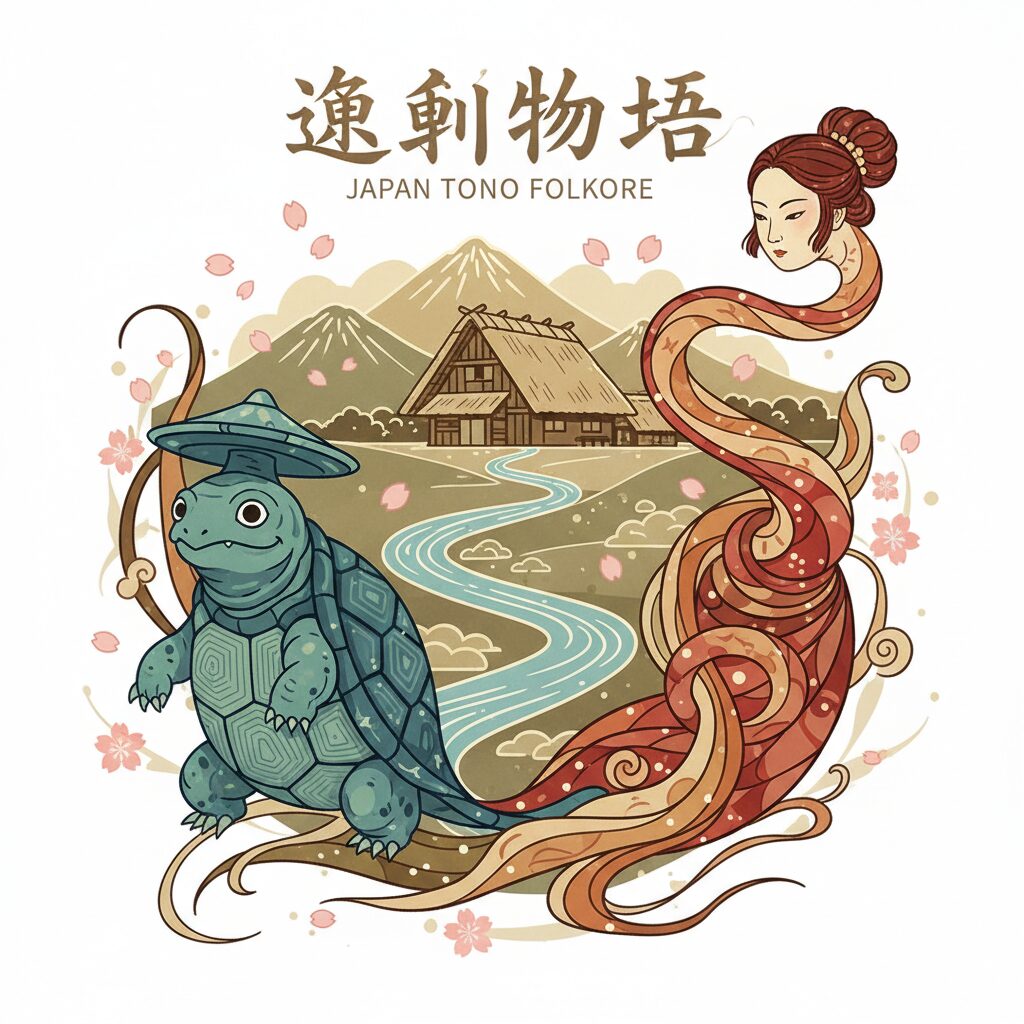
There are places on the map that are simply coordinates, and then there are places that are anchors for the soul of a nation. Tono, a quiet basin town cradled by the mist-shrouded Kitakami Mountains in Iwate Prefecture, belongs to the latter. This isn’t a city of neon lights or bullet-train efficiency. It’s a landscape of whispers, a living library where the ink is river water and the pages are rice paddies, each rustle of the leaves a turning point in a story you can feel but not always see. To visit Tono is to step off the well-trodden path and into the very heart of Japan’s collective imagination, a realm where legends are not relics of the past but breathing, ever-present neighbors. This is the land that gave birth to Kunio Yanagita’s seminal work, Tōno Monogatari, or The Tale of Tono, a book that didn’t just record folklore but enshrined it, giving a voice to the spirits, creatures, and strange occurrences that shape the character of rural Japan. Here, the boundary between the seen and unseen world is beautifully, thrillingly thin. You come to Tono not just to see a town, but to listen to its stories, to feel the chill of a mountain spirit on the wind, and to understand that in some corners of the world, magic is simply a part of the landscape. It’s a pilgrimage for the curious heart, a journey into the deep, enchanting green of Japan’s true north, where every gnarled tree and mossy stone has a tale to tell. Before you can truly explore its hidden corners and meet its fabled inhabitants, you must first find your way into this basin of dreams, a place that exists both on the map and in the heart of Japan’s oldest stories. The journey itself is part of the experience, a gradual shedding of the modern world as you venture deeper into the mountains, preparing you for the timeless world that awaits. Tono is not a destination you simply arrive at; it is a world you must allow yourself to enter, slowly and with an open mind, ready to believe in the stories that echo from its valleys and streams.
Embracing Japan’s ancient mystique, a detour to Dogo Onsen offers another intimate chapter in the country’s storied hot spring traditions.
The Soul of Tono: Kunio Yanagita and the Legends That Live On

To grasp Tono is to grasp the profound influence of a single, slender volume published in 1910. Tōno Monogatari, authored by the brilliant government official turned folklorist Kunio Yanagita, is more than just a book; it is a cultural landmark. It was a groundbreaking effort to preserve and capture the oral traditions of a rapidly modernizing Japan before they disappeared like morning mist. Yanagita was not a native of Tono. A man of Tokyo, educated and elite, his heart was nevertheless attuned to the rhythms of rural life. During a stay in Tono, he met Kizen Sasaki, a local intellectual and master storyteller. Over many nights, Sasaki, a true son of Tono, recounted the tales of his upbringing—stories of mountain gods, mischievous spirits, strange disappearances, and fortunate encounters. Yanagita listened not merely as a collector of curiosities, but as a scholar who recognized these stories as the foundation of Japanese identity. He carefully transcribed and assembled Sasaki’s oral narratives, publishing them with stark, unadorned elegance. The book was a revelation, presenting these local legends not as mere children’s fairy tales but as authentic, lived experiences of the people of Tono. It marked the birth of minzokugaku, or Japanese folklore studies, a discipline devoted to understanding the nation’s soul through the beliefs, customs, and stories of its ordinary people. The tales are concise, nearly reportorial in style, each numbered as a separate account. They tell of yamabito, enigmatic mountain dwellers who sometimes interact with villagers; of houses haunted by benevolent zashiki-warashi; and of the ever-present water sprites, the kappa. Reading Tōno Monogatari before or during a visit transforms the journey. A simple stream becomes the famed Kappabuchi, a forested hill the possible home of a deity, and an old farmhouse a stage for supernatural drama. The book offers a spiritual and narrative map of the region, allowing visitors to see beyond the physical landscape into the deeper, more resonant world of myth. The Tono City Museum is an excellent starting point for anyone wishing to explore this history. It provides a comprehensive look at Yanagita’s work, his connection with Kizen Sasaki, and the cultural context in which these tales originated. The museum displays the tools, clothing, and lifestyle of the people whose beliefs shaped these stories, rooting the fantastical in the tangible reality of a life lived closely and often harshly in harmony with nature. The partnership between Yanagita, the outsider scholar, and Sasaki, the insider storyteller, stands as a beautiful testament to the power of listening—an act of profound cultural respect that acknowledges the wisdom of a place lies within its people. This legacy lives on in Tono today. The town does not merely showcase its folklore for visitors; it embodies it. It honors the work of these two men by remaining a place where stories matter, where the past is not a foreign country but a living, ongoing presence. Understanding this foundation is essential, for every site visited in Tono is layered with the narratives captured in that seminal book. It is the key that unlocks the true magic of the place, transforming a pleasant trip into a profound pilgrimage into the heart of Japan’s storied soul. The raw, untamed nature of the stories themselves mirrors the environment of Tono—a land of harsh winters, dense forests, and a constant awareness of nature’s power. These tales were not spun merely for entertainment; they served as explanations for the unexplainable, cautionary warnings, and expressions of deep reverence for the forces governing life and death. Yanagita’s brilliance lay in preserving this raw authenticity, resisting the temptation to embellish or romanticize. The result is a work that feels both ancient and immediate, a direct connection to the fears, hopes, and beliefs of a people deeply rooted in their land. Visiting Tono allows one to walk through the pages of this remarkable book, stand in the very places where these legends originated, and, if only for a moment, experience the same sense of awe and wonder that inspired Kizen Sasaki to share his stories and Kunio Yanagita to devote his life to preserving them.
Whispers of the Kappa and Zashiki-warashi
The folklore of Tono is rich with a captivating array of spirits, deities, and creatures collectively known as yokai. Among the most well-known and cherished are the aquatic kappa and the household-haunting zashiki-warashi. These beings are not distant or abstract concepts; in Tono, they feel like familiar local residents whose presence is both recognized and respected. Their tales are intertwined with everyday life, influencing the design of old homes and the rituals performed at nearby streams. Visiting their haunts offers one of the most enchanting experiences for travelers, providing a direct encounter with the town’s most renowned supernatural inhabitants. These entities embody the dual nature of the spiritual world in Japanese folklore—spirits can be mischievous and dangerous, yet also kind and protective. They are part of the household and landscape, demanding respect and acknowledgment. For the people of Tono, coexisting with these entities is simply part of life, a worldview that balances a healthy fear of the unknown with a sense of wonder and connection to realms beyond human perception. This close relationship with the unseen is what makes Tono’s folklore so compelling and continues to attract visitors eager to deepen their understanding of Japan’s spiritual heritage.
Kappabuchi Pool: A Riverside Encounter
Just a short, pleasant walk or bike ride from the town center, behind the historic Jokenji Temple, gently flows an unassuming stream called Kappabuchi—arguably the most famous kappa habitat in all of Japan. According to local legend, this tranquil pool is home to mischievous, water-loving yokai. The atmosphere here is thick with anticipation: the air is cool and damp, carrying the scent of wet earth and moss. The stream’s gentle murmur is constant, while the branches of old willow trees cast dappled, mysterious light over the water. Kappa are typically described as green, turtle-shelled humanoids with a water-filled dish, or sara, atop their heads. This dish is the source of their power; if the water spills, they become powerless. Known for their fondness for cucumbers and skill in sumo wrestling, these creatures also have a darker reputation for dragging horses and children underwater. Still, in Tono, kappa are often regarded with a certain fondness. At the water’s edge, there is a small, weathered shrine dedicated to the local kappa. Visitors frequently leave offerings of cucumbers tied with red string, hoping to appease the spirits and maybe even catch a glimpse. A quirky local custom allows you to purchase a kappa-catching license from the tourist office. A fishing rod baited with a cucumber is often positioned by the stream—a playful invitation to test your luck. The nearby Jokenji Temple embraces this connection fully. Instead of fierce guardian deities, the temple features comical kappa statues. Legend says that the temple was once saved from a devastating fire by local kappa who emerged from the stream to extinguish the flames. In gratitude, the temple enshrined them as protectors. Experiencing Kappabuchi isn’t about actually seeing a kappa; it’s about opening yourself to the possibility. It’s standing by the water’s edge, offering a cucumber, and connecting imaginatively with generations who believed in these creatures. It’s a moment of quiet reflection and a playful yet profound engagement with one of Japan’s most enduring folk legends. The air seems charged with unseen energy, and as you gaze into the dark, reflective water, it’s easy to believe something ancient and mysterious watches back.
The Elusive Zashiki-warashi: Spirits of Fortune
While the kappa symbolize the wild, untamed spirit outside the home, the zashiki-warashi represent the spirits dwelling within. These childlike ghosts or spirits, often depicted with bobbed hair and red faces, inhabit the main guest rooms (zashiki) of old, distinguished houses. Unlike typical ghosts, their presence is considered a sign of great fortune. A family whose home is visited by a zashiki-warashi prospers, but if the spirit departs, the family’s luck wanes and the house deteriorates. Mischievous by nature, they play pranks such as leaving tiny ash footprints or making rustling paper sounds at night. Though rarely seen, children are sometimes said to catch glimpses of them. The belief in zashiki-warashi reflects a deep bond between a family and their home—the idea that a house possesses its own spirit that must be cared for and respected. This belief remains strong in Tono. While you cannot book a tour to see one, you can visit places reputed to have a strong zashiki-warashi presence. One such location is the Warabe Zashiki at Denshoen Park, a preserved old house where visitors can experience the atmosphere of a home believed to be inhabited by these spirits. Another famed site, just outside Tono, is the Ryokufuso inn in nearby Ninohe, which gained a legendary reputation for zashiki-warashi sightings before it tragically burned down and was rebuilt. Within Tono itself, the best way to connect with this legend is by visiting the preserved traditional farmhouses. Sitting quietly on tatami mats in rooms dimly lit and scented with old wood and thatch, such as at Denshoen or Tono Furusato Village, one can easily imagine the gentle presence of these guardian spirits. It’s more a feeling than a sight—a warmth, a sense of history, and the notion of a house being more than just wood and plaster. This legend encourages visitors to see old buildings not as empty shells, but as living entities with their own unseen stories and inhabitants. It’s a beautiful idea that transforms your view of traditional Japanese homes into places of potential magic and fortune, presided over by playful, elusive, yet ultimately benevolent spirit guardians.
Stepping Through Time: The Landscape of Folklore
Tono’s magic extends beyond its yokai tales; it is deeply rooted in the very soil and architecture of the area. The landscape acts as a character itself, a quiet storyteller whose tale is revealed through curved thatched roofs, moss-covered stones, and winding rural paths. To genuinely experience the world of Tōno Monogatari, one must immerse themselves in these surroundings. Several significant sites act as gateways to this past, inviting visitors to step directly into the backdrop of the legends. These are not sterile museums but vibrant, living spaces where the air is thick with history and myth, almost tangible to the touch. Exploring these locations, ideally by bicycle on a clear day, embodies the quintessential Tono experience. The journey between them—through rice paddies and alongside tranquil rivers—is as much a part of the pilgrimage as the destinations themselves. It is in these moments of travel, with the mountains looming overhead, that the line between the modern world and the realm of folklore begins to blur. Every farmhouse, shrine, and forest trail adds to the immersive sensation of stepping back in time to when the spirit world was an accepted aspect of daily life.
Denshoen Park: A Living Museum
Denshoen Park is an essential first stop for those wishing to physically connect with Tono’s heritage. Nestled on the banks of the stream flowing into Kappabuchi Pool, this open-air museum serves as a beautifully preserved entrance to the region’s cultural legacy. The park’s centerpiece is the Kikuchi Family House, an Important Cultural Property. This classic Nambu magariya farmhouse, with its distinctive L-shape, is unique to this region of Japan. The design cleverly unites the family’s living space with the stables under one vast thatched roof, providing a practical solution for harsh winters by using the animals’ body heat to warm the home. Stepping inside offers a deeply sensory experience. Your eyes adjust to the dim light filtering through small windows, highlighting the smoke-darkened wooden beams of the high ceiling. The air carries the rich scent of woodsmoke from the sunken hearth (irori), a fragrance that seems absorbed into the house’s very fabric over centuries. Walking through the tatami rooms, earthen-floored kitchen, and stables, you can imagine the lives of generations who lived and toiled here, sharing their space with cherished livestock. Yet Denshoen is more than just a house. It also houses the Oshira-do Hall, a small, unassuming building that holds one of Tono’s most striking and slightly eerie sights. Inside, hundreds of Oshira-sama—household deities represented by mulberry wood sticks topped with carved heads of a horse and young woman—fill the room. Each figure is draped with colorful fabric scraps, and visitors can add their own cloth while making a wish. The Oshira-sama legend is a poignant tale of love between a young woman and a horse, a powerful local myth reflecting the close bond between humans and animals. Standing amid this silent, vibrant assembly is a deeply spiritual experience, exemplifying a faith that is both intimate and communal. Denshoen also features the Legends Hall, where animated shorts and exhibits bring the Tōno Monogatari stories to life, adding rich context to the artifacts and buildings on display.
Tono Furusato Village: A Hamlet Frozen in Time
While Denshoen preserves a single house, Tono Furusato Village recreates an entire hamlet with remarkable authenticity. Located a few kilometers from the town center and nestled against a forested mountain, this expansive village feels completely detached from the modern world. It faithfully reconstructs a traditional mountain village from the Edo period, featuring several original magariya farmhouses that were relocated from across the Tono region and meticulously reassembled. There are no power lines or paved roads—just gravel paths winding between thatched-roof houses, a water mill turning slowly beside a stream, and terraced fields ascending the hillside. Wandering through Tono Furusato Village offers a truly immersive experience. Each farmhouse boasts unique characteristics, reflecting the different ranks and roles of its former inhabitants, from affluent farmers to village leaders. Visitors can freely enter many homes, where knowledgeable local elders often demonstrate traditional crafts such as weaving, charcoal making, or straw sandal weaving. They might share stories or invite you for a cup of tea by the irori, making the visit feel warm and authentic. The village is meant to be experienced through all four seasons. In spring, cherry blossoms and wild mountain greens bring a lively sense of renewal; in summer, the rice paddies shimmer with vibrant green, filled with the sounds of cicadas; autumn paints the surrounding mountains in fiery red and gold; and winter covers everything in a deep snow blanket, silencing the landscape and revealing the profound beauty and harshness of old Japanese rural life. Tono Furusato Village has also been a popular filming location for historical dramas and movies, and its meticulous detail lets visitors feel as though they have stepped onto a film set—or better yet, back into history. It is a place to slow down, spend hours walking, listen to nature, and appreciate the simple, sustainable lifestyle that inspired Tono’s timeless legends.
The Five Hundred Arhats (Gohyaku Rakan)
For a different spiritual encounter, visit the Gohyaku Rakan hidden in the woods behind Unedori Shrine. This is one of Tono’s most evocative and quietly powerful hidden treasures. The site is neither grand nor monumental; its impact derives from subtlety and its profound connection to nature. A short walk along a shaded, moss-covered path leads to a grouping of large rocks and boulders. Carved into their mossy surfaces are the faces of 500 rakan, disciples of Buddha. Time has weathered these carvings, giving them a softened, ancient aspect: some faces remain clear and distinct, while others merge gradually with the stone, all cloaked in a vibrant green moss carpet. The story behind these carvings is one of deep compassion. In the 18th century, during a devastating famine, a local temple priest was so moved by the widespread suffering and death that he carved these 500 faces as a memorial for the victims and a prayer for their souls. Knowing this transforms the site from a mere curiosity to a powerful monument. The atmosphere here exudes calm and reverence. The air is cool and still, broken only by rustling leaves and birdcalls. Sunlight filters through the high canopy, casting an ethereal green glow. Unlike the structured experiences at Denshoen or Furusato Village, visiting Gohyaku Rakan offers a meditative, personal moment. It is a place to contemplate history, loss, and the enduring strength of faith and art to bring comfort during hardship. Searching out each moss-hidden face becomes a quiet, reflective game, connecting you directly to the priest’s centuries-old devotion. It stands as a perfect example of how, in Tono, history, spirituality, and nature are bound inseparably together.
Practical Magic: Planning Your Tono Pilgrimage
Although Tono may seem like a journey back in time, reaching this mythical basin is completely feasible with some modern planning. The trip itself is an essential part of the experience, marking a gradual shift from bustling cities to the peaceful heart of the Japanese countryside. Once there, getting around becomes part of the adventure, giving you the freedom to explore at your own pace and make personal discoveries. A bit of preparation will ensure your pilgrimage into the realm of folklore is as smooth and enchanting as the legends themselves. Tono is not suited for a rushed day trip; it rewards those who take their time, absorb the atmosphere, and remain open to the quiet magic tucked along its country lanes. Thoughtful planning of travel, accommodation, and timing will let you fully immerse yourself in the experience without worrying about logistics, allowing you to focus on the stories waiting to be uncovered.
Getting There and Around
Tono lies in the heart of Iwate Prefecture, and while it is off the main tourist routes, it remains accessible. The most common way to get there is by train. From Tokyo, you take the Tohoku Shinkansen (bullet train) to Shin-Hanamaki Station. This part of the journey is quick and efficient, contrasting sharply with what follows. From Shin-Hanamaki, you transfer to the JR Kamaishi Line, a charming local train that meanders through mountains and river valleys. This section marks the real transition. The train slows, the scenery grows increasingly rural and dramatic, and you feel yourself leaving the urban world behind. The ride to Tono Station lasts about an hour and a half and is a scenic delight in itself. Upon arrival at Tono Station, the town is small and walkable, but the true treasures—farmhouses, villages, and spiritual sites—are spread across the basin. By far, the best way to explore is by renting a bicycle. Several rental shops near the station offer various options, including standard and electric-assist bikes, which are very helpful for the gentle but persistent hills. Cycling through Tono is a sublime experience. It lets you proceed at a human pace, stop whenever a view captivates you, feel the breeze, and hear the sounds of the countryside. The roads are quiet and safe, with clear signposts in both Japanese and English guiding you to the main sights. For those who prefer not to cycle or want to venture further, local buses are available, though their schedules can be infrequent. Renting a car, either in a larger city like Morioka or at Shin-Hanamaki, offers the most flexibility, especially if you plan to visit more remote areas or travel with family.
Where to Stay and What to Eat
To truly embrace the spirit of Tono, consider staying in traditional Japanese accommodations. The town and surrounding area offer several minshuku (family-run inns) and ryokan (traditional inns). Staying in one of these provides more than just a bed; it’s a cultural experience. You’ll sleep on a futon laid out on tatami mats, enjoy elaborate homemade meals featuring local ingredients, and have opportunities to interact with hosts who often have deep community roots and their own stories to share. For a uniquely authentic experience, you can stay in a restored magariya farmhouse, which offers full immersion in Tono’s architectural and cultural heritage. Of course, more conventional hotels are also available in town for those who prefer them. When it comes to food, Tono offers a delicious taste of the rustic, hearty cuisine of the Tohoku region. A must-try local dish is hittsumi-jiru, a savory soup with hand-stretched, doughy noodles and seasonal vegetables. It’s the ultimate Japanese comfort food, perfect after a long day of cycling. Another specialty is Tono jingisukan, a Japanese version of grilled mutton and lamb named after Genghis Khan. It’s very popular, with numerous restaurants specializing in it; their tables often have built-in grills. The region is also known for high-quality rice and fresh mountain vegetables (sansai). For those who enjoy a drink, Tono is home to local sake breweries and produces doburoku, a rustic, unfiltered sake that is both strong and delicious. Sampling the local cuisine is an essential part of the Tono pilgrimage—a way to literally taste the terroir and savor the bounty of the land that inspired so many legends.
Best Times to Visit
Tono possesses distinct charms in every season, and the best time to visit depends on the experience you seek. Spring (late April to May) is a season of awakening—the snow melts, the landscape turns vibrant green, and cherry blossoms bloom, creating picturesque scenes amid traditional farmhouses. The weather is cool and pleasant, ideal for cycling. Summer (June to August) brings lush, deep green landscapes and warm weather. It’s a lively time in the rice paddies and great for enjoying verdant scenery, although early summer can be rainy. Autumn (October to early November) is arguably the most breathtaking time to visit. The mountains encircling the Tono basin burst into spectacular autumn colors. The crisp, clear air and golden light provide incredible views and comfortable exploration. The harvest season also supplies an abundance of delicious local produce. Winter (December to March) transforms Tono into a quiet, magical snow-covered world. The thatched-roof farmhouses, draped in white, resemble scenes from a fairy tale. While cycling isn’t possible, the snowy landscape offers serene and contemplative beauty. It’s a time to experience the stillness and harsh northern winters that deeply influenced local folklore, and to warm up by an irori hearth with a bowl of hittsumi soup. Each season provides a unique perspective on the landscape and its stories, making Tono a place worth visiting more than once.
A Traveler’s Note: Embracing the Tono Spirit

A journey to Tono ultimately becomes a journey inward. It is a place that invites you to slow your pace, awaken your senses, and engage with the world in a more mindful and imaginative manner. This is not a destination for ticking off photo spots in a rush. The true spirit of Tono lies in the moments between—the quiet ride along the river, the shared cup of tea in an old farmhouse, the sensation of being watched by ancient mountains. To truly embrace your pilgrimage, it helps to adopt a mindset that values slowness, curiosity, and a willingness to believe in the unseen. The reward is an experience that stays with you long after you leave, deepening your connection to Japan’s cultural soul and renewing a sense of wonder within your heart.
Listen to the Silence
In today’s hyper-connected world, genuine silence is rare. Tono offers it in abundance. Make a conscious effort to embrace it. When you find yourself at places like Gohyaku Rakan or a quiet corner of Furusato Village, put your phone away. Stop talking. Simply stand and listen. You’ll start to hear a new soundtrack: the wind rustling through massive cedar trees, the cry of a hawk overhead, the distant clang of a temple bell, the gurgle of a hidden stream. This is the sound of Tono. Within this stillness, imagination can truly take flight. It’s where you begin to sense the presence of the past and the whispers of legends carried on the wind. Don’t fear the quiet; lean into it. Let it wash over you. This practice of active listening will connect you to the landscape far more deeply than any photograph ever could.
Let Your Imagination Roam
Tono serves as a canvas for your imagination. To fully appreciate it, a little preparation helps. Reading some tales from Tōno Monogatari before you visit will transform your experience. Suddenly, that ordinary stream becomes the home of a kappa, and that old farmhouse might shelter a fortune-bringing spirit. These stories add a layer of meaning that enriches every sight. Allow yourself to be playful. Let your wonder wander. What if that rustle in the woods is a mischievous tengu? What if that shadow at the edge of your vision is a zashiki-warashi? Tono invites you to suspend disbelief and engage with its world on its own terms. The magic here doesn’t lie in proving whether the legends are ‘real,’ but in appreciating the reality of the belief that has preserved these stories for centuries and shaped the soul of this unique and enchanting basin.
A Gentle Farewell
Leaving Tono can feel like waking from a vivid dream. As your train departs, carrying you back to a world of Shinkansen and skyscrapers, the lush green rice paddies and the deep mountain shadows remain with you. You leave not only with memories of beautiful landscapes but with stories. You carry the image of hundreds of Oshira-sama wrapped in cloth, the cool moss beneath your fingers at Gohyaku Rakan, and the imagined taste of a cucumber offered to a kappa. Tono reminds us that the world is far more mysterious and wondrous than we often allow ourselves to believe. It stands as a testament to the enduring power of stories to shape a place and its people. This is a journey not simply to a spot in northern Japan, but into the heart of a nation’s folklore—a pilgrimage that gently urges you to look closer, listen more deeply, and carry a little of its magic with you on your way.