
To read a Haruki Murakami novel is to step through a looking glass into a world that is at once recognizably our own and yet hauntingly different. It’s a world of talking cats, mysterious women who vanish with the dawn, wells that serve as portals to other dimensions, and the ever-present hum of jazz and classical music drifting from unseen speakers. His stories are woven into the very fabric of modern Japan, yet they float in a space of surreal melancholy and existential wonder. For many readers, the line between the Tokyo on the page and the Tokyo on the map begins to blur. The city itself becomes a character—a sprawling, breathing entity filled with quiet coffee shops, labyrinthine train stations, and lonely protagonists cooking spaghetti in silent apartments. This journey isn’t just about sightseeing; it’s a pilgrimage into the heart of that Murakami-esque feeling. It’s about walking the same streets as Toru Watanabe, Aomame, and Tengo, and perhaps, for a fleeting moment, seeing the world through their eyes, with two moons hanging in the sky. It’s about finding the profound in the mundane, the magical in the everyday, and the deep, quiet wells of meaning hidden just beneath the surface of the world’s largest metropolis. Welcome to Haruki Murakami’s Tokyo. Let’s begin our walk.
While Murakami’s Tokyo is a world unto itself, his literary dreamscape extends to other cities, offering different paths into his surreal universe.
The Student Days: Wandering Waseda and the Ghost of Norwegian Wood
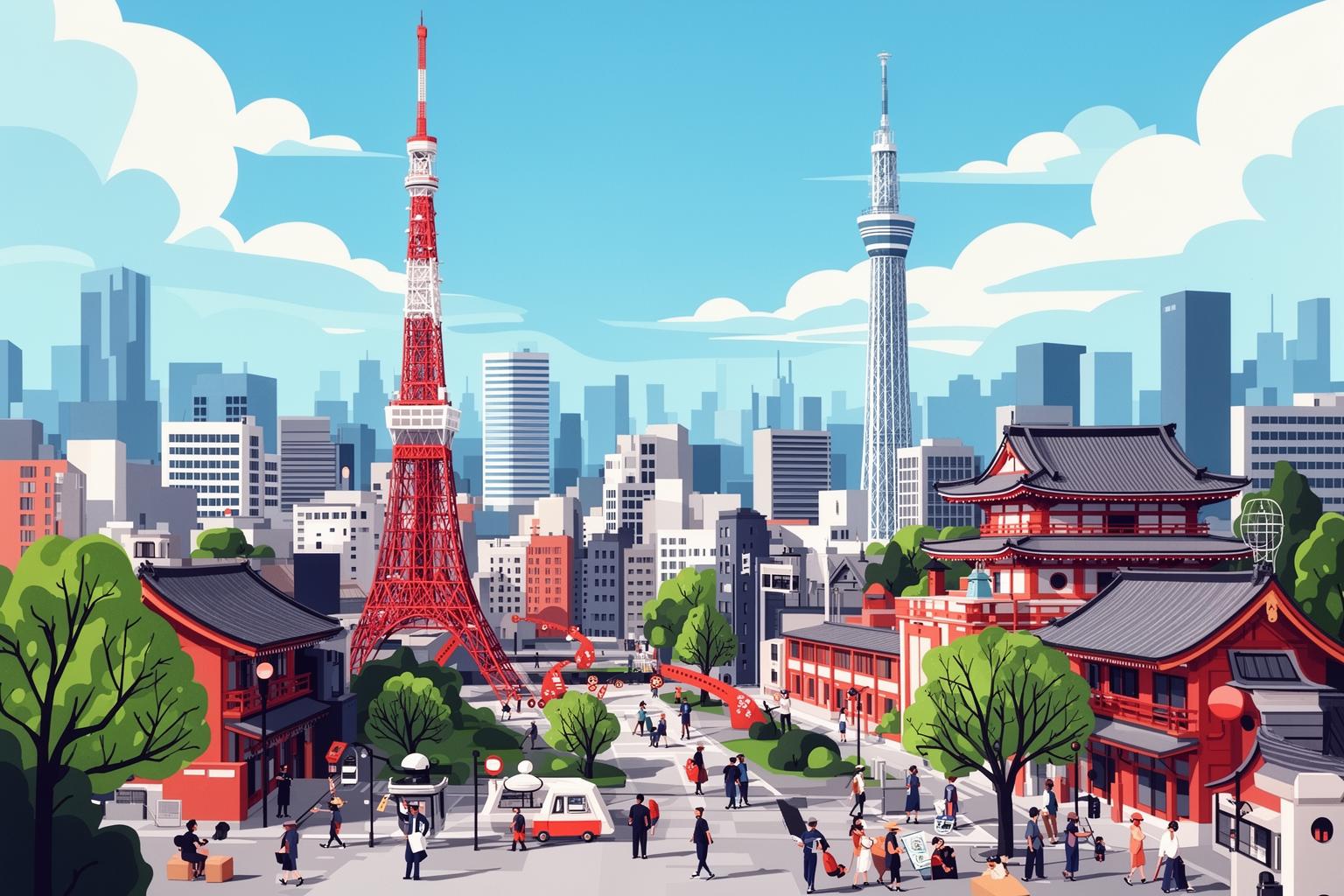
Our pilgrimage begins in the vibrant, intellectual heart of Waseda, a neighborhood that always feels youthful, steeped in the memories of student life. This is where Haruki Murakami himself attended university in the late 1960s, a time marked by intense social change and personal strife that later shaped the emotional core of his famed novel, Norwegian Wood. Walking through the Waseda University campus means treading the same paths as a young Toru Watanabe, grappling with love, loss, and the heavy burden of memory. The atmosphere here is thick with a particular kind of nostalgia, a bittersweet reverberation of earnest dialogues and youthful idealism. The grand Okuma Auditorium stands guard like a silent sentinel, its clock tower having observed countless generations of students, including Murakami, pass beneath it. One can almost envision Toru and his friend Nagasawa engaged in a spirited debate on the lawn, or Toru retreating to a quiet corner of the library to escape the world, engrossed in The Great Gatsby.
The Retro Rhythm of the Toden Arakawa Line
To deepen your immersion into this era, take a ride on the Toden Arakawa Line, also called the Tokyo Sakura Tram. It is the last of Tokyo’s traditional streetcar lines—a rattling, charming relic winding through peaceful, residential neighborhoods. As the tram gently sways along its tracks, passing by small shops, local parks, and modest homes, it’s easy to feel as though you’ve stepped back in time. This is the kind of journey Toru and Naoko might have taken on one of their aimless Sunday strolls—a slow, meandering trip without a specific destination, where conversation and shared silence mattered more than where they were headed. The tram offers views of a different Tokyo, far removed from the neon glare of the city center. It’s a more intimate, human-scale city—exactly the sort of setting where Murakami’s characters often discover moments of quiet clarity amid their inner struggles. Getting off at an arbitrary stop and wandering the nearby streets is a very Murakami-esque experience. You might stumble upon a tiny shrine, a traditional sweets shop, or simply find a peaceful bench to sit on and watch the world go by.
Mejiro’s Quiet Contemplation
Although the sanatorium where Naoko stays in Norwegian Wood is situated in the mountains near Kyoto, the atmosphere of quiet reflection and dignified solitude she sought can be felt in the vicinity of Mejiro, just a short distance from Waseda. This upscale, tranquil neighborhood, with its lovely gardens and stately homes, stands in stark contrast to the livelier energy of other parts of Tokyo. It is a place for long walks and quiet reflection. Visiting Mejiro Garden, with its serene pond and traditional architecture, is like stepping into one of the novel’s peaceful interludes. Here, nature offers a gentle solace for a troubled spirit. The mood is one of order, calm, and elegant melancholy, perfectly capturing the emotional terrain of Naoko’s world. For a first-time visitor, spending an afternoon here offers a way to appreciate the significance of these quiet, reflective spaces in Japanese culture and in Murakami’s literary realm.
Labyrinthine Hubs: Shinjuku and Shibuya’s Neon Dreams
If Waseda symbolizes the past and its lingering memories, then Shinjuku and Shibuya represent the chaotic, hyper-modern present where anything can occur. These vast urban centers frequently appear in Murakami’s work, from the nocturnal wanderings in After Dark to the parallel realities of 1Q84. They embody immense energy, dizzying complexity, and profound anonymity. Standing in the heart of Shinjuku Station, the world’s busiest transport hub, offers a firsthand experience of a central Murakami theme: the sensation of being a solitary individual swept along by a vast, impersonal tide of humanity. Millions of stories converge here daily without truly touching, creating a powerful blend of connection and alienation. The station is a genuine labyrinth, a concrete and steel maze easy to get lost in—a physical representation of the existential disorientation his characters so often endure.
The Warm Glow of Golden Gai
Just a short stroll from the futuristic towers of Shinjuku’s main district lies a fragment of the past: Golden Gai. This maze of six narrow alleys is packed with over two hundred tiny, ramshackle bars, some accommodating only a handful of patrons. Entering Golden Gai is like stepping into another era. The dimly lit pathways, weathered wooden facades, and intimate, cramped interiors evoke the atmosphere of post-war Tokyo. This is exactly the kind of place where a Murakami protagonist might nurse a whiskey and listen to jazz, a solitary figure amid a sea of strangers. The experience is both intimate and deeply personal. You might strike up a conversation with the bartender or another guest, sharing a brief connection before fading back into the night. It’s a place steeped in secrets and untold stories, an ideal setting for the chance encounters that shape Murakami’s characters’ destinies. A tip for visitors: many bars charge a small cover fee, and it’s wise to check the signs, as some venues are reserved for regulars only. Finding a welcoming spot and settling in for a drink is an essential Tokyo experience.
Music as a Refuge: The Jazz Bars
Music pulses through Murakami’s novels, a constant companion to his characters that offers comfort, unlocks memories, and shapes their emotional landscapes. Jazz, especially, is a recurring theme. Murakami himself once ran a jazz bar, Peter Cat, before becoming a full-time writer. To fully immerse yourself in his world, a visit to one of Tokyo’s legendary jazz kissaten or bars is essential. While some places he frequented have closed, the spirit endures in venues like Dug Jazz Cafe & Bar in Shinjuku, which Murakami has mentioned. Descending into one of these basement bars feels like entering a sacred space. The air is thick with the scent of aged wood, whiskey, and the warm, intricate sounds of John Coltrane or Miles Davis spinning on vinyl. These aren’t loud, boisterous spots; they are sanctuaries of sound where listeners come to focus deeply. It’s the perfect setting for introspection, where the music can wash over you and transport you elsewhere, just as it does for so many of his characters.
The Quiet Side of the City: Koenji, Sangenjaya, and the Search for Meaning
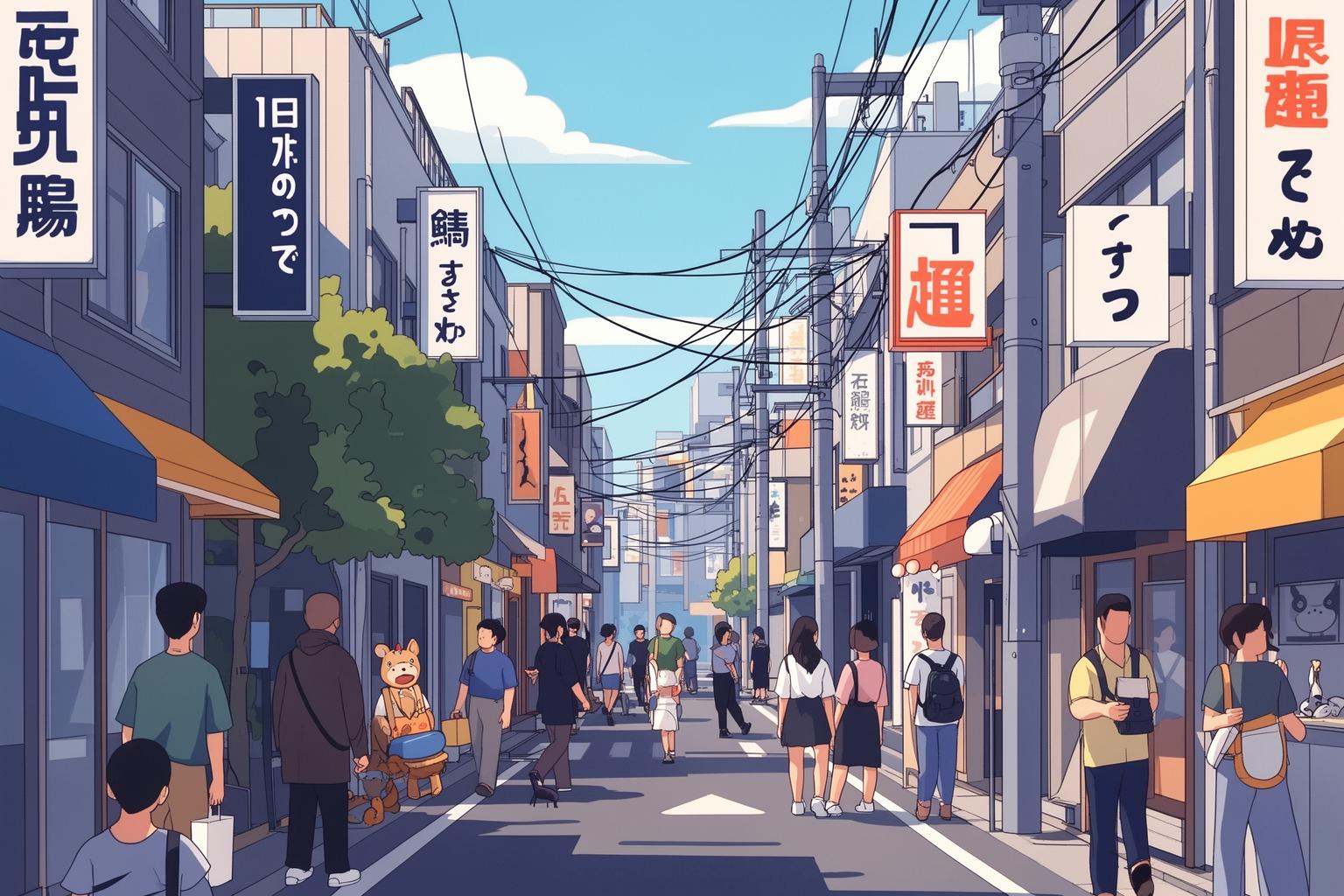
Beyond the shining centers of commerce and chaos lies another Tokyo—the city of residential neighborhoods where everyday life flows with a quiet rhythm. This is the Tokyo where Murakami’s characters truly live, the backdrop for the strange and surreal events that interrupt their carefully constructed routines. These neighborhoods are where cats vanish, mysterious phone calls come in the dead of night, and emergency staircases lead to alternate realities. This is the world of The Wind-Up Bird Chronicle and 1Q84.
Two Moons Over Koenji
Koenji, with its bohemian atmosphere, vibrant counter-culture scene, and network of covered shopping arcades (shotengai), serves as the spiritual home for the setting of 1Q84. It is here, near a park reminiscent of Koenji Central Park, that the protagonist Aomame descends an emergency staircase from an elevated expressway and finds herself in a world with two moons. While you may not discover a portal to another reality, you will encounter a neighborhood that pulses with a unique, independent energy. It’s a place filled with vintage clothing shops, second-hand bookstores, and small, unpretentious eateries. The park itself is a tranquil oasis, a typical neighborhood green space where children play and elderly people relax. It’s this very ordinariness that heightens the surreal events of the novel. Standing there, you can easily picture Aomame gazing up at the sky, her world subtly but irreversibly changed. Wandering Koenji’s side streets, you gain a sense of the everyday world that Murakami masterfully depicts, making it the perfect setting for his fantastical stories.
The View from Sangenjaya
In another part of the city is Sangenjaya, the neighborhood where Tengo, the other protagonist of 1Q84, lives. This area, affectionately called “Sancha,” has a more modern yet still local vibe. Its most prominent landmark is the Carrot Tower, a tall commercial building with a free observation deck on the 26th floor. From there, you can take in a sweeping view of the vast cityscape, a seemingly endless expanse of buildings stretching to the horizon. This perspective is vital in Murakami’s work—the notion of seeing the world from afar, understanding one’s own small place within a vast, interconnected system. It is from an apartment in a neighborhood like Sangenjaya that Tengo writes his stories, attempting to make sense of the strange and inexplicable events unfolding around him. The view from Carrot Tower offers a moment of clarity, a chance to grasp the big picture before returning to the delightfully chaotic streets below, with their mix of trendy cafes and classic pubs.
Places of Solitude and Reflection: Libraries, Parks, and Cats
Murakami’s characters are often solitary figures who find solace in quiet, contemplative spaces. These places offer them a retreat from the world, opportunities to process their thoughts, and a chance to connect with something deeper within themselves. Despite its reputation as a bustling metropolis, Tokyo is filled with such sanctuaries—if you know where to look.
A Walk Through Jingu Gaien
The iconic avenue of ginkgo trees in Meiji Jingu Gaien serves as a perfect example. In autumn, the trees turn a brilliant gold, forming a stunning natural cathedral. A leisurely walk down this path becomes a meditative experience, allowing one to sense the changing seasons and the quiet passage of time. Murakami, a devoted fan of the local Yakult Swallows baseball team whose stadium is located here, has undoubtedly walked this path many times. It’s the kind of place where characters take long, thoughtful strolls, the crunch of leaves beneath their feet accompanying their inner reflections. The park offers a carefully structured, man-made nature typical of Japan, designed for peaceful contemplation. Early in the morning, before crowds arrive, the atmosphere is especially serene, making it an ideal spot to begin a day of exploration.
The Sanctuaries of Knowledge and Art
Libraries and museums also serve as crucial refuges in Murakami’s world, notably in Kafka on the Shore. Although the novel’s private library is situated in Shikoku, Tokyo hosts many institutions that capture the same spirit of quiet reverence for knowledge and art. The Nezu Museum in Aoyama, with its remarkable collection of Japanese and East Asian art—and more importantly, its magnificent traditional garden—is a prime example. The garden is a winding, layered landscape featuring stone paths, tea houses, and tranquil ponds. It feels like a world unto itself, where the city’s noise completely fades away. Spending an hour or two here, simply sitting on a bench and observing the interplay of light, water, and greenery, offers the deep, restorative solitude so essential to the Murakami universe. It’s about discovering beauty and meaning not through grand gestures, but in quiet, perfectly composed moments.
Fueling the Journey: The Food and Drink of Murakami’s World

Food and drink in Murakami’s novels rarely serve merely as sustenance; they function as rituals. The simple, intentional act of cooking spaghetti, brewing the perfect cup of coffee, or pouring a glass of whiskey offers his characters a sense of order and control in a world that often feels chaotic and unpredictable. These culinary rituals ground them in the physical world, a small act of creation that brings comfort and normalcy.
The Kissaten Experience
To truly understand this, one must visit a traditional Japanese coffee shop, or kissaten. Unlike modern, bustling cafes, a kissaten is often a dimly lit, quiet space, sometimes filled with a faint haze of smoke, where time seems to slow down. The shop’s master prepares your coffee with meticulous, almost ceremonial care, using a siphon or pour-over method. The result is a cup of coffee meant to be savored slowly. Sitting in a plush velvet chair, listening to classical music or soft jazz playing from a vintage sound system, it’s easy to imagine one of Murakami’s characters seated in the same spot, lost in thought with a book open on the table. It’s an experience defined as much by the atmosphere as by the coffee itself.
Simple Pleasures: Spaghetti and Whiskey
Cooking spaghetti is a recurring motif in his books—a simple, solitary ritual that is both comforting and meditative. Even if you aren’t cooking it yourself, finding a small, local restaurant that serves a straightforward plate of pasta connects you with this theme. It isn’t about gourmet dining; it’s about the satisfaction of a simple, well-made meal. Likewise, ending your day in a quiet, understated bar with a glass of whiskey—perhaps Cutty Sark, a favorite of his characters—is the perfect conclusion to a Murakami pilgrimage. Seek out a bar with a long wooden counter and a knowledgeable bartender. Order your drink neat. Don’t rush it. This is a moment for reflection, for piecing together the day’s sights, sounds, and feelings, and for letting the city’s stories settle within you.
As you wander these streets, you’ll discover that Haruki Murakami’s Tokyo is not a fixed itinerary of landmarks to tick off. Rather, it is a state of mind, a lens through which to view the city. It resides in the loneliness of a crowded subway car, the unexpected beauty of a hidden garden, the melancholic melody of a jazz standard drifting from a basement bar, and the quiet comfort of a simple meal. By walking in the footsteps of his characters, you’re not merely exploring a city; you are uncovering the liminal spaces between reality and imagination, between the mundane and the magical. You are searching for your own missing cats and your own hidden wells. And in a city as vast and layered as Tokyo, you are almost certain to find them.