
Deep within the verdant, mist-shrouded mountains of Japan’s Kii Peninsula, there lies a network of trails etched into the very soul of the nation. This is not merely a collection of hiking paths; it is the Kumano Kodo, a sacred pilgrimage route that for over a thousand years has guided emperors, samurai, ascetics, and commoners in search of spiritual solace and purification. To walk these stones is to trace the footsteps of history itself, to feel the pulse of a land where the divine and the natural world are inextricably entwined. This is a journey into the heart of Japan’s spiritual landscape, a UNESCO World Heritage site recognized not just for its physical trails but for the profound cultural tradition it represents. The air here feels different, heavy with the prayers of generations and the quiet wisdom of ancient cedar and cypress trees that stand as silent witnesses to the passage of time. It is a place that feels both intensely real and yet plucked from the pages of a myth, a landscape that has inspired countless works of art and literature, and whose atmosphere resonates with the serene, spirit-inhabited worlds often depicted in modern Japanese storytelling. This pilgrimage is an invitation to disconnect from the clamor of the modern world and reconnect with something more elemental, a rhythm set by your own footfalls on the moss-covered earth. Your journey into this timeless realm begins here.
Those captivated by the ancient spirit of sacred paths may also be inspired by the Yakushima pilgrimage, where nature and myth gracefully intertwine.
The Soul of the Three Grand Shrines
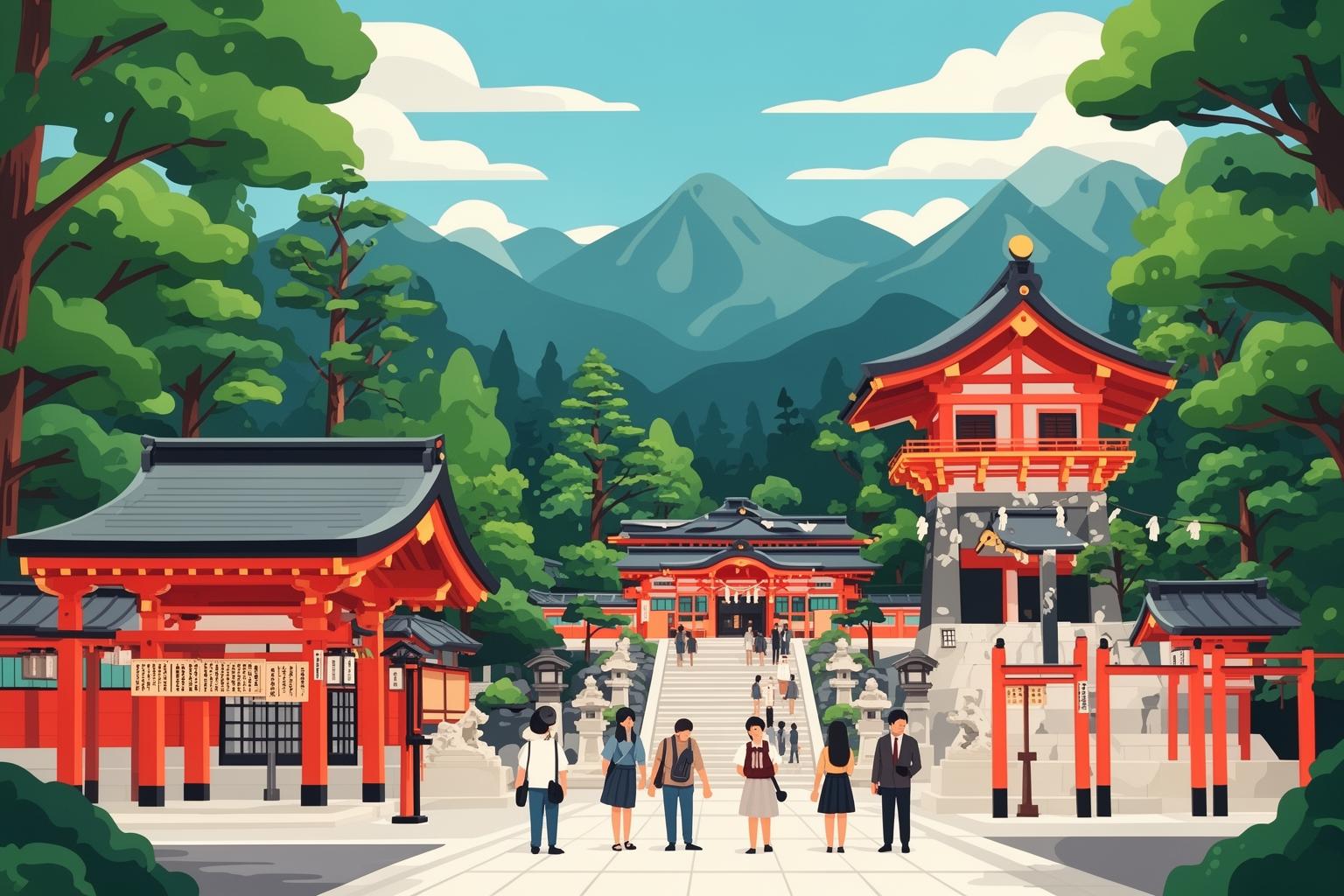
The entire pilgrimage network of Kumano Kodo converges, both physically and spiritually, on a sacred trio of shrines known as the Kumano Sanzan. These three grand shrines—Kumano Hongu Taisha, Kumano Hayatama Taisha, and Kumano Nachi Taisha—serve as the ultimate destinations and the anchors of faith within this vast wilderness. Each shrine possesses its own unique character, distinct atmosphere, and special connection with the powerful nature that surrounds it. Visiting them is not simply a checklist to complete; it is the heart of the Kumano experience—a gradual immersion into the core of a uniquely Japanese syncretic faith that has welcomed all, regardless of status or gender, for centuries. The journey between these shrines is as meaningful as the arrival itself, weaving a narrative of purification, reverence, and profound natural beauty.
Kumano Hongu Taisha: The Heart of the Pilgrimage
Your initial encounter with Kumano’s spiritual essence often begins at Hongu Taisha. Nestled deep in the mountains, this shrine radiates a solemn, understated majesty. Its raw, unlacquered timber buildings, with their elegant, sweeping roofs of cypress bark, blend effortlessly into the dense forest. It is a place of quiet reflection. The air is still, broken only by the crunch of gravel underfoot and the cawing of crows, believed to be messengers of the gods. Here you sense the weight of history and a profound dignity. The shrine’s emblem is the Yatagarasu, a mythical three-legged crow that, according to legend, guided the mythical Emperor Jimmu through these same treacherous mountains. This divine guide embodies the spirit of Kumano: a helping hand through the wilderness toward enlightenment. To fully grasp Hongu Taisha’s significance, you must also visit its original site, Oyunohara, just a short walk away. Located on a sandbank at the confluence of two rivers, the shrine was relocated after a devastating flood in 1889. Today, Oyunohara is marked by the world’s largest torii gate, a colossal steel structure standing as a monumental testament to the site’s enduring sanctity. Standing beneath it, you can almost envision the sprawling complex that once existed and feel the raw, untamable power of the nature that both nurtures and challenges this sacred land.
Kumano Hayatama Taisha: The Vibrant Guardian
Traveling downstream along the Kumano River, the landscape and character of the shrines transform. Located in the coastal city of Shingu, Kumano Hayatama Taisha presents a striking contrast to the rustic austerity of Hongu. Here, the buildings are coated in brilliant vermilion lacquer that glows vividly against the surrounding greenery. The atmosphere is brighter, more energetic—a celebration of life and divine presence. The shrine is dedicated to the gods of healing and marital harmony, and its position near the river’s mouth gives it the feeling of a gateway between the sacred mountains and the vast Pacific Ocean. The true treasure of Hayatama Taisha, however, is not crafted by human hands. Within its grounds stands a colossal Nagi tree, a sacred podocarpus estimated to be over a thousand years old. Its thick, gnarled trunk is adorned with a shimenawa rope, marking it as a vessel of the divine. Touching its bark, you feel a connection to a living entity that has watched over pilgrims for a millennium, its resilient, tear-resistant leaves symbolizing enduring bonds and protection.
Kumano Nachi Taisha and the Sacred Falls
The final gem of the Kumano Sanzan is perhaps the most visually iconic. Kumano Nachi Taisha forms part of a breathtaking religious complex perched halfway up a mountain, offering sweeping panoramic views of the ocean. The approach itself is a test of endurance—a long, steep stone staircase called the Daimon-zaka, lined with towering ancient cedars that create a cathedral-like canopy. The effort is richly rewarded. The shrine, another exquisite example of vermilion-lacquered architecture, stands in harmonious proximity to the Buddhist Seiganto-ji Temple. Their side-by-side existence exemplifies the fusion of Shinto and Buddhist beliefs that defines Kumano. Yet the true spectacle lies just beyond: the magnificent three-story pagoda of Seiganto-ji, perfectly framed against the backdrop of Nachi-no-Otaki, Japan’s tallest single-drop waterfall. The sight is simply sublime. The waterfall, cascading 133 meters in an unbroken stream of white water, has been worshipped as a deity in its own right since before the shrine was constructed. The roar of the water is a constant, primal sound, and the mist it casts feels like a baptism. Here at Nachi, architecture and nature, Buddhism and Shinto, all converge in a scene of overwhelming beauty and spiritual power that captures the very essence of the Kumano pilgrimage.
Walking the Imperial Path: Choosing Your Route
One of the key things to grasp about the Kumano Kodo is that it is not a single, straightforward trail. Rather, it is a web—a network of paths weaving across the Kii Peninsula, each with its own history, character, and difficulty level. Choosing a route is a deeply personal decision that shapes your entire pilgrimage experience. Whether you are drawn to the well-worn path of emperors, the rugged solitude of a mountain ascetic, or the coastal breezes that fishermen and merchants once followed, there is a route suited to you. These ancient roads are more than mere trails; they are living veins of a sacred landscape, with every turn unveiling a new vista, a hidden shrine, or a quiet moment for reflection.
The Nakahechi Route: The Pilgrim’s Mainstay
For most contemporary pilgrims, the Nakahechi route embodies the quintessential Kumano Kodo experience. Favored by the imperial court during the Heian period, it remains the best-preserved and most frequented trail today. It winds from the western coast at Tanabe City into the mountainous core of the peninsula, linking the three grand shrines in a meaningful and spiritually fulfilling order. Walking the Nakahechi means journeying through a timeless landscape. You’ll pass tranquil villages where life slows down, ascend dense forests of towering cedar and cypress whose canopies scatter sunlight into ethereal beams, and traverse moss-covered stone paths worn smooth by a thousand years of footsteps. Along the way, small subsidiary shrines called Oji act as spiritual markers, places to rest and pray. A particularly cherished stretch is the trek from Hosshinmon-oji—the “gate of awakening the aspiration to enlightenment”—to Kumano Hongu Taisha. This multi-hour hike perfectly captures the Nakahechi’s allure, offering breathtaking views and a profound sense of arrival as the majestic roofs of the grand shrine come into sight.
The Iseji Route: A Coastal Journey of Faith
Running along the eastern coast of the peninsula, the Iseji route presents a distinctly different yet equally captivating pilgrimage. Historically, this path connected Ise Jingu, the nation’s most sacred Shinto site, with the Kumano Sanzan. It was mainly used by common folk and reflects the coastal industries of fishing, forestry, and trade. The journey is a dynamic blend of mountain and sea. One day you might climb a steep, stone-paved pass through whispering bamboo groves; the next, you could stroll along a pristine beach gazing out over the Pacific. The Iseji is generally less crowded than the Nakahechi, offering a stronger sense of solitude and adventure. Notable sections include Magose Pass, with its beautiful rain-slicked cobblestones, and Matsumoto Pass, which opens onto breathtaking views of Shichiri Mihama Beach, rewarding the intrepid traveler. This route feels wilder, a tribute to the resilience of pilgrims who braved both formidable mountains and the unpredictable sea.
The Kohechi and Ohechi Routes: For the Intrepid Soul
For those eager to truly leave the modern world behind, the Kohechi and Ohechi routes offer formidable challenges. The Kohechi is a rugged mountain trail cutting through the spine of the Kii Peninsula, connecting the Buddhist monastic complex of Koyasan with Kumano. It is a path for ascetics, marked by long, strenuous climbs over high passes and often limited services. The rewards are immense: unparalleled solitude, pristine nature, and a profound sense of achievement. The Ohechi, in contrast, follows the southern coastline, a route of stunning sea views and sleepy fishing villages. While less vertically demanding than Kohechi, it is still a long and undulating trail. Both routes are suited to experienced hikers and require careful planning, yet they offer an unfiltered glimpse into the raw, untamed beauty of the region and a deep connection to the spirit of endurance that defines the Kumano Kodo.
A Tapestry of History and Legend

Walking the Kumano Kodo means immersing yourself in a history that extends beyond museums and books; it lives within the very landscape around you. The stones, trees, and rivers each play a role in a grand story that has been unfolding for more than a thousand years. Grasping this context transforms the journey from a simple hike into a profound conversation with the past. The path itself becomes a guide, unveiling the evolution of faith, culture, and the connection between humanity and nature in Japan. As a historian, I find few places where the layers of time are so tangible and so easily accessible to those willing to hear the whispers carried by the wind.
Echoes of Imperial Pilgrims
The golden age of the Kumano pilgrimage began during the Heian period (794–1185), when retired emperors and members of the imperial court undertook the arduous, month-long journey from the capital, Kyoto. These were no casual outings; they were grand processions involving hundreds of courtiers, priests, and attendants. Their purpose was to seek spiritual merit and divine favor in the remote, mystical land of Kumano. The trails they traveled were perilous, and the journey was a sincere act of devotion. Their patronage elevated Kumano to one of Japan’s most important spiritual centers. The poetry and diaries left by these imperial pilgrims offer a vivid glimpse into their world, filled with detailed accounts of natural beauty, spiritual awe, and the physical trials they faced. Standing at a viewpoint and gazing out over the same sea of mountains they beheld allows you to share a moment across a gulf of a thousand years.
The Syncretic Faith of Kumano
What made Kumano truly distinctive was its remarkably inclusive and syncretic form of belief. At a time when many sacred sites enforced strict prohibitions, Kumano welcomed everyone—from emperors to farmers, and notably, women, who were barred from many other holy mountains. This openness arose from the philosophy of Shinbutsu-shugo, the blending of Japan’s native Shinto beliefs with imported Buddhism. In the Kumano faith, the Shinto kami (gods) were understood as Gongen, or local manifestations of Buddhist deities. For example, the main deity of Hongu Taisha was regarded as a manifestation of Amida Buddha. This inspired theological fusion created a powerful, universal appeal. Kumano was seen as a gateway to the Pure Land on Earth, a paradise accessible not only after death but through the very act of pilgrimage. This democratic spirituality remains Kumano’s enduring legacy—a foundational principle of compassion and acceptance etched into its mountain paths.
Kumano in Literature and Modern Imagination
The profound atmosphere of the Kumano Kodo—its ancient forests, swirling mists, and palpable sense of the sacred—has long inspired the Japanese imagination. The pilgrimage inspired countless poems, plays, and epic tales. This artistic heritage continues to resonate in modern times. While not always a direct influence, the aesthetic of Kumano deeply echoes in some of Japan’s most cherished modern folklore and animation. The sense of a world inhabited by spirits residing in trees and mountains, where nature is a powerful, sentient force and ancient traditions hold profound wisdom, is the very essence of Kumano. Consider the sacred forests of Hayao Miyazaki’s Princess Mononoke or the quiet, mystical encounters in Yuki Urushibara’s Mushishi. The Kumano Kodo remains a real place where one can step into that feeling—a tangible connection to the spiritual and natural worldview that continues to shape Japanese culture.
Practical Guidance for the Modern Pilgrim
A journey on the Kumano Kodo, while deeply spiritual, also demands practical preparation. This is not a simple stroll in the park; it is a multi-day trek through mountainous terrain where the weather can be unpredictable and services are limited. Proper planning shows respect both for the trail and for your own safety. It allows you to focus not on logistical concerns but on the profound experience of the pilgrimage itself. A bit of foresight will turn potential difficulties into manageable challenges, enabling you to fully embrace the magic of the path.
When to Embark on Your Journey
The timing of your pilgrimage can greatly influence your experience. The most popular and arguably most pleasant seasons for walking the Kumano Kodo are spring (April to May) and autumn (October to November). In spring, the trails are decorated with blooming cherry blossoms and other wildflowers, and the weather is typically mild and comfortable. Autumn showcases a breathtaking display of fall colors, with mountainsides covered in vibrant reds, oranges, and yellows under crisp, clear skies. Summer (June to August) can be oppressively hot and humid, coinciding with the rainy and typhoon seasons, which can cause trail closures. Winter (December to February) is peaceful and beautiful but prepare for cold temperatures and the possibility of snow and ice on higher passes, which requires specialized equipment and experience.
Access and Orientation
The Kii Peninsula is a relatively remote area of Japan. The main entry points for the Nakahechi route are Kii-Tanabe on the west coast and Shingu or Kii-Katsuura on the east. These are accessible via limited express trains from major cities like Osaka and Nagoya. Once in the region, an extensive local bus network connects train stations to various trailheads and villages along the route. It is important to have an up-to-date bus schedule, as services can be infrequent. The Tanabe City Kumano Tourism Bureau, located next to Kii-Tanabe station, is an invaluable resource. Their staff are extremely helpful and can provide maps, timetables, and last-minute advice to help you start your journey smoothly.
What to Pack and Prepare
Packing wisely is essential. First and foremost, invest in a sturdy, comfortable pair of hiking boots that are well broken-in—your feet will thank you. The weather can change rapidly, so waterproof gear—including a good rain jacket and pants—is a must, even if the forecast is clear. Dress in layers that can be easily added or removed as you warm up during hiking or as the temperature shifts with elevation. A backpack of around 30–40 liters is generally sufficient for a multi-day trek. Carry at least one to two liters of water, since water sources between villages can be scarce. High-energy snacks are also essential. For convenience, consider one of the excellent daily luggage forwarding services available locally. For a small fee, they will transport your main bag from one accommodation to the next, allowing you to hike with only a light daypack—a modern convenience that even ancient emperors would have envied.
Beyond the Trail: Immersing in the Kumano Region
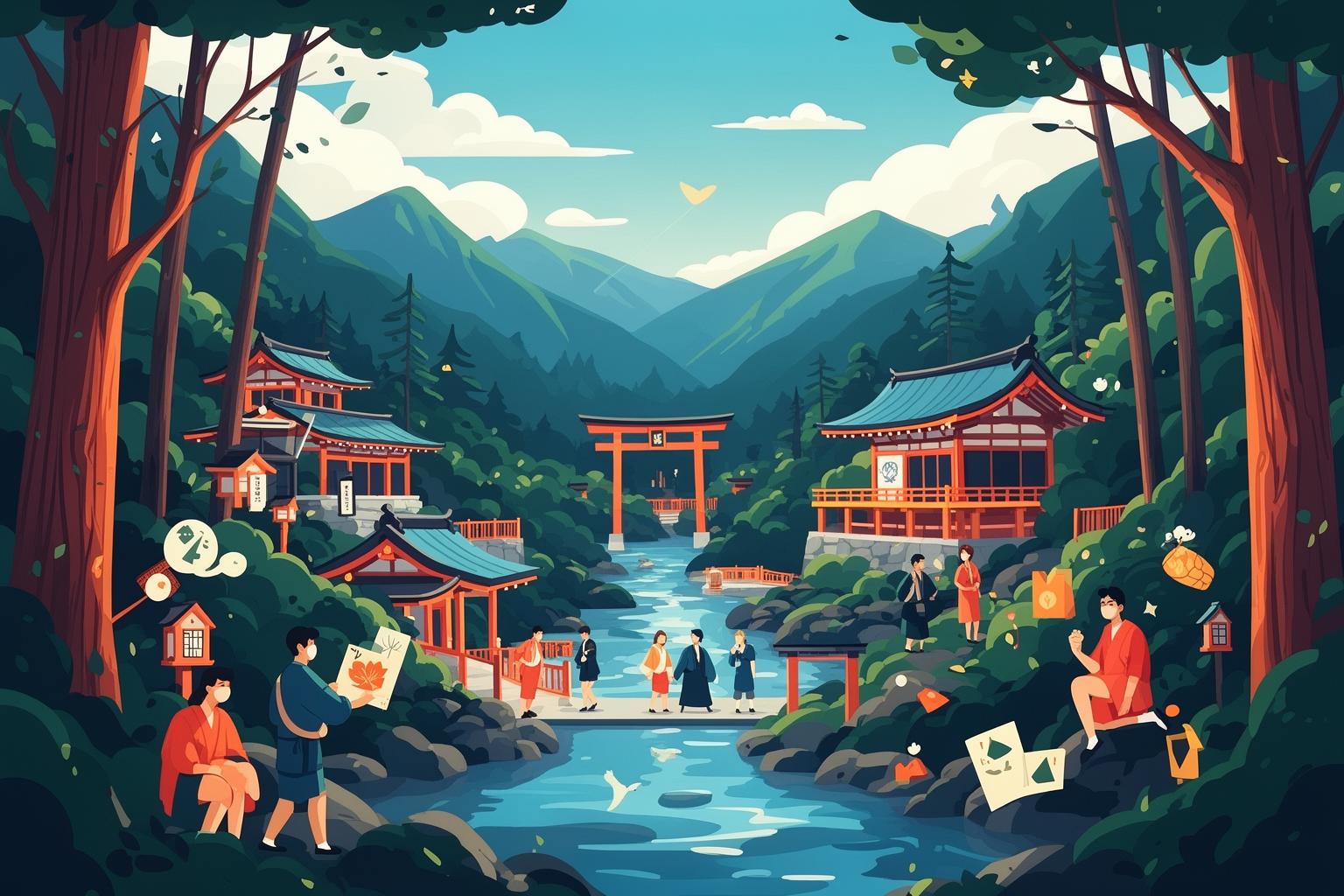
The Kumano Kodo experience goes far beyond the simple act of walking. The trail serves as a thread weaving together a rich tapestry of cultural customs, culinary traditions, and distinctive local encounters. To fully appreciate the pilgrimage, you need to immerse yourself in the life of the region. Relaxing in a hot spring, enjoying a local meal, or experiencing the hospitality of a traditional inn are not mere distractions; they are essential elements of the journey toward purification and renewal. These pauses for rest and cultural engagement turn a demanding trek into a profoundly restorative and unforgettable adventure.
The Healing Waters of Onsen
After a long day of hiking, nothing is more rewarding than sinking into mineral-rich, geothermally heated onsen waters. The Kii Peninsula is sprinkled with hot spring towns that have soothed pilgrims’ weary bodies for centuries. The most renowned is Yunomine Onsen, one of Japan’s oldest hot springs. Here, you can experience Tsuboyu, a small, rustic bath in a tiny wooden cabin built over a creek. It is the only hot spring in the world recognized as a UNESCO World Heritage site, and pilgrims have traditionally performed hot water purification rituals here before visiting Kumano Hongu Taisha. Another special spot is Kawayu Onsen, where hot water bubbles up from the bed of the Oto River. You can create your own personal hot spring bath in the riverbank’s gravel and adjust the temperature by mixing in cool river water—offering a truly memorable experience.
Sustenance for the Soul and Body
Cuisine in the Kumano region is simple, hearty, and closely tied to the local environment. A classic pilgrim’s food is mehari-zushi, a large rice ball seasoned with salt and wrapped in a pickled mustard leaf. This was originally a portable lunch for woodcutters and travelers. For a more refined dining experience, local inns often serve meticulously prepared kaiseki dinners showcasing the area’s bounty. These meals can include fresh sashimi from the Pacific, sweet river fish like ayu grilled over charcoal, and a variety of mountain vegetables. Don’t miss trying the local citrus, especially the rare jabara, a small, tart fruit believed to have significant health benefits. This food nourishes not only the body but also tells the story of the land.
Staying in Sacred Lodgings
The best way to experience Kumano’s renowned hospitality is by staying in the small, family-run guesthouses (minshuku) and traditional inns (ryokan) along the pilgrimage routes. These accommodations have welcomed travelers for generations. After a day on the trail, arriving at a minshuku means being greeted with a warm smile, a cup of tea, and a hot bath ready to soothe your muscles. Sleeping on a futon in a tatami room and sharing a homemade meal with your hosts and fellow travelers is a fundamental part of the Kumano Kodo community experience. It is in these quiet moments of shared humanity that you truly feel the spirit of the pilgrimage—a tradition of welcome and mutual support that has endured for a thousand years.
A Final Reflection on the Path
Finishing a journey on the Kumano Kodo leaves you with more than just sore muscles and a camera filled with stunning photos. It makes an indelible impression on your spirit. This journey affects you gradually and gently. It is found in the rhythm of your breath as you ascend a steep pass, the feeling of cool moss beneath your fingertips, the shared smile with a fellow pilgrim, and the profound silence of a cedar forest. The Kumano Kodo is not about conquering a mountain or reaching a destination quickly. It is about the experience itself. It is about slowing down enough to notice the small details—the stone Jizo statue draped with a tiny red bib, the way the light shifts in the afternoon, the sound of a distant temple bell. It is a pilgrimage into the heart of nature, into the depths of Japanese history and faith, and ultimately, into your own self. The whispers along this ancient path are not just echoes of the past; they are a dialogue with the present moment, a reminder of nature’s enduring power, and a gentle invitation to discover your own peace, one sacred step at a time.