There are places on this earth that feel older than time, worlds wrapped in mist and moss where the air itself seems to hum with an ancient energy. We’ve all felt it, that shiver of recognition when we see such a place on screen. For millions, that moment came with Studio Ghibli’s masterpiece, Princess Mononoke. The sprawling, god-inhabited forest, where colossal trees claw at the sky and mischievous spirits peek from behind emerald curtains of moss, felt too real, too alive to be mere animation. And that’s because, in a way, it is. Deep in the south of Japan, floating in the East China Sea, lies Yakushima Island, a UNESCO World Heritage site and the soul-stirring inspiration for Hayao Miyazaki’s epic. This is not just a filming location; it is the spiritual heart of the film, a place where the lines between myth and reality blur. To journey to Yakushima is to step through the screen, to walk the same gnarled roots as Ashitaka, and to feel the profound, untamable power of a forest that has watched civilizations rise and fall. It is a pilgrimage for the Ghibli faithful, but it is also a profound journey for anyone who feels the call of the wild, a chance to stand in the presence of living deities and listen to the whispers of the earth itself.
For those whose souls are awakened by ancient forests, a journey through Tokyo offers a modern pilgrimage that echoes the mystique of places like Yakushima.
The Heart of the Ancient Forest: Shiratani Unsuikyo Ravine
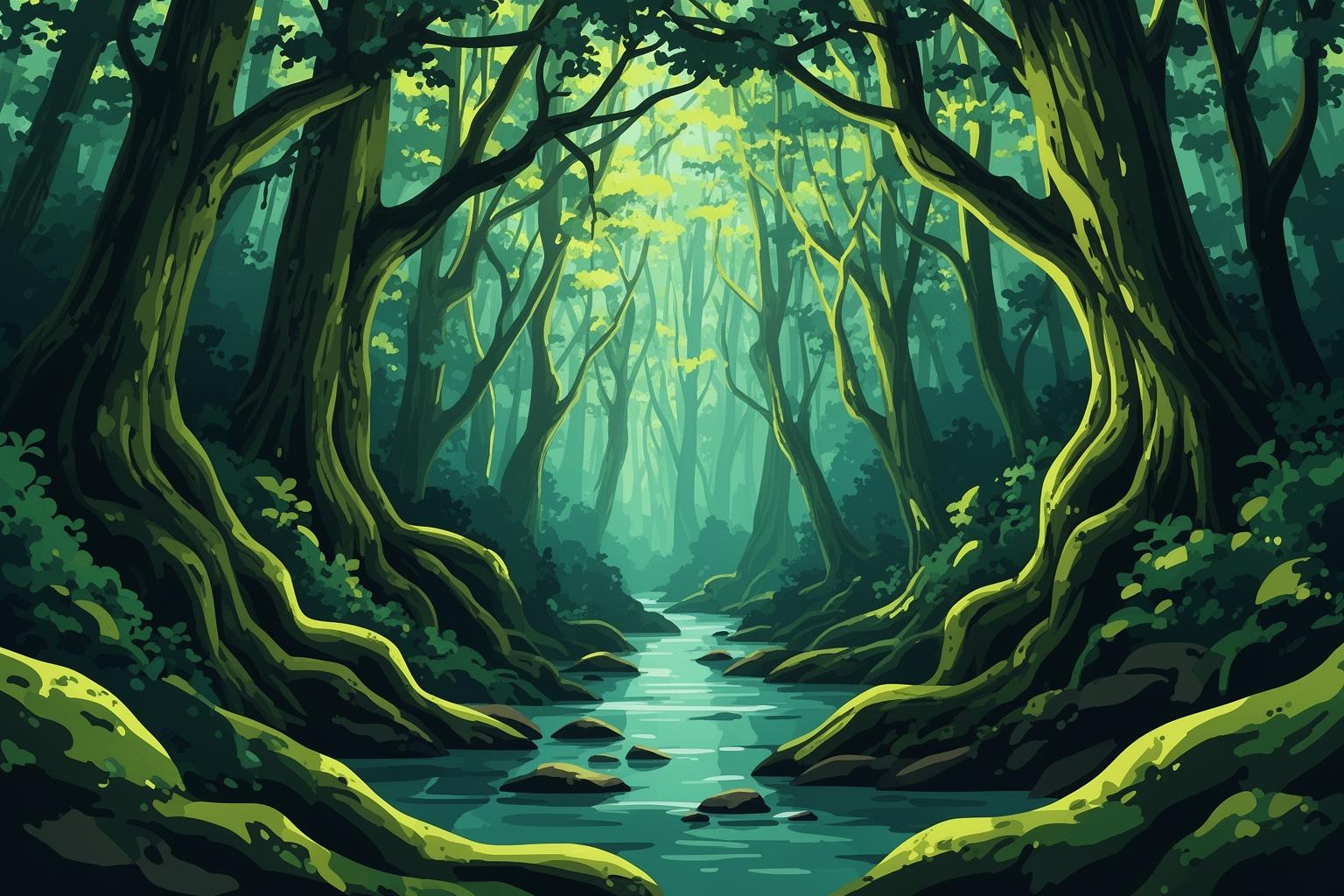
Your pilgrimage into the world of Princess Mononoke truly begins at Shiratani Unsuikyo, the Ravine of White Valley and Cloud Water. This is the very place Miyazaki and his team visited repeatedly, sketching and soaking in the atmosphere that would later become the film’s iconic setting. The moment you step onto the trail, the modern world fades away. You are immediately embraced by a silence that is not empty but rich—filled with the drip of water from fern fronds, the rustle of unseen creatures, and the vast, breathing presence of the forest. The air is cool and heavy with the scent of damp earth and decaying wood, a primal fragrance that feels both strange and intimately familiar. This is not a park; it is a living cathedral. Gnarled, moss-covered roots of ancient Yakusugi cedars weave across the path like the sinews of a sleeping giant. Sunlight struggles to penetrate the dense canopy, casting ethereal, shifting light upon the forest floor. It’s impossible not to feel reverence here, a sense that you are a guest in a realm ruled by forces far older than humanity. Every twisted branch and moss-covered stone seems deliberate, placed by an unseen artist. Here is where you begin to grasp the film on a cellular level.
The Moss Forest: Kokemusu-no-mori
Deep within the ravine lies a clearing that will halt you in your tracks. Known as Kokemusu-no-mori, or the Moss Forest, this is famously cited as the direct inspiration for the Forest Spirit’s domain. The scene is breathtakingly surreal. Everything—the ground, rocks, fallen logs, and low-hanging branches—is draped in a thick, velvety carpet of countless shades of green. It’s a world sculpted from moss. The sheer vibrancy of it all seems to make the air glow. When the mist rolls in, as it often does, the landscape shifts into something truly mystical. Shapes blur, and the world shrinks to just you and the few feet of emerald wonder surrounding you. In these moments, you half-expect to see the silent, rattling heads of the Kodama, the tree spirits from the film, appearing and disappearing among the trees. You find yourself walking slower, breathing softer, not wanting to disturb the sanctity of the place. It’s a powerful reminder that Ghibli’s magic isn’t merely fantasy; it’s a heightened reality, an artistic lens focused on the genuine wonder that already exists around us.
Navigating the Ancient Trails
Shiratani Unsuikyo welcomes hikers of all skill levels. The park offers several well-marked routes, ranging from an easy one-hour loop to more challenging four- or five-hour treks leading deeper into the primeval landscape. For those seeking the full Princess Mononoke experience, the longer trails are a must. They guide you along narrower paths, over rustic wooden bridges, and past remarkable sights like the Kugurisugi, a cedar tree you can walk through. Proper preparation is essential. The trails are often wet and slippery due to the island’s legendary rainfall, making sturdy, waterproof hiking boots an absolute necessity. Equally important is reliable rain gear. Yakushima is renowned for having some of the highest annual rainfall in the world; locals joke that it rains “35 days a month.” But don’t let that discourage you. The rain breathes life into the forest, intensifying the vibrant greens of the moss and nourishing the countless streams that weave through the landscape like silver threads. A rainy or misty day in Shiratani Unsuikyo is not a spoiled experience; it is the authentic one.
Seeking Jomon Sugi: A Pilgrimage to the Whispering Giant
While Shiratani Unsuikyo captures the essence of the film’s forest, the journey to Jomon Sugi embodies its themes of endurance and reverence for life. Jomon Sugi is a colossal, ancient Yakusugi cedar, estimated to be between 2,000 and over 7,000 years old. It stands as one of the oldest living trees on Earth, silently witnessing the entirety of recorded human history. Reaching it is no casual walk; it is a demanding ten-to-twelve-hour round-trip trek that acts as a modern-day pilgrimage. This journey challenges your physical limits but offers a profound spiritual experience that’s difficult to express in words. This is the real-life Forest Spirit—not in form but in essence—a being of immense age, power, and quiet wisdom. The hike serves as a testament to the film’s themes of struggle and perseverance, physically mirroring Ashitaka’s arduous journey.
The Arakawa Trail: A Path Through History
The trek to Jomon Sugi begins before dawn, with hikers starting out by headlamp. Much of the trail follows an old logging railway known as the Arakawa Trail. For hours, you walk over wooden railway sleepers laid across a narrow track winding through the deep forest. This man-made scar on the landscape stands as a tangible link to the central conflict of Princess Mononoke: the clash between human industry and nature. You literally walk through the history of logging that once threatened to destroy these ancient woods. The flat, steady pace of the railway eventually leads to a strenuous, steep climb up the mountains. Here, the real challenge begins as you navigate exposed roots and rough wooden staircases. It’s exhausting, yet with each step you feel yourself leaving the outside world behind and drawing closer to the island’s heart.
An Encounter with Time Itself
After hours of relentless hiking, you finally arrive. Jomon Sugi does not reveal itself all at once. You ascend a final set of stairs to a small, specially designed viewing platform, made to protect the tree’s fragile root system from the thousands of pilgrims who visit annually. And there it stands. Words and photographs fall short of capturing the tree’s monumental presence. Its trunk is a massive, gnarled fortress of bark, resembling a geological formation more than a plant. Its few remaining branches stretch skyward like weathered arms. Standing before it, you feel a deep sense of humility. This living being has remained here as empires have risen and fallen, as languages have been born and vanished. It connects you directly to a past so distant it feels mythic. In its presence, the frantic pace of modern life seems utterly meaningless. You are not just looking at a tree; you stand before a silent god, the ultimate symbol of nature’s resilience and enduring strength—the very essence of what the Forest Spirit embodied in Miyazaki’s film.
Echoes of the Iron Town: Yakushima’s Human History
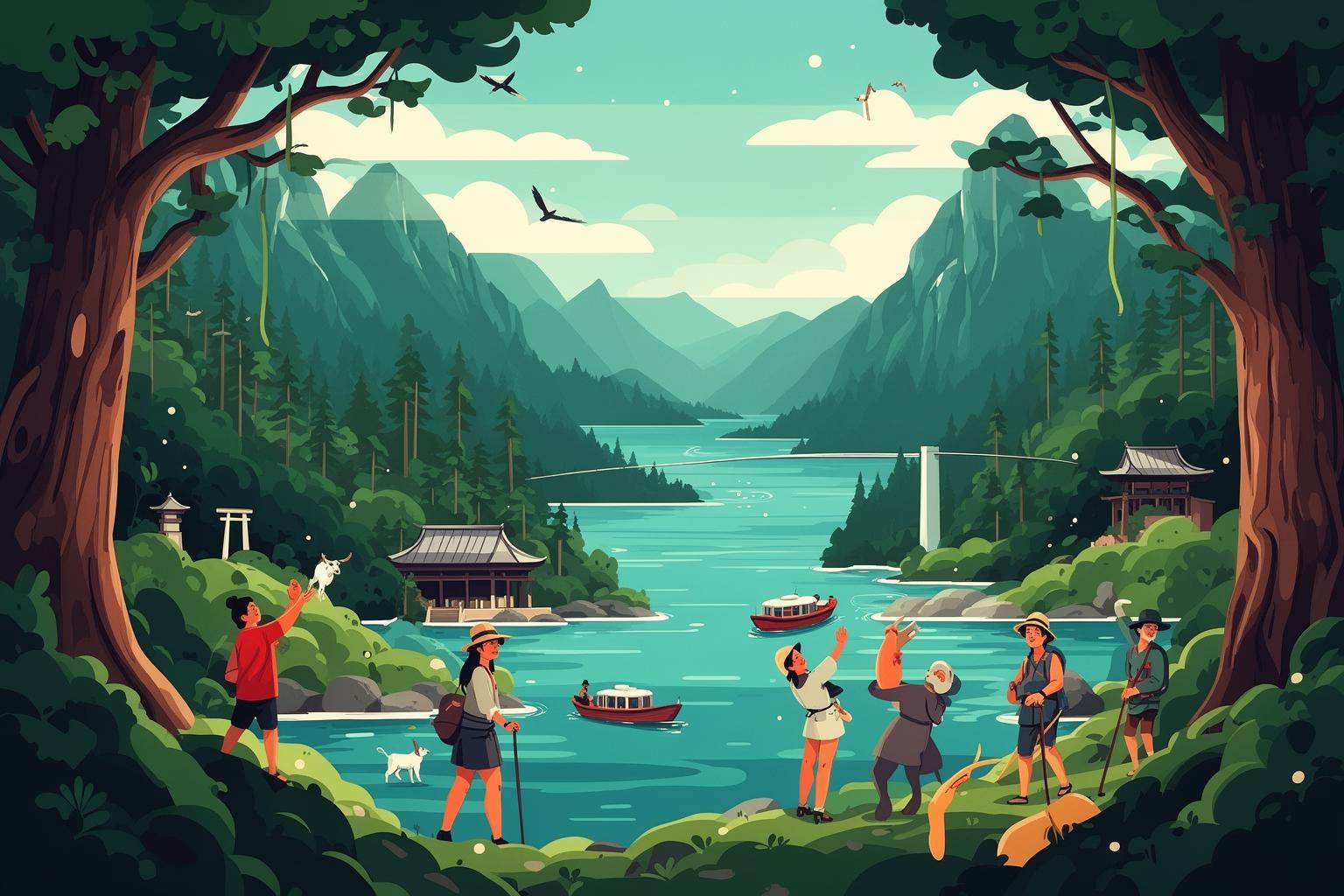
Princess Mononoke is more than just a tale about a magical forest; it is a complex story about the relationship between humanity and nature. To truly appreciate the film’s inspiration, one must also be aware of Yakushima’s own history of human industry. During the Edo Period, the island’s majestic cedars were extensively logged, with their timber highly valued for constructing temples and shingles. This history is embedded in the landscape. The most striking reminder of this period is Wilson’s Stump, or Wilson’s Kabu. It is the massive remnant of a giant cedar felled centuries ago. The stump is so vast that its hollow interior forms a small cavern that hikers can enter. Inside, looking up through the core of what was once a mighty tree, you see a heart-shaped opening to the sky. It serves as both a tomb and a shrine. Standing within this monument to a fallen giant, one cannot help but think of Irontown and the relentless industry that threatened the film’s forest. Wilson’s Stump stands as a powerful symbol of nature’s loss, but also of its resilience and ability to create beauty even from a wound.
Island Life Beyond the Forest: Practicalities and Charms
While the ancient forests are the primary attraction, Yakushima is a lively, living island with its own distinct culture and rhythm. Knowing how to get to and navigate around this remote paradise is essential for a successful pilgrimage.
Getting to the Mythical Island
Your trip to Yakushima will almost certainly begin in Kagoshima, the southernmost major city on Japan’s main island of Kyushu. From there, you have two main options. The fastest is the high-speed hydrofoil ferry, commonly known as the “Toppy” or “Rocket,” which crosses the water in about two to three hours. It’s efficient but can be a bumpy ride on rough seas. The more relaxed and cost-effective choice is the car ferry, taking about four hours and offering open decks where you can watch flying fish and enjoy the sea breeze. Alternatively, you can fly directly to the small Yakushima Airport from Kagoshima, Fukuoka, or Osaka. Flying is the quickest method but also the priciest, though it provides spectacular aerial views of the island’s mountainous interior as you descend.
Navigating Yakushima
Upon arrival, you’ll quickly notice that Yakushima is larger and more rugged than it seems on a map. Public transportation is quite limited, with infrequent buses running along the coastal ring road. While a bus pass can work for some plans, it demands careful scheduling and can limit your flexibility. To truly explore the island at your own pace and access the trailheads, waterfalls, and hidden gems, renting a car is nearly indispensable. The roads are narrow and winding, especially as they ascend into the mountains, so driving calls for caution and focus. Be sure to obtain an International Driving Permit before departing your home country. Having your own vehicle lets you follow the sunlight, linger at stunning viewpoints, or make spontaneous stops at roadside stands selling local Tankan oranges.
Where to Stay
The island’s population is mainly concentrated in a few coastal settlements. The two largest towns are Miyanoura, on the northeast coast where the main port lies, and Anbo, a slightly smaller port town to the southeast. Both offer a variety of accommodations, from modest family-run guesthouses known as minshuku to conventional hotels. Staying in a minshuku provides a wonderful chance to experience Japanese hospitality, often including delicious home-cooked meals made with local ingredients. Booking lodging well in advance is strongly recommended, especially during peak travel times like Golden Week in the spring.
The Spirit of the Island: Wildlife and Waterfalls
The magic of Yakushima goes well beyond its forests. The island is alive with wildlife that seems aware of its protected status. You won’t need to search for the native Yakushika deer or Yakuzaru monkeys; they are everywhere. The deer, smaller than their mainland counterparts, are surprisingly tame and can often be seen grazing quietly along roadsides or wandering through towns. The monkeys are just as bold, frequently spotted grooming each other right in the middle of the road, causing cars to stop respectfully. Witnessing them in their natural environment, so unafraid and seamlessly part of the landscape, adds another dimension to the island’s enchanted ambiance. They are the true animal inhabitants of the forest, the background characters in your own Ghibli-style adventure.
Senpiro-no-taki and Oko-no-taki Falls
Considering the heavy rainfall, it’s no surprise Yakushima boasts some of Japan’s most stunning waterfalls. Two of the most impressive and easily reachable are Senpiro-no-taki and Oko-no-taki. Senpiro-no-taki, meaning “thousand-hiro falls” (with a hiro being a traditional unit of measure), is a thunderous cascade that has carved its way through a huge granite monolith. The viewing platform offers a breathtaking view of its power. Further along the western coast, in a less frequented part of the island, lies Oko-no-taki, one of Japan’s top 100 waterfalls. This 88-meter cascade is remarkable because you can walk right up to its base and feel the spray on your face, making it a truly immersive and humbling encounter with nature’s raw force.
Coastal Wonders and Sea Turtles
While the mountainous interior draws most attention, Yakushima’s coastline is both beautiful and wild. Nagata Inakahama, a golden beach on the northwest coast, is not only a scenic spot for sunsets but also the most important nesting ground for endangered loggerhead sea turtles in the North Pacific. From May to July, female turtles come ashore under the cover of night to lay their eggs. Witnessing this ancient ritual is deeply moving, but must be approached with great care and respect, ideally through a guided tour run by local conservation groups to avoid disturbing the turtles. It’s yet another profound connection to the cycles of life that define this extraordinary island.
A Taste of Yakushima: Fueling Your Adventure
Exploring Yakushima’s challenging terrain calls for plenty of fuel, and the local cuisine is both delicious and an essential part of the experience. The island’s signature dish is flying fish, or tobiuo. It is served in various forms, with the most common being deep-fried whole, fins and all, eaten like crispy crackers. This unique and flavorful specialty is a must-try. Yakushima is also renowned for its citrus fruits, especially the sweet Tankan and Ponkan oranges, which are used to make juices, jams, and sweets. For a local drink, be sure to sample Mitake, a brand of shochu (a distilled Japanese spirit) crafted on the island using its famously pure water. Look for small, family-run restaurants in Miyanoura or Anbo. Though they may appear modest, these places offer the most authentic and lovingly prepared island cuisine, providing the perfect fuel after a long day of hiking among the gods.
Essential Tips for the Intrepid Pilgrim
A journey to a wild place like Yakushima demands careful preparation. A bit of planning can greatly contribute to making your pilgrimage safe, comfortable, and respectful of the delicate environment you are there to experience.
When to Visit
Yakushima can be explored year-round, with each season offering a unique experience. Spring (March to May) features pleasant weather and stunning mountain cherry blossoms. Summer (June to August) is hot, humid, and marks the peak rainy season, but it is also the time for sea turtle nesting and lush, vibrant greenery. Autumn (September to November) is often regarded as the best time to visit, with more stable weather, cooler temperatures ideal for hiking, and beautiful fall foliage at higher elevations. Winter (December to February) brings fewer tourists and a serene, peaceful atmosphere. While the mountains are snow-covered, making high-altitude hikes like Jomon Sugi impossible without specialized alpine gear, the lower-elevation forests such as Shiratani Unsuikyo remain accessible and hauntingly beautiful.
What to Pack
No matter the season, Yakushima’s packing list revolves around one key factor: water. Bring a full set of high-quality, breathable waterproofs—both jacket and trousers. Sturdy, well-broken-in hiking boots with excellent grip are essential. Wear layers that can be easily added or removed as you ascend and descend. A small, quick-dry towel is invaluable. Don’t forget insect repellent, especially for the summer months, sunscreen, and a portable phone charger, since reception can be unreliable and you’ll likely use your phone for photos. Lastly, carry a reusable water bottle. The island’s water is famously pure and delicious, and you can refill it from numerous mountain streams along the trails.
Respecting the Environment
Visiting Yakushima carries the responsibility of protecting it. The ecosystem, particularly the moss, is extremely fragile. Always remain on designated trails and wooden boardwalks. Never feed the wildlife, regardless of how charming the deer and monkeys appear. Follow the “leave no trace” principle: bring out everything you brought in, including all food wrappers and trash. Use the designated bio-toilets located at trailheads and along main routes. You are entering a sacred place, the real-world inspiration for a film with a powerful environmental message. To honor the spirit of Princess Mononoke means treating its living counterpart with the utmost care and respect, ensuring the magic and wonder of this place endure for generations to come.
The Lingering Magic: A Final Reflection
Leaving Yakushima feels like emerging from a vivid dream. The return ferry journey, as the island’s jagged green peaks fade into the mist, offers a moment for quiet reflection. You arrive searching for the world of a cherished film, and you find it. You glimpse the Kodama in the twisted trees, sense the Forest Spirit in the ancient cedars, and grasp the conflict between San and Lady Eboshi reflected in the island’s history. Yet you depart with something deeper. You carry the damp scent of the forest in your memory and the texture of ancient bark beneath your fingertips. Yakushima reveals that the magic experienced in the cinema was not a creation, but a revelation. It is the magic of a world that breathes, endures, and thrives by its own timeless laws. The pilgrimage to the forest of Princess Mononoke is ultimately a return to the real world—one now viewed through new eyes, enriched with a deeper appreciation for the wild, sacred places that still exist, waiting for us to hear their stories.