There’s a rhythm to Kinosaki Onsen, a gentle, percussive beat that echoes through its soul. It’s the clip-clop of wooden sandals, geta, on stone bridges arching over a tranquil river. It’s the soft rustle of willow trees, their branches weeping gracefully into the water. And it’s the quiet hiss of steam, rising from the earth itself, carrying with it tales of healing, reflection, and profound literary inspiration. This isn’t just a town; it’s a narrative you wear. Here, the streets are the corridors of a grand hotel, the local inns are its private rooms, and the seven public bathhouses, the sotoyu, are its magnificent, communal tubs. To visit Kinosaki is to shed your world and step into another, one where time slows to the pace of a leisurely stroll and the main objective of your day is simply to soak. But beyond its therapeutic waters lies a deeper story, one penned by one of Japan’s most celebrated authors, turning this hot spring haven into a sacred pilgrimage site for lovers of literature. This is a place where you don’t just see the culture; you absorb it through your very skin, becoming part of the story yourself. It’s a sensory experience that connects deeply with an East Asian appreciation for finding harmony between humanity and nature, a place to heal not just the body, but the contemplative spirit within.
For a different kind of literary pilgrimage in Japan, you can follow in the footsteps of Osamu Dazai.
The Soul of the Town: A Story Written in Steam and Willow
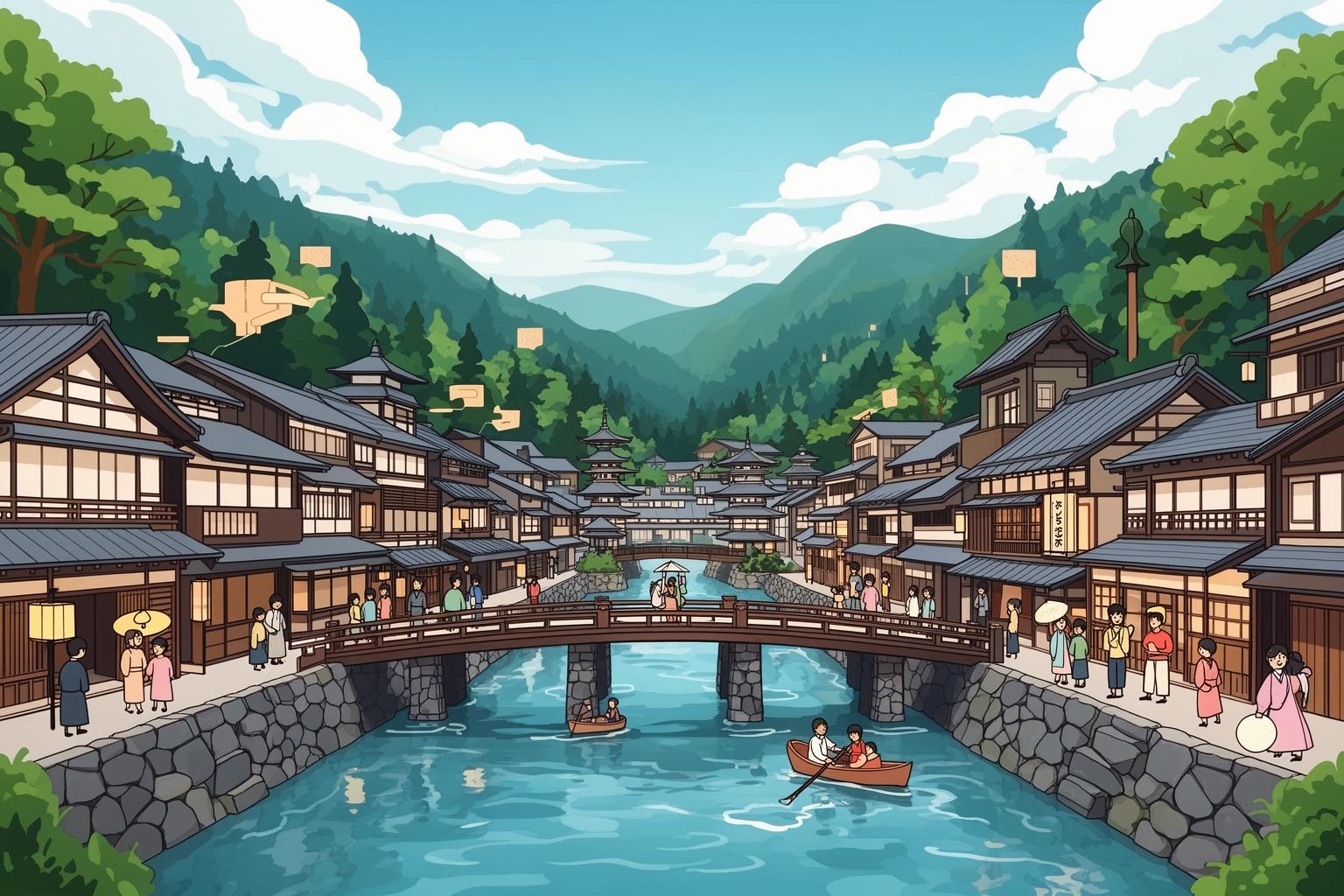
The very heart of Kinosaki Onsen lies in its distinctive bathing culture, a tradition called sotoyu meguri, or the pilgrimage to the outer baths. When you check into your ryokan (traditional inn), you become more than just a guest; you are granted honorary citizenship in this bathing community. Evidence of this is the yumepa, a digital pass that provides unlimited access to all seven of Kinosaki’s famed public onsen. Another part of your new identity is the attire: a crisp cotton yukata paired with wooden geta. Watching everyone—from children to elders, locals to tourists—strolling the streets in this dress creates a lovely, cohesive atmosphere. It erases the boundaries of the outside world, fostering a community united by shared relaxation and warmth. This custom deeply resonates with Daoist ideals of simplicity and returning to nature, setting aside the complexities of contemporary fashion for a uniform that is both graceful and elemental.
The Seven Mystical Bathhouses
Each of the seven bathhouses possesses a unique character, architecture, and legend, making the sotoyu meguri a voyage of discovery. Your pilgrimage might begin at Kouno-yu, the town’s oldest bath. Legend says an Oriental White Stork was seen healing its injured leg in these waters, revealing the spring’s miraculous powers. Bathing here feels like stepping back in time. The outdoor bath is nestled in a quiet town corner, surrounded by lush greenery, with an atmosphere steeped in serene reverence for the history that fills the air.
Next, you might visit Mandara-yu, whose name and facade recall a Buddhist temple. The spring is said to have emerged after a holy priest, Dochi Shonin, prayed for a thousand days to help the local people. This bath offers a more reflective experience, featuring a unique outdoor ceramic barrel bath where you can sit wrapped in warm, mineral-rich water, gazing skyward. It is a meditative soak that invites quiet contemplation. Then there is Goshono-yu, the “imperial palace bath,” designed in the style of the Kyoto Imperial Palace. Its grand cypress-paneled interior and dramatic waterfall flowing into the outdoor pool create a truly majestic experience. The high ceilings and large glass windows connect you with the forest just outside, making you feel like royalty communing with nature.
Satono-yu, located adjacent to the train station, offers a more modern and panoramic experience. Its top-floor outdoor bath gives sweeping views of the surrounding mountains and town below, an ideal spot to watch the sunset paint the sky. Ichino-yu, with its distinctive kabuki theater-style facade, is said to bring good fortune and was once lauded by a feudal-era doctor as the best in Japan. Its highlight is a cave bath carved from natural rock, providing a primal, sheltered sensation as steam envelops you. Jizo-yu, a local favorite, is recognized by its lantern-like hexagonal windows and is believed to grant safety to families. Yanagi-yu, the smallest and most quaint of the seven, is crafted from fragrant cypress and is reputed to promote fertility and safe childbirth. Its waters are known to be the hottest, offering a quick, invigorating dip. The act of moving from one bath to another, experiencing the varied textures of the water and embracing the unique stories of each, forms the core narrative of any visit to Kinosaki.
A Literary Pilgrimage: In the Footsteps of Shiga Naoya
While the onsen are the heart of the town, its soul is rooted in literature. Kinosaki Onsen is closely associated with Naoya Shiga, one of the foremost masters of 20th-century Japanese fiction. In 1913, after being struck by a train in Tokyo, Shiga came to Kinosaki to recover from his serious injuries. His three-week stay served as the basis for his seminal short story, Kinosaki nite (“At Kinosaki”). This work is a masterpiece of the “I-novel” genre, a deeply personal and introspective style where the author’s own experiences are central to the narrative. Shiga’s story does not revolve around dramatic events but focuses on quiet observation and profound reflection on life, death, and the delicate balance of nature.
The Birth of “At Kinosaki”
During his recovery, Shiga took slow, meditative walks through the town, observing the world with a heightened awareness of his own mortality. He noticed a dead bee, carefully describing its final moments and the stillness of its body. He saw a rat struggling for its life after being speared by a child, experiencing a troubling mix of revulsion and empathy. He also encountered a small newt, which he unintentionally killed with a stone, feeling a sudden connection to life’s fragility. These three seemingly minor encounters with death, set against the life-giving warmth of the onsen, compelled him to confront his own near-death experience. Kinosaki became the stage for this existential drama. The quiet streets, the flowing river, and the steam rising from the ground all served as a backdrop for his internal reflections. The story is not merely set in Kinosaki; it is Kinosaki itself. The town’s calm, observant character is echoed in Shiga’s sparse, precise prose. Reading his work is to grasp the spirit of this place on a far deeper level.
Tracing the Narrative
A visit to Kinosaki offers the unique opportunity to literally walk through the pages of a book. You can stand on the bridges over the Otani River, as Shiga did, and reflect on the flow of life. You can follow the trails extending from town into the forested hills, imagining his contemplative strolls. For those wishing to explore further, the Kinosaki Bungeikan (Literary Museum) is a must-visit. This thoughtfully curated museum honors the writers and artists inspired by the town. A significant portion is dedicated to Shiga Naoya, featuring early editions of his works, personal letters, and photographs that bring his stay here to life. The museum offers context, explaining how Kinosaki’s landscape—its inns, its river, and its creatures—influenced his literary voice. It is a tranquil, reflective space that deepens your appreciation of the town’s cultural importance, making your own walks feel like a continuation of Shiga’s journey.
Beyond the Baths: Savoring Kinosaki’s Delights
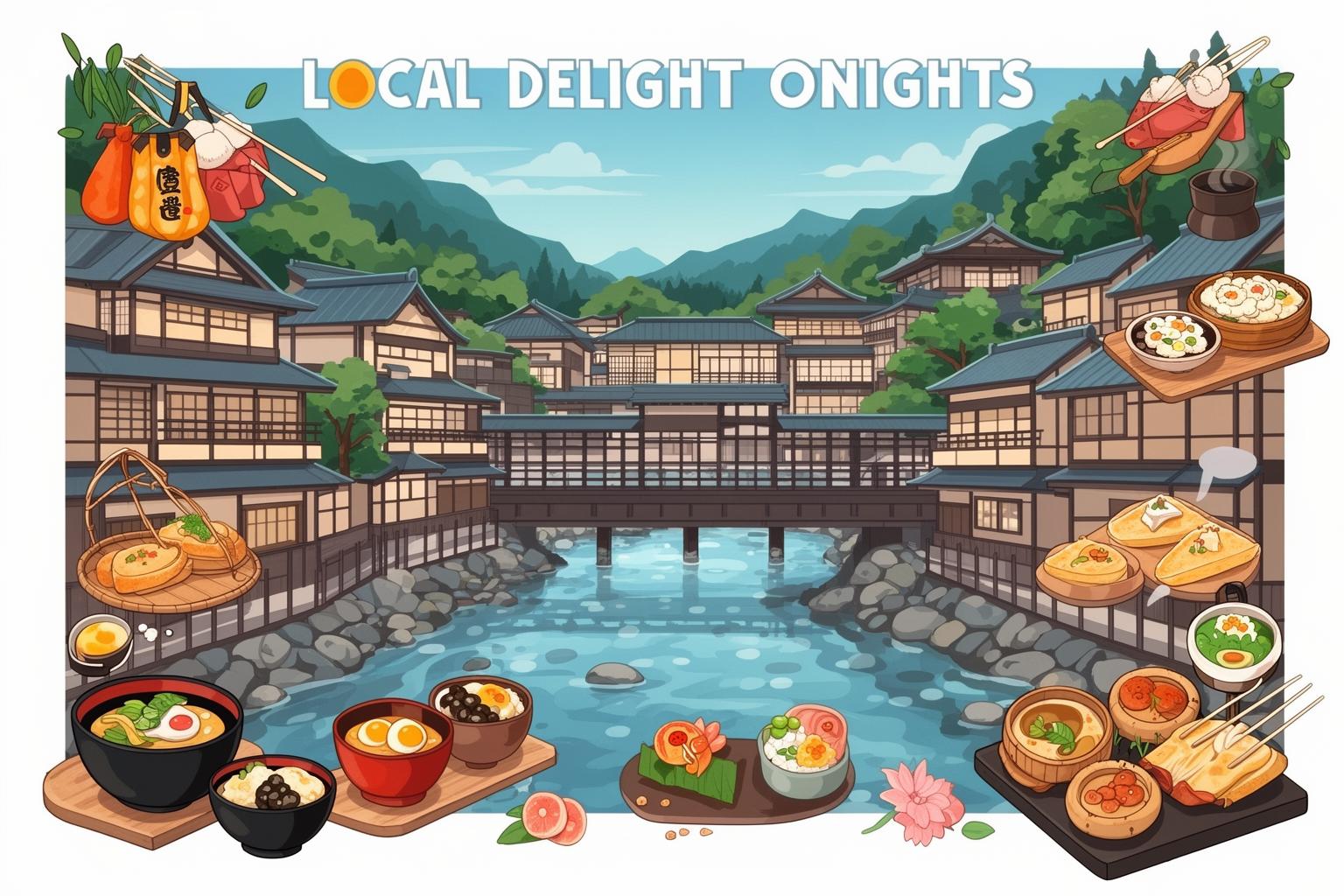
Life in Kinosaki centers around the onsen, yet it is enlivened by moments of culinary delight and natural beauty. The town provides a sensory feast that goes well beyond its restorative waters. The daily rhythm—a morning soak, a midday walk, an afternoon nap, and an evening bath—is enhanced by the joy of tasting the region’s remarkable local produce.
A Culinary Journey
Kinosaki Onsen, situated in the Tajima region of Hyogo Prefecture, is famed for its exceptional cuisine. From November to March, the town becomes a haven for crab enthusiasts. The highlight is the Matsuba crab, a male snow crab prized for its sweet and delicate meat. Staying at a ryokan during this period typically includes an impressive multi-course kaiseki dinner centered on this local specialty. The crab might be served as sashimi, so fresh it melts on the tongue; grilled to release a smoky aroma; boiled to enjoy its pure flavor; and finally, in a rich hot pot called kani-suki, with the leftover broth used to create a savory rice porridge, zosui. Another prized local ingredient is Tajima beef, the legendary breed that is the source of the world-renowned Kobe beef. Many eateries and inns serve this exquisitely marbled beef, often as steak, in a sukiyaki hot pot, or as shabu-shabu. Beyond these refined meals, simple pleasures abound. Shops offer freshly steamed buns filled with Tajima beef, creamy soft-serve ice cream made from local milk, and craft beers brewed in the area. A quintessential Kinosaki experience is making your own onsen tamago—eggs slow-cooked to a perfect custard-like texture in the naturally hot spring water. You buy raw eggs from a local shop, place them in a net, and submerge them in a designated public spring—a simple, yet deeply rewarding ritual.
Exploring the Periphery
When you want a break from bathing, a ride on the Kinosaki Onsen Ropeway presents a breathtaking new view. The cable car ascends Mount Daishi’s slope, unveiling a stunning panorama of the town nestled in the valley, the winding Maruyama River, and the distant Sea of Japan. The summit offers spectacular views, especially on a clear day. Midway up the mountain stands Onsenji Temple, a historic site dedicated to the Buddhist priest Dochi Shonin, who, according to legend, founded Kinosaki Onsen. The temple has long been the town’s spiritual protector; for centuries, visitors were required to pray here before entering the baths. Today, it remains a serene place, rich in history and ambiance. Strolling its quiet grounds, surrounded by ancient trees, provides a peaceful moment and a deeper connection to the town’s origins. The hike down the mountain via a forested path is a wonderful way to soak in the natural beauty enveloping Kinosaki.
Practical Guidance for Your Kinosaki Story
Part of Kinosaki’s appeal lies in its accessibility and ease of getting around. It is a destination crafted for relaxation from the moment you arrive. With a bit of preparation, your journey into this living story can flow as smoothly as the Otani River.
Getting There and Getting Around
Kinosaki Onsen is easily reached by train from major centers in the Kansai region. The most direct options are the JR Limited Express Hamakaze from Osaka or the Limited Express Kounotori from Shin-Osaka or Kyoto. The trip takes about two and a half to three hours and offers a scenic journey through the Japanese countryside. This route is fully covered by the Japan Rail Pass, making it a convenient addition to a broader travel plan. Once you arrive at Kinosaki Onsen Station, you’ll find yourself right at the edge of the main town. The charm of Kinosaki lies in its compactness; the entire onsen district is wonderfully walkable. The willow-lined river, the seven public baths, shops, and restaurants are all a short, pleasant stroll from each other. Leave your heavy luggage at your inn and embrace the town’s pedestrian-friendly nature. Walking, hearing the sound of your geta on the pavement, is an essential part of the experience.
The Art of the Ryokan Stay
To truly experience Kinosaki’s culture, staying in a traditional ryokan is a must. These inns offer more than just lodging; they provide an experience of Japanese hospitality, or omotenashi. Upon arrival, you will exchange your shoes for slippers and be guided to a room with fragrant tatami mats, sliding paper screens, and a low table where you’ll be served welcoming tea. Your bedding will be a comfortable futon, laid out for you in the evening by the inn staff. The highlight of a ryokan stay is often the kaiseki dinner, a carefully prepared multi-course meal that showcases seasonal, local ingredients with artistic presentation. Breakfast typically consists of a traditional Japanese set meal, including grilled fish, rice, miso soup, and assorted small side dishes. Your ryokan will provide the essential yukata, geta, and the yumepa pass for hopping between onsen. Kinosaki offers a wide range of inns, from historic, family-run ones to larger, modern establishments. It’s strongly recommended to book your accommodation well in advance, especially if visiting during peak times such as the winter crab season or the spring cherry blossom bloom.
Onsen Etiquette for First-Timers
The idea of a public bath may feel intimidating for newcomers, but the process is straightforward and the atmosphere welcoming. In Kinosaki, you’ll notice a relaxed and friendly environment. An important note for international visitors is that Kinosaki Onsen is notably tattoo-friendly, a rarity in Japan where tattoos often restrict onsen access. This makes it an exceptionally inclusive destination. Before entering the bath, you must wash thoroughly. Washing areas are equipped with stools, faucets, and soap. Cleanse and rinse your entire body before stepping into the communal water. The small towel provided is for modesty while walking around and for washing, but it should never be placed in the bathwater. You can rest it on your head, as many Japanese do, or leave it on the side of the tub. The onsen is for soaking, not swimming. Find a comfortable spot, relax, and let the mineral water work its magic. Remember to stay well hydrated before and after bathing. Following these simple guidelines ensures a pleasant and respectful experience for everyone.
The Rhythmic Heartbeat of Kinosaki
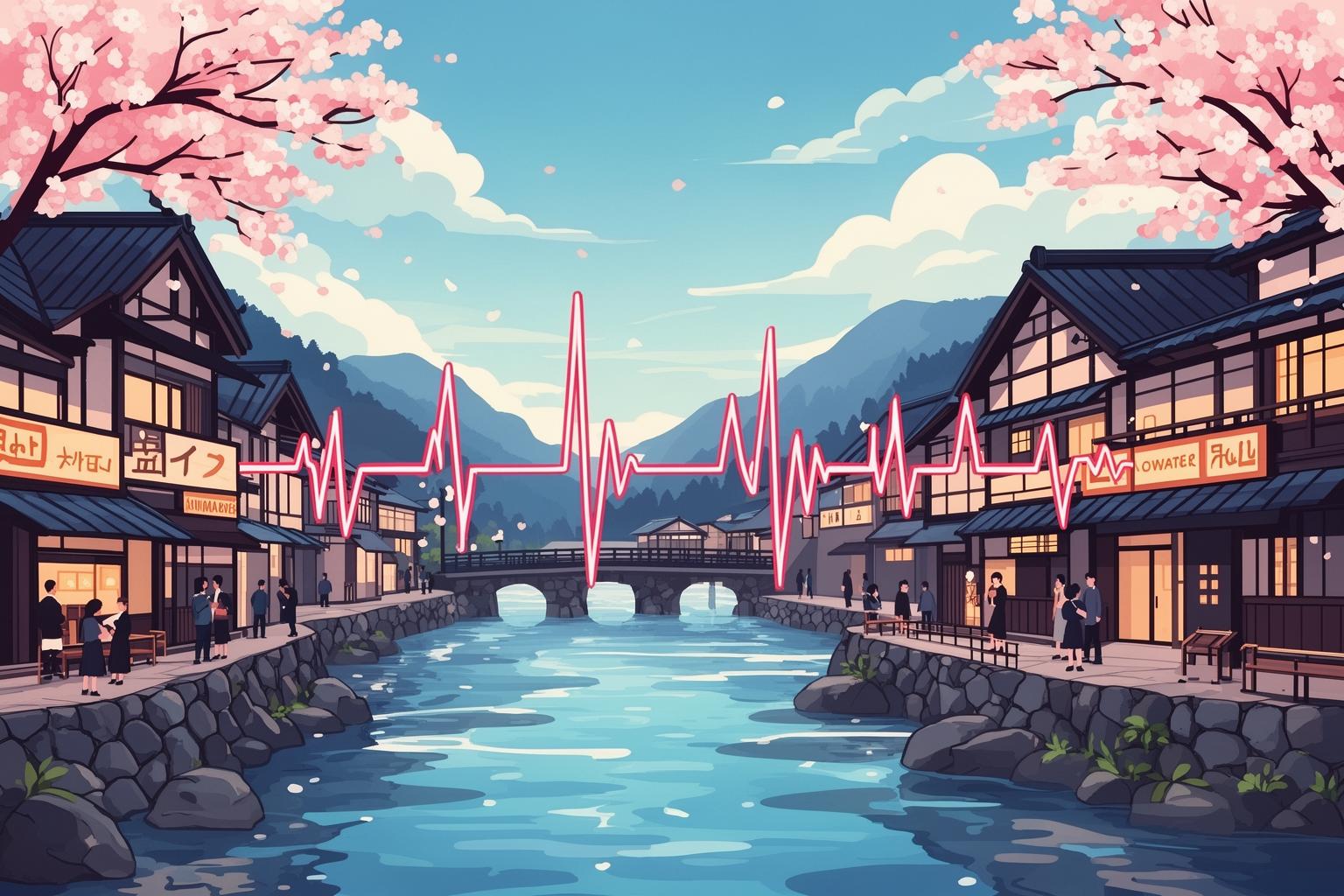
To truly grasp Kinosaki, you need to attune yourself to its rhythm. This rhythm shifts throughout the day. In the early morning, a gentle silence prevails, interrupted only by the sound of the river and the first few pairs of geta making their way for a pre-breakfast soak. By afternoon, the streets come alive with the cheerful clatter of sandals as visitors and locals go about their rounds, stopping by shops for a snack between baths. But it is at dusk that Kinosaki reveals its true magic. Lanterns hanging along the river and outside inns begin to glow, casting a warm, nostalgic light on the old wooden buildings. The willows turn into soft silhouettes against the darkening sky, while laughter and conversation drift from open doorways. Steam rises from the river in ethereal wisps, blurring the line between reality and dream. This is the essence of the Kinosaki experience—a timeless, dreamlike atmosphere that feels both ancient and vibrant.
A Town in Harmony
A profound sense of harmony pervades this place. The town was established around the water flowing from the earth, and its entire culture expresses gratitude for this gift. The architecture engages in a dialogue with the natural landscape. The people move with a shared intention of rest and renewal. This is a place that feels deeply connected—not only through its community but also through its relationship with the environment. It stands as a living example of a philosophy that views health, nature, and spirit as intertwined, a concept that resonates widely across East Asian cultures. Spending time here serves as a reminder of the power of simplicity and the importance of creating spaces that nurture both body and soul.
An Invitation to Write Your Own Chapter
Kinosaki Onsen is more than just a destination; it’s an immersive storybook inviting you to step inside. It offers a rare chance to disconnect from the hectic pace of modern life and reconnect with a more fundamental rhythm. Whether you seek the healing waters, follow the footsteps of a literary giant, savor exquisite local cuisine, or simply desire a moment of deep peace, Kinosaki delivers. It encourages you to slow down, notice the small details, feel the warmth on your skin, and listen to the gentle clip-clop of your own footsteps along its timeless streets. Just as Naoya Shiga found his story in the quiet reflection on life and death by the Otani River, you might also discover a moment of clarity or a fresh perspective. Leave your shoes and worries at the door, slip into the simple elegance of a yukata, and write your own chapter in the tale of Kinosaki Onsen. The page awaits.