
There are authors you read, and then there are authors you feel. Osamu Dazai, born Shuji Tsushima, belongs profoundly to the latter. His words are not just stories; they are exposed nerves, confessions whispered from the darkest corners of the human heart. To read Dazai is to confront the beautiful, agonizing awkwardness of being alive, the desperate search for connection, and the quiet fear of disqualification from the human race. His life, as turbulent and tragic as his prose, is inseparable from the landscapes that cradled his genius and ultimately witnessed his demise. To truly understand him, one must walk where he walked. This journey is a pilgrimage of two halves, a tale of two vastly different worlds that forged one of Japan’s most iconic literary figures: the cerebral, modern suburbs of Mitaka in Tokyo, and the raw, snow-swept expanse of his homeland, Tsugaru, in the far north. It’s a path that traces the trajectory of a life lived with brutal honesty, a journey from the gilded cage of his birth to the quiet suburban street where his story reached its final, heartbreaking punctuation. We begin where his career blossomed and his life concluded, in the deceptively peaceful city of Mitaka, a place where cherry blossoms bloom over waters that hold the deepest secrets.
For a different perspective on a literary journey through Japan, consider exploring the Japan of Ryunosuke Akutagawa.
The Mitaka Years: A Canvas of Creation and Despair
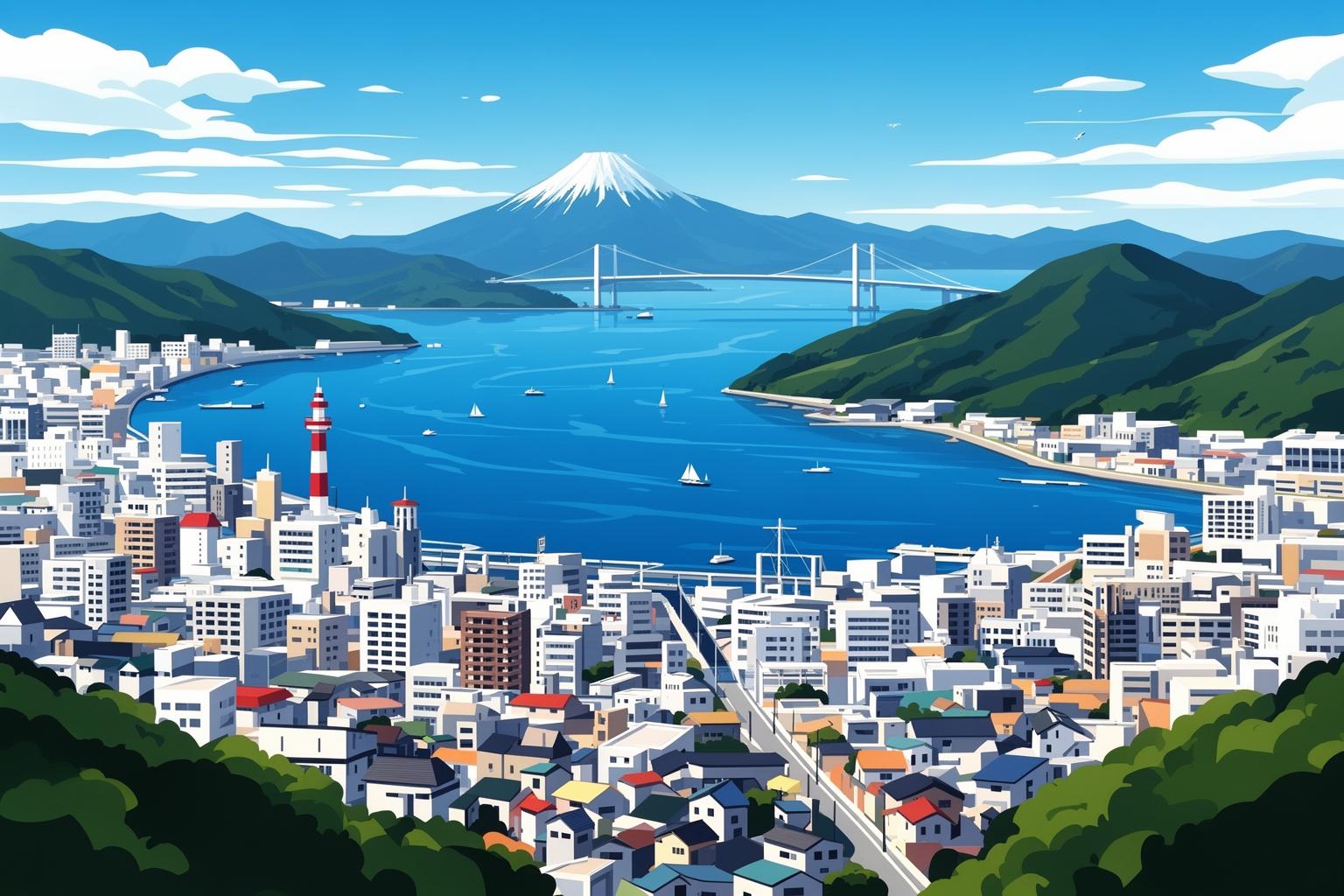
Mitaka, situated on the western fringe of the Tokyo metropolis, feels worlds apart from the electric buzz of Shinjuku or Shibuya. It is a place of tranquil residential streets, verdant parks, and a strong sense of Showa-era nostalgia. For Osamu Dazai, this city was both his sanctuary and his prison from 1939 until his death in 1948. Here, in a small, modest home, he wrote some of his most influential works, including “The Setting Sun” and the hauntingly intimate “No Longer Human.” Strolling through Mitaka today is like peeling back time itself, discovering traces of his presence in the rustling leaves along the canal and in the quiet reverence of those who continue to pay their respects.
A Reflective Walk Through Inokashira Park
At the heart of this literary landscape lies Inokashira Park. This expansive green haven straddles the boundary between Mitaka and the fashionable neighborhood of Kichijoji. The park is renowned for its peaceful central pond, where couples and families glide on colorful swan boats beneath the shadows of weeping willows and stunning cherry trees. In spring, the air is thick with the sweet fragrance of sakura blossoms, their petals settling to form a delicate pink carpet on the water’s surface. Come autumn, the park bursts into a blaze of crimson and gold, with the crisp air carrying scents of woodsmoke and roasted sweet potatoes from nearby stalls. This was Dazai’s backyard, his daily walking ground. It’s easy to imagine him here, a solitary figure in a trench coat, cigarette in hand, pacing the lake’s edge. He observed the lovers in their boats, children chasing pigeons, and salarymen resting on benches, absorbing the quiet dramas of daily life that would later emerge in his writing, filtered through his distinctive lens of alienation and longing. To walk here is to share a view he knew intimately, to feel the same gentle breeze, and witness the same seasonal cycle that framed his most intense period of creativity and inner conflict. It’s a beautiful place, yet knowing its connection to Dazai adds a layer of melancholy—a bittersweet awareness of the fragile happiness it seems to offer.
The Sobering Presence of the Tamagawa Aqueduct
Just a short walk from the southern edge of Mitaka Station brings you to a more somber landmark: the Tamagawa Josui, or Tamagawa Aqueduct. This narrow, man-made waterway, lined with a lush green footpath, weaves through quiet residential neighborhoods. The water flows gently and almost silently beneath a canopy of cherry and zelkova trees. It is a peaceful, idyllic spot favored by locals for jogging and leisurely walks. Still, it bears a dark and heavy significance. This is where, on a rain-slicked night in June 1948, Osamu Dazai and his lover, Tomie Yamazaki, ended their lives. The stark contrast between the aqueduct’s tranquil beauty today and the desperate act that took place here is profoundly moving. Walking along its banks, you sense a tangible shift in the atmosphere. The sunlight filtering through the leaves feels softer, the birdsong more distant. It is not a typical tourist destination but a place for quiet reflection. Here, the abstract tragedy of his life story becomes a concrete, geographical reality. As you gaze into the slow-moving water, you try to grasp the depth of despair that led him to his final choice. It is a place that calls for silence, respect, and a moment of empathy for the tormented soul who saw this as his only escape.
Zenrin-ji Temple: His Last Resting Place
Your journey through Mitaka concludes at Zenrin-ji, a peaceful Buddhist temple complex a short walk from the aqueduct. Its grounds are pristine, adorned with ancient trees, moss-covered stones, and the subtle scent of incense lingering in the air. Nestled in a quiet corner of the temple cemetery is Osamu Dazai’s grave. His final resting place is surprisingly unassuming—a simple stone marker bearing his pen name. Poetically, it lies just across from the grave of another literary giant, Mori Ogai, an author Dazai greatly admired. What stands out about this site is that it is never truly empty. A constant, quiet stream of visitors comes to pay their respects, leaving not only flowers and incense but also personal offerings: a can of his favorite beer, a pack of cigarettes, or a single perfect cherry. This speaks to the enduring power of his work. His readers do not merely admire him; they feel they know him and return here to continue a conversation that began on the printed page. The most significant day to visit is June 19th, his birthday, which also marks the anniversary of the discovery of his body. Known as Otoki, the Cherry Memorial, this day draws fans from across Japan to the temple for a solemn ceremony—a beautiful and poignant tribute affirming that his voice continues to resonate decades after it fell silent.
Practical Tips for Visiting Mitaka
Visiting Dazai’s Mitaka is remarkably easy. From Shinjuku Station in central Tokyo, the JR Chuo Line will take you to Mitaka Station in about twenty minutes. The area is best explored on foot, allowing you to soak in the suburban atmosphere at a relaxed pace. A logical route is to start at Mitaka Station’s south exit, walk toward the Tamagawa Aqueduct, then head to Zenrin-ji Temple. From there, you can loop back to Inokashira Park, perhaps finishing your day in the charming cafes and vintage shops of nearby Kichijoji. The trip is enjoyable in any season, though spring and autumn showcase the area’s most spectacular natural beauty. For those deeply interested in his life, planning a visit around the Otoki ceremony in June offers a rare chance to witness the community of admirers his work continues to inspire.
Journey to the North: The Soul of Tsugaru
Leaving Mitaka to journey northward to the Tsugaru Peninsula in Aomori Prefecture is like traveling back in time—not only through Dazai’s life but in the broader story of Japan itself. This land is marked by stark beauty, with long, harsh winters that cloak the landscape in a silent, white embrace, and brief, vibrant summers when apple orchards burst with fruit. It is Dazai’s primordial landscape, the place that shaped his identity, his guilt, and his profound sense of origin. Born into a wealthy and influential landowning family, he enjoyed privilege yet carried a lifelong burden of feeling like a fraud, a ‘clown’ performing a role he never truly fit. The spirit of Tsugaru—with its stubborn pride, deep melancholy, and raw, untamed nature—courses through his literature.
Shayokan: The House of the Setting Sun
Located in Kanagi, now part of Goshogawara city, stands Shayokan, the birthplace of Shuji Tsushima. To call it merely a house does it a disservice; this magnificent, sprawling mansion is a testament to the Tsushima family’s vast wealth and status. Erected in 1907 from fragrant hiba cypress wood, the two-story building, with its distinctive red-tiled roof and imposing storehouses, resembles more a feudal lord’s residence than a family home. Today, it serves as the Osamu Dazai Memorial Museum, and crossing its grand threshold feels like stepping into the pages of “The Setting Sun.” The sheer scale is awe-inspiring as you tread across cool, earthen floors and wander through a labyrinth of eighteen tatami rooms, each separated by intricately painted sliding screens. You encounter the formal reception rooms where his politically prominent father would host guests and the expansive, airy areas where numerous children of the household lived and played. Yet for Dazai, this grandeur bred profound alienation; raised mostly by servants and distanced from his busy parents, he felt like a stranger in his own home. As you explore these rooms, the presence of the lonely boy retreating into books and imagination—the nascent artist’s inner conflict—seems palpable. The house is both a beautiful prison and a key to understanding the guilt and self-loathing driving much of his writing.
The Tsugaru Railway and the Whispers of “Return to Tsugaru”
No exploration of Dazai’s homeland is complete without riding the Tsugaru Railway, a charming local line winding through the peninsula’s heart, linking Goshogawara to the northern tip at Nakasato. In winter, it transforms into the Stove Train, or Stove Ressha, where inside vintage carriages, pot-bellied stoves glow with red-hot coals. Passengers gather around these for warmth, while vendors stroll the aisles selling dried squid and sake, which you can grill atop the stove. The air fills with a smoky, savory aroma as the train rattles through a stark white landscape. Beyond frosted windows glide snow-covered apple orchards and lone farmhouses, often framed by the majestic peak of Mount Iwaki, known as the ‘Tsugaru Fuji.’ This journey vividly evokes Dazai’s travelogue, “Return to Tsugaru,” written near the end of his life when he revisited his homeland to reconnect with its people and places. Riding the Stove Train, you share in that same nostalgia and introspection—a slow, meditative passage inviting you to see the landscape not as a tourist but as a deeply resonant part of his soul.
Exploring Dazai’s Tsugaru
The pilgrimage extends beyond Shayokan. Ashino Park, a stop along the Tsugaru Railway line, was another favorite childhood retreat of Dazai’s. Famous for its over 1,500 cherry trees that blossom into a stunning pink tunnel in late spring, the park also hosts a bronze statue of Dazai, capturing his contemplative mood. Nearby, the old Ashino Park Station building has been preserved as a retro-style café, an ideal spot to enjoy coffee with one of his books. For a vibrant dose of local culture, the Tachineputa Museum in Goshogawara is essential. It displays the colossal, multi-story illuminated floats featured in regional summer festivals—a fiery, passionate spectacle that contrasts sharply with the quiet introspection of Dazai’s world yet shares the resilient spirit of Tsugaru.
The Literary Echo: Feeling Dazai Today
A pilgrimage honoring an author involves more than simply visiting locations on a map. It is an act of emotional and intellectual connection. It means standing in a place and sensing the narrative of a life becoming clear. After walking the path by the Tamagawa Aqueduct, the final, desperate chapters of “No Longer Human” resonate with a new, devastating intensity. After exploring the cavernous, empty rooms of Shayokan, the decaying aristocratic family in “The Setting Sun” feels less like a fictional creation and more like a deeply personal elegy for his own past.
Beyond the Landmarks: Discovering the Spirit
The true magic of this journey is found in the small moments. It is sitting quietly on a bench in Inokashira Park, opening a collection of his short stories, and reading a passage as swan boats drift past. It is standing on the platform at Kanagi Station, feeling the cold northern wind, and imagining a young Dazai boarding a train to Tokyo, beginning the life that would both make and break him. These places are infused with his memory. They serve not merely as backdrops but as active participants in his story. By visiting them, you become more than an observer; you step into the narrative itself. You begin to grasp how the oppressive stillness of a wealthy rural home and the anxious, anonymous energy of Tokyo combined to cultivate such a unique and powerful literary voice. The journey transforms your relationship with his work, changing it from something you read into something you have lived, however briefly.
The Modern Pilgrim’s Mindset
It is crucial to undertake this journey with the appropriate mindset. This is not a typical sightseeing tour filled with cheerful photo opportunities. Rather, it is a somber and meditative experience. Places like the Tamagawa Aqueduct and his grave at Zenrin-ji Temple demand quiet reverence. This pilgrimage leads into a landscape of melancholy, a central emotion in Dazai’s work. To fully appreciate the experience, one must be willing to embrace that feeling. Dazai’s lasting appeal lies in his refusal to shy away from the painful, awkward, and often lonely facets of human existence. He gives voice to the sense of being an outsider, a ‘clown’ struggling to perform for an audience he does not understand. This pilgrimage offers a chance to connect with that raw vulnerability, to recognize that the landscapes that shaped him were both hauntingly beautiful and profoundly lonely, just like the man himself.
Practicalities for a Dual Pilgrimage
Embarking on a journey to both Mitaka and Tsugaru requires some planning due to the considerable distance between them. Yet, it is precisely this contrast that makes the pilgrimage so fulfilling.
Connecting Mitaka and Tsugaru
The quickest way to reach the Tsugaru region from Tokyo is by taking the Tohoku Shinkansen, or bullet train. The trip from Tokyo Station to Shin-Aomori Station lasts just over three hours. From Shin-Aomori, you can transfer to local JR lines to reach Goshogawara, the gateway to Dazai’s homeland. The journey itself is part of the attraction, as you watch the dense urban landscape of Tokyo gradually transform into the fields, mountains, and rugged coastline of northern Honshu. A suggested itinerary is to spend a full day exploring Mitaka, then catch an early morning Shinkansen to Aomori for a two-day, one-night stay to fully soak in the atmosphere of Tsugaru—perhaps lodging in a local inn to enjoy the region’s warm hospitality and cuisine.
What to Bring and When to Go
What you pack will largely depend on the season. While Tokyo experiences relatively mild winters, Aomori is among the snowiest places on Earth. If you plan a winter visit to ride the Stove Train and admire the stark beauty of the snow-covered landscape, be sure to bring thermal wear, waterproof boots, and heavy winter gear. Spring is an excellent time to visit both locations, though cherry blossoms bloom much later in Aomori (typically late April to early May) than in Tokyo (late March to early April). Autumn showcases vibrant colors in both Inokashira Park and the hills of Tsugaru. For the most dedicated fans, a mid-June visit offers the chance to participate in the Otoki ceremony in Mitaka, a truly unique and heartfelt experience that vividly highlights his life and legacy.
A Parting Word on a Timeless Author
To follow in the footsteps of Osamu Dazai is to recognize that a person’s geography is intertwined with their biography. His spirit extends beyond the pages of his books; it is engraved in the quiet suburban streets of Mitaka and carried on the cold, salty winds of the Tsugaru Strait. This journey is more than a literary pilgrimage; it is a delve into the dual nature of a man caught between the modern and the traditional, between fame and obscurity, between a deep yearning for connection and a paralyzing fear of being truly known. He exposed his soul for the world to witness, and in these places, one can sense the faint, enduring warmth of that soul. The path he traveled was challenging, but by retracing it, we draw closer to understanding the man behind the legend, the universal truths he revealed, and the lasting reason why, long after his voice fell silent, we remain so deeply attuned.