
There is a peculiar, bittersweet feeling that haunts the modern soul—a phantom limb of memory for a person we have never met, a nostalgic ache for a place we have never been. It is the Japanese concept of mono no aware, the gentle sadness of passing things, but infused with a thread of profound, unexplainable connection. No piece of modern storytelling has captured this ethereal sensation quite like Makoto Shinkai’s 2016 masterpiece, Kimi no Na wa, or Your Name. The film swept across the globe, not just as an animated feature, but as a cultural phenomenon that resonated with a universal yearning for connection in a fragmented world. It tells the story of Taki, a high school boy navigating the dizzying urban sprawl of Tokyo, and Mitsuha, a girl living a quiet life in the fictional rural town of Itomori, who mysteriously begin to swap bodies. Their lives, separated by distance and something far more cosmic, become inextricably intertwined, a concept the film calls musubi—the braiding and twisting of time, tradition, and human bonds.
This powerful narrative has given rise to a modern form of pilgrimage, or seichi junrei, where fans travel to the real-world locations that inspired the film’s stunningly detailed backdrops. While Mitsuha’s Itomori is a composite of several locations, Taki’s Tokyo is a tangible, breathing entity, meticulously rendered and waiting to be explored. This journey is not merely about taking a photo for social media; it is about standing in the very spot where fiction and reality blur, feeling the emotional weight of a scene play out in the physical world. It is about understanding how a story can sanctify a space, turning an ordinary staircase or a bustling intersection into a landmark of shared emotion. This guide will walk you through the heart of Taki’s Tokyo, tracing his footsteps through the concrete canyons of Shinjuku and the quiet, sloping streets of Yotsuya, allowing you to experience the city through his—and Mitsuha’s—eyes. Here, in the world’s largest metropolis, you can find the intimate settings of a story that touched millions, and perhaps discover a connection you never knew you were searching for.
As you wander through Tokyo’s storied streets, you might also unearth the film’s deeper legacy through red string connections that entwine history and modern life.
The Heart of the Connection: Suga Shrine’s Iconic Steps
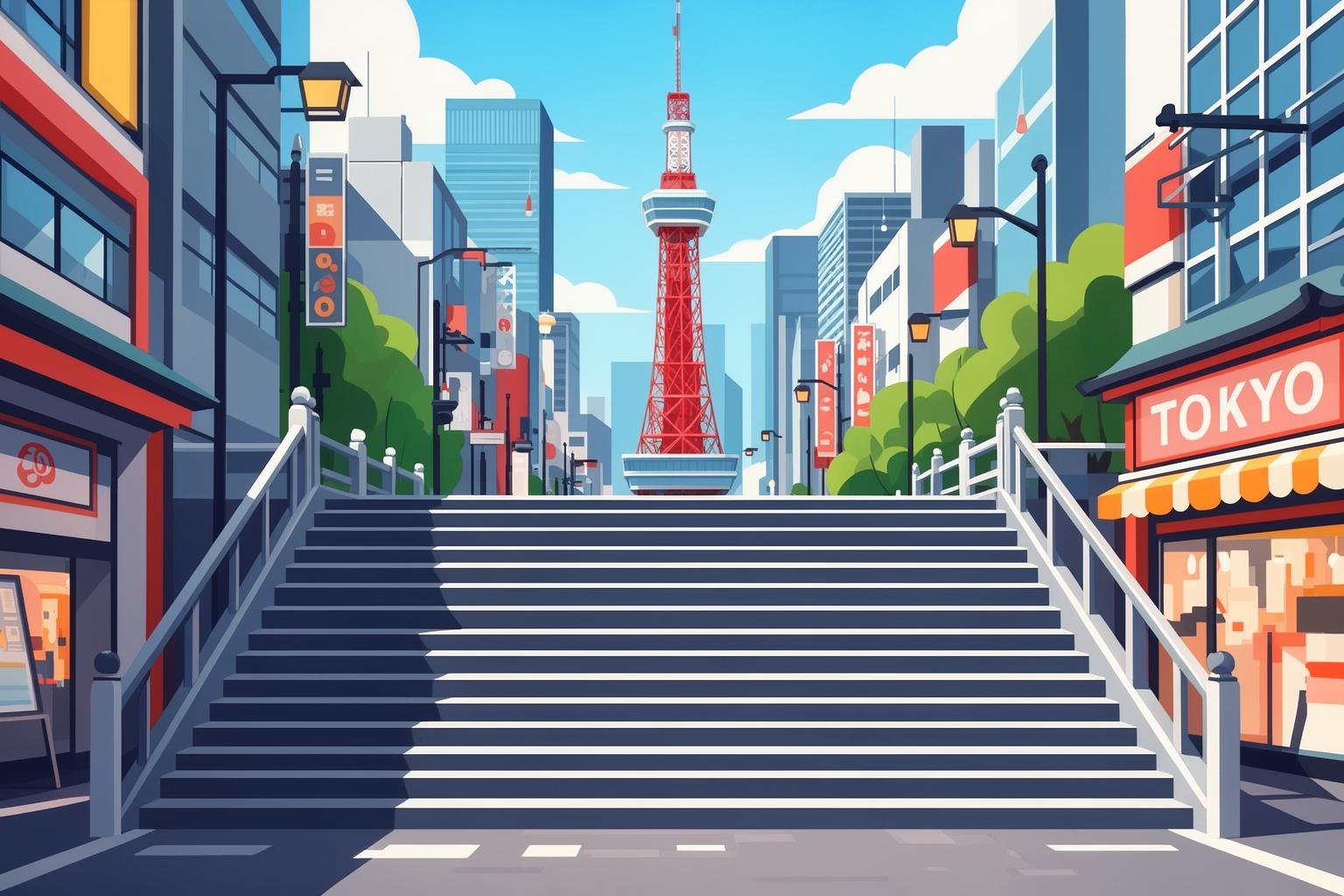
Every pilgrimage has its sacred core, the emotional peak where the journey’s meaning becomes clear. For fans of Your Name, that place is an unassuming staircase tucked away in a quiet residential area of Yotsuya. This is where the film’s breathtaking climax unfolds—the spot where, years after the comet’s fall and with their memories reduced to a persistent ache of longing, Taki and Mitsuha finally and miraculously reconnect. The scene is a masterful blend of tension and release, a moment that serves as both a beginning and an end. Standing on these steps, one can sense the lingering echo of their desperate question, “Your name is?” hanging in the air.
A Cinematic Climax in Everyday Yotsuya
Discovering the Suga Shrine stairs feels like uncovering a hidden secret. Leaving behind the bustling main streets, you wander through a maze of narrow lanes where Tokyo’s noise softens into a gentle murmur. The neighborhood is strikingly ordinary, filled with apartment buildings, small houses, and the quiet rhythms of daily life. This very ordinariness is what lends the location its power, grounding the film’s fantastical events in a tangible reality. Then, suddenly, as you turn a corner, the stairs come into view. The vibrant red handrails stand out sharply against the urban palette of grey concrete and lush greenery. The perspective is remarkably precise, a testament to Shinkai’s commitment to realism. In the distance, the skyline stretches out—the exact view Taki sees climbing up and Mitsuha descending. The atmosphere here is one of calm anticipation. Visitors often speak in hushed voices, sharing a silent understanding. They are more than tourists; they are pilgrims, united by a shared story. The air feels charged with a subtle magic, as if the boundary between the onscreen world and the one beneath your feet has grown wonderfully thin. It is a place to pause, breathe, and reflect on the invisible threads connecting us all.
Capturing Your Own Moment
Of course, every visitor wishes to capture their own version of the iconic movie poster shot. Doing so well requires some patience and timing. The stairs can get busy, especially on weekends and holidays, with fellow pilgrims waiting for their turn. For the best experience, try to visit on a weekday morning. The soft early light casts long shadows that enrich your photos. The low sun beautifully highlights the scene, making the red handrails stand out against the sky. Late afternoon offers a similar golden hour glow, equally stunning. Posing for the shot is an art itself—one person near the top, the other near the bottom, recreating their moment of meeting. Even solo visitors can capture the essence by focusing on details—the texture of the stone, the light filtering through the trees, the city view framed by the stairs. Be mindful of local residents; this is their home, so avoid loud noises or blocking pathways for those coming and going. While the stairs are the main draw, take a moment to visit Suga Shrine at the top. It’s a lovely, tranquil Shinto shrine offering a peaceful respite, adding a spiritual layer to the film’s themes of fate and tradition.
Tracing Taki’s Footsteps Through Shinjuku
If the stairs of Suga Shrine embody the emotional core of the story, then the expansive, ultra-modern Shinjuku district serves as its pulsating heart. This is Taki’s environment—a vibrant, sometimes overwhelming urban setting that starkly contrasts with Mitsuha’s tranquil mountain town. Shinjuku is a city within a city, a dizzying hub of commerce, entertainment, and transportation. Its towering skyscrapers shape the iconic skyline seen throughout the film, symbolizing both the ambition and anonymity of megacity life. Walking through Shinjuku is to immerse yourself in the energy that molded Taki, offering a glimpse into his fast-paced, metropolitan viewpoint.
The Urban Canvas of Shinjuku Station and Its Surroundings
Shinjuku Station, the busiest railway station worldwide, is a veritable river of humanity coursing through an intricate maze of platforms, tunnels, and exits. The film features shots of the station’s South Exit and nearby pedestrian bridges to convey the scale and tempo of Taki’s life. From one of these overpasses, you can watch the constant flow of trains—the JR Yamanote Line, the Chuo Line, the Narita Express—gliding in and out like silver serpents. The sheer density of people and movement is a spectacle itself. Here, you grasp the sensation of being a single, small piece within a vast, interconnected system—a core theme in the story. This is Taki’s daily world, one of fleeting encounters and missed opportunities, which makes his unique, profound connection with Mitsuha all the more moving. Exploring the station area reveals Shinjuku’s dual nature: the gleaming corporate towers on the west side and the vibrant, neon-lit entertainment district on the east. Both contribute to the rich visual tapestry Shinkai has masterfully recreated.
A View from the Top: The Tokyo Metropolitan Government Building
To truly understand the city Taki calls home, one must see it from above. While the film shows views from various fictional skyscrapers, the real Tokyo Metropolitan Government Building offers a comparable—and completely free—perspective. Situated a short walk from Shinjuku Station’s west exit, this architectural masterpiece by Kenzo Tange features twin observation decks on the 45th floor, soaring 202 meters high. The elevator offers a swift, silent ascent into the sky. From this vantage point, Tokyo spreads out in every direction. On a clear day, the view is breathtaking, stretching from the dense urban core to Mount Fuji’s distant silhouette. This panoramic scene perfectly encapsulates Taki’s world. You can spot intertwining train lines, ribbons of highways, and the endless skyline of buildings extending to the horizon. The view can make you feel both powerful and insignificant simultaneously. Gazing down at this vast urban expanse, it’s easy to imagine Taki sketching the cityscapes in his notebook, trying to capture the beauty and complexity of the place he knows—while somewhere in it, sensing the mysterious allure of a town he has yet to visit.
Cafe La Bohème: The Site of a Fateful Part-Time Job
An essential spot in Taki’s social life is the stylish Italian restaurant where he works part-time alongside his crush, the elegant Okudera-senpai. The real-life inspiration for this eatery is Cafe La Bohème Shinjuku Gyoen, located near one of Tokyo’s most beautiful parks. Stepping inside feels like entering a grand European villa, with high ceilings, dramatic chandeliers, a sprawling mural, and large windows flooding the space with natural light. The atmosphere is refined yet cozy—a far cry from a typical student job. It’s easy to see why Taki is drawn to this place, a refined oasis amid the city’s chaos. For fans, visiting the cafe is a must. You can sit down for a leisurely lunch of pasta or enjoy cake and coffee while soaking in the ambiance and picturing scenes from the film unfolding around you. It offers a delicious and immersive way to connect with Taki’s story. As a bonus, you can combine your visit with a stroll through the adjacent Shinjuku Gyoen National Garden—a stunning oasis offering peaceful respite and another beautiful facet of Tokyo life.
The Threads of Time: Deeper Connections and Hidden Details
The pilgrimage extends beyond the most famous locations. Makoto Shinkai intricately wove the fabric of Tokyo into nearly every frame of Taki’s story, and a closer look uncovers additional significant places that enrich the narrative with texture and meaning. Though these spots may be less crowded, they provide equally fulfilling experiences, allowing you to admire the remarkable attention to detail that makes the world of Your Name feel so vividly real.
The National Art Center, Roppongi: A Date with Okudera-senpai
One of the film’s most memorable and visually captivating scenes is Taki’s date with Okudera-senpai. Their afternoon of art and conversation is set at The National Art Center in Roppongi, one of Japan’s largest and most prominent art museums. Even before entering, the building itself is a work of art. Designed by Kisho Kurokawa, its flowing glass facade ripples like a wave, creating a dynamic interplay of light and shadow. Inside, the expansive, open atrium is interrupted by two massive inverted concrete cones. Perched atop one of these cones is the Salon de Thé ROND, the cafe where Taki and Okudera sit. You can visit this exact cafe, take a seat by the window, and look out at the same view. The experience feels surreal. The cafe appears to float within the vast space, offering a unique architectural perspective. Visiting the art center allows you to step directly into a scene that marks a turning point in Taki’s emotional growth—the moment he begins to realize that his feelings for Mitsuha go beyond a simple crush. The location is sophisticated and beautiful, reflecting the maturity of the film’s themes.
The Shinjuku Yunika Vision and the Pedestrian Scramble
No portrayal of modern Shinjuku would be complete without its iconic electronic billboards. Just outside the east exit of Shinjuku Station is the Yunika Vision, a cluster of three enormous high-definition screens that display advertisements, music videos, and news to the busy crowds below. This landmark features prominently in the film, illustrating the sensory overload of Taki’s surroundings. The continuous flow of information and entertainment flooding the public square serves as a striking contrast to the deeply private, almost telepathic, connection between Taki and Mitsuha. Beneath the screens lies one of Tokyo’s many “scramble” crossings, where pedestrians simultaneously cross the intersection from all directions. Standing in the heart of this organized chaos is a quintessential Tokyo experience. It captures the city’s energy—the sensation of being one soul amid millions, each person on their own path, yet all moving together in a complex, rhythmic dance. It is within this very anonymity that the miracle of Taki and Mitsuha finding each other becomes all the more extraordinary.
A Pilgrim’s Practical Guide: Navigating Your Journey
Embarking on a seichi junrei for Your Name is an immensely rewarding journey, but some planning can help make the experience smoother and more enjoyable. Tokyo’s vastness may feel overwhelming for a first-time visitor, yet its world-class public transportation and well-organized layout make getting between these iconic sites surprisingly easy.
Planning Your Route
A sensible way to organize your pilgrimage is to dedicate a day to exploring the Shinjuku and Yotsuya areas. A great place to start is Shinjuku Station. From there, begin on the west side by visiting the Tokyo Metropolitan Government Building for its panoramic views. Then, cross over to the east side to take in the energy of Yunika Vision and the nearby streets. It’s a pleasant walk from there to Cafe La Bohème and the tranquil Shinjuku Gyoen. After soaking in Shinjuku’s lively atmosphere, head to Yotsuya. The quickest route is the JR Chuo-Sobu Line from Shinjuku Station to Yotsuya Station, a journey of just a few minutes. From Yotsuya Station, it’s about a 10-15 minute walk through a quiet neighborhood to Suga Shrine. Alternatively, if you enjoy walking, the trek from Shinjuku Gyoen to Suga Shrine takes roughly 25-30 minutes and provides a lovely transition from the bustling commercial district to a peaceful residential area. Always keep a reliable navigation app like Google Maps handy, since the smaller streets can sometimes be tricky to navigate.
Etiquette and Respect
It’s important to remember that these cherished anime locations are not film sets but part of a living, breathing city where people reside and work. The staircase at Suga Shrine, in particular, is a public pathway in a quiet residential neighborhood. When visiting, be a respectful representative of the fan community. Speak softly, avoid lingering in large groups that block the way for residents, and take your photos quickly and efficiently. Never leave any trash behind. When at Suga Shrine itself, observe basic Shinto customs: bow once before passing through the torii gate at the entrance and perform a simple purification ritual at the temizuya (water basin) before approaching the main hall to pray. These small gestures of respect help ensure that these sites remain welcoming to pilgrims for years to come. The same respect applies to cafes and museums—you are a customer first and a pilgrim second. By being considerate, you honor both the story you cherish and the community that graciously hosts its real-world settings.
The Best Time to Weave Your Story
Tokyo is a city for all seasons, and your pilgrimage can be beautiful at any time of year. Spring, when cherry blossoms bloom in full glory, offers a stunning backdrop—especially in parks like Shinjuku Gyoen. However, it’s also peak tourist season, so expect larger crowds at all locations. Autumn brings crisp air and striking fall foliage, painting the city in vibrant reds and golds, which can be just as magical. For a quieter visit, consider going on a weekday rather than a weekend. The crowds in Shinjuku will be thinner, giving you a better chance for unobstructed photos at the Suga Shrine stairs. Don’t be discouraged by rain in the forecast. Overcast or drizzly days can actually enhance the mood, lending a cinematic, melancholic atmosphere to your photos—very much in the spirit of Makoto Shinkai’s signature weather scenes. Rain-slicked Shinjuku streets reflecting neon lights can be just as breathtaking as sunshine.
This pilgrimage through the world of Your Name is more than just sightseeing. It’s an exploration of the profound and often magical connection between art and life. Walking the same streets as Taki, seeing the city through his eyes, deepens your appreciation for the craft and vision that brought the story to life. It’s an opportunity to experience the emotional resonance of key moments in a tangible, physical way. Standing on that fateful staircase in Yotsuya, you are not just a visitor to Tokyo; you become part of a shared narrative, a thread in a global tapestry of fans bound by a story of longing, memory, and the unbreakable ties of musubi. Go forth and trace the threads of this beautiful tale, and perhaps, in doing so, you will write a new and unforgettable chapter in your own story.