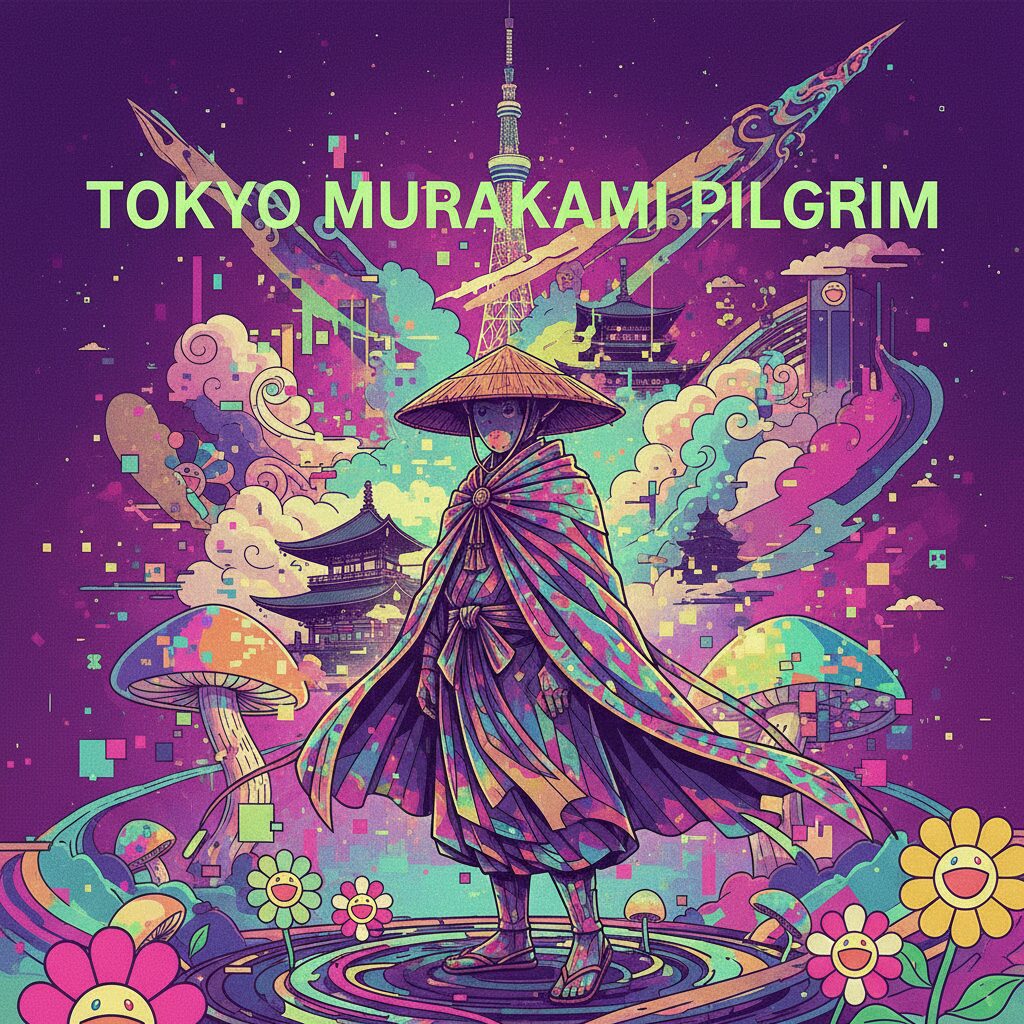
Tokyo, a city of a million stories, thrumming with a silent, electric energy. For countless readers around the globe, this metropolis isn’t just a place on a map; it’s a landscape of the mind, meticulously crafted by one of modern literature’s most iconic voices, Haruki Murakami. His Tokyo is a place where the mundane bleeds into the magical, where lonely protagonists cook spaghetti to the sound of classic jazz, where cats disappear and whisper prophecies, and where alternate realities exist just beyond the emergency exit of a highway. To walk through Tokyo with Murakami’s novels as your guide is to engage in a unique form of pilgrimage. It’s a quest not for relics, but for a feeling—a search for the quiet, surreal hum that vibrates just beneath the surface of the world’s most populous city. This journey is about finding the real-world anchors for his fantastical fiction, from the smoky jazz bars of Shinjuku to the sun-dappled running paths that fueled his creativity. It’s about stepping into the pages of Norwegian Wood, 1Q84, and The Wind-Up Bird Chronicle, and realizing that the strange, beautiful, and melancholic world he describes is, in fact, right here, waiting to be discovered down a quiet alleyway or on a late-night train. Prepare to peel back the layers of reality and explore the Tokyo that belongs to Haruki Murakami, a city that is as much a character as any talking cat or enigmatic woman with perfectly shaped ears.
For those enchanted by Tokyo’s layered allure, an evocative pilgrimage along ancient Kumano trails offers a reflective journey into Japan’s timeless spiritual legacy.
Shinjuku: Labyrinth of Neon and Nostalgia
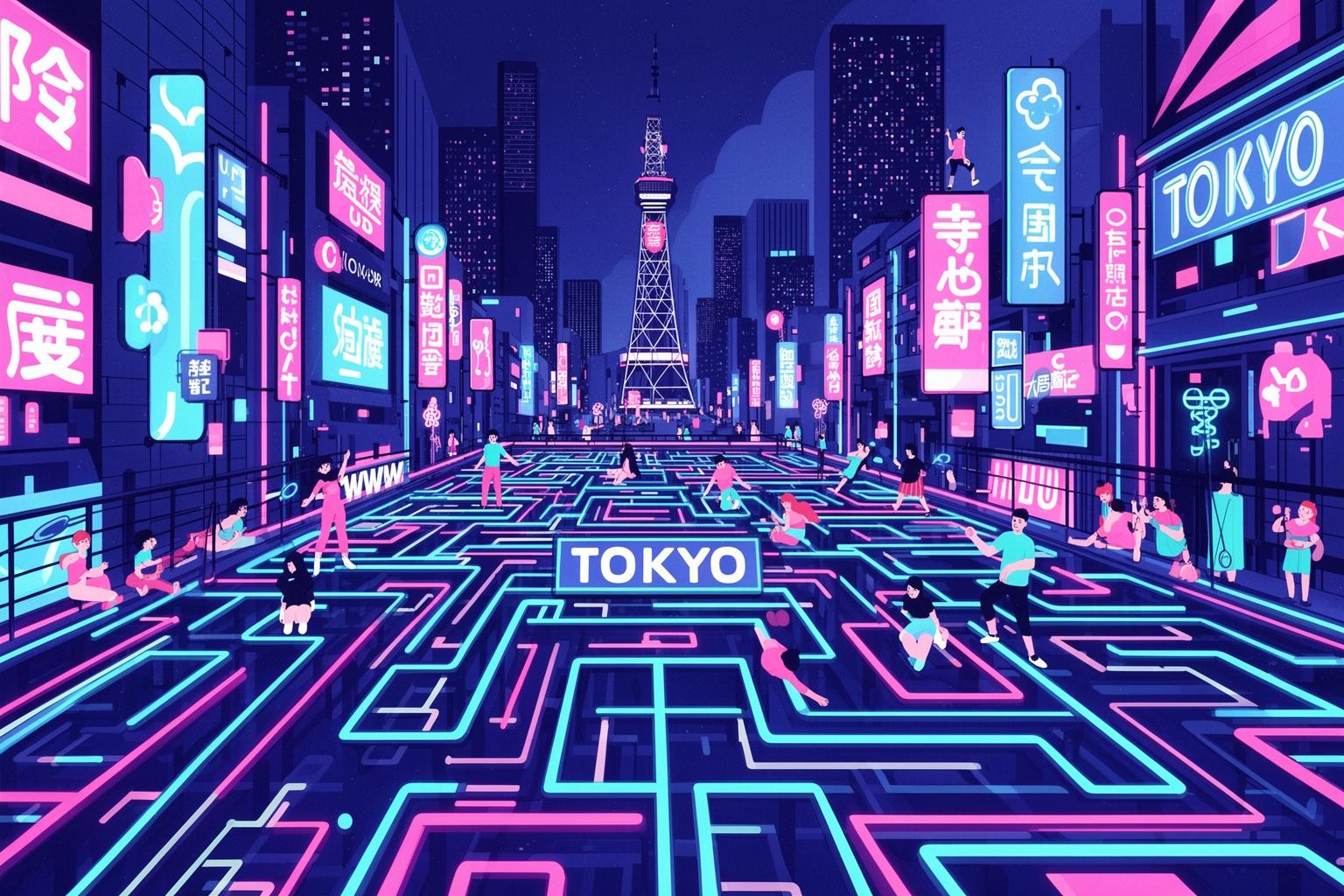
Shinjuku is the vibrant core of Murakami’s Tokyo, a place full of profound contradictions that provides an ideal setting for his stories. By day, it is filled with sharp-dressed professionals navigating between towering skyscrapers and shoppers crowding renowned department stores. By night, it transforms into a cinematic dreamscape—a concrete jungle bathed in a flood of neon light. This is the Shinjuku of After Dark, where the hours between midnight and dawn possess a peculiar, fluid quality, and where diverse lives can intersect under the sterile glow of a Denny’s. The immense scale of Shinjuku Station, a colossal hub managing millions of people daily, embodies a Murakamian idea—a crossroads of endless routes and possibilities, where one might easily become lost and emerge into a subtly altered reality. The energy here is intense, a sensory overload that can be both exhilarating and profoundly isolating, reflecting the experience of many of his protagonists who feel adrift in a sea of humanity.
The Haunting Melodies of Jazz Kissa
To truly discover the soul of Murakami’s Shinjuku, you must go deeper. Descend a narrow staircase, push open a heavy wooden door, and enter the quiet sanctuary of a jazz kissa, or jazz café. These havens frequently appear in his work, most notably in Norwegian Wood. One legendary spot is Jazz Spot Dug, situated near the east exit of Shinjuku Station. Although the original location that Toru Watanabe visited has moved, the current venue retains the same spirit. Upon entering, the city’s chaos fades away. The air is cool, thick with lingering cigarette smoke, the scent of dark wood, and the rich, complex tones of vinyl records. Visitors aren’t here to chat; they come to listen, to lose themselves in intricate John Coltrane solos or Bill Evans’ melancholic piano. You sit with a glass of whiskey, the ice softly clinking, and let the music envelop you. It is a meditative, almost sacred experience. This environment shaped Murakami’s aesthetic—a world where music is not merely background noise but a narrative force, unlocking memories and emotions beyond words. Finding a place like Dug is like discovering a key to his entire literary universe. For newcomers, the rules are simple: order a drink, keep your voice low, and let the music speak. It is a portal to the past, a living museum of a distinct cultural moment Murakami has immortalized.
Golden Gai: A Tangle of Memories
Just a short stroll from the futuristic shine of the Tokyo Metropolitan Government Building lies Golden Gai, a compact, ramshackle tangle of alleys that feels transported from the mid-20th century. This area is a resilient survivor: over 200 tiny bars squeezed into a few blocks, each barely large enough to seat a handful of patrons. It physically embodies the intimate, somewhat secretive worlds his characters inhabit. Walking through these lantern-lit lanes is like stepping onto a film noir set. It’s easy to imagine one of his characters nursing a drink in one of these shoebox-sized bars, sharing a fateful conversation with a stranger. The atmosphere is thick with history and a sense of shared secrets. For newcomers, Golden Gai demands a bit of courage. Many bars charge cover fees, and some cater exclusively to regulars. The best approach is to wander, find a place with an open door and a friendly sign, and prepare for a unique social experience. It’s not suited for large groups, but for quiet conversation and observation. Here, the labyrinthine nature of Shinjuku becomes personal and intimate—a perfect setting for the chance encounters that move Murakami’s plots ahead. It serves as a stark reminder that even in the most modern cities, pockets of the past endure, offering refuge and a different kind of connection.
Aoyama & Harajuku: The Runner’s Solitude and Vanishing Worlds
Murakami’s work extends beyond smoky bars and neon-lit streets. Another equally significant side of his Tokyo includes open spaces, parks, and long, quiet roads where one can find meditative solitude. This is the world of Murakami the runner, a persona portrayed with candid honesty in his memoir, What I Talk About When I Talk About Running. The stretch from Harajuku to Aoyama, centered on Meiji Jingu Shrine and Jingu Gaien Park, serves as his personal running track and a crucible for creativity. Following his path here reveals the discipline and rhythm underlying his often dreamlike prose. It represents a different kind of pilgrimage, one centered on motion, breath, and the subtle shifts of nature within the urban landscape.
The Epiphany at Jingu Stadium
For any devoted Murakami fan, Jingu Stadium is sacred ground. It holds almost mythical importance. According to the story, on a beautiful spring afternoon in 1978, a young Haruki Murakami was sitting in the outfield, sipping a beer while watching a baseball game between the Yakult Swallows and the Hiroshima Carp. When American player Dave Hilton hit a clean double, an unexpected thought struck him: “I think I can write a novel.” That moment altered the course of his life and modern Japanese literature forever. He went home that night and started writing what would become his debut novel, Hear the Wind Sing. The stadium remains home to the Tokyo Yakult Swallows, the team he passionately supports. To fully experience the spirit of the place, attend a game. The atmosphere is vibrant, with coordinated chants and umbrella dances, yet you can also find a quiet spot in the outfield just as he did. Sit beneath the open sky, feel the sun’s warmth, and reflect on that singular moment of inspiration. It’s a powerful reminder that life-changing ideas often emerge in the most unexpected settings—not in a library or study, but during a simple, joyful baseball game.
Jingu Gaien: The Golden Path
Extending from the stadium is the iconic Jingu Gaien Ginkgo Avenue, the core of his running route. This magnificent, tree-lined promenade is breathtaking year-round but becomes truly enchanting in late autumn. From mid-November to early December, the ginkgo trees burst into a radiant, almost fluorescent, gold. Their leaves carpet the ground, forming a golden tunnel with an otherworldly feel. Running or simply walking here during that season is an unforgettable experience. This is the physical space where Murakami clears his mind, where the repetitive motion of running lets ideas percolate and come together. In his memoir, he describes the runner’s void, a state where everyday worries fade away. Walking this path, one can sense that peacefulness. It is a spot of quiet concentration amid the city’s relentless energy. The best time to visit is early morning, when the air is crisp and the path is shared only with other runners and elderly locals doing morning exercises. You can feel the city waking around you, yet in this corridor of green and gold, there is a deep calm. This is where the artist’s discipline is shaped, step by step.
Waseda & Jinbocho: The Student Years and a Sea of Books
Before becoming a globally acclaimed author, Haruki Murakami was a student, a young husband, and a small business owner. The neighborhoods of Waseda and Jinbocho are rich with memories from this formative period of his life, offering a window into the intellectual and cultural influences that shaped his early worldview. This part of Tokyo has a distinctly different atmosphere compared to the commercial bustle of Shinjuku or Aoyama. It’s quieter, more academic, and deeply connected to the written word. Exploring these areas is like turning the early pages of his biography, uncovering the foundations upon which his literary legacy was built.
The Waseda International House of Literature
At the core of this district stands Waseda University, Murakami’s alma mater, where he studied drama. For many years, his connection to the university was a simple historical detail. Today, however, it hosts one of the most important destinations for any Murakami fan: The Waseda International House of Literature, also known as the Haruki Murakami Library. Designed by the renowned architect Kengo Kuma, the building itself is a masterpiece, featuring a stunning, flowing wooden facade that feels both natural and futuristic. Inside, it is a haven for his readers. The library contains an archive of his manuscripts, notes, and correspondence, in addition to his extensive personal collection of vinyl records—the very ones that provided the musical backdrop for his novels. There’s a replica of his study, offering an intimate glimpse into his creative environment. A listening room lets visitors immerse themselves in the jazz, classical, and rock music that permeates his work. Perhaps most invitingly, there is an on-site cafe, the Orange Cat, run by students, where you can relax with a coffee and a book, fully absorbed in the ambiance. Visiting the library is more than an academic visit; it’s an immersive experience. It offers a chance to grasp the intricate mix of influences—music, film, translation, and daily life—that converge in his work. It feels less like a sterile archive and more like a vibrant, living tribute to his creative journey. Be sure to check the opening hours and reservation requirements online before your visit, as access may be limited.
Jinbocho: A Labyrinth of Paper and Ink
A short train ride away lies Jinbocho, Tokyo’s famous book town. It’s a place where literature is not just sold but cherished. The streets are lined with over a hundred bookstores, many specializing in used and rare editions. The air carries the scent of old paper and ink. This neighborhood could easily belong in one of Murakami’s stories—a place where a character might stumble across a cursed book or a forgotten manuscript that opens a portal to another world. While Murakami’s own jazz cafe, Peter Cat, was originally located further out in Kokubunji before relocating to Sendagaya, the spirit of Jinbocho perfectly embodies his deep passion for books and the culture surrounding them. Wandering through Jinbocho is an adventure in itself. You can spend hours browsing the towering shelves, uncovering everything from Edo-period woodblock prints to out-of-print academic texts and vintage manga. Many shops focus on specific genres, so exploring reveals stores dedicated to foreign literature, art books, or philosophy. This is an ideal place to get lost and let your curiosity lead the way. Sit down in a small kissaten, order a siphon coffee, and enjoy your newfound treasure. Jinbocho reflects the intellectual curiosity at the heart of Murakami’s writing—the ongoing quest for knowledge, stories, and the hidden ties that weave them together.
Beyond the Obvious: Capturing the Murakami Vibe
A pilgrimage through Haruki Murakami’s Tokyo ultimately goes beyond a mere checklist of sites. After visiting the jazz bar, tracing the golden path, and browsing through countless books, you begin to understand that the real journey is about capturing the feeling of his world—the unique mix of melancholy, wonder, and surrealism that characterizes his work. This feeling can’t be pinned down to a single location. Instead, it’s found in the small details of everyday life, in the transitional spaces between places, and in a certain state of mind. It’s about learning to view the city through his perspective, noticing the quiet magic that often slips by unnoticed.
The Rituals of the Everyday
Murakami’s protagonists are often shaped by their simple, intentional routines. These rituals serve as anchors in a world that can feel unpredictable and strange. One of the most iconic is the act of cooking spaghetti. This appears repeatedly in his books, a modest, solitary ritual that is both soothing and meditative. To experience this yourself, visit a typical Japanese supermarket. Take in the careful packaging and the wide selection of ingredients. Purchase some pasta, tomatoes, and garlic, and prepare a straightforward meal. The process—the chopping, simmering, waiting—connects you to the rhythm of his characters’ lives. Another common motif is donuts, especially from Mister Donut, a well-known chain in Japan. In his early novels, characters frequently meet or reflect on life while enjoying coffee and a donut. Finding a Mister Donut and sitting down for a simple, unpretentious treat surprisingly captures the everyday nostalgia of his early work. These are small, unassuming acts, but they serve as genuine touchpoints to the texture of his fictional world.
In Search of Liminal Spaces
His novels abound with portals and transitional places: wells, empty rooms, emergency highway stairs, train line termini. These are spaces where reality feels fragile. While you can’t exactly find a dried-up well in a suburban backyard as described in The Wind-Up Bird Chronicle, you can explore Tokyo’s own liminal spaces. Ride a local train like the Setagaya Line or the Toden Arakawa tram all the way to its last stop. Observe where you arrive—often a quiet, overlooked neighborhood that feels far removed from the bustling city center. Wander through an old cemetery, such as Aoyama or the expansive Yanaka Cemetery, where the city’s noise is softened by ancient trees and a deep sense of calm. Seek out a small neighborhood Shinto shrine hidden between apartment buildings. These are the places where the city seems to hold its breath, where the surreal feels just a little closer. It is in these still, in-between moments that the true essence of a Murakami pilgrimage comes to light. It’s about being receptive to the potential for magic in the mundane and recognizing that the next great mystery might be waiting just around the corner.
Finding Your Own Story in Murakami’s City
To journey through Haruki Murakami’s Tokyo is to recognize that the city he describes is both a physical place and a state of mind. You can stand outside the building that once housed the Dug jazz bar, run along the same path beneath the ginkgo trees, and sense the presence of a million books in the air of Jinbocho. These locations are concrete, tangible. Yet, the true pilgrimage culminates not in a photograph but in a personal transformation of perception. You leave with your senses sharpened, more attuned to the city’s hidden frequencies—the lonely sound of a distant train, the sudden crossing of a stray cat, the unique quality of dusk light as it glints off a skyscraper. Murakami offers a map, but the territory is ultimately yours to explore. The real magic unfolds when you set the book aside and allow yourself to wander, to get lost in the labyrinth, and to discover your own quiet, surreal moments. Tokyo becomes a landscape of endless possibility, a place where your story can intersect with the echoes of his. The search for the Sheep Man, for Sumire, or for the two moons of 1Q84 becomes a journey toward self-discovery, revealing that the deepest mysteries are not hidden in another world but patiently waiting to be found in the beautiful, bewildering, and uniquely real Tokyo.