There’s a certain kind of magic that lives inside a Studio Ghibli film. It’s the gentle pitter-patter of rain on a bus stop roof in My Neighbor Totoro, the exhilarating rush of wind beneath your wings in Porco Rosso, the comforting aroma of a freshly baked herring pot pie in Kiki’s Delivery Service. These moments feel less like watching a movie and more like revisiting a cherished memory, a dream you once had. They are cinematic comfort food, warming the soul with their intricate art, profound stories, and unwavering belief in the goodness of humanity. For fans around the world, these films are sacred texts. And every sacred text deserves a pilgrimage. Just a short train ride from the neon-drenched hustle of Shinjuku and Shibuya, nestled in the quiet, leafy suburbs of western Tokyo, lies the destination for that pilgrimage. In the city of Mitaka, on the edge of the sprawling Inokashira Park, you’ll find the Ghibli Museum. This isn’t a sterile gallery with paintings on the wall. This is the clubhouse of your childhood dreams, a whimsical, ivy-covered labyrinth built from the very imagination of Hayao Miyazaki himself. It’s a place designed with a singular, beautiful philosophy, etched on the very first page of the pamphlet you receive: “Let’s Get Lost, Together.” This is your invitation to leave the map behind, to wander without a path, and to discover the secrets of animation not through plaques and text, but through touch, play, and pure, unadulterated wonder. This is where the magic becomes real.
For those enchanted by landscapes that blur the lines between film and reality, exploring Tokyo’s real-life spots offers yet another memorable pilgrimage.
The Journey Begins: A Walk Through the Woods
Your Ghibli experience doesn’t begin when you scan your ticket; it starts the moment you step off the train. The museum is situated in Mitaka, a tranquil residential city that feels worlds apart from the towering skyscrapers of central Tokyo. You can choose between two main stations: Mitaka Station on the JR Chuo Line or Kichijoji Station, which serves both the JR Chuo and Keio Inokashira Lines. Each offers a unique introduction to your adventure.
From the South Exit of Mitaka Station, the route is straightforward. You can follow the Tamagawa Josui canal, a historic aqueduct lined with cherry trees that burst into a sea of pink in spring. The walk is a gentle, fifteen-minute unwind, allowing the city’s noise to fade into the rustling of leaves and birdsong. Pay attention to the signposts along the way; they’re small works of art, crafted with Ghibli’s distinctive charm to guide you. If your feet grow tired, or if you’re traveling with children, a whimsical yellow community bus decorated with beloved Ghibli characters shuttles visitors from the station directly to the museum. Even the bus ride feels like part of the experience, a cheerful prelude to the main event.
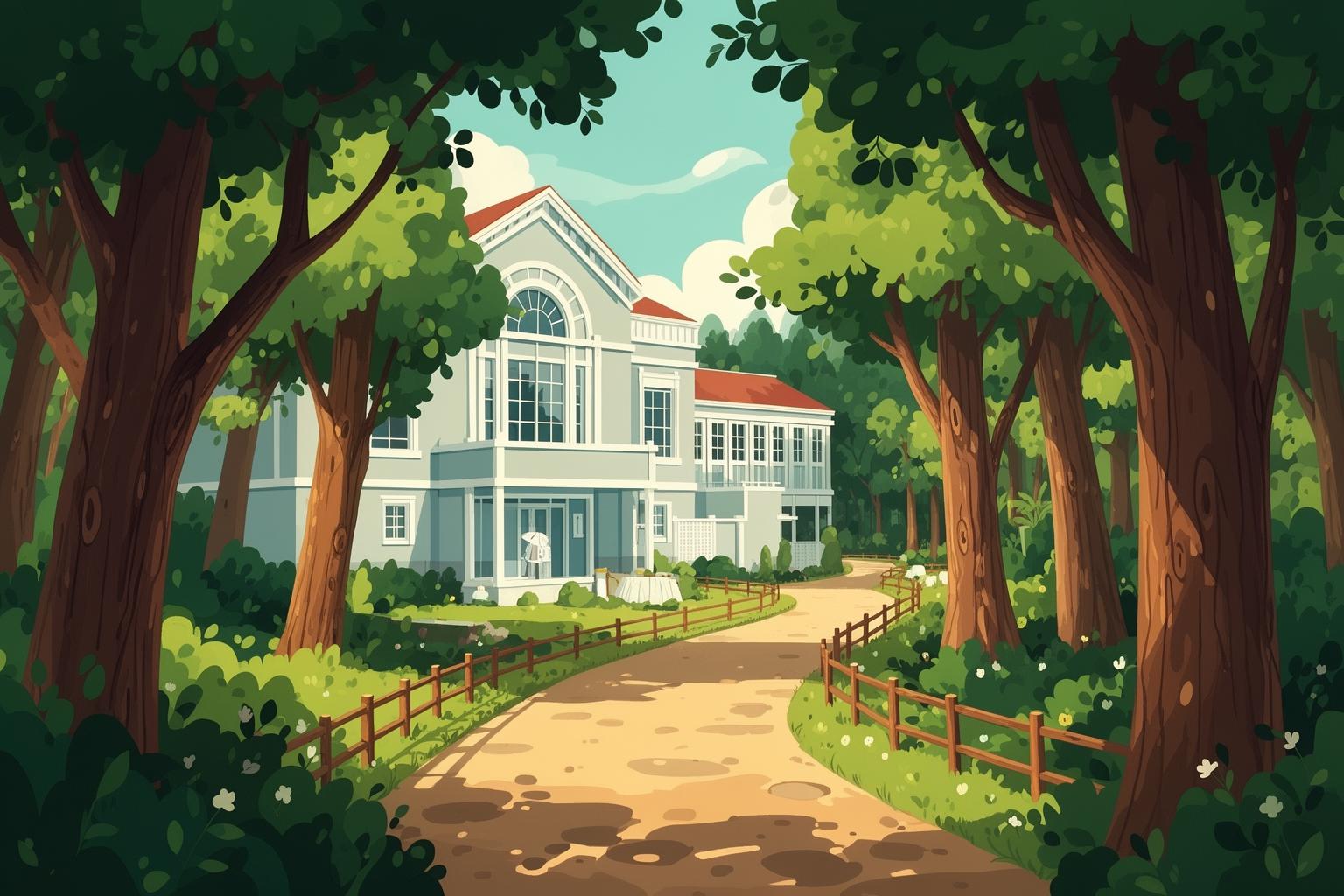
My personal favorite, however, is the route from Kichijoji Station. Kichijoji is a lively, fashionable neighborhood known for its stylish boutiques, cozy cafes, and one of Tokyo’s most cherished parks, Inokashira Park. Strolling through this expansive green oasis is the perfect way to set the mood. The park is a rich tapestry of Japanese nature, featuring a large, tranquil pond where you can rent swan boats, shaded trails winding beneath ancient trees, and a small shrine dedicated to Benzaiten, the goddess of all that flows. As you venture deeper into the park, following signs to the museum, you truly feel like Satsuki and Mei from Totoro, exploring a forest full of spirits. The sounds of the city are completely absorbed by nature. Eventually, you’ll catch sight of the museum’s vibrant, stucco walls peeking through the trees, not as a constructed building but as if it organically grew from the forest floor.
A Building That Tells a Story
Standing in front of the Ghibli Museum is a surreal experience. It appears as though it were lifted straight from one of Miyazaki’s sketchbooks. There are no grand columns or imposing facades. Instead, it’s a whimsical blend of architectural styles, featuring curved staircases, a birdcage-like atrium, and tiny doors and windows of various shapes and sizes. The walls are painted in soft, earthy shades of pink, yellow, and green, while winding ivy climbs the exterior, blurring the boundary between the artificial and the natural. Before you even step inside, you’re welcomed by a giant, grinning Totoro stationed at a fake ticket booth. It’s the perfect greeting, a gentle reminder that this place runs on the logic of dreams, not reality. He can’t sell you a ticket, but he can certainly sell you a smile.
Once inside, you enter a magnificent central hall that feels like the core of a colossal, magical treehouse. Sunlight streams through a glass-domed ceiling, casting dappled patterns on the wooden floors below. A grand, spiraling staircase winds up to the upper levels, and a glass elevator, resembling something from Howl’s Moving Castle, slowly rises and descends. But what truly takes your breath away are the stained-glass windows. Instead of traditional designs, they portray scenes and characters from the films: Kiki on her broomstick, Totoro in the forest, and the creatures of Nausicaä Valley. As the light filters through them, it bathes the entire hall in a kaleidoscope of shifting colors, bringing the world of Ghibli vividly to life around you. Here, you exchange your entrance voucher for your real ticket: a small strip of 35mm film, featuring three unique frames from a Ghibli movie. It’s a beautiful, tangible piece of magic you can take home—a tiny story in your pocket.
The Heart of Creation: Where a Film is Born
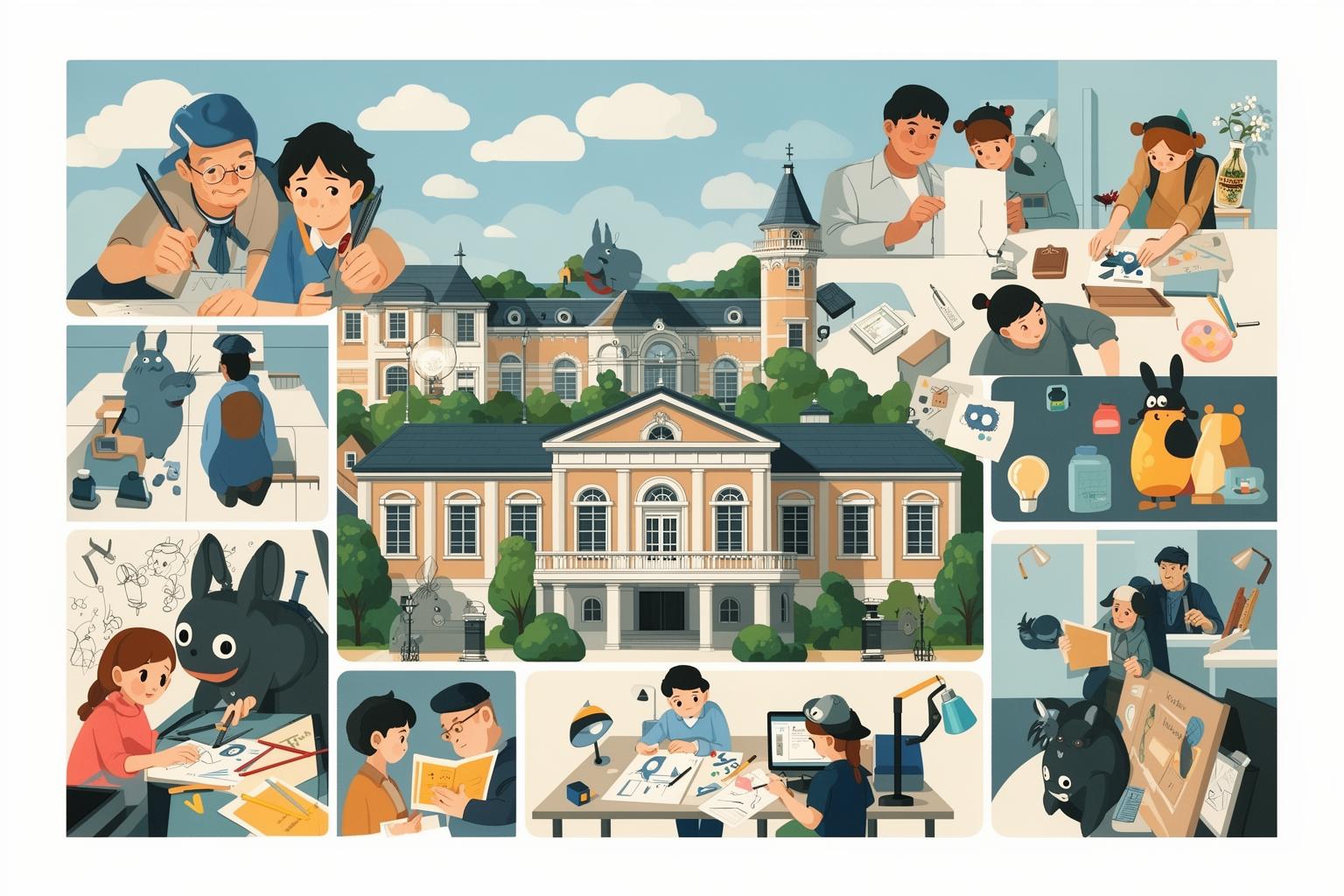
The entire museum is a tribute to the art of animation, but the first floor serves as its vibrant core. This is where you’ll find the permanent exhibition, “Where a Film is Born,” a five-room display that unveils the creative process. It’s far from a dry, technical showcase; it’s an immersive journey into the mind of an animator. The standout is the first room, “A Boy’s Room,” a romanticized re-creation of a Ghibli artist’s studio, showcasing a masterful chaos. The space is packed from floor to ceiling with books on art, history, aviation, and botany. Jars hold countless pencil stubs, too short to draw with but too valuable to discard. Sketches, storyboards, and character designs cover every surface, overlapping in a charming jumble. A half-eaten snack rests on a desk beside a model airplane, hinting the artist was just called away. It feels deeply personal and alive, like you’ve discovered a hidden sanctuary. You sense the passion, the late nights, and the immense research and imagination that go into crafting these worlds. While you can’t touch anything, the creative energy in the air is palpable.
From there, you move through rooms that detail the physical process. You’ll observe how pigments are blended to create Ghibli’s distinctive color palettes, how backgrounds are meticulously painted, and how celluloid cels are layered to produce depth and motion. This fosters a deep appreciation for the skill and human touch in each frame. The true highlight, however, is a large, three-dimensional zoetrope titled “Bouncing Totoro.” Around a circle, dozens of sculpted figures of Totoro, Mei, and the Catbus are posed slightly differently. When the strobe light inside flashes and the platform spins, the static figures seem to come alive. Mei skips rope, the Catbus bounds forward, and Totoro bounces with his umbrella. It’s pure, magical animation brought into the physical world, enchanting both children and adults alike. It perfectly embodies the museum’s philosophy: showing, not telling.
To the Stars and Beyond: Upper Floors and Hidden Worlds
Climbing the spiral staircase or taking the whimsical elevator leads you to the second floor, a space devoted to play and discovery. For the youngest visitors (and the envy of every adult), the highlight is the Catbus room. Yes, a life-sized, plush Catbus from My Neighbor Totoro awaits, ready to be climbed on, bounced in, and explored. It’s a space filled with pure, chaotic joy and the delighted squeals of children living out a cinematic dream. Unfortunately, it’s reserved for elementary school-aged children and younger—a rule both wholly understandable and a little heartbreaking for the rest of us. Nearby, you’ll also find the Mamma Aiuto gift shop, named after the sky pirates from Porco Rosso. This isn’t your typical museum gift shop; it’s a treasure trove of exclusive merchandise you won’t find anywhere else. From exquisite art books and intricate music boxes to unique stationery and hand towels featuring obscure characters, it’s the perfect spot to find a keepsake from your visit.
This floor also contains the special exhibition gallery. Unlike the permanent displays downstairs, this space showcases rotating exhibits focused on particular aspects of Studio Ghibli‘s work or inspirations. Past exhibitions have included an in-depth look at the delicious food featured in the films, a tribute to vehicles and flying machines, and an exploration of architectural designs. This ever-changing content is a brilliant addition, ensuring that even repeat visitors will discover something new. It’s always wise to check the museum’s official website before your visit to see what wonders are currently on display.
The Saturn Theater: A Ghibli Film Just For You
Arguably the most special feature of the museum is the small, cozy cinema known as the Saturn Theater. Your film-strip ticket grants admission to a screening of an original Ghibli short animated film, most of which can only be seen here. These aren’t trailers or clips; they are full, charming stories created with the same care and love as the feature films. The lineup rotates, making each visit a delightful surprise. You might watch Mei and the Kittenbus, a heartwarming sequel to My Neighbor Totoro, or Boro the Caterpillar, a passion project Hayao Miyazaki devoted years to. There’s also Mr. Dough and the Egg Princess, a fairytale romp with a distinctly European flair. The films are in Japanese without subtitles, but their universal, visually expressive stories transcend language barriers. The theater itself is a joy, featuring a ceiling painted like a blue sky and a projector that lowers from a whimsical housing. When the film ends and the windows automatically open to let sunlight flood the room, you feel as if you’ve just been let in on a wonderful secret.
A Guardian in the Sky: The Rooftop Garden

After discovering the marvels inside, a narrow, winding spiral staircase in the birdcage atrium leads you up to the sky. You step out onto the museum’s rooftop, transformed into a lush and tranquil garden. The atmosphere here is entirely different from the bustling energy below—peaceful, quiet, and reflective. Standing watch over it all is him: a five-meter-tall bronze Robot Soldier from Castle in the Sky. He stands calmly, head slightly bowed, as if contemplating the world beneath. Moss and ivy have begun creeping up his legs, blending him into the garden and making him seem like an ancient guardian who has stood here for centuries. There is a profound sense of gentle melancholy about him. You can approach him closely and admire the exquisite detail of his design. It’s one of the few spots in the museum where photography is allowed, making it an iconic shot for any visitor. Hidden behind the robot is another subtle tribute to Laputa: the black control cube from the flying castle, adorned with its mysterious, alien script. Standing on that rooftop, with the breeze in your hair and this gentle giant before you, you truly feel transported to another world.
The All-Important Ticket: A Pilgrim’s First Quest
Now, here is the most important advice I can give: you cannot simply show up at the Ghibli Museum and purchase a ticket. Tickets are never sold on-site. This is the biggest mistake made by first-time visitors. Getting a ticket requires careful planning, persistence, and a bit of luck—it’s a challenge in itself. For international visitors, tickets go on sale on the 10th of each month for the following month’s dates. For instance, tickets for any day in August become available on July 10th. They are sold online via the Lawson Ticket website and tend to sell out within minutes, especially for weekends and holidays. Sales start at 10:00 AM Japan Standard Time, so you’ll need to be online, logged in, and ready to purchase the instant they are released. The process can be competitive and hectic. For residents of Japan, tickets are distributed through a lottery system. You apply during a designated period each month, and if successful, you gain the chance to buy tickets. This strict system ensures the museum never becomes overcrowded, allowing every visitor a comfortable and magical experience. While it may be frustrating, the payoff is a leisurely visit where you can fully enjoy the space. My advice is to remain flexible with your dates and times if possible. Weekday afternoons generally offer the best availability. Plan well ahead and consider securing your ticket as the first step of your Ghibli journey.
A Final Taste of Magic
After wandering for a few hours, your stomach may begin to rumble. Luckily, the museum has you covered with the Straw Hat Café. Staying true to the museum’s overall theme, the café offers simple, wholesome food made with care. It feels like something straight out of a Ghibli film—hearty and comforting. The menu includes dishes such as hearty bowls of soup, vibrant salads, and a richly flavorful pork cutlet sandwich. The real highlight, however, might be the desserts. The creamy strawberry shortcake is famous for good reason. Every dish is served on beautifully custom-designed Ghibli plates by Noritake. The café is very popular, and lines often form, so it’s smart to plan your meal timing carefully, perhaps aiming for an early or late lunch to avoid the busiest times. It’s an ideal spot to rest your feet, reflect on the wonders you’ve experienced, and savor a meal that feels like it was prepared by a friendly character from one of the films.
Leaving the Ghibli Museum feels like awakening from a beautiful dream. You step back into Inokashira Park, and the world appears just a little brighter, a little more magical than when you entered. The museum stands as a testament to the power of storytelling and the importance of preserving the art of hand-drawn animation. It’s not only a celebration of Studio Ghibli’s past accomplishments but also a living, breathing promise of the wonder that still exists in the world, if you just know where to look. It reminds you that creativity is a messy, beautiful, and deeply human process. It’s a place that doesn’t simply ask you to observe art but invites you to become part of it. A visit here is a journey back to the best parts of childhood, when curiosity reigned and every corner held a new secret waiting to be uncovered.