
There are films that you watch, and then there are films that you feel—experiences so profound they leave an imprint on your soul, a lingering echo of emotion that calls you back long after the credits roll. Makoto Shinkai’s masterpiece, Your Name (Kimi no Na wa), is one such film. It’s a story of connection, of fate, of two souls intertwined across distance and time, painted against a backdrop of breathtakingly realistic yet magical cityscapes and serene countryside. For millions around the world, the story of Taki and Mitsuha didn’t just end on screen; it sparked a desire to step into their world. This desire has a name in Japan: seichi junrei, or a sacred pilgrimage. It’s the beautiful practice of visiting the real-life locations that inspired our favorite works of fiction. And the wonderful thing about Your Name is that its most iconic settings aren’t in some far-flung, inaccessible fantasy land. They are nestled right in the heart of Tokyo, waiting for you to discover them. This journey isn’t just about seeing a place from a movie; it’s about feeling the pulse of Taki’s Tokyo, standing where he stood, and perhaps, for a fleeting moment, feeling that same cosmic pull that connected two worlds. It’s a chance to see the city not just as a tourist, but as a participant in a story that continues to resonate globally. So, let’s retrace their steps, find the magic hidden in plain sight, and discover how the ordinary streets of Tokyo became the stage for an extraordinary tale.
As you wander through Tokyo’s vibrant streets, consider exploring this pilgrimage guide to uncover the real-life locations that transformed a film into a timeless journey.
The Heart of the Connection: Suga Shrine’s Iconic Stairs
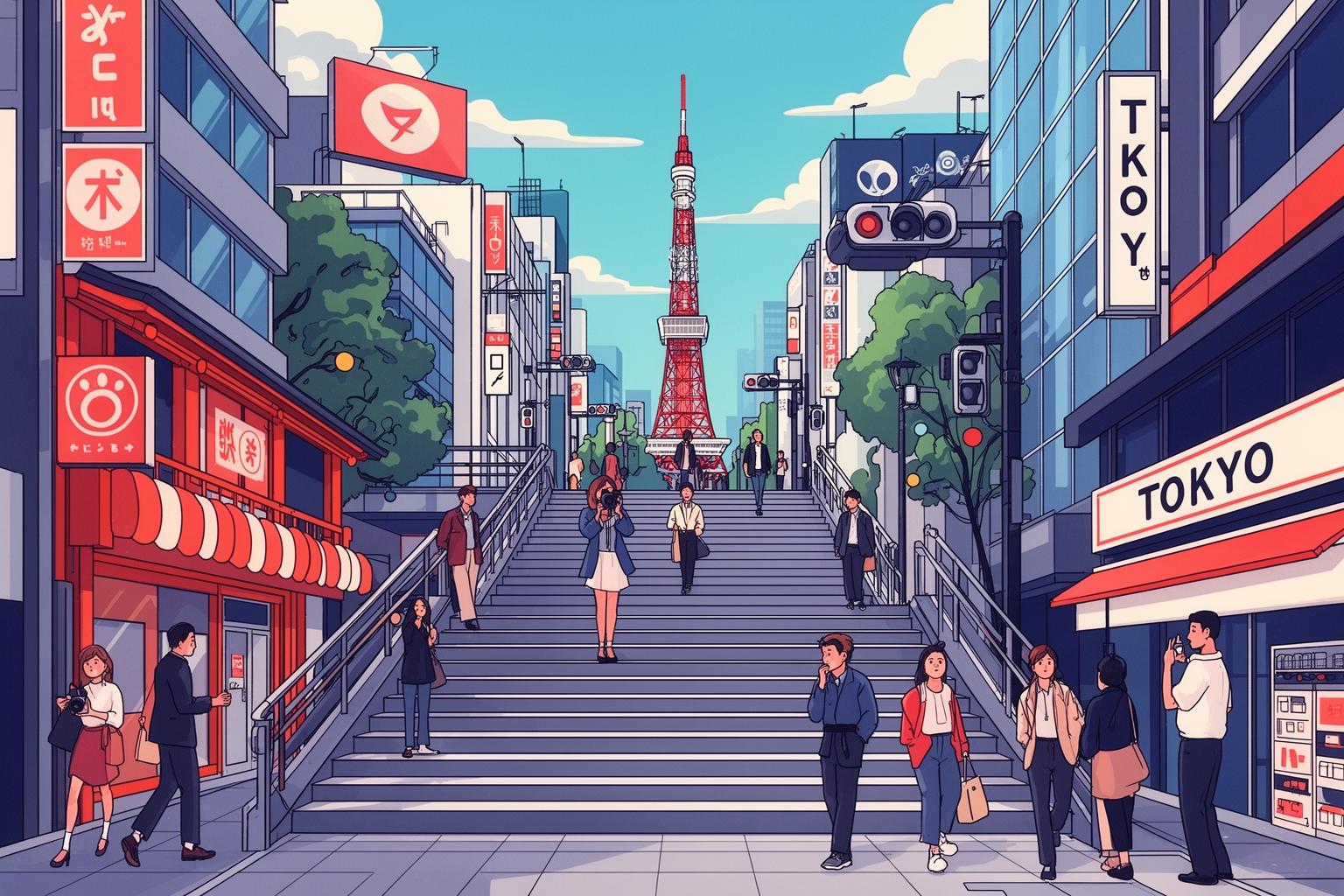
Every pilgrimage has its sacred place, its ultimate destination where the emotional significance of the journey reaches its peak. For fans of Your Name, that spot is a modest set of red-railed stairs in a tranquil residential area of Yotsuya. This is it—the site of the film’s breathtaking, heart-stopping climax. This is where Taki and Mitsuha, years after the comet and their forgotten memories, ultimately reunite. The moment you turn the corner from the narrow street and glimpse the stairs for the first time, a rush of recognition sweeps through you. It’s a surreal sensation, seeing something so familiar from the screen embodied so tangibly in the real world. The incline, the curve of the road, the buildings flanking the sides—it’s all depicted with Shinkai’s distinctive photorealism. The atmosphere here is unexpectedly calm, a stark contrast to the scene’s emotional intensity. There are no flashing signs or tourist traps. Only homes, the soft hum of everyday life, and the rustling leaves from the nearby Suga Shrine. To reach this place, you can enjoy a pleasant walk from Yotsuya Station or Yotsuya-sanchome Station on the Tokyo Metro Marunouchi Line. Visiting in the late afternoon is strongly recommended. As the sun begins to set, the light softens and stretches long shadows, perfectly capturing the cinematic magic of that reunion. You’ll spot other fans quietly gathered, each waiting their turn to take the perfect photo from either the top or bottom of the steps. There’s an unspoken, shared understanding among everyone there. You’re all present for the same reason: to stand in a place where a miracle unfolded onscreen and to feel a piece of that magic yourselves. A gentle reminder for first-time visitors: this is a residential neighborhood. People live here. Keep your voices down, be mindful of traffic, and resist the urge to shout “What’s your name?” across the steps. The true essence of the pilgrimage lies in quiet reverence, immersing yourself in the atmosphere and letting the story wash over you once again.
A Taste of Taki’s Life: Shinjuku and Beyond
If the Suga Shrine stairs symbolize the film’s spiritual core, then the vast, electrifying district of Shinjuku represents its beating heart. This is Taki’s world—a vibrant, chaotic, and endlessly captivating metropolis where he lived through high school, friendships, and a part-time job. Exploring Shinjuku through the lens of Your Name lets you feel the city’s dynamic energy just as he did, discovering beauty within the urban jungle that Shinkai so skillfully portrays.
Cafe La Bohème Shinjuku Gyoen: The Italian Restaurant
Taki’s part-time job at the fictional “Il Giardino delle Parole” played a significant role in his Tokyo life, especially during his memorable date with his coworker, Okudera-senpai. The real-world inspiration for this elegant restaurant is Cafe La Bohème, located near the verdant Shinjuku Gyoen National Garden. Stepping inside feels like entering the anime itself. The high ceilings, grand crystal chandeliers, ornate decor, and expansive windows flooding the space with light are all faithfully recreated. The restaurant exudes a sophisticated yet inviting atmosphere, making it a perfect spot to rest after a day of exploring. You can easily picture Taki rushing between tables here, hoping to impress his crush. The menu features a variety of classic Italian dishes, from pasta to pizza, and while it’s somewhat more upscale than a typical café, it remains reasonably priced. Enjoying lunch or just a piece of cake and coffee here is a wonderful way to immerse yourself in the film’s world. It offers a tangible part of the story you can experience with all your senses. The café is popular, so booking a reservation is advisable, especially during busy weekend hours. It provides a moment of calm and elegance amid the Shinjuku hustle—a perfect pause on your pilgrimage.
The View from Above: Shinjuku’s Cityscape
Throughout the film, Makoto Shinkai presents breathtaking panoramic views of Tokyo’s skyline. These shots highlight the city’s vastness and the emotional distance between Taki and Mitsuha. One of the most notable features in these views is the distinctive, pointed top of the NTT Docomo Yoyogi Building. While you can’t visit that building, you can enjoy a nearly identical view for free. The Tokyo Metropolitan Government Building, just a short walk from Shinjuku Station, offers free observation decks on the 45th floors of both its North and South towers. From there, Tokyo spreads out beneath you like a complex circuit board of light and concrete. You can spot landmarks from the film and grasp the immense scale of Taki’s world. Viewing the city from this height truly brings the movie’s themes to life. It’s a powerful experience to gaze over millions of lives and stories unfolding simultaneously and to feel like a small part of something vast. On clear days, you might even spot Mount Fuji in the distance, adding another magical layer to the experience. Visiting near sunset is especially memorable, as you watch the city lights begin to sparkle, transforming the urban sprawl into a galaxy of its own—reminiscent of the comet’s ethereal glow.
Weaving Through the Crowds: Shinjuku Station and the Pedestrian Bridge
Shinjuku Station is the world’s busiest train station, a dizzying maze of platforms and corridors that perfectly captures Tokyo’s organized chaos. Shinkai uses rapid cuts of the station and its surroundings to convey the fast pace of Taki’s life. One of the most iconic shots is of the large, circular pedestrian intersection in front of Shinjuku Station’s west exit, particularly near the Shinjuku Police Station. This distinctive structure, with its multiple intersecting bridges, appears in a montage sequence and serves as a visual symbol of urban complexity. Standing there, amid the endless stream of people, you can truly feel the city’s pulse. It’s a place of constant motion, where countless individual journeys briefly intersect. Finding the exact spot for this shot can be an enjoyable challenge for photographers and fans alike. It reminds us that even in the most crowded and impersonal places, personal stories—like Taki’s and Mitsuha’s—are continuously unfolding. The area buzzes with activity, so stay aware of your surroundings and pedestrian flow as you take in the view and capture memories. It’s a powerful, grounding experience that connects you directly to the film’s urban aesthetic.
In Search of Intimate Moments: Lesser-Known Spots and Hidden Gems
While the stairs and the café are the main attractions of any Your Name pilgrimage, the real joy of seichi junrei frequently comes from discovering the quieter, more subtle spots. These locations add depth and texture to the film’s world, serving as the backdrop for smaller, more intimate moments that are equally vital to the story. Exploring these places offers a more personal connection to the narrative and a greater appreciation for the intricate detail woven into Shinkai’s work.
The National Art Center, Tokyo
The setting for Taki and Okudera-senpai’s significant date is one of Tokyo’s most stunning architectural landmarks: The National Art Center in Roppongi. Its flowing glass facade is instantly recognizable from the film. The date scene mainly unfolds in the museum’s atrium, specifically at the Salon de Thé ROND, a distinctive café perched atop a large concrete cone. You can sit at the same café, enjoying tea and cake while gazing over the beautiful, light-filled space. The museum itself doesn’t have a permanent collection; instead, it hosts various special exhibitions throughout the year. This means each visit can present a new artistic experience. Even if you don’t attend an exhibition, the building itself is a masterpiece worth exploring. Visiting the art center helps contextualize Taki’s interests; he’s a student passionate about art and architecture, making this location choice feel genuinely authentic to his character. It’s a sophisticated and beautiful spot, easily accessible via Nogizaka Station, offering a wonderful, cultured pause during your pilgrimage. It’s a chance to experience a slice of Tokyo’s contemporary art scene while walking in the footsteps of the characters.
The Yotsuya Pedestrian Overpass
Not far from Yotsuya Station, on the way to Suga Shrine, lies another important but often overlooked site. It’s the pedestrian overpass where Taki and Okudera-senpai part ways after their date—a scene tinged with a touch of melancholy and confusion for Taki. This is an everyday piece of Tokyo infrastructure, a simple green bridge spanning a busy road. Yet for fans, it holds quiet significance. Finding it feels like uncovering a secret. Standing on the bridge, looking down at the trains passing below, you can almost hear their conversation. This location beautifully showcases Shinkai’s ability to find the cinematic in the mundane. He transforms a simple overpass into a stage for a key character moment. It may lack the immediate spectacle of other sites, but its ordinariness is precisely what makes it special. It firmly grounds the film’s setting in a tangible, believable reality. It’s a reminder that the great, sweeping stories of our lives often unfold against the backdrop of the everyday, and that there is beauty and meaning to be discovered in these ordinary spaces.
A Pilgrim’s Practical Guide: Planning Your Journey
Embarking on a Your Name pilgrimage in Tokyo offers a truly rewarding experience, and with some thoughtful planning, it can be a smooth and unforgettable journey. The main locations are scattered across several neighborhoods, but thanks to Tokyo’s exceptional public transportation system, a self-guided tour is both easy and enjoyable.
Getting Around Tokyo
The most convenient way to travel between pilgrimage sites is by train. The primary areas to visit are Shinjuku, Yotsuya, and Roppongi/Nogizaka. The JR Yamanote Line, which loops around central Tokyo, along with the Tokyo Metro Marunouchi and Chiyoda lines, will be essential. It’s highly recommended to purchase a rechargeable IC card like a Suica or Pasmo, allowing you to simply tap at ticket gates without buying individual tickets for every journey—saving you both time and trouble. Google Maps is very reliable for navigating the train system, offering precise routes, transfer information, and travel times. Although Tokyo’s train map may seem complex at first, after one or two rides, you’ll find it surprisingly user-friendly.
A Suggested Itinerary
You can visit the locations in any order, but following a logical route can help you maximize your day. A great way to start is in Nogizaka with a visit to The National Art Center—a peaceful and beautiful beginning. From there, take a short train ride to Shinjuku and spend your afternoon exploring Taki’s urban world: enjoy lunch at Cafe La Bohème, take in the views from the Tokyo Metropolitan Government Building, and experience the lively pedestrian bridge. As the day progresses and the golden hour approaches, head toward Yotsuya. On the way from the station, stop by the pedestrian overpass. The grand finale should be the Suga Shrine stairs—arriving in the late afternoon lets you see them in optimal light, creating a deeply satisfying and emotional conclusion to your journey. This route gradually builds in intensity, reserving the most iconic and poignant spot for last.
Pilgrimage Etiquette
As you begin your adventure, it’s essential to remember these are not movie sets but real locations where people live, work, and worship. The most important rule of seichi junrei is respect. In residential neighborhoods near Suga Shrine, please keep your voices low and avoid gathering in large, disruptive groups. Do not trespass on private property to capture a better photo. When visiting Suga Shrine itself, behave with the quiet reverence appropriate to any place of worship. At cafes and restaurants, be a courteous customer. Avoid blocking sidewalks or roads and always take your trash with you. By being a considerate and respectful visitor, you help keep these places welcoming for future fans and, more importantly, honor the residents who kindly share their communities with the world.
Beyond the Frames: The Enduring Magic of a Shinkai World
Completing a pilgrimage to the locations featured in Your Name is more than simply checking off items on a list. It is an act of engagement. It’s a way of expressing that this story mattered—that it moved you so profoundly you were willing to cross oceans and navigate an unfamiliar city just to feel a bit closer to it. What makes this journey truly special is realizing that the magic wasn’t confined to the screen. It’s present in the sparkle of sunlight reflecting off a skyscraper, in the quiet reverence of a small shrine, and in the steady rhythm of countless footsteps crossing an intersection. Makoto Shinkai’s brilliance lies in his ability to reveal the deep beauty in the everyday scenery of Tokyo and to make us see it as well. He turns a simple staircase into a symbol of hope and a lively café into a stage for emerging love. As you walk through these places, you start to view the city through his vision, and through the eyes of Taki and Mitsuha. The boundary between fiction and reality begins to fade, and for a time, you are living within the world you cherish. So when you visit, take your time. Put the camera down for a moment and simply be present. Listen to the sounds, observe the people, and soak in the unique atmosphere of each location. You may have come to Tokyo searching for a film, but you will depart having discovered a deeper, more personal connection to the city itself, forever marked by the unforgettable story of a boy, a girl, and a comet that once fell from the sky.