In the electric heart of Tokyo, a city that pulses with a relentless, futuristic rhythm, there exists a place where time slows to the gentle cadence of falling rain and rustling leaves. Shinjuku Gyoen National Garden is not merely a park; it’s a sprawling, living canvas, an oasis of profound tranquility carved out of the world’s most populous metropolis. For many, it’s a destination for a quiet afternoon stroll, a picnic on immaculate lawns, or a chance to witness the fleeting beauty of cherry blossoms. But for a devoted legion of fans around the globe, it is something more. It is a pilgrimage site, a tangible piece of a story told in breathtakingly beautiful animation. This is the world of Makoto Shinkai’s cinematic poem, ‘The Garden of Words,’ and to walk through its gates is to step directly into the frames of the film, to feel the very atmosphere that cradled its lonely protagonists. Here, amidst the meticulously crafted landscapes, the real and the animated blur into a single, poignant experience, where every raindrop on a pond seems to echo a line of dialogue, and every shaded bench holds the promise of an unexpected connection. The garden is a testament to Japan’s mastery of nature and a sanctuary for the modern soul, inviting you to lose yourself in its beauty and, perhaps, find a piece of a beloved story waiting just for you.
Visitors enchanted by the garden’s cinematic beauty may also find inspiration in exploring real-world film locations that reveal the hidden narratives behind Japan’s iconic scenes.
A Symphony of Gardens: The Three Faces of Shinjuku Gyoen
What makes Shinjuku Gyoen so enchanting, both as a public park and a film location, is its extraordinary diversity. It is not a single, uniform space but a harmonious blend of three distinct garden styles, each offering a uniquely different ambiance. Strolling through the park is like traveling across continents and historical periods. The moment you step through one of the main gates—whether the bustling Shinjuku Gate or the quieter Sendagaya Gate—the urban noise fades away, replaced by a gentle harmony of nature. Your exploration begins here, with an understanding of the three essences of this magnificent landscape.
The English Landscape Garden: A Pastoral Dream in the Heart of Shinjuku
Exiting the Shinjuku Gate, you are immediately welcomed by the stunning expanse of the English Landscape Garden. The initial feeling is one of freedom. Wide, rolling lawns stretch out before you, dotted with majestic, century-old trees like Himalayan cedars and tulip trees, their canopies reaching skyward. This landscape is designed to evoke an idealized, pastoral image of nature. Unlike the strict formality of other styles, the English garden embraces gentle curves, open views, and a sense of wild, romantic beauty. It invites you to spread a blanket, feel the grass beneath your fingers, and watch clouds drift across the sky. Families picnic here, children run freely across the fields, and couples find quiet spots under the shade of towering plane trees. It’s a living space, offering a psychological escape from the crowded city just outside its borders. This sense of retreat and peaceful reflection is a recurring theme in The Garden of Words, where the characters seek shelter from their own confined lives. The English garden—with its expansive sky and soft green hills—is the perfect physical embodiment of that longing for freedom.
The French Formal Garden: Symmetry and Roses
As you move further into the park, the scenery changes dramatically. The organic curves of the English garden give way to the bold geometry and precision of the French Formal Garden. Perfectly symmetrical, two long rows of plane trees create a stunning avenue that draws your gaze toward the horizon. Between them, meticulously maintained flowerbeds burst with color, featuring over a hundred rose varieties in full bloom during late spring and autumn. The atmosphere here feels distinct—more polished, more intentional. The design celebrates human order imposed on nature, a tribute to elegance and control. It is a place for a more dignified walk, a chance to appreciate the skill of the gardeners who uphold its immaculate appearance. This garden presents a sharp contrast to the other areas of the park, embodying a completely different philosophy of landscape design. It’s a piece of Versailles in the heart of Tokyo, offering a unique beauty born from structure, symmetry, and vivid, cultivated hues.
The Japanese Traditional Garden: A Journey Through Time
For many visitors, especially those on a pilgrimage inspired by The Garden of Words, the Japanese Traditional Garden represents the heart and soul of Shinjuku Gyoen. This section exemplifies Japanese landscape artistry—a carefully crafted world of ponds, islands, and meticulously pruned trees that compose a series of perfect, postcard-like scenes. The central pond, with its calm water mirroring the sky, serves as the garden’s focal point. Gnarled pine trees bend gracefully over the water, their shapes shaped by decades of careful cultivation. Stone lanterns, clad in a soft mossy patina, stand like ancient guardians along the pond’s edge. As you cross elegant wooden bridges and follow winding stone paths, each turn reveals new views. A key concept here is shakkei, or borrowed scenery. The garden artfully includes the distant Shinjuku skyscrapers, such as the NTT Docomo Yoyogi Building, into its backdrop. This blend of ancient and modern, natural and man-made, is quintessentially Tokyo and a central visual motif in Shinkai’s film. Hidden within this peaceful setting are traditional teahouses, Rakuu-tei and Shounan-tei, where you can sit, enjoy matcha, and gaze upon a scene that feels untouched by time. Here, the film’s atmosphere is most vivid, where the serene and slightly wistful beauty of a rainy day feels most fitting.
Echoes of Animation: Finding ‘The Garden of Words’
While the entire park serves as the film’s backdrop, certain locations have become iconic destinations for fans. Visiting them feels less like sightseeing and more like stepping into a cherished memory. Makoto Shinkai is celebrated for his photorealistic animation, and at Shinjuku Gyoen, you can experience his source material firsthand. The park is not merely a setting in the film; it acts as a character, its shifting moods and seasonal beauty reflecting the emotional journey of the protagonists, Takao and Yukari.
The Gazebo of Rain and Respite
The most revered spot for pilgrims is the gazebo where Takao and Yukari share their rainy morning meetings. In the film, this simple wooden shelter becomes a sanctuary, a world unto itself where two lonely souls can connect. While the gazebo in the anime is a slight artistic composite, its primary inspiration is widely recognized as the Kyu-Goryo-Tei, also known as the Taiwan Pavilion, which sits on the edge of the Japanese garden’s upper pond. Finding it is a quest in itself. As you approach, the view across the water, with the gentle arch of a bridge and dense foliage, is instantly familiar. Stepping inside the shelter, the world outside is framed exactly as Shinkai portrayed it. You can sit on the bench and gaze across the pond, imagining the sound of rain tapping on the roof. The air is filled with a quiet reverence. You will often see other visitors here, sitting in silent reflection, some with a sketchbook, others simply absorbing the atmosphere. To fully immerse yourself in the experience, you might be tempted to bring a can of beer and a chocolate bar, just as the characters did. It is in this spot, more than anywhere else, that the line between fiction and reality completely fades.
Tracing Takao’s Steps: Other Cinematic Vistas
Beyond the famous gazebo, the entire park resonates with echoes of the film. As you stroll the paths, you’ll recognize specific scenes. There’s the iconic view of the NTT Docomo Yoyogi Building, its distinctive spire piercing the clouds, perfectly framed by the garden’s lush trees. This image, used repeatedly in the film, symbolizes the outside world the characters are trying to escape. You can find the exact places where Takao sketched his shoe designs, benches shaded by the deep green of summer maples. The stone steps, the covered walkways near the teahouse, the wisteria trellises—all of these elements were meticulously recreated in the animation. A fun activity for fans is to have screenshots from the film ready on your phone and try to find the exact camera angles. This little treasure hunt enhances your appreciation for both the park’s beauty and the incredible artistry of Shinkai’s team. It turns a simple walk into an interactive, cinematic adventure.
Beyond the Silver Screen: A Living Tapestry of Seasons
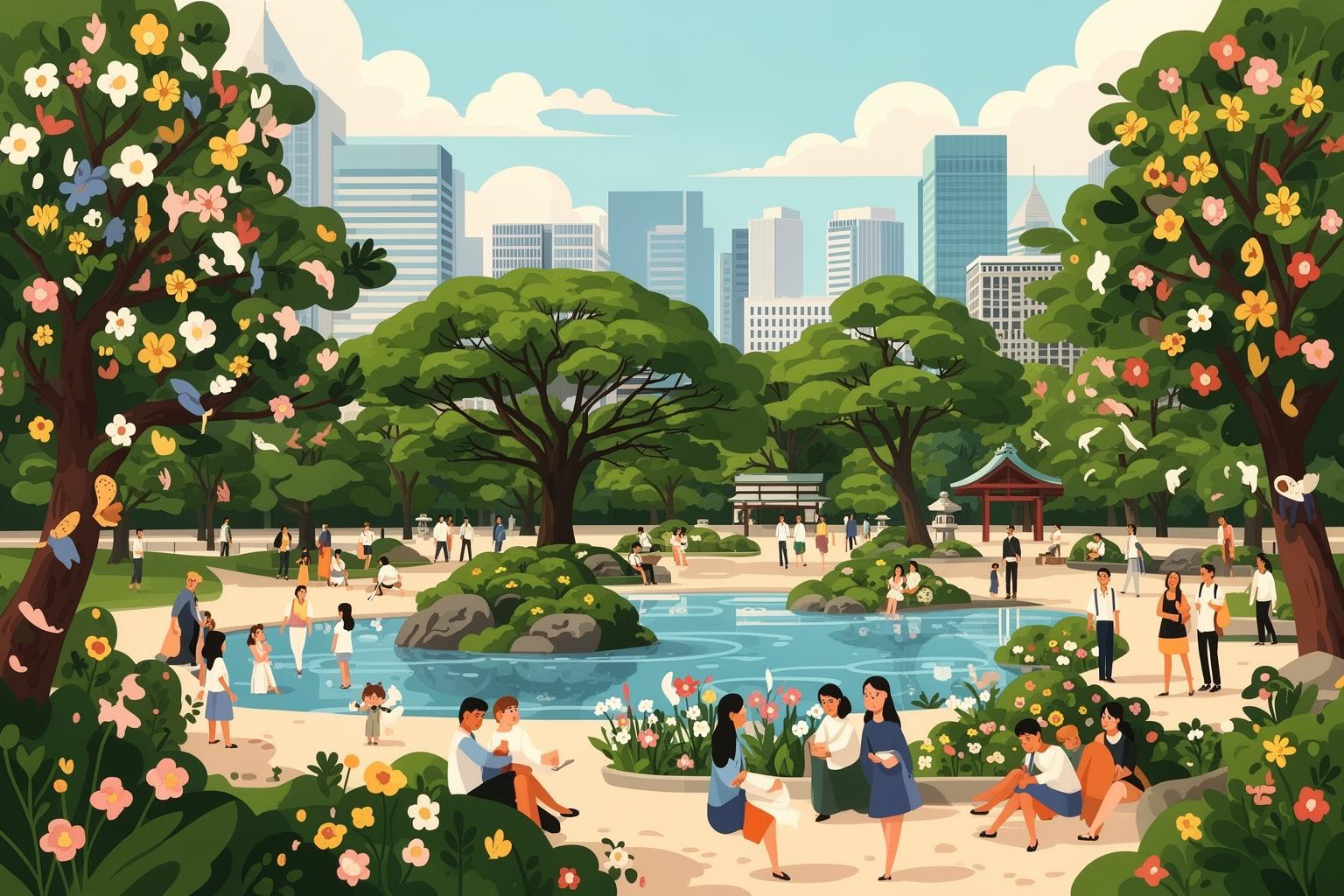
While Shinjuku Gyoen is famous for its connection to ‘The Garden of Words,’ its true enchantment lies in the ever-shifting beauty of its seasons. The park is a living masterpiece, presenting a fresh and unique experience each month. Whenever you visit, you are sure to witness a stunning display of nature’s artistry.
Spring’s Fleeting Beauty: The Cherry Blossom Spectacle
In spring, Japan is swept up in cherry blossom mania, and Shinjuku Gyoen ranks among Tokyo’s top ‘hanami’ (flower viewing) locations. What distinguishes it is the remarkable variety of cherry trees—more than a dozen types, ranging from early-blooming ‘kanzakura’ in February to late-blooming ‘yaezakura’ in late April. This extended blooming period provides a broader window to enjoy the flowers. The park’s atmosphere during this season is festive yet tranquil. Unlike other popular hanami sites that can become crowded and noisy, Shinjuku Gyoen enforces strict rules against alcohol and loud music, ensuring a peaceful, family-friendly environment where the focus is on the breathtaking floral displays. The sight of the English garden’s expansive lawns blanketed in pink and white petals is truly unforgettable.
Summer’s Lush Embrace: Verdant Canopies and Hydrangeas
Summer brings ‘The Garden of Words’ to life, and visiting during the rainy season (‘tsuyu’) in June and July offers the most genuine pilgrimage. The park transforms into a lush tapestry of deep, vibrant greens. The trees grow thick with leaves, creating dense canopies that provide cool, shaded havens from the city’s heat and humidity. After a rainfall, the colors intensify, the air is fragrant with the scent of damp earth and fresh foliage, and droplets cling to leaves and spiderwebs like tiny jewels. This is when the park feels most vibrant and mysterious. Hydrangeas bloom in shades of blue and purple, while ponds brim with lively lily pads. The constant hum of cicadas adds a natural soundtrack, blending vivid energy with profound tranquility.
Autumn’s Fiery Palette: A Canvas of Crimson and Gold
As summer heat fades, Shinjuku Gyoen prepares for its next spectacular show. In autumn, the park bursts into flames of color. The Japanese maples (‘momiji’) around the traditional garden blaze with brilliant reds and scarlets, their reflections shimmering in the ponds. Maple Hill (‘Momijiyama’) is a favorite spot for photographers capturing this fiery display. In the French garden, towering plane trees turn a rich, burnished gold, their leaves carpeting the grand avenue. Autumn also marks the annual chrysanthemum exhibition, a tradition dating back to the park’s imperial era. Masterfully cultivated chrysanthemums, trained into dramatic cascading and single-stem shapes, are showcased in traditional pavilions, celebrating a centuries-old art.
Winter’s Quiet Grace: Camellias and Structural Beauty
Winter in Shinjuku Gyoen reveals a subtler charm. With many deciduous trees stripped bare, the park’s underlying design—the elegant branch patterns, carefully placed rocks, and winding paths—becomes more visible. This season invites a quieter, more reflective mood. Evergreen pines in the Japanese garden stand out against the grey sky, sometimes dusted with light snow, turning the landscape into a scene reminiscent of a traditional ink wash painting. But winter is not without color; resilient camellias and sasanquas add splashes of pink and red, while fragrant plum blossoms begin blooming by late winter, heralding spring’s approach. For a cozy retreat, the park’s large, modern greenhouse is a must-see, offering a tropical paradise filled with exotic orchids, towering palms, and vibrant flowers that bring life to the coldest months.
A Practical Guide to Your Gyoen Pilgrimage
Navigating a place as expansive as Shinjuku Gyoen might feel overwhelming, but a bit of planning can make all the difference. Knowing the logistics will help you unwind and fully enjoy the experience, whether you’re pursuing cinematic sights or simply looking for a peaceful escape.
Getting There: Access and Entrances
Shinjuku Gyoen is conveniently situated and reachable from multiple train stations, with three main gates for entry. The best gate for you depends on your route and what you want to explore first.
Shinjuku Gate
This is the main and most frequented entrance, just a ten-minute walk from the South Exit of JR Shinjuku Station or a five-minute walk from Shinjuku-gyoemmae Station on the Marunouchi subway line. Entering here brings you directly to the edge of the expansive English Landscape Garden.
Okido Gate
Also a five-minute walk from Shinjuku-gyoemmae Station, this gate is ideal if you wish to visit the greenhouse or the French Formal Garden first. The visitor center and a charming café are located nearby as well.
Sendagaya Gate
The quietest entrance, this gate is a short five-minute walk from JR Sendagaya Station. It offers direct access to the Japanese Traditional Garden and is a perfect starting point for those on a ‘Garden of Words’ pilgrimage, being the closest gate to the Taiwan Pavilion area.
Timing Your Visit: Hours, Fees, and Best Practices
Shinjuku Gyoen is open from 9:00 AM to 4:00 PM, with gates closing at 4:30 PM, though hours may be extended during peak seasons like cherry blossom and autumn foliage viewing. The park is usually closed on Mondays (or the following day if Monday is a national holiday). There is a small entrance fee, payable in cash at ticket vending machines or conveniently with rechargeable IC cards such as Suica or Pasmo. To maximize your visit, try to arrive early in the morning when the park is at its most tranquil. The gentle morning light offers ideal conditions for photography. Keep in mind, the park’s calm atmosphere is upheld by several important rules: no alcohol, no sports equipment like balls or frisbees, and no musical instruments. Following these guidelines helps ensure a pleasant experience for all visitors.
Inside the Oasis: Facilities and Hidden Comforts
Despite its natural ambiance, the park is well-equipped with modern conveniences. Clean restrooms are abundant and easy to locate. Multiple rest houses and cafés are available, including a Starbucks featuring large windows overlooking the garden, providing a perfect spot to relax with a coffee. Traditional teahouses in the Japanese garden offer a cultural experience, serving matcha green tea and Japanese sweets for a small fee. Benches are generously placed throughout the park, inviting visitors to sit and stay awhile. Don’t rush your visit—find a quiet corner, perhaps with a book or sketchbook, and let the garden’s serene energy envelop you. The large greenhouse near the Okido Gate is a wonderful attraction in itself and is included with the entrance fee, offering a journey through various climate zones and botanical wonders.
The Soul of the Garden: History and Heritage
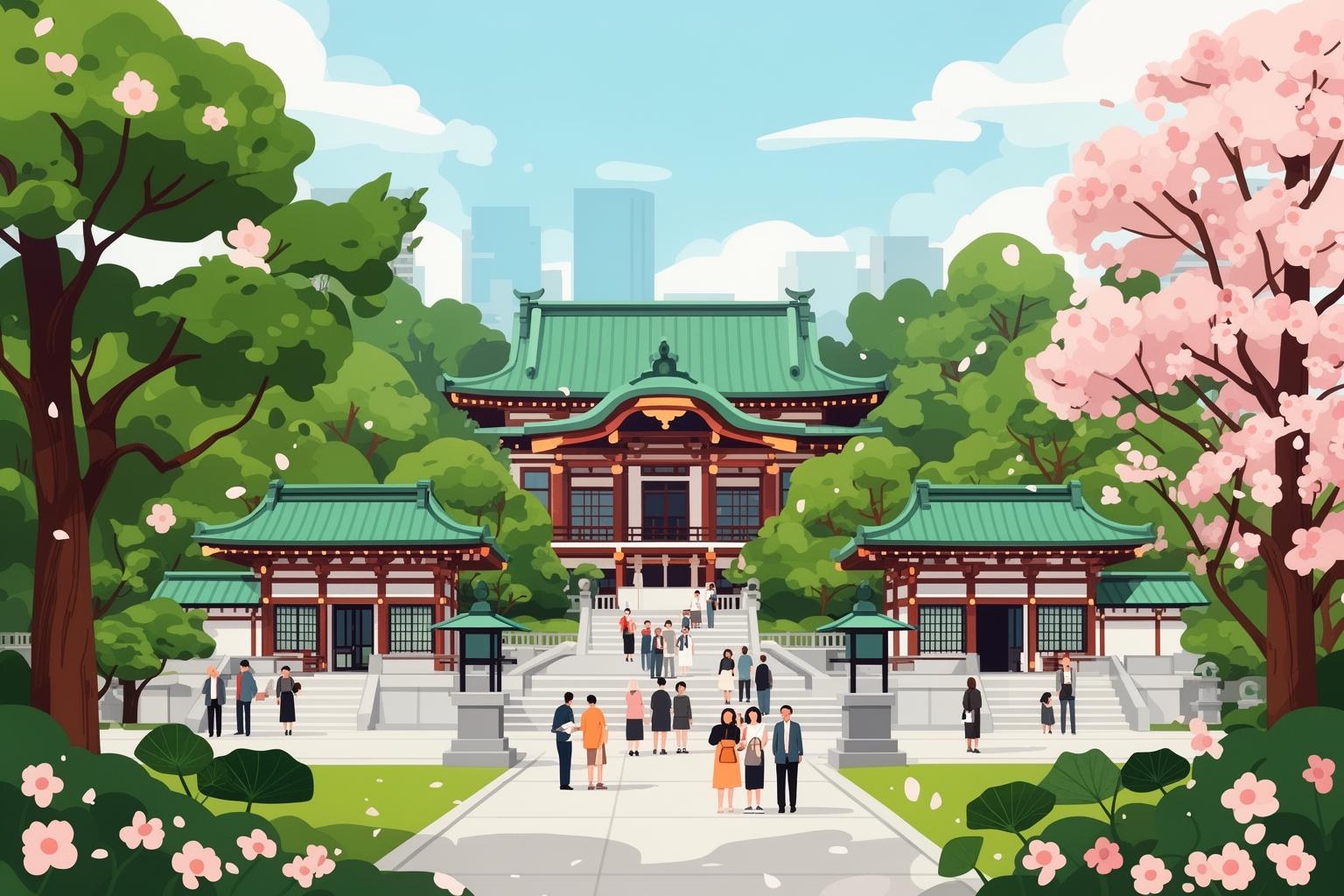
To fully appreciate Shinjuku Gyoen, it is helpful to understand its rich history, which is as complex and captivating as its landscapes. This place has quietly witnessed the dramatic transformation of Tokyo itself.
From Feudal Lord’s Estate to Imperial Garden
The garden’s story begins in the Edo Period (1603–1868), when the land was part of the extensive urban estate of the Naito clan, a powerful feudal family. After the Meiji Restoration in the late 19th century, which restored power to the Emperor, the estate was transformed into an imperial botanical garden. It was redesigned and enlarged, blending the trendy English and French styles with the traditional Japanese garden, to serve as a space for the recreation and entertainment of the Imperial Family and their international guests. This imperial heritage is still evident today in the park’s dignified atmosphere and grand scale.
A Symbol of Resilience and Renewal
The garden’s most dramatic period came during World War II. Nearly all its buildings and many of its magnificent trees were destroyed in air raids. But, like Tokyo itself, the garden rose from the ashes. It was carefully restored after the war and, in 1949, opened to the public for the first time as a national garden. This history adds depth to the park’s profound sense of peace. Its beauty is not only a product of design; it represents resilience, a testament to nature’s enduring ability to heal and renew. Standing within its grounds, you are experiencing a living monument that has survived feudalism, imperialism, and war to become a democratic space of tranquility for everyone.
A Gentle Farewell from the Garden of Words
A visit to Shinjuku Gyoen is more than just spending a day in the park. It is an experience—a journey through distinct worlds, from England’s rolling hills to the precise avenues of France and the serene ponds of Japan. It is a journey through the seasons, each presenting its own unique and stunning palette. For many, it is also a deeply personal journey into the heart of a beloved film, offering the chance to follow in the footsteps of characters who found comfort and connection within its leafy embrace. Shinjuku Gyoen gracefully holds a dual identity, serving both as a cherished public sanctuary for Tokyoites and as sacred ground for animation enthusiasts worldwide. As you finally walk back toward the gate, leaving behind the tranquility and preparing to re-enter the city’s vibrant chaos, you carry a piece of that calm with you. The garden leaves a lasting impression on your soul—a quiet memory of dappled sunlight, the scent of earth after rain, and the gentle rustle of leaves in the breeze—a real-life garden of words where every sight and sound tells a story.