There are moments in travel when a landscape feels more than just new; it feels familiar. A shiver of recognition runs through you, a sense of déjà vu for a place you’ve never been. For millions around the world who have been captivated by Makoto Shinkai’s animated masterpiece, “Your Name.” (Kimi no Na wa), that feeling washes over you with breathtaking force the first time you gaze upon Lake Suwa in Nagano Prefecture. This vast, shimmering body of water, nestled in a caldera-like basin and surrounded by the gentle slopes of the Japanese Alps, is the undeniable soul of the fictional town of Itomori. It’s where the threads of time, tradition, and teenage longing were woven into one of the most poignant stories of our time. To visit Lake Suwa is not just to see a movie location; it’s to step into the frame, to breathe the same mountain air, and to feel the powerful, unseen connections—the musubi—that bind the fictional world to our own. This journey is a pilgrimage for the heart, a chance to find the magic hidden in the mundane, and to witness the quiet, enduring beauty of rural Japan that inspired a global phenomenon.
For travelers eager to discover more enchanting corners of Japan’s animated heritage, the Ghibli museum offers an equally captivating journey.
The View from Above: Chasing the Twilight Vista
Every pilgrimage has its sacred peak, its ultimate destination where the purpose of the journey becomes clear. For fans of Your Name., that destination is Tateishi Park. Nestled on a hillside overlooking the lake’s eastern shore, this modest public park provides the definitive, god-tier view that perfectly reflects the film’s most iconic and emotionally powerful scenes. The journey to the park is an experience in itself. You can hop on a local bus or take a taxi from Kami-Suwa Station, but for those feeling determined, a winding, steep road awaits for a walk. It’s a genuine workout, a climb that builds anticipation with every step. As you ascend, the noises of the town below gradually fade away, replaced by the rustling leaves and the crisp mountain air. It feels as though you’re leaving the everyday behind and entering a more reflective space.
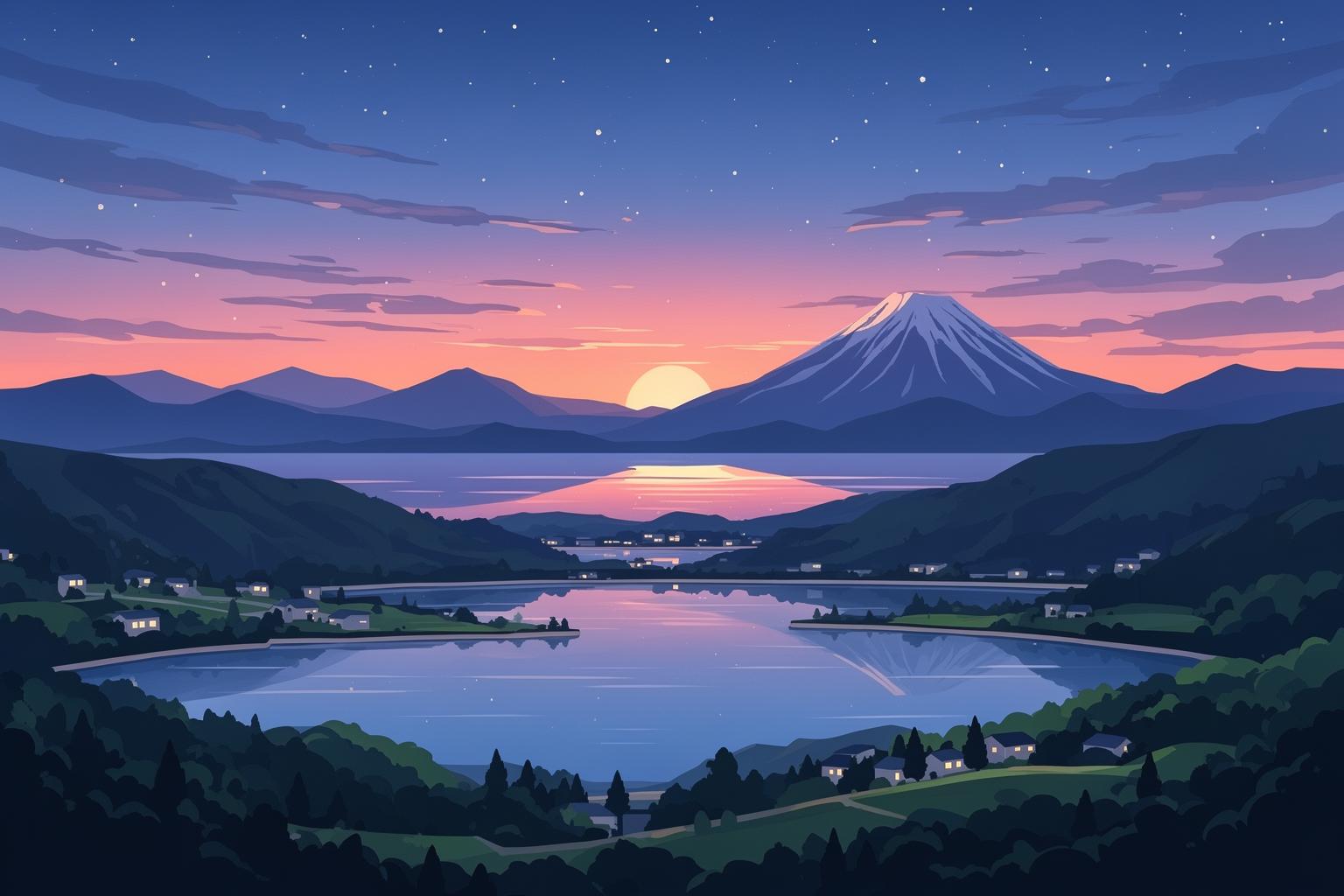
The park itself is understated. A simple observation deck, a few benches, and a whimsical spiral slide that seems a little out of place yet adds a quirky charm. But none of that matters once you turn to face the view. It takes your breath away, bringing a moment of stillness. The entire Lake Suwa stretches before you, a vast mirror reflecting the sky. The towns of Suwa, Shimosuwa, and Okaya line its shore, their rooftops and streets forming a detailed, intricate pattern. In the distance, the gentle peaks of the Kiso and Hida Mountains frame the vista. It’s immediately clear how Shinkai and his team adapted this real landscape into the geography of Itomori. The shape of the lake, the town’s embrace of it, the surrounding mountains — it’s all there.
To truly experience the film’s magic, timing is key. You must aim for kataware-doki, the twilight hour. As the sun dips, the world is bathed in a soft, ethereal glow. The water shifts from bright blue to a liquid canvas painted with orange, pink, and deep violet hues. The town’s lights begin to shimmer on, one by one, like scattered diamonds. It’s in this suspended moment between day and night that the line between reality and animation blurs entirely. You can almost hear RADWIMPS’ score swelling in the background. It’s a deeply moving experience, and it’s not unusual to find fellow fans standing silently, cameras set aside, simply soaking in the atmosphere. A small tip for visitors: the park is exposed, so bring a jacket, even on mild days, as the wind can be brisk. Also, be sure to check the bus schedule for the return trip carefully, as service can be infrequent, especially in the evening. A taxi might be the most dependable choice after sunset, allowing you to stay until the very last light fades away.
Whispers of the Shrine: Exploring Suwa’s Spiritual Heart
Though Itomori’s Miyamizu Shrine is fictional, its essence is deeply tied to the ancient spiritual traditions of the Suwa region. The true heart of this area lies in the Suwa Grand Shrine, or Suwa Taisha, one of Japan’s oldest and most significant shrine complexes. Its history extends far back into the mists of time, predating written records. Suwa Taisha is not a single building but a group of four distinct shrine complexes, divided into two main sections: the Upper Shrine (Kamisha) on the southern side of the lake, and the Lower Shrine (Shimosha) on the northern side. Visiting here adds profound cultural depth to the anime pilgrimage, linking the film’s themes of tradition, ritual, and nature worship to their powerful real-world origins.
Begin your journey at the Kamisha, which itself consists of two sites. The Maemiya (Front Shrine) feels ancient, a place where worship seems to arise naturally from the earth. The structures are rustic and simple, and here you can sense the oldest energy. Nearby is the Honmiya (Main Shrine), which is much grander. Its massive, unpainted wooden structures and detailed carvings convey a quiet dignity. You walk along pure white gravel paths beneath towering cedar trees, the air rich with the scent of wood and incense. Uniquely, the Honmiya lacks a honden, the main hall where the deity is usually enshrined. Instead, it venerates the mountain behind it as its sacred object, a powerful symbol of the deep Shinto bond between gods and nature.
Across the lake, the Shimosha is likewise split into two locations: the Harumiya (Spring Shrine) and Akimiya (Autumn Shrine). Connected by the Nakasendo trail, an old Edo-period highway, walking between them offers a delightful experience. The Akimiya is known for its impressive kaguraden (dance hall), decorated with a massive shimenawa, a sacred rice-straw rope symbolizing purity. Nearby stands a bronze Komainu (guardian lion-dog), believed to be one of the largest in Japan. The Harumiya sits beside a river and exudes a more tranquil, peaceful atmosphere. At both the Upper and Lower Shrines, you will notice four enormous wooden pillars at the corners of the main areas. These are the Onbashira, giant fir trees cut, dragged down the mountainside, and erected by thousands of local men every six years in a famously wild and dangerous festival. This powerful tradition, a visceral expression of community and faith, reflects the deep festival culture portrayed in Itomori and exemplifies the enduring spirit of the Suwa people.
A Walk Around the Water’s Edge: Life by the Lake
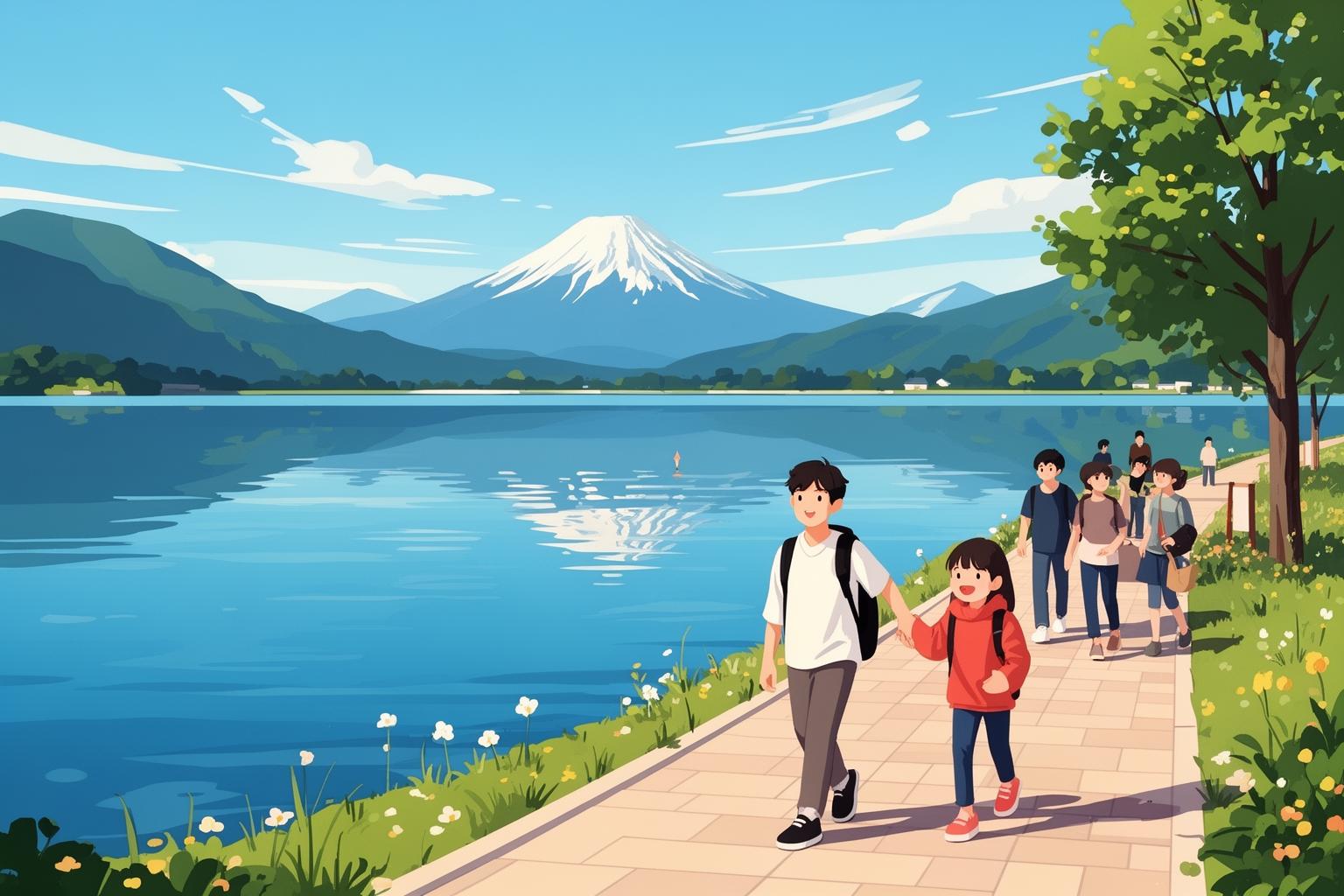
The grand vistas and ancient shrines are awe-inspiring, but the true essence of Suwa is discovered right at the water’s edge. A sixteen-kilometer path for cycling and walking circles almost the entire lake, providing a constantly shifting view of the water and mountains. Renting a bicycle near Kami-Suwa Station is an excellent way to spend a few hours, letting you explore more and uncover quiet spots that many visitors overlook.
The path leads you past small parks, fishing spots where locals cast their lines, and a collection of charming, sometimes whimsical, public art sculptures. On the southern shore, near Suwa’s main town, you’ll find a popular lakeside park and several free public footbaths, or ashiyu. There’s nothing quite like slipping off your shoes after a long walk and soaking your tired feet in the naturally hot, mineral-rich onsen water while gazing out over the tranquil lake. It’s a simple, rejuvenating pleasure that feels deeply Japanese.
Another lakeside highlight is the Lake Suwa Geyser Center. Though the natural geyser has weakened over time, an impressive eruption is now triggered with compressed air every few hours. It’s an entertaining sight, especially for families, and a reminder of the geothermal energy simmering just below the surface. For a different perspective, consider taking a cruise on one of the pleasure boats on the lake. The most well-known is shaped like a giant turtle, adding a playful touch to the majestic scenery. As you glide across the water, you gain a deeper appreciation for the lake’s vastness and the way the towns nestle into the landscape. The lake’s mood is ever-changing. On a bright, sunny day, it sparkles like a sapphire. When clouds roll down from the mountains, it turns a moody, atmospheric gray, with mist clinging to the surface—a scene reminiscent of Shinkai’s more melancholic moments. Each season brings its own unique beauty: the delicate pink cherry blossoms of spring, the thunderous spectacle of Japan’s largest fireworks festival in summer, the vibrant reds and golds of autumn, and the stark, serene beauty of winter, when the lake occasionally freezes in very cold years, forming the sacred pressure ridge known as Omiwatari, or “The God’s Crossing.”
Culinary Connections: Tasting the Flavors of Shinshu
A journey through an area isn’t complete without sampling its flavors, and the region around Lake Suwa, part of the broader Shinshu area (the historic name for Nagano), offers a delightful variety of local specialties. Nagano is renowned for its buckwheat, and tasting the local soba noodles is a must. Served either cold with a dipping sauce (zaru soba) or hot in a savory broth, Shinshu soba is celebrated for its firm texture and nutty, earthy taste. Many small, family-run restaurants around the lake specialize in handmade soba, and watching an expert chef prepare it is a pleasure in itself.
The cool, pure mountain water also makes Suwa an ideal place for producing two of Japan’s key fermented products: miso and sake. Numerous traditional miso shops sell the rich, savory paste that is fundamental to Japanese cuisine. For sake enthusiasts, the area is a real treat. Along the old street near Kami-Suwa Station, you’ll find the “Suwa Gokura,” five historic sake breweries located within walking distance of each other. Most, including the famous Masumi brewery, offer tastings where you can sample a variety of styles and learn about the complex brewing process. It’s a wonderful way to spend an afternoon and pick up a unique, delicious souvenir.
For a more rustic, local snack, watch for oyaki, a type of steamed or baked dumpling filled with ingredients like seasoned vegetables, mushrooms, or sweet red bean paste. They make the perfect portable comfort food for a stroll along the lake. For those with a more adventurous palate, Nagano is one of the few Japanese regions with a tradition of eating insects, and you might find inago no tsukudani (grasshoppers simmered in soy sauce and sugar) at local markets. It’s a distinctive taste of the region’s resourceful culinary heritage. Pairing these local flavors with the stunning surroundings—perhaps enjoying an oyaki on a park bench or sipping sake in a traditional inn overlooking the water—is an essential part of the Suwa experience.
Practical Pilgrimage: Planning Your Journey to Suwa
Reaching this corner of Nagano is refreshingly simple, making it a fantastic addition to any Japan itinerary. The region is well-served by rail, which remains the most convenient way to get there.
Getting to Lake Suwa
From Tokyo, the most direct option is the JR Azusa Limited Express train, which departs from Shinjuku Station and arrives directly at Kami-Suwa Station on the lake’s shore in about two and a half hours. The journey is scenic, transitioning from Tokyo’s urban expanse into Japan’s increasingly mountainous interior. This route is fully covered by the Japan Rail Pass. Alternatively, you can take the Hokuriku Shinkansen (bullet train) to Nagano City and transfer to a local line, but the direct Azusa is generally easier.
From Nagoya, the JR Shinano Limited Express train offers a picturesque ride through the Kiso Valley, arriving at Shiojiri Station, where a short transfer connects you to a local train to Kami-Suwa. The entire trip takes just over two hours. Traveling from cities like Kyoto and Osaka is also straightforward, typically involving a Shinkansen ride to Nagoya followed by the same route.
Navigating the Area
Upon arrival, you’ll notice that the main points of interest are somewhat spread out. The town of Suwa is very walkable, especially the area between Kami-Suwa Station, the lakeside, and the five sake breweries. To visit the Suwa Grand Shrine’s four separate sites or enjoy the panoramic view from Tateishi Park, local transport is necessary. The local bus network, including the charmingly named “Karin-chan Bus,” can be helpful, though schedules require some advance planning. Taxis are readily available at the station and provide a convenient option for reaching Tateishi Park, particularly if you plan to stay through sunset when bus service is limited. For cycling enthusiasts, renting a bike is ideal for exploring the lakeside path but isn’t suitable for the steep climb to the park or accessing the more distant shrines.
Where to Stay and When to Visit
To fully experience the area, an overnight stay is highly recommended. The Lake Suwa region is renowned for its hot springs (onsen), and many hotels and traditional Japanese inns (ryokan) along the shore boast their own baths, often with direct lake views. Staying at a ryokan is a quintessential Japanese experience, frequently featuring elaborate multi-course kaiseki dinners and the chance to sleep on comfortable futons placed on tatami mat floors. For those on a budget, numerous modern business hotels are conveniently located near the station.
Suwa is a year-round destination, with each season offering its own unique appeal. Spring (April to May) brings cherry blossoms and mild weather. Summer (July to August) is warm and lush, culminating in the spectacular annual fireworks festival. Autumn (October to November) is arguably the most stunning season, with the surrounding mountainsides ablaze in vivid colors. Winter (December to February) offers a serene, stark beauty, with snow-dusted landscapes and the rare, magical chance to witness the Omiwatari phenomenon on the frozen lake.
Beyond the Frame: Embracing the Spirit of Suwa
Ultimately, a trip to Lake Suwa is about much more than simply ticking off locations featured in an anime. It offers an opportunity to uncover the profound beauty and rich culture that inspired such a touching work of art. While the view from Tateishi Park remains an undeniable highlight, the true charm of Suwa lies in the smaller moments: tasting pure mountain water from a shrine’s purification fountain, experiencing the warmth of a shopkeeper explaining various types of miso, hearing the soft hum of cicadas on a summer afternoon, and witnessing the moon’s reflection on the lake’s calm surface.
The film “Your Name.” resonates deeply because it explores universal themes of connection, memory, and the quest for something—or someone—missing. When you stand by Lake Suwa’s shores, these themes come alive. You sense the link to the ancient past at Suwa Taisha, the natural rhythm of the seasons, and the lasting bond between people and the breathtaking natural world around them. So come, seek out the landscapes that inspired your imagination on screen, but also allow yourself to wander beyond the frame. Visit small art museums, get lost in the backstreets, and create your own memories. In this special place, you may discover that what you were truly searching for isn’t a fictional town, but the feeling of connection it symbolizes—a feeling that is vividly real.