
There’s a quiet hum to the world when it’s buried in snow. A profound stillness that swallows sound and sharpens the senses. In the heart of Niigata Prefecture, nestled deep within the Japanese Alps, lies a place where this silence is not just a seasonal feature, but the very soul of its identity. This is Echigo-Yuzawa, a town that exists in the global imagination as the quintessential “Snow Country.” Its fame was immortalized by Yasunari Kawabata, Japan’s first Nobel laureate in Literature, whose novel, Yukiguni, or Snow Country, painted a portrait of love, loss, and transient beauty against a backdrop of endless white. To visit Yuzawa is to do more than just see a pretty mountain town; it is to step inside the pages of a masterpiece, to feel the chill in the air that inspired Kawabata, and to trace the faint, lingering footsteps of his lonely characters. This is a pilgrimage not to a grand temple, but to a feeling—a delicate, melancholic atmosphere captured in ink and preserved in ice. We’re about to cross the border, through the long tunnel, and emerge into a world where literature and landscape are one.
A reflective detour to Yakushima offers an evocative counterpoint where nature’s quiet voice continues to inspire timeless stories.
The Opening Passage: Arriving in a World of White
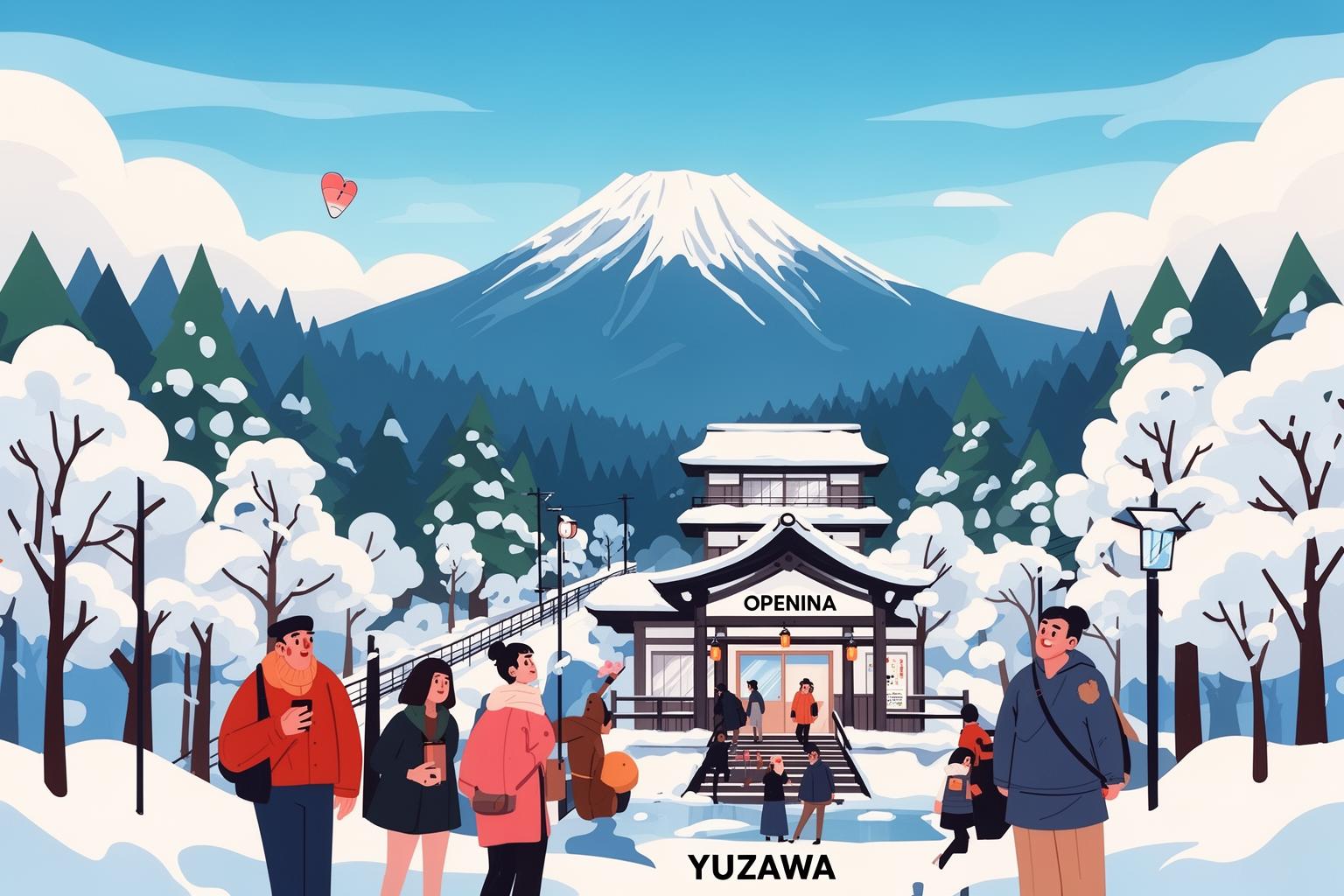
“The train emerged from the long border tunnel into the snow country.” This opening line is among the most famous in modern literature, serving as both a vivid physical description and a profound emotional threshold. To truly embark on a journey into Kawabata’s world, one must experience this passage. Traveling from Tokyo today is deceptively straightforward, a swift ride on the Joetsu Shinkansen that carries you from the urban expanse to the alpine heartlands in just over an hour. Yet, for a more genuine pilgrimage, consider the local Joetsu Line—the very same route taken by the novel’s protagonist, Shimamura. The train winds its way through Gunma Prefecture, the landscape becoming increasingly rugged before it plunges into the vast darkness of the Shimizu Tunnel. For nearly fourteen kilometers, all you hear is the rhythmic clatter of the tracks and see is the dim carriage light. This is a moment of transition, a purposeful sensory deprivation that readies you for the revelation ahead. Then, it happens. The train bursts out of the tunnel, and the world is utterly, dazzlingly transformed. Everything is white—the mountains, the roofs of distant houses, the trees laden with snow—blanketed by pristine, impossibly deep snow. The air feels different, purified and crisp. The light softens and diffuses, as if the whole sky has become a glowing lantern. This is more than a change of scenery; it’s a shift in reality. You have left the ordinary world behind and entered the ethereal realm of Yukiguni. This dramatic emergence sets the tone for all that follows, a powerful reminder that in this part of Japan, nature is not just a backdrop but the main character, shaping the rhythm of life and the mood of the soul.
A Living Novel: The Takahan Ryokan
At the heart of any literary pilgrimage to Yuzawa lies the Takahan Ryokan, a traditional Japanese inn perched on a hillside overlooking the town. This is no ordinary hotel; it serves as a sacred sanctuary for admirers of Kawabata’s work. It was here, during several extended stays in the mid-1930s, that the author wrote much of his seminal novel. Though the inn has stood for centuries, its identity is now inextricably connected to Snow Country. Walking its halls is to sense the presence of the past, the faint echoes of the story born within its walls. The wooden floorboards creak with history, while the air carries the gentle scent of aged cedar, tatami mats, and the subtle, sulfurous aroma of the hot springs that gave the town its name. The ryokan is more than just a setting; it is a living museum, a gateway to the very moment of creation.
The Kasumi-no-ma: A Room with a View
The most revered corner of the Takahan Ryokan is a room called Kasumi-no-ma, or the “Room of Mist.” This was the very space where Yasunari Kawabata stayed, now carefully preserved as a small museum for visitors. Crossing its threshold feels like a quiet intrusion into a deeply personal domain. The room is modest, defined by the elegant simplicity of traditional Japanese design. Tatami mats cover the floor, and a single low wooden desk sits near the window—a silent witness to countless hours of literary labor. On the desk rest replicas of his writing tools: an inkstone, a brush, and manuscript paper. Yet it is the view from the shoji-screened window that truly captivates the imagination. It overlooks the snow-covered roofs of Yuzawa and the majestic slopes of the surrounding mountains. This is the exact panorama Kawabata gazed upon, the same landscape Shimamura observes in the novel. One can almost sense the author’s process—lifting his head from the page to watch the falling snowflakes, drawing inspiration from the quiet, monochromatic world outside. In this small, tranquil room, the boundary between fiction and reality dissolves completely. You sit where he once sat, see what he once saw, breathe the same mountain air. The experience is deeply moving—a tangible connection to the mind of a literary master.
The Atmosphere of a Bygone Era
Beyond Kasumi-no-ma, the entire Takahan Ryokan exudes an atmosphere of a bygone era. Its public spaces form a maze of corridors and staircases, leading to communal lounges where guests can unwind and expansive onsen baths fed by naturally heated mineral water. Soaking in these hot springs is an essential part of the Yuzawa experience. As steam rises to meet the crisp winter air, you can gaze out over the snowy landscape, feeling the deep, penetrating warmth seep into your bones. This is the world inhabited by the novel’s characters—a place where life followed the rhythms of the seasons and the restorative power of the onsen. The ryokan also includes a small library and exhibition space dedicated to Kawabata, showcasing photographs, first editions of his works, and letters. It offers a richer understanding of his relationship with Yuzawa and the real-life individuals who inspired his characters. Whether staying overnight or visiting for the day, the Takahan allows you to immerse yourself fully in the Showa-era ambiance that permeates Snow Country, turning the story from a book you’ve read into a memory you’ve lived.
The Spirit of Komako: Exploring Yuzawa Town
While Takahan Ryokan captures the introspective essence of Kawabata and his protagonist Shimamura, the town of Yuzawa itself resonates with the vibrant yet tragic presence of the novel’s heroine, Komako. A geisha in a secluded onsen town, Komako embodies intense passion and poignant resilience, her life a “beautiful, wasted effort” set against the stark snowy landscape. To truly understand her, one must walk the streets she once walked and sense the rhythm of the town that was her stage.
In the Footsteps of a Geisha
Today, Yuzawa is a lively ski resort town, yet traces of its quieter past remain for those who seek them. To connect with Komako’s spirit, venture away from the main station and ski lifts, especially as evening falls. The town’s genuine atmosphere appears after the day-trippers have left and a gentle silence descends with the snow. Wander along the narrow backstreets, where traditional inns and family-run restaurants glow softly under paper lanterns. The crunch of your boots on compacted snow may be the only sound. Here, you can imagine Komako hurrying through the cold night toward an engagement, the melody of her shamisen drifting on the frosty air. The Yuzawa Town History Museum, known as the Yukigunikan, is a must-visit. It offers a dedicated exhibit on Snow Country, featuring detailed displays about the onsen geisha who inspired Komako. Historical photographs, traditional garments, and musical instruments enrich your cultural understanding and deepen appreciation of her story, transforming her from fiction into a symbol of the real women who lived and loved in these mountain towns.
The Echo of the Shamisen
The sadness woven through Snow Country is intimately linked to Komako’s artistry and her unfulfilled love. Her shamisen, a three-stringed Japanese instrument, serves as her primary means of expression, its sound both haunting and beautiful. As you explore Yuzawa, try to sense that echo. Though you may not hear an actual shamisen, its spirit lingers in the town’s ambiance. Find a small local izakaya, slide open the door, and step into a warm, wood-paneled room. Order a flask of hot sake, made from Niigata’s renowned rice, and listen to the soft murmur of local voices. This is the setting where Komako would have entertained her guests. The blend of warmth, companionship, and the ever-present chill beyond the door captures the essence of her world. Visiting a nearby Shinto shrine, such as the Suwa Shrine hidden in the town center, also offers a moment of quiet reflection. Standing among snow-covered stone lanterns, you can contemplate themes of purity, ritual, and fate that shape Komako’s journey, sensing her spirit in the silent, sacred air.
The Beauty of Transience: Nature and Seasons in Snow Country
Kawabata’s writing is renowned for its profound appreciation of nature and its link to the Japanese aesthetic of mono no aware—a gentle sorrow for the impermanence of things. In Yuzawa, this philosophy is not merely an abstract idea; it is an experience that can be felt. The landscape acts as a character itself, with its striking seasonal changes shaping the emotions and lives of those who live there. The overwhelming presence of nature transforms the story from a simple romance into a deep reflection on existence.
A Kingdom of Winter
Winter is undeniably the season of Yukiguni. Niigata ranks among the snowiest places on Earth, and the sheer amount of snow is hard to grasp until witnessed firsthand. Snowdrifts can tower over cars and engulf the ground floors of houses. But it’s not only the quantity that is remarkable; the quality of the snow is unique as well. It is heavy and wet, ideal for constructing the kamakura snow huts found in the region. This is the snow that muffles the world in silence, isolates the community, and forms the stark, beautiful backdrop against which the novel’s drama takes place. To truly connect with this setting, one must engage with it directly. Riding the Yuzawa Kogen Ropeway, which quietly ascends the mountainside, offers breathtaking panoramic views of the valley blanketed in white. From the summit, the world appears vast and tranquil. Being enveloped by this expansive, silent, and powerful landscape helps to grasp Shimamura’s fascination with the area—its cold beauty reflects his own emotional distance, while its purity contrasts with Komako’s passionate, grounded existence.
Beyond the Snow: A Glimpse of Green
Although winter defines Snow Country, Yuzawa is not a place of only one season. To fully grasp the theme of transience, it is worth experiencing or at least imagining the region during other times of the year. When the great thaw arrives in spring, the area bursts with life. The mountainsides, once blanketed in white, turn into a vibrant tapestry of brilliant green. Wildflowers bloom across alpine meadows, and the rivers, swollen with meltwater, race through the valleys. Summer brings lushness and vitality, a sharp contrast to winter’s hibernation. The region is also home to the renowned Fuji Rock Festival, Japan’s largest outdoor music event, which injects a different kind of energy into the mountains. In autumn, the slopes ignite with the fiery hues of changing leaves—a final, spectacular splash of color before the inevitable return of snow. Witnessing Yuzawa through these various seasons highlights the cyclical nature of life central to Kawabata’s work. Each season holds its own beauty, yet each is fleeting. The awareness that summer’s vibrant green will eventually be buried by meters of snow adds a poignant, precious dimension to it.
A Traveler’s Guide to Yuzawa
Embarking on your own journey to the snow country is both simple and rewarding. The area is well-prepared for tourists due to its ski industry, yet it maintains an authentic charm that warmly welcomes literary travelers. With a bit of planning, you can fully immerse yourself in the unique atmosphere of the region.
Getting There: Traveling Through the Tunnel
Access from Tokyo is incredibly easy. The Joetsu Shinkansen departs frequently from Tokyo Station and Ueno Station, reaching Echigo-Yuzawa Station in about 70 to 80 minutes. While a day trip is feasible, spending a night allows you to truly appreciate the town’s evening and morning ambiance. For those who prefer a slower, more novel-like journey, the local Joetsu Line runs from Takasaki Station in Gunma. Although this route takes longer, it offers a more intimate glimpse of the changing landscape as you approach the Shimizu Tunnel. Once in Yuzawa, the town is compact enough to explore on foot, especially around the station and the onsen area. Local buses and taxis are available for visiting farther spots such as the Takahan Ryokan or the ropeway base.
Where to Stay and What to Enjoy
For a truly immersive literary experience, staying at a traditional ryokan is essential. The Takahan Ryokan remains the top choice for visitors, providing modern amenities alongside direct access to the Kasumi-no-ma museum. Yuzawa, as an onsen town, offers a wide range of accommodations to fit various budgets, many featuring tatami rooms, elaborate kaiseki dinners, and relaxing hot spring baths. When dining, Niigata Prefecture stands out as a culinary leader. Known as Japan’s rice capital, its local koshihikari rice is renowned for both flavor and texture. This exceptional rice also supports the region’s famed sake production. Yuzawa houses several breweries, and tasting the local nihonshu is a must. Seek out restaurants offering regional dishes like hegi soba, buckwheat noodles made with seaweed, and hearty hot pots perfect for combating the winter cold.
A Note for First-Time Visitors
If visiting in winter, proper preparation is crucial. Heavy snowfall makes waterproof boots with good traction essential. Layering your clothing is the best way to stay comfortable since indoor spaces are well-heated while outdoors can be bitterly cold. First-time onsen visitors need not worry; the process is straightforward. You wash thoroughly at designated stations before entering the communal bath, and small towels are for modesty while walking around, not for use in the water. Although Yuzawa attracts many skiers and snowboarders, there’s no pressure to hit the slopes. The town offers a dual experience: energetic winter sports alongside quiet, reflective cultural exploration. Spending your days simply strolling through the snow, soaking in hot springs, and reading a good book is perfectly fine.
The Enduring Legacy of Yukiguni
A journey to Echigo-Yuzawa is more than just a trip; it is an experience of reading in three dimensions. The town serves as a text, the landscape a poem. Kawabata did not merely depict this place; he captured its spirit, its delicate balance of cold and warmth, of stark isolation and deep passion. The legacy of Snow Country is not found in grand monuments but in quiet moments: the view from a window, the taste of hot sake on a cold night, the profound silence of freshly fallen snow. Visiting Yuzawa lets you understand the novel on a sensory level, to feel the emotional depth behind its famously spare prose. It reminds us that beauty can exist in the most remote corners of the world, and that human emotions burn brightest against the coldest backdrops. As you board the train to leave, passing through the long border tunnel, you carry a piece of the snow country with you—not just as a memory of a place, but as an understanding of a feeling, a beautiful, fleeting echo in the heart.