Some cities are built from stone and steel, their stories etched in monuments and museums. Others are woven from whispers, from the ink of a forgotten novel, from the steam of an ancient bathhouse that feels like a dream. Matsuyama, nestled on the coast of Shikoku island, is one of those latter places. It’s a city where the air itself feels narrative, where every corner seems to hold a scene from a story you half-remember. This isn’t just a destination; it’s an immersion into two of Japan’s most beloved tales. One is the fiery, comical rebellion of a young teacher in Natsume Soseki’s classic novel, Botchan. The other is the fantastical, spiritual world that echoes in the halls of Dogo Onsen, a place so magical it’s widely believed to have inspired the magnificent bathhouse in Studio Ghibli’s masterpiece, Spirited Away. To walk through Matsuyama is to walk between the pages of a book and the frames of a film, to feel the pulse of a story that is still being told. It’s a journey for those who seek not just sights, but atmospheres; not just history, but the living, breathing soul of a narrative. Here, the clatter of a tram becomes the rhythm of a bygone era, and the steam rising from a hot spring carries legends of gods and spirits. Prepare to step into the story.
To further embrace Japan’s enchanting blend of history and myth, consider exploring a literary onsen journey that deepens the narrative allure of its timeless landscapes.
The Timeless Allure of Dogo Onsen
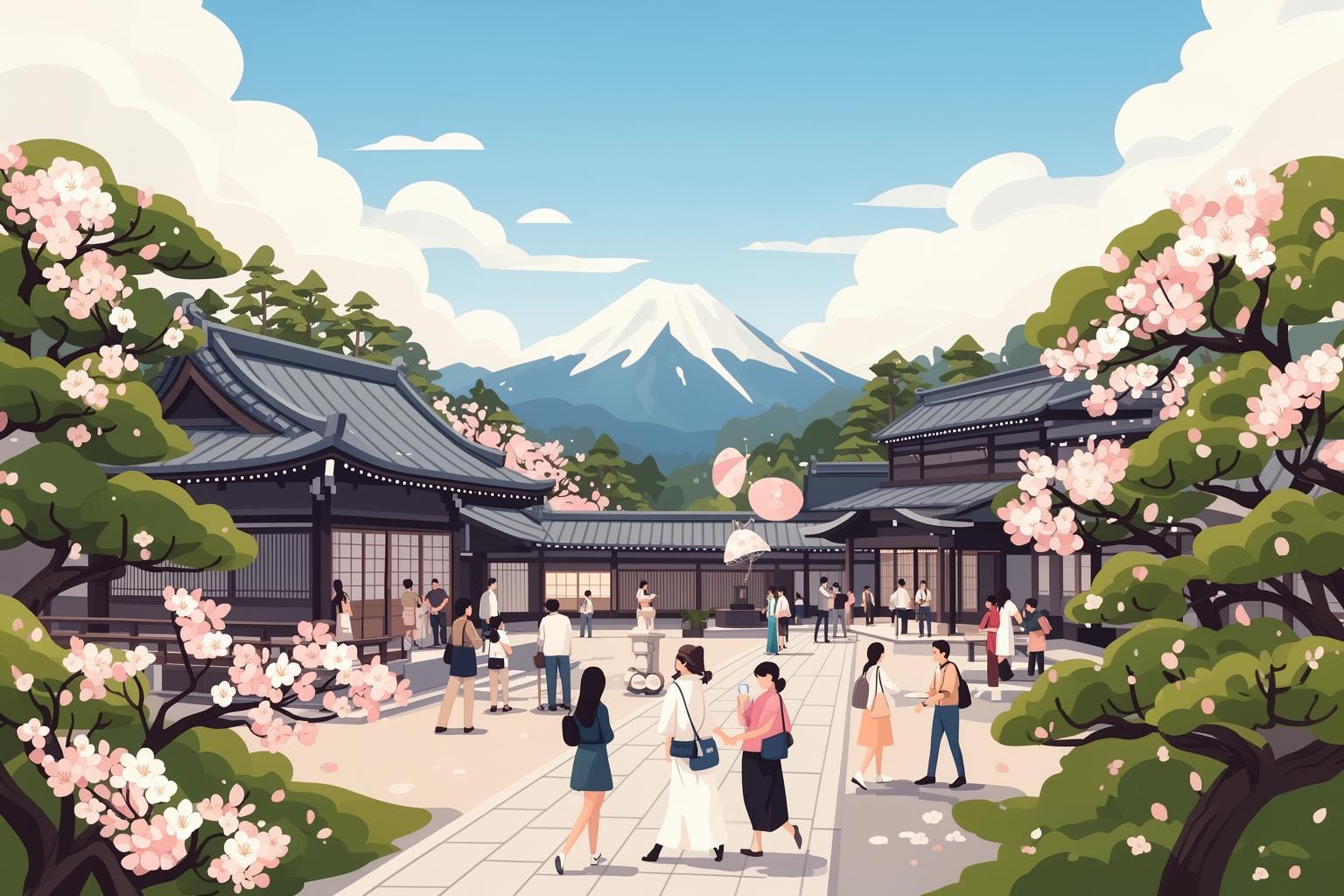
Your pilgrimage aptly begins where legends come to life: Dogo Onsen. As you near the main building, the Honkan, it doesn’t merely appear—it emerges. This stunning, bewildering maze of dark wood, sloping tiled roofs, and delicate white shoji screens is topped by a striking red-lacquered balustrade and the Shinrokaku, a drumming tower that still keeps time with deep, resonant beats. The building feels alive—a complex wooden entity exhaling steam into the cool air. It’s impossible to stand before it without a shiver of recognition, a cinematic sense of déjà vu. Its layered intricacy, the network of external staircases and corridors, and the way it seems to have grown organically over centuries—all evoke Yubaba’s bathhouse from Spirited Away. Though Hayao Miyazaki has cited various inspirations for his fantastical creation, the spirit of Dogo Onsen Honkan is unmistakably embodied in its essence.
A Bathhouse of Myth and Legend
The history here runs as deep and mysterious as the waters themselves. Legends say the spring was discovered when an egret healed its injured leg by dipping it in the water—a story still honored in symbols and carvings throughout the onsen district. Officially, its history spans over a thousand years, making it among Japan’s oldest, if not the oldest, hot springs. The current Honkan, however, was built in 1894, a Meiji Era architectural masterpiece blending Japanese aesthetics with subtle Western influences. It was an ambitious endeavor to revitalize the area, a success clear in its enduring reverence. Stepping inside is like traveling back in time. You exchange your shoes for slippers, the wooden floorboards creaking beneath. The air is thick with the scent of sulfur, damp wood, and history. Attendants clad in traditional yukata move gracefully, guiding visitors through a labyrinth of narrow corridors and steep stairs. Everything feels both intimate and wonderfully disorienting—just as a true spirit world bathhouse should.
The Honkan includes a special wing, the Yushinden, built in 1899 exclusively for the Imperial Family. This rare architectural jewel is the only bathhouse in Japan designed for royalty. Though bathing there isn’t permitted, tours provide a glimpse of its luxurious rooms, adorned with intricate carvings, gold leaf, and custom furnishings. Here, you truly understand Dogo Onsen’s stature—as a place not just for commoners or spirits, but for the Emperor himself.
The Ritual of the Bath
For first-timers, the experience may seem intimidating but unfolds with elegant simplicity. Tickets are purchased at a counter that feels charmingly old-fashioned, offering several options dictating which bath you may use and whether you gain access to a communal tatami resting lounge afterward. The Honkan’s two main baths are the Kami no Yu (Bath of the Gods) on the ground floor and the Tama no Yu (Bath of the Spirits) on an upper floor. Kami no Yu is larger, grander, and livelier, with a granite bath framed by beautiful Izumo stone. Tama no Yu is smaller, more intimate, made from exquisite Aji marble, offering a quieter, refined atmosphere.
After securing your ticket, you’re led to a changing room where you undress and place your belongings in a wicker basket—no modern lockers to disrupt the ambiance. You’re given a small towel for modesty and washing. The key rule of Japanese onsen etiquette is to wash thoroughly before entering the bath. Small stools and washing stations line the bathing area walls. You cleanse yourself, rinsing away the outside world before stepping into the sacred waters. The water is hot, silky, and alkaline, said to soften skin and soothe tired muscles. Immersing yourself is a moment of utter release, sharing the same healing water that has comforted pilgrims, samurai, emperors, and perhaps gods for millennia. Surrounded by high ceilings and steam veiling the faces of strangers, you feel a profound connection to the countless souls who have found solace here.
The ritual continues after your soak. Depending on your ticket, you might don a yukata and be guided to a spacious tatami room. Here, you can relax, cool down, and sip tea—sometimes served with a small Botchan dango rice cracker. The breeze flowing through open windows, the hum of fellow bathers, and the distant drum from the tower create a moment of perfect, timeless tranquility.
Beyond the Main Building: The Modern Wings
While the Honkan remains the pilgrimage’s heart, the story of Dogo Onsen continues to grow. Directly opposite the old building stands Dogo Onsen Asuka no Yu, a striking modern annex opened in 2017. Its design draws inspiration from the Asuka period (592–710), a golden age in Japanese history, and incorporates traditional crafts from Ehime Prefecture. It provides a contemporary yet deeply respectful counterpart to the Honkan, featuring spacious baths, private rooms, and even a projection mapping show in the main hall. A short walk away is Tsubaki no Yu, a larger, more utilitarian bathhouse favored by locals. Though it lacks Honkan’s historic grandeur, it offers an authentic, unpretentious glimpse into the everyday onsen life of Matsuyama. Visiting these other baths lets you appreciate the full spectrum of onsen culture—from the sacred and historic to the communal and everyday.
Walking in the Footsteps of Soseki and Botchan
As you step out of the timeless steam of Dogo Onsen, you enter the world of another story. This one is more grounded, more human, yet just as essential to Matsuyama’s identity. This is the world of Botchan, Natsume Soseki’s cherished 1906 novel. Soseki, one of Japan’s most renowned modern writers, spent a year teaching in Matsuyama in 1895, and his experiences served as the foundation for this satirical and heartfelt tale of a young, impulsive Tokyo teacher navigating the quirks and hypocrisies of a provincial town.
The City as a Living Novel
Reading Botchan before or during your visit transforms Matsuyama from a charming city into a living literary stage. The novel’s protagonist, Botchan, is a man of principle and impatience, a fish out of water who rebels against the perceived backwardness of his new home. His misadventures, conflicts with colleagues—the sycophantic “Red Shirt” and the pompous “Clown”—and his growing friendship with the stoic “Porcupine” unfold against the backdrop of Meiji-era Matsuyama. The city itself is a character in the book, and remarkably, many landmarks Botchan encountered remain central to life here today. Following his footsteps is one of the greatest pleasures of visiting Matsuyama.
Key Locations from the Novel
Your literary journey can start just outside Dogo Onsen Station. Here, you’ll find the Botchan Karakuri Clock, a whimsical clock tower that comes alive on the hour. As music plays, small animatronic figures from the novel emerge and reenact scenes. It’s a charming tribute that immediately immerses you in the story. From this point, the entire city becomes your playground.
The most iconic experience is a ride on the Botchan Train. This diesel-powered replica of the small, quaint steam locomotives that once ran in Matsuyama during Soseki’s era is described in the novel, where Botchan refers to it as a “matchbox-like” train. Today, you can travel in the faithfully recreated green carriages as they chug and hiss between Dogo Onsen and the city center. Conductors in period uniforms manually turn the engine on a turntable at the line’s end, a spectacle in itself. Sitting on the wooden benches, gazing out at the modern city passing by, it’s easy to imagine yourself as Botchan, arriving in this strange new town with a mix of apprehension and defiant pride.
Another significant landmark is Matsuyama Castle. Perched atop Mount Katsuyama, this magnificent original castle overlooks the city just as it did in Botchan’s time. In the novel, Botchan visits the castle and comments on its impressive scale. Getting there is part of the experience; you can take an open-air chairlift or a conventional ropeway to the castle grounds. The climb to the main keep is steep but rewarding. Inside, the castle exemplifies feudal Japanese architecture, featuring polished wooden floors, steep staircases, and samurai armor displays. Yet, the true reward is the view from the top. From this vantage point, you see all of Matsuyama spreading out beneath you, the modern city intertwined with the old, and can almost pinpoint the places where Botchan faced his triumphs and frustrations. It’s a powerful moment of connection, gazing over the very landscape that inspired Soseki.
Naturally, no Botchan pilgrimage would be complete without tasting his favorite snack: dango. The novel famously includes a scene where Botchan eats two skewers of the sweet, chewy rice dumplings at a teahouse after his initial visit to Dogo Onsen. The shopping arcade leading to the onsen is lined with shops selling “Botchan Dango,” typically colored green (matcha), yellow (egg), and brown (red bean paste), in tribute to the story. Finding a small shop, ordering a skewer, and enjoying it while watching passersby is a simple, delicious way to step directly into a scene from the book.
Weaving Your Own Story in Matsuyama
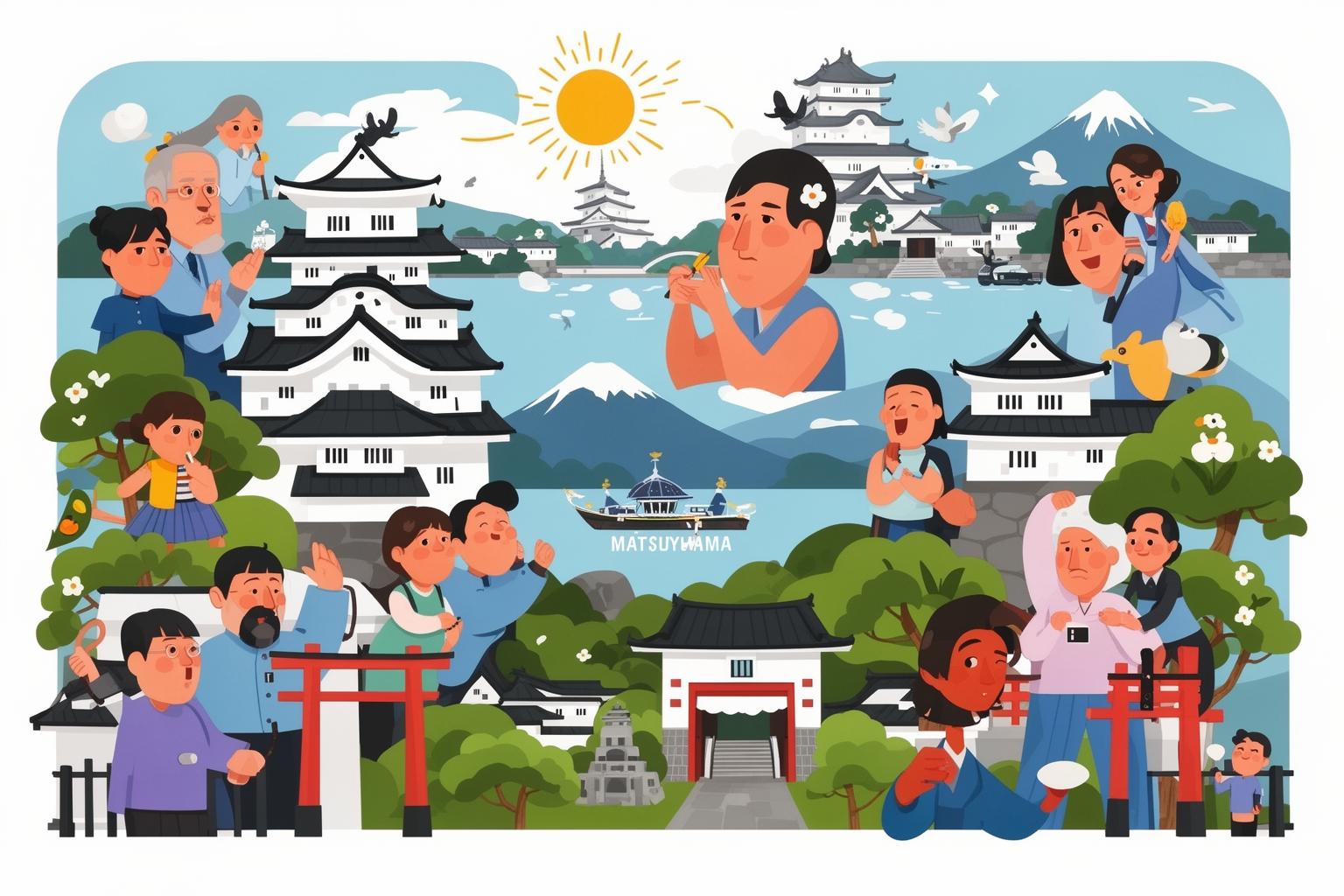
Beyond the well-worn trails of Ghibli enthusiasts and literary travelers, Matsuyama presents a rich mosaic of experiences where you can weave your own story. The city invites you to slow down, explore leisurely, and uncover the subtle details that give it its unique charm. It is in these quiet moments—between the famous landmarks—that Matsuyama’s true spirit comes to life.
A Journey Through Time and Taste
The Dogo Hayikara Dori, a covered shopping arcade linking Dogo Onsen Station to the Honkan, serves as the vibrant heart of the district. The term “Hayikara” is a quaintly old-fashioned word originating from the English “high collar,” used during the Meiji era to describe things that were stylishly Western and modern. This arcade is a delightful blend of eras. Here, traditional crafts like Tobe-yaki pottery and Iyo kasuri textiles sit side by side with shops offering character goods from Spirited Away. The air is filled with the scent of roasting rice crackers, steaming sweet buns, and the crisp, fresh aroma of citrus. Ehime Prefecture is known as Japan’s undisputed citrus capital, and you can find everything from freshly squeezed mikan juice to mikan-flavored beer and ice cream. Don’t miss stopping at one of the small stalls to sample various juices; it’s a refreshing way to savor the local flavor.
For a full meal, Matsuyama’s signature dish is Tai-meshi, or sea bream with rice. There are two main styles. In the central and eastern parts of the prefecture, the fish is cooked whole with rice in a savory broth. The southern style, more common in local restaurants, features delicate raw sea bream sashimi slices arranged atop hot rice, with raw egg and a soy-based dashi sauce poured over to be mixed in. Both styles are delicious and showcase the abundant flavors of the Seto Inland Sea. Another must-try specialty is Jakoten—a rustic patty made from ground whole small fish that is deep-fried. It boasts a robust, savory taste and is a beloved regional comfort food.
Temples of Tranquility
A short walk or tram ride from the lively onsen district leads to a zone of profound spiritual calm. Ishite-ji Temple is the 51st stop on the renowned Shikoku 88 Temple Pilgrimage, a demanding but revered circuit attracting pilgrims worldwide. The temple’s atmosphere contrasts sharply with the refined charm of Dogo Onsen, feeling ancient, eclectic, and wonderfully chaotic. Its grounds are filled with weathered wooden halls, a striking three-storied pagoda, and countless moss-covered statues. The main gate, a designated National Treasure, radiates a deep sense of history. One of the temple’s most fascinating features is a dark, winding underground cave adorned with stone carvings and Buddhist statues. Exploring its eerie, unlit passages is a memorable and slightly unsettling experience, believed to bring blessings to those who complete it. Ishite-ji offers a pilgrimage grounded in centuries of faith and devotion, providing a potent spiritual contrast to the more playful pilgrimages of anime and literature.
Practical Rhythms: Navigating Matsuyama
Reaching Matsuyama is fairly simple. Matsuyama Airport has frequent flights to Tokyo, Osaka, and other major Japanese cities. Alternatively, you can take the Sanyo Shinkansen (bullet train) to Okayama and transfer to the JR Shiokaze Limited Express, a scenic ride crossing the Great Seto Bridge. Once in the city, the best way to get around is by using the Iyotetsu streetcar system. These charming trams weave through the city, linking all the major attractions, including JR Matsuyama Station, the city center, Matsuyama Castle, and Dogo Onsen. A one-day pass offers great value with unlimited rides. For first-time visitors, the tram map is straightforward and user-friendly, making it easy to explore at your own pace.
Choosing the right time to visit can enrich your experience. Spring is enchanting, with cherry blossoms at Matsuyama Castle creating a stunning display. Autumn brings mild weather and beautiful fall foliage. The city can be busy during peak holidays, so booking accommodation and onsen tickets early is advisable, especially if you want to visit the Dogo Onsen Honkan. Whatever the season, Matsuyama maintains a relaxed, welcoming pace that sets it apart from Japan’s larger urban centers.
A Local Guide’s Gentle Advice
To truly savor Matsuyama, embrace its tempo. Wear comfortable shoes, as you’ll be covering a lot of ground on foot. Don’t just rush between sights; take time to sit and absorb your surroundings. Enjoy a coffee at a café in the Okaido shopping arcade. Rest your feet in one of the free public footbaths (ashiyu) scattered around the Dogo Onsen area—they provide a perfect moment to recharge. Don’t hesitate to try the onsen, even if you’re unfamiliar with the customs—locals are generally friendly and helpful. The experience is essential to understanding the essence of this place. Lastly, welcome serendipity. Get lost in the side streets, follow the sound of a distant temple bell, and let the city tell you its own stories, beyond those you came seeking.
A Farewell to the City of Echoes
Leaving Matsuyama feels less like saying goodbye to a city and more like closing a cherished book. The tales of Botchan and the spirits of Dogo Onsen don’t remain behind; they accompany you. They become woven into your own travel story. You’ll recall the sensation of the onsen water on your skin, the rumble of the Botchan train beneath your feet, the sweeping view from the castle keep, and the sweet flavor of dango. This is a city that appreciates the power of story—how a place can become a character and how a visitor can become part of its ongoing narrative. It’s a journey that delights not only the senses but also the imagination. Whether you arrived searching for the world of a fiery teacher or a lost little girl, you leave with something richer: a profound appreciation for a city that beautifully honors its own mythology, inviting every visitor to step inside and discover a little magic of their own. The echoes of Matsuyama will linger long after you’ve departed, a gentle reminder that the best places are those filled with stories.