There are films that you watch, and then there are films that you inhabit. Wong Kar-wai’s 1994 masterpiece, Chungking Express, is defiantly the latter. It’s not just a movie; it’s a mood, a sensation, a neon-drenched daydream of a Hong Kong that feels both hyper-real and fantastically imagined. It’s a cinematic poem about lonely hearts crossing paths in the dizzying urban sprawl, a story of fleeting connections, missed encounters, and the bittersweet hope found in a can of pineapple or a new salad at a late-night snack counter. To walk through the locations of this film is to step directly into its pulsing, vibrant, and melancholic heart. This isn’t about simply finding a backdrop and taking a photo; it’s about chasing the ghosts of its characters—the lovesick Cop 223, the mysterious woman in a blonde wig, the heartbroken Cop 663, and the whimsical, daydreaming Faye. You come here to feel the city’s rhythm, to understand how this metropolis of beautiful contradictions became the film’s most essential character. You come to see if, just maybe, love is only 0.01 centimeters away. Prepare to immerse yourself in the intoxicating, kinetic world that Wong Kar-wai captured so perfectly, a world where every corner holds a story and every moment has an expiration date.
If you’re captivated by the idea of visiting the real-world settings of iconic films, you might also enjoy exploring the filming locations of ‘Out of Africa’.
The Labyrinth of Longing: Chungking Mansions
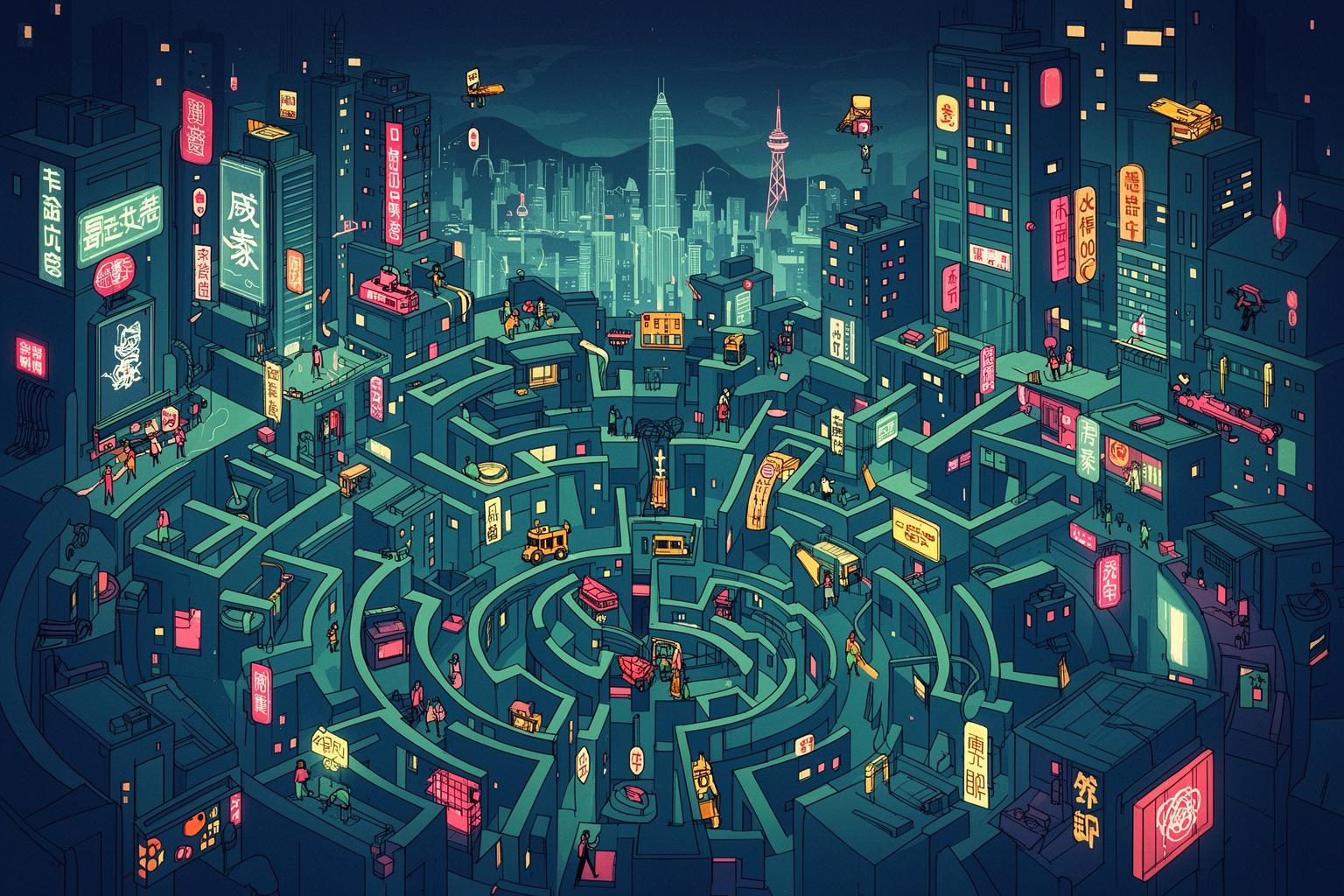
Our journey starts where the film’s opening story ignites, within the chaotic, bewildering, and utterly captivating corridors of Chungking Mansions. Situated in the heart of Tsim Sha Tsui, this expansive complex is much more than just a building; it’s a microcosm of the world, a vibrant hub of global commerce and culture condensed into a single city block. In Chungking Express, it serves as a metaphorical underworld—a maze of shadowy dealings and desperate individuals where Cop 223, portrayed by Takeshi Kaneshiro, frantically pursues suspects while searching for meaning after a painful breakup. Christopher Doyle’s handheld, kinetic camerawork transforms these already narrow hallways into a dizzying, exhilarating vortex, perfectly reflecting the character’s emotional confusion. Stepping inside immediately reveals why Wong Kar-wai chose this location: a place where one can feel completely alone in a crowd, a nexus where countless lives briefly and intensely intersect.
A City Within a City: The Real Chungking
Even before entering, the energy of Chungking Mansions is palpable. From Nathan Road, the building’s exterior appears modest, but the entrance bursts with activity. Men call out, offering everything from tailored suits to hotel rooms and SIM cards. The air is thick with the aroma of spices emanating from the many South Asian and African restaurants inside. This is not a conventional tourist destination; it is a living, breathing organism. Historically, Chungking Mansions has been a first stop for numerous immigrants, traders, and backpackers arriving in Hong Kong, earning its reputation as a global melting pot. It’s a place of remarkable diversity, where dozens of languages mingle within just a few meters. This raw, unfiltered reality is exactly what makes it so cinematic. The building doesn’t pretend to be anything other than what it is: a complex, sometimes intimidating, but always fascinating vertical city. Inside, the ground floor forms a dizzying arcade of money changers offering some of the best rates in the city, tiny eateries serving authentic curry, and shops selling just about everything. It’s easy to get lost—and in a way, that’s the point. The film captures this sensation of drifting in a sea of humanity, a feeling instantly recognizable to any visitor.
Chasing Phantoms: On the Trail of Cop 223
Some of the most memorable scenes from the first half of the film take place within these walls. We watch the woman in the blonde wig (Brigitte Lin) weave through the crowds, coordinating a smuggling operation that ultimately unravels. We witness Cop 223 in a breathless foot chase, the camera struggling to keep pace as he navigates the labyrinth. Though you won’t be able to identify exact locations with pinpoint accuracy—the filming style is intentionally disorienting—you can certainly feel the atmosphere. As you ascend the notoriously slow and crowded elevators to the upper floors, consisting mainly of guesthouses and small residences, the mood shifts. The corridors narrow, the air grows still, and the private lives behind each door become tangibly present. Here, the film’s themes of anonymity and urban loneliness resonate most strongly. You can easily picture Cop 223 jogging to sweat out his heartbreak or the blonde wig woman hiding in a sterile room, weighed down by the world. The best way to experience it is to wander freely, let the building guide you, and observe the constant flow of people passing through—each carrying their own story.
The Sensory Overload
Visiting Chungking Mansions is a full sensory experience. Visually, it’s a collage of glowing signs, worn surfaces, and a steady stream of faces from every corner of the globe. Sonically, it’s a symphony of multiple languages, the clatter of commerce, and the perpetual hum of air conditioning units. The smells are perhaps the most evocative; at one moment, you’re surrounded by the rich aroma of chicken tikka masala, and the next, the sweet scent of perfume or a faint trace of incense. This sensory overload isn’t mere background noise; it is the core of the place’s character, the same chaotic energy Wong Kar-wai translated into his distinctive visual style. He didn’t need to dress the set; he simply pointed the camera and captured the beautiful, overwhelming reality of the location. For travelers, the best advice is to embrace it wholeheartedly. Don’t hesitate. Dive into one of the small restaurants for an authentic, affordable meal. Let the chaos envelop you. In that surrender, you’ll discover the true spirit of Chungking Express.
Practical Navigation for the Urban Explorer
For first-time visitors, Chungking Mansions may seem intimidating. The key is to approach it with an open mind and patience. The building is divided into several blocks (A, B, C, D, E), with elevators in each block that often become overcrowded, usually separated for odd and even floors. It’s best to explore during daylight hours initially. While its reputation was once seedy, the area is generally safe, though—as in any crowded place—it’s wise to remain aware of your surroundings and keep valuables secure. The ground-floor currency exchange booths are famous, but the real treasures lie in the food courts tucked away on the lower levels and scattered throughout. Discovering them feels like a rewarding find. Don’t be afraid to explore, but don’t feel pressured to see everything. Sometimes, the most profound experience is simply standing near the entrance, watching the world flow by, feeling the incredible fusion of cultures that makes this place—and the film it inspired—truly unforgettable.
The Stairway to Somewhere: Central-Mid-Levels Escalator
If Chungking Mansions symbolizes the chaotic, inner world of the film’s first story, the Central-Mid-Levels Escalator captures the rhythmic, almost meditative beat of the second. Crossing Victoria Harbour from the gritty energy of Kowloon to the sleek, vertical landscape of Hong Kong Island, we shift from Cop 223’s frantic running to Cop 663’s melancholic routine. This escalator is more than mere infrastructure; it is a flowing artery of humanity, conveying people through the city’s core, and in the film, it serves as a stage for observation, longing, and the quiet start of a new connection. From this moving vantage point, Faye (Faye Wong) gazes into the life of the heartbroken Cop 663 (Tony Leung), setting in motion one of cinema’s most charming and unconventional love stories.
The Rhythmic Heartbeat of Hong Kong Island
The Central-Mid-Levels Escalator holds the title of the longest outdoor covered escalator system worldwide. It stands as a remarkable achievement of urban design, aimed at easing the commute for residents of the steep Mid-Levels district, ferrying them down to the Central business district in the morning and back up in the evening. Operating downhill from 6 AM to 10 AM and uphill from 10:30 AM to midnight, its daily rhythm is key to understanding its cinematic role. For the characters, it forms part of their unconscious routine, a backdrop to everyday life. But for Wong Kar-wai, it’s a potent symbol. The escalator’s continuous, steady movement sharply contrasts with the emotional stagnation of Cop 663, trapped in a cycle of grief following his recent breakup. Its glass walls evoke a feeling of being both part of the city and detached from it—an observer gliding through others’ lives without truly connecting—a perfect metaphor for the urban experience.
A Voyeur’s Vantage: Faye and Cop 663’s Story
Here, the film’s second narrative finds its visual anchor. Faye, working at the Midnight Express food stall, watches Cop 663 ascend the escalator daily. His apartment is visible from her viewpoint, and the escalator becomes the thread linking their two worlds. Scenes of her looking up at his window or him gazing down at the city rank among the film’s most iconic. The escalator functions as a cinematic device, allowing long, lingering shots that highlight observation and introspection. It is on these moving stairs that we witness subtle shifts in their dynamic—from strangers to the subjects of Faye’s secret, kindhearted intrusions into Cop 663’s life. Walking these same paths, one can feel the voyeuristic intimacy of the story. Peering into apartment windows, catching glimpses of daily life, it becomes clear how easy it is to become captivated by a stranger’s life, to imagine their stories and dream of joining them.
Riding the Dragon’s Back
Experiencing the escalator is a must for anyone visiting Hong Kong, whether or not they are film fans. The ride breaks into several sections, connected by footbridges and platforms, allowing for hopping on and off at will. The entire trip from Queen’s Road Central at the bottom to Conduit Road at the top takes about 20-25 minutes. As you ascend, the city’s character changes dramatically. You begin amid the hustle of the Central market, pass trendy bars and restaurants in SoHo, and eventually reach the quieter, greener residential Mid-Levels. The views are spectacular, offering a unique cross-section of Hong Kong life. Traditional wet markets, sleek art galleries, old tenements, and modern high-rises all unfold in one continuous panorama. It feels like watching a live movie of the city. For the full Chungking Express experience, ride it in the late afternoon or early evening, when city lights start to twinkle and the atmosphere thickens with romantic possibility.
Life Along the Escalator
The neighborhood surrounding the escalator has become one of Hong Kong’s most vibrant areas, partly thanks to the escalator itself. The route is lined with an eclectic variety of businesses. You can step off at Staunton Street or Elgin Street to explore a wealth of international restaurants and chic bars that define SoHo (South of Hollywood Road). Hidden temples, antique shops on Hollywood Road, and quiet parks nestled in the hillsides can also be found. This diversity makes the location so rewarding to explore. It is not a static landmark. You can recreate the film’s ambiance by grabbing a snack from a local vendor, sitting at a street-side bar, and simply watching the endless flow of people glide by on the escalator above. It is a place for people-watching, soaking in the atmosphere, and experiencing the unique verticality of life on Hong Kong Island.
Echoes of Midnight: Lost and Found Eateries
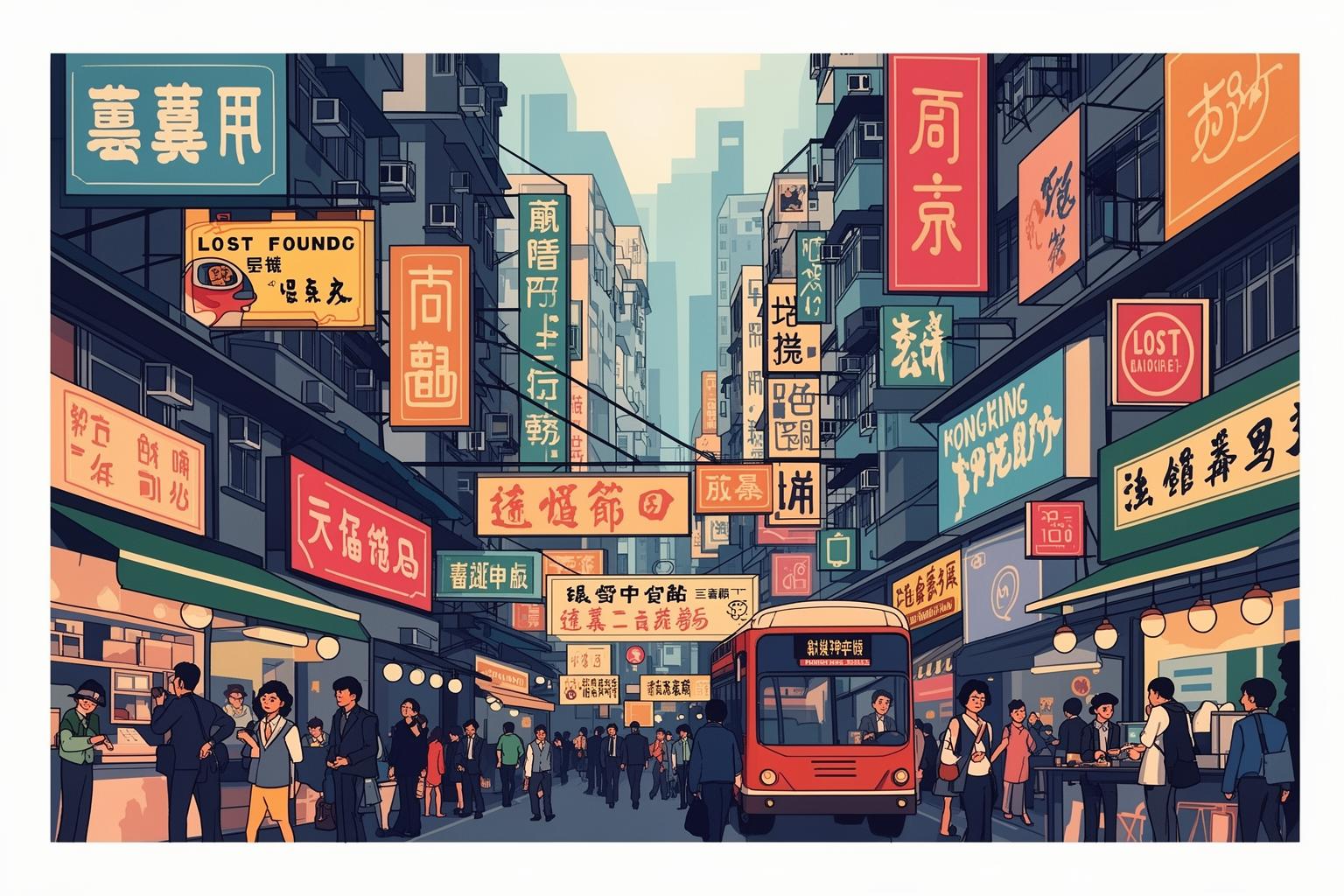
Food and routine lie at the heart of the emotional world of Chungking Express. For the two policemen, their daily meals serve as rituals marking the passage of time and mirroring their inner emotions. Cop 223 fixates on pineapple cans with a May 1st expiration date, symbolizing the deadline for his former love to return. Cop 663 consistently orders the same chef’s salad every night, a soothing routine gently interrupted by the quirky and perceptive Faye. The places where they dine, especially the Midnight Express snack counter, function not merely as settings but as vital spaces for interaction and transformation.
The Ghost of Midnight Express
The Midnight Express food stall, where Cop 663 purchases his nightly salad and where Faye works while playing “California Dreamin'” by The Mamas & the Papas, stands as perhaps the film’s most cherished location. It was once a genuine establishment, a dai pai dong (open-air food stall) situated in the lively nightlife area of Lan Kwai Fong. Here, the film’s most enchanting scenes took place: Faye dancing to her music, her secretive observations of Cop 663, and the quiet chemistry developing between them at the counter. Unfortunately, like many elements in the ever-evolving city of Hong Kong, the original Midnight Express no longer exists. The area has been redeveloped, and the physical stall has vanished, becoming a ghost of cinematic history. This loss, however, is both poignant and strangely appropriate for a film so concerned with memory, change, and the notion that everything has an expiration date. Its disappearance adds a further dimension to the film’s themes, creating a real-world echo of the story’s bittersweet nostalgia.
California Dreaming in Lan Kwai Fong
Though the particular stall has disappeared, the spirit of the area endures. Lan Kwai Fong remains Hong Kong’s premier party district, a maze of narrow streets filled with bars, clubs, and restaurants. Visiting at night plunges you into a sea of neon lights, loud music, and lively crowds—an atmosphere closely aligned with the film’s vibrant energy. The California Restaurant & Bar, where Faye also works and dreams of moving to the sunny state, was a real place in Lan Kwai Fong as well. It has since closed, replaced by other businesses. The pilgrimage here isn’t about locating the exact spot but about immersing oneself in the environment that inspired the film’s second story. It’s about appreciating the contrast between the boisterous street energy and the quiet, internal world of the characters living within it. You can almost catch the faint notes of “California Dreamin'” on the breeze, a testament to the power of Faye’s daydreams amid the nocturnal chaos.
Finding the Flavor Today
How, then, can today’s visitor capture the Midnight Express experience? The answer lies in discovering its contemporary counterparts. Although Lan Kwai Fong is now dominated by more upscale bars, nearby areas in Central, such as Graham Street or the smaller alleys off Wellington Street, still house traditional dai pai dongs and local eateries. The key is to seek out places with open kitchens, simple stools, and menus featuring Hong Kong comfort food. Order a pork chop bun or a bowl of wonton noodles. The experience is about finding a spot that feels authentic and lived-in, where you can enjoy a simple, unpretentious meal while watching city life unfold around you. This is the true legacy of Midnight Express: not a fixed location, but an atmosphere of casual intimacy and comforting routine that can still be discovered in the hidden corners of this incredible food city. It’s an invitation to create your own cinematic food memory.
The Apartment of Talking Objects
In the second half of Chungking Express, the apartment itself takes on the role of a character. Cop 663’s home, situated near the Mid-Levels Escalator, starts as a place filled with deep sorrow and lingering memories. After his flight attendant girlfriend leaves him, he begins conversing with the inanimate objects around him—a damp towel, a bar of soap, a cluster of stuffed animals—projecting his loneliness onto them. The apartment becomes his sanctuary of solitude, a space where his grief is allowed to fester. That is, until Faye, in a whimsical and borderline-illegal act of affection, obtains a spare set of keys and secretly enters his home, transforming both the space and him in the process.
A Sanctuary of Solitude
The apartment scenes are among the most poignant and imaginative in the film. Faye doesn’t steal anything; rather, she ‘improves’ his life. She cleans, buys him new goldfish, changes the labels on his canned goods, and replaces his melancholy music with her lively favorites. Essentially, she rewrites his surroundings, attempting to lift him out of his funk without his awareness. This covert intrusion into his personal space serves as a beautiful and unusual metaphor for how we allow others into our lives. Cop 663, lost in his own world, initially fails to notice the changes, believing that the apartment’s brighter, happier atmosphere reflects his own improving mood. The apartment becomes a battleground between his persistent sadness and her intrusive optimism—a space that physically evolves as the possibility of a new connection begins to take root.
Finding the Feeling on Shelley Street
The exterior shots of Cop 663’s apartment were filmed around Shelley Street, which runs parallel to the Mid-Levels Escalator. While the actual interior (likely a set) isn’t accessible, walking the streets provides a vivid sense of the environment. The buildings stand tightly packed, creating a vertical landscape of windows and balconies. It’s easy to imagine Faye peering across the way or to sense the intimacy of living so close to your neighbors. To explore this area, step off the escalator around Shelley Street or Peel Street and wander up the steep, narrow staircases and alleyways. There, you’ll find yourself amid a world of residential towers, small local shops, and quiet corners that feel far removed from the hustle and bustle of Central below. This is the true magic of the location hunt: discovering the atmosphere that gave the film its unique texture. The feeling of the apartment isn’t tied to a single address but resides in the collective character of these hillside residences, where each window holds the potential for its own story of love, loss, and talking soap bars.
Hong Kong Itself: The Unseen Character
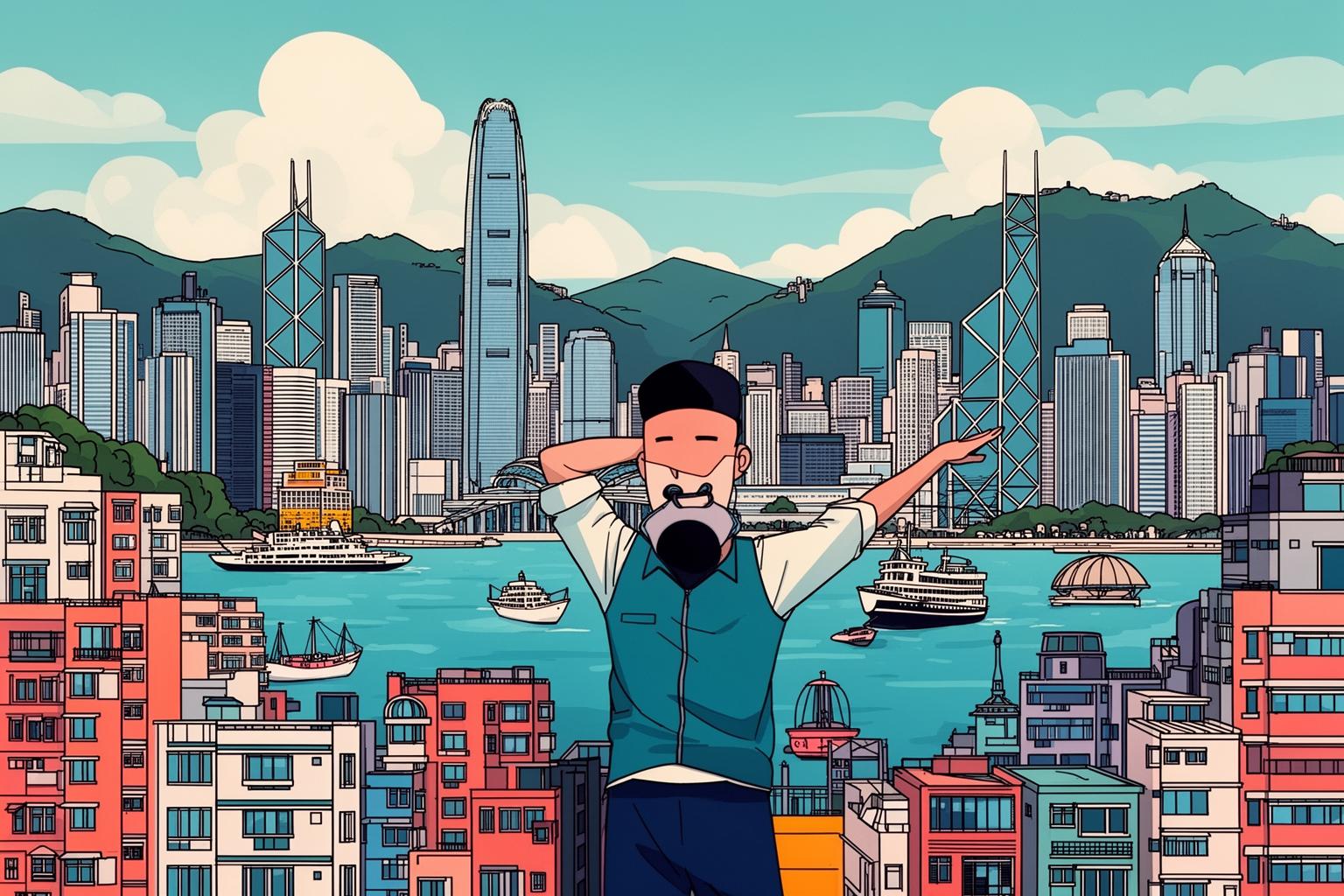
More than any single location, the true star of Chungking Express is the city of Hong Kong. Wong Kar-wai treats the city not as a mere backdrop but as an active participant in the narrative, with its energy and rhythms influencing the lives and emotions of the characters. The film serves as a love letter to Hong Kong in the 1990s, a city on the brink of significant change, imbued with a powerful blend of anxiety, vibrancy, and romanticism. To fully complete this pilgrimage, one must embrace the director’s distinctive vision of the city.
A Tale of Two Cities: Kowloon vs. Hong Kong Island
The film skillfully captures the unique personalities of its two main locations. The first story, set in Tsim Sha Tsui’s Chungking Mansions, embodies Kowloon: dense, chaotic, multicultural, and somewhat dangerous. The camera is restless, and the lighting is dark and moody, reflecting the underworld dealings and the frenetic state of its characters. The second story, set around the Central-Mid-Levels Escalator and Lan Kwai Fong, highlights the Hong Kong Island experience: more orderly, rhythmic, and aspirational, yet tinged with a subtle loneliness. Camera movements become smoother and lighting brighter, mirroring Faye’s sunny disposition and the hopeful, blossoming romance. The film beautifully expresses the geographical and psychological divide between the two sides of Victoria Harbour, illustrating how they can feel like entirely separate worlds, each with its own rules and unique kind of magic.
The Wong Kar-wai Aesthetic: Light, Motion, and Rain
Wong Kar-wai and cinematographer Christopher Doyle crafted a visual style that has been widely imitated but never truly replicated. They use a technique called step-printing to produce a distinctive, dreamlike motion blur, making some scenes appear accelerated while others seem stuck in slow motion. This perfectly captures the characters’ subjective perception of time—how moments of excitement fly by, while periods of heartbreak seem to stretch endlessly. They shoot through doorways, down long corridors, and from behind objects, enhancing the feeling of voyeurism and isolation. Neon lights bleed into shimmering pools of color, and the frequent rain-slicked streets reflect the city back on itself, creating a world that is both gritty and beautiful. As you wander through the city, especially at night, take note of these details. See how the light from a noodle shop spills onto the wet pavement, or how faces in the crowd blur together as you rush past. These are the moments when you cease to be a mere tourist and become a character in your own Wong Kar-wai film.
Crafting Your Own Cinematic Journey
Embarking on a Chungking Express tour is more than simply ticking off locations on a list. It’s about crafting an experience, moving through the city guided by the film’s atmosphere. It means being open to spontaneous encounters and discovering beauty in the ordinary, just as the characters do.
A Suggested Walking Itinerary
For a full-day immersion, begin your afternoon in Tsim Sha Tsui. Brave the sensory overload of Chungking Mansions. Don’t merely glance inside; explore the ground floor, grab a samosa or curry from one of the food stalls, and soak up the international energy. As late afternoon nears, take the iconic Star Ferry from Tsim Sha Tsui to Central. This brief boat ride offers breathtaking views of the Hong Kong Island skyline and serves as a perfect bridge between the film’s two narratives. Once in Central, head to the foot of the Mid-Levels Escalator. Ride it to the top, getting off occasionally to explore side streets like Shelley Street. As evening falls, ride back down and immerse yourself in the lively chaos of Lan Kwai Fong and SoHo. Find a local eatery for dinner—perhaps a dai pai dong tucked away on a side street—and channel the spirit of Chungking Express. Finish your night with a drink at a bar overlooking the city, reflecting on the fleeting moments and connections of your day.
Tips for the Intrepid Cinephile
- Watch the film again just before your trip. Let the images, sounds, and emotions stew in your mind. This will deepen the resonance of the real-world locations.
- Stay spontaneous. The film celebrates chance. If an alleyway seems intriguing, explore it. If a song catches your attention, follow it.
- Travel by night. Hong Kong transforms after dark. The neon lights, bustling night markets, and glistening streets are central to the film’s aesthetic. The city truly comes alive, amplifying its cinematic essence.
- Don’t just look—listen. The Chungking Express soundtrack is legendary. Build a playlist featuring “California Dreamin’,” “Dreams” by The Cranberries (covered in Cantonese by Faye Wong), and the film’s moody score. Listening while wandering the streets offers an immersive experience like no other.
Expiration Dates and Timeless Moments
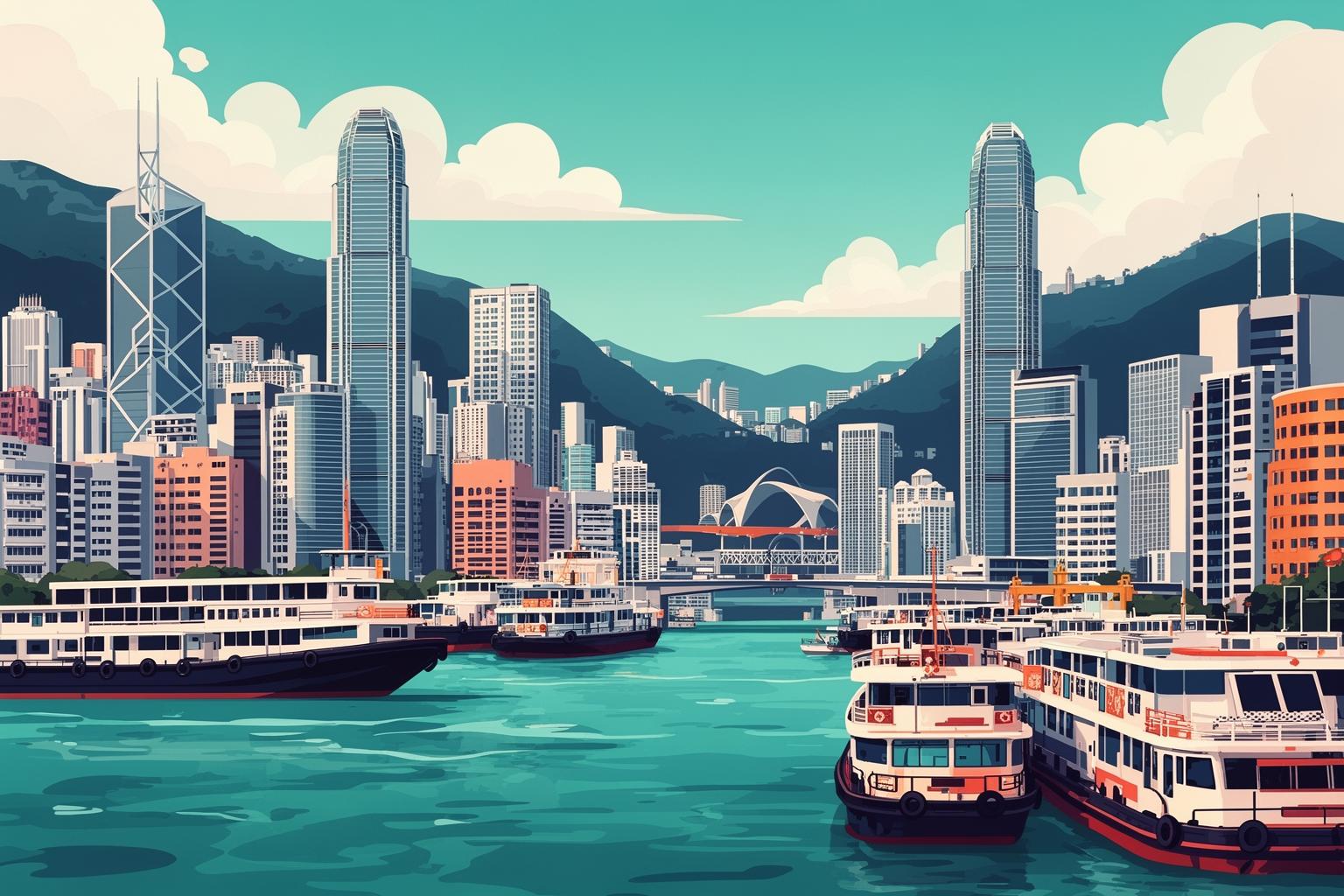
To visit the world of Chungking Express is to encounter the film’s central theme: the passage of time. Some places, like the escalator, still exist. Others, like Midnight Express, have vanished, now surviving only in memory and on screen. But this is not a cause for sorrow. It beautifully reflects Hong Kong itself—a city continually evolving, always dismantling the old to create the new. The film captured a particular moment, a feeling of pre-1997 handover anxiety and romance, yet its themes of love, loneliness, and the quest for connection are universal and timeless. Your journey will not be an exact reenactment of the film, and that is the essence. It is about discovering the echoes of that world in today’s city, about forging your own moments and stories within its vibrant, chaotic, and endlessly inspiring landscape. Because, as Cop 223 learns, while some things may expire, the memories we create and the connections we build can, if we’re fortunate, endure a lifetime.