There are places on this earth that feel like they were dreamed into existence, landscapes so ancient and ethereal they hum with a forgotten magic. Yakushima Island is one of those places. Drifting in the waters south of Kyushu, this pearl of Japan is a world unto itself—a kingdom of moss, granite, and water, where thousand-year-old trees hold court in a silence so profound it feels sacred. For cinephiles and dreamers, its name whispers of another, fiercer world: the primordial battleground of Hayao Miyazaki’s animated masterpiece, Princess Mononoke. This isn’t merely a filming location; it is the very soul of the film, the living, breathing inspiration for its untamed forests and resilient spirit. To step onto Yakushima is to walk through the celluloid and into the myth, to feel the cool, damp air of the Ghibli universe on your skin. The island, a designated UNESCO World Heritage site, is a testament to nature’s enduring power, a place where the line between reality and fantasy beautifully, irrevocently blurs. It’s a journey for the adventurous heart, a pilgrimage to the green, beating core of one of animation’s most powerful stories.
Wandering through moss-draped groves, travelers can experience the island’s timeless allure and even embark on a hiker’s pilgrimage that deepens its cinematic mystique.
The Spirit of the Shiratani Unsuikyo Ravine
The adventure truly begins the moment you step into the Shiratani Unsuikyo Ravine, the island’s most accessible and arguably most magical forest. As soon as you cross the threshold, everything changes. The air thickens with moisture, carrying the scent of damp earth and decaying wood—a fragrance both ancient and vibrantly alive. Sunlight struggles to break through the dense canopy, casting a constantly shifting mosaic of light and shadow on the forest floor. Every surface, and I mean every surface, is blanketed in a lush, velvety carpet of moss. It clings to the twisted roots of primeval cedars, drapes over massive granite boulders, and softens every edge until the entire landscape feels sculpted from green velvet. The soundscape is nature’s symphony: the gentle drip of water from leaf to leaf, the distant rush of a mountain stream, and the cheerful chirping of unseen birds. It’s a place that demands quiet reverence, where you find yourself walking softly and speaking in whispers, as if not to disturb the spirits surely dwelling here.
The Moss Forest of Mononoke Hime
Deep within the ravine lies the core of the pilgrimage: the area famously known as ‘Mononoke Hime no Mori,’ or Princess Mononoke’s Forest. This is it. The very place you’ve imagined. The winding roots of the Yakusugi cedars twist like mythical serpents, their shapes so otherworldly you might half expect them to move. The sheer density and diversity of moss here are astonishing—more than 600 species thrive in this verdant sanctuary. You can almost sense the presence of the Kodama, the little white tree spirits from the film, peeking from behind trees, their heads rattling with a curious rhythm. It’s an immersive, almost overwhelming sensory experience. Every photo you take feels like capturing a frame from the movie, yet no image can fully convey the sensation of being enveloped by such deep, living green. It’s a place to pause, to sit on a moss-covered rock and simply breathe, allowing the profound calm of the forest to seep into your soul.
Taiko Iwa Rock: A View from the Top
The trails through Shiratani Unsuikyo aren’t just about wandering beneath the canopy; they lead to a remarkable reward. The hike to Taiko Iwa, a massive granite outcrop towering above the trees, is essential. The path becomes steeper, the roots more difficult to navigate, but the effort is rewarded many times over. As you emerge from the dense forest onto the sunlit rock surface, the world unfolds beneath you. The view is stunning—a sweeping panorama of the island’s mountainous interior, a rolling sea of green treetops stretching to the horizon. On a clear day, you can make out Miyanoura-dake, the highest peak, standing guard over its realm. It’s a moment of pure cinematic grandeur, the perfect climax to a journey through these enchanted woods. You feel as if you’re standing atop the world, gazing down on the very forest that Ashitaka and San fought to protect. It offers a powerful perspective, a reminder of the vastness and wildness of this extraordinary island.
Whispers of the Jomon Sugi
If Shiratani Unsuikyo represents the soul of Princess Mononoke, then the Jomon Sugi stands as its ancient, pulsating heart. This is far from a casual walk; it is a genuine pilgrimage, a challenging journey to encounter the island’s oldest and most revered inhabitant. The Jomon Sugi is a massive Yakusugi cedar, a twisted, ancient giant believed to be between 2,000 and 7,200 years old. Standing before it is to connect with a history that surpasses most human civilizations. It is a humbling and deeply moving experience—one that pushes your physical endurance yet rewards you with a profound connection to the earth’s past. This tree has witnessed thousands of years, silently observing the unfolding story of the world, and its mere presence feels like a sacred encounter with a living deity of the forest.
A Journey Through Time
The trek to Jomon Sugi is a full-day endeavor, usually taking ten to twelve hours for the round trip. It starts in the pre-dawn darkness with hikers setting out by headlamp to maximize daylight hours. Much of the trail follows the route of an old logging railway, known as the Anbo Trail. Walking along these wooden planks, surrounded by towering trees, feels like stepping back into a forgotten industrial era—a haunting echo of the conflict portrayed in Miyazaki’s film. Initially, the trail is long but mostly flat, lulling you into a steady pace before it ascends into the mountains. You’ll cross rushing streams on swaying suspension bridges, scramble over a network of tree roots, and navigate wooden staircases designed to protect the fragile forest floor. Along the way, you’ll encounter other notable giants, such as the Meoto Sugi (Husband-and-Wife Cedars) and the remarkable Wilson’s Stump—the hollowed remains of an enormous cedar felled centuries ago. You can even step inside its cavernous core and gaze upward through a heart-shaped opening to see the sky—an enchanting moment.
Meeting the Ancient Guardian
After hours of intense hiking, the moment you finally reach the Jomon Sugi is one of quiet victory and profound awe. To safeguard its ancient roots, a viewing platform has been constructed a short distance away, but this does little to diminish the tree’s impact. The tree is magnificent. Its trunk is a twisted mass of wood, shaped by countless typhoons and centuries of slow, steady growth. Its branches stretch toward the sky with nearly defiant vigor. It doesn’t feel like just a plant; it feels like a presence. You can sense its immense age, its resilience, and its quiet majesty. Fellow hikers speak softly, cameras click gently, but mostly, people simply stand and gaze, lost in silent reflection. This is the ultimate forest god—the Shishigami manifest in its most tangible form. It’s a powerful testament to nature’s endurance, a living monument that captures the timeless spirit of Yakushima.
Beyond the Forest: Yakushima’s Coastal Charm
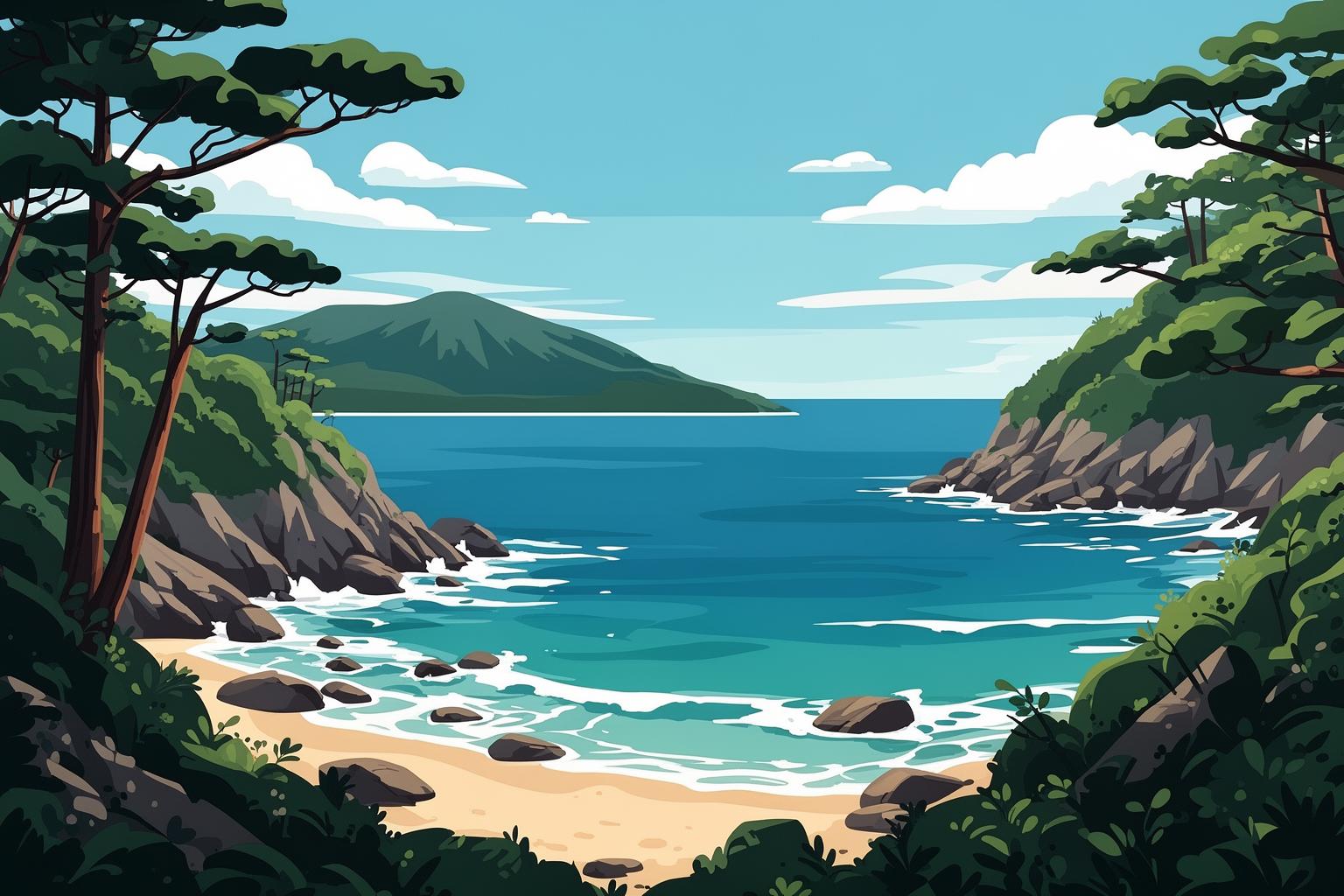
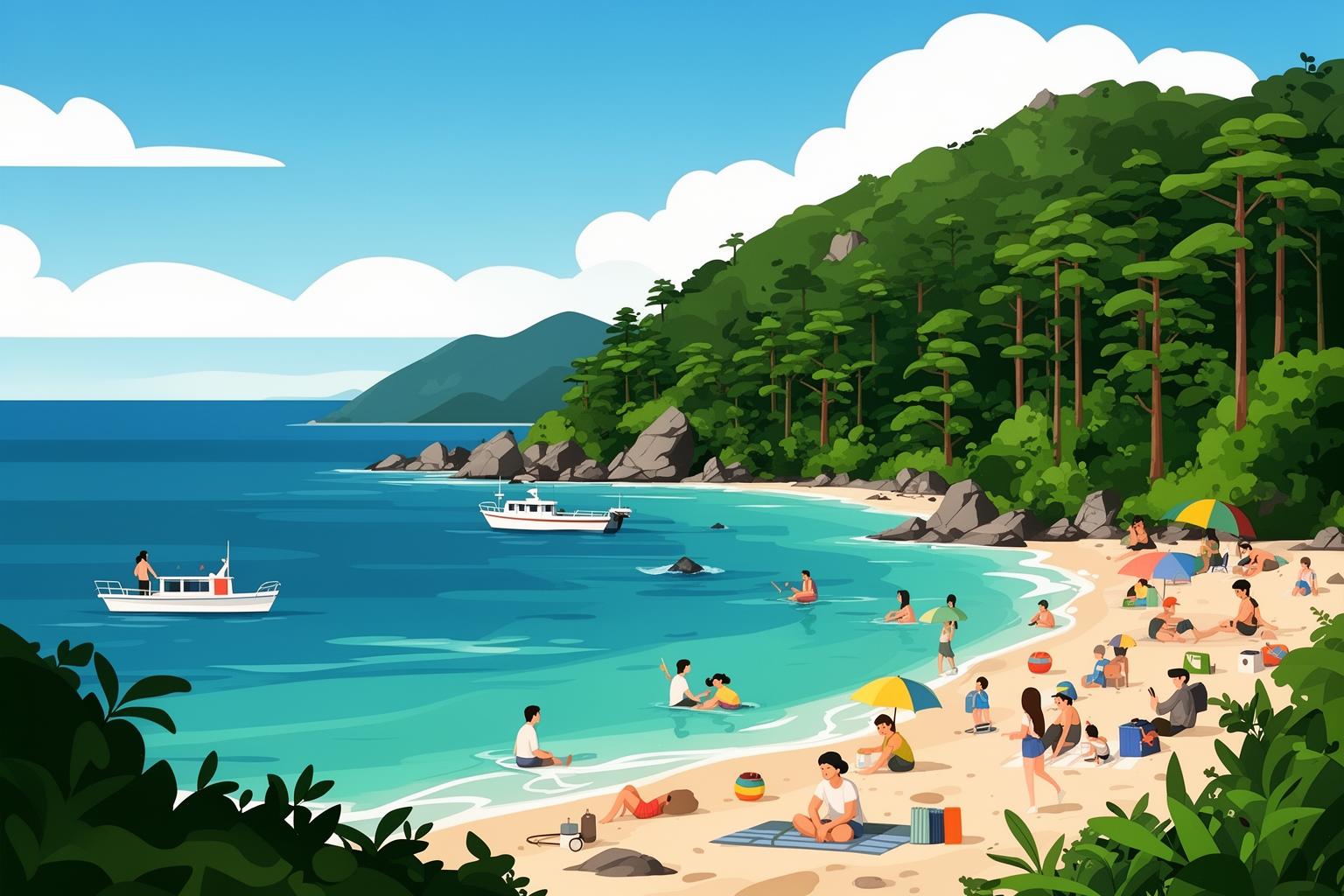
While Yakushima’s ancient forests remain its primary attraction, the island’s rugged coastline presents a distinctly different yet equally enchanting type of beauty. The striking contrast between the dark, mystical interior and the bright, expansive ocean is breathtaking. Here, the island’s granite backbone meets the crashing Pacific waves, shaping a landscape of dramatic cliffs, sandy beaches, and secluded coves. Exploring the coastal loop around the island is essential for a full Yakushima experience, unveiling a gentler, sunnier aspect of this wild place.
Sun, Sand, and Sea Turtles
Nagata Inakahama Beach is truly a sight to behold. This long, stunning stretch of golden sand is recognized as the most important nesting ground for loggerhead sea turtles in the North Pacific. From May to July, female turtles emerge from the ocean under the cover of darkness to lay their eggs in the warm sand. Then, from late summer through autumn, the tiny hatchlings make their hazardous journey back to the sea. Witnessing this ancient ceremony is a once-in-a-lifetime event, but it must be approached with the utmost respect. Local conservation groups offer guided tours to ensure the turtles are not disturbed. Even outside nesting season, the beach itself is a beautiful spot to watch the sunset blaze across the sky over the East China Sea.
The Power of the Tides: Hirauchi Kaichu Onsen
For a uniquely Japanese experience, the Hirauchi Kaichu Onsen is not to be missed. These are not ordinary hot springs but natural rock pools located right at the ocean’s edge, accessible only for a few hours each day during low tide. When the tide retreats, naturally hot, sulfur-rich water fills the rocky basins, creating an ideal seaside bath. Soaking in the warm water while waves crash just feet away is an unforgettable sensation. It’s a rustic, mixed-gender experience with no changing facilities—you simply choose a spot, undress discreetly, and slip into the milky waters. It’s a perfect way to relax tired muscles after a long hike and connect with the raw, elemental forces that shape the island.
Waterfalls and Hidden Pools
Yakushima is an island defined by water, showcased spectacularly in its waterfalls. Oko-no-taki, located in the southwest, is one of Japan’s top 100 waterfalls—a thundering 88-meter drop you can approach closely to feel its cool mist on your face. Further east, Senpiro-no-taki offers a different wonder, where the river has carved a vast V-shaped gorge from a single granite block, with water plunging dramatically into the valley. These impressive natural showcases are easily reachable from the main road, providing outstanding photo opportunities and a chance to experience the powerful force of the water that sustains the island.
Practical Magic: Planning Your Yakushima Pilgrimage
A trip to Yakushima demands a bit more planning than visiting Tokyo or Kyoto, but that’s part of its appeal. Its seclusion is what has kept its magic intact. Getting the logistics right will help make your journey into this wild paradise as smooth and enchanting as possible. A little preparation goes a long way in ensuring your pilgrimage is both comfortable and unforgettable.
Getting There and Getting Around
Your trip to the island will most likely start in Kagoshima, the southernmost major city on Japan’s main islands. From there, you have two primary options. The fastest is a short flight from Kagoshima Airport directly to Yakushima Airport (YAK). A more scenic and popular choice is the high-speed ferry, often called the toppy or rocket, which takes about two to three hours and offers stunning views as you approach the island’s dramatic silhouette. Once on the island, renting a car is almost essential. Although a bus system exists, it runs infrequently and doesn’t reach all the trailheads and points of interest. Having a car gives you the freedom to explore at your own pace, chase sunsets on secluded beaches, or arrive at the Jomon Sugi trailhead before dawn. Be sure to book your car rental well in advance, especially during peak seasons.
When the Rain Gods Speak: Weather and Seasons
There’s a local saying that it rains ’35 days a month’ in Yakushima, and it’s not far from the truth. The island experiences some of the highest rainfall on Earth, but don’t let that discourage you. The rain is the forest’s lifeblood; it’s what makes the moss so vibrantly green and the rivers so pristine. The key is to come prepared. Spring (March to May) and autumn (October to November) are generally the best times to visit, offering milder temperatures and steadier weather. Summer brings warmth but also typhoon season and the heaviest rains in June and July. Winter is cool, and the highest peaks are dusted with snow, creating a tranquil and beautiful setting for experienced hikers. Whatever season you visit, expect rain, embrace it as part of the experience, and you’ll be rewarded with the island’s genuine, mystical atmosphere.
Gearing Up for the Trails
Proper gear is essential for a safe and enjoyable experience on Yakushima’s trails. This is not a place for sneakers and a light jacket. Waterproof gear is your top priority. A dependable waterproof jacket, pants, and a cover for your backpack are vital. Sturdy, well-broken-in hiking boots with strong grip and ankle support are necessary for handling slippery roots and rocks. Dress in layers so you can adjust as you warm up during climbs or cool down during breaks. Bring plenty of water and high-energy snacks, since there are no shops along the trails. If you prefer to avoid traveling with heavy gear, many rental shops in the main towns of Miyanoura and Anbo offer everything from boots and rain gear to backpacks and walking poles.
A Note on Guides
Although many trails, such as those in Shiratani Unsuikyo, are well-marked and can be explored independently, consider hiring a local guide for the Jomon Sugi trek. A guide not only ensures your safety on the long, challenging trail but also greatly enhances the experience. They can pace your hike, share intriguing stories about the island’s ecology and history, and point out subtle details of the flora and fauna you might otherwise miss. They transform a long walk into a captivating story, deepening your connection to the forest you’re traversing.
A Taste of the Island Life
The magic of Yakushima extends beyond its natural beauty to encompass its quiet, welcoming culture. Life in the small port towns of Miyanoura and Anbo flows at a slower, more intentional pace. Taking the time to explore these communities, enjoy the local cuisine, and engage with the friendly residents is an essential part of the journey. The island’s food reflects its environment—fresh, simple, and flavorful. A local specialty you must try is tobiuo, or flying fish, often served grilled or as delicate fried sashimi. The island also produces its own renowned shochu, a distilled spirit, with brands like Mitake offering a smooth, robust taste of the local terroir. Be sure to sample the island’s citrus fruits, such as the sweet tankan and ponkan, which provide a refreshing burst of flavor. Visiting a small, family-run restaurant or a cozy cafe is a wonderful way to relax after a day of hiking and truly experience island hospitality.
The Enduring Message of the Forest
Leaving Yakushima feels like emerging from a vivid dream. The images of the moss-covered forest, the scent of damp earth, and the awe-inspiring presence of ancient cedars linger long after you’ve boarded the ferry back to the mainland. More than just a stunning destination or a pilgrimage for Ghibli fans, Yakushima is a living, breathing lesson. It embodies the central theme of Princess Mononoke: the delicate and often tense relationship between humanity and the natural world. Walking its trails is to grasp what’s at stake, to experience the profound strength and vulnerability of a world that existed long before us and, with care, will continue long after. The island is not merely a backdrop; it is the protagonist of its own epic tale. A visit here invites you to listen, to observe, and to carry a piece of its wild, resilient spirit back into your own world, with a renewed sense of wonder for the magic that still lingers in the quiet, green places.