The air changes the moment you step into the forest. It becomes thick, ancient, and profoundly green. It’s a living atmosphere, heavy with the scent of damp earth, sweet cedar, and millennia of undisturbed life. This isn’t just any forest; it’s a sanctuary, a place where the line between the tangible world and the world of myth feels impossibly thin. This is Yakushima Island, a bastion of primeval nature floating in the waters south of Kyushu, Japan. For countless admirers of Studio Ghibli’s epic masterpiece, Princess Mononoke, this island is more than a travel destination; it is a pilgrimage. It is the very soul of the film, the breathing, pulsing heart of the bewitching and formidable landscapes that Hayao Miyazaki brought to the screen. The gnarled roots of the Yakusugi cedars, the velvet-soft carpets of moss, and the crystalline streams that carve through the granite are not mere inspirations—they are the real-life characters that shaped the story of Ashitaka, San, and the great Forest Spirit.
To visit Yakushima is to walk through a living painting, to feel the weight of its history in the cool, misty air, and to understand on a cellular level why this place was designated a UNESCO World Heritage site. It’s a journey into a world where nature reigns with an untamed, silent, and overwhelming power. It challenges you, changes you, and leaves an indelible imprint on your memory, much like the film itself. This is not a simple sightseeing trip. It is an immersion, an exploration into the profound connection between human creativity and the enduring wilderness that fuels it. Prepare to have your senses overwhelmed and your perception of the natural world forever altered. Here, the whispers of the kodama, the tree spirits of Japanese folklore, feel not like fiction, but like a fundamental truth of the forest, waiting to be heard by those who listen closely.
Experience the forest’s mythic allure from every angle, as a Yakushima journey reveals the timeless secrets whispered by its ancient trees.
The Ancient Heartbeat: Shiratani Unsuikyo Ravine
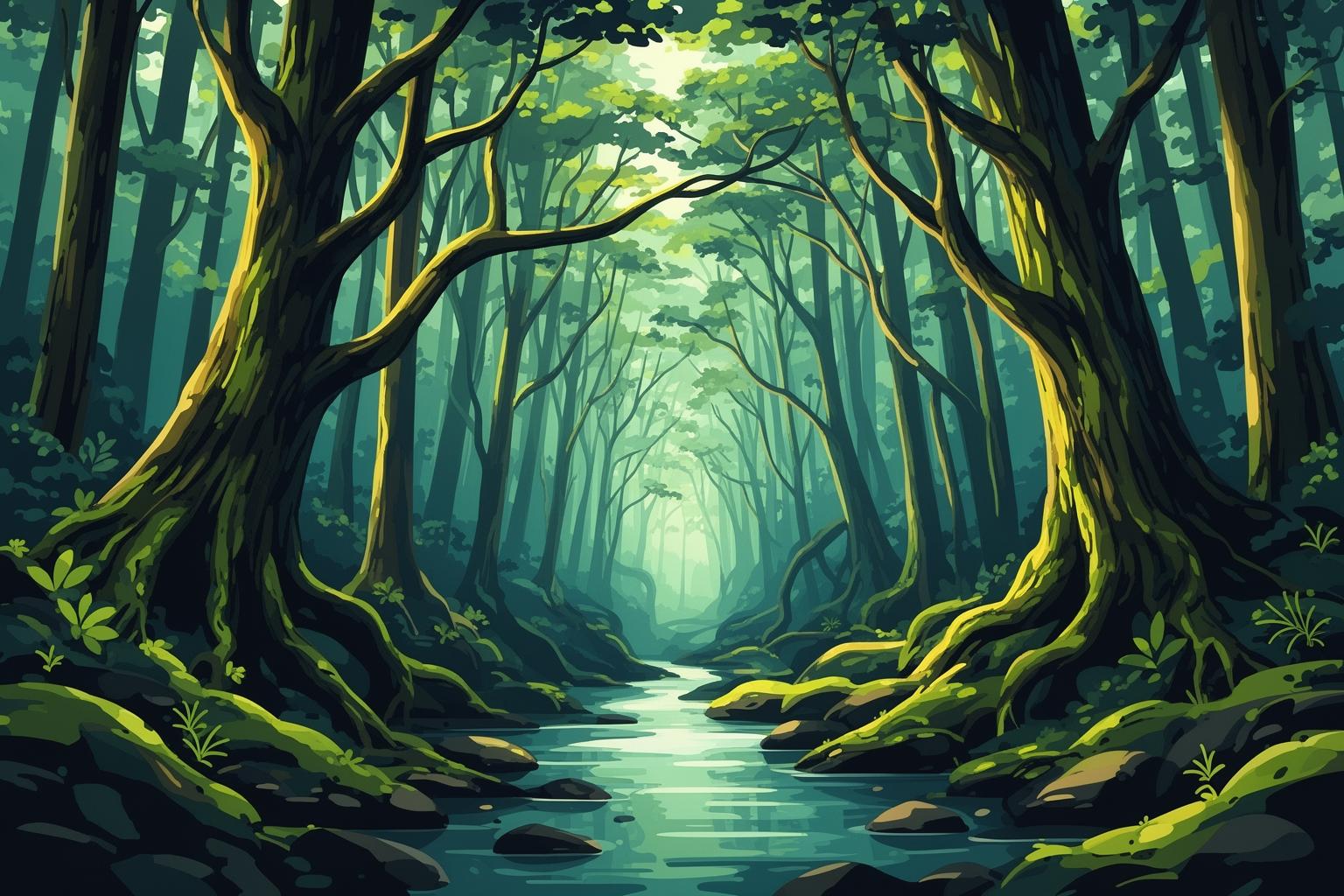
Your journey into the realm of Princess Mononoke truly begins at Shiratani Unsuikyo, the Ravine of White Valley and Cloud Water. This is the core of inspiration, the very spot where Miyazaki’s team spent countless hours sketching and soaking in the atmosphere that would shape the film’s visual heart. The moment you step onto the trail, the modern world fades away. You are immersed in a green so rich and diverse it seems alive with energy. Every surface—the ancient stones, fallen logs, and twisting branches of towering trees—is draped in a thick, radiant layer of moss. Sunlight struggles to break through the dense canopy, and when it does, it filters down in ghostly beams, lighting up dust particles and mist in a way that feels completely cinematic.
Walking Through Miyazaki’s Canvas
The trails here weave through a landscape that is both wild and perfectly arranged. You’ll find yourself climbing over massive roots resembling the sinews of a resting giant and ducking beneath branches that have reached for the light over centuries. The air is filled with the soft rhythm of dripping water and the flowing nearby stream, a constant soundtrack that amplifies the profound serenity of the place. It’s impossible to walk here without a sense of awe. You are a visitor in a realm that existed long before humans and will likely endure long after. The most renowned part of this trail system is a small, especially dense grove officially named “Mononoke Hime no Mori,” or Princess Mononoke’s Forest. Standing amidst moss-covered rocks and ancient, twisted trees, the feeling is surreal. You half expect to glimpse the white fur of a wolf god darting between the trunks or hear the distinct rattle of a kodama’s head turning as you pass. This isn’t merely a place that looks like the film; it’s one that feels like it, embodying the movie’s core theme of nature as a powerful, spiritual force.
A Realm of Moss and Stone
What truly defines Shiratani Unsuikyo’s character is the incredible variety of its textures. Yakushima is home to over 600 types of moss, and here it feels like you can observe them all. From the plush, deep green carpets covering the forest floor to the delicate, fern-like strands clinging to tree bark, the moss softens every surface, creating a world both ancient and ever-renewing. It absorbs sound, crafting a silence that is profound and reflective. Water is the other dominant element, etching paths through granite, pooling in dark, crystal-clear basins, and sustaining the lush ecosystem. This dynamic interplay between hard, unyielding stone and soft, persistent life serves as a visual metaphor for the island itself—a place of endurance, age, and stunning beauty. For any visitor, especially those with a creative spirit, the ravine is an endless well of inspiration, a natural masterclass in design.
Beyond the Ravine: The Spirit of Jomon Sugi
While Shiratani Unsuikyo captures the aesthetic essence of Princess Mononoke, the journey to Jomon Sugi unveils its spiritual heart. Jomon Sugi is more than just a tree; it is a living monument, believed to be between 2,000 and 7,200 years old, making it one of the oldest living organisms on Earth. The trek to see it is not a simple hike but a true pilgrimage—a demanding full-day effort that challenges your stamina and rewards you with a profound sense of achievement and wonder. This journey echoes Ashitaka’s own quest into the forest to find the wisdom of the Shishigami, the Forest Spirit. The ancient cedar’s vast, twisted form and its silent, enduring life force evoke the presence of the film’s powerful, life-giving deity.
The Pilgrimage to an Elder God
The hike to Jomon Sugi generally takes ten to twelve hours round trip, starting well before dawn. The initial hours involve walking along the Anbo Forest Railway, a narrow-gauge track still occasionally used for logging. The flat, steady path through the dark forest, lit only by your headlamp, offers a meditative experience. As dawn breaks, it reveals a landscape of towering cedars and deep valleys. After the railway section, the trail becomes the Okabu Trail, which is steep and challenging, weaving over roots, rocks, muddy patches, and wooden staircases built to protect the forest floor. Along the way, you encounter other magnificent Yakusugi, including Wilson’s Stump—the hollowed remains of a massive cedar so large you can walk inside it. Looking up from within, the heart-shaped opening to the sky is both famous and moving. After hours of exertion, you finally reach the viewing platform for Jomon Sugi. The tree stands apart, its bark scarred and twisted by millennia of storms and hardship, with branches reaching out like the arms of a primordial god. Though you cannot touch it, its presence is palpable, radiating an aura of incredible age and resilience that is both humbling and deeply moving.
Preparing for the Trail
This trek should not be taken lightly. Proper preparation is vital for your safety and enjoyment. Sturdy, waterproof hiking boots are essential. The weather on Yakushima is famously unpredictable, and rain can begin at any time, so top-quality rain gear for both upper and lower body is indispensable. Many hikers choose to hire a local guide, which is highly advisable for first-timers. Guides not only ensure you stay on the correct path but also greatly enhance the experience with their knowledge of local flora, fauna, and history. They help set a suitable pace and know the best spots for breaks. Be sure to bring plenty of water and a substantial lunch, as there are no facilities along the trail. Ordering a “bento” lunch box through your accommodation the night before is a convenient and common practice. Finally, starting early is crucial—most hikers aim to catch the bus to the trailhead around 4 or 5 AM to allow enough daylight to complete the hike safely.
The Island’s Dual Nature: Coasts, Creatures, and Culture
While Yakushima’s deep, moss-covered forests are its most famous feature, they represent only one aspect of the island’s multifaceted identity. The island is a miniature world, a land of striking contrasts where subtropical shores transition into alpine summits. This duality is key to its essence and enriches the narrative behind Princess Mononoke, a story grounded in the clash between distinct worlds.
Where the Forest Meets the Sea
Descending from the misty highlands, you’ll encounter a rugged and stunning coastline shaped by the Pacific Ocean. The granite that forms the island’s heart extends into the sea, creating dramatic cliffs and tide pools teeming with life. One of the most notable coastal spots is Nagata Inakahama Beach, a stretch of golden sand that serves as the largest nesting ground for endangered loggerhead and green sea turtles in the North Pacific. From May to August, witnessing a mother turtle laboriously crawl ashore under the moonlight to lay her eggs is a powerful, unforgettable sight. The island also features several natural “onsen,” or hot springs, right on the coast. At Hirauchi Kaichu Onsen, pools emerge from the rocky shoreline and are accessible only for a few hours each day at low tide, allowing you to soak in geothermally heated waters while watching waves crash just a few feet away. This direct connection to the ocean offers a striking contrast to the enclosed, ancient world of the forest interior.
The True Locals: Yakushika Deer and Yakuzaru Macaques
As you explore the island, it quickly becomes clear you are not alone. Yakushima is home to a thriving population of native wildlife, especially the Yakushika deer and Yakuzaru macaques. These animals are smaller than their mainland relatives and so numerous—particularly along the western Seibu Rindo forest path—that they seem like the island’s true residents. They move with calm confidence, the deer peacefully grazing by the roadside and the monkeys grooming one another in the trees. Seeing them in their natural environment instantly evokes the animal clans of Princess Mononoke—the boars, wolves, and apes who protected their forest home. They stand as a constant, living reminder that this is their realm. While generally tolerant of human presence, it’s crucial to remember they remain wild creatures. Approaching too closely or, especially, feeding them is strictly forbidden, as it disrupts their natural behaviors and the fragile balance of the ecosystem.
Practical Magic: Planning Your Yakushima Expedition
A journey to a place as remote and wild as Yakushima demands a bit more preparation than a trip to a major city, but the effort involved is richly rewarded. Careful planning of access, transportation, and timing will help ensure your trip is as seamless and enchanting as possible.
Reaching the Enchanted Isle
The gateway to Yakushima is Kagoshima, the southernmost major city on Japan’s main island of Kyushu. From there, you have several options. The quickest way is by air; Japan Air Commuter operates multiple daily flights from Kagoshima Airport directly to Yakushima’s small airport, a flight of about 40 minutes. For those on a tighter budget or with more time, ferries provide an excellent alternative. The high-speed jetfoil, known as the “Toppy” or “Rocket,” travels from Kagoshima Port in roughly two to three hours. The slower, much larger car ferry takes about four hours but is considerably cheaper and is the only way to bring your own vehicle to the island. It’s highly recommended to book your transport, especially flights and the jetfoil, well in advance, particularly during busy seasons like Golden Week in spring or Obon in summer.
Navigating the Island Itself
Once you arrive on Yakushima, getting around is your next concern. While there is a public bus system, its infrequent service may not suit the early starts required for major hikes such as Jomon Sugi. For the greatest freedom and flexibility, renting a car is by far the best choice. This enables you to explore the island’s winding coastal roads, stop at isolated beaches, and reach remote trailheads at your own pace. Several rental agencies operate near Miyanoura Port and the airport. Be sure to reserve a car well before your trip, as they tend to book up. The island’s two main towns, Miyanoura in the north and Anbo in the east, serve as the primary hubs, offering the widest range of accommodations—from simple guesthouses (minshuku) to hotels—as well as restaurants, supermarkets, and stores renting hiking gear.
When to Heed the Call
Yakushima can be visited year-round, with each season offering a unique experience. Spring (March to May) is a popular time, featuring mild temperatures, blooming rhododendrons, and fresh green growth. Autumn (October to November) is another prime season, with cool, crisp air, stable weather, and stunning fall colors at higher elevations. Summer brings heat, humidity, and the rainy season, or tsuyu, which typically lasts from late May through June. The local saying that it rains “35 days a month” is only a slight exaggeration; the island receives some of the highest rainfall in the world. This abundant rain creates the lush, moss-covered environment but means you must always be prepared for sudden downpours. Late summer into early autumn is also typhoon season, which can disrupt travel plans. Winter is cool, with snow covering the highest peaks and creating a serene, beautiful landscape for experienced hikers, though some trails may be inaccessible.
Capturing the Spirit: A Photographer’s Perspective
As a photographer, Yakushima represents both a dream and a challenge. Its visual grandeur is overwhelming, yet capturing its true essence—the sense of antiquity and vibrant life—in a two-dimensional image proves to be a formidable endeavor. The island encourages you to see differently, to seek out the subtle stories told through light and texture.
Chasing the Light
The forest is a low-light realm, filled with deep shadows and fleeting highlights. A tripod becomes your best ally here, enabling long exposures that reveal the delicate details in the moss and transform flowing streams into silky ribbons. A polarizing filter is also essential for cutting through glare on wet leaves and enriching the greens and blues. Above all, patience is the most vital tool. The light shifts constantly as mist drifts and the sun moves across the sky. Waiting for the perfect moment when a sunbeam strikes a twisted cedar or a glowing patch of moss can make all the difference. You must also remain vigilant in protecting your equipment—the humidity is intense, and sudden rain is always a risk. A sturdy waterproof camera bag and a lens cloth are indispensable companions on any trek.
The Feeling Beyond the Frame
Eventually, you realize that the most compelling images from Yakushima aren’t the vast, sweeping landscapes. Instead, they are often the intimate details: the intricate pattern on a leaf, the way water droplets cling to moss, the ancient texture of Yakusugi bark. These small moments convey the broader spirit of the island. Yet, there comes a time when the camera must be put aside. There is a sensation here that no lens can capture—a feeling of being a small, fleeting part of something eternal and vast. It exists in the silence between water droplets, in the cool air brushing your skin, in the simple act of placing your hand on a tree that was a sapling during the height of the Roman Empire. To truly experience Yakushima, you must be fully present, allowing its quiet, potent magic to permeate your very bones.
A Parting Whisper
Leaving Yakushima feels like awakening from a vivid dream. The transition back to a world of concrete and traffic is unsettling after being enveloped in such a primal force. You carry the forest with you—the scent of cedar, the memory of endless green. The island is much more than just the setting for a cherished film. It is the source of its enchantment, proof that worlds as magical and profound as those created by Studio Ghibli exist right here on our planet, waiting to be explored. A trip to Yakushima serves as a reminder of the deep, unbreakable connection between human creativity and the natural world. It highlights the urgent need to protect these ancient places, not only for their ecological importance but also for their power to inspire, humble, and reconnect us with something essential within ourselves. The whispers of the kodama may be subtle, but in Yakushima’s forests, if you stand quietly and listen, you can hear them clearly.