Some films are merely watched; others are felt, experienced in a visceral, gut-punching way that leaves an indelible mark on your soul. Ridley Scott’s 2001 masterpiece, Black Hawk Down, is firmly in the latter category. It’s not just a war movie; it’s a terrifying, chaotic, and profoundly human symphony of survival against impossible odds. The film throws you directly into the dust-choked streets of Mogadishu, Somalia, during the ill-fated 1993 raid, and it never lets you go. For over two hours, the grit, the fear, and the deafening roar of combat are your constant companions. This realism, this raw intensity, is why fans and cinephiles remain captivated decades later. It’s also what inspires a unique kind of pilgrimage—a journey not to a fictional fantasy world, but to the very real streets where this harrowing story was brought to life. But here’s the twist in our journey: we are not heading to Somalia. The Mogadishu you see on screen, with its sun-bleached walls and labyrinthine alleys, was masterfully recreated hundreds of miles away, on the shores of the Atlantic, in the vibrant kingdom of Morocco. Our pilgrimage takes us to the twin cities of Rabat and Salé, the sprawling urban landscapes that stood in for one of the most intense battlefields of modern history. This is a journey into the heart of filmmaking magic, a walk through the living, breathing sets of a modern classic, and an exploration of the incredible North African cities that made it all possible.
If you’re captivated by the idea of visiting the real-world backdrops of powerful cinema, you might also enjoy a pilgrim’s journey through the timeless world of Jules and Jim.
The Moroccan Masquerade: Why North Africa Became 1993 Somalia
Recreating the Battle of Mogadishu posed a monumental challenge for director Ridley Scott. Filming in the actual city was, and still is, impossible due to ongoing instability. The production required a location that could convincingly represent the Somali capital in appearance while also offering the extensive logistical support necessary for a Hollywood blockbuster of this magnitude. This search brought them to Morocco, a nation with a rich history of collaborating with international film productions. The choice was driven by multiple factors, blending architecture, atmosphere, and practical considerations.
Architectural Twin
The main attraction was the striking resemblance of Rabat and its neighboring city, Salé, to early 1990s images of Mogadishu. The ancient medinas—the historic walled old towns—in both cities provided a natural maze of narrow, winding streets, vibrant marketplaces (souks), and densely clustered, low-rise buildings. The sun-baked, earth-toned plaster walls, intricate doorways, and organically disordered street layouts closely matched the news footage and photographs of Mogadishu the production team carefully examined. There existed a shared architectural language, a common thread between North and East African urban design that made the illusion seamless. Walking through Rabat’s medina today, it’s clear why Scott was so convinced. The way sharp light pierces the alleyways, casting long, dramatic shadows, combined with the constant buzz of city life, creates an authentic sense of immersion essential to the film’s documentary-style realism.
A Film-Friendly Nation
Aside from visual similarities, Morocco provided an established, highly efficient filmmaking infrastructure. Under King Mohammed VI’s patronage, the Moroccan government has actively promoted foreign productions for decades. This resulted in a smooth permit process, a large pool of skilled local crew, and, crucially, full cooperation from the Royal Moroccan Armed Forces. The latter was non-negotiable for Black Hawk Down. The film demanded enormous military resources and personnel. The Moroccan military supplied thousands of soldiers to serve as extras portraying both Somali militia and civilians. They also allowed access to military equipment, vehicles, and bases, which were vital for executing the film’s complex action scenes. Such state-supported backing was rare and essential to achieving the scale and authenticity the film required.
The Human Element: A City of Extras
A film like Black Hawk Down depends heavily on conveying chaos and densely populated scenes. Ridley Scott needed to fill the streets of his “Mogadishu” with thousands of people to create a believable, vibrant environment. The residents of Rabat and Salé answered this call. The production hired a vast number of local Moroccans as extras, whose energy and presence resonate in every frame. Production designers worked tirelessly to transform entire city blocks, adding Somali-language signs, political murals, and the remnants of conflict, but it was the people who truly animated the scenes. For the Moroccans involved, it was more than just work; it offered a fascinating and sometimes intense glimpse into the world of epic filmmaking. Their participation forms a crucial part of the film’s success, grounding Hollywood action in a palpable, human reality.
Walking the Combat Zone: Exploring Rabat and Salé
A pilgrimage to the world of Black Hawk Down involves more than just visiting a single, static film set. It means immersing yourself in the vibrant, living cities that served as the backdrop for the story. The key locations are scattered across Rabat, the modern capital, and Salé, its older and more traditional neighbor across the Bou Regreg river. Exploring these areas is a journey through time, both into the historical core of Morocco and the cinematic chaos of 1993.
The Heart of the Medina: The Streets of Bakara Market
Most of the film’s intense street-level combat scenes were shot within the winding medinas of Rabat and Salé. These ancient walled cities form a dizzying labyrinth of narrow alleys, hidden courtyards, and lively squares. Here, you can truly feel the film’s spirit. As you pass through one of the old gates, such as Bab El Had in Rabat, the modern city fades away. The air thickens with the scents of spices, leather, and fresh mint tea. The calls of vendors, the hammering of artisans, and the buzz of countless conversations replace the sound of traffic.
These very streets stood in for the Bakara Market area, the operational hub for Somali warlord Mohamed Farrah Aidid. Tracking down the exact alleyways used for specific scenes is a thrilling, though challenging, treasure hunt. There are no plaques or signs to guide you—you must rely on your memory of the film. Look for the sharp corners where the Rangers took cover, the open doorways offering brief sanctuary, and the wider streets where Humvees raced through. A key area to explore is the network of streets around Rue des Consuls in Rabat. While now famous for its artisan shops, the smaller side alleys and parallel paths there were transformed into a warzone. It’s here that the brilliance of the location scouts shines through. The architecture naturally provides cover and ambush spots, making the tactical struggles faced by the soldiers in the film feel terrifyingly authentic.
The Target Buildings: The Olympic Hotel and Beyond
Several important buildings in the film correspond to real locations in Rabat and Salé. One of the most notable is the building used as the exterior of the Olympic Hotel, the target of the initial raid where Aidid’s lieutenants were gathered. This site is widely believed to be a large residential building in Rabat’s Hay El Fath district, a more modern area outside the medina. Although it’s a private property and off-limits inside, its distinctive structure is recognizable to devoted fans. Locating it requires some detective work, comparing film screenshots with the local architecture. Discovering this link creates a direct connection between the cinematic world and the physical one.
Other buildings across the cities were dressed as various key locations. The production skillfully used different camera angles and set dressings to make one building appear as multiple places. A nondescript corner building in Salé might have served as a militia base in one scene and a civilian home in another. The best way to experience this is by wandering without a fixed plan. Let the surroundings guide you. Turn a corner and you may suddenly recognize the texture of a wall or the shape of a window from a memorable scene—like when Sergeant Eversmann’s chalk squad works to secure a building. This spontaneous recognition is the true reward for any film pilgrim.
The First Crash Site: Super 6-1
The first Black Hawk helicopter to be shot down, Super 6-1, piloted by Cliff Wolcott, marks one of the film’s most pivotal and shocking moments. The chaotic crash scene and the desperate fight to control the site were filmed in a specific square within one of the cities. Fan research and reports suggest the location is in a more residential part of Salé, an open area spacious enough to hold the wreckage mock-up and the intense action filmed there. The production built a full-scale replica of the downed helicopter, surrounded by debris and pyrotechnics to create the devastating aftermath. Today, the square has likely returned to normal—a place where children play and neighbors gather. Yet standing there, you can almost hear the echoes of the film: frantic radio calls, incoming RPGs, and soldiers’ shouts. It’s a powerful feeling to stand on a quiet Moroccan street and imagine the incredible cinematic violence that unfolded there.
The Military Footprint: Kenitra and the “Mogadishu Mile”
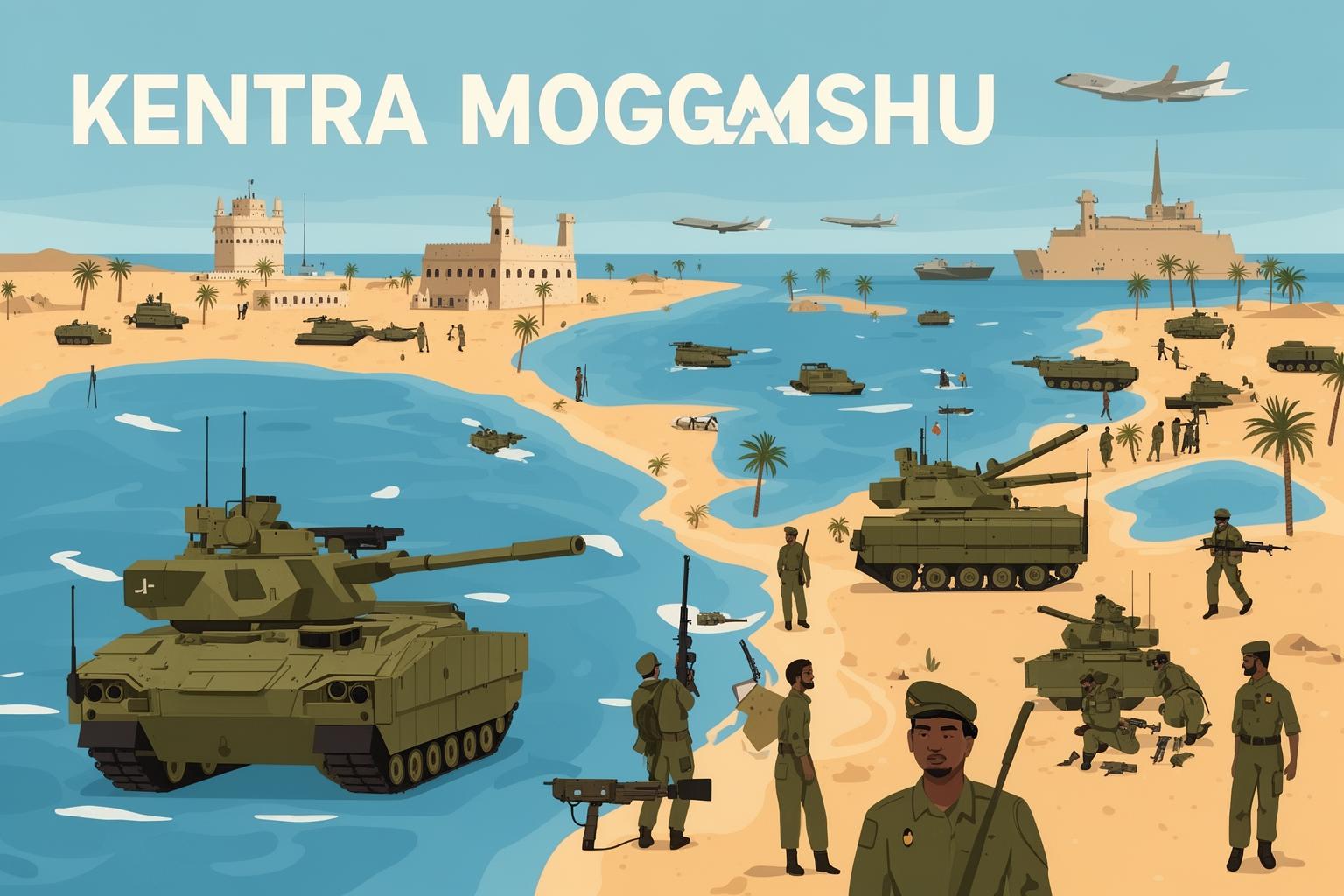
While Rabat and Salé served as the urban core of the film, the production’s logistical and military foundation was situated elsewhere. Much of the filming, especially scenes involving the military base and the iconic final run, took place in and around Kenitra, a city about an hour north of Rabat.
The American Base: Kenitra Air Base
Kenitra has a longstanding military history, having formerly operated as a U.S. Naval Air Station. This made its air base an ideal stand-in for the American military base and airfield at Mogadishu Airport, headquarters of Task Force Ranger. The hangars, barracks, and tarmacs at Kenitra were heavily used for the film’s opening scenes, where the soldiers are introduced and the mission is planned. During filming, the actors underwent intense boot camp training led by former Special Forces operatives to ensure their movements, weapon handling, and camaraderie appeared genuine. Although the base is still an active military facility and not open to the public, its perimeter and nearby areas convey the vast scale of the operation. The flat, open terrain around Kenitra sharply contrasts with the dense urban landscape of Rabat, reflecting the real-world geography along the Mogadishu coast.
The Final Run to the Stadium
The film’s intense climax—the “Mogadishu Mile”—shows the surviving soldiers, left without vehicle support, forced to run on foot from the crash site back to the safety of the Pakistani-controlled stadium. These exhausting, desperate scenes were filmed on the outskirts of Kenitra and parts of Salé. The production team discovered long, straight roads and industrial zones that effectively doubled for the streets leading out of Mogadishu’s center. These areas were dressed to depict the battle’s devastation, with burning cars and scattered debris along the route. Walking or driving these roads today, one can sense the tremendous endurance the characters needed to complete the run. The wide-open spaces feel exposed and perilous, perfectly capturing the soldiers’ vulnerability after being confined in the city’s cramped quarters for so long. The “stadium” itself was created through a mix of an actual Moroccan stadium and clever set design, representing the final refuge after a night of unimaginable horror.
A Practical Guide for the Film Pilgrim
Embarking on a journey to the filming locations of Black Hawk Down offers an adventure that combines film history with Morocco’s rich cultural tapestry. A bit of planning can greatly enhance your pilgrimage. Here are some practical tips to help you navigate your mission.
Getting Your Boots on the Ground
Your main entry point will be Rabat-Salé Airport (RBA), which is well-connected to major European hubs. From the airport, taking a taxi is the easiest way to reach your accommodation in either Rabat or Salé. These two cities, separated by the Bou Regreg river, are linked by a modern tram system and several bridges, making travel between them easy and efficient. The tram also provides a great way to get oriented and observe the contrast between Rabat’s grand, French-colonial boulevards and Salé’s more traditional ambiance.
Navigating the Medina: Embrace Getting Lost
The medinas are the soul of the experience, but they can be confusing for first-time visitors. While maps help to some extent, the best approach is to embrace the chaos. Allow yourself to get lost—each wrong turn reveals a new discovery, such as a hidden spice market, a peaceful fountain, or a beautiful tiled doorway. This is the most authentic way to experience the city and the closest you’ll come to feeling the disorienting environment shown in the film. Wear comfortable shoes as you’ll be walking on uneven cobblestones. If you do lose your way, locals are incredibly friendly and will almost always gladly guide you, often with a smile and shared laughter.
Timing and Atmosphere
Morocco can be visited year-round, but the ideal times are spring (March to May) and autumn (September to November), when the weather is pleasantly warm. Summers can be extremely hot, adding to the authenticity of a Black Hawk Down experience but also potentially exhausting. To fully capture the film’s ambiance, try exploring the medina early in the morning or late in the afternoon. The “golden hour” before sunset is especially magical, casting long shadows that dramatically reshape the alleyways, making them feel exactly as they did on screen. The low, angled light enhances the textures of the walls, creating a breathtakingly cinematic effect.
Respectful Exploration
While seeking filming locations, remember you are in a living city, not a theme park. The streets, squares, and buildings are the homes and workplaces of many. Be respectful when photographing; always ask permission before taking a person’s picture, particularly in the more traditional areas of Salé. Dress modestly, especially when visiting religious sites or conservative neighborhoods. Learning a few basic Arabic or French phrases, like “As-salamu alaykum” (Peace be upon you) or “Merci” (Thank you), will greatly help in creating positive interactions. This respect for local culture will enrich your journey and ensure you are warmly welcomed.
Beyond the Battlefield: The Soul of Morocco
While your trip centers on locating filming sites, the real enchantment is found in uncovering the culture that surrounds them. Morocco is a land of vibrant hues, captivating aromas, and heartfelt hospitality. Your journey presents a unique perspective through which to experience this remarkable country.
A Taste of Morocco
Between your adventures, indulge in the local cuisine. Begin your morning with a traditional breakfast of msemen (a flaky, square-shaped pancake) paired with a glass of sweet mint tea, the cornerstone of Moroccan social life. For lunch, seek out a small café in the medina and savor a tagine—a slow-cooked stew of meat or vegetables with prunes, apricots, and fragrant spices, prepared in its distinctive conical earthenware pot. In the evening, if you visit Marrakech, spend time at the Djemaa el-Fna square, or in Rabat, find a lively food stall offering grilled meats or harira, a hearty lentil and tomato soup. The cuisine is more than nourishment; it is an essential element of the cultural experience.
The Living History
Look beyond the cinematic backdrop to appreciate the deep history of the area. In Rabat, explore the Kasbah of the Udayas, a magnificent 12th-century fortress at the river’s mouth, featuring whitewashed walls and striking blue doors, with breathtaking views of the Atlantic. Discover the Chellah, a medieval fortified necropolis housing both Roman ruins and Islamic sanctuaries. In Salé, often missed by tourists, you’ll encounter a more intact and authentic medina, boasting a grand mosque and historic madrasas. These sites share a story that spans centuries, long predating Hollywood, and offer rich context for the city that eventually became Mogadishu.
The Echoes of a Film, The Heartbeat of a City
Returning to these Moroccan streets decades after Ridley Scott and his crew packed up feels surreal. The bullet holes have disappeared, the wreckage cleared away, and the Somali-language signs painted over. The city has reclaimed its own identity. Yet, the echoes of Black Hawk Down linger for those who know where to look and, more importantly, how to feel. You sense it in the oppressive midday sun beating down on a narrow alley, in the disorienting maze of the medina where every corner could hide friend or foe, and in the silhouettes of men gathered in a doorway, their faces shrouded in shadow.
Walking these streets allows you to appreciate the immense artistry behind the film. It stands as a testament to cinema’s power to transform one place into another, crafting a world so convincing it feels real. But beyond that, it provides an opportunity to connect with a place and people far removed from the conflict shown on screen. Your journey might begin with a search for Hollywood history, but it ends with a profound appreciation for Moroccan culture. You arrive seeking the ghost of Mogadishu and leave having discovered the vibrant, beating heart of Rabat and Salé. The film’s famous tagline was “Leave No Man Behind.” On this trip, you’ll realize the true mission is to leave no sight unseen, no flavor untasted, and no friendly smile unreturned. You leave a part of yourself in these ancient streets, and they, in turn, become a part of you. The battle is long over, but the story of this place—both real and cinematic—endures.