Welcome to the heart of a paradox, a city of impeccable design and quiet civility that served as the stage for one of the most brilliantly uncomfortable cinematic experiences of the 21st century. We’re diving deep into the world of Ruben Östlund’s Palme d’Or-winning film, The Square. This isn’t just a movie; it’s a scalpel that dissects the fragile membrane of our social contract, the unspoken rules that keep our civilized world from collapsing into primal chaos. And its operating theater is the magnificent, historic, and achingly stylish city of Stockholm. To walk through the filming locations of The Square is to walk through the very ideas the film confronts. It’s a journey that places you directly inside the gilded cage of the contemporary art world, the sterile canyons of modern urban living, and the public spaces where our best and worst selves collide. Our guide today leads us through grand palaces masquerading as museums, imposing towers that whisper of isolation, and the very spots where the veneer of society was stripped bare, leaving audiences squirming with recognition. This is more than a location scout; it’s an exploration of how physical space shapes our behavior, our morality, and our deepest anxieties. Prepare to step into the sanctuary of trust and caring, and to question everything you find inside.
If you’re inspired to explore other cinematic pilgrimages, consider chasing the ghosts of the French New Wave in Godard’s Paris.
The X-Royal Museum: A Palace of Art and Power
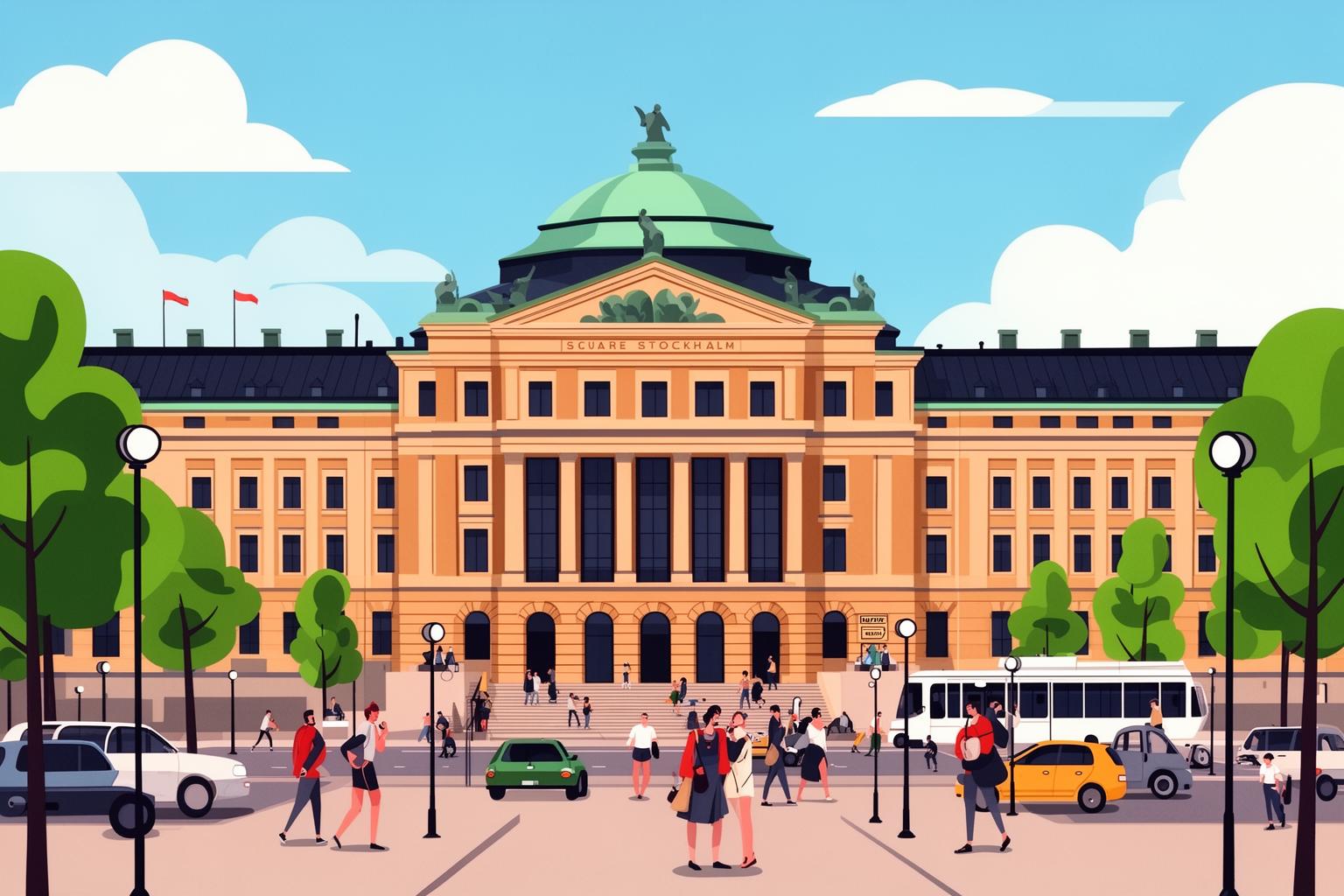
The narrative center of The Square, the institution overseen by chief curator Christian, is the fictional X-Royal Museum of Contemporary Art. It is a place of great cultural prestige, a temple where the high priests of creativity decide what holds meaning and what does not. However, this fictional museum is housed within a very real and historically significant building: The Royal Palace of Stockholm, or Kungliga slottet. This choice is a directorial masterstroke, instantly establishing a visual and thematic tension that permeates the entire film. The palace serves not merely as a backdrop but as a character itself, its stoic Baroque grandeur silently commenting on the transient and often absurd nature of the modern art it claims to contain.
The Royal Palace (Kungliga slottet): A Stage for Satire
Perched on the edge of Gamla Stan, Stockholm’s old town, the Royal Palace is an architectural titan. With over 600 rooms, it ranks among Europe’s largest and most dynamic palaces, serving as the official residence of His Majesty the King of Sweden. Built in the 18th century, it stands as a clear declaration of imperial power—a monument to order, tradition, and divine right. Standing before its vast, symmetrical facade, one senses centuries of rigid protocol and unyielding hierarchy. This is precisely why Östlund selected it. What better setting to lampoon the pomposity and self-importance of the contemporary art world than within a building symbolizing an older, more tangible form of cultural authority? Throughout the film, the palace’s richly decorated interiors—rococo embellishments and heavy velvet—are set against the stark, often puzzling installations of the X-Royal. This creates a brilliant visual metaphor for the clash between entrenched tradition and the avant-garde, heightening the art world’s anxieties about its own relevance.
Courtyard Chaos and Grand Interiors
The opening sequence that introduces Christian’s world takes place in the palace’s Outer Courtyard. Here, his phone and wallet are skillfully stolen through an elaborate piece of street theater—a staged emergency that exploits his sense of social responsibility. Visitors can stand in this very spot, feeling the cobblestones beneath their feet, surrounded by the towering palace wings, with the impassive Royal Guards marching in perfect unison—it all feels profoundly official and secure. This makes the theft all the more impactful. Östlund uses this symbol of state control and order as the setting for the film’s first major social disruption. The guards’ precise choreography is mirrored by the thieves’ own performance, transforming the courtyard into a stage where social order and disorder compete. This immediately establishes a central theme: the rules that govern us are more fragile than these stone walls imply.
Inside, one can follow Christian’s path through the halls used in filming. The most recognizable locations are within the Bernadotte Apartments, a suite of rooms for state ceremonies and royal audiences. In the film, these grand spaces—with soaring ceilings, immense chandeliers, and ancestral portraits—serve as the museum’s galleries. Imagine walking through the Hall of State and encountering installations of orderly gravel piles or the neon sign stating “You Have Nothing.” The contrast is striking and richly humorous. One unforgettable scene, where a cleaner accidentally vacuums part of an art piece, was shot in these majestic corridors. Standing there, you can almost sense the phantom presence of museum staff, their hushed, earnest conversations about market shares and artistic significance echoing oddly against the royal history backdrop. The palace’s real function as a guardian of heritage clashes beautifully with the X-Royal’s mission to push boundaries, creating a setting both sacred and profoundly absurd.
Experiencing the Palace Today
A visit to the Royal Palace is essential for any traveler to Stockholm, but for fans of The Square, it offers an immersive experience. Though a working building, large sections are open to the public year-round. It’s wise to purchase a combination ticket granting access to the Royal Apartments, the Treasury (housing the Crown Jewels), and the Tre Kronor Museum, which chronicles the palace’s medieval past. Allow at least half a day to explore, as the sheer scale can be overwhelming. As you move from room to room, try to see it through Östlund’s perspective. Notice how light filters through tall windows, the polished sheen of parquet floors, and the silent scrutiny of painted ancestors adorning the walls. It feels less like a dusty museum and more like an active participant in the film’s drama. For an unforgettable moment, time your visit to witness the Changing of the Guard ceremony in the Outer Courtyard, held daily. Observing the precision and tradition of this ritual where Christian’s carefully ordered life began to unravel offers a cinematic pilgrimage unlike any other. It powerfully reminds us of the layered performances and rituals—royal, military, and artistic—that define this remarkable space.
Christian’s World: The Brutalist Heart of the City
If the X-Royal Museum symbolizes Christian’s public persona—a carefully staged display of intellectual and cultural authority—then his private life is expressed through an entirely different architectural language. The film shifts from the historic grandeur of Gamla Stan to the sleek, imposing, and somewhat cold environment of Stockholm’s modern city center. Christian’s apartment building is a central location, offering a glimpse into the soul of a man who is increasingly disconnected from the world he purports to critique.
Södra Kungstornet and the Modernist Aesthetic
Christian resides in the Södra Kungstornet, or Southern King’s Tower, one of a pair of towers that stand as iconic guardians over the Kungsgatan bridge. Constructed in the 1920s, these buildings were Stockholm’s first true skyscrapers, emblematic of a new, modern era. Although not strictly Brutalist, the film presents the building and its surroundings to highlight a clean, functional, and almost sterile modernist style. This is a realm of straight lines, unembellished surfaces, and cool, impersonal efficiency. The contrast with the Baroque curves and ornate details of the Royal Palace could not be more pronounced. This architectural choice cleverly mirrors Christian’s character. His apartment is spacious, impeccably designed, and offers a breathtaking view of the city, yet it feels empty and isolating. It’s a fortress of solitude high above the chaos of human life, a physical representation of his emotional disengagement. The building itself becomes a symbol of both his status and his isolation—a concrete-and-glass cage separating him from the very people his museum is meant to serve.
The View from the Top
The film repeatedly uses shots from Christian’s apartment to gaze down upon the city. We observe the flow of traffic, the faceless crowds, and the orderly grid of streets below. This viewpoint is essential. Christian is not part of the city; he is an observer, a surveyor. He looks down upon society from a position of privilege, both literally and figuratively. This is the viewpoint of the art world elite, analyzing humanity from a secure distance. To experience this world, a visitor should explore the area around Hötorget (Haymarket Square), which lies just beneath the Kungstornen towers. This is the commercial and cultural center of modern Stockholm. Here you’ll find the Stockholm Concert Hall, the bustling Hötorget market, and the glass-and-steel facade of the Sergels Torg public square. It’s a landscape shaped by a mid-20th-century vision of urban life—efficient, democratic, and somewhat impersonal. Walking through this neighborhood, you can sense the energy the film conveys. It’s the Stockholm of commerce and everyday activity, far removed from the tourist-packed cobblestone streets of Gamla Stan. For a small insider tip, visit one of the rooftop bars in the area, such as the one atop the Scandic Continental hotel. From there, you can catch your own version of Christian’s outlook, gazing over the city and reflecting on the gap between merely observing life and truly living it.
The Unraveling: Spaces of Confrontation
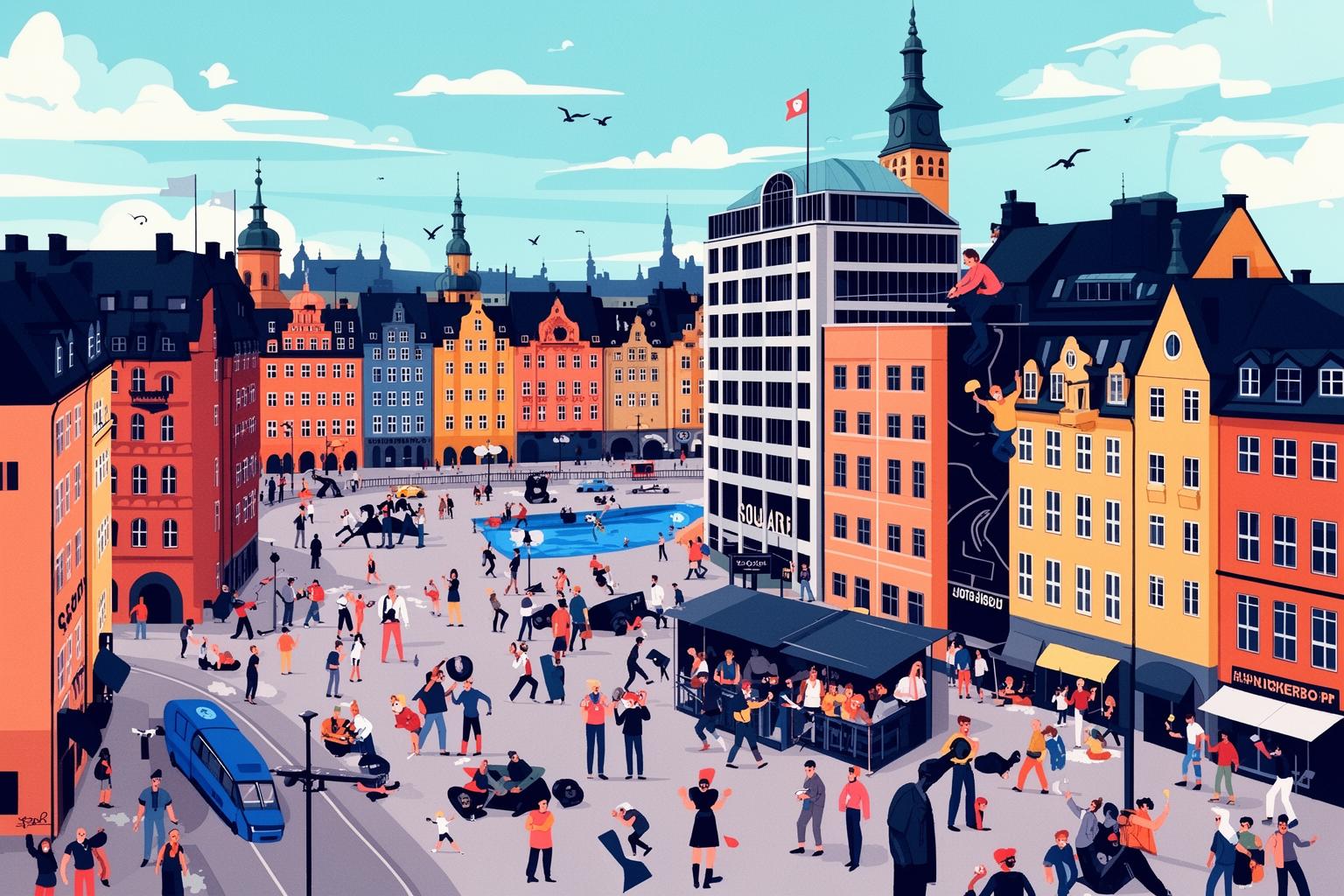
As Christian’s carefully constructed world begins to unravel, the film shifts to a series of deliberately mundane, anonymous, and unsettling locations. These are places where society’s unspoken rules are challenged and broken, where primal instincts surface and overwhelm civilized restraint. These settings may be the most difficult to visit, yet they are crucial to grasping the film’s raw emotional impact.
The Condominium Complex: A Maze of Middle-Class Guilt
After his phone is stolen, Christian tracks its location to a large, generic apartment complex in a working-class suburb. Fueled by righteous indignation, he and a colleague embark on a misguided mission to distribute threatening letters to every resident. This sequence was shot in Rissne, a residential district northwest of Stockholm. The architecture plays a key role in creating the scene’s oppressive atmosphere. The buildings are uniform, a product of the “Million Programme,” a vast public housing initiative from the 1960s and 70s. They embody a bland, functional equality that starkly contrasts with Christian’s world of bespoke design and curated aesthetics. As Christian moves through the echoing stairwells and identical hallways, the camera highlights the labyrinthine, disorienting nature of the setting. He is an intruder here—a representative of the elite entering a world he neither understands nor respects. For a traveler, visiting Rissne via the Tunnelbana (the blue line) offers a rare glimpse into a less-touristy side of Stockholm. It’s not a picturesque destination, but it is authentic. Walking among these buildings, one can sense the anonymity and subtle social tensions that Östlund masterfully exploits. It’s a compelling lesson in how urban design can reinforce social divides, making Christian’s subsequent panicked retreat all the more striking.
The 7-Eleven: An Arena of Primal Fear
The film’s most direct and terrifying confrontation unfolds in the most banal location: a 7-Eleven convenience store. Here, the young boy Christian wrongly accused confronts him, demanding an apology and refusing to let him evade the consequences. The specific 7-Eleven is not a notable landmark and was likely chosen for its generic quality. It could be any convenience store, anywhere. That, precisely, is the point. Östlund transforms this everyday transactional space—with its harsh fluorescent lights and orderly shelves—into a claustrophobic arena for a primal power struggle. The social contract dissolves completely. Christian, the powerful museum director, becomes helpless before the child’s righteous fury. This scene is a masterclass in tension, revealing how quickly our civilized facades can crumble when faced head-on. For the film pilgrim, the aim isn’t to find the exact store, but to remain aware the next time they enter such a place. Notice the lighting, the security cameras, the unspoken rules. Imagine the space stripped of neutrality, and you will grasp the scene’s terrifying intensity.
The Gala Dinner: Civilization’s Breaking Point
No discussion of The Square is complete without analyzing its most iconic, widely debated, and profoundly uncomfortable scene: the gala dinner. At a lavish museum fundraiser, wealthy patrons witness a performance art piece featuring a man who perfectly imitates an ape. The performance quickly spirals out of control as the artist, Oleg, terrorizes the guests, dismantling their polite decorum and revealing the frightened animals beneath their designer clothes. This unforgettable sequence was filmed not in Stockholm but at the Vandalorum Museum in Värnamo, a town about a four-hour train ride south. This detail is key for devoted fans, as the location is as significant as the performance itself.
Vandalorum: Art, Design, and Anarchy
The Vandalorum is a striking example of modern architecture, designed by the world-renowned Renzo Piano. Its barn-like structures, inspired by local agricultural buildings, create a space that is both rustic and highly sophisticated. The museum celebrates regional art and international design, a place dedicating itself to creativity and refined taste—making it the ideal setting for the film’s climactic chaos. The scene takes place in a beautiful, light-filled hall with high ceilings and clean lines. Elegant guests, epitomizing cultural capital, sit at exquisitely set tables, exuding smug self-satisfaction. Into this pristine environment comes the ‘ape,’ a force of pure, untamed id. Played with terrifying conviction by Terry Notary, the performance artist systematically dismantles the room’s social order. He challenges the alpha male, frightens the women, and assaults a guest, while the other patrons remain frozen by a mix of fear and social awkwardness, uncertain where art ends and reality begins. The Vandalorum’s architecture becomes an arena for this cage match—the open, airy space leaving no refuge, making the confrontation raw and unavoidable.
A Worthwhile Journey
For true admirers of The Square or modern architecture, a trip to Värnamo is a rewarding pilgrimage. The train ride from Stockholm passes through Sweden’s beautiful countryside. Once at the Vandalorum, you can stand in the very hall where the gala dinner was filmed. The museum offers excellent exhibitions and a wonderful restaurant. But being in that space—aware of the cinematic violence and social breakdown that unfolded there—is a uniquely powerful experience. It deepens your appreciation of the scene, revealing how the room’s clean, civilized design served as a blank canvas on which Östlund painted a masterpiece of social horror. It is a journey to the physical and thematic heart of the film’s most profound question: what happens when the animal within us is finally unleashed?
Stockholm’s Public Squares: The Social Contract in Action
Beyond specific, pinpointed locations, the film is deeply invested in the very concept of public space, especially the notion of the square. The artwork that lends the film its title is itself a simple outline on the ground, a conceptual space described as a “sanctuary of trust and caring” where everyone shares equal rights and responsibilities. This idea resonates throughout the film, transforming the entire city of Stockholm into an extensive experiment in social responsibility.
The Concept of the Square
Stockholm is a city defined by its squares, or torg. From the historic Stortorget in Gamla Stan, the site of the infamous Stockholm Bloodbath, to the vibrant, modernist Sergels Torg, these open spaces have always been central to the city’s public life. They are places where commerce takes place, protests unfold, and people from all walks of life converge. Östlund uses this existing urban framework to continually test his film’s main thesis. Every public interaction in the film serves as a reflection on the success or failure of The Square’s ideals. The opening scene in the palace courtyard, encounters with homeless individuals on the street, the marketing team’s disastrous viral video campaign—each moment probes the limits of our empathy and the boundaries of our social contract. The film implies that while we may aspire to the ideals of The Square, we consistently fall short of them. As a visitor, you can engage with this theme firsthand. Spend time at Sergels Torg, with its black-and-white paving and constant stream of people. Sit on a bench in the smaller, quieter squares of Södermalm. Observe how people interact. The film alters the way you perceive these spaces, turning them from mere thoroughfares into dynamic laboratories of human behavior.
Wandering the Districts: A Tale of Two Cities
To fully grasp the social landscape of The Square, it helps to understand the distinct character of Stockholm’s various districts. The film primarily shifts between two main areas: Östermalm and the downtown district of Norrmalm. Östermalm is home to the Royal Palace and the city’s most exclusive residences and boutiques. It stands as the stronghold of old wealth and high culture, an area marked by quiet elegance and refined taste. This is the natural environment of Christian and his patrons. The atmosphere here is one of order and restraint. By contrast, Norrmalm and, further south, Södermalm represent different sides of the city. Norrmalm is the modern commercial center, while Södermalm is the famously hip, bohemian island, inhabited by artists, writers, and a more eclectic, creative crowd. A great way to experience the film’s social dynamics is to take an extended walk. Begin your day in Östermalm, perhaps visiting the Historiska Museet to immerse yourself in the area’s deep-rooted heritage. Then, proceed west into Norrmalm, noticing the shift in energy as you enter the city’s commercial core. Finally, cross into Södermalm. Observe the change in architecture, the style of the shops, and the fashion of the people on the street. This journey reflects the social divides the film explores, helping you sense the tangible difference between Christian’s privileged world and the more varied, messier realities of the rest of the city. It’s a walk that makes the film’s social commentary feel less like an abstract critique and more like a concrete, lived experience.
A Traveler’s Guide to Östlund’s Stockholm
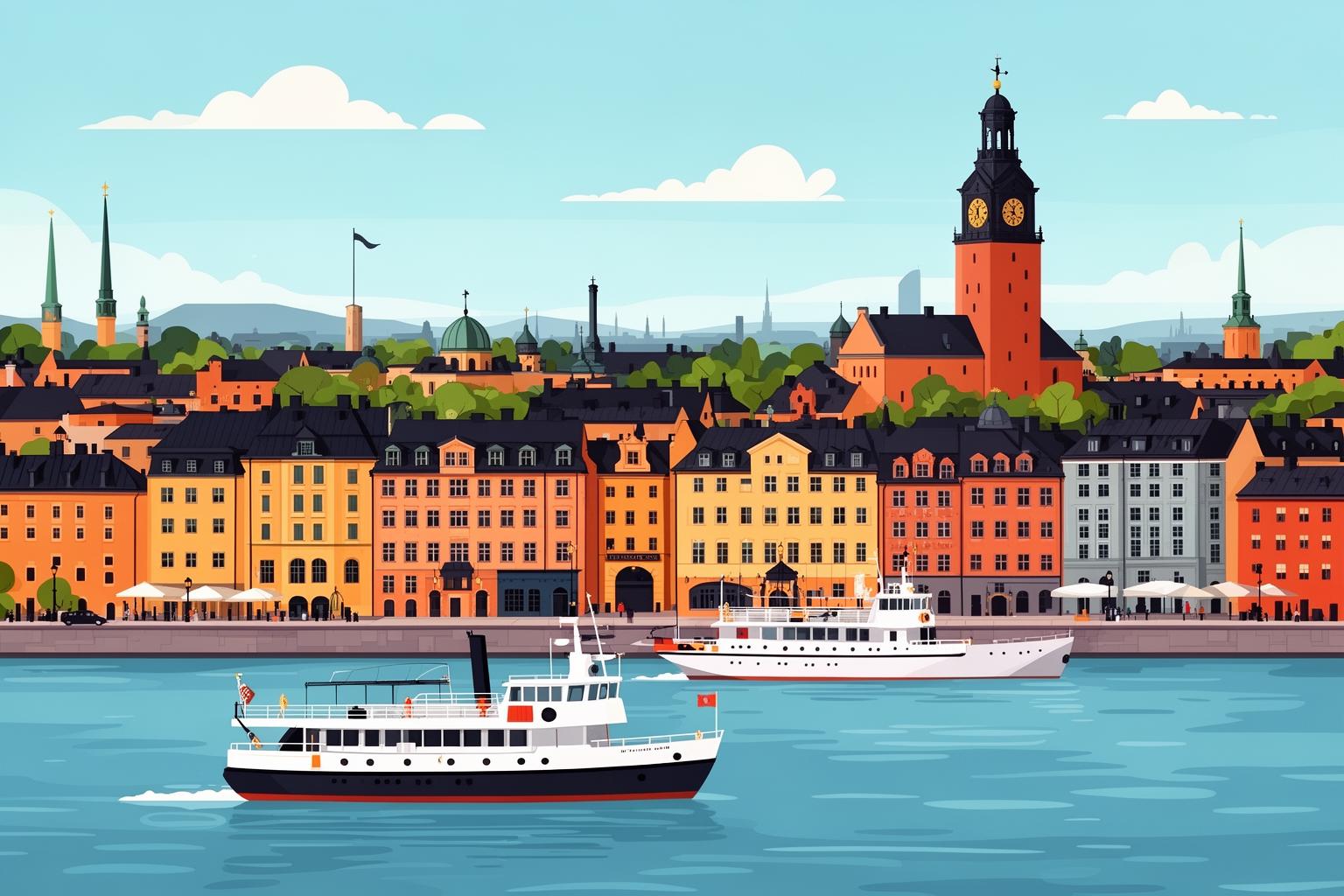
Exploring Stockholm in pursuit of The Square‘s essence offers a uniquely gratifying experience. The city serves not merely as a backdrop but as an active participant in the film’s story. Here is some practical guidance to help you embark on your own pilgrimage.
Getting Around the City
Stockholm is incredibly easy to get around. Its public transportation system—including the subway (Tunnelbana), buses, and ferries—is efficient, clean, and extensive. The Tunnelbana is an attraction in itself, often called the world’s longest art gallery, with many stations adorned with stunning mosaics, paintings, and installations. For central locations, walking is often the best choice. The distances between Gamla Stan, Norrmalm, and Östermalm are manageable, and walking lets you take in the subtle changes in atmosphere from one neighborhood to another. Investing in a multi-day transit pass is wise, offering unlimited travel and the freedom for spontaneous exploration.
When to Visit
The film is shot with a cool, crisp, nearly clinical light that perfectly captures the Scandinavian aesthetic. To see the city in a similar light, plan your visit during the shoulder seasons of spring (May-June) or early autumn (September). The weather is comfortable, crowds are thinner than in peak summer, and the quality of light is spectacular. Summer, with its famous ‘white nights’ and endless daylight, provides a different yet equally enchanting experience, imbuing the city with a lively, festive spirit. Winter offers a more stark and dramatic beauty, with snow covering historic rooftops and the warm glow of cafés creating a cozy refuge—a feeling of mys, the Swedish concept of cozy contentment.
Beyond the Film: The Real Art Scene
The Square brilliantly satirizes the art world, but Stockholm’s real art scene is lively and well worth exploring. A visit to the Moderna Museet (Museum of Modern Art) on Skeppsholmen island is a must. It features a world-class collection of 20th- and 21st-century art and serves as a compelling real-world counterpart to the fictional X-Royal. For something more contemporary, Fotografiska is a striking photography museum with consistently excellent exhibitions and a rooftop restaurant offering one of the best views in the city. Visiting these authentic institutions after watching the film adds depth to the experience. You can appreciate the art on its own terms while also observing the surrounding culture with a newly critical, Östlund-trained perspective. And don’t forget to embrace the Swedish tradition of fika—a coffee and pastry break that’s central to daily life. Find a cozy café, order a cinnamon bun, and simply watch the world go by. It’s the perfect moment to pause, reflect, and observe the social rituals that captivated the makers of The Square.
To follow in Christian’s footsteps through Stockholm is to connect with the city on a profoundly deeper level. You are no longer just a tourist admiring beautiful architecture; you become a pilgrim exploring the complex, often contradictory spaces where art, commerce, and human nature intersect. These places are not just sets; they physically embody the film’s unsettling questions about our capacity for empathy and the resilience of our social bonds. Whether walking through the Royal Palace courtyard, gazing from the heights of a modern tower, or standing in a quiet suburban stairwell, you are invited to step inside the frame and become part of the ongoing experiment. It is a journey that is challenging, thought-provoking, and utterly unforgettable, leaving you with a deeper appreciation for the film’s brilliance and the city that brought its provocative vision to life.