There are places on this earth that feel older than memory, where the air itself seems to hum with the whispers of forgotten gods. These are landscapes not just seen, but felt—a deep, resonant chord that strikes something primal within us. One such place is Yakushima, a subtropical island floating in the waters south of Kyushu, Japan. It is a realm of colossal trees, emerald moss, and water so pure it seems to be the source of life itself. For many travelers, particularly those whose hearts were captured by the sweeping animated epics of Studio Ghibli, Yakushima is more than just a destination; it is a pilgrimage. This island is the living, breathing soul of the primeval forest depicted in Hayao Miyazaki’s masterwork, Princess Mononoke. To walk here is to step through the screen and into the world of Ashitaka, San, and the great Forest Spirit. It is a journey into a wilderness that feels both fantastical and profoundly real, a sanctuary where the line between myth and nature dissolves into a misty, green-tinged haze. This is not a simple tour of filming locations; it is an immersion into the very environment that sparked a masterpiece, a chance to understand the deep reverence for nature that permeates Japanese culture and Miyazaki’s art. Prepare to enter a world where every root, stone, and stream tells a story millennia in the making.
Embracing the ancient spirit of nature, a Tateyama pilgrimage offers another captivating passage into Japan’s timeless blend of myth and reality.
The Soul of the Island: Whispers of the Kodama
The moment you enter the forests of Yakushima, the outside world fades away. It is replaced by an overwhelming, deep sense of tranquility and timelessness. The air becomes cool and thick with the scent of damp earth, cedar wood, and decomposing leaves—a rich, natural fragrance that feels purifying to the soul. Sunlight struggles to break through the dense canopy, filtering down in delicate beams that illuminate drifting dust particles and reveal the vivid green of the moss. This is the island’s hallmark: a landscape blanketed by a tapestry of mosses, so lush and vibrant they seem alive. They cover fallen logs, cling to the bark of ancient trees, and soften the granite boulders scattered throughout the terrain. Within this setting, you begin to grasp the inspiration behind the Kodama, the silent, mysterious tree spirits from Princess Mononoke. You catch yourself watching the shadows, half-expecting their small white forms to appear from behind a twisted root or to hear a faint rattle of their heads. The forest is not an empty space; it is a living presence. The steady sound of water—from the gentle trickle of a concealed spring to the rush of a pristine river slicing through stone—forms a natural symphony that encourages mindfulness, a practice the Japanese call shinrin-yoku, or forest bathing. Yakushima may be the ultimate refuge for this, a place to simply exist, to walk slowly, breathe deeply, and let the ancient atmosphere envelop you. The silence here is not a lack of sound, but a richness of it, a quiet vibration of life that has endured for millennia.
The Two Great Pilgrimages: Shiratani Unsuikyo and Jomon Sugi
For most visitors, the journey to Yakushima’s core follows one of two sacred routes, each offering a distinct way to connect with the island’s spirit. One path leads into a dreamlike world of moss and water that seems plucked straight from Miyazaki’s sketchbook; the other is a strenuous trek to encounter a living deity of the forest. Both provide unforgettable experiences that define the Yakushima pilgrimage.
Shiratani Unsuikyo: The Moss-Covered Kingdom
If there is a place on Yakushima that embodies the forest from Princess Mononoke, it is Shiratani Unsuikyo. This expansive nature park, a ravine shaped by the Shiratani River, is a maze of ancient cedar trees, twisted roots, and moss-covered surfaces. It is here that the film’s visual language finds its most powerful real-world expression. The moment you step onto the trails, you are immersed in a realm of extraordinary beauty. The ground, rocks, and tree trunks are all blanketed in a thick, velvety green. The forest floor is a tangled but captivating web of roots resembling dormant serpents, intertwining beneath and above one another. Crystal-clear water, so pure it can be drunk straight from the streams, flows over granite bedrock and gathers in small, calm pools before continuing toward the sea. Several well-marked trails wind through the ravine, accommodating various fitness levels. A brief, one-hour walk offers a glimpse of the magic, but the real reward awaits on the longer routes. The trail leads to a spot affectionately named Mononoke Hime no Mori (Princess Mononoke’s Forest), a particularly thick and atmospheric grove that so closely mirrors the film’s animation it feels surreal. The ultimate destination for many is Taikoiwa Rock, a huge granite boulder perched high above the forest. After a steep ascent, you emerge from the trees onto this rocky ledge and are met with a stunning panoramic view of the island’s mountainous interior. On clear days, the vista is spectacular, providing a god’s-eye view of the forest just traversed. The vibe in Shiratani Unsuikyo is enchanting—it seems like a forgotten realm where time flows differently. A practical tip: Yakushima is notorious for its rain, which locals say falls “35 days a month.” Don’t be discouraged by this. The forest is arguably at its most beautiful during or immediately after rain, when the moss’s colors deepen to a luminous green and a mystical mist drifts through the trees. Proper rain gear is essential, not optional. A waterproof jacket, pants, and a backpack cover will keep you comfortable. Additionally, sturdy hiking boots with good traction are crucial, as trails and wooden paths often become slippery.
Jomon Sugi: A Journey to the Elder God
While Shiratani Unsuikyo offers a dive into the aesthetic of Princess Mononoke, the trek to Jomon Sugi takes you to the film’s philosophical heart: a confrontation with the overwhelming power and ancient grandeur of nature. Jomon Sugi is the island’s patriarch, a gigantic Yakusugi cedar tree believed to be between 2,000 and over 7,200 years old. It is among the oldest living trees on the planet, silently witnessing the rise and fall of civilizations. Reaching it is no easy task. The round-trip hike covers a demanding 22 kilometers (about 13.6 miles) and usually takes 10 to 12 hours to complete. This is a true pilgrimage, requiring strength and endurance both physical and mental. The journey starts before dawn, with hikers setting off under headlamp light, first climbing a steep path to reach the Anbo Forest Railway track. For several hours, you follow this narrow-gauge railway line, a relic from the island’s logging history. The flat, steady trail through the forest in the soft morning light is meditative, a rhythmic buildup for the challenges ahead. The tracks cross spectacular ravines on trestle bridges that offer dizzying views of the gorges beneath. After leaving the railway, the path becomes a rugged mountain trail, ascending steeply through the forest. Along the way, you encounter other giant cedars, such as the Meoto Sugi (Husband-and-Wife Cedars) and the Daiosugi (Great King Cedar), each magnificent in its own way, serving as guardians on the route to the ancient giant. The approach to Jomon Sugi is filled with awe. Due to its age and fragility, touching the tree is prohibited. A viewing platform has been constructed a short distance away to protect its delicate root system. Yet even from here, its presence is immense. Its gnarled, weathered bark resembles stone more than wood, and its vast, sprawling crown seems to hold up the sky. It doesn’t feel like looking at a tree; it feels like standing before a living entity of profound wisdom and power. This is the real-life counterpart to the Forest Spirit, a tangible connection to the distant past. This hike demands careful preparation: start before sunrise, carry ample high-energy food and at least two liters of water (which can be refilled from mountain streams), and wear suitable hiking gear. Hiring a local guide is strongly advised, not only for safety but also for the invaluable insights and stories they provide about the forest’s ecology and history.
Beyond the Ancient Cedars: The Island’s Other Faces
While the ancient forests remain the primary attraction, Yakushima’s allure also reaches its dramatic coastline and powerful waterways. The island acts as a microcosm of varied ecosystems, each presenting a unique way to engage with its wild spirit. Focusing solely on the forests means missing a vital part of its story.
The Coastal Charms: Turtles, Tides, and Tropical Breezes
Driving around the island reveals a breathtaking and rugged coastline. One of the most notable sites is Nagata Inakahama Beach, a beautiful expanse of golden sand on the northwest coast. This beach is not merely for scenic views; it serves as the most important nesting ground for loggerhead sea turtles in the North Pacific. From May to July, female turtles come ashore under the cover of night to lay their eggs. Witnessing this ancient ritual is deeply moving but should be done with great care and respect, preferably via a locally organized tour to avoid disturbing the turtles. The island’s volcanic origin has also gifted it with unique seaside hot springs, or onsen. The best known is Hirauchi Kaichu Onsen, a series of pools carved into the ocean rocks. These natural hot tubs are only accessible for a few hours a day during low tide. Soaking in the warm, mineral-rich waters while waves crash just feet away offers a uniquely wild and restorative experience.
Waterfalls and Rivers: The Lifeblood of the Forest
Yakushima’s heavy rainfall nourishes a network of powerful rivers and spectacular waterfalls, which serve as the island’s lifeblood, flowing from mountain peaks down to the sea. Two of the most impressive and accessible are Senpiro-no-taki and Oko-no-taki. Senpiro-no-taki is a thunderous cascade plunging over a massive granite monolith. The viewing platform provides an excellent vantage point to appreciate the waterfall’s scale and the sheer force of water. Further along the coast lies Oko-no-taki, one of Japan’s top 100 waterfalls. This 88-meter drop is one of the few where visitors can walk right up to the base and feel the tremendous power of the spray. The roar is overwhelming, a visceral reminder of nature’s raw energy. For the more adventurous, the island’s rivers offer opportunities for kayaking, stand-up paddleboarding, and canyoning, providing an exciting way to experience the pristine waters that define Yakushima.
Practical Magic: Planning Your Yakushima Expedition
A trip to a wild and remote destination like Yakushima calls for some planning ahead. Managing the logistics is part of the adventure, and being well-prepared will let you fully immerse yourself in the experience once you arrive.
Getting There and Getting Around
Your journey to Yakushima will almost certainly start in Kagoshima, the southernmost major city on Japan’s main island of Kyushu. From there, you have two main options. The quickest way is to fly from Kagoshima Airport (KOJ) to Yakushima Airport (YAK). The flight is brief, around 40 minutes, and provides stunning aerial views of the island as you approach. The more popular and scenic option is the high-speed ferry, often called a jetfoil (with the primary operators being Toppy and Rocket). This trip takes two to three hours and docks at either Miyanoura Port or Anbo Port on Yakushima. Once on the island, public transportation is limited. The bus system runs along the coastal road, but service can be infrequent, especially outside the main towns. To truly explore the island’s hidden spots and enjoy the freedom to visit trailheads and remote beaches on your own schedule, renting a car is by far the best choice. It offers the flexibility needed to maximize your time. Be sure to book your rental car well in advance, especially during peak travel seasons like Golden Week and the summer months.
Where to Rest Your Head
Yakushima provides a variety of accommodations catering to different budgets and travel preferences. The two main hubs are Miyanoura, the island’s largest town and main port, and Anbo, the second-largest town and port, situated further south. Miyanoura has the most amenities, including supermarkets, restaurants, and gear rental shops. Anbo is a bit quieter but serves as a convenient base for those planning to hike to Jomon Sugi. Accommodation options range from simple guesthouses called minshuku, which offer a cozy, home-like atmosphere with local hosts, to mid-range hotels and even several luxury resorts like the Sankara Hotel & Spa. Staying in a minshuku is a great way to experience Japanese hospitality and often includes delicious homemade meals featuring local ingredients. Once again, booking your lodging well in advance is essential, as places fill up quickly.
What to Pack for the Primeval Forest
Packing appropriately for Yakushima is vital for a safe and enjoyable visit. The island’s weather is famously unpredictable. It can be sunny and warm on the coast while cold and rainy in the mountains on the same day. The key is layering and waterproof gear. A high-quality waterproof, breathable jacket, waterproof pants, and a rain cover for your backpack are must-haves. Even on sunny days, trails can be wet and muddy. Worn-in, waterproof hiking boots with excellent ankle support and traction are the most important gear you’ll bring. Beyond that, pack quick-drying synthetic layers rather than cotton. Include a warm fleece or mid-layer for higher elevations. Also bring sunscreen, a wide-brimmed hat, insect repellent, a reusable water bottle to fill from the pure mountain streams, and a portable battery charger for your phone, as reception can be unreliable and GPS quickly drains battery life. Many shops on the island offer full hiking gear rentals if you prefer not to bring your own.
A Visitor’s Etiquette: Respecting the Sacred Woods
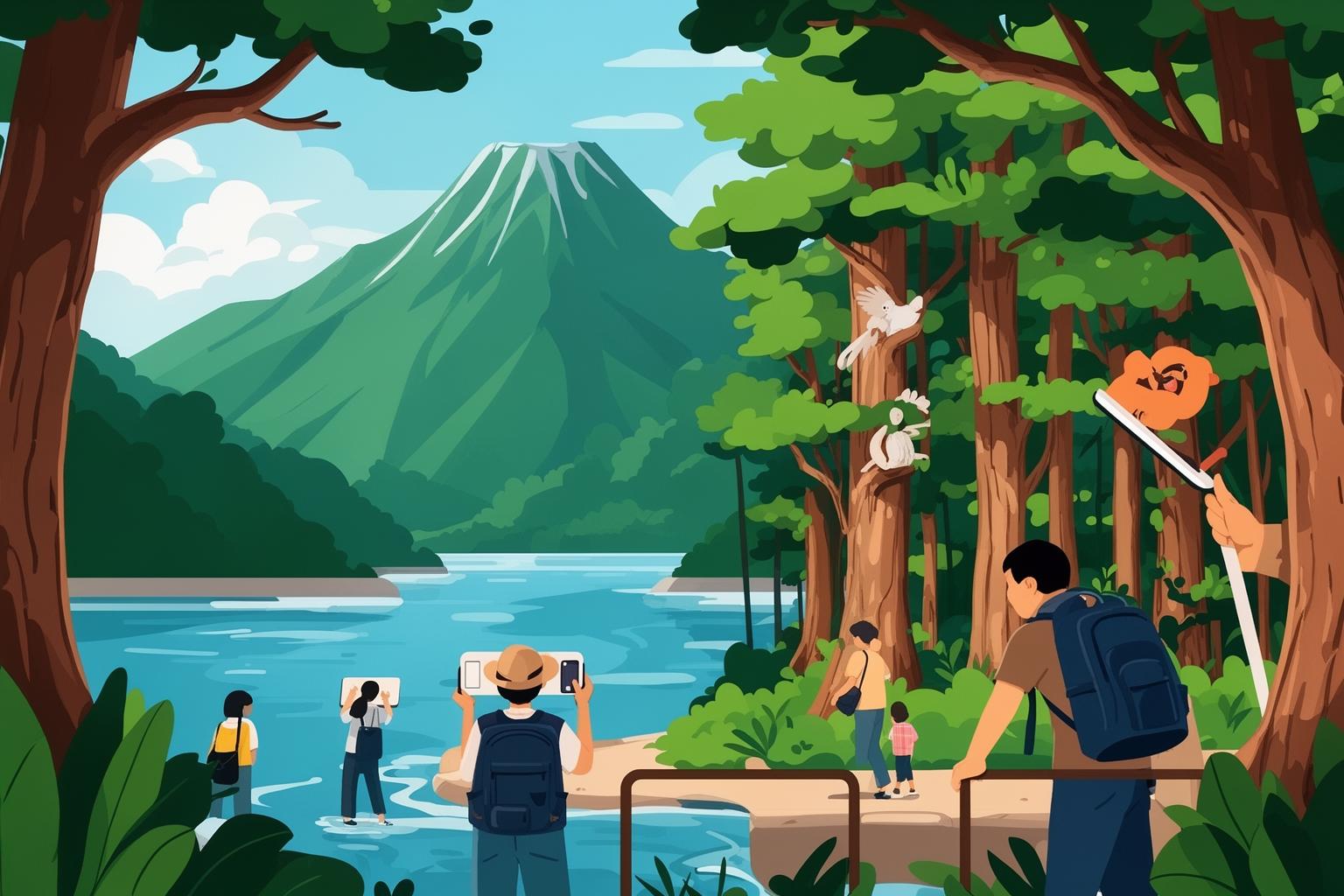
Yakushima is a UNESCO World Heritage site for good reason. Its ecosystem is both remarkably resilient and extremely fragile. As visitors, we bear a deep responsibility to treat the island with the highest respect. This goes beyond simply following rules; it calls for an attitude of gratitude and care toward this sacred natural environment. The most essential rule is to leave no trace. Take out everything you bring in, including all food wrappers and trash. Remain on the marked trails to protect the delicate moss and plant life beneath your feet. A single step can destroy moss that has taken decades to develop. Do not disturb the wildlife, and never feed the island’s monkeys or deer. For longer hikes such as the Jomon Sugi trail, where restroom facilities are not available, hikers must carry a portable toilet kit to safeguard the water sources. These kits are available at numerous shops on the island. By adhering to these guidelines, we help preserve the profound beauty and ecological integrity of Yakushima for future generations, allowing others to experience the same powerful sensation of stepping into a living, breathing legend.
An Echo in Your Heart: The Lingering Spirit of Yakushima
Leaving Yakushima feels like awakening from a vivid dream. The lush greens, the scent of rain-drenched earth, and the profound silence of the ancient forest stay with you long after you’ve boarded the ferry back to the modern world. A journey to this island is far more than a mere anime pilgrimage. It is a deeply moving encounter with the power of nature and the vastness of time. You arrive seeking the forest of Princess Mononoke, and you find it not just in a single grove of mossy trees, but within the island’s entire spirit. You see it in the struggle of a cedar seedling reaching for light, in the patience of a turtle nesting on the shore, and in the relentless force of a waterfall carving through stone. Yakushima imparts the central lesson of Miyazaki’s film: that there is a profound, intricate, and sacred connection between humanity and the natural world, a balance that is both powerful and precious. You leave with more than just photographs; you carry an echo of the island’s ancient soul in your heart, a quiet reminder of a world that is wild, beautiful, and vibrantly alive.