There are films that capture a moment, and then there are films that capture an entire world. David Lean’s 1965 masterpiece, Doctor Zhivago, is undeniably the latter. It’s a sweeping, heart-wrenching epic of love and loss set against the fiery backdrop of the Russian Revolution. We remember the endless, snow-dusted steppes, the desperate train journeys, the frozen lacework of the ice palace at Varykino, and the grand, imposing streets of Moscow, first glittering with aristocratic promise and later choked with the fervor of change. The film paints such a vivid, authentic portrait of Russia that for decades, its landscapes have been seared into our collective imagination as the real thing. But cinema, in its most brilliant form, is a masterful illusion. The vast, turbulent Russia of Yuri Zhivago and Lara Antipova was not found within the borders of the then-Soviet Union, a place inaccessible to Western filmmakers during the Cold War. Instead, this world was painstakingly and brilliantly recreated hundreds, even thousands, of miles away. The heart of cinematic Russia, it turns out, beats strongest in the sun-drenched plains of Spain, finds its deepest winter chill in the forests of Finland, and its most majestic mountain vistas in the wilds of Canada. To embark on a pilgrimage to the locations of Doctor Zhivago is to chase the ghosts of a cinematic legend, to stand in the Spanish dust that doubled as Siberian snow, and to understand the sheer, audacious scale of filmmaking in its golden age. It’s a journey that peels back the layers of movie magic to reveal the real, tangible places that gave life to an immortal story.
This journey of cinematic discovery is akin to the experience of a pilgrimage to the filming locations of ‘The Square’ in Stockholm, where the real city becomes a stage for a film’s satirical vision.
The Spanish Steppes: How Madrid Became Moscow
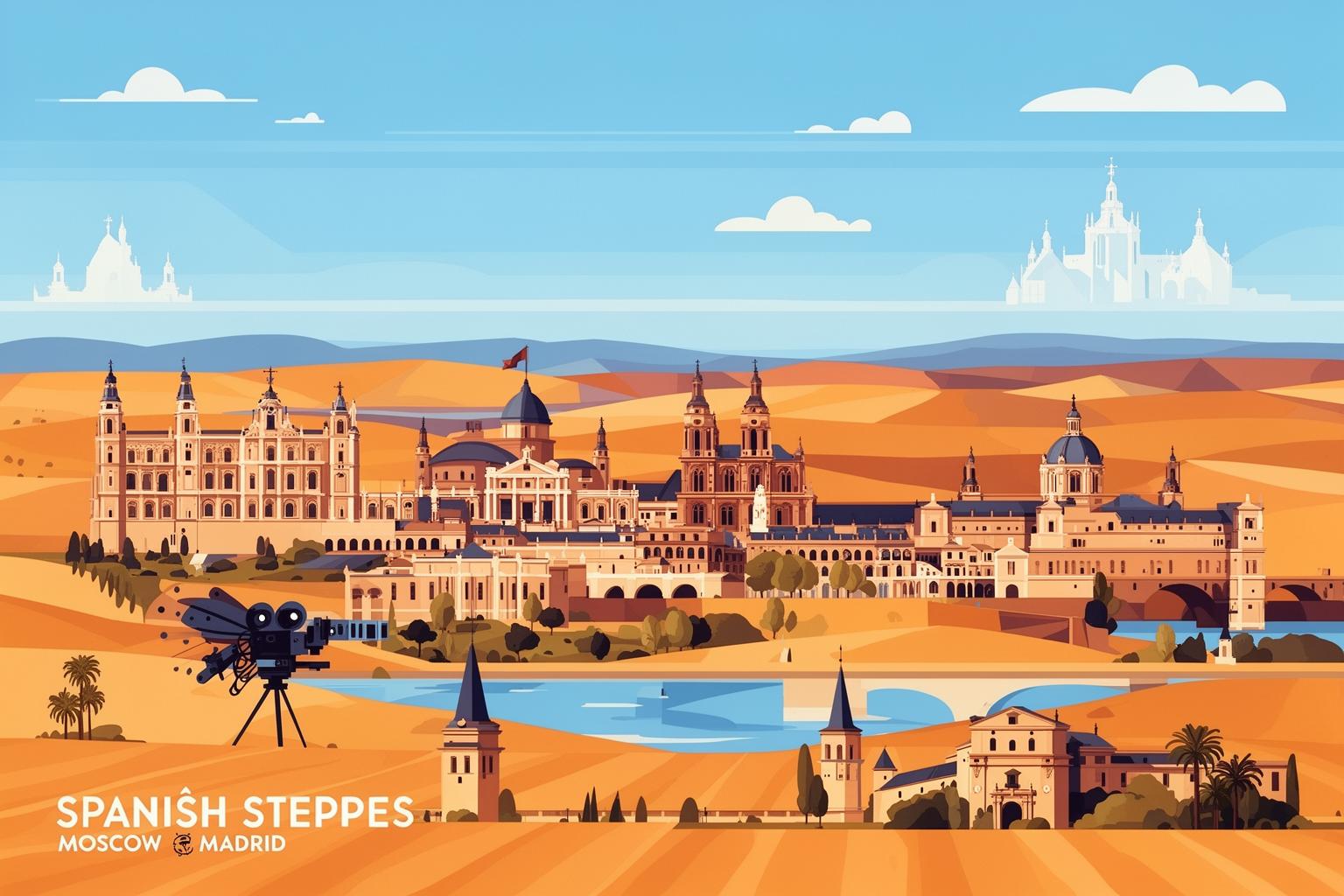
The most impressive sleight of hand in Doctor Zhivago was transforming Franco-era Spain into revolutionary Russia. This monumental task was fueled by David Lean’s unwavering vision. He required a vast canvas for his story and found it in Spain’s diverse landscapes and cityscapes. Not only did the country provide ample space, but also a variety of architectural styles and a seemingly reliable climate—or so the production team believed. The centerpiece of this extraordinary illusion was Madrid itself, whose modest outskirts and historic stations were about to become the backdrop for one of cinema’s most dramatic sequences.
A City Transformed
Picture the mid-1960s: a sprawling, ten-acre set rising from the dust in Canillas, then a quiet suburb on Madrid’s northeastern edge. Here, production designer John Box worked his magic, creating a full-scale, meticulously detailed replica of Moscow. It was more than mere scenery; it was a living, breathing city street. Cobblestones were carefully laid, tramlines installed and operated by period-accurate trams, and towering replicas of Kremlin towers loomed over the Spanish horizon. Shops were constructed and dressed, Cyrillic signs hung, and the entire street was designed to be filmed from every angle, granting Lean the freedom to move his camera as if navigating a real city. It was on this set that the pivotal scenes of social unrest were filmed—the peaceful protests turning violent, the Tsar’s dragoons charging the crowds, and revolutionary fervor spilling into the streets. This was an astounding achievement of construction and artistry.
Today, the old set has vanished, overtaken by Madrid’s modern development. Canillas and the surrounding Hortaleza district are now vibrant residential and commercial areas. Yet, walking these streets still evokes a faint whisper of that cinematic past. Though the cobblestones and Kremlin replicas are gone, one can still appreciate the immense scale of the transformation. The area stands as a testament to the film’s ambition. For visitors, the experience is less about locating a specific landmark and more about understanding the landscape that was so radically altered. A visit here pairs well with exploring the authentic charms of modern Madrid, from the Prado Museum to the lively tapas bars of La Latina, creating an intriguing contrast between the city’s real character and its legendary cinematic role. The Spanish sun, which once posed significant challenges for a production trying to mimic a Russian winter, now warmly illuminates these neighborhoods, offering a pleasant and engaging walk for any film enthusiast.
Delicias Station: A Portal to the Urals
While the Moscow streets were a temporary creation, another key Madrid location remains perfectly preserved—a time capsule of industrial elegance. The Estación de Delicias, now home to Spain’s National Railway Museum (Museo del Ferrocarril), starred in several important train station scenes. Its magnificent 19th-century cast-iron and glass structure, designed by a student of Gustave Eiffel, combined grandeur and grit, perfectly capturing the chaotic heart of Russia’s transportation network during the war and revolution.
This station is where Yuri Zhivago departs for the front lines of World War I, and later, where the Zhivago family makes their desperate escape from a starving, politically turbulent Moscow toward the supposed safety of the Ural Mountains. The soaring, light-filled hall of Delicias was filled with hundreds of extras, steam, and an electric atmosphere of panic and hope, vividly portraying a society on the brink. Visiting the museum today is like stepping right into one of those scenes. The air is thick with the scent of old steel and oil. Vintage locomotives and elegant carriages rest silently on the tracks, their polished surfaces reflecting the intricate ironwork above. Standing on the platform once occupied by actors, surrounded by these beautiful machines, it’s easy to imagine the whistles and the frantic energy of the film. The museum is a must-see, not only for film fans but anyone interested in the history of technology and architecture. It offers a tangible, immersive connection to both historical and cinematic pasts. Easily accessible by Madrid’s metro, it’s an atmospheric location worth several hours of exploration—the beauty of the trains and the station itself is thoroughly captivating.
The Glimmer of High Society: Palaces of the Past
Before the revolution dismantled it all, Doctor Zhivago depicted a world of aristocratic splendor, grand balls, and quiet, candlelit drawing rooms. To capture this fading opulence, the production utilized several of Madrid’s historic buildings and palaces. The 19th-century Fernández de Córdova family palace, for example, provided some of the lavish interiors for the Gromeko estate where Yuri was raised. These locations, with their ornate plasterwork, soaring ceilings, and polished wood floors, offered an authentic glimpse into a world of privilege and comfort.
These scenes sharply contrast the chaos unfolding on the purpose-built Moscow streets just miles away. This juxtaposition is key to the film’s narrative—the intimate, personal dramas of the characters unfolding within the gilded cages of their homes while the world outside is irreversibly changing. Although many of these palaces remain private and are not open to the public, their architectural essence resonates throughout Madrid’s historic center. A stroll through the Salamanca district, with its elegant facades and grand apartment buildings, evokes the same sense of pre-revolutionary grandeur. It serves as a reminder that beneath its cinematic veneer, the filmmakers chose Spain not only for its open spaces but also for the echoes of European history embedded in its very stones.
Soria’s Siberia: The Heart of Winter’s Tale
If Madrid supplied the urban core of the revolution, it was the province of Soria, located in the high, windswept plains of Castilla y León, that imbued the film with its soul. This sparsely inhabited, ruggedly picturesque region of Spain stood in for the vast, harsh terrains of the Russian countryside and the Ural Mountains. Here, beneath the expansive Spanish sky, David Lean captured the iconic images of isolation and endurance that define Doctor Zhivago.
The Icy Plains of Castilla y León
Lean selected Soria for its severe climate and stark, treeless horizons, which closely resembled the Russian steppe. Known for its cold, harsh winters, the production arrived hoping to capture authentic, deep snow. The landscape itself is cinematic—a rolling patchwork of muted golds and browns, marked by dramatic rock formations and distant mountain silhouettes. The area around Gómara and Candilichera, east of the city of Soria, provided the backdrop for the epic train journeys, where the locomotive, symbolizing both escape and doom, carves its way through a seemingly endless wilderness. These scenes convey the immense scale of the characters’ journey, dwarfing them against an indifferent, imposing natural world.
Ironically, the winter of 1964-65 was among the mildest on record in Spain. The expected snows never truly appeared, forcing the crew to improvise. They used acres of crushed white marble dust, salt, and plastic sheeting to simulate the deep drifts of a Siberian winter. This behind-the-scenes detail adds another layer to the pilgrimage. Standing in the Campos de Gómara today, feeling the warm breeze and seeing the fertile fields, it is almost impossible to imagine them covered in cinematic snow. This is the ultimate tribute to the filmmakers’ artistry. A visit to Soria offers a dual experience: you can appreciate the raw, natural beauty of this unspoiled corner of Spain while simultaneously marveling at the cinematic illusion that transformed it into a frozen wasteland. Driving through this region is the best way to grasp its vastness. The roads are quiet, the vistas immense, and around every bend lies a landscape that feels both deeply Spanish and uncannily Russian.
Varykino in the Spanish Sun: The Dam and the Estate
Perhaps no location in Doctor Zhivago is more iconic or more romantic than Varykino, the isolated country estate where Yuri and Lara find a fragile, temporary peace. It is here that Yuri, inspired by the profound silence and stark beauty of the landscape, writes his most famous poetry. The exterior of the dacha and the breathtaking, snow-covered surroundings were filmed in the pine forests and mountains around the Cuerda del Pozo reservoir, near Vinuesa. On screen, Varykino is a place of fairy-tale beauty, especially its famous “ice palace,” where the interior of the abandoned house becomes coated in a magical armor of frost and ice.
Of course, the dacha itself was a set, masterfully built and dressed. The magical ice interior was created using tons of frozen beeswax. But the soul of Varykino—the whispering pines, the frozen lake, the profound sense of isolation—is very real. Visiting the Cuerda del Pozo reservoir today is a breathtaking experience. The deep blue water is ringed by dense pine forests climbing the slopes of the distant Urbión Peaks. It is a place of immense tranquility. Hiking along the shoreline, you can easily find the spots that so inspired David Lean. In winter, a dusting of real snow often blankets the ground, and the air is crisp and silent. In summer, the area becomes a lush paradise for nature lovers. While the house is gone, the landscape remains the true star. For the pilgrim, this is a place of quiet reflection—a chance to connect with the themes of the film: the power of nature to inspire art and provide sanctuary in a world torn by conflict. Local tips for visitors include exploring the charming stone-built village of Vinuesa and taking the scenic drive that circles the reservoir, offering stunning, ever-changing views.
The Village of Candilichera: A Revolutionary Outpost
To represent the small provincial towns caught in the crossfire of the Civil War, the production scouted numerous villages in Soria. They ultimately chose Candilichera, a tiny, modest hamlet whose simple stone and adobe houses possessed a timeless, rustic charm. The village was thoroughly transformed. Thatched roofs were added, Cyrillic signs hung, and an Orthodox-style onion dome placed atop the local church to create the fictional town of Yuriatin, where Lara lives and works. This is where some of the film’s most dramatic scenes unfold, including the arrival of the ruthless partisan commander Strelnikov (Lara’s husband, Pasha Antipov), and the simmering tensions of a community living under military control.
Today, Candilichera has returned to its quiet, peaceful state. It is a small village, home to only a handful of residents. The onion dome is gone, and Cyrillic signs have been replaced by Spanish street names. Yet, the village’s layout and the sturdy architecture of its houses remain instantly recognizable. Walking its silent streets feels like stepping back in time. You can stand in the small plaza and imagine the film crew, actors clad in heavy winter coats, and the controlled chaos of the production. Locals who remember the filming describe it as the most exciting event ever to have happened in their village. For visitors, Candilichera offers one of the most direct and authentic connections to the film. It has not been commercialized or turned into a tourist trap; it is simply a place where cinematic history was made, now resting peacefully under the Castilian sun. It’s a short drive from the city of Soria and best visited as part of a day trip exploring the province’s various filming locations.
Finnish Winter: The Authenticity of Ice and Snow
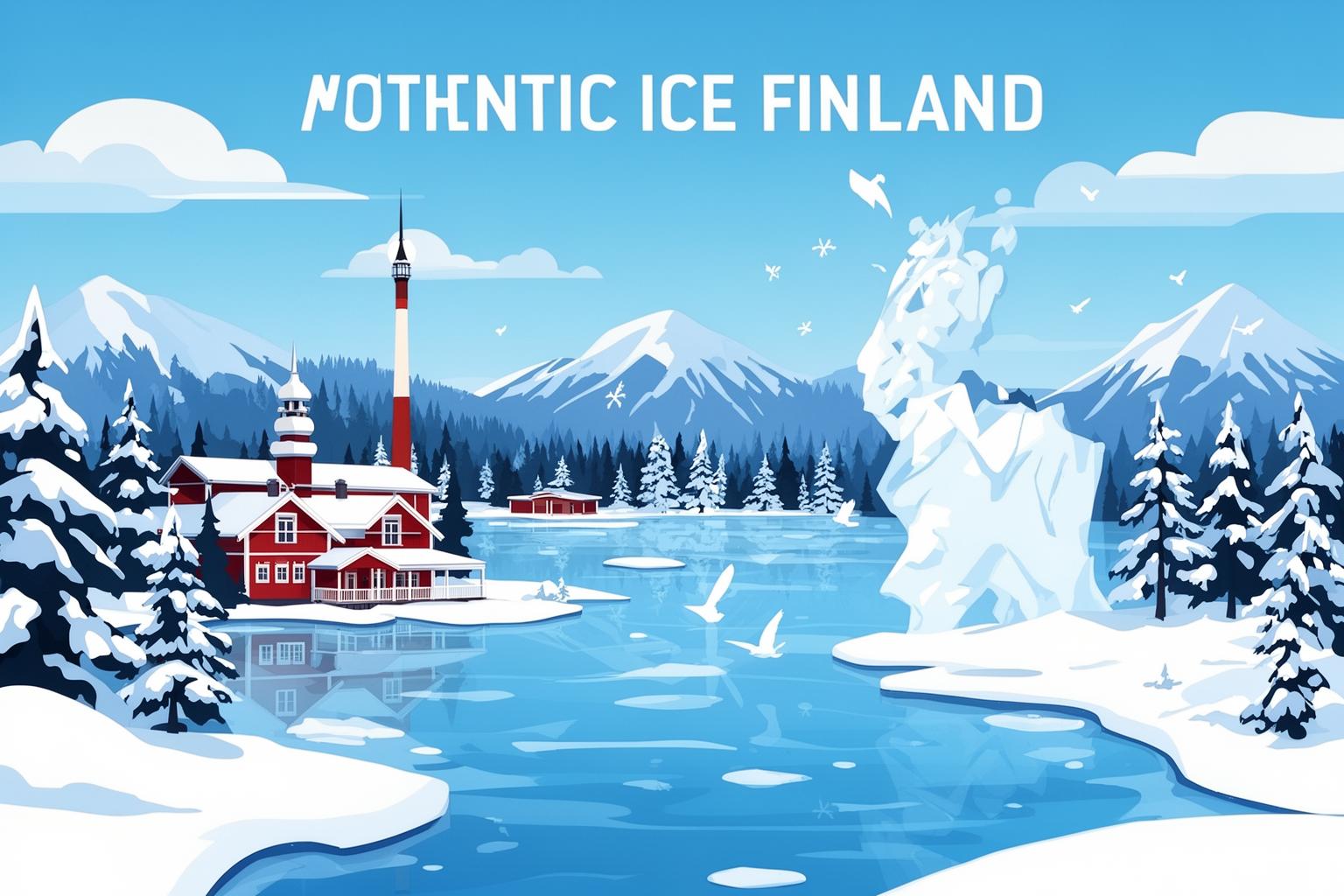
Despite the crew’s best efforts using marble dust and wax, David Lean remained dissatisfied with the Spanish winter. He needed scenes of deep, authentic, soul-crushing snow—the kind of winter that becomes a character in its own right. For this, he turned to the only place in Europe that could guarantee it: Finland. In the winter of 1965, part of the cast and crew moved to this Nordic country, venturing close to the Russian border to capture the final, essential winter scenes.
When Spain’s Snow Fell Short
The decision to relocate to Finland arose from necessity. The story required a landscape blanketed in snow, a world gripped by the harshness of winter. The Zhivago family’s train journey across the Urals had to feel arduous and endless. Yuri’s desperate trek on foot to find Lara in Yuriatin needed to convey complete isolation and exhaustion. These emotions could only be captured in a genuine, formidable winter environment. The area around Joensuu in eastern Finland provided the ideal setting. Here, snow lies thick for months, vast forests of pine and birch stand silent, and lakes freeze solid. The atmosphere differs completely from Spain. The air is crisp and pure, the silence in the snow-covered forests is profound, and the winter light—a low, ethereal glow—is something that cannot be replicated. This was the raw, authentic backdrop Lean had been seeking.
The Journey to Yuriatin
The Finnish portion of the production focused mainly on the epic train journey and Yuri’s subsequent trek on foot. The production used a local railway line, with Finnish trains modified to resemble their Russian counterparts from the era. The scenes of the train pushing through massive snowdrifts, passengers huddling for warmth, are among the film’s most memorable. Location scouts discovered spectacular landscapes near the Punkaharju ridge, a breathtaking area known for its eskers—long, winding ridges of sand and gravel shaped by ancient glaciers, now covered in towering pine trees and bordered by frozen lakes. This is the terrain Yuri crosses. When you see Omar Sharif as Zhivago, a small figure struggling against a vast expanse of white, you are witnessing the genuine Finnish winter in all its harsh beauty. For modern travelers, a visit to this part of Finland, especially in winter, is a magical experience. You can ride the trains on these very routes, gazing out at a landscape that has changed little since the 1960s. The Finnish Lakeland is a paradise for winter activities, from cross-country skiing and snowshoeing to ice skating on natural rinks formed by frozen lakes. It offers a chance not only to follow in the footsteps of the film’s characters but also to fully immerse yourself in the environment that gave the movie its most authentic taste of Russia.
Canadian Rockies: A Grand Finale
While Spain and Finland provided most of the film’s settings, a few crucial shots demanded a different kind of grandeur—a scale of mountain majesty and engineering that brought the production to the Canadian Rockies. These brief scenes contribute to the film’s epic scope, delivering some of its most breathtaking visuals.
A Touch of Summer and a Final Winter
The Canadian sites in Alberta and British Columbia served two primary purposes. First, they formed the backdrop for several summer sequences set at Varykino. The lush greenery and towering, snow-capped peaks of the Rockies offered a more vibrant contrast to the landscapes of Spain. Second, and more notably, they featured in shots of the train crossing spectacular high trestle bridges and the dramatic scenes at the hydroelectric dam that frame the film. The powerful imagery of water rushing through the dam, shown in the film’s present-day sequences, was captured at the Cheakamus Dam in British Columbia. This imagery acts as a potent metaphor for the unstoppable force of history and industrialization sweeping away the old world of Zhivago and Lara. The mountain scenery around Banff and Jasper National Parks in Alberta was also incorporated into the film, skillfully blended with footage from Spain and Finland to create a composite, idealized vision of the Russian wilderness. This use of diverse, distant locations is characteristic of Lean’s directorial style—a tireless quest for the perfect image, regardless of geography. For travelers, these Canadian locations are part of one of the world’s most scenic road trips. A journey along the Icefields Parkway, linking Banff and Jasper, reveals the same jaw-dropping mountain vistas seen in the film. It offers a chance to experience a landscape that is naturally cinematic, a place whose inherent drama requires no enhancement.
The Pilgrim’s Path: Weaving the Journey Together
Embarking on a Doctor Zhivago pilgrimage offers a distinctive journey through diverse climates, cultures, and continents. It is an adventure that honors the art of filmmaking while connecting travelers to the real locations behind a fictional masterpiece. Planning such a trip involves weaving together these varied elements into a cohesive itinerary.
Planning Your Zhivago Tour
For a focused experience, the “Spanish Route” is the most practical and rewarding option. This includes flying into Madrid and spending a few days exploring the city, including a visit to the Railway Museum at Delicias. From there, renting a car is crucial for the journey north to the province of Soria. You can base yourself in the city of Soria and take day trips to Candilichera, the Gómara plains, and the Cuerda del Pozo reservoir. The ideal time for this trip is late spring or early autumn, when the weather is pleasant for driving and hiking, though a winter visit offers a more atmospheric, albeit colder, experience. For the truly devoted fan, a “Winter Route” could combine a winter trip to Soria with a flight to Helsinki and a train journey to the Joensuu region in Finland. This allows you to witness both the simulated snow of Spain and the genuine winter wonderland of Finland. The Canadian locations are best incorporated into a broader tour of the Canadian Rockies, usually done during the summer months for optimal hiking and sightseeing conditions. Whichever route you choose, slow travel is essential. These are not destinations to be hurried. The beauty of the Soria plains and Finnish forests reveals itself in quiet moments, shifting light, and the vast sense of space.
More Than a Movie Set: The Enduring Legacy
Ultimately, traveling to these sites is about more than cinematic sightseeing. It involves connecting with the landscapes that inspired a timeless story. Standing on a hill overlooking the Soria countryside evokes the isolation and freedom that defined Yuri’s time at Varykino. Walking through the silent, snow-covered forests of Finland offers insight into the formidable, breathtaking wilderness he faced. These locations are not mere backdrops; they carry the emotional weight of the film. They resonate with a story of enduring love, the power of art, and the resilience of the human spirit amid overwhelming historical forces. David Lean and his team did more than film in these places; they transformed them, adding a new layer of history and a cinematic legacy that continues to attract dreamers and pilgrims worldwide.
This journey reminds us that a film’s world extends beyond the screen. It persists in the real places that shaped its form and meaning. While the Russia of Boris Pasternak’s novel remains distant, the cinematic Russia of David Lean’s Doctor Zhivago awaits discovery—in a quiet village in Spain, on a historic railway in Finland, and beneath the towering peaks of Canada. It invites you to step into the frame and uncover the poetry Yuri Zhivago sought—not in the pages of a book, but in the vast, beautiful, and ever-changing landscape of the world itself.