
There are films that entertain, films that move you, and then there are films that carve themselves into the very bedrock of cinema, their influence echoing through generations of storytellers. Akira Kurosawa’s 1954 masterpiece, Seven Samurai, is not just a film; it is a cinematic monument. A sprawling, three-and-a-half-hour epic of honor, desperation, and mud-soaked valor, it has become a mythic text for filmmakers and audiences alike. Its story of down-on-their-luck samurai hired to protect a helpless village from ruthless bandits is elemental, timeless. Yet, what truly breathes life into this legend isn’t just the unforgettable characters or the revolutionary filmmaking techniques; it’s the earth itself. The raw, untamed landscapes of Japan that Kurosawa chose as his canvas are as vital to the story as any of the actors. The wind whipping through the pampas grass, the volcanic rock underfoot, the relentless, driving rain—these are the silent, eighth, ninth, and tenth samurai. To walk these grounds today is to undertake a pilgrimage, to step through the silver screen and feel the pulse of Kurosawa’s world beneath your own feet. It’s a journey not just to a location, but into the heart of a cinematic soul, a quest to find the lingering spirits of Kambei, Kikuchiyo, and their comrades in the very soil they fought to defend. This journey takes us primarily to the dramatic terrains of the Izu Peninsula and the vast, windswept highlands of Hakone, places where the legend was forged in nature’s unforgiving crucible.
If you’re inspired to explore other cinematic landscapes that shaped legendary films, consider embarking on a pilgrimage to the filming locations of ‘Fallen Angels’ in Hong Kong.
The Forbidding Wilds of Izu: Crafting a World on Volcanic Earth
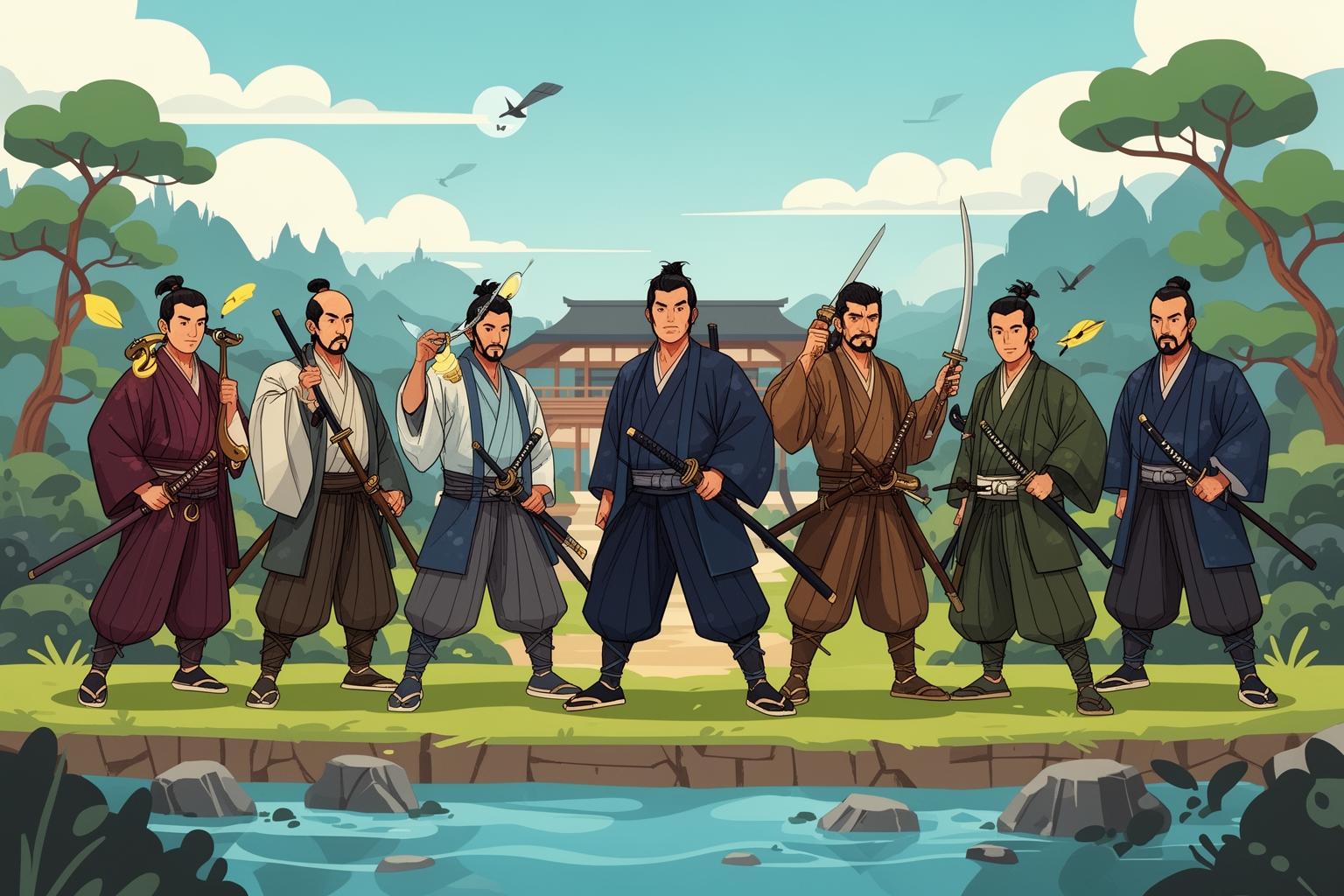
Our pilgrimage does not commence in a peaceful temple but on the rugged, volcanic terrain of the Izu Peninsula in Shizuoka Prefecture. A land of dramatic coastlines, steaming hot springs, and jagged mountains, Izu offered Kurosawa the primal, untamed wilderness that envelops the besieged farming village. Although the village itself was an intricately constructed set at Toho Studios in Tokyo, its geographical and spiritual essence was rooted here. Kurosawa sought a landscape that felt ancient, powerful, and completely indifferent to the human drama unfolding within it. Izu, with its dark, fertile soil and twisted forests, was the ideal choice.
To visit Izu today is to immediately grasp his vision. The Shinkansen from Tokyo to Mishima Station serves as the modern gateway, but as you transfer to the local Izu-Hakone Railway or rent a car to explore deeper into the peninsula, the urban sprawl quickly disappears. The air shifts, thickening with the scent of damp earth and greenery. The mountains, part of Fuji-Hakone-Izu National Park, rise not as gentle rolling hills but as formidable, commanding masses. This is the terrain the samurai would have traversed, where bandits would have established their strongholds.
One of the primary filming locations was along the Kano River basin. As you drive or hike through this area, you can almost envision the samurai on their quest. Picture Kambei, the wise and weary leader, surveying the terrain, his strategic mind weighing every advantage and disadvantage the landscape presented. The winding roads snaking through the Amagi Mountains recall the perilous paths the samurai and villagers were forced to navigate. Filming here was notoriously challenging. The crew battled unpredictable weather, hauling heavy camera equipment up steep, muddy slopes. Yet this struggle became ingrained in the film’s very essence. The exhaustion visible on the actors’ faces is not always mere acting; it is the genuine hardship of living and working in such a demanding environment. The film’s grit and texture spring from the authentic grit and texture of Izu’s soil.
As a photographer, I find the light in Izu especially cinematic. In the early mornings, a thick mist often embraces the valleys, cloaking the forests in an ethereal, almost monochromatic haze that feels like stepping into Kurosawa’s black-and-white world. When the sun finally breaks through, it does more than illuminate; it sculpts. It carves sharp shadows from ancient trees and accentuates the rugged contours of volcanic rock. This is an ideal setting for capturing images that feel timeless and deeply Japanese. Notice the small details: how moss clings to a stone marker, the patterns of light filtering through dense bamboo groves, the powerful rush of a waterfall cascading down the mountainside. These are the elements Kurosawa used to construct his world, frame by frame.
For visitors, a wonderful way to embrace this atmosphere is to hike along the Odoriko Trail, which traces the path of a famous short story by Nobel laureate Yasunari Kawabata. While not an actual filming site, it immerses you in the kind of primordial forest landscape that shaped the film’s exterior scenes. You’ll cross old stone bridges and pass the renowned seven waterfalls of Kawazu, sensing the same isolation and raw nature the film’s characters would have known. For a moment, the modern world slips away, leaving only the sound of the river, the whisper of wind in the trees, and the faint imagined echo of a distant battle cry.
Sengokuhara: The Hallowed Ground of the Final Battle
If Izu was the soul of the wilderness in Seven Samurai, then the Sengokuhara Pampas Grass Fields in Hakone are its heart—a heart that beats in time with the rhythm of cinema’s most iconic final battle. This is where Kurosawa staged his climactic, rain-soaked showdown. It is here, within this vast, windswept caldera, that the samurai make their final, desperate stand against the bandits. Today, the fields offer serene, breathtaking beauty, but for any fan of the film, they remain hallowed ground, a natural amphitheater where cinematic history was forged.
Reaching Sengokuhara from Tokyo is a journey into the mountains. You can ride the scenic Odakyu Romancecar train to Hakone-Yumoto, the gateway to the Hakone region, then transfer to a local bus that winds its way up the mountain roads. The ascent is part of the experience itself. With every switchback, the views grow broader, and the air becomes cooler and crisper. When you finally arrive at the fields, their immense scale is breathtaking. A vast sea of susuki, or pampas grass, stretches out before you, rippling with each gust of wind. In the distance, the caldera’s mountainous rim frames the view, lending a sense of dramatic enclosure.
Kurosawa selected this location for its raw, elemental power. He famously waited for days, sometimes weeks, for the perfect cloudy sky, knowing that the battle’s drama would be heightened by the brooding, atmospheric heavens. The final battle was filmed in February, amid bitter cold. The crew used four cameras simultaneously to capture the chaotic, swirling action from multiple perspectives—a technique revolutionary for its time. To create the iconic mud, they flooded the fields with huge amounts of water, transforming the volcanic soil into a thick, treacherous quagmire. The actors, chilled and exhausted, slipped and slid through the freezing muck, their struggle against the elements mirroring their characters’ desperate fight for survival.
To stand in Sengokuhara today is to feel this history in the air. The best time to visit is autumn, from late September to November, when the pampas grass turns a magnificent golden-silver. A single walking path bisects the heart of the fields, allowing you to immerse yourself in the landscape. As you walk, the rustling of millions of grass stalks creates a mesmerizing soundscape. Close your eyes, and you can almost hear the thunder of hooves, the clash of steel, and Toshiro Mifune’s unforgettable, wild laughter as Kikuchiyo. It is a deeply moving experience. You begin to grasp the tremendous physical effort it took to create those scenes. You can imagine where Kurosawa placed his cameras, envisioning wide shots of bandits charging through the grass on horseback, and tight, frantic close-ups of samurai fighting for their lives in the mud and rain.
From a photographer’s perspective, Sengokuhara is a dream. The way light interacts with the pampas grass constantly shifts. At sunrise or sunset, the fields ignite with color, offering a soft, warm palette. On overcast days, the landscape takes on a somber, monochromatic tone, perfectly echoing the film’s aesthetic. I recommend using both a wide-angle lens to capture the vastness of the fields and sky, and a telephoto lens to compress the scene, creating dense, abstract patterns of grass and light. Focus on the movement—the way the wind creates waves across the landscape. This motion is the living spirit of the place, the same energy Kurosawa captured so brilliantly on film.
Beyond the fields, the wider Hakone region provides further context. It has long been a site of strategic importance, a major checkpoint on the old Tokaido highway connecting Edo (Tokyo) and Kyoto. The samurai were well-acquainted with these mountains. Visiting the nearby Hakone Checkpoint Museum or walking a preserved stretch of the old Tokaido road, complete with original stone paving, can deepen your appreciation for the historical world that Seven Samurai, set in the late 16th century, inhabits. This is not just a film set; it is a region rich with the history of the samurai era.
The Spirit of the Village: Toho Studios and the Art of Creation
While the soul of the film’s world resided in the wild landscapes of Izu and Hakone, the literal heart of the story—the farming village—was an extraordinary feat of human creation. It is essential to understand that the village was not a real, pre-existing place. Rather, it was built from scratch on the backlot of Toho Studios in Setagaya, Tokyo. Kurosawa, known for his perfectionism, demanded an unprecedented level of realism and detail. He didn’t just want a set; he envisioned a fully functional, living village.
He had his crew construct an entire village, complete with dozens of huts, a water mill, bridges, and fences. The buildings were crafted from aged materials to appear as though they had stood for generations. He even had the actors live on the set for a time before filming began, to help them fully inhabit their roles and foster a genuine sense of community. Each house was designed with its resident character in mind, filled with props and details that told their story, even if these elements never appeared explicitly on camera. This approach exemplifies the Kurosawa method: complete immersion and the belief that a film’s truth lies in the authenticity of its world.
Naturally, you cannot visit this set today. It was deliberately partially destroyed during the filming of the final battle, and the remainder was dismantled long ago. However, knowing about its existence alters how you perceive the film and its locations. It creates a striking duality. The untamed, timeless nature of Izu and Hakone represents the outside world—the threat, the chaos, the journey. The meticulously constructed village at Toho symbolizes the fragile sanctuary of humanity, the thing worth fighting for. This contrast is vital. The samurai act as mediators, figures who must impose the discipline and order of their warrior code upon the wild chaos to protect the constructed village world.
For the modern pilgrim, visiting the area around Toho Studios can still be a fulfilling experience. Although the studio grounds themselves are off-limits, the surrounding neighborhood of Seijo is a pleasant, upscale residential area. More importantly, it serves as a reminder that the magic of cinema arises from both discovering the perfect real-world landscapes and possessing the artistic vision to build a world from nothing. After immersing yourself in the raw nature of Izu and Hakone, reflecting on the sheer artistry and effort invested in creating the village set provides a fuller understanding of Kurosawa’s genius. It was a masterful fusion of the found and the made, of nature’s grandeur and human creativity.
Nearby, you can also visit the Kurosawa Film Studios, a separate facility in Yokohama, occasionally hosting exhibits related to his work, or attend special screenings of his films at repertory cinemas in Tokyo, such as the Jinbocho Theater. Connecting the physical journey to the locations with an appreciation for the filmmaking craft completes the pilgrimage experience.
A Practical Guide for the Modern Pilgrim
Setting out on this journey requires some planning, but the payoff is an unforgettable connection to one of cinema’s greatest masterpieces. The main sites in Izu and Hakone can be visited as individual day trips from Tokyo, yet to fully soak in the atmosphere, a two- or three-day itinerary is recommended.
In Izu, a good base is a town like Shuzenji, a charming hot spring resort with a rich heritage. From there, renting a car is the most effective way to explore the mountainous interior and the Kano River areas, which echo the film’s landscapes. While public transport is available, it can be sporadic in the more remote regions. Expect plenty of driving on winding mountain roads. Here, the journey itself is part of the experience. Allow time to stop at scenic viewpoints, hike short trails, or simply sit and listen to the sounds of the forest. The best seasons to visit are spring, for the cherry blossoms and vibrant greenery, and autumn, for the stunning fall foliage. Summer can be hot and humid with an increased risk of typhoons, which might add to the cinematic mood but can disrupt travel plans.
In Hakone, the transport system is an attraction in its own right. The Hakone Free Pass is a great choice, covering the train from Tokyo’s Shinjuku station and all local transport including the switchback railway, cable car, ropeway, and even a pirate ship cruise on Lake Ashi. Sengokuhara, your main destination, is easily accessible by bus from Hakone-Yumoto or Gora. As noted, autumn is the ideal time to visit the pampas grass fields; their golden glow is truly magical. Expect crowds, especially on weekends, but the fields are large enough to find quiet spots for reflection. Wear comfortable shoes, as the path through the grass stretches over a kilometer. Mountain weather can change quickly, so bring layers even if the day starts sunny.
When exploring these areas, embrace the local culture. Both Izu and Hakone are famed for their onsen (hot springs). Staying in a ryokan (traditional Japanese inn) and soaking in an onsen after a day of hiking and exploring is a perfect way to relax and deepen your connection to the place. It’s an experience of purification and reflection that resonates with the samurai spirit. For food, Izu is known for its fresh seafood and wasabi—you can even visit wasabi farms near the Amagi mountains. In Hakone, be sure to try kuro-tamago, eggs boiled in volcanic hot springs that turn black and are said to add seven years to your life.
My advice for first-time visitors is not to rush. This is not a checklist to be completed, but a journey of atmosphere. Take time to sit, watch the light change, and feel the breeze. Bring a good camera, but also know when to put it away and simply be present. The power of these places lies in their ability to transport you—let them. Re-watch Seven Samurai before your trip, and perhaps bring stills from the film on your phone or tablet. Finding a vista you recognize, standing where Kurosawa placed his camera, is a thrilling moment of connection across time. It closes the gap between you, the filmmaker, and the timeless story he told. This journey is about more than just seeing a place; it’s about feeling a film in its purest form, discovering that the echoes of those seven warriors still linger, carried on the winds of Izu and Hakone.