
Some films aren’t just watched; they’re felt. They seep into your soul, leaving an indelible mark with their raw power and aching beauty. Michael Cimino’s 1978 masterpiece, The Deer Hunter, is one such film. It’s an epic, a gut-wrenching symphony of friendship, the brutal innocence lost to war, and the haunting silence that follows. The story of Michael, Nick, and Steven, three steelworkers from the small town of Clairton, Pennsylvania, who are irrevocably changed by their service in Vietnam, is a cornerstone of American cinema. But the film’s power isn’t just in its performances or its narrative; it’s in its profound sense of place. The grimy, fiery heart of steel country, the majestic, unforgiving mountains, and the chaotic, humid jungles—these aren’t just backdrops; they are characters in their own right, shaping the destiny of the men we come to know. To walk these grounds is to step into the very soul of the movie, to connect with its echoes of loyalty, trauma, and the desperate search for home. This journey isn’t just for film buffs; it’s a pilgrimage for anyone moved by this staggering tale, a chance to stand where titans of cinema stood and feel the powerful currents of history, both real and cinematic, that flow through these incredible locations. From the industrial heartland of the Rust Belt to the soaring peaks of the Pacific Northwest and the distant rivers of Southeast Asia, we’re about to trace the footsteps of a cinematic legend.
For those who find themselves similarly drawn to the visceral landscapes of war cinema, a pilgrimage to the heart of ‘Platoon’ offers another profound journey into the soul of a conflict.
The Heart of Steel Country: Pennsylvania’s Industrial Echoes
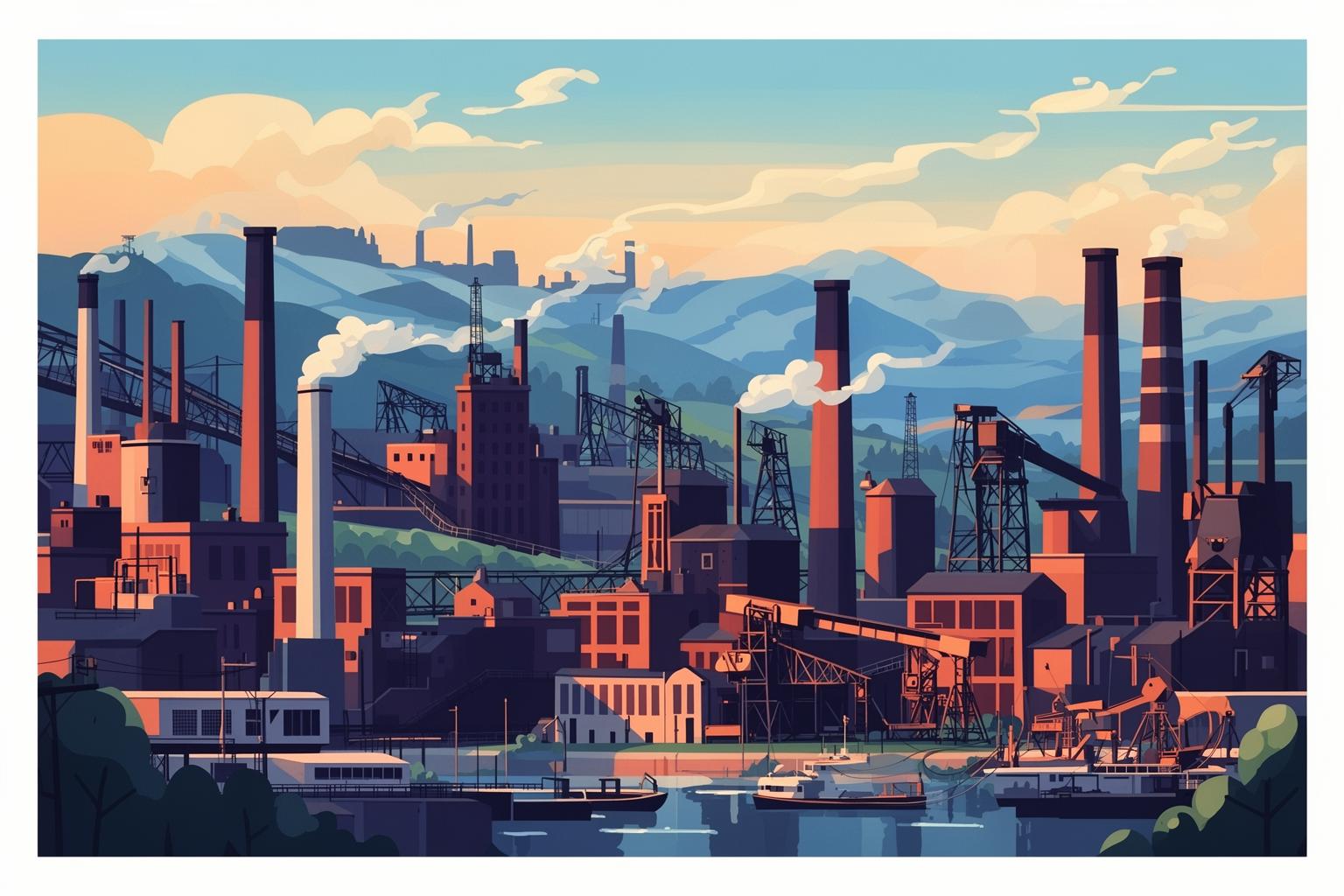
The soul of The Deer Hunter was forged in fire, within the vast, smoke-churning steel mills that loomed over the skyline and shaped the lives of its characters. This was the world they fought to protect and sought to return to. Though the film cites Clairton, Pennsylvania, as their hometown, the steel town depicted on screen is a composite—a mosaic of locations scattered across the American Rust Belt. This region carries a profound history marked by immigrant dreams and industrial strength, now tempered by a quiet resilience amidst economic shifts. Visiting these places today offers a lesson in American history and a chance to sense the grit and glory Cimino so vividly captured on film. You can almost hear the roar of the furnaces and the laughter of friends as they drive through these lively streets, unaware of the darkness looming ahead.
Clairton, Pennsylvania: The Heart of the Story
Although surprisingly little of The Deer Hunter was actually filmed in Clairton, its spirit infuses every frame of the movie’s opening act. This is the film’s spiritual ground zero. To truly understand the characters, one must first understand the world that shaped them. Clairton is a genuine town built on the steel industry, anchored by the massive Clairton Works—one of the largest coke manufacturing plants in the world. In the era depicted, this mill was the town’s heartbeat, provider, and identity. It offered a tough but steady life defined by community, church, and simple pleasures like sharing a beer after a long shift. Driving through Clairton today reveals a poignant glimpse of this world. The grand scale of Clairton Works still dominates the landscape along the Monongahela River, standing as a testament to a bygone era of American industrial power. The atmosphere is thick with history, blending pride with the melancholy of changing times. While specific filming locations are absent, the town embodies the true essence of the film’s setting. To experience it fully, take a slow drive through its residential streets, noting modest homes and old storefronts. Imagine Michael, Nick, and Steven living here, their lives timed to the mill’s whistle. The town invites reflection on the strong social fabric that the war would ultimately unravel. Visitors should remember this is a living community, not a film set—respect its privacy, observe from afar, and absorb the authentic ambiance that made it the unseen heart of the movie.
The Russian Orthodox Church: A Symbol of Community
The film’s magnificent opening, a sprawling and vibrant wedding celebration, honors life and tradition before the fall. The stunning church with its golden onion domes is not in Pennsylvania but in Cleveland, Ohio. This is St. Theodosius Russian Orthodox Cathedral, located in the historic Tremont neighborhood. Consecrated in 1912, this National Historic Landmark is an architectural marvel. Its intricate brickwork and iconic domes stand as a powerful symbol of the community’s deep Slavic roots—a sanctuary of faith and tradition grounding the characters’ lives. Approaching its grand entrance, you can almost hear the choir and see the wedding party spilling onto the steps. Inside is equally awe-inspiring, filled with ornate iconography, rich colors, and a tangible sense of sacred history. This is where Steven and Angela were married and their friends celebrated, creating joyful memories that later carry painful weight. The interior atmosphere offers serene reverence—a beautiful, stark contrast to the industrial grit outside. For visitors, it’s an opportunity to step directly into one of the film’s most memorable scenes. As an active cathedral, visitors should be respectful: check service times before coming, avoid visiting during worship, dress modestly, and honor the space as a house of worship. The vibrant Tremont neighborhood, full of galleries, boutiques, and excellent eateries, makes the cathedral a perfect starting point for a day exploring Cleveland.
Lemko Hall: The Wedding Reception’s Energetic Center
Just a short walk from the cathedral, also in Cleveland’s Tremont, stands another key location from the film’s opening: Lemko Hall. This unpretentious brick building was the site of the marathon wedding reception—a scene of lively, drunken dancing, heartfelt toasts, and subtle hints of what’s to come. Here, the friends drink from the loving cup, symbolizing their unity, while Michael silently observes the Green Beret at the bar, foreshadowing future violence. The hall becomes a microcosm of their world—noisy, vibrant, and fiercely loyal. Officially known as the “Lemko Association,” the building has a rich history as a social and cultural hub for the local Carpatho-Rusyn community. Although its function has changed over time and it may not always be open to the public, standing outside at 2335 West 11th Street is a powerful experience. You can easily picture long banquet tables, hear Stan shouting about his pistol, and feel the band’s energy as couples whirl on the dance floor. The exterior is instantly recognizable to any fan of the film. While entering might not be possible, and ordering a Rolling Rock at the bar unlikely, its presence attests to the film’s remarkable use of authentic, lived-in spaces. It feels less like a set and more like a place where real memories were created—for both the characters and the local community that welcomed the filmmakers.
The Majestic and Menacing Wilderness: Washington State’s Dramatic Landscapes
If the steel towns symbolize the structured, man-made environment the characters live in, the mountains embody a primal, natural realm filled with beauty, danger, and deep spiritual significance. The deer hunting scenes, which powerfully metaphorize skill, control, and the sanctity of life, were not actually filmed in Pennsylvania’s Allegheny Mountains as the story suggests. Instead, Cimino brought his crew to the breathtaking, vast landscapes of Washington State’s North Cascades. This decision was a masterstroke, as the immense scale and raw beauty of these mountains elevate the film’s themes, crafting a visual poetry that starkly contrasts with both the industrial home front and the chaotic jungles of Vietnam. This is Michael’s sanctuary, where his philosophy of “one shot” is revered like a sacred ritual. The atmosphere here feels distinct—clean, crisp, and charged with the power of untamed nature.
North Cascades National Park: Where “One Shot” Resonates
The hunting sequences were shot in and around Mount Baker-Snoqualmie National Forest and North Cascades National Park, a region often dubbed the “American Alps” for its jagged, glacier-carved peaks. Many of the film’s most iconic shots were taken at Heather Meadows, a high-elevation area near the end of the Mount Baker Highway (State Route 542). Driving this road is a pilgrimage in itself, winding up through dense forests until you emerge above the treeline into an awe-inspiring landscape of alpine meadows, pristine lakes, and panoramic views of Mount Baker and Mount Shuksan. Here lies the landscape of Michael’s soul. The atmosphere evokes profound awe and humbling solitude. The immensity of the wilderness puts human concerns into perspective. It’s easy to imagine Michael, alone with his rifle, finding a rare clarity and purpose that eludes him elsewhere. For today’s visitors, this area is a haven for outdoor recreation. The best time to visit is from late July through early October, after the heavy winter snows have melted. Heather Meadows offers numerous hiking trails ranging from gentle, scenic walks around Picture Lake—famous for its postcard-perfect reflection of Mount Shuksan—to more challenging climbs. First-time visitors should be prepared for quickly changing mountain weather; even in summer, bringing layers is advisable. The drive to Artist Point, located at the highway’s end, provides arguably the region’s most spectacular 360-degree views and is an absolute must. Standing there, surrounded by a sea of peaks, you can sense the spirit of the film and the meaning behind Michael’s search for that single, perfect shot.
Diablo Lake: The Cascades’ Azure Jewel
One of the film’s most unforgettable vistas features the characters’ car driving alongside a lake of impossibly vibrant turquoise. This is Diablo Lake, a reservoir along the North Cascades Highway (State Route 20). The lake’s surreal hue isn’t a cinematic illusion; it results from glacial flour—finely ground rock particles suspended in the water—that reflect sunlight. Diablo Lake Vista Point, a popular and easily accessible stop just off the highway, offers a stunning view of the lake nestled among the towering Colonial, Pyramid, and Davis Peaks. The scene is genuinely breathtaking and stands as one of the film’s most beautiful and tranquil moments before their world unravels. It symbolizes the majesty of the natural world they belong to, a paradise they will soon lose. Visiting the overlook is straightforward but worth lingering to fully absorb the view. Interpretive signs at the site explain the area’s geology. For a deeper experience, visitors can hike down to the lake or take a boat tour operated by Seattle City Light, which manages the local dams. Because the North Cascades Highway closes in winter due to heavy snowfall (usually from November through April or May), plan your visit in summer or early fall to ensure access to this unforgettable cinematic landscape.
A World Away: The Jungles of Thailand

Arguably, the most harrowing and unforgettable scenes in The Deer Hunter are those set in Vietnam. The film’s portrayal of the chaos of war, the terrifying prisoner of war camp, and the psychological horror of Russian roulette left a lasting impression on audiences. For reasons of safety and logistics, these scenes were not shot in Vietnam but mainly in Thailand. The country’s lush jungles, winding rivers, and bustling urban areas provided a convincing and powerful stand-in for wartime Southeast Asia. The shift from the cool, majestic mountains of Washington to the hot, oppressive humidity of the Thai jungle creates a sensory shock, reflecting the characters’ own nightmarish journey into the heart of darkness.
The River Kwai and Sai Yok: Recreating a War Zone
The infamous POW camp scenes, where Michael, Nick, and Steven are forced to play Russian roulette by their captors, were filmed in and around Kanchanaburi province, a few hours west of Bangkok. The specific location for the underwater cage and riverside village was the Khwae Yai River, better known as the River Kwai. This site carries its own tragic history—that of the World War II Death Railway, constructed by Allied prisoners of war under brutal conditions. This historical significance adds another layer of gravity to the filming location. Cimino and his crew built an extensive prison camp set along the river, creating a terrifyingly authentic scene of despair. Today, the area is a popular tourist destination; although the film’s sets are long gone, the environment remains unmistakable. The dense green jungle, the wide, slow-moving river, and the oppressive humidity immediately evoke the world of the film. Visitors can explore the area by taking a long-tail boat trip down the river, perhaps the best way to experience the landscape as depicted in the movie. You can visit the famous Bridge over the River Kwai, explore the Hellfire Pass Memorial Museum, and pay respects at the Allied War Cemeteries. The atmosphere is a unique mix of serene natural beauty and the heavy weight of history. It invites reflection on the nature of conflict and survival, themes central both to its real history and its role in The Deer Hunter.
Patpong, Bangkok: The Gritty Streets of Saigon
To recreate the chaotic, morally ambiguous streets of Saigon during the war, the production turned to Bangkok’s notorious Patpong district. In the 1970s, as it is today, Patpong was a bustling, neon-lit entertainment area known for its go-go bars, nightclubs, and night market. It provided the perfect stand-in for the frenetic energy and desperation of a city at war. This is where Michael wanders in a daze, searching for Nick, and ultimately finds him in the hidden, smoke-filled gambling den, consumed by the horrors of Russian roulette. Filming amid the real, crowded streets of Patpong lent these scenes an intense sense of authenticity and danger. Today, Patpong remains vibrant and chaotic, though it caters heavily to tourists. Walking through the Patpong Night Market, with stalls selling everything from souvenirs to designer knockoffs, surrounded by flashing lights and blaring music from nearby bars, you can still sense the sensory overload Cimino captured. While it can be overwhelming, it’s an essential stop for anyone tracing the film’s journey. It’s a place of stark contrasts—of commerce and vice, excitement and risk. For visitors, the best advice is to stay street-smart and aware of your surroundings, but don’t hesitate to dive in. Grab a drink at one of the bars, haggle for a souvenir at the market, and soak in the unique, electric atmosphere. It’s here, amid the city’s chaos, that the film’s tragic final act begins to unfold.
Back in the Steel Valley: Ohio and West Virginia’s Supporting Roles
To create the composite portrait of Clairton, the filmmakers explored numerous locations across the Ohio River Valley, discovering the ideal industrial and small-town textures in Ohio and West Virginia. These sites offered essential visual details—the authentic, functioning steel mill, the neighborhood supermarket, the friends’ favored bar—that anchored the film in a tangible, blue-collar reality. Visiting these towns feels like a step back in time, into a vision of America that is both nostalgic and deeply real. This is the fabric of their daily lives, the world that exists between the grand events of weddings and the life-changing experiences of hunting and war.
Mingo Junction, Ohio: The Authentic Steel Mill
The awe-inspiring, terrifying, and beautiful footage of the steel mill’s interior—the massive furnaces, the showers of sparks, the flowing molten steel—was shot inside an actual, operating mill. This was the Wheeling-Pittsburgh Steel Corporation plant in Mingo Junction, Ohio. Cimino received unprecedented access, enabling him to capture the raw, elemental force of the steelmaking process. These scenes do more than show where the men work; they serve as a visual metaphor for the industrial powers that shape them and the hellish, fiery environment that, in an odd way, prepares them for the inferno of war. A visit to Mingo Junction today is a poignant experience. The steel industry has experienced significant decline, and the fate of this particular mill has fluctuated over the years, with periods of closure and reopening. While you can’t tour the inside of the working plant, driving through Mingo Junction and the surrounding area reveals the enduring legacy of the industry. The sheer scale of the mills, even from afar, remains impressive. The town itself retains the authentic, working-class character that the film captured so well. It is a place that understands hard work and has weathered economic hardships, a resilience that mirrors the film’s surviving characters.
Follansbee, West Virginia: The Local Bar and Beyond
Just across the Ohio River from Mingo Junction lies Follansbee, West Virginia, a small town that offered several crucial locations. Here, the filmmakers found the perfect setting for Welch’s Bar—the local hangout where the friends gather to drink, play pool, and sing along to Frankie Valli’s “Can’t Take My Eyes Off You” in one of the film’s most iconic scenes of camaraderie. The town’s V.F.W. (Veterans of Foreign Wars) post served as the bar’s interior. Additionally, a local supermarket in Follansbee was used for the scenes featuring Linda at work. These locations helped weave the rich, detailed tapestry of the characters’ hometown. Follansbee preserves its classic American small-town charm. Driving along Main Street, it’s easy to see why it was chosen. It feels genuine and untouched by time. Though specific businesses may have changed names or closed over the decades, the architecture and overall atmosphere persist. A visit here, combined with a stop in Mingo Junction, offers a full picture of the cinematic Clairton. It’s a journey into the heart of an America often overlooked—a world of close-knit communities and quiet pride, the very world that The Deer Hunter both honors and mourns.
The Pilgrim’s Reward: Connecting with The Deer Hunter’s Enduring Legacy

To travel through the filming locations of The Deer Hunter is to embark on an emotional and geographical journey. This voyage takes you from the industrial core of America, echoing immigrant hopes and blue-collar pride, to the majestic, cathedral-like peaks of the Cascades, and ultimately to the humid, history-rich landscapes of Thailand. Each site provides more than a mere photo op; it offers a profound connection to one of the most powerful stories ever captured on film. Standing before the golden domes of St. Theodosius, you feel the sacred ties of community. Gazing across Diablo Lake, you grasp Michael’s quest for purity and control amid chaos. And wandering the streets of Patpong, you sense the desperation behind his search for a lost friend. This pilgrimage serves as a reminder of cinema’s power to transform real places into sanctified ground, imbuing them with meaning and emotion that reach beyond the screen. It is a journey that unveils the soul of America—its beauty, brutality, resilience, and lingering ghosts. Ultimately, visiting these locations does more than deepen your appreciation of the film; it makes you feel its profound and heartbreaking story deep within your bones, leaving a lasting impression of war’s cost and the enduring strength of friendship.