
The earth itself breathes a story in Paul Thomas Anderson’s magnum opus, There Will Be Blood. It’s a tale etched not just in the searing gaze of Daniel Day-Lewis but in the vast, unforgiving landscapes that cradle his ambition. The film’s canvas is a character in its own right—a desolate expanse of dust, rock, and shimmering heat that feels both ancient and violently new. To watch the film is to be transported to the turn of the 20th century, to a California oil boom that feels more like a biblical prophecy of greed. But this California is not the one of sun-drenched beaches and Hollywood dreams; it is a California conjured from the stark, sprawling majesty of West Texas. This is where the heart of the film beats, in the high desert plains around Marfa, a place that has become a pilgrimage site for cinephiles seeking to stand on the same ground where Daniel Plainview drilled, and bled, and conquered. It’s a journey into the soul of the American West, a landscape that promises boundless fortune and profound isolation in a single, silent glance. Here, under a sky that feels impossibly wide, the echoes of a cinematic masterpiece resonate in the whispering wind, inviting you to witness the source of its terrible and awe-inspiring power. Before we drill down into the specifics of this cinematic territory, let’s survey the vast expanse that served as Anderson’s stage.
This cinematic pilgrimage to Marfa is part of a growing tradition of exploring the profound connection between place and story, much like the journey through the Spanish landscapes of Almodóvar’s films detailed in Echoes in the Silence: A Pilgrim’s Journey Through the Spain of Almodóvar’s ‘Talk to Her’.
The Heart of the Black Ocean: Why West Texas?
Paul Thomas Anderson’s choice to film most of There Will Be Blood in West Texas, mainly around the minimalist art community of Marfa, was a masterstroke of cinematic insight. Though the story, adapted from Upton Sinclair’s novel Oil!, is set in California, the actual landscapes of Southern California’s oil fields have since been consumed by relentless suburban development. The wild, untamed frontier essential to the story no longer exists there. Anderson sought a location that still preserved the raw, primordial emptiness of the early 20th century—a land appearing scarcely touched by human presence. He discovered it in the vast Chihuahuan Desert.
This part of Texas presents a distinctive visual language. It is a realm of vast scale, where the horizon stretches endlessly and the sky dominates with an often oppressive presence. The terrain is rugged and sparse, adorned in muted earth tones—ochre, rust, and pale sagebrush—that burst with color during brief moments at sunrise and sunset. This visual sparseness perfectly reflected the inner world of Daniel Plainview: a man of unwavering focus, devoid of sentimentality, whose spirit was as barren and formidable as the land he aimed to conquer. The very ground here tells a tale of struggle and survival, mirroring the film’s central themes.
Additionally, the history of the Permian Basin—the extensive geological formation beneath this region—is deeply intertwined with oil. While the film’s story is fictional, the essence of the boom-and-bust cycle is firmly rooted in local culture. This area experienced its own frenzied oil rushes, creating fortunes overnight and leaving ghost towns behind. Filming here allowed the production to tap into an authentic historical energy, a living memory of wildcatters, roughnecks, and the intoxicating yet destructive allure of black gold. The choice was more than logistical; it was thematic. The land itself acted as method acting, offering a backdrop that was not merely scenic but elemental, shaping the film’s haunting atmosphere and imparting a profound sense of authenticity to every shot.
The Plains of Ambition: The Ranches of Marfa
Marfa, Texas, once a quiet railroad water stop, has evolved over the decades into a globally acclaimed center for minimalist art, largely due to the influence of artist Donald Judd. Yet, for film enthusiasts, its identity remains closely tied to the towering derrick and fiery ambition of Daniel Plainview. The main filming locations are found on private ranches spread across the expansive countryside outside town, lands tended by the same families for generations. Accessing these exact sites can be challenging, requiring respect for private property and occasionally some luck, but their presence profoundly shapes the region’s character.
The Means Ranch: Site of the Inferno
The most iconic and visually striking scenes in There Will Be Blood were shot on the historic Means Ranch, a vast estate held by the same family since the late 1800s. This is where the Sunday Ranch stands, the spot of Daniel’s oil discovery that erupts into a catastrophic fire. The scene where the derrick explodes, sending a towering column of fire and smoke into the night sky, remains one of modern cinema’s most unforgettable moments. It’s a baptism by fire, marking Daniel’s rise to power and foreshadowing the destructive path he will carve through the lives of others.
Visiting the area around the Means Ranch, it’s easy to see why this location was chosen. The landscape features rolling hills and wide-open plains dotted with yuccas and creosote bushes. The terrain allowed cinematographer Robert Elswit to capture stunning wide shots, emphasizing the vastness of nature against the intimate human drama. The site of the derrick fire sits on a gentle rise, providing a commanding view of the surrounding land. Standing there, you can almost feel the ground tremble and hear the roar of flames that the production team created.
Of course, the derrick itself no longer stands. It was a massive, fully functional replica built specifically for the film. The crew went to great lengths to ensure authenticity, and the controlled explosion was a major practical effect, rare in an era dominated by CGI. Today, the spot where it stood is open rangeland, yet the power of the location endures. The best way to experience it is by driving along the public roads bordering the ranch, such as US-90. Stopping safely, you can gaze out over the same vistas that Anderson and his team so beautifully framed. The profound silence is broken only by the wind, and in that quiet, you can appreciate the isolation and sheer determination it would take to conquer such a place. It’s a landscape that demands respect and vividly conveys how it might have shaped a man like Daniel Plainview.
The McGuire Ranch: A Homesteader’s Solitude
While the Means Ranch served as the backdrop for Plainview’s explosive business successes, the nearby McGuire Ranch was the setting for his more personal, domestic life. This is where the production constructed the homestead where Daniel lives with his adopted son, H.W. The simple wooden house, the solitary windmill, and the small cluster of outbuildings were all built on this property, crafting an authentic slice of period life.
This setting is essential to the film’s narrative. It’s where Daniel’s attempts at fatherhood unfold—a space that should embody warmth and family but instead becomes a stage for his emotional coldness and manipulation. Scenes of young H.W. playing near the house, set against the vast, empty Texas plains, underscore the boy’s loneliness and the emotional barrenness his father has created. The McGuire Ranch offers a different feel from the Means property. It is somewhat flatter and more exposed, highlighting the vulnerability of the small family unit amid the unforgiving environment.
Like the Means Ranch, the McGuire Ranch is private property. The film set was dismantled after shooting ended, so Daniel Plainview’s house no longer stands here. However, the spirit of the place remains. The landscape itself, with its low hills and endless horizon, evokes the profound isolation that permeates the film. Driving the rural roads here, you’ll encounter countless scenes that appear lifted directly from the movie. The stark beauty of a lone windmill turning against a bruised purple sunset, or a simple ranch house standing firm beneath the vast sky—these real-life images give There Will Be Blood its soul. The best way for visitors to engage is to absorb the overall atmosphere of the Marfa high desert, realizing that the exact patch of earth is less important than the overwhelming feeling the place imparts as a whole.
Little Boston: A Town Built on Greed in Shafter
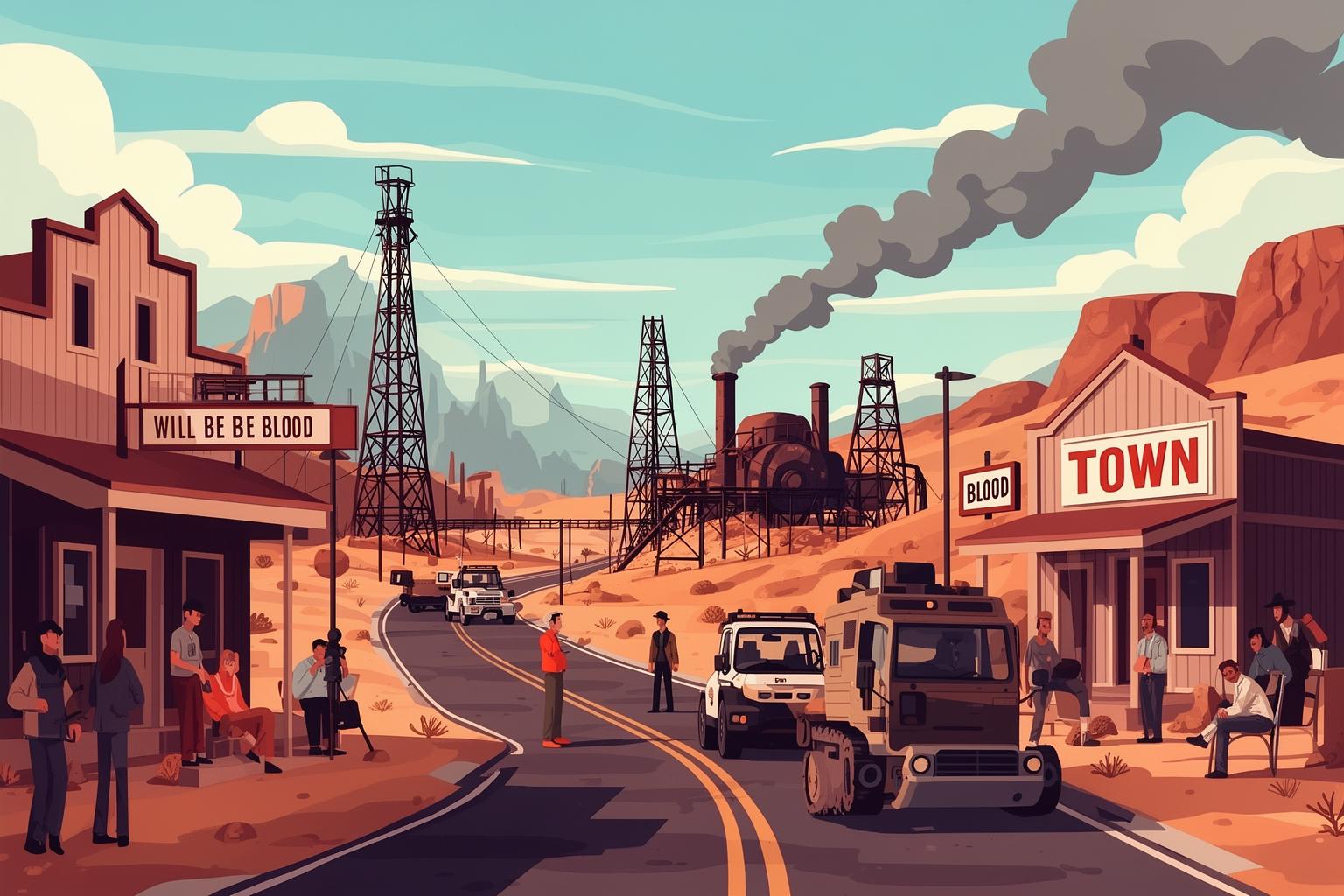
To create the bustling, makeshift oil town of Little Boston—the community that emerges around the Sunday Ranch and becomes the battleground between Daniel Plainview and the preacher Eli Sunday—the production team relocated about an hour south of Marfa to the near-ghost town of Shafter, Texas. This location was another inspired choice, rich with its own history of boom and bust.
Once a thriving silver mining town, Shafter had become a shadow of its former self by the time the film crew arrived, with only a few residents remaining amid a collection of decaying historic buildings. This provided the ideal backdrop. The crew constructed an entire period-accurate town on Shafter’s outskirts, including the church, saloon, general store, and modest homes. They fashioned a main street that looked completely authentic—a muddy, chaotic thoroughfare filled with the hopes and desperation characteristic of a boomtown.
What makes a visit to Shafter so compelling is its dual history. You can sense the echoes of the real silver miners who lived and died there, while simultaneously imagining the fictional drama of the film. The landscape surrounding Shafter is even more dramatic and rugged than that of Marfa. Nestled in the Chinati Mountains, the terrain is rocky and steep, marked by deep arroyos and imposing peaks. This setting added a distinctive texture to the film, conveying a feeling of being hemmed in by mountains, which contrasted sharply with the wide-open plains of the ranch scenes.
Today, Shafter remains a quiet, haunting place. Although the Little Boston set has been removed, some of the town’s original historic buildings, including the old church and the crumbling ruins of the mining operation, still stand. Walking through Shafter feels like stepping back in time. The silence is profound, and the arid air carries untold stories. You can stand where Eli Sunday’s Church of the Third Revelation was built and gaze at the same mountains that framed his fervent sermons. It’s a powerful experience that links the film’s fiction with the tangible history of the American West. A visit to Shafter is essential for any serious pilgrim, offering a glimpse into the raw, hardscrabble community so vividly depicted in the film.
California’s Gilded Cage: The Final Act
After immersing the audience in the grit and dust of the Texas frontier, the film’s final act shifts sharply to the opulent, stifling wealth of Southern California. This change in setting is essential, revealing the ultimate outcome of Daniel’s relentless ambition. He has escaped the physical hardships of the oil fields, only to become trapped in a gilded cage of his own making. To depict this decadent decline, the production utilized several historic locations in and around Los Angeles.
The Doheny Mansion: Bowling for Blood
The film’s unforgettable climax, the notorious “I drink your milkshake” scene, occurs in the cavernous bowling alley of Daniel Plainview’s vast mansion. This was not a constructed set; it was filmed in the authentic bowling alley located in the basement of the Greystone Mansion in Beverly Hills. This stunning Tudor Revival estate was built in the 1920s by Edward Doheny, an oil tycoon who actually served as one of the main inspirations for the character of Daniel Plainview. This connection adds a striking layer of historical resonance to the scene. The very walls of the location are infused with the spirit of the oil fortunes that the film explores.
Greystone Mansion is now a city park, and its grounds are open to the public. The interior is often accessible for tours or special events. Stepping inside feels like entering another world. The immense scale and luxury are breathtaking, featuring hand-carved wood, marble floors, and intricate details at every turn. Yet there is also a coldness, a museum-like atmosphere that perfectly reflects Plainview’s hollow existence. Visiting the bowling alley is the ultimate experience for any fan. It’s a surprisingly large two-lane alley, and standing there, you can almost hear the echoes of Daniel Day-Lewis’s thunderous monologue and the sickening thud of the bowling pin. It is one of the most accessible and rewarding locations from the film, where the line between cinema and reality feels incredibly thin.
The Huntington Library: A Deceptive Paradise
Another important California location is the Huntington Library, Art Museum, and Botanical Gardens in San Marino. The lush, meticulously maintained grounds of this estate were used for the scene in which the adult H.W. and his wife, Mary, share a conversation. The peaceful, beautiful setting sharply contrasts with the ugliness of the family’s history and the bitter exchange that will soon occur between H.W. and his father. The choice of this location underscores the superficial paradise that oil money can buy—a stunning facade that conceals deep emotional decay. Visiting The Huntington is a wonderful experience in its own right, featuring world-class art collections and acres of breathtaking gardens to explore. For fans of the film, a stroll through the North Vista or the Japanese Garden will feel hauntingly familiar—like a beautiful dream on the verge of turning sour.
Planning Your Pilgrimage: A Practical Guide
A journey to the filming locations of There Will Be Blood is far from a simple trip; it’s an adventure that demands careful planning and a readiness to embrace the solitude of the open road. The West Texas sites, in particular, are isolated, with limited services available.
Getting to West Texas
The closest major airports to Marfa are Midland/Odessa (MAF) and El Paso (ELP), each about a three-hour drive away. Renting a car is absolutely necessary, as there is no other way to explore the vast landscapes where the film was shot. Make sure to rent a vehicle with reliable tires and prepare for long stretches without gas stations or cell service. Always fill your tank when possible, and bring extra water and snacks.
When to Go
West Texas is known for its extreme climate. Summers are intensely hot, often climbing above 100°F (38°C), while winters can be surprisingly cold, with freezing temperatures and occasional snowfall. The best times to visit are spring (March-May) and fall (September-November), when the weather is generally mild and enjoyable. The light during these seasons is especially striking, casting long shadows and enhancing the vibrant desert hues.
Where to Stay
Marfa offers a variety of distinctive lodging options, from the historic Hotel Paisano—where Elizabeth Taylor and James Dean stayed during the filming of Giant—to sleek, minimalist hotels like The Hotel Saint George and the Thunderbird Hotel. Additionally, there are many vacation rentals and more rustic choices such as El Cosmico, which features trailers, yurts, and tent camping. Make sure to book your accommodations well ahead of time, especially if visiting during popular festivals or holiday weekends.
Respecting the Land
This is the most important advice. Most filming locations in Texas are on privately owned, working ranches. Do not trespass. You can appreciate the beauty of these places from public roads. Driving along the highways and county roads around Marfa and Shafter will give you a remarkable sense of the film’s setting. Locals are typically friendly but highly protective of their privacy and land. Be a respectful visitor: avoid stopping on dangerous road sections, do not block gates, and adhere to the “leave no trace” principle. The desert is a fragile ecosystem, and its stark beauty depends on responsible care by those who pass through it.
Beyond the Blood: Exploring the Marfa Mystique
Although your pilgrimage may be inspired by the film, a visit to Marfa offers much more. This small town is a cultural oasis in the heart of the desert, where cowboy culture and high art intersect in captivating ways. Take time to explore the Chinati Foundation, an art museum founded by Donald Judd that showcases large-scale installations seamlessly integrated with the surrounding landscape. Wander through the various art galleries scattered throughout town. In the evening, drive east on US-90 to the official viewing area for the mysterious Marfa Lights, an unexplained phenomenon that has puzzled observers for generations.
Marfa’s food scene is also surprisingly vibrant, offering everything from excellent food trucks to upscale dining experiences. The community is a blend of artists, ranchers, and free spirits, creating an atmosphere unlike anywhere else in Texas. Embrace the town’s slow pace and quirky charm. Visiting the locations of There Will Be Blood is made richer by understanding the unique cultural backdrop of the place Paul Thomas Anderson chose as his canvas.
The Echo of the Drill: A Final Reflection
To travel through the landscapes of There Will Be Blood is to experience more than just a film set; it is to immerse yourself in the very soul of the movie. The wind that sweeps across the plains carries the echoes of Daniel Plainview’s solitary ambition. The vast, silent sky mirrors his profound emptiness. The harsh, unforgiving ground tells of the brutal effort needed to extract a fortune from the earth. These places are not merely backdrops; they are active participants in the narrative, shaping its characters and defining its themes.
A journey here becomes a meditation on scale—the scale of the land, of human greed, and of the sky beneath which it all unfolds. You depart with a deeper appreciation for the film’s artistry and for the raw, powerful beauty of the American West. While you may not find an ocean of oil beneath your feet, you will discover a landscape rich with history, art, and the enduring spirit of one of cinema’s greatest tales. The milkshake is gone, but the land and its haunting whispers remain.