Tokyo is more than a city; it’s a character, a sprawling organism of concrete, neon, and whispered secrets. In the world of acclaimed author Haruki Murakami, this metropolis transforms into something else entirely. It becomes a labyrinth of possibility, a place where the mundane bleeds into the magical, where a simple walk down an alley can lead you into an alternate reality, and where lonely souls search for connection against a backdrop of jazz clubs, quiet cafes, and ever-present train lines. To walk through Tokyo with Murakami’s novels as your guide is to peel back the layers of the everyday and glimpse the surreal dreamscape shimmering just beneath the surface. This isn’t just a tour of locations from a book; it’s an immersion into a state of mind, a journey into a city that feels both intimately familiar and wonderfully strange. You’ll find yourself looking for two moons in the night sky, listening for the echo of a forgotten song, and feeling the profound, beautiful melancholy that permeates his stories. It’s a pilgrimage for those who believe that the most extraordinary things happen in the most ordinary places.
Embracing Tokyo’s surreal energy might inspire you to embark on a reflective journey along the ancient path, where history and mystery intertwine.
The Echoes of Shinjuku: Where Reality Blurs
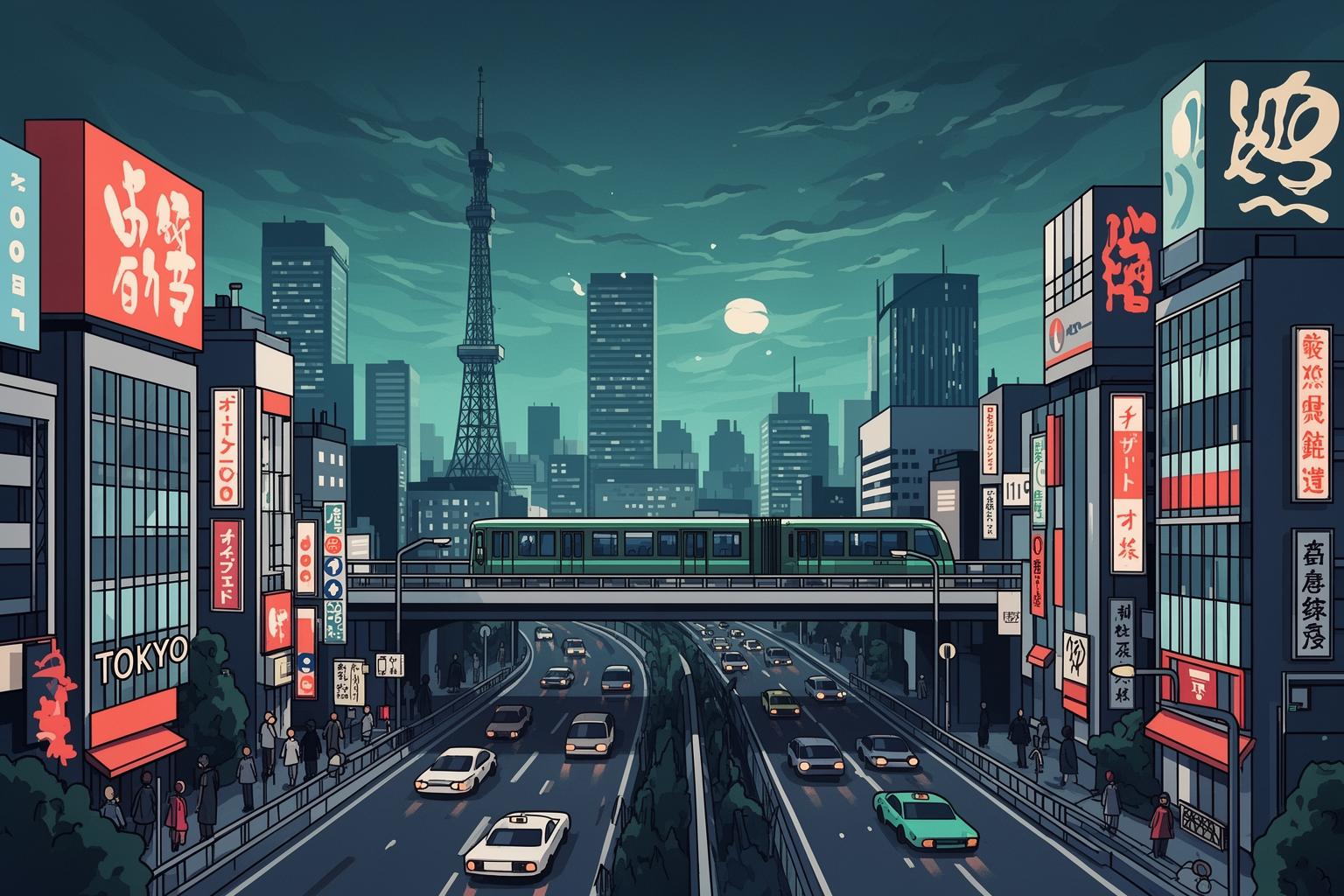
Shinjuku is the vibrant, chaotic heart of Tokyo, and for Murakami, it serves as a key stage for his characters’ existential journeys. The district is marked by sharp contrasts, where the sleek skyscrapers of the Tokyo Metropolitan Government Building give way to the cramped, intimate alleyways of Golden Gai. This duality lies at the core of the Murakami experience. The Shinjuku you encounter during the day—a busy center of business and transportation—is quite different from the Shinjuku that comes alive at night, a place filled with smoky bars, fleeting encounters, and the haunting sound of a solitary saxophone.
Golden Gai and the Whispers of After Dark
Step into Golden Gai, and it feels like stepping back in time. This tiny enclave of Shinjuku, a network of six narrow alleys filled with more than two hundred miniature bars, surprisingly survived the post-war redevelopment that reshaped the rest of the area. Each bar is a world unto itself, some barely fitting five or six people. This is the kind of setting where you can easily picture one of Murakami’s protagonists nursing a whiskey, lost in thought, while the city’s neon lights glow dimly through a grimy window. The atmosphere is thick with history and unspoken tales. It’s intimate, slightly intimidating, yet incredibly rewarding. A useful tip for newcomers: many bars have a seating charge, or otoshi, and some are members-only. Look for signs in English that welcome tourists, or simply be brave and pull open a door that looks inviting. Sharing such a tiny space with the bartender and a few patrons is pure Murakami—a brief, intense connection in an overwhelmingly vast city.
Shinjuku Gyoen National Garden: A Sanctuary of Solitude
Just a short stroll from the hectic energy of Shinjuku Station lies Shinjuku Gyoen, a tranquil oasis. Parks and quiet spaces play a crucial role in Murakami’s world, offering moments for reflection, memory, and often poignant, melancholic conversations. Though famously featured as a setting in Makoto Shinkai’s The Garden of Words, its essence perfectly aligns with the Murakami aesthetic. This is where characters escape the city’s relentless pace to face their inner selves. Picture Toru Watanabe from Norwegian Wood walking these paths, grappling with love and loss. The garden, with its distinct English Landscape, French Formal, and Japanese Traditional sections, provides a deep sense of peace. Visiting on a weekday morning is ideal—you can find a quiet bench, watch the seasons shift, and let the city’s noise fade to a distant murmur. In these moments of quiet reflection, Murakami seems to suggest, we can truly hear ourselves think. It is the perfect counterbalance to the sensory overload of Shinjuku’s core, a necessary pause in the story of your journey.
Koenji’s Counter-Culture Beat: The Heart of 1Q84
If Shinjuku represents the city’s mainstream pulse, Koenji embodies its alternative, bohemian heartbeat. This neighborhood in western Tokyo serves as the essential setting for 1Q84, marking the protagonist Aomame’s entry into a parallel world. It feels slightly out of sync with the rest of Tokyo, which is exactly what makes it so captivating. Renowned for its vibrant punk rock scene, numerous vintage clothing stores, and independent shops, Koenji radiates a creative and rebellious vibe that makes it an ideal gateway to another reality.
Down the Rabbit Hole of the Emergency Exit
Aomame’s journey in 1Q84 begins when she follows a taxi driver’s advice to descend an emergency staircase from the elevated expressway to avoid a traffic jam, an action that transports her from 1984 to the alternate reality of 1Q84. While you can’t duplicate this exact experience, you can immerse yourself in its spirit by exploring the elevated train tracks weaving through Koenji’s heart. Beneath the tracks lies a maze of small, distinctive shops, restaurants, and bars—all waiting to be discovered. This captures the novel’s essence: the notion that a small, unconventional choice can lead to an entirely different world. Strolling through Koenji, you sense that anything is possible, that a hidden door or a forgotten alley could lead somewhere unexpected. It invites curiosity and the courage to veer off the well-trodden path.
Finding the Two Moons
The most emblematic symbol of 1Q84’s world is the sight of two moons in the sky. As you roam Koenji’s streets, allow this concept to guide your exploration. Seek out the strange, the beautiful, and the unexpected. The neighborhood brims with oddities, from quirky street art to eccentric shop displays. The real journey here isn’t about locating a specific place but about embracing a new perspective. Visit a tiny record store and sift through crates of vinyl. Spend time in a vintage shop that feels like a time capsule. Find a quiet kissaten, a traditional coffee shop, and watch the world pass by. The magic of Koenji, much like the novel, lies in its details. It’s a place that rewards patient, attentive observation—a place where you might just begin to sense the fabric of reality gently unraveling at the edges.
The Crossroads of Fate: Shibuya and Aoyama
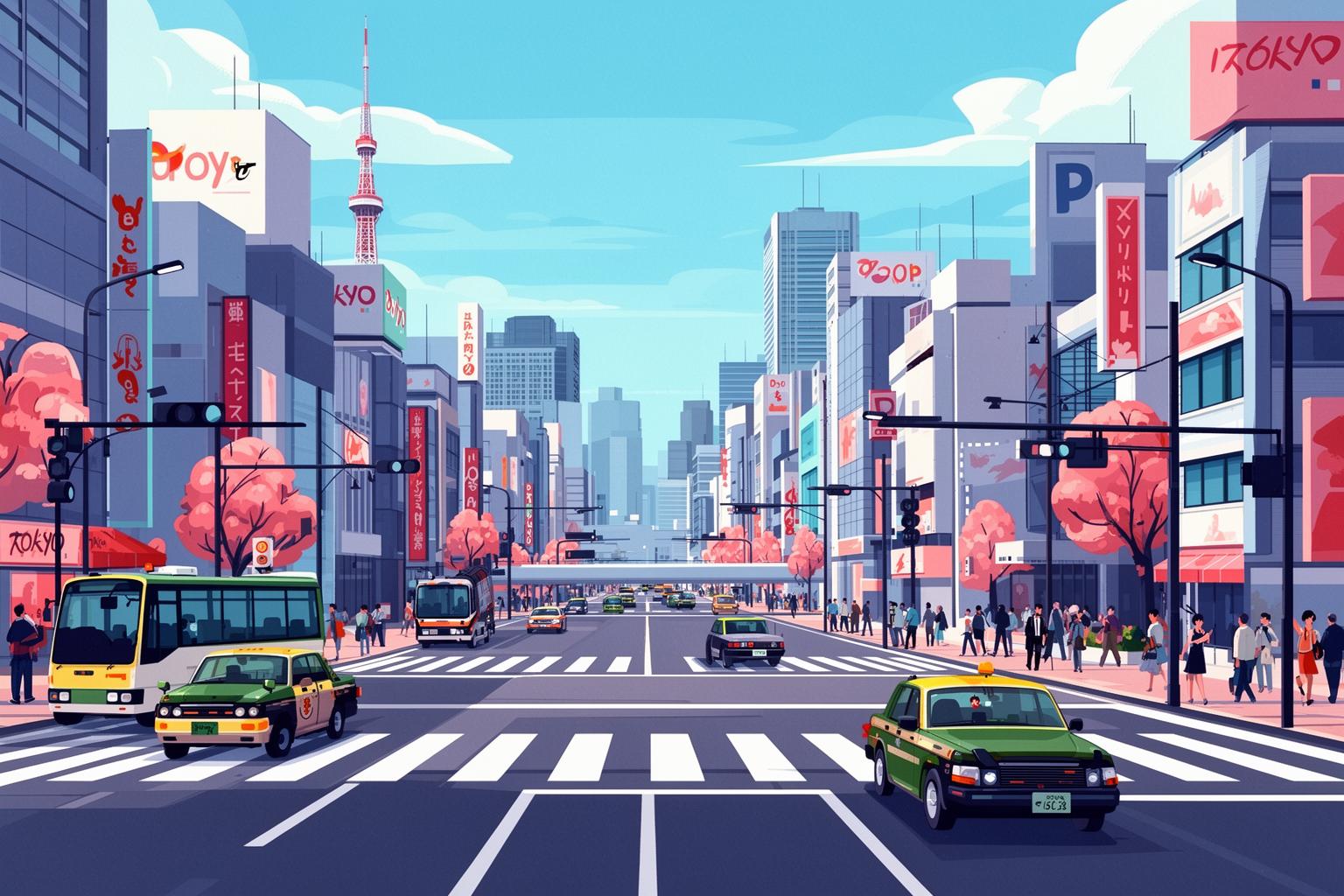
Shibuya and its more sophisticated neighbor, Aoyama, embody the youthful, stylish, and often lonely side of Tokyo that is prominently featured in Murakami’s earlier works, especially Norwegian Wood. This is the setting of university students, first loves, and first heartbreaks, all unfolding amid trendy boutiques, quiet residential streets, and legendary jazz clubs.
Aoyama Itchome and the University Days of Norwegian Wood
The story of Toru, Naoko, and Midori in Norwegian Wood is closely connected to the geography of their student lives. The area around Aoyama, Harajuku, and Shibuya forms their familiar terrain. You can trace their long, aimless walks through these neighborhoods. Begin near Aoyama Gakuin University and stroll along the refined streets of Omotesando, often referred to as Tokyo’s Champs-Élysées. Yet, the true essence lies in the backstreets—the ura-Harajuku area—where crowds thin out and a quieter, more contemplative mood prevails. Here, the novel’s poignant melancholy becomes palpable. These walks serve as a form of therapy for the characters, helping them process their tangled emotions. By retracing their paths, you’re engaging not merely in sightseeing but in the narrative’s emotional journey. Pause for coffee in a small, independent café and absorb the atmosphere. The sensation of being an anonymous observer in a vast, ever-moving city is a foundational part of the Murakami experience.
The Blue Note Tokyo: A Pilgrimage for Jazz Lovers
Music, especially jazz, is not simply a soundtrack in Murakami’s novels; it is a fundamental part of the universe, a language that conveys emotion when words fall short. His characters are often passionate collectors of jazz records, and the smoky, atmospheric jazz bar is a recurring motif. While the specific bars in his novels are usually fictional, The Blue Note Tokyo in Aoyama perfectly captures the spirit of these venues. As a premier stage for world-class jazz, visiting here is a pilgrimage for any Murakami enthusiast. The experience extends beyond the music itself; it encompasses the entire ritual. The dim lighting, the clinking of glasses, the focused silence of the audience, and the soul-stirring improvisation on stage create a sensory immersion that transports you directly into a scene from one of his books. It can be an expensive night out, but for those seeking to truly grasp the texture of his world, it is an indispensable experience. It connects you deeply to the enduring passion that inspires the author’s creative work.
Beyond the Main Stops: Lesser-Known Murakami Haunts
Although Shinjuku and Shibuya are prominent hubs, Murakami’s Tokyo is a vast mosaic made up of many diverse neighborhoods. To truly immerse yourself in his world, you need to explore the quieter, more residential areas where the subtler charms of his stories often come alive. These locations offer a slower pace and a more intimate connection to the city he depicts.
Inokashira Park and Sputnik Sweetheart’s Disappearance
Situated in the quaint neighborhood of Kichijoji, Inokashira Park is a beautiful, expansive public space that plays a significant role in Sputnik Sweetheart. It’s where the aspiring writer Sumire spends her time reflecting on her life and unrequited love before she mysteriously vanishes. The park, with its large central pond, swan boats, and lush greenery, exudes a dreamy, subtly melancholic atmosphere that perfectly complements the novel’s mood. You can rent a boat and paddle across the lake, or simply stroll around and find a bench to read. The vibe here feels timeless, a place where reality might easily slip away, just as it did for Sumire. Kichijoji itself is a fantastic area to explore, consistently ranked among Tokyo’s most desirable neighborhoods. Its mix of department stores, bohemian shops, and the lively covered market district Harmonica Yokocho make it a destination worth visiting.
Jimbocho: The Town of Books
Murakami’s characters are almost always readers—intellectuals, students, or individuals who find comfort and meaning within the pages of books. Jimbocho, Tokyo’s renowned book town, serves as their spiritual sanctuary. This district is home to over one hundred and fifty secondhand bookstores, each a treasure trove of knowledge and history. The air is filled with the scent of old paper and ink. You could spend an entire day browsing shelves, uncovering everything from rare literary editions to vintage manga and art books. Many of Murakami’s characters would feel right at home here. The area is also famous for its dense concentration of classic kissaten—old-fashioned coffee shops that have remained unchanged for decades. These quiet, solemn spots are devoted to the art of coffee. Securing a seat at places like Ladrio or Milonga, with their dark wood interiors and hushed ambiance, feels like entering a sanctuary. It’s the ideal setting for reading, writing, and sinking into the contemplative mood so central to the author’s work.
Crafting Your Own Murakami Itinerary
Exploring Murakami’s Tokyo is not about ticking off a checklist of places. It’s about adopting a particular mindset, a way of moving through the city that values feeling and atmosphere over straightforward sightseeing. This journey calls for patience and a readiness to get lost.
A Note on Pacing: Embrace the Meandering
The key advice is to slow down. Murakami’s characters seldom hurry. They walk, ride the train, sit in parks, and listen to music. Their travels are as much inward as they are outward. Allow yourself to wander without a fixed destination. Follow a street that catches your interest. Step into a bar that draws your attention. Spend a whole afternoon in one neighborhood simply observing the rhythm of everyday life. Real discoveries emerge in the unplanned moments, the quiet pauses between stops. Avoid overloading your schedule. Make room for serendipity, letting the city reveal its secrets on its own terms. This approach will connect you far more deeply to the spirit of the novels than any strict itinerary ever could.
What to Pack for Your Journey
Your packing list should reflect the distinct nature of this pilgrimage. First and foremost, bring an exceptionally comfortable pair of walking shoes—you will cover a lot of ground. A good book is essential, perhaps the Murakami novel you’re currently reading, to enjoy in a park or cozy cafe. A journal and pen are highly recommended as well, since the city and experience will surely inspire thoughts and reflections you’ll want to record. Lastly, consider a portable music player or a curated playlist on your phone. Include jazz artists Murakami often references—Duke Ellington, Thelonious Monk, Billie Holiday—to create your own soundtrack as you wander the city streets.
A Taste of the Mundane and Magical
Food and drink in Murakami’s world are often simple yet meaningful. Characters commonly cook pasta, brew coffee, or sip whiskey—grounding rituals in their frequently unsettled lives. To deepen your immersion, seek out these humble pleasures. Visit a local supermarket to check out the ingredients they might use. Explore a department store basement—a depachika—and marvel at the variety of prepared foods. Instead of only hunting for upscale restaurants, savor a simple plate of spaghetti at a neighborhood Italian spot. And after a long day on foot, find a quiet, unpretentious bar, order a Cutty Sark on the rocks, and watch the flickering city lights outside. It is in these ordinary, everyday acts that the true magic of Murakami’s world lies—the profound beauty hidden in life’s quiet, simple moments.
This journey through Haruki Murakami’s Tokyo invites you to view a familiar city through a new perspective. It is a path that leads not just to physical places but deep into the heart of his literary universe. You’ll walk the same streets as Toru, Aomame, and Sumire, yet the story you uncover will be uniquely your own. You may not encounter a talking cat or slip into a parallel reality, but you will undoubtedly discover the subtle magic woven into the everyday fabric of this extraordinary city. You’ll learn to appreciate solitude, find meaning in melancholy, and see the world with a bit more wonder. So put on your walking shoes, open a book, and prepare to lose yourself in the beautiful, enigmatic labyrinth that is Haruki Murakami’s Tokyo.