
There are films that you watch, and then there are films that you live. Richard Linklater’s ‘Before Sunset’ is a masterpiece of the latter, a cinematic experience that feels less like a movie and more like a stolen afternoon, a whispered secret between two people against the grand, romantic canvas of Paris. Nine years after their magical night in Vienna, Jesse and Céline meet again, and for eighty precious minutes, we walk with them, talk with them, and fall in love all over again—not just with them, but with the city that cradles their reunion. Paris in this film isn’t merely a backdrop; it’s the third character, a silent, knowing confidante whose streets, gardens, and cafes guide their conversation and echo the beautiful, complicated melody of their shared history. For anyone whose heart beats in time with their story, a pilgrimage to these locations isn’t just about seeing where a movie was filmed. It’s about stepping into the frame, breathing the same air, and feeling the powerful, lingering magic of a love story that is, in a word, real. It’s a journey into the heart of cinematic romance, a chance to trace the footsteps of a conversation that spanned a decade and captured the souls of a generation. Get ready to wander, to talk, to reminisce, and to perhaps find a piece of your own story in the timeless streets of Jesse and Céline’s Paris.
This cinematic pilgrimage through Paris is a profound way to connect with a film’s soul, much like embarking on a spiritual journey through the landscapes of The Darjeeling Limited.
The Literary Sanctuary: Shakespeare and Company
Our journey begins where theirs is reignited, inside the legendary Shakespeare and Company bookstore at 37 Rue de la Bûcherie. This is no ordinary bookshop; it is sacred ground for literature lovers, a tangled, enchanted maze of stories stacked from floor to ceiling. The moment you step through its iconic green and yellow doorway, you are transported. The air itself feels different here, thick with the intoxicating scent of aged paper, ink, and the quiet reverence of a thousand whispered ideas. It is here, amidst towering shelves and the gentle hum of literary devotion, that Jesse, now a successful author, is concluding a reading from his novel—a story about a single night in Vienna. And then, he sees her. Céline, standing silently at the back, a ghost from a past that has evidently never left him. The look that passes between them is electric, a decade of questions and what-ifs condensed into a single, breathtaking moment.
To visit Shakespeare and Company is to step directly into this scene. You can almost hear the polite applause and Jesse’s nervous thank yous. Find a spot near the back and simply imagine that moment. But the magic of this place goes far beyond the film. It is a living, breathing institution. The original shop, opened by Sylvia Beach in 1919, was a sanctuary for the “Lost Generation”—writers such as Ernest Hemingway, F. Scott Fitzgerald, and James Joyce. The current incarnation, opened by George Whitman in 1951 and now run by his daughter Sylvia, carries forward that bohemian spirit. It is a place where aspiring writers, known as “Tumbleweeds,” can sleep among the books in exchange for helping out in the shop. Feel the history in the creak of the wooden floorboards beneath your feet. Run your fingers along the spines of countless books, from well-worn classics to the latest indie press favorites.
Don’t miss the chance to explore upstairs. The stairs are narrow and steep, but lead to a series of cozy reading nooks, a children’s corner, and even a piano tucked away, waiting for an impromptu concert. Find the window that looks directly out onto the magnificent, stoic form of Notre Dame Cathedral, just across the Seine. This is the very view that has inspired countless artists and writers for centuries. It is a view that speaks of permanence, history, and enduring beauty. In the film, Jesse and Céline leave the shop and are immediately greeted by this iconic sight, a powerful reminder of the grand stage on which their intimate drama unfolds.
For the perfect souvenir, purchase a book and have it stamped with the shop’s famous logo. It is more than just an ink mark; it is proof of pilgrimage, a tangible connection to this special place. Be prepared for crowds, especially in the afternoon. The best time to visit for a more reflective experience is on a weekday morning, right when they open. You can find a quiet corner, soak in the atmosphere, and feel the powerful convergence of literature, history, and cinematic romance that makes Shakespeare and Company the perfect, poignant starting point for any ‘Before Sunset’ tour.
The First Steps: A Wandering Conversation in Le Marais
As Jesse and Céline leave the bookstore, their initial conversation is cautious, a gentle exchange of pleasantries and subtle questions as they attempt to close the nine-year gap. They have no set destination; they simply begin walking, allowing the city to lead them. Their route takes them away from the busy tourist area of the Latin Quarter and into the charming, atmospheric streets of Le Marais. Here, the film truly finds its rhythm—a rhythm of walking and talking, where the journey itself becomes the destination.
Le Marais is one of the most captivating districts in Paris. Its name, meaning “The Marsh,” refers to its origins, but today it is a vibrant blend of history and modern life. Unlike many parts of Paris that were demolished and rebuilt by Baron Haussmann in the 19th century, Le Marais preserves its pre-revolutionary street layout. This allows you to wander narrow, winding cobblestone streets that seem lifted from a historical novel. As Jesse and Céline stroll, the camera trails them through enchanting lanes like Rue des Jardins Saint-Paul, lined with ancient stone walls and traces of a medieval fortress.
This neighborhood perfectly mirrors their conversation. Just as they are unearthing memories, peeling back layers of time to understand what happened since Vienna, the streets of Le Marais unveil their own layered past. You pass grand 17th-century aristocratic mansions—hôtels particuliers—many now museums such as the Musée Picasso or Musée Carnavalet. Nestled among these stately facades are trendy boutiques, art galleries, traditional Jewish bakeries, and stylish cafés. Here, the past and present don’t merely coexist; they engage in a lively, ongoing dialogue.
As you follow their footsteps, let yourself get slightly lost. This is the heart of their journey. Slip into a hidden courtyard and admire the serene, elegant architecture. Notice the delicate ironwork on a balcony or the faded splendor of an old wooden door. The beauty of this part of the film lies in its authenticity. They’re not rushing from one landmark to another; they’re simply inhabiting the city, allowing their conversation to flow as naturally as the Seine. To fully embrace this segment of the pilgrimage, you should do the same. Put the map aside for a while. Choose a street that appeals to you and see where it leads. This is your opportunity to have your own Parisian moment, to sense the unique energy of Le Marais—a place where every corner tells a story, much like the two characters rediscovering their own.
A Moment of Respite: Le Pure Café
After their first stroll through Le Marais, Jesse and Céline find a spot to sit, have a coffee, and let their conversation deepen. They settle into a classic Parisian bistro, Le Pure Café, located at 14 Rue Jean-Macé in the 11th arrondissement. This moment marks a turning point in the film. The initial awkwardness has faded, and they begin sharing more vulnerable truths about their lives—their marriages, careers, and lingering dreams. It is here that Céline recalls her bittersweet memory of a waltz, a story that subtly yet powerfully foreshadows the film’s iconic ending.
Visiting Le Pure Café feels like discovering an authentic piece of Paris, a place wonderfully untouched by the film’s fame. It’s not a tourist trap but a beloved neighborhood spot, bustling with locals enjoying their morning espresso at the zinc bar or a leisurely lunch. The décor matches what you remember from the film: warm wooden paneling, vintage posters, classic red banquettes, and a mosaic-tiled floor. The atmosphere is both lively and intimate—perfect for the kind of soul-baring conversation shared by Jesse and Céline.
To fully embrace the experience, find a small table, perhaps even the one by the window where they sat. Order a café crème and a glass of water. Take a moment to simply observe—the clatter of cups and the murmur of French conversations around you. This captures the essence of Parisian café culture—the art of lingering, watching the world go by, and stretching a simple coffee into an hour of contemplation or intense discussion. The staff are used to fans of the film but appreciate when visitors treat the café as what it is: a functioning, cherished local business. Be polite, order something, and soak in the genuine ambiance.
This scene is essential because it grounds their almost fantastical reunion in reality. They are no longer just romantic ideals; they are two adults in their thirties, facing life’s compromises and disappointments. The cozy, unpretentious setting of Le Pure Café fosters this vulnerability. It feels like a safe haven where they can finally start being honest with each other. For travelers, it’s a welcome pause during a day of walking, a chance to recharge and reflect on the journey so far. It offers a taste of the real Paris—the Paris of daily life—which is, in its own right, just as magical as the city’s grand monuments.
An Elevated Perspective: The Promenade Plantée
Leaving the café, their conversation now touched with a deeper intimacy and honesty, Jesse and Céline ascend to one of Paris’s most distinctive and enchanting green spaces: the Promenade Plantée, also known as the Coulée Verte René-Dumont. This elevated park, built atop a disused 19th-century railway viaduct, is a true hidden treasure. It’s a ribbon of greenery stretching nearly five kilometers, lifting you above the city’s hustle and bustle into a tranquil world filled with trees, flowers, and surprising views.
This location stands as one of the most beautiful and symbolic settings in the entire film. As they stroll along this verdant pathway, suspended between the rooftops of the city, their conversation also lifts to a higher plane. They discuss love, relationships, and the nature of memory. The physical act of walking a straight, defined path mirrors their focused, linear journey back to each other, while the lush, sometimes wild surroundings reflect the untamed emotions simmering just beneath the surface. Director Richard Linklater masterfully uses this space, with long tracking shots that highlight the continuous, uninterrupted flow of their dialogue and their progress forward, both literally and emotionally.
Experiencing the Promenade Plantée means uncovering a secret side of Paris. It can be reached via a staircase on Avenue Daumesnil, near the Bastille Opera. As you climb, the sounds of traffic fade, replaced by rustling leaves and the fragrance of roses and lavender. The path winds through arches of climbing plants, past bamboo groves, and alongside peaceful water features. Occasionally, gaps in the foliage reveal striking, unexpected views of the Haussmannian architecture in the 12th arrondissement. You feel both connected to the city and wonderfully apart from it, in a private world of your own—much like Jesse and Céline appear to be.
Walking this path, the romance is palpable. It’s a place for quiet conversations and holding hands. The changing seasons dramatically transform its character. In spring, it bursts with cherry blossoms and blooming flowers. In summer, a lush, shady canopy offers cool relief from the heat. In autumn, leaves turn brilliant shades of gold and crimson. The section most prominently featured in the film is the westernmost part, but the entire stretch is worth exploring if time allows. The Promenade Plantée is more than a park; it’s a metaphor for their relationship—a structure from the past revitalized with new, vibrant life. It stands as a testament to the idea that beauty can be found in the most unexpected places, perfectly paralleling a love story rediscovered against all odds.
A River Runs Through It: The Seine Boat Tour
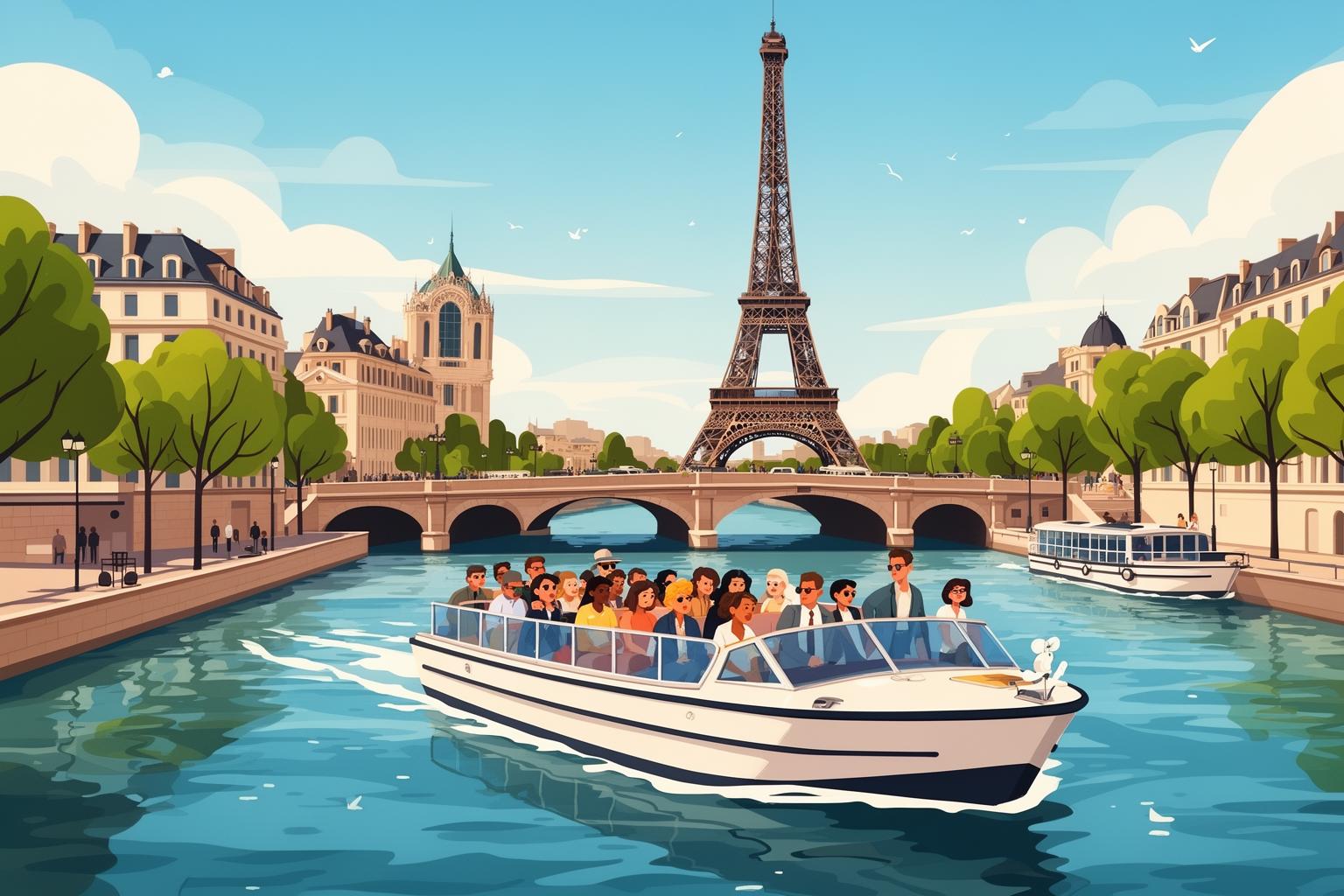
As the afternoon sun begins to sink lower in the sky, casting a warm golden glow over the city, Jesse and Céline set out on one of Paris’s most iconic experiences: a boat tour along the Seine. They board one of the renowned Bateaux Mouches, and as the boat smoothly glides over the water, the city’s legendary landmarks drift past like scenes in a play. This is a shared moment of wonder, where their personal story unfolds against the grand backdrop of Parisian history.
The scene is a storytelling masterpiece. While a tour guide’s voice recounts the history of the monuments over the loudspeaker, Jesse and Céline are immersed in their own world. Their conversation creates a brilliant counterpoint to the official narrative being recited. Jesse points to Notre Dame, sharing with Céline a moving tale about a German soldier ordered to destroy the city’s bridges and monuments but who couldn’t bring himself to harm such beauty. It’s a story about the enduring power of art and history triumphing over conflict, a theme that deeply resonates with their own effort to preserve the precious memory of their one night together amid the complications of their adult lives. The boat passes beneath the Pont Neuf, Paris’s oldest bridge, a silent witness to centuries of love stories, now adding theirs to its legacy. The emotional climax comes as they stand close, the wind tousling their hair, a kiss lingering between them—a moment of profound, unspoken connection.
Taking a Seine river cruise is a must for any visitor to Paris, but for a ‘Before Sunset’ fan, it’s an essential pilgrimage. Several companies offer tours from docks near the Eiffel Tower or Pont Neuf. For the most magical experience, schedule your cruise in the late afternoon, just as they did. This is the l’heure bleue, the blue hour, when the setting sun bathes the city’s limestone buildings in a soft, ethereal light. As dusk falls, the city lights begin to sparkle, and landmarks like the Eiffel Tower put on a dazzling show. It is irresistibly romantic.
From the water, you gain a unique, breathtaking view of the city’s layout. You’ll see the Musée d’Orsay, a former train station turned art museum; the grand façade of the Louvre; the spires of the Conciergerie, where Marie Antoinette was once imprisoned; and, of course, the iconic silhouette of Notre Dame Cathedral. Viewing the cathedral from the river, particularly in its current state of restoration, adds another layer of poignancy to Jesse’s story about preservation and beauty. It serves as a reminder that even things that seem eternal can be fragile, urging us to cherish beauty while it lasts. This boat ride is a moment to pause, to take in Paris’s grandeur, and to feel the powerful flow of history and romance running through the heart of the city—carrying our two protagonists, and us, along with it.
The Final Approach: Quai de la Tournelle and Céline’s Street
As the boat tour comes to an end, the reality of Jesse’s impending flight becomes unavoidable. The sun is setting—turning the film’s title into a literal deadline. The final segment of their journey is a walk from the banks of the Seine to Céline’s apartment, where the emotional tension reaches its peak. The lighthearted catching-up fades away, replaced by a raw, urgent desperation. Their route follows the Quai de la Tournelle and winds through the ancient, atmospheric streets of the Latin Quarter one last time.
This walk is both visually breathtaking and emotionally intense. As they stroll along the quay, the magnificent apse of Notre Dame—with its intricate flying buttresses—dominates the view. This is one of the most stunning perspectives of the cathedral, serving as a silent, majestic witness to their increasingly strained conversation. They pass the famed bouquinistes, the secondhand booksellers whose dark green stalls line the Seine’s banks. These stalls, a Parisian institution, are treasure troves of old books, prints, and postcards—a fitting backdrop for two people trying to find the ending of their own story.
From the quay, they turn into the labyrinthine streets that lead to her home. They are seen on Rue Saint-Julien le Pauvre, home to one of Paris’s oldest churches, in an area that exudes a tangible sense of history. The cobblestones are worn smooth by centuries of footsteps, and the buildings lean close as if sharing secrets. The fading light casts long shadows, creating an atmosphere of intimacy and melancholy. It is in these narrow streets that they finally confront the pain of their separation and the depth of their feelings. Their defenses fall away, and the raw truth of their unhappiness in separate lives spills out.
To retrace this final walk is to feel the film’s emotional climax rising within you. Begin at the Quai de la Tournelle, across from Notre Dame, and simply wander into the maze of streets behind it. Let the historic atmosphere surround you. The air feels thick with romance and nostalgia. This is not the grand, expansive Paris of the Champs-Élysées; rather, it is the intimate, medieval heart of the city. It’s a place that feels deeply personal and profound—the perfect setting for the film’s most honest and heartbreaking moments. As you walk, you can almost hear their hushed, urgent voices discussing fate, missed chances, and the terrifying, beautiful possibility of a second chance.
The Final Waltz: Céline’s Courtyard and Apartment
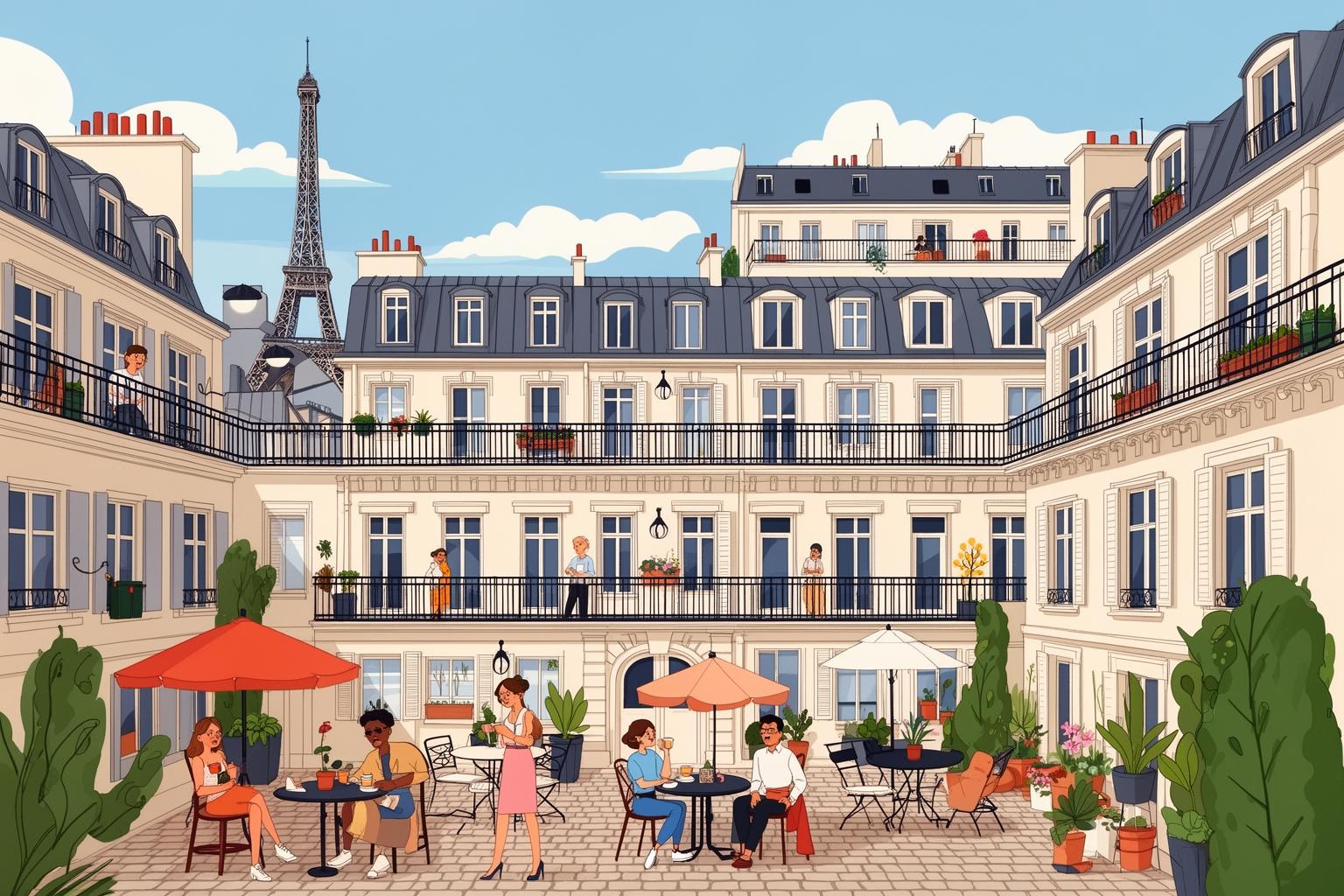
And so we reach the end of the line, the final stop on their day-long journey: Céline’s apartment. They pass through an unassuming wooden door into a breathtakingly beautiful and quintessentially Parisian courtyard. This is Cour de l’Étoile d’Or, nestled in the 11th arrondissement. It’s a hidden world, a peaceful oasis of greenery and cobblestones, sheltered from the city’s noise. For Jesse, and for us, entering this courtyard feels like being granted access to Céline’s most private realm, a secret garden that mirrors her soul.
The scene is iconic. As they cross the courtyard and ascend the winding, worn wooden staircase to her apartment, the tension is palpable. Each step upward takes them further from the outside world and deeper into the reality of their connection. Once inside her apartment, the atmosphere is cozy, artistic, and deeply personal. It’s filled with books, a guitar, and photographs—the tokens of a life fully lived. It’s here that the film’s final, perfect moments unfold. Céline plays her guitar and sings a song she wrote for him, a beautiful, vulnerable waltz about their one night together. It’s a complete and heartfelt confession of her feelings.
Then, as Nina Simone’s “Just in Time” plays on the stereo, Céline performs a playful, swaying imitation of the singer. Jesse watches her with a look of pure adoration. He is utterly captivated, and he knows, as we do, that he cannot leave. She gazes at him and delivers the film’s legendary last line: “Baby, you are gonna miss that plane.” Jesse simply smiles—a smile of surrender and acceptance. The screen fades to black, leaving us with an ending that is both ambiguous and perfectly hopeful.
While the actual courtyard and apartment are private residences and should be respected as such, you can explore the essence of this location in the surrounding neighborhoods, such as the area around Faubourg Saint-Antoine. This part of Paris is filled with similar hidden passages (passages) and courtyards (cours). Keep an eye out for unassuming doorways that might lead to these secret spots. One nearby example open to the public is the Cour Damoye, a charming cobblestone passage that offers a similar sense of discovering a hidden world. The film’s conclusion isn’t centered on a grand monument; it’s about a genuine, lived-in space. It reminds us that the greatest magic often lies behind the simplest doors, in the quiet, personal places where life truly unfolds. It’s the perfect, intimate ending to a story never about sightseeing, but about two people finding their way home to each other.
Crafting Your Own ‘Before Sunset’ Itinerary
Following in the footsteps of Jesse and Céline is less about adhering to a rigid map and more about adopting a certain mindset. Their journey was marked by spontaneity and meaningful conversation, and yours should be the same. That said, having a general itinerary can help capture the spirit of their day. Begin your morning at Shakespeare and Company, giving yourself plenty of time to browse and absorb the literary ambiance. Then, cross the Seine and wander eastward into Le Marais, letting your curiosity lead you through its historic streets.
Plan for a late lunch or an afternoon coffee break at Le Pure Café in the 11th arrondissement. It’s a bit of a walk or a short Métro ride away, but worth it for its authentic atmosphere. Afterwards, head to the nearby Promenade Plantée. A walk along this elevated garden is an ideal way to enjoy the golden hours of the afternoon, offering a unique city perspective. As evening draws near, return toward the river for a sunset boat cruise along the Seine, allowing you to see the city’s landmarks in their best light while resting your feet.
To finish your day, stroll along the Left Bank, starting from the quays opposite Notre Dame and weaving into the heart of the Latin Quarter. Find a quiet bistro to have dinner and reflect on your day. The key to this itinerary is to embrace detours. If a particular street, shop, or park piques your interest, explore it. Pause for a glass of wine. Sit on a bench and watch the world go by. The real spirit of the film lies in the unplanned moments, the unexpected discoveries, and the quality of the conversations you share along the way, whether with a travel companion or simply with yourself.
The Soul of Paris in the Film
What makes ‘Before Sunset’ so compelling is Richard Linklater’s insight that Paris is more than just a picturesque backdrop. The city itself actively shapes the story. The film’s real-time format, where eighty minutes of screen time correspond exactly to eighty minutes in the characters’ lives, offers an immersive experience akin to walking through a city. There are no abrupt cuts or time jumps; we accompany them through every step, every conversation, every shared moment of silence.
Paris, with its rich history and reputation as the city of love, acts as a catalyst for their reunion. It’s a city that invites walking and reflection. Its beauty encourages introspection, while its romantic atmosphere allows them to explore the ‘what ifs’ that have lingered for nine years. The chosen locations aren’t random tourist attractions; each has a distinct purpose. The intellectual refuge of the bookstore, the historic maze of Le Marais, the candid intimacy of the café, the elevated view from the garden, and the sweeping grandeur of the Seine—all reflect stages in their emotional journey from tentative reconnection to deep intimacy. The city becomes a container for their memories and renewed hopes, a place where the past feels alive and the future holds promise.
A Traveler’s Guide to the Parisian Vibe
To truly capture the spirit of Jesse and Céline, a few practical tips can be helpful. Plan your pilgrimage for late spring, summer, or early autumn, when the long daylight hours and pleasant weather are perfect for the extensive walking this journey demands, reflecting the sunlit afternoons in the film. Choosing the right footwear is essential. Aim for Céline’s effortless Parisian chic, but prioritize comfort. Since you will be walking for hours on cobblestones, stylish yet supportive flats, loafers, or sneakers are a must.
Although Paris boasts an excellent public transportation system, this itinerary is best enjoyed on foot to fully embrace the film’s continuous, flowing rhythm. Embrace the walk. For covering longer distances, such as between Le Marais and Le Pure Café, a short Métro ride is perfectly fine. A little French goes a long way. Simple phrases like “Bonjour,” “Merci,” “S’il vous plaît,” and “Au revoir” will be appreciated and enhance your interactions with locals. When visiting a café, remember the art of lingering. You won’t be rushed. Order your coffee or drink, then feel free to sit, write, or simply watch the world go by for as long as you like. It’s an essential part of the Parisian experience.
A Final Waltz with Memory
To follow the trail of ‘Before Sunset’ through Paris is to do more than simply visit filming spots. It’s an invitation to slow down, observe, and connect. It’s a journey that honors the beauty of conversation, the power of a shared glance, and the magic of a city that has inspired dreamers for centuries. You leave not only with photographs of stunning places but with a feeling—the warmth of a golden afternoon spent in perfect company, the bittersweet ache of time slipping away, and the hopeful, lingering melody of a waltz just beginning. This pilgrimage reminds us that the most meaningful journeys are often measured not in miles, but in moments of true human connection. Standing on a bridge overlooking the Seine at dusk, you may realize that Jesse and Céline’s story has blended with your own, leaving you with one beautiful, lingering thought: some planes are worth missing.