There are films that you watch, and then there are films that you inhabit. Park Chan-wook’s 2016 masterpiece, The Handmaiden, is unequivocally the latter. It is a world of whispered secrets behind shoji screens, of opulent decay, of love that blooms in the most poisoned soil. The film’s setting is as much a character as the scheming Count, the enigmatic Lady Hideko, or the resilient Sook-hee. Set in 1930s Japanese-occupied Korea, the story’s primary stage is a colossal, isolated mansion—a Gothic marvel that is a psychological prison of breathtaking beauty. It’s a place where Japanese and Western architectural styles clash and fuse, mirroring the turbulent cultural landscape of the era and the conflicted identities of those within its walls. To embark on a journey to the filming locations of The Handmaiden is not merely to sightsee; it is to step through the screen, to walk the corridors of power and deception, and to feel the lingering echoes of its haunting, triumphant story. This pilgrimage takes us across borders, from the serene gardens of Japan to the cinematic landscapes of South Korea, tracing the footsteps of a narrative woven with stunning precision. Each location holds a piece of the puzzle, a fragment of the atmosphere that made the film an unforgettable sensory experience. Prepare to enter the world that Park Chan-wook built, a world waiting to be explored.
If you’re captivated by cinematic pilgrimages, you might also be interested in exploring the filming locations of The Irishman.
The Heart of the Estate: Kouzuki’s Mansion
The magnificent and suffocating mansion of Uncle Kouzuki serves as the dark heart of The Handmaiden. It is a maze of secret corridors, forbidden libraries, and meticulously maintained gardens where each plant seems to hold its breath. In the film, this estate feels like a singular, unified entity, showcasing the brilliance of production designer Ryu Seong-hui. In reality, this architectural chimera was created through a masterful blend of various locations, purpose-built sets, and a hint of cinematic magic. Pursuing the ghost of this mansion means journeying to two distinct places, each contributing a vital layer to the illusion. The elegant, commanding exterior was found in Japan, a historic home that perfectly embodied the cultural fusion at the story’s core. The soul of the house, its terrifying and awe-inspiring library, resides in a modern sanctuary of books in South Korea. Realizing this composite nature enriches one’s appreciation of the filmmakers’ vision, turning a location hunt into a revelation of how artifice and reality can intertwine to create a world more powerful than either alone.
A Façade of Elegance: The Rokkaen in Kuwana, Japan
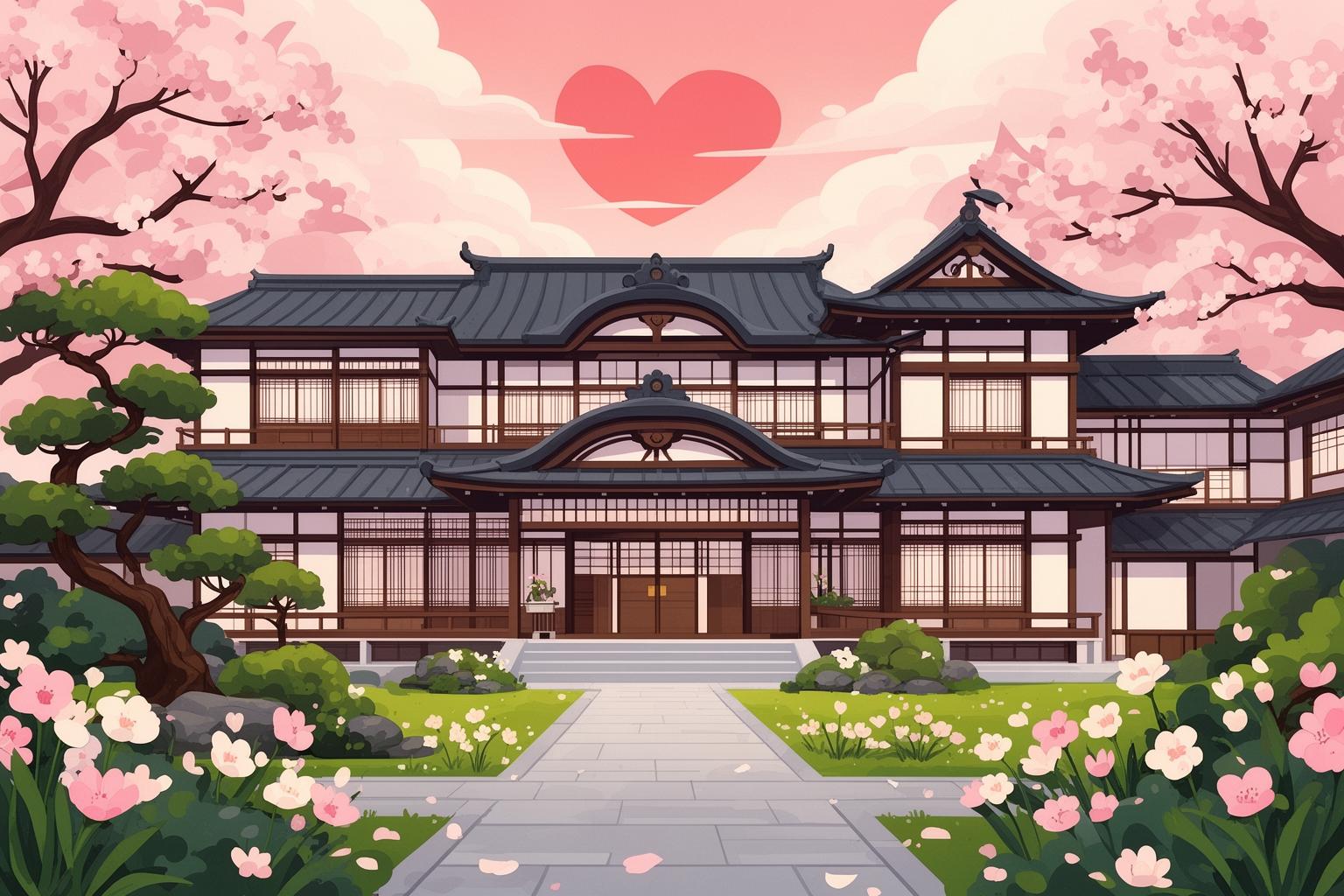
The first sight of Kouzuki’s estate is stunning. A sprawling Western-style manor stands proudly, connected to a traditional Japanese-style building, with a lush garden serving as a bridge between two worlds. This is Rokkaen, a historic villa in Kuwana City, Mie Prefecture, Japan. Director Park Chan-wook scouted locations for months before discovering Rokkaen, and it’s clear why he ended his search here. The building itself tells a story. Completed in 1913, it was designed by Josiah Conder, a British architect often hailed as the “father of modern Japanese architecture.” He created it for Moroto Seiroku II, a local rice and lumber magnate. Conder’s design exemplifies cultural synthesis. The main, four-story tower is pure Queen Anne style, with bay windows, verandas, and intricate rooflines, while the attached Japanese section features elegant wooden corridors and tatami rooms overlooking a classic Japanese garden. This physical duality perfectly symbolizes Kouzuki, a Korean man obsessed with Japan and England, a collaborator who lives through crafted identities. Standing before Rokkaen, you confront the film’s face: the long driveway where the new handmaiden arrives, the manicured lawns where Lady Hideko takes her carefully controlled walks, and the imposing silhouette promising both luxury and menace. The atmosphere is serene, almost surreal in its beauty. The air hangs still, and the garden, with its pond and carefully arranged stones, invites reflection. Yet, knowing the dark secrets the building harbors in the film, a palpable tension underlies the tranquility. It feels like a place holding its breath, a beautiful mask for the darkness within. Visiting Rokkaen is a journey into Japan’s late Meiji and early Taisho periods, a time of rapid modernization and Western influence. The house is a designated National Important Cultural Property, and its preservation allows visitors to experience this historical blend firsthand. You can wander through the sunlit rooms of the Western wing, admiring intricate woodwork and stained glass, then remove your shoes and step softly across the tatami mats in the Japanese wing, feeling the cool garden breeze. For first-time visitors, the best way to enjoy Rokkaen is slowly. Don’t just view the architecture; feel the transition between the two styles. Notice how the light shifts moving from a high-ceilinged Victorian room to a low, open-walled Japanese one. Imagine Hideko at the window, or Sook-hee peeking from a corner, and the entire estate takes on life. Kuwana is easy to reach as a day trip from Nagoya. From Nagoya Station, a short ride on the Kintetsu or JR Kansai Main Line brings you to Kuwana Station, from where Rokkaen is a pleasant walk or a brief taxi ride. It’s wise to check the official website for opening times and any special closures before visiting. The best seasons are spring, when cherry and plum blossoms add an ephemeral beauty Hideko herself would admire, and autumn, when maple leaves in the garden turn fiery shades of red and gold, painting a scene of melancholic splendor.
The Cathedral of Knowledge: The Forest of Wisdom Library
If Rokkaen provides the mansion’s body, its twisted soul lies in the grand library. This is Kouzuki’s inner sanctum: a towering, three-story chamber where floor-to-ceiling bookshelves rise into the heavens, dwarfing the humans below. Here, the darkest secrets are kept, where literature is warped into a tool of subjugation. This breathtaking yet oppressive space is not a studio set but a real location: the Forest of Wisdom library in Paju Book City, South Korea. Situated just south of the DMZ, Paju Book City is a fascinating cultural complex—a planned city devoted to the entire lifecycle of a book, from creation and printing to distribution and sales. The Forest of Wisdom is its crown jewel. It is not a conventional library; all the books, donated, are organized by donor rather than formal cataloging and are for on-site browsing only. The space is vast, modern, and filled with light, designed as a sanctuary for readers. The shelves, some more than eight meters tall, form dramatic canyons of text. It was this monumental scale that inspired the director. For The Handmaiden, the production team transformed this bright, open space into Kouzuki’s personal hell. They carefully curated books, added rolling ladders, a spiral staircase, and a reader’s podium, and used masterful lighting to create a shadowy, intimidating atmosphere. The library on film feels ancient, dusty, and laden with perverse history, sharply contrasting with the real location’s modern, airy ambiance. This transformation showcases the power of production design. Visiting the Forest of Wisdom is a surreal experience for fans of the film. You enter this bright, welcoming space and see people casually reading, chatting in cafés, and browsing shelves. Yet, you cannot help but envision the film’s ghosts—searching for the spot where Hideko stood, where Kouzuki held his morbid readings. The sheer verticality of the bookshelves is as awe-inspiring in person as on screen. The feeling is one of reverence both for the knowledge contained in millions of books and for the cinematic artistry that so completely reimagined the space. Paju Book City is about an hour’s bus ride from Hapjeong Station in Seoul, making it an excellent day trip for those wishing to escape the city’s bustle. Beyond the Forest of Wisdom, the city offers numerous publishing houses with unique architectural designs, quirky book cafés, and art galleries. A useful tip for visitors is to wear comfortable shoes, as the complex is expansive and best explored on foot. Allow at least half a day to fully immerse yourself not only in the library’s atmosphere but also in the entire city devoted to the written word. It is a place celebrating the very thing Kouzuki sought to corrupt, making it a strangely triumphant stop on this pilgrimage.
Beyond the Walls of Deception
While Kouzuki’s mansion stands as the undeniable centerpiece of The Handmaiden‘s world, the film’s narrative occasionally extends beyond its oppressive walls, offering glimpses into the broader landscape of 1930s Korea. These exterior locations are essential, providing scale and context. They function both as an entry point into the realm of deception and as a symbol of the dream of escape from it. From the bustling, era-specific train station where Sook-hee’s journey commences to the windswept fields that grant a fleeting sense of freedom, these places are vital to the story’s emotional progression. They were brought to life in an expansive theme park dedicated to Korean history and in the natural, untamed scenery of the Korean countryside, each offering a unique pilgrimage for devoted fans.
The Echoes of the Past: Hapcheon Image Theme Park
Sook-hee’s entry into the world of The Handmaiden is marked by a train ride that delivers her to a provincial town alive with period detail. The steam-belching locomotive, wooden station house, and vintage cars lining the streets all work together to immerse the viewer immediately in the 1930s. These carefully recreated scenes were filmed at the Hapcheon Image Theme Park in South Gyeongsang Province. This isn’t simply a small set but a vast, open-air studio, one of the largest in South Korea. It serves as a popular location for filmmakers and TV producers creating historical works. The park features impressively detailed replicas of Seoul’s streets from the 1920s to the 1980s, including reproductions of key historical buildings, tram lines, and old cityscapes. Walking through Hapcheon Image Theme Park feels like stepping back in time. As you stroll down the recreated streets of Gyeongseong (Seoul’s colonial-era name), you literally walk through the backdrop of many iconic Korean films and dramas. For The Handmaiden fans, the most important section represents the Japanese colonial period, where the train station and adjoining townscape are located. The atmosphere is eerie—on a quiet day, it can feel like a ghost town, with exquisitely crafted facades hiding empty interiors. But when busy, with visitors including some dressed in period costumes rented at the park, it bursts to life, completing the illusion. You can almost hear the train whistle and see Sook-hee stepping onto the platform, her mind filled with plans of theft. Visiting here requires some planning, as Hapcheon lies in a rural area. The easiest access is by car or by taking an intercity bus to Hapcheon Bus Terminal, then a local bus or taxi to the park. The park is extensive, so allocate several hours for a full visit. To enhance the experience, studying film stills of the arrival scenes beforehand adds a fun, interactive scavenger hunt element in identifying the exact angles and spots where scenes were filmed. Beyond its link to The Handmaiden, the park stands as a fascinating destination on its own, offering a tangible, walkable history of Korea’s turbulent 20th century and powerful visual context for the historical backdrop underpinning the entire film.
The Desolate Landscapes of Goheung
In stark contrast to the mansion’s claustrophobic interiors are the brief, liberating scenes set in open countryside. The most memorable is when Sook-hee and Hideko escape momentarily, running hand-in-hand through tall, swaying pampas grass beneath a vast, open sky. These shots offer a visual breath of fresh air, symbolizing their growing feelings and the possibility of life beyond Kouzuki’s control. These stunning, windswept scenes were filmed in Goheung County, South Jeolla Province. Goheung is a peninsula on Korea’s southern coast, known for its rugged shoreline, green tea fields, and largely untouched natural beauty. Unlike other locations, this is not a single pinpointable spot on a map; rather, it is the overall atmosphere of the area that the filmmakers captured. Here, the sense is one of raw, untamed freedom. The wind blows in from the sea, the landscape feels ancient and expansive, and the isolation is profound—but here, isolation is freeing, not confining. Experiencing this part of the film does not require finding the exact field. Instead, the pilgrimage involves embracing the spirit of the landscape. Renting a car and driving the Goheung coast is the best way to do this. The roads wind through stunning ocean views, quiet fishing villages, and rolling hills. In autumn, the pampas grass fields (eoksae in Korean) turn silvery-gold, recreating the film’s scenic backdrop. A trip to Goheung connects one with the emotional heart of the film’s love story—finding beauty in wild nature and the sense of possibility that comes with an open horizon. Practical advice for this journey includes preparing for a slower travel pace. This is not a heavily touristed area, which adds to its charm. Accommodations tend to be local guesthouses or pensions rather than large hotels. This is a part of Korea that rewards explorers who embrace spontaneity. Find a scenic overlook, pause the car, and listen to the wind. In those quiet moments, the spirit of Hideko and Sook-hee’s escape can be truly felt.
The Art of Illusion: Production Design and Studio Sets
A pilgrimage to the real-world locations of The Handmaiden is a deeply rewarding experience, but it is important to recognize the significant role played by what cannot be visited: the purpose-built studio sets. A large part of the film, particularly the most intricate and narratively essential interior scenes, was shot on soundstages. The brilliance of Academy Award-nominated production designer Ryu Seong-hui and her team lay in their ability to craft spaces that were not only visually stunning but also psychologically profound, seamlessly blending them with the real locations so that the audience would never detect the difference. The most famous of these creations is, of course, the enormous cherry tree in the garden—a site of traumatic memory and a symbol of false beauty. This was not a real tree but a meticulously constructed sculpture, with branches carefully fashioned and blossoms artificially affixed. Likewise, the horrifying basement, complete with an octopus tank and torture devices, was a chilling set designed to evoke dread and perverse order. Many of the Japanese-style tatami rooms within the mansion were also studio-built. This practical choice allowed the filmmakers to accommodate the story’s complex architectural demands, such as hidden listening posts, sliding walls that revealed secret passages, and floors that could be pulled apart. These features give the mansion its labyrinthine quality, transforming it into a physical embodiment of the unfolding conspiracies. The sets were constructed at a large film studio in Paju, near the Forest of Wisdom library, facilitating a smooth and cohesive production workflow. Appreciating the role of these sets deepens one’s visit to the real locations, highlighting the collaborative nature of filmmaking and fostering greater respect for the craft. Standing in the actual Forest of Wisdom, you can admire how its essence was captured and enhanced by the studio-built elements of the library. Walking through the gardens of Rokkaen, you can imagine where the fictional cherry tree once stood—its beautiful yet sinister presence completing the scene. This understanding does not ruin the illusion; rather, it illuminates the artistry behind it. It reminds us that the world of The Handmaiden is a carefully constructed reality: a mosaic of authentic history, tangible places, and the limitless power of cinematic imagination.
A Journey Through Time and Culture
Tracing the filming locations of The Handmaiden involves more than merely visiting a collection of beautiful settings. It invites you on a layered journey through time, culture, and the essence of cinematic storytelling. The careful selection of sites across Japan and South Korea was a deliberate and inspired decision by Park Chan-wook, crafting a geographical narrative that reflects the film’s intricate themes. This journey leads you from a perfectly preserved symbol of Japan’s Meiji-era Western fascination to a contemporary city of books and a vast historical theme park in Korea. Each destination contributes to a broader cultural and historical dialogue about colonialism, identity, and the tension between tradition and modernity that characterized 1930s Korea and still resonates today. This pilgrimage explores duality: the interplay of Japanese and Western aesthetics at Rokkaen, the contrast between the film’s dark fiction and the bright reality of the Forest of Wisdom, and the juxtaposition of the meticulously recreated past at Hapcheon with the untamed, timeless nature of Goheung. It is a journey for cinephiles, as well as for enthusiasts of history, architecture, and deep storytelling.
Navigating Your Pilgrimage: Practical Advice
Embarking on a multi-location, cross-border pilgrimage calls for some planning. With thoughtful preparation, however, it can become a smooth, rewarding adventure that fully immerses you in the captivating world depicted on screen.
Planning Across Borders
Since these locations are divided between Japan and South Korea, the most effective strategy is to focus on one country at a time. A sensible itinerary might start in Japan. Fly into Nagoya’s Chubu Centrair International Airport (NGO), an ideal gateway to Mie Prefecture. Spend a day or two exploring the Kuwana area, including Rokkaen. From Nagoya, direct flights to Seoul’s Incheon International Airport (ICN) are readily available. Once in South Korea, use Seoul as your base to visit Paju Book City before planning a longer trip to the southern provinces to explore Hapcheon Image Theme Park and the landscapes of Goheung.
Getting Around
Both Japan and South Korea offer excellent public transportation networks. In Japan, the train system is unrivaled. While a Japan Rail Pass might be excessive for a focused trip around Nagoya, local Kintetsu and JR lines are convenient and straightforward. In South Korea, the KTX high-speed train is excellent for covering long distances, such as the journey from Seoul to the southern regions. For remote locations like Hapcheon and the full exploration of Goheung peninsula, renting a car is highly advisable. It provides the flexibility to travel at your own pace and uncover hidden gems. Remember to carry an International Driving Permit.
Best Seasons to Visit
To experience the locations in their most atmospheric form, aligned with the film’s aesthetic, spring and autumn are ideal. Spring (late March to early May) brings iconic cherry blossoms to both Japan and Korea, creating breathtaking and fleeting beauty. The weather is mild and comfortable for sightseeing. Autumn (September to November) offers equally stunning views, with crisp air and vibrant fall foliage that transforms Rokkaen’s gardens and Goheung’s hills into rich tapestries of reds, oranges, and golds. These seasons showcase the landscapes in their most cinematic light.
Beyond the Film
While the film locations are the primary draw, don’t miss the rich cultural experiences nearby. Near Kuwana, Nabana no Sato flower park is renowned for its spectacular seasonal blooms and dazzling winter light displays. Paju, close to the border, serves as a common starting point for tours to the Korean Demilitarized Zone (DMZ), providing a sobering historical perspective. In the southern region, historic temples, national parks, and acclaimed culinary spots abound. Including these additional experiences will deepen your trip and offer broader insight into the world surrounding the film’s story.
Visiting Rokkaen, you might experience a chill beyond the weather. Sitting amid the towering shelves of the Forest of Wisdom, you could sense a silence heavier than simple quiet. Standing on a hill in Goheung, with the wind rushing through your hair, you may feel a surge of defiant freedom. These places have transcended mere locations; they hold the echoes of Lady Hideko’s quiet suffering, Sook-hee’s fierce resolve, and the transformative power of their love. A pilgrimage to the world of The Handmaiden is a journey to the heart of a masterpiece—a chance to stand where a dark, twisted fairy tale was woven into cinematic gold, leaving with the profound reminder that even in the most exquisitely crafted prisons, the human spirit will always find a way to break free.