There are places where the tick of the clock seems to surrender to the gentle rhythm of the tides. Ports where the salty air carries not just the scent of the sea, but whispers of centuries gone by. Tomonoura, a gracefully aging harbor town nestled along the coast of the Seto Inland Sea in Hiroshima Prefecture, is such a place. It exists in a dreamlike state, a living museum of Edo-period architecture and maritime culture. But for millions around the globe, this serene fishing village holds another, more fantastical identity. It is the tangible soul of the whimsical, vibrant world brought to life by legendary animator Hayao Miyazaki in his masterpiece, Ponyo on the Cliff by the Sea. To walk the narrow, winding streets of Tomonoura is to step through the silver screen, to feel the very currents of inspiration that gave birth to a cinematic classic, and to discover a town whose own history is as captivating as any animated tale.
Embrace the enchanting coastal charm that inspired Miyazaki’s masterpiece as you explore Tomonoura’s seaside muse.
The Living Canvas: Miyazaki’s Vision and Tomonoura’s Reality
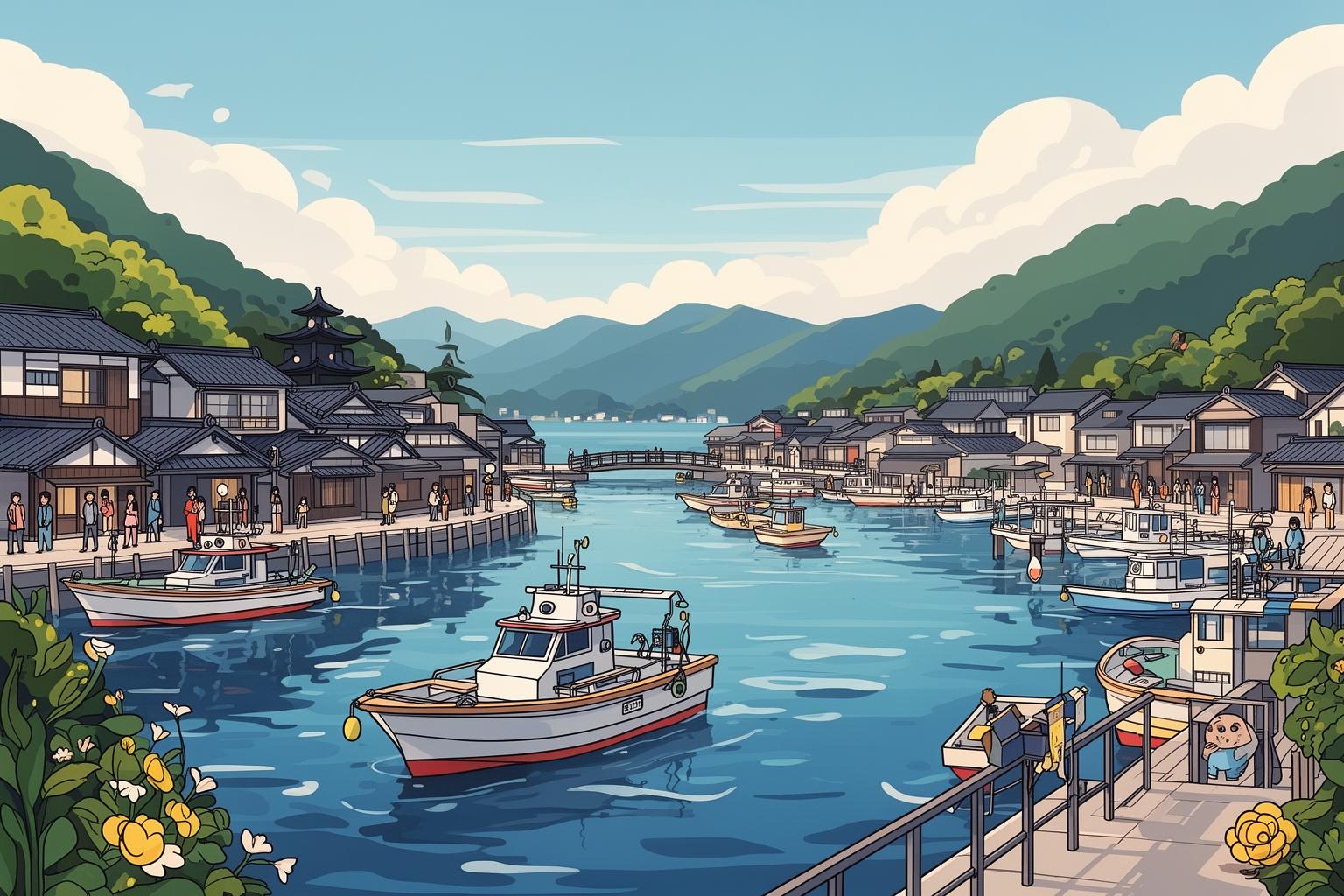
The connection between Tomonoura and Ponyo is far from a mere coincidence or casual reference; it represents a profound artistic symbiosis. Hayao Miyazaki and his Studio Ghibli team famously spent two months living in this town, absorbing its unique atmosphere, sketching its landscapes, and allowing its gentle spirit to permeate their project. They weren’t mere tourists; they became residents, immersing themselves in the everyday life of the port, observing how light danced on the water, the charmingly chaotic cluster of houses clinging to the hillside, and the resilient nature of the local fishermen. The result is a film that feels less like a fantasy imposed on a setting and more like a story that sprouted naturally from the salty soil of Tomonoura itself.
A Town Captured in Celluloid
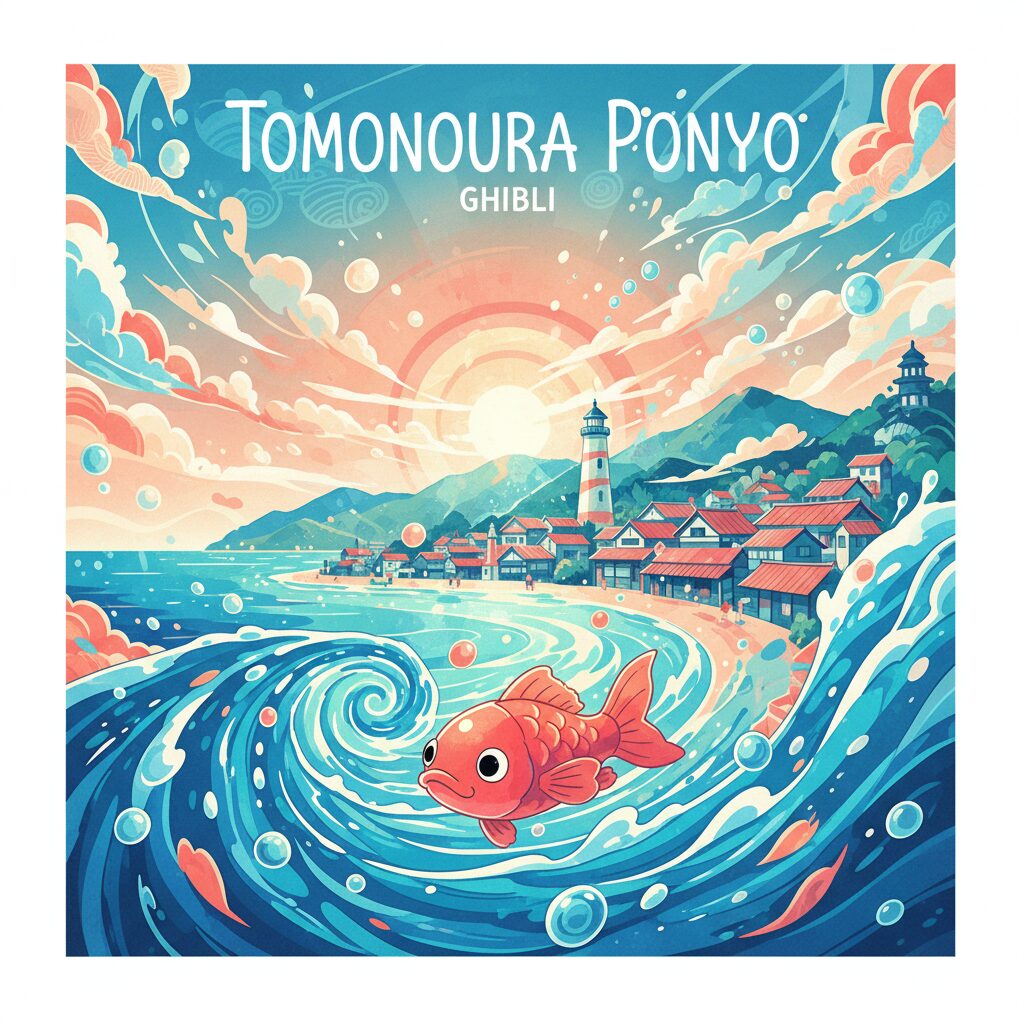
For fans of the film, arriving in Tomonoura is a deeply nostalgic and delightful experience. The crescent-shaped harbor, cradling a fleet of small fishing boats, is instantly recognizable as Sosuke’s seaside home. Gazing upon the cluster of weathered, tile-roofed houses tumbling down the green hills to the water, you can almost envision Ponyo’s magical tsunami, a living wave of deep blue, cresting over them. The narrow, maze-like alleyways, some barely wide enough for two to pass, mirror the paths Sosuke runs along with his bucket. Even the small details—like the stone sea walls and wooden piers—are rendered with such loving fidelity in the animation that the boundary between reality and imagination blurs into a seamless whole. The film’s core theme—the delicate, often fraught balance between humanity and the untamed ocean—is the very story of Tomonoura, a town that has thrived for centuries by honoring the power and poetry of the sea.
Beyond the Animation: The Enduring Spirit of the Port
Yet to define Tomonoura solely by its tie to Studio Ghibli is to overlook the deeper magic that first captivated Miyazaki. The town’s charm is genuine and deeply rooted. It carries a palpable tranquility that has become rare in the modern world. The atmosphere is thick with history and the unhurried rhythms of a waterfront life. The dominant sounds are not traffic but the cries of black kites soaring overhead, the chug of a solitary boat engine, and the gentle lapping of waves against the stone foundations of the port. It’s a place that invites you to slow down, wander without direction, and simply be present. While cinematic fame has drawn visitors, it has not broken the spell. The town continues its daily life with quiet dignity, preserving the very essence that made it the perfect muse for a story about love, nature, and the wonder of the sea.
Echoes of the Past: A Port Waiting for the Tide
Long before it was celebrated in animation, Tomonoura played a crucial role in Japan’s history. Its distinctive geography made it a shiomachi no minato, a “port for waiting on the tide.” Located where the east and west currents of the Seto Inland Sea meet, ships traveling this essential waterway had to anchor in Tomonoura’s tranquil harbor to await favorable tides. This natural occurrence turned the town into a lively hub of commerce, culture, and communication—a necessary stop for feudal lords, traders, and foreign emissaries.
The Strategic Heart of the Seto Inland Sea
Tomonoura flourished during the Edo period (1603-1868), reaching its peak. The harbor buzzed with activity, crowded with vessels, while sailors and merchants filled the streets. The wealth that passed through the port remains evident today in the grand merchant homes and numerous temples and shrines scattered throughout the town. It also became an official port of call for Korean delegations traveling to Edo (modern Tokyo), adding an international dimension to its maritime culture. This history as a meeting point and waiting place has given the town a distinctive character—marked by patience, attentiveness, and a profound bond with nature’s rhythms.
A Stage for History: Sakamoto Ryoma and the Iroha Maru Incident
Aside from its maritime trade, Tomonoura was the backdrop for a dramatic episode in the waning years of the samurai era. In 1867, the steamship Iroha Maru, chartered by the visionary samurai Sakamoto Ryoma and his Kaientai naval squadron, collided with a vessel from the powerful Kishu clan and sank off the coast. Ryoma, a pivotal figure in the Meiji Restoration, came to Tomonoura to negotiate compensation. These tense talks occurred in buildings that still stand today, filling the town’s peaceful streets with echoes of political intrigue and revolutionary zeal. Visitors can see the very rooms where Ryoma strategized and debated, and a dedicated museum displays a replica of the sunken ship along with artifacts recovered from the wreck. This historical layer adds rich depth to the town, reminding visitors that its serene exterior conceals a past marked by high-stakes drama.
Preserving a Bygone Era
The town’s exceptional preservation is no accident. In the early 2000s, a proposal emerged to build a large, modern bridge across the harbor to ease traffic. Yet, a passionate movement of local residents and supporters nationwide, including Hayao Miyazaki, rallied to protect the historic landscape. They argued that the bridge would irreparably harm the scenic beauty and cultural heritage that define Tomonoura. After a long and difficult struggle, the plan was ultimately shelved in favor of preserving the town’s legacy. This victory reflects the community’s deep affection for their home and their recognition that its true value lies not in modern conveniences but in its timeless, unchanging spirit. It is this very commitment to preservation that keeps the world of Ponyo alive and tangible for all visitors.
Navigating the Labyrinth: Key Landmarks of Tomonoura
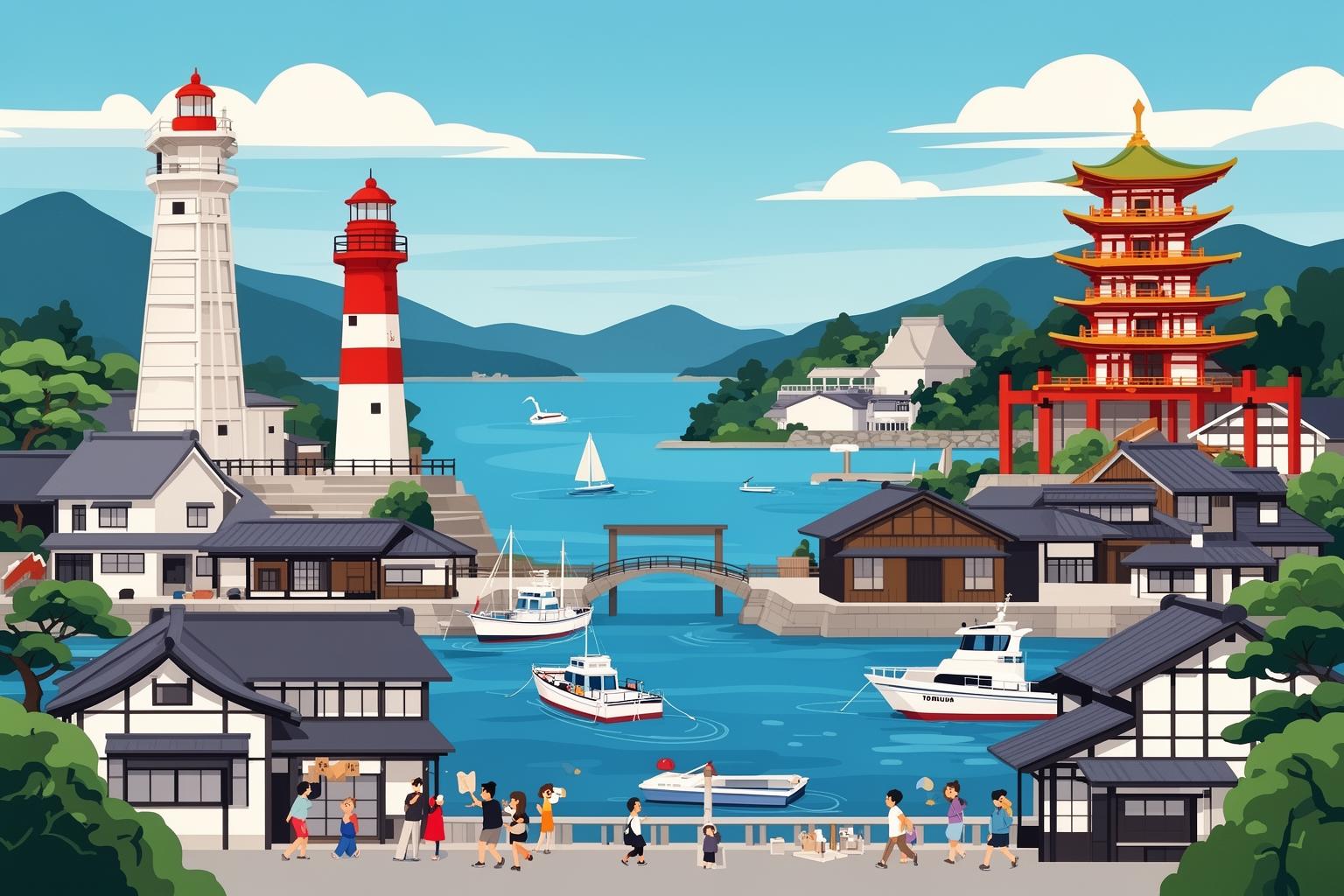
While the greatest pleasure in Tomonoura comes from aimless wandering, several notable landmarks act as beautiful anchors for your exploration. Each one reveals a piece of the town’s rich history, offering stunning views and a deeper connection to its maritime and cultural heritage.
The Joyato Lighthouse: A Beacon Through Centuries
Standing prominently in the center of the harbor is the iconic Joyato Lighthouse, the unmistakable symbol of Tomonoura. Rising just over 11 meters tall, this elegant stone structure has guided ships safely into the port since its construction at the close of the Edo period. It is the largest historic harbor lighthouse of its kind in Japan, a powerful testament to the town’s past maritime importance. Today, its flame no longer burns, but its presence remains a compelling focal point. It serves as a gathering spot for locals, an ideal backdrop for photographers capturing the changing light at dawn and dusk, and a silent stone sentinel watching over the town it has protected for generations. Sitting on the seawall and gazing at the Joyato allows you to feel the heartbeat of old Japan.
Fukuzenji Temple and the Taichoro Pavilion: A Borrowed View
Situated on a small hill just above the harbor, Fukuzenji Temple offers a moment of peaceful reflection. Yet its true gem is the Taichoro, an adjacent reception hall built in 1690 to host dignitaries. Entering this beautiful wooden building is like stepping into a perfectly composed painting. The large, open windows of the main room frame a breathtaking view of the harbor, with the charming Bentenjima and Sensuijima islands drifting in the distance. A Korean emissary in 1711 was so captivated by this sight that he declared it the “most beautiful view in all of Japan.” This idea of shakkei, or “borrowed scenery,” where the surrounding landscape is incorporated into the design of a garden or building, is masterfully realized here. For a small entrance fee, you can sit on the tatami mats, enjoy a cup of tea, and lose yourself in a view that has enchanted visitors for more than three hundred years.
The Ota Clan Residence: A Merchant’s Legacy
To grasp the wealth and refinement of Tomonoura during its golden era, a visit to the Ota Clan Residence is indispensable. This expansive complex was the home of a wealthy family that made its fortune brewing Homeishu, a medicinal liqueur renowned throughout Japan. The beautifully preserved main house, featuring elegant rooms, intricate woodwork, and tranquil inner gardens, offers an intriguing look into the life of an Edo-period merchant. However, the family’s legacy is most vividly alive in the ongoing production of Homeishu. Several historic breweries remain active in the town, their dark, atmospheric interiors filled with the sweet, herbal scent of the sixteen botanicals used in the recipe. Many offer tastings, allowing you to savor a unique flavor that has been part of Tomonoura’s identity for nearly four centuries.
Iouji Temple: A View from Above
For those willing to exert a little effort, the reward is an unmatched panoramic view of the entire area. A climb up the 583 stone steps behind the main town leads to Iouji Temple, a sacred site with a history spanning over a thousand years. While the temple itself is a peaceful and worthy destination, the real prize is the vista from its observation point. From here, you can see the entire layout of Tomonoura: the graceful curve of the harbor, the proud stance of the Joyato lighthouse, the cluster of rooftops, and the emerald islands scattered across the shimmering Seto Inland Sea. It offers a god’s-eye view that unites all the town’s parts into one magnificent, harmonious whole. It’s the perfect way to appreciate the geography that shaped Tomonoura’s destiny.
The Soul of the Town: Experiencing Tomonoura’s Daily Rhythm
Beyond the well-known landmarks and historical sites, the true essence of Tomonoura emerges in the small, quiet moments. The magic lies in the spaces between destinations, in the sensory details of daily life that have persisted for centuries.
Wandering the Winding Alleys
Put aside your map and let yourself get lost. The town is a charming maze of narrow streets and hidden paths, with each turn revealing a new surprise. You might discover a tiny, pristine shrine tucked between two houses, a weathered wooden facade displaying the faded name of an old shop, or a friendly cat napping in a patch of sunlight. These backstreets are where the real town breathes. You’ll hear the clatter from a local kitchen, catch the savory scent of grilling fish, and see residents tending to their potted plants. This is the texture of Tomonoura, worlds away from bustling tourist spots, where you will feel the town’s spirit most deeply.
The Flavors of the Sea
As a historic fishing port, Tomonoura’s culinary scene is naturally centered on the bounty of the Seto Inland Sea. The local specialty is sea bream, or tai, renowned for its delicate flavor and firm texture. Every spring, the town holds a festival celebrating the traditional method of catching sea bream with large nets. Throughout the year, you can enjoy it in various dishes, from simple, exquisite sashimi to tai-meshi, a delicious meal where a whole fish is steamed with rice, infusing every grain with its savory flavor. Finding a small, family-run restaurant overlooking the harbor to savor freshly caught seafood is an essential Tomonoura experience.
A Voyage to Sensuijima Island
A brief, five-minute ferry ride from Tomonoura’s pier transports you to another world. Sensuijima Island, whose name means “island of the immortal hermits,” is a largely untouched natural paradise. A network of walking trails crosses the island, guiding you through lush forests to secluded beaches and vantage points that offer stunning views back toward Tomonoura. It’s an opportunity to immerse yourself in the natural beauty surrounding the town, feel the sea breeze, and experience a deep sense of peace and solitude. Viewing the port town from this vantage point enhances its beauty, making it look like a perfectly crafted miniature nestled along the coastline.
A Practical Guide for the Intrepid Traveler
Though Tomonoura feels like a world away, it is surprisingly easy to reach. With a bit of planning, your trip to this coastal gem will be as smooth and pleasant as the gentle ebb and flow of its harbor tides.
Reaching This Seaside Haven
The entry point to Tomonoura is the city of Fukuyama, a key stop on the Sanyo Shinkansen (bullet train) line, conveniently accessible from major cities such as Osaka, Hiroshima, and Fukuoka. From the south exit of Fukuyama Station, proceed to bus stop number 5. Tomon Tetsudo buses run frequently to Tomonoura, with the trip taking about 30 minutes. You can disembark at either the Tomo-no-Ura stop in the main town or the final Tomo Port stop. The ride itself is quite scenic, winding along the coastline and building anticipation for your arrival.
Timing Your Visit: Seasons in the Port
Tomonoura is charming year-round, but spring and autumn stand out as especially beautiful. In spring, from March to May, the weather is mild and pleasant, cherry blossoms add flashes of pink throughout the scenery, and the town hosts its well-known Sea Bream Festival. Autumn, from October to November, offers comfortable temperatures, clear skies, and a warm golden light ideal for photography. Summer can be hot and humid, but the town buzzes with lively seasonal energy. Winter is quiet and atmospheric, revealing a more stark and solitary beauty, perfect for visitors seeking peaceful reflection.
Tips for a Seamless Journey
To fully enjoy your visit, keep a few tips in mind. First and foremost, wear comfortable walking shoes. The town’s appeal lies in its old, uneven stone paths, narrow staircases, and sloping streets. Exploring on foot is essential, so be prepared. Although many places now accept credit cards, it’s wise to carry some Japanese yen in cash, especially for smaller family-run shops, cafes, and temple entrance fees. While it’s possible to see the main sights of Tomonoura on a day trip from Hiroshima or Okayama, to truly soak in its magical atmosphere, consider staying overnight. Watching the sunset over the harbor and experiencing the profound quiet of the town after the day-trippers leave is an unforgettable experience.
The Enduring Allure of a Timeless Port
Tomonoura is a rare and precious place, a town of contrasts where the whimsical fantasy of a beloved animated film coexists seamlessly with the raw authenticity of a living, working port. It is a destination that fulfills the desires of both the anime pilgrim seeking the real-world enchantment of Ponyo and the discerning historian following the paths of samurai revolutionaries. It serves as a sanctuary for artists, photographers, and anyone in need of a break from the relentless pace of modern life. Visiting Tomonoura means experiencing more than just a beautiful place; it means feeling it—allowing its gentle rhythms to realign your own, breathing in its history, and sailing away with a renewed sense of wonder, carrying the quiet magic of this timeless port in your heart forever.